The Left Berlin News & Comment

This is the archive template

ALFILM Festival

Arab Film Festival Berlin


21/04/2026

ALFILM Arab Film Festival Berlin is organized since 2009 by the non-profit association Zentrum für arabische Filmkunst und Kultur e.V. (formerly Freunde der arabischen Kinemathek, Berlin e.V.). It is the largest platform for the promotion of the diverse Arab cinematography in Germany. ALFILM takes place in Berlin in the Arsenal cinema and City Kino Wedding, as well as other venues. It is a founding member of Festiwelt e.V., the independent network of Berlin film festivals.

ALFILM is organized and run by a team of freelancers and volunteers, currently led by Pascale Fakhry (Executive Director) and Iskandar Abdalla (Artistic Director).

The aim of ALFILM is to highlight films from the Arab world and its diaspora that have a high artistic value and present challenging perspectives on contemporary cultural, social and political issues. With its two main pillars, ALFILM SELECTION and ALFILM SPOTLIGHT, the festival offers a lively platform for critical discourse, intercultural exchange, engagement with other cultures and future synergies and cooperations.

Discussions with filmmakers and experts take up socially and artistically relevant topics while offering new and stimulating views on the coexistence of cultures, diversity, and the portrayal and representation of minorities in mainstream society. Panel discussions on current themes, film talks and specials complete the programme.

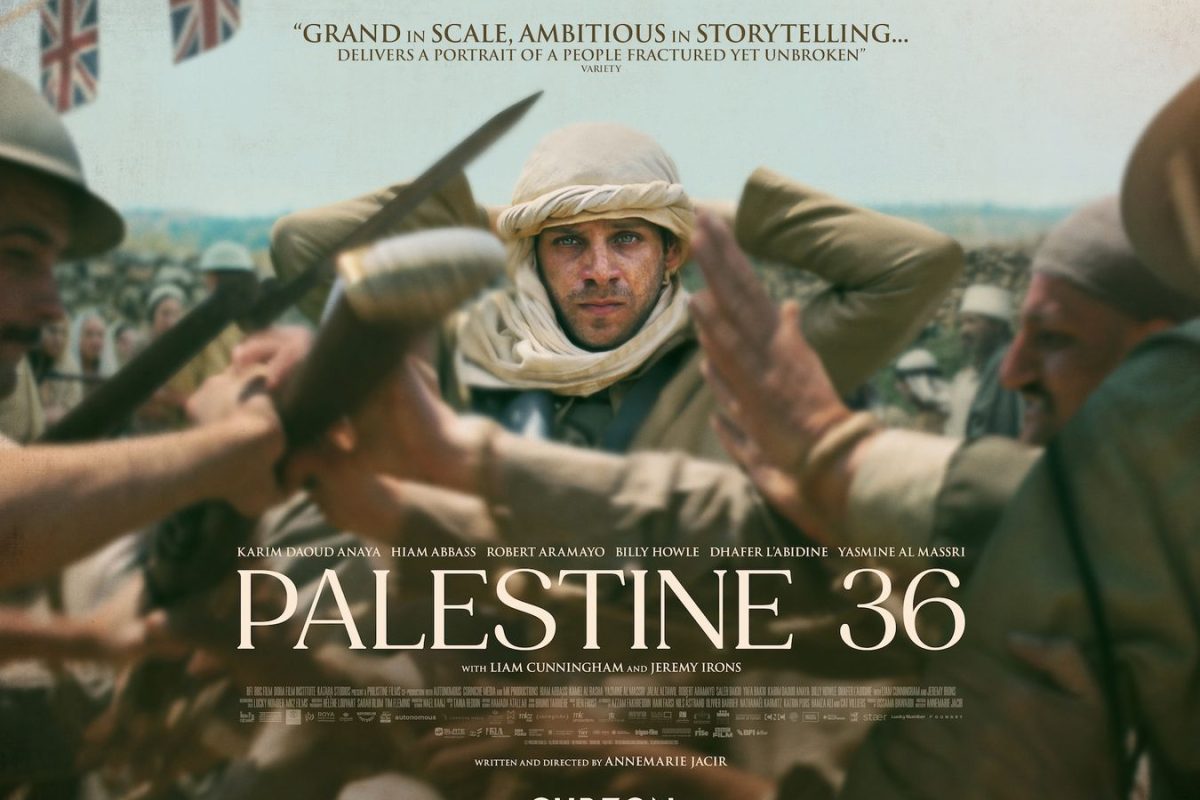
ALFilm 2026 starts on Wednesday, 22nd April at 7pm with a screening of Palestine 36 in HAU 1. The final screenings are on Tuesday, 28th April. You can see the whole programme here.

Support the walkout at Vivantes Töchter!

Hospital workers demand proper pay and conditions, activists collect donations and attend picket lines

Vivantes_260415_cropped tight

Ancillary workers at Berlin’s Vivantes hospitals began an indefinite strike on Wednesday, 15 April. Their demand is simple: proper pay and conditions under the public sector contract. The city, which owns the hospitals, promised exactly that in 2023, but failed to deliver. Now these striking ‘key workers’ need our support.

Ancillaries are the ones who do all the non-medical work required to keep the hospitals running: cleaning, cooking, security, transport, technical services, stock-keeping, sterilisation and administration. Although they are essential to the hospital’s functioning, their jobs were outsourced in 2005 to a string of subsidiaries known collectively as ‘Vivantes Töchter’. Their pay and conditions are considerably worse than they would be under the general public service pay agreement (Tarifvertrag für den öffentlichen Dienst (TVöD)). According to the union Verdi, the pay gap ranges between 10 and 15 per cent, and other aspects such as pension arrangements also need improving.

The current indefinite strike follows on a longer campaign to increase union membership and create structures for action (team reps as delegates, for example). This included shorter stoppages. The strike ballot found 98.2 per cent support for an indefinite strike. Altogether 2,200 ancillaries are affected. About 500 are members of the union Verdi. On any one day, an activist told me, between 150 and 200 are on the picket lines. The demonstration and mass meeting on Wednesday were attended by around 300. That is worth explaining, as conventional wisdom would suggest that 100 per cent backing is required for a successful strike.

On the one hand, the law requires that minimum skeleton staffing be maintained where a strike affects ‘vital services’. Fundamentally the union agreed to this, but the employer demanded higher levels and obtained a court order. At the mass meeting on Wednesday, workers affected by this explained to their colleagues how they were organising a work-to-rule.

On the other hand, all these workers are hard-pressed financially, and there is understanding for those who feel unable to join the strike every day. Disgracefully Verdi has refused to supplement the normal strike pay of 60 percent. And that’s not to speak of the loss of bonuses for weekend working. Donations are being collected to top up the strike pay (see here). As evidenced by similar industrial action at Berlin’s Charité hospitals last year, a minority strike can certainly be successful in this sector. (In that dispute, Verdi boosted strike pay to 90 per cent.)

The strike is also notable for its high level of participation. Every location is picketed, with regular events bringing together all the strikers. On day one, they all met at Klinikum am Urban in Neukölln and marched through Kreuzberg to a mass meeting at SO36. The decision to continue the strike next week was unanimous by show of hands. On day two, they demonstrated at the CDU headquarters, and the negotiating committee rejected the employer’s blackmail attempts—an offer of a one-off payment of one thousand euros each to be taken off the table if they failed to settle in full (i.e. concede defeat) by 28 April. Supporters are very welcome to attend picket lines and demonstrations (info via WhatsApp channel, see below).

The affected hospitals are: Klinikum Neukölln (Buckow), Auguste Viktoria Klinikum (Schöneberg), Humboldt Klinikum (Reinickendorf), Klinikum am Urban (Neukölln), Klinikum Spandau and Klinikum Friedrichshain. Two hospital catering centres (Versorgungszentren) are also involved,in Reinickendorf (Oranienburger Str.) and Neukölln (Buschkrugallee).

The firms in question are: Vivantes Service GmbH (VSG), Speiseversorgung und -logistik GmbH (SVL), and Vivaclean GmbH.

For up-to-the-minute information on picket lines, demonstrations and developments, join the Vivantes Töchter Info channel on WhatsApp.

Donate here to the strike pay top-up fund.  

 Robert Dale lives in the Berlin region, where he has been active in socialist politics since the 1980s.

Israel, Apartheid, and the Death Penalty: A War on the Palestinian Right to Life

Law as an Institutionalized Tool of Violence within an Apartheid System


19/04/2026

On March 30, 2026, the Israeli Knesset passed a law imposing the death penalty by hanging on Palestinian prisoners and detainees convicted by military courts, to be carried out within ninety days of sentencing. This is not merely a legal amendment. It is a qualitative shift in the nature of violence, to a  codified and openly declared violence. 

The law does not regulate justice, it redefines it to  serve a repugnant structure of national oppression within a legally and politically documented apartheid system.

To understand this shift, the law cannot be viewed in isolation from the context that produced it. We face an integrated system in which the structure of occupation intersects with global capitalism, protected by a network of Western political support, foremost being  the United States. This transforms killing into a policy, discrimination into law, and extermination into an administrative procedure.

The death penalty, at its core, is an expression of state failure, not strength. It is the most extreme form of official violence, employed when authority is unable, or unwilling, to address the deeper causes of violence and crime. As a principle and from a human standpoint, I categorically oppose the death penalty everywhere. Ast is punitive, inhumane, irreversible, and opens the door to the killing of innocents in the name of justice. 

In the case of Palestine, this punishment takes on an even more brutal dimension, being used against a people subjected to occupation, repression, displacement, and daily humiliation. Here, the death penalty becomes a political instrument to eliminate resistance, criminalize the victim, and grant the executioner the power to decide who has the right to live and who must die.

Legalizing Killing and the Rise of Settler Right-Wing Forces Backed Internationally

This law did not emerge in a vacuum. The current Israeli government is the most extreme and racist in Israel’s history. It comprises  settler, religious, and ultra-nationalist forces that openly advocate displacement, extermination, and annexation. This government did not reach this level  solely because of its internal strength, but because it enjoys extensive international protection. U.S. support, particularly during the Trump era, provided Israel with unprecedented cover and elevated political brazenness from implicit backing to overt sponsorship.

What is new in this law is not that Israel has begun killing now. For decades, Israel has carried out assassinations, targeted killings, and collective bombardment against Palestinians, both within the occupied territories and beyond. The novelty lies in the transition from practicing killing in the field to codifying it legislatively and embedding it explicitly within the legal structure of the state. What was carried out by weapons alone is now also carried out by law. In this way, parliament becomes a direct partner in the administration of death.

This development cannot be separated from the rise of the settler movement. That has moved from the margins of Israeli political life to the core of the state and its institutions. Settlements are not merely residential communities. They are an organized colonial project, militarily protected and politically and economically funded, constituting a blatant violation of international law. The International Court of Justice and numerous United Nations resolutions have affirmed the illegality of occupation and settlement. Yet, the West continues to treat Israel as a normal state, and many governments maintain economic and military relations with Israel. ,It is a glaring double standard that exposes the limits of human rights discourse when confronted with strategic interests.

Legal Apartheid: A Dual System and Executions Without Safeguards

Within this framework, the new law becomes a natural extension of a dual legal system in which Palestinians and settlers are subject to entirely different regimes. Palestinians are tried before military courts lacking the most basic standards of justice. Meanwhile settlers enjoy civil law, broader protections, and a permanent position of privilege. This is the essence of apartheid: the legal and political division of human beings within a national basis, granting one group the right to life and protection while depriving another of the most basic conditions of justice.

What is most dangerous about the new law is that it does not merely prescribe execution, but removes many of the safeguards that might obstruct its implementation. A decision by a military panel is sufficient, avenues for appeal are narrowed, and the judge is placed in a position where they must justify why they do not impose the death penalty. 

This is a complete inversion of the very idea of justice. The principle is no longer the protection of life, but the facilitation of its taking. In such a system, the court is not an instrument of justice. The court becomes   an administrative component within a machinery of repression.

Describing Israel as an apartheid system is no longer merely a political characterization. Reports by Amnesty International and Human Rights Watch, alongside international legal opinions and UN resolutions, have confirmed that what is taking place constitutes a structure of racial segregation and systematic oppression. On the ground, this is manifested in land confiscation, the separation wall, the permit system, siege, displacement, and discrimination in rights, movement, housing, and daily life. The new law adds yet another layer: direct control over the Palestinian right to life itself.

From International Isolation to the Alternative of a State of Citizenship

In confronting this reality, verbal condemnations are not enough. The historical experience of South Africa teaches us that apartheid regimes do not fall through moral appeals alone. They fall through comprehensive isolation and sustained political, economic, cultural, and academic pressure. What is required today is the genuine international isolation of Israel. That should include sanctions, an arms embargo, divestment, boycott, and the prosecution of those responsible for crimes before international courts. 

This is a political and moral obligation for every state and every force that claims to defend international law and human rights.

Looking further ahead, it is not sufficient to repeal this law without proposing a radical political alternative. The alternative I propose is a democratic, secular state of citizenship. One in which nationalism and religion are irrelevant to  exercise of  power; and where full equality is the foundation, not national or religious privilege. This proposal is grounded in a realistic assessment of past experiences that have failed to deliver solutions.  All settlement projects based on national division till now, have merely reproduced the crisis in new forms, while consolidating imbalance of power in favor of the occupying state.

A state of citizenship here means dismantling the structure based on national and religious privilege and rebuilding the state on the basis of the individual human being, as a citizen with full rights in accordance with international human rights standards. It means that the law is the same for all, and that the rights to land, life, work, and movement are not determined by identity.

This proposal also recognises the reality that the two-state solution, in its commonly discussed form, no longer exists in practice on the ground. Extensive settlement expansion has fragmented the West Bank into isolated cantons. he presence of hundreds of thousands of settlers and their infrastructures have rendered the idea of a geographically contiguous Palestinian state only a theoretical construct rather than a realistic political possibility. 

In addition, millions of Palestinians inside Israel face documented institutional discrimination, for which no solution based on national division offers a just or viable answer. Furthermore, the issue of refugees and the legally guaranteed right of return remains excluded from any settlement based on the logic of two states, where it is treated as a file to be postponed or bypassed. 

By contrast, the proposal of a state of citizenship opens the possibility of addressing this right within a comprehensive legal and human framework grounded in equality not demographic majorities.
This does not mean that the path toward this alternative is simple or direct. The issue is complex and intertwined, where history intersects with geography, and identity with politics. 

The alternative of a state of citizenship, as an open emancipatory horizon, may take multiple forms. These range from a unified decentralized state to federal arrangements or others, depending on what those living on this land agree upon.

Leftist and emancipatory discourse requires honest critique even in the most difficult moments. Resistance to occupation and national oppression does not negate the necessity of internal criticism. The Palestinian experience has revealed deep crises, from corruption and security coordination to religious authoritarianism and one-party rule, and the resulting division has weakened the emancipatory project

These issues do not build a genuine emancipatory alternative. Instead they risk reproducing patterns of repression in different forms at the expense of the people and their lives. Critique here is not a weakening of the cause, it is a condition for rebuilding it on progressive foundations.

Opposing the Death Penalty and Racial Discrimination: One Path

The struggle to abolish the death penalty, dismantle the Israeli system of national oppression and discrimination, and isolate the global alliance that protects Israel are not separate battles. They are multiple expressions of a single emancipatory struggle that places every human being, without exception, at the center of value, rights, and equality.

In this context, abolishing the Israeli death penalty law passed on March 30, 2026, becomes an urgent and immediate demand. It is a brutal and racist law, a codified instrument of ethnic cleansing, a war crime, and a flagrant violation of international humanitarian law. Demanding its repeal is a moral and legal obligation for all leftist, progressive, and human rights forces, as well as for every state that claims to respect international law and human rights. The demand stands alongside the necessity of ensuring protection for Palestinian prisoners within the Israeli system of national repression.

Let us dismantle the system of racial discrimination in Israel, and let us abolish the death penalty itself. Let the death penalty become the last irreversible victim, everywhere.

Palestine 36 – Film Review

Annemarie Jacir’s new film is not just a history lesson. By explaining Palestinians’ fight against British colonialism, it helps us understand apartheid Israel


18/04/2026

We start with footage of Palestine in the 1930s. Jerusalem, Jaffa, and other towns and cities are teeming with life. We see market traders, and men herding goats and camels. But this is not some rural hinterland. We also see dockers working in the ports. The footage—some old sepia archive shots, some made for this film—helps disprove the myth that Palestine pre-1948 was either a desert or a land without a people. Anyone who claims otherwise is either mistaken or deploying mischievous propaganda.

Cut to a train arriving in Jerusalem station. News vendors call out familiar headlines: “Tensions in Nablus!”, “British crack down hard on protests!” A young man, Yusuf, arrives from the village of Al-Basam. Almost immediately, armed British troops demand to see his papers. Yusuf heads towards a large house where he, and we, first meet Kholoud—a bustling woman wearing a fez and a man’s suit, who is busy bashing the keys of an old typewriter.

Kholoud is an Oxford-educated journalist. She writes for the newspaper owned and edited by her husband Amir, but she has to use a man’s name: Ahmed Canaani. She asks Yusuf what people are saying in the villages. Unrest is brewing throughout Palestine, which is something that inspires Kholoud. Amir is wealthy, and seems less radical than his wife (later he will tell her: “I adore you even if we don’t agree on everything”). He gives Yusuf a job as his chauffeur and tells him to clean the car.

We move to Ramallah to an open air event for which Amir, Kholoud, and their circle have dressed up. This is the launch party for the Palestine Broadcasting Service, the second national radio station in the Arab world, after Cairo. High Commissioner Sir Arthur Wauchope is particularly proud of the project, which he presumably sees as his way of bringing civilisation to the heathen natives. After announcing that “a new page in history is written today,” Wauchope invites an Orthodox rabbi and an imam to make speeches. 

The Brits do not come out of Palestine 36 looking well—and rightly so. Wauchope, as played by Jeremy Irons, is reminiscent of Peter Cook’s portrayal of Harold Macmillan in Beyond the Fringe. He is an aristocrat who is unable to come to terms with the decline of the British Empire. He patronises the locals, telling them that “together we can create a united and peaceful Holy Land.” It is not that Wauchope looks down on Palestinians. As they are not Englishmen, he is barely aware of their existence.

Captain Orde Wingate, in contrast, belongs to a new, rising class. He is a racist who despises Palestinians. He has learned enough words of Arabic to be able to give them orders, but is just as likely to simply shoot them dead. Wauchope may represent the old way of running things, but the region will be increasingly run by the ideas propagated by people like Wingate. Wingate’s troops order Palestinians to leave their villages, and then blow up their homes, whether they have left or not.

The third major British character is Thomas Hopkins, Wauchope’s private secretary. Hopkins is a liberal who, to Wingate’s consternation, has immersed himself in Arab culture. His closeness to the Palestinians means that he acts as the voice of dissent inside meetings. At one stage, he points out: “We’ve shut down every Arab printing press, we’ve banned newspapers, censored their mail, and intercepted their telephone calls, we’ve set up check posts and curfews, we’ve even taken away their bloody livestock.”

Yet while Hopkins is able to articulate dissent, he is unable to effect change. The repression that he describes in his outburst is not the result of bad decisions but is intrinsic to the British colonial project. By the end of the film, Hopkins has given up his post and is ready to return home, defeated. When he tells his friend Kholoud about his decision to quit Palestine, she understands, but tells him that as a Palestinian she does not have that option. Unlike him, she says: “I’m not a tourist.”

Palestine 36 is an indictment of the British occupation of Palestine and shows how so many of today’s problems are simply a continuation of what has been going on for 90 years and more. Following a “terrorist” attack, occupants of a neighbouring village face collective punishment, checkpoints are used to restrict movement and intimidate civilians, flags are banned, and walls are built to separate and imprison people. The Israelis may have intensified this sort of repression, but much of it was started by the Brits.

But this is not just a film about evil British occupiers. Primarily it is about the Palestinian population, how they resisted and how they were driven to resist. Early on, we meet dockers who are mainly interested in making enough money to survive. Then, promised overtime payments are not paid. A barrel which they are hauling onshore is dropped, and it opens to reveal guns to be used against the Palestinian population. Not everyone starts the film as a radical, but they are radicalised by their unbearable experiences.

We next hear that a general strike has been called. The angry dockers join the strike. In a largely flawless film, I think the general strike could have been handled better. It rumbles along in the background, and then, after several months, it is called off. We don’t really learn why, nor are we shown the nature of the strike. Is it a mass withdrawal of labour aimed at shutting down the occupation’s economy, or is it just business men not turning up to work? In reality it was a bit of both, but I’d have liked to see more here.

Class differences—and how they affect people’s relation to the resistance—are considered, though. While dockers lose their jobs and farmers their homes and land, well-heeled community leaders hold discussions about how they can collaborate with the Brits. Amir, the newspaper editor, opposes the general strike and starts running a column by a fictitious Palestinian writer. It turns out these articles are written by a Zionist group set up for this purpose. All Palestinians suffer from colonialism, but they do not suffer equally.

The story is told from many perspectives—maybe too many for the audience to remain on top of things. Father Broulos is an Orthodox priest who preaches stoicism instead of resistance. Broulos is one of the many characters who tries—and fails—to find a middle way out of the conflict. His very existence confuses the Brits, who are used to categorising and demonising the Palestinians as Muslim terrorists (little change here). When a Christian resistance group produces a flag with a cross on it, the confusion deepens.

Palestinian resistance does not just belong to the men. We are also told the stories of women and girls, not least Kholoud’s angry resistance. There is a scene on a bus where British soldiers spend so much time harassing the male passengers that the women are able to hide the weapons which someone had brought onto the bus. We also spend some time with the villager Rabab, who lives with her parents and daughter Afra. Both Afra and Rabab have obviously inherited grandmother Hanan’s resilience.

The film keeps coming back to Yusuf, as he moves between the country and the city. At first, Yusuf is not really interested in politics, but as things develop, and his family is directly affected, he feels himself drawn into the resistance. But Amir tries to win Yusuf for the Muslim Association, which has been set up by the Zionist Commission to undermine Palestinian resistance. The newspaper editor gives his poor dogsbody money to buy a suit. It looks like Yusuf will play a counter-revolutionary role until real life intervenes.

Yusuf’s trajectory is reflected by that of the docker Khalid, who was equally unpolitical until his lack of overtime payments prompted the workplace dispute at the beginning of the film. Khalid’s political development is quicker than Yusuf’s, and it is not long before he is a leading resistance fighter, boarding trains and collecting solidarity payments from passengers. What might sound like extortion is actually a display of how much support Palestinian guerillas had in the wider population.

As the film develops, Palestinians’ hopes of justice disappear. The Peel commission announces partition in which a Palestinian state is denied and over half of Palestinian land is taken away. Palestinian newspapers are closed down and their printing press destroyed. British officials like Hopkins, who had offered Palestinians at least verbal support, start to recognise their own impotence. The various characters who had attempted to look at both sides of the conflict are forced to make a choice. 

Some critics have complained that the Jewish settlers barely appear in this film, but this is not their story. Settlers attack villagers and burn down property, but they are not the main danger to the Palestinians—for the moment at least. This film is set in 1936 and 1937, when Palestinians had much more to fear from British colonialism than the not-yet-Israelis. There is a certain radicalism in this point of view, which sees that the main enemy of the Palestinians is not the Israeli leaders, but their Western imperialist backers.

Annemarie Jacir wrote a Director’s Statement in which she said: “Palestine 36 is a period film, but I never conceived it as something of the past. It has always been current, relevant and alive. Sometimes critical, never nostalgic, always searching. Set in a time I never lived, Palestine 36 is deeply personal. We do not choose the circumstances of our lives, we do not choose war or the million painful moments we learn to survive. Sometimes we choose how we react to them.”

There is a common recent statement: “it didn’t start on October 7th”. This is often taken to mean that the suppression of Palestinian rights started with the Nakba in 1948. Palestine 36 shows how it didn’t start in 1948 either. British interference in 1936 Palestine enabled the expulsion and murder which followed. While colonies in Africa and Asia were able to overthrow their imperial masters, British (and later US-American) imperialism were able to retain a subject state in this strategically important oil region.

Two dedications are hidden in the film’s end credits. The first says: “For our people in Gaza in the years the world failed you”; the second: “no olive oil was spilled in the making of this film”. This combination of statements is a telling sign of director Jacir’s ability to combine radical politics with good humour. Among the last voices that we hear are chants in Arabic: “Down with colonialism” and “Revolution.” As these chants become popular once more, they have found their expression in this superb film.

Film festivals after the Gaza Genocide

From Berlin to İstanbul, cinema faces new forms of oppression


17/04/2026

In the past, film festivals were more than just screenings; they were also political events. Today, we are talking about different things when discussing cinema or participating in a festival. At the 2026 Berlinale, jury president Wim Wenders drew criticism after saying ‘we have to stay out of politics’ when asked about Israel’s genocide in Gaza. Two prize-winning Turkish films at this year’s Berlinale have also become flashpoints for political debates. İlker Çatak’s Yellow Letters and Emin Alper’s Salvation have entered ongoing discussions about the intensifying pressures of state repression, censorship, and nationalist politics shaping Germany’s and Türkiye’s cultural spheres.

The consequences of cutting political meaning out of festival spaces are now impossible to ignore. In 2024, Human Rights Watch announced it was closing its film festival after 35 years as part of a wider restructuring due to financial constraints. This was more than an institutional loss: it exposed the vulnerability of liberal human-rights culture under financial pressure. The 45th Istanbul Film Festival offers a similar case: the Nerdesin Aşkım? curated queer selection, previously excluded on technical grounds, with promises of reinstatement in 2026, was again absent from the program. Filmmakers and cultural workers described the omission as censorship and linked it to the broader climate of anti-LGBTQ+ repression in Türkiye.

This should compel us to ask what role these spaces actually play. Film screenings can bring people together as active participants in communal spaces. This makes cinema a counter-hegemonic political engagement for social change, and a means to share ideas and build solidarity. Many such festivals still exist. However, with the rise of neoliberal culture, they increasingly work within an environment shaped by stakeholders, non-governmental organization (NGO) agendas, and broader market logics; therefore, they function not only as sites of resistance but also as part of the expanding service economy. In this sense, the main question is not whether movies can be political, but how places that support film culture are evolving today.

What makes a film festival radical?

The phrase ‘radical film festival’ seems contradictory, since mainstream festivals often present themselves as impartial spaces rather than political entities. This is the reason why festival culture often mixes political aspiration with competition for legitimacy. Filmmakers, funding bodies, NGOs, critics, journalists, scholars, and audiences all compete for legitimacy and appearance, even when they share similar ideological stances. Consequently, it is often unclear what ‘radical’ refers to, and who gets to define it. This feeling often leads to destructive, futile debates. When the stakes feel high and the boundaries are blurry, people tend to defend their own position or just try to prove themselves right rather than seek real solutions.

Instead of just saying that festivals are less radical, we could find out how digital technologies affect their operational capacity to support resistance. In the age of platform capitalism, the question is what happens when access to cinema depends on corporate infrastructures. Online platforms do not simply reproduce inequality; they also shape visibility, restrict circulation, and shape who sees what, where, and when. The central question, then, is this: how do the meanings of resistance and the value of film exhibition change when radical film cultures spread through festival circuits and digital technologies?

A grassroots or radical festival is defined less by branding, like a mainstream one, than by structure: collective organization, volunteer-led, precarious resources, and explicit political commitments. These festivals focus on films and activities that resist dominant ideas, give space to oppressed voices, and encourage people to discuss and come together by making it possible to create a proletarian public sphere. Their programming and organizational practice are shaped around anti-capitalist, anti-fascist, decolonial, feminist, queer, ecological, labor, or anti-war politics. At the same time, another perspective suggests that being radical in the festival circuit should be understood not only as a matter of thematic programming but also as a question of infrastructural organisation or the politics of space.

From Third Cinema to NGO liberalism

To understand the political shift mentioned at the beginning, it is necessary to recall that film festivals such as Cannes, Venice, and the Berlinale already functioned as soft-power arenas within Cold War politics. At the same time, they were shaped by anti-imperialist struggles, the liberation of oppressed nations and women, and student protests/labor strikes. It is also important to remember that the institution of the film festival was not born as an ‘impartial’ cultural experience: the Venice Film Festival, the world’s oldest, was founded in 1932 under Mussolini’s fascist regime as a tool of nationalist sentiment, alongside the broader festivals that came after. These were largely a product of Eurocentric, colonial assumptions about which cinema deserved legitimacy.

We should also remember the concept of the three types of cinema and of ‘cine‐acción’ (film event), which flourished in the manifesto of Third Cinema by Fernando Solanas and Octavio Getino. Rejecting Hollywood cinema (First Cinema) and European auteur cinema (Second Cinema), and instead promoting a militant cinema that supported anti-colonial, anti-capitalist, and anti-imperialist liberation movements, the Third Cinema was a true turning point in allowing spectators to become ‘actors’ in the political process. Attending a screening of militant cinema was a political act in itself, as it moved beyond borders to create new ways of anti-imperialist struggle.

The closure of the Human Rights Watch Film Festival and the removal of queer cinema from the Istanbul Film Festival are not singular events but the endpoint of a longer shift. This change can be seen as shifting from creating ‘manageable politics’ to ‘disappearance of politics’ in mainstream film festivals. At the same time, it would be too simple to suggest that truly radical work is now entirely excluded or in collapse. There are notable examples in the life of radical film culture that we need to focus on more: many festival programs showcase movies that take hard stances against the ruling class, promote social justice, or foster dynamic interactions that can result in real social change.

Platforms, access, and justifiable politics

Of course, this kind of organization comes with structural and financial costs that cannot be ignored, especially when moving into online media environments brings new costs and compromises. However, festival screenings are embedded in collective intellectual exercise, with people watching films together and often discussing them afterward. Yet such settings (especially when digital and theatrical practices coexisted) were often socially constrained, shaping access to film festivals by economic precarity and class distinctions. Digital technologies do not mean a simple victory of streaming over cinema; instead, they mean that new/hybrid forms of settlement will replace the decline of routine moviegoing. Film festivals, long understood as privileged sites of classical cinephilia, are being restructured by smartphones, apps, social media, and other forms of connected viewing.

Digital technologies have also generated so-called alternative media. The slippery term ‘alternative’ deserves suspicion as much as celebration. We should remember that ‘alternative’ often functions as a softened substitute for ‘radical’ within the broader media ecosystem. It softens the political face of genuine dissent, making it more acceptable to institutional gatekeepers, corporate interests, and liberal discourse without threatening the system. To call something ‘alternative,’ therefore, is to justify and separate activism from radicalism, perpetuating ruling-class market ideology by offering society a myth rather than real resistance to capitalism.

What remains possible?

In an era of escalating capitalist exploitation and colonial oppression, a rising imperialist warfare machine, and the rapid spread of fascist, nationalist, and alt-right ideas through online media, even watching a radical film, whether on a laptop or in a physical venue, can feel politically isolating. This contemporary media experience is not the same as traditional censorship; radical themes in movies can still be produced, screened, and watched. What has changed is how people engage with them and how they perceive them.

Pressures are real, but they don’t exhaust the openings for a radical struggle. Even though problems exist, isn’t it still too early to say that film festivals can no longer be spaces of resistance? Foreclosing all possibilities and directly humiliating the festival experience can never be an option for a true radical film culture.

The film festival ecosystem is best understood as contradictory rather than fixed: it contains both fragile spaces of solidarity and the pressures of ruling class power. Film festivals are neither completely assimilated nor fully autonomous events. They organize within contradictions that reveal broader transformations in global capitalism, film circulation, and media culture. Their political effectiveness depends on how programmers, filmmakers, and audiences deal with tensions. In an era of collapsing liberal morality and post-Covid precarity, film cultures endure as fragile yet necessary laboratories where cinema can still serve as a catalyst for collective resistance and change.