The Left Berlin News & Comment

This is the archive template

News from Berlin and Germany, 20th May 2026

Weekly news round-up from Berlin and Germany


20/05/2026

News from Berlin

3,000 people commemorate the Nakba in Berlin

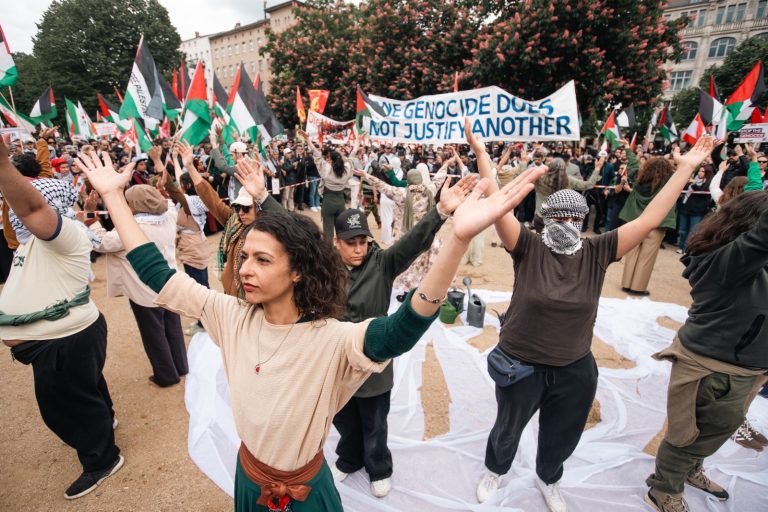
For the first time in years, the Berlin Nakba demonstration was allowed to proceed. After four and a half hours, this year’s Berlin demonstration commemorating the 78th anniversary of the Nakba on May 16 arrived at its destination, Südstern, at 6:30 p.m. in 2025, the assembly authorities prohibited a demonstration; only a stationary rally, also at Südstern, was permitted. This year, around 3,000 people participated in the demonstration. “We had the impression beforehand that the police genuinely wanted the demonstration to proceed peacefully,” Ali C., from the alliance that organized the demonstration, told “nd.” Except for one incident, this was the case. Source: nd-aktuell

140 Berlin primary schools in socially disadvantaged areas will have smaller classes

Teachers at Berlin schools are set to receive relief from their workloads in the future. This also applies to the educators employed at these institutions. Education Senator Katharina Günther-Wünsch (CDU) and the Berlin branch of the Education and Science Union (GEW) signed an agreement regarding a corresponding package of measures, as announced on May 18. According to the agreement, classes at primary schools located in socially disadvantaged areas—among other institutions—are to be reduced in size from 24 to 20 children starting in August. This means that 140 of the capital’s 457 primary schools (a bit more than 30%) will feature smaller class sizes. Source: rbb

News from Germany

No time for evaluation

Family Minister Karin Prien (CDU) is currently restructuring “Demokratie Leben”, a federal program for enhancing democracy. The Greens have criticised the changes. One point is about the timing since the evaluation of the current funding cycle (2025 to 2032) has not yet been completed. Around 140 organizations recently called upon Federal Family Minister Prien in an open letter not to act prematurely, by axing projects she dislikes. Prien justifies the restructuring by citing the allegedly lacking public acceptance of “Demokratie leben.” The 2020-2024 program cycle has received positive evaluations. Source: taz

Germany could miss climate targets, experts warn

The impact of the climate protection program presented by Environment Minister Carsten Schneider (SPD) is likely to be significantly smaller than the government planned, affirms the German independent Council of Experts on Climate Issues (“Expertenrat Klimafragen“). Even if the program were fully implemented, none of the targets set for the year 2040 would be achieved, the independent agency has said. Although the Council of Experts confirms the calculations made by the Federal Environment Agency (UBA) for 2025, indicating that greenhouse gas emissions fell by 0.1% compared to 2024, it believes UBA’s projections for greenhouse gas emissions up to 2030 to be overly optimistic. Source: spiegel

Greens alarmed by child poverty in Germany

According to an international comparative study on child well-being recently published by UNICEF, Germany ranks a mere 25th out of the 37 countries evaluated. UNICEF notes that Germany’s child poverty rate has stagnated for years at a high level of 15%. Considering such persistently high levels of child poverty in Germany, the Greens are criticizing the planned budget cuts to the education and social welfare sectors. This is “scandalous,” affirmed Misbah Khan, deputy parliamentary group leader for the Greens. She also pointed out that “The fact that the Federal Government is doing the exact opposite with its planned cuts amounts to an admission of failure regarding education and social policy in Germany.” Source: n-tv

Germany launches program for civil protection

The Federal Government aims to bolster civil defense and disaster relief capabilities through multi-billion-euro investments, a new command structure, and an improved warning system. According to government sources, the Federal Cabinet is expected to soon approve a corresponding package of measures. Particularly considering the Russian threat, this initiative is intended to fortify Germany’s resilience—running parallel to the expansion of the Bundeswehr. “We are integrating military and civil defense to ensure greater security and resilience,” as the German Interior Minister Alexander Dobrindt (CSU) stated. The plan is quite comprehensive, with the goal of informing the public of all public shelters via “NINA”, a federal government’s digital warning system. Source: dw

“Atlas of Civil Society”: downgrade for Germany

The report “Atlas of Civil Society” is published annually by Brot für die Welt — an organization supported by Protestant churches in Germany. This year’s report focuses on disinformation as a global phenomenon. According to that “Atlas”, only 3.4% of the world’s population lives in truly open societies, and Germany is no longer considered a fully open society amid concerns over disinformation and police brutality. “This year, there has been a 7% increase on societies categorized as having ‘limited’ openness,” said Brot für die Welt human rights expert Silke Pfeiffer. She pointed out to increased police brutality and arrests at protests in Germany as a major factor to its placement in the rankings. Source: dw

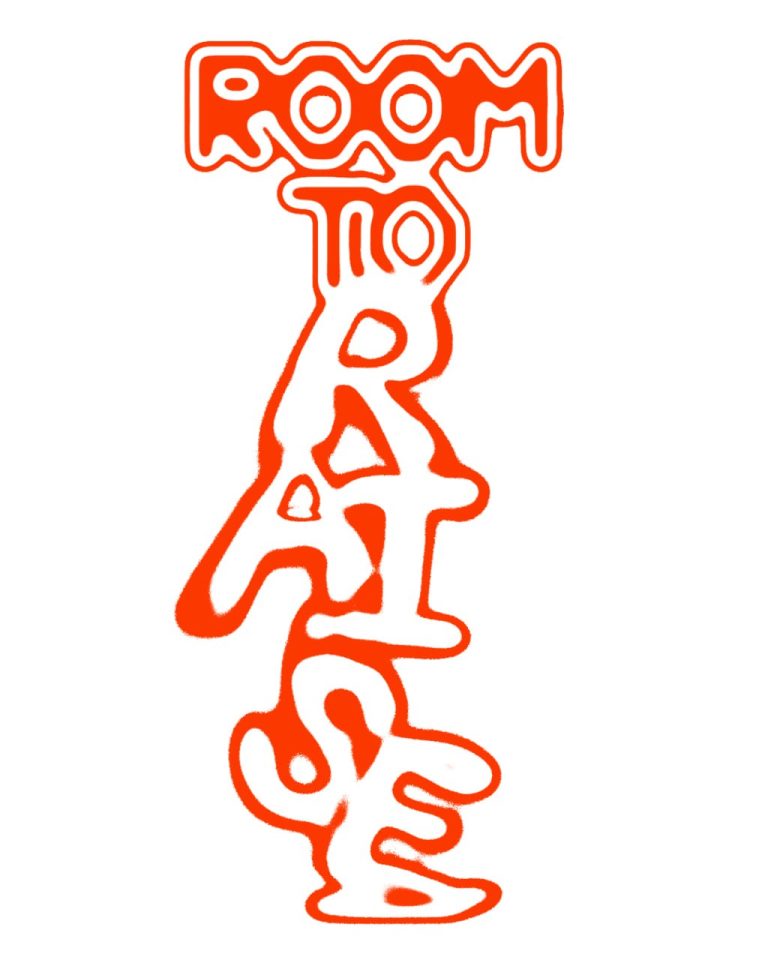
Room to Raise

Monthly community and music events for Palestine

Room to Raise is a monthly community and music fundraising event in Berlin, dedicated to raising money for families and individuals in Gaza. 

These evenings feature live music, readings, dj sets, tarot and shiatsu, with proceeds going directly toward essential aid and emergency relief.

The events take place at KWIA Berlin, a queer ambient listening bar located on Maybachufer in Neukölln, which provides space for a lot of fundraising events.

Our main contact in Gaza is Obaida Al-Ash’al, and his campaign to provide food for families in Gaza. You can read more about the campaign here.

Room to Raise’s next Event is on Tuesday, 26th May.

22 May 1875: Socialist Worker’s Party founding

This week in working class history


19/05/2026

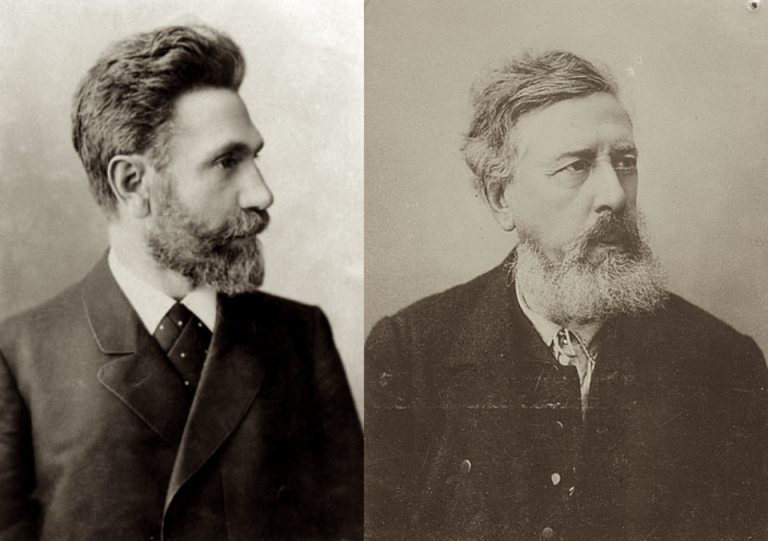
As German politics today seeks to erode workers’ rights, we remember May 22, 1875: a day on which the first “Socialist Workers’ Party” (SAP), was founded in Gotha. A predecessor of today’s Social Democratic Party of Germany (SPD), the SAP was the merger of two workers’ parties, while the driving force behind it were revolutionaries Wilhelm Liebknecht and August Bebel. The consolidation prompted the then Chancellor Otto von Bismarck to enact the “Socialist Law”, an attempt to destroy the labor movement.

Wilhelm Liebknecht, a supporter and associate of Karl Marx, lived most of his life in poverty. The staunch anti-militarist met August Bebel in Leipzig in 1865, where the two went on to found the SDAP four years later. Liebknecht and Bebel campaigned against the Franco-Prussian War and opposed the war loans of the time. Both were subsequently put on trial and sentenced for high treason in 1872 (Leipziger Hochverratsprozess). In the courtroom, which was filled with members of the SDAP, Liebknecht read out the entire Communist Manifesto and other writings in his defense. This trial marked the peak of international attention on Wilhelm Liebknecht and elevated him and Bebel from local figures to national leaders of the labor movement.

In contrast to Liebknecht and Bebel’s SDAP, which adhered to Marxist principles and advocated for a Greater Germany, the other workers’ party, the ADAV (General German Workers’ Association), espoused a “Small German” and Prussian perspective. This difference on the national question was less significant than the pressure of widespread rejection and mistrust from the authorities and in the new Reichstag. With Wilhelm Liebknecht as a motivator, the workers’ parties decided to merge into the SAP, which increased interest in the labor movement.

In response, Chancellor von Bismarck enacted repressive measures in the form of the Socialist Law: a “Law Against the Dangerous Endeavors of Social Democracy”. Bans on and fear of trade unions in the working class have persisted to this day. Currently, the Bundestag is considering abolishing the 8-hour workday and the 4-day workweek—rights that workers had to fight hard for over 100 years ago. The aim today is to wear down the working class by any means necessary, just as it was in 1875 when Bismarck banned all party activities for the SAP. Only the right to vote stayed intact.

The repression forced the party into hiding for 12 years, during which it continued to organize secret meetings even outside Germany, thereby expanding its reach, popularity, and ideology from the underground and, despite the ban, remaining a community. This made it the strongest party in Germany in 1890. That same year, the SAP became the “Social Democratic Party of Germany” (SPD), which still exists today. How much of Liebknecht and Bebel’s ideology remains is debatable. Social democracy means that social equality is a prerequisite for democracy; to this day, there is neither such equality nor a fair distribution of wealth in Germany.

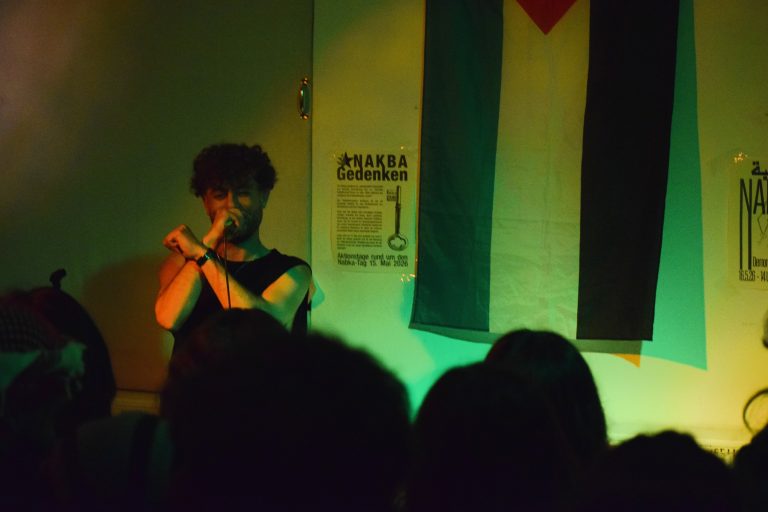
Photo Gallery: Palivision 2026

All photos: Katie O’Connor

All photos: Katie O’Connor

More police violence at the Nakba demo

Repression in Berlin – report #10
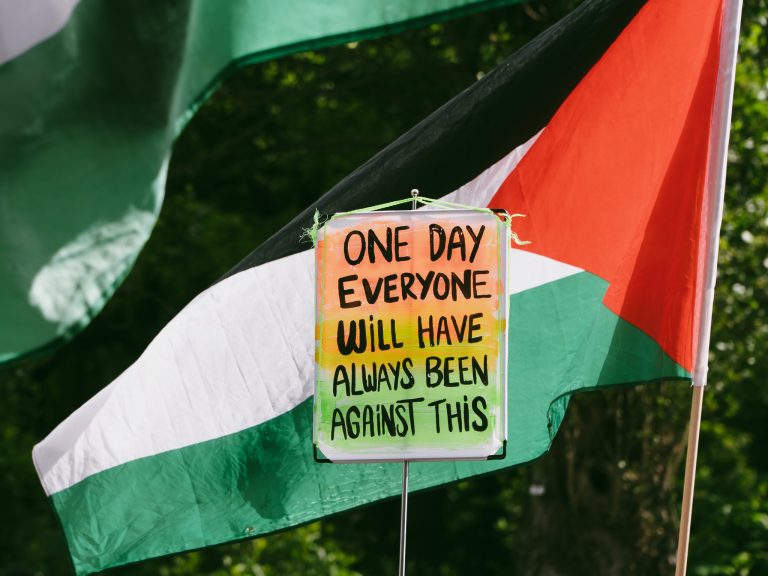
This year’s Nakba demo, held on May 16, 2026, commemorated 78 years since the Palestinian Nakba, the violent displacement of two-third of the indigenous Palestinian population between 1948 and 1950. 

The commemoration of the Nakba strikes a central nerve in Germany, which sees in Israel’s violent settler-colonialism its Staatsräson, or reason of state, in an attempt to whitewash its own genocidal past during the Nazi era. Therefore, Nakba protests have been typically met with massive police violence and state-aligned media campaigns smearing protestors in order to distract from the ongoing violation of Palestinian rights. 

This year was no different. Shortly after the demonstration began marching from Oranienplatz to Wassertorplatz in Kreuzberg, police brutality commenced. Protestors were attacked with tear gas and pepper spray and savagely beaten in the face and body, leading to hospitalizations and severe shock. 

The brutality continued throughout the demonstration, which nevertheless marched steadfastly and bravely to its endpoint. Several times, police stormed the crowd in attempts to disrupt the demonstration and create mass panic. Yet pictures and videos show an experienced and courageous crowd of activists taking care of one another, lifting comrades run over by police from the ground, and shielding those on the ground from the fists and batons of Berlin’s mafia-like police force. The routine nature of such violence would by now lead anyone to (rightly) assume that brutalizing protestors at the Nakba demonstration has become a state-sanctioned outlet for aggression and racism. 

While the well-organized demonstration organizers were able to prevent mass arrests this year, it is important to remember that last year saw yet another attempt by German police to fabricate lies in order to give the state a pretext for more repression. 

After a police officer pretended to have been assaulted by unarmed protestors and shamelessly claimed that they had attempted to seriously injure or even kill him – despite the fact that he was armed and wearing a helmet and protective clothing – the Attorney General took charge of the case, leading to widespread raids and a crackdown in the aftermath of the demonstration. 

Shortly afterward, however, videos emerged proving the police version of events to be false. Left-wing newspapers picked up the story and showed that the officer who had allegedly been attacked had in fact fallen during one of the police’s most brutal beatings of demonstrators. Subsequently, even liberal newspapers – which otherwise barely bat an eyelid while supporting Germany’s genocidal Staatsräson – covered the story, and it became increasingly clear that the state would not be able to sustain its bogus version of events. 

It remains to be seen whether this year will bring similar absurdities. What is certain, however, is that no matter how often the claims of the state and its Israel-aligned henchmen against the movement are proven false, the broader anti-Palestinian narrative in the German mainstream media shows no sign of changing.