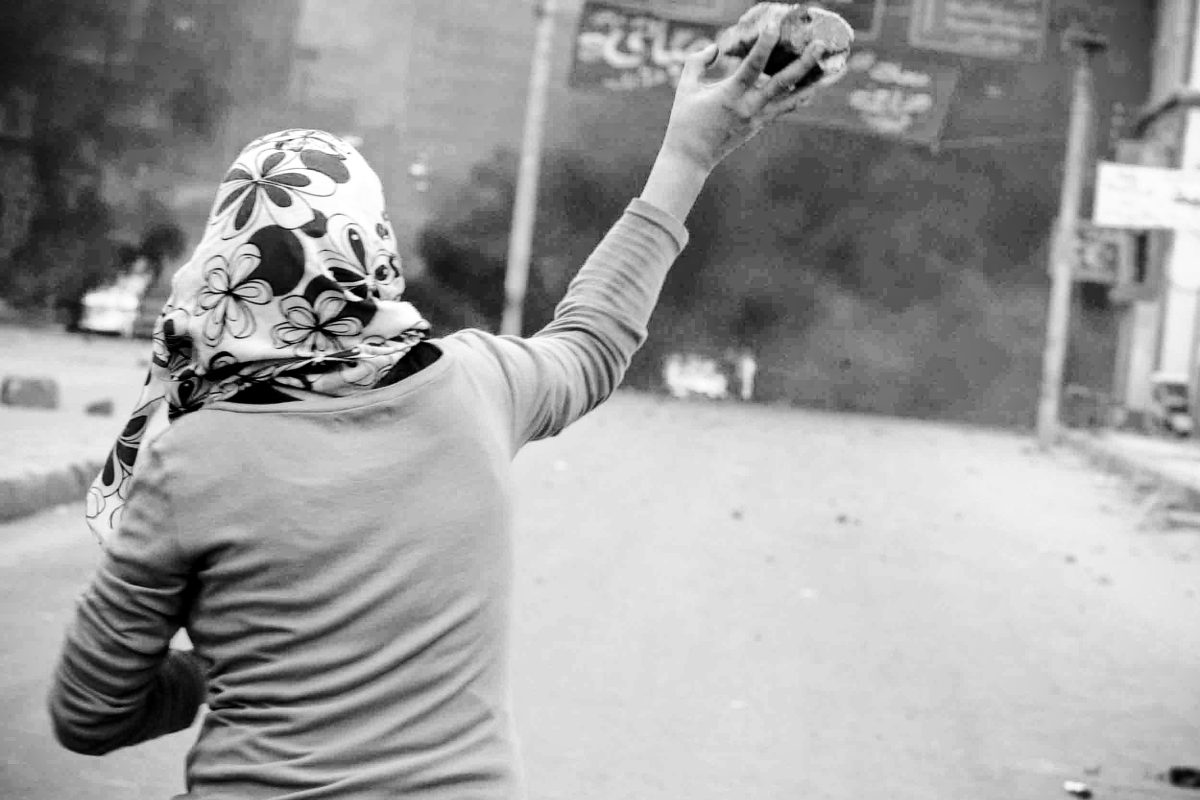
On Sunday, 6th April 2008, textile workers in Mahalla el-Kubra in the Nile Delta struck against rising inflation, food prices and low wages. This led to a heated battle with riot police and security forces. President Hosni Mubarak responded by sending in thousands of troops to crush the so-called “Mahalla Intifada”. The inhabitants of Mahalla responded by two days of rioting. After police attacked a demonstration with rubber bullets, 40,000 demonstrated in a city with 500,000 inhabitants.
The Mahalla uprising had its roots in the Egyptian solidarity movement with the Palestinian Intifada in 2000, which saw the biggest demonstrations in Egypt in a generation. One of the slogans of those demonstrations was: “The road to Jerusalem passes through Cairo”. Demonstrators, many of whom were too frightened of repression to fight for themselves, asked why the Mubarak government was doing nothing to help the Palestinians. At the time, Egypt was Israel’s main supplier of gas.
In 2006, the mainly female workers in Mahalla struck for 3 days after the Egyptian government failed to deliver promised pay rises for public sector workers. One year later, there was another garment workers’ strike across the Nile Delta. Workplace action both hit Egyptian capitalism in the pocket, and was able to protect people protesting against Mubarak’s dictatorship. Before 1990, strikes were unthinkable. They were now a central part of the resistance’s armoury.
Mahalla was a catalyst. Interviewed by The Left Berlin about Mahalla, Egyptian journalist Hossam el-Hamalawy said: “The news and images of the riots got out to everyone, who saw people from Mahalla stamping their feet on Mubarak posters. And this signaled the beginning of the end of the Mubarak dictatorship. Strikes were now happening everywhere, to the extent that newspapers were full of business experts who complained about the “plague of strikes” that had engulfed Egypt.”
The 2008 Mahalla strike was not fully successful, but it was an inspiration. The police were able to suppress the strike, but were powerless against the uprising which followed. A “facebook strike” in solidarity with the Mahalla textile workers helped unite the strikers with radical students. Less than 3 years later, a mass wave of action overthrew Mubarak. We know that the Egyptian revolution is unfinished, but Mahalla helps to show how it could be completed.