The Left Berlin News & Comment

This is the archive template

Red Flag: Why Trotsky still matters, 85 years after his murder

In his weekly column, Nathaniel Flakin honors the Russian revolutionary struck down on August 20, 1940


20/08/2025

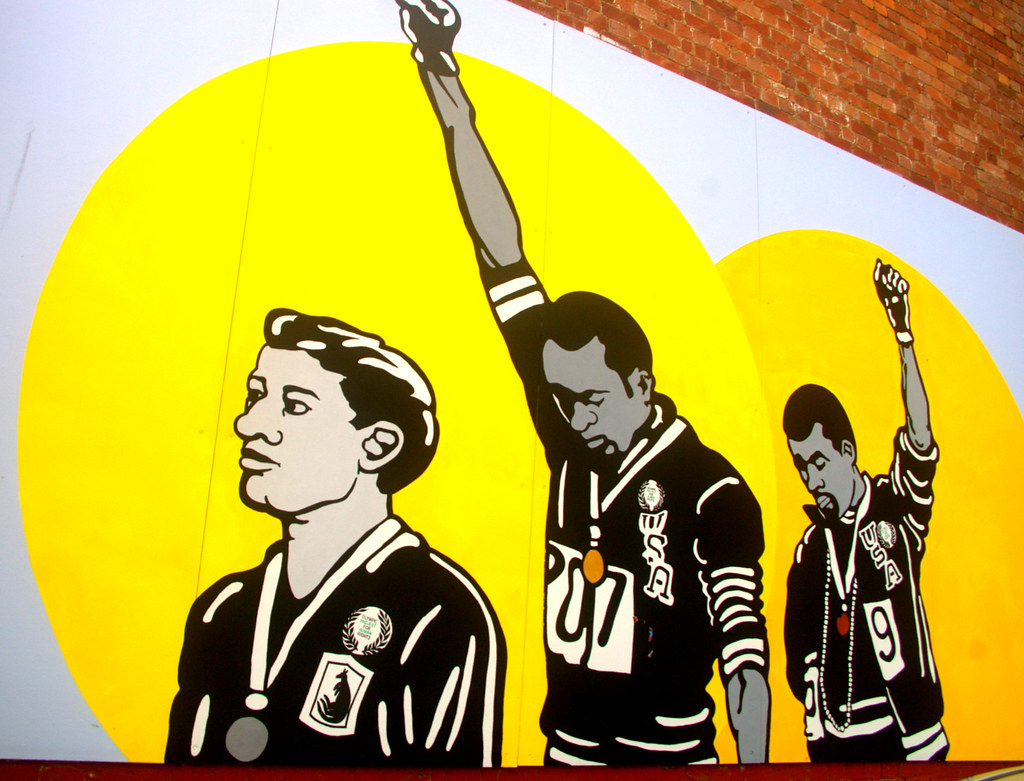
Mural of Trotsky on a wall. The paint is cracked.

85 years ago today, Leon Trotsky was struck down by a Stalinist assassin in Coyoacán in Mexico. As his grandson recalled in 2017, this was not the first attempt on the life of the man who founded the Red Army.

I’ve never understood why anyone on the Left would tell jokes about that ice axe. You never hear “canal jokes” about Rosa Luxemburg or “shotgun jokes” about Malcolm X. 

Some might accuse Trotsky of being a “splitter” due to his struggle against Stalinism. But Malcom X was no less a “splitter,” both from Martin Luther King and from Wallace Fard Muhammad. Rosa Luxemburg was a “splitter” par excellence, breaking with the PPS, the SPD, the USPD, etc. Splits in progressive movements happen all the time—the question is: which side is right?

Conspiracy theories

Dedicated Stalinists might call Trotsky a “traitor,” based on Stalin’s accusations that Trotsky collaborated with Nazi Germany and Imperial Japan. (When Stalin was allied with Hitler, he accused Trotsky of working for the British.)

During the Great Purges, 681,692 people were executed on charges of being part of Trotsky’s counter-revolutionary conspiracy. This would have been, by an order of magnitude, the largest conspiracy in human history—George Bush personally directing Osama bin Laden would have been a piece of cake by comparison. Yet even after many decades, not a scrap of evidence has been found showing that so many communists were secretly working together with their sworn enemies.

Both Germany and Japan were defeated, with their archives ending up in the hands of the Soviets and the Americans. If there was a conspiracy, then the U.S. and Russia have been keeping Trotsky’s secrets for over 80 years. In the Nuremberg trials, Soviet prosecutors interrogated Rudolf Hess, supposedly Trotsky’s contact man in the fascist regime. Thus, Stalin himself must have been part of the coverup too.

A handful of ultra-Stalinists still try to defend the Moscow Trials. The professor of medieval English literature (not history) Grover Furr has written numerous books that claim to prove Trotsky’s guilt. Yet as Doug Greene examines in a forthcoming book, Furr admits he’s never found any evidence besides the preposterous “confessions” of people showing obvious signs of torture.

Failed theories

A more “moderate” Stalinist might acknowledge that more than a few innocent people were killed, but that the murder of Trotsky and most of the leading figures of the October Revolution was a historical necessity to defend the Soviet Union and consolidate socialism.

But as the Left Opposition pointed out at the time, the suppression of all forms of proletarian democracy could only weaken the socialist project. Looking back from a century later, we can say that “really existing socialism”—rather, the rule of a privileged bureaucratic caste—alienated the masses of workers, who made no attempt to defend a system they supposedly controlled.

This is precisely why Trotsky is relevant today. While his contributions to Marxism are too extensive for this short column, many of his ideas were not original: he merely defended ideas first put forth by Marx and Lenin about the need for a socialist revolution to be international, for example, against the failed idea of “socialism in one country.” 

Trotsky was the most important Marxist to study the bureaucratization of the Russian Revolution—a social formation that had never existed before. His analysis of this degenerated workers’ state helps understand these non-capitalist, but also non-socialist societies. 

Trotsky in Berlin

Trotsky never had a strong personal connection to Berlin—his pre-revolutionary years of exile were spent in London, Vienna, Paris, and New York. Yet much later, while he was in exile from the Soviet Union on the Turkish island of Prinkipo (today Büyükada), he wrote piercing analyses of German politics in the late 1920s and early 1930s.

Trotsky’s writings on Germany are well worth reading today, as the Far Right is once again advancing threateningly. The Left Opposition argued for a workers’ united front against fascism, as part of a revolutionary strategy to topple capitalism. Perry Anderson has called these works “the first real Marxist analysis of a twentieth century capitalist state” and “unmatched in the field of historical materialism.”

In the TV series Babylon Berlin, Berlin’s Trotskyists of the 1920s are portrayed as isolated weirdos. In real life, however, the Trotskyist movement was made up of factory workers fighting to unite the whole working class in the life-or-death struggle against the Nazis. After they lost this struggle, Trotskyists remained active in the resistance and in the concentration camps. Even though most cadres were liquidated by fascism, a few survivors rebuilt German Trotskyism after the war––and were joined by many more young people after 1968.

Today, 85 years after one of the most heinous assassinations of the 20th century, is a good day to cast aside silly stereotypes and think about what Trotsky’s ideas can offer us for the struggle against capitalism today.

Red Flag is a weekly opinion column on Berlin politics that Nathaniel has been writing since 2020. After moving through different homes, it now appears at The Left Berlin.

22-26 August 1992: Rostock-Lichtenhagen Pogrom

This week in working class history

In late August 1992, right-wing extremists converged on the Lichtenhagen neighbourhood of the northern German city of Rostock. On the 22nd of August, they first attacked the heavily under-resourced refugee centre housing Roma people who had arrived from Eastern Europe. Upon the evacuation of the refugee centre, the rioters turned to the so-called Sonnenblumenhaus, a large apartment block named for the mural of sunflowers on the side, where Vietnamese contract workers lived.

The gathered right-wingers stayed outside the Sonnenblumenhaus for several days in a celebratory atmosphere, with barbecues and beer, until on the evening of the 24th, when the police suddenly retreated. The crowd then began throwing molotov cocktails through the windows of the lower-storey apartments, and eventually broke into the building. Residents of the Sonnenblumenhaus, along with several journalists, managed to escape through the roof to a neighbouring building. Amazingly, everyone made it out alive.

These attacks took place within the context of numerous other racist and right-wing assaults across Germany at the time, alongside widespread and consistently racist coverage in mainstream German media of the supposed migration crisis at the time. The Rostock attacks themselves were broadcast live on television. The state’s response to this wave of racist violence was not to strengthen protections for migrants, but instead to severely restrict the right to asylum in Germany, which required an amendment to the Basic Law, the country’s constitution.

While the German states and many Germany institutions have been slow to recognise what happened in August 1992, after decades of debate and grassroots organising, the events are now widely recognised as a pogrom. This recognition marks an important acknowledgment of the structural racism that created the conditions for Rostock-Lichtenhagen, while the various arms of the state stood back and watched.

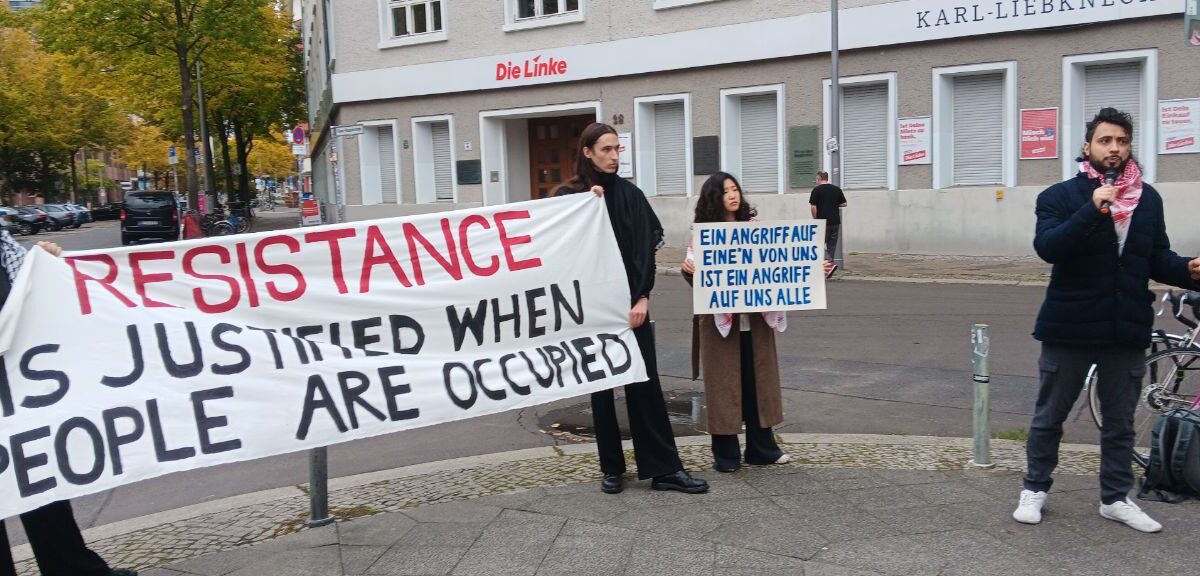
We can no longer tolerate German journalists relativising genocide

Statement on the murder of Anas Al-Sharif

On the night of August 10th, Al-Jazeera journalist Anas al-Sharif was murdered in Gaza City by the Israeli occupation force. The press tent was hit by rockets, as he and his team were live-reporting on Israel’s intense bombardment of Gaza City, shortly after the Israeli cabinet announced renewed military occupation of Gaza City. 

The asassination of Anas al-Sharif and rest of the Al-Jazeera team in Gaza highlights Israel’s intent to suppress any accountability of its genocidal project. 

We commemorate Anas al-Sharif and fellow reporters Mohammed Qreiqeh, Ibrahim Zaher, Mohammed Noufal, Moamen Aliwa, and Mohammed al-Khaldi. We commemorate 212 journalists (according to International Federation of Journalists, of which Verdi trade union is an affiliate) from Gaza who have been killed by Israel since 2023.

Instead of condemning these blatant war crimes, different media outlets in Germany and even the media branches of Ver.di trade union (DJU) started a smear campaign, describing al-Sharif as affiliated with Hamas without evidence. The federal DJU statement defers to the Israeli military assertion without challenging its conjecture. While a moderate critique of the Israeli military’s actions was presented, the large part of the piece smeared al-Sharif’s legacy without evidence. All critical comments on the Instagram official statement (including ours) were deleted, and requests for comments from internal communications were given lip-service.

Even more disturbingly; the regional Berlin-Brandenburg branch of DJU outright endorses the assassination of al-Sharif. In contrast, the DJV (another media union) reported on the facts.

In 2018, the Israeli military assassinated Yaser Murtaja, similarly claiming he was a Hamas militant. Seven years later, the Israeli military has yet to provide any public evidence. More than 200 journalists have been killed in Gaza since 2023. With a military-blockade on foreign journalists from entering Gaza, the only reporting possible is from the brave journalists on the ground who know a target is painted on their back. 

This is a political failure in Germany on multiple levels. Journalists and trade unionists alike should be asking the tough questions, doing diligent investigative reporting and hold power accountable. Instead, many see it as their job to uplift and parrot Israeli military statements without analysis.

As members of ver.di and its media branch, DJU, we can no longer tolerate the DJU relativising Israel’s genocide on Gaza, and attacking our comrades and colleagues who stand up for the people of Palestine with false accusations. The smear campaigns promoted by Jörg Reichel in Berlin play an instrumental role in repressing the Palestine solidarity movement both in Germany and Gaza. Our complicity with genocide should be replaced with solidarity. Our union membership dues should fund protection of journalism, not the glorification of war crimes.

Global Sumud flotilla

Interview with Yasemin Acar, one of the organisers of the new Gaza Freedom Flotilla


16/08/2025

Thanks for talking to us, Yasemin. Can you start by briefly introducing yourself?

Thank you for having me. My name is Yasemin Acar. I live in Berlin, and I’m a human rights activist. I’ve been in different movements, different causes, and the center of all my activism is human beings. Humanity doesn’t depend on religion, background, or ethnicity. I really don’t care. It’s about social justice.

I’ve been an active member of the Palestine Solidarity Movement for two years, but I’ve always advocated for Palestine. 

You were recently on the Freedom Flotilla which was trying to take aid to Gaza. You were intercepted by the Israeli forces, and didn’t get through. Was it worth it?

In the face of a livestreamed genocide, and decades of occupation and misery by Israel––the Zionist entity––I think anything and everything you do for the liberation of Palestinians is definitely worth it. We have to keep trying to break the illegal blockade. We have to keep trying to stop our governments from supplying the Zionist entity with weapons and money and full support. 

This is why we go on demonstrations, knowing very well that the Berlin police could kill someone at any moment. They don’t stop in front of women. They don’t stop in front of children, or the elderly. They simply don’t care. But we still take it to the streets because it’s our duty to keep pushing.

And as you say, this sometimes comes at a personal cost. How were you personally treated by the Israeli troops?

Obviously the treatment wasn’t nice, because they didn’t want us there. Even before they intercepted us, there was a lot of psychological warfare. And when we were finally attacked, they threw a chemical onto the vessel. To this day, we don’t know what it was. 

There’s not much humanity to their behaviour towards people in general, but obviously the Zionists are not going to treat us like they’re treating Palestinians. I don’t know if you realize, but we don’t really go into the way we were treated. We wrote reports for the UN about it. We have spoken to our doctors about it, but I refuse to say much to the public.

Our pain is less than the pain of those who are going through the real suffering. We didn’t go there because we have nothing to do. We went because of everything we see through our phones, and everything that we know through history. We have to focus on why we were there, not on how we were treated. We always have to bring back the attention to the suffering, the human rights violations, and the violations of international law.

You’re not just fighting in Israel and Palestine. You were recently in court in Berlin. What were you charged with, and why?

The fight with the Berlin police is with real state violence, basically pure fascism. I’ve been charged with many things, anything they can find. And it’s not just me, they have charged almost everyone. I was taken to court for the slogan “from the river to the sea”, and I was acquitted. They are now going to take it to a higher court because they were not happy with the fact that the judge actually acquitted me. 

I think it’s important to dive into why they are doing this. Berlin is supposedly trying to fight against antisemitism. And the more they charge us with these things, the more they can say when the real antisemites come: “Well, we tried to do something against it.” Because they messed up in the 1930s and they did not fight against antisemitism, which led to the Holocaust. 

So now they’re trying to change it, but they are targeting the wrong people. And while they’re targeting us and trying to tell us that we are antisemites, they are ignoring what’s really happening with the neo-Nazis in this country, and the rise of the far right. Antisemitism in Germany is not imported.

This is basically to divert attention, and I’m totally aware of it. They’ll use anything to pull you out of demonstrations and to charge you with incitement. They tell you that you’ve done these things, and you know you haven’t, but the police in this country are always right. So no one believes demonstrators when they say: “I have not done this”.

The charges against me are simply ridiculous because they’re based on lies and repression. It’s just a tool for oppression used to silence people. Luckily, the judge in my case did admit that, you know, “from the river to the sea” is not a call for the erasure of Jewish people. It’s a call for the liberation of Palestinians.

I’m sure you’ve seen that the Berlin police recently announced that, although you won your case, and other people have won their cases, they will carry on arresting people for chanting “from the river to the sea”.

Yeah. The police are spreading false information because they say that if you say “from the river to the sea”, you are committing a crime. They say that this is what the prosecutor said, but it is not true. This has to go to a higher judge, and the higher judge has to decide, and this has not happened yet. 

What is the importance of Palestine for Germany today?

At this very moment, it’s important because Germany is breaching international law on Palestine. And this is important because Germany claims to be a democratic country. It’s also important because Germany caused the Holocaust and killed millions of people. They then didn’t want these people here. 

This is the reason why there was a Holocaust in the first place, because not just Germany but also Europe wanted to push Jews into the Middle East. Germany fully supports the occupation, and maybe it’s because they don’t want the Jews back in Europe. Germany is the root of all evil here.

The biggest Palestinian diaspora in Europe lives in Germany, and their treatment here is not good. For many, many years, they’ve been mistreated here, and in the last two years, it’s gotten worse. I see no difference between what Germany did to the Jews and what they’re doing to Palestinians today. Just because they don’t put them on trains and bring them to camps, doesn’t mean that Germany is not capable of doing that.

There are many, many reasons why Palestine is important for Germany. It’s important on a human level. It’s important on a political level. It’s important on an economic level. But we never get to talk about all of these topics. Unfortunately.

We’ve recently seen a slight change in what the German government is saying. The SPD is now for the recognition of Palestine. Even Friedrich Merz has said that maybe Israel’s gone a little bit too far. Are they being sincere? Is this something we should welcome?

First and foremost, it’s lip service, and not for the first time. Every now and then, when Germany realizes that there’s just too much slaughter going on and we won’t be able to hide it, someone says something. Politicians perform some lip service to calm everyone down. This is a tactic.

They have still sent billions of euros worth of weapons. Just a few days ago—you’re a journalist—the German media dehumanized a journalist who was murdered by the Zionist entity. So if something in politics was really changing, this would be reflected in the media. It would be reflected in the demonstrations. But just two days ago, there was so much police violence. 

If what the politicians are saying is true, they would sanction Israel. It’s as simple as that. We should remember these figures because they will go into history books, and I believe that they will have to justify this in some kind of court.

Let’s move from what their side is doing to what our side is doing. This week, Greta Thunberg announced that she’s going to be part of a new and bigger flotilla. What’s your role in the new flotilla?

I’m a steering committee member of the Global Sumud Flotilla. And as soon as  I got back to Germany, I started planning this bigger mission. We said we are going to escalate, because that is what’s necessary. By escalating, I mean we have to bring in more boats. We have to bring in more countries. We have to connect with the struggles of the Global South and mobilize worldwide. And this is exactly what we’re doing. 

There are 44 countries in this initiative, hundreds of people from across the globe, and we will start sailing from different points of the world and eventually meet in international waters. We will have launch events in Spain, in Italy, and in many other ports. We will leave from Barcelona on 31 August, and we will be joined by dozens of boats leaving from Tunis and other areas on 4 September.

Do you think there’s a chance this time you’ll break through the blockade? Or is it more a symbolic act?

We said we have to escalate with more boats and more people, because, even with the Madleen, we always believed that we would get through. 

Yes, the aid that we’re bringing in is not enough. It’s more symbolic to bring the world’s attention to Gaza and the illegal siege, and to show all the illegal things that are happening which breach international law and violate human rights. But the main thing was, always, we will reach Gaza. And if we have more boats, how are they going to stop us? How are they going to stop dozens of boats? They can only stop us if they use the violence that we know they are capable of using. 

We want to bring in humanitarian aid. We want to open up a corridor. And we want to tell the world that we all have to come together and challenge the illegal siege, because we can, in fact, break the siege.

If people want to support you, what can they do?

I always say, you don’t need a boat. Your vessel is your body. Even if people cannot be on the boats, they are still very helpful in pressuring their governments. This is what they did when I was imprisoned. There was so much pressure on the German foreign office that they at some point had to shut down their phones. 

It’s very important that we continue taking it to the streets. It’s important that we talk about the siege, that we talk about the man-made famine, that we demand an end to this, and that the borders are opened and that humanitarian aid gets in. One of our biggest demands still is sanctions against Israel.

We will have encampments around the world, where everyone will be able to get more information about the mission. We will start mobilizing; we will call for demonstrations, while we are sailing, to show the world that we are all together in this. 

We also have a website: https://globalsu mudflotilla.org. On that website, people can apply to be on the boats. You can have dozens of boats, but you have to move them. We are always welcoming more captains and crew. If there are people out there who have experience with boats, if there are captains out there who would like to break the siege with us, please get in touch.

Have you talked to Carola Rackete?

I met her when we were in Malta, when we tried to go with the Conscience, our bigger vessel, and were bombed. She was there to support us. We approached her this time as well. But she’s in the European Parliament, so she has many commitments. She is definitely in support of this flotilla. We are in contact with her.

You talked about encampments. Are encampments going to be planned in Germany?

We will reach out very soon to the world, especially to students, and ask them to come together and create these encampments around the world. Our ground team is going to communicate with all of these encampments worldwide. There will be constant communication between the Global Sumud Flotilla and the encampments.

So watch this space?

Absolutely. Yeah.

While people are waiting to find out about the demonstrations, we’ve got just over two weeks before the flotilla sets off. What can we do to let people know what’s going on?

Watching a livestreamed genocide for two years, we are normalizing a lot of things. We are even normalizing the police violence that we have been experiencing on the streets of Berlin. 

We should never normalize these things. We should be outraged, as on the first day. We have to be loud, continue the advocacy, and call for people to not normalize what’s going on, and not to dehumanize Palestinians. Because even in our activism, we sometimes do that, even if we don’t mean to.

We can fall into this trap of dehumanizing Palestinians, and depicting them only by their suffering, just calling them resilient and heroes. We have to look at the fact that Palestinians just want to be. So how can we help the Palestinians just be? 

We have to continue the advocacy work. We have to continue to pressure our governments. And honestly, at this point, we need more direct action. We need people to engage in civil disobedience on a large scale, because this is not working. 

We’ve been asking for two years, and peaceful protesters are being criminalized by the media, by the state, by the police. This needs to change. We have to push back, and we can’t do that by asking them. We have to tell them that we are the people and that we have a say in this as well, and that we vote the people into power.

It’s not them speaking for us, and it’s not them deciding for us. If we’re not okay that there’s a genocide being committed under our government, then we have to use everything and resist by all means necessary.

Key of Return

Event series x Palestine


13/08/2025

Key of Return is a grassroots event series for Palestine, brought together by fourteen Gazzawi artists, six non-Gazzawi artists, a few cultural organisers and curators, and countless helping hands. At heart, we are a decentralised collective of friends—working like the tentacles of an octopus: each part working independently and engaged with their local communities, yet all connected by a shared core.

We organise events to raise funds for artists and their families in Gaza, but also to build community, to grieve death, and to celebrate life. We are united in our commitment to liberation from all forms of oppression, and we fiercely condemn the ongoing genocide in Gaza.

Refusing immobility, we organise through the strength of community, believing that art is a powerful tool of resistance, memory, identity, and solidarity. We aim to amplify voices that are silenced and, through art, claim existence and shared humanhood.

Our exhibition:

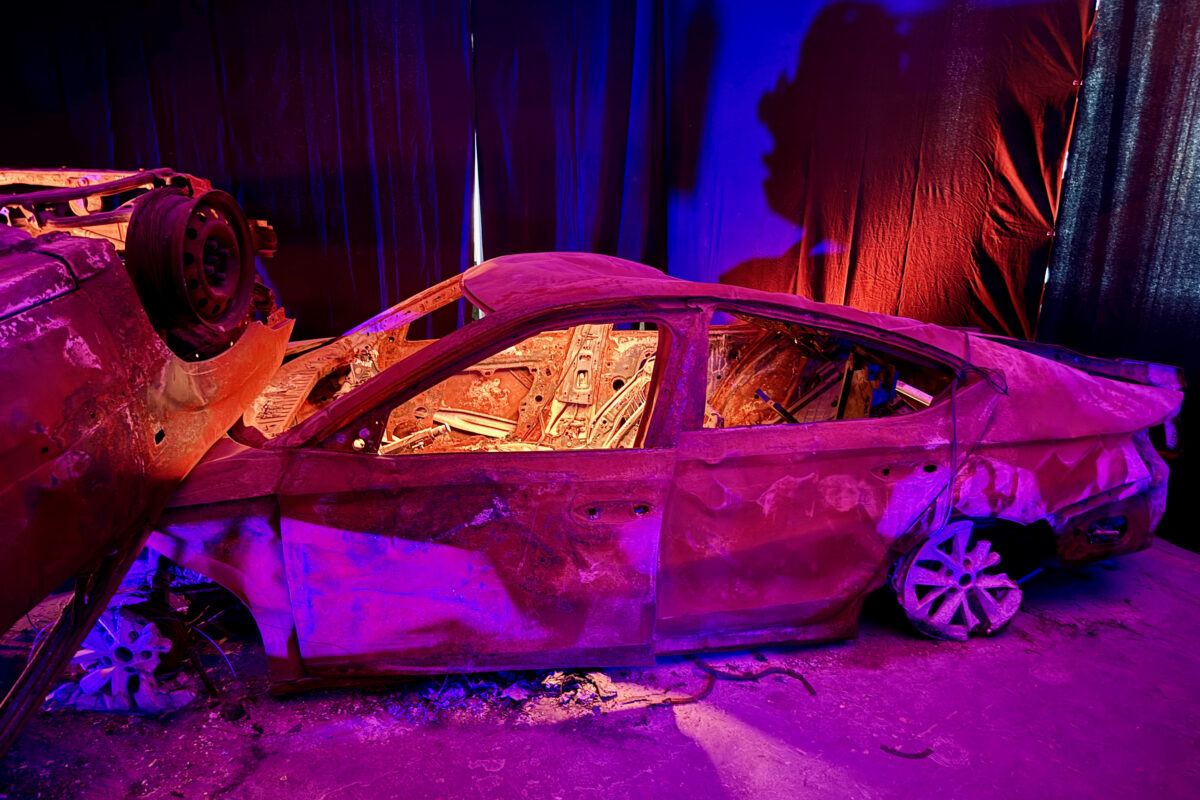
In ‘Ayda Refugee Camp, just outside Bethlehem, every single resident has been exposed to tear gas bombs, often multiple times a week, making it the most tear-gassed community ever documented. In order to get there, you must drive along the separation wall, where breaths are skipped as petrol burns.

One more turn and there you are–the place where Akram Wa’ra and his family greet you: This is my wife, these are my kids, my niece who is visiting. Warm hellos and cheerful thank‑yous before the most delicious feast enters your mouth—just like the Palestinian key turning in the lock of a house on returned land.

Not so long ago, Jerusalem’s neighbourhoods Sheikh Jarrah and Silwan witnessed yet more Palestinian homes expropriated; khalas? You left my hand holding a key without the house it opens! In this exhibition we return to the shades beneath the olive trees, to the scent of jasmine in Jaffa, the mulberries of Ramallah, the flower tatreez of Khalil, the steadfast mountains of Nablus, the sea that cradles Gaza.

In the art you are about to see, you’ll encounter a reimagined homeland—where tear gas bombs are turned into jewellery, where a grandfather’s memories are etched into every corner of the city, where smuggled sperm brings life from within Israeli prisons, where colour becomes an escape from grief, where the landscape is liberated from colonialism, where hibiscus tea returns as oil on canvas, and where “free blood will inherit the land”, once again, in Gaza.

Welcome, everyone—for this is your home. It has no key, for it was never meant to be locked.

Exhibition: Key of Return: 14th – 18th August 2025 in the Glogauer Art Gallery, Berlin.

More information on Instagram.