The Left Berlin News & Comment

This is the archive template

Not such a bad year after all – 2020 in Film

Despite the closure of cinemas for several months, 2020 was a surprisingly good year for films. There was very little to moan about, if we ignore Sofia Coppola for a moment.


28/12/2020

For the last couple of years, I’ve been compiling end of year lists of the best and worst films for my Berliner film blog. In comparison with previous years, the results for 2020 were surprisingly good. Normally, I list the 20 best films and the 10 worst, but to be honest – at least if we just take the 157 films that I actually saw [yes, I know] – I didn’t see 10 bad films.

I’ve already written about why I think that one of the unexpected side-effects of lockdown was a much more diverse cinema programme. This article looks at some of the films we got to see as a result, as well as fulfilling my childish desire to make lists.

The quality is so great that there’s no room in my Top 20 for Armando Iannucci’s marvellous colour-blind adaption of David Copperfield or the tremendous Georgian gay ballet drama And Then we Danced. Both of these – and many more – are well worth a visit.

There are 8 US-American films in the list, as well as 4 from Germany, 2 from France and one each from Algeria, Austria, Spain, Sweden, Syria and the UK. 8 are directed by women and 9 by Black directors, which is a promising indication for 2021.

Without further ado, here is – from best to not quite as good – my top 20 and, er, worst 2 films of 2020. In case you’re mad that something obvious is missing, other opinions are allowed. Besides, I’m only counting new films which I first saw in 2020 in a cinema or as a pre-release stream.

1. Les Miserables (not that one)

Also known as Die Wütenden in Germany, the film unluckily came up against Parasite for the 2019 Best foreign film Oscar. Even though the Oscar jury untypically made a good call with Parasite, I still think that this one is even better. An everyday story of life in the banlieux for Black kids and their regular conflicts with the racist police. Les Miserables has been deservedly compared to Matthieu Kassovitz’s superb La Haine, which celebrated its 25th birthday this year. The fervent anger sustains it right to the great final scene.

2. White Riot

This superb documentary about Rock Against Racism was snuck out to insufficient praise as COVID-19 hit, but we were treated to a sneak preview at the Berlinale. White Riot opens by reminding us how exceptionally racist 1970s British television was, before focusing in on the musicians who tried to change this and quell the growing Nazi threat. It receives bonus points for pointing out that these musicians were not automatically progressive and that hard arguments by good activists were also necessary. All this with by far the soundtrack of the year.

3. Nardjes A

This was another film which made a hit at the Berlinale (with me at least), but then got lost in the subsequent COVID-19 programming. A day in the life of a female activist in the recent Algerian uprisings. Nardjes A shows that social upheavals do not contain the order ascribed to them in some films. Everything is chaotic, and a diversity of opinions is shown as the participants try to make sense of what’s happening. This started out as a documentary about something else entirely, and allows director Karim Aïnouz to find himself swept along by historic events.

4. Cocoon

Cocoon is a touching tale of first love, where Nora’s “normal” teenage problems are intensified because the love of her life is (a) unpredictable and (b) a girl. There is a metaphor going on about Nora’s pet caterpillars emerging from their cocoon but the story of working-class, multi-cultural life transcends the usual clichés. It’s a life-affirming film, but not short of deep heartache. In other words, it treats a gay romance exactly the same way good film treats heterosexual young love. It’s a shame that this is exceptional, but this is a rare gem.

5. Never Rarely Sometimes Always

It’s a simple enough story. You’re pregnant and you live in a conservative town where it’s impossible to get an abortion without your parents’ consent. The only person you can trust is your cousin, so you go together to New York to deal with your problem. The simple premise addresses an everyday crisis which still affects many girls. And the film approaches this traumatic event with inconspicuous panache. The strength in Never Rarely Sometimes Always is that it never claims to be extraordinary. This is what normal life is like for many people.

6. Horror Noire: A History of Black Horror
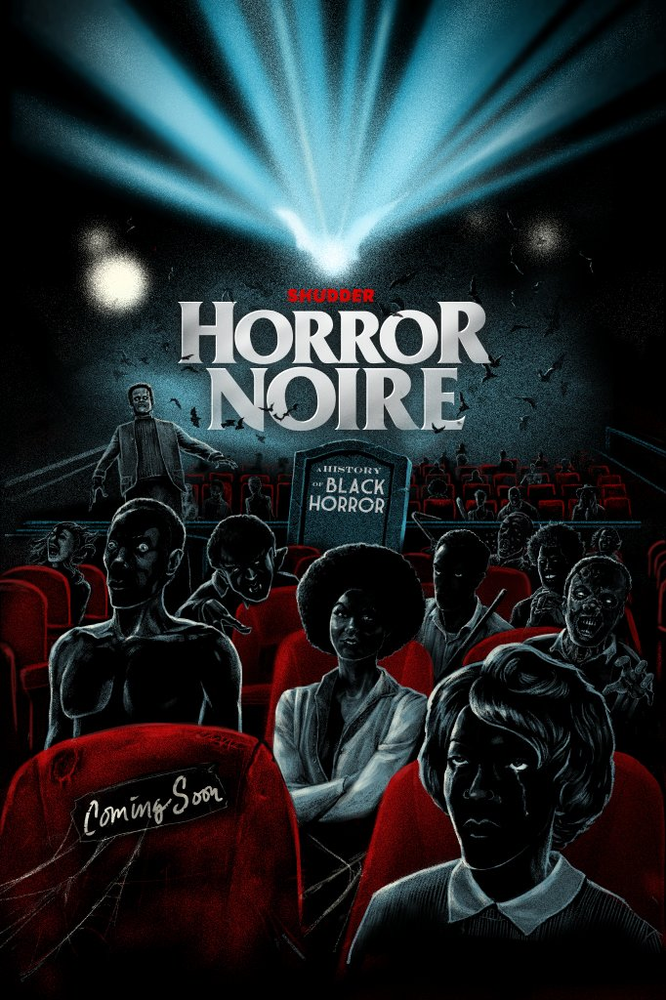
Horror Noire is an absolutely fascinating documentary about the history of Black horror films. From the Klan-loving Birth of a Nation over a century ago, to Jordan Peele’s Get Out, we are shown exactly how the depiction of Black characters in film reflected their status in society. Night of the Living Dead is lauded as being maybe the first film with a Black character with whom an audience could unequivocally identify, but in many later horror films, the Black character was still always the first victim. This offers a subtle and sympathetic analysis which contains a lot more worth watching.

7. Knives Out

A murder mystery is played for laughs à la the great Murder by Death. But there’s also plenty of social commentary, and a message of contempt for the idle rich in between the jokes. Daniel Craig has a great deal of fun hamming it up as strangely accented detective Benoit Blanc, but this is very much an ensemble film, which delights us in showing us that no character’s point of view is entirely accurate. I went again when it was shown in Summer open air cinema and it was even better second time round.

8. For Sama

This essential documentary focuses on bombed out Aleppo, and its inhabitants who are still fighting to survive. Sama is the baby daughter of co-director and narrator Waas al-Kateab. This is the grim story of the first precarious year of her life. Al-Kateab’s husband is a doctor, so we see plenty of scenes of valiant hospital workers struggling to keep their patients alive in between life-threatening power cuts. There are occasional moments of joy, but this is a sickeningly accurate document of desperate times which still affect people trapped inside Syria’s ruins.

9. Advantages of Travelling by Train

With a poster like an Yves Tanguy painting, this absolutely batshit crazy film may worry you that its going to be one of those self-referential “post-modern” films that smugly celebrate their own weirdness. It may well be to some people, but I loved its crazed logic. It’s about story-telling by narrators who are not to be trusted even though their tales have their own perverse logic and are often hilarious. This is one of those films where trying to explain what happens diminishes its lustre. It’s best just to go and watch it for yourself.

10. Where no one knows us

This remarkable Austrian film follows the everyday life of a pair of Chechen refugees. After their mother is taken into a psychiatric hospital, they go on the run, but are eventually caught and fostered out (separately of course) to well-meaning liberal care givers. Their new guardians have good intentions, even if they are insufferably smug, and the film treats them with critical understanding. But it never loses sight of the poor kids who are the real victims of the piece. A bleak film of misplaced hope which still has space to appreciate its few moments of joy.

11. Harriet

I’m sure I’ve read at least one lefty review condemning Harriet for some minor historic inaccuracy, but that would be to seriously miss the point. This is an inspirational story of Harriet Tubman, the one time slave who was at the forefront of the liberation movement. The film hit Berlin screens just as international demonstrators were taking matters into their own hands and tearing down colonial statues. Harriet shows people who were not just victims of the colonialists, but were also active in driving them out. Religious undercurrents permeate the film, which may scare off some people, but you shouldn’t change history.

12. Queen and Slim

Queen and Slim is a film that never sinks into cliché, although we’ve experienced much of the plot in many other films, not least Bonnie and Clyde. To a degree the freshness comes because both characters are Black, and in a(nother) year of Black Lives Matter, God knows we need more films which speak of the Black experience. What also makes Queen and Slim spectacular is the great directing and beautiful filming by creator of music videos turned first time film director, Melina Matsoukas. She should go far if she avoids being sucked into making soul-destroying franchise films.

13. Varda by Agnès

Agnès Varda died in 2019, but her final film didn’t reach Berlin till 2020. It’s a “Best Of” which shows scenes from her previous films, accompanied by on-screen commentary by the great director. Varda’s presence is a significant plus, as the screen is infected by the mischievous woman in a pudding bowl haircut. Is this her best film? Probably not, but we are inspired to look through her back catalogue for ourselves, and it is a fitting tribute to a groundbreaking artist who will be sorely missed.

14. Berlin Alexanderplatz

Burhan Qurbani reimagines Alfred Döblin’s classic novel in modern Berlin, and hero Franz becomes the refugee Francis (later Frank as he “integrates” into German society). Although the film looks sumptuous, Berlin is shown in all its sordid detail, oozing with corruption and racism beneath the glossy surface. It all looks like a sleek music video, but a strong plot and a cast of great actors provide the film with some serious and astutely observed content. The lavish film almost justifies its running time of over 3 hours.

15. Waves

Often judging a book by its cover is perfectly fine – in the absence of other information, what else is there? And yet sometimes, a shiny Oscar-bait trailer hides a film with much more depth than you were expecting. The intelligent film tells the story of two young black siblings negotiating life, and shows how many young people manage to fuck up their lives because they aren’t offered any serious alternatives. The flawed individuals on screen hold our hope before showing they are, ultimately, only human and thus prone to occasionally make really stupid decisions.

16. Jean Seberg – Against All Enemies

This could have very easily become a vanity project for star Kristen Stewart, but ends up as a powerful documentary about the “Breathless” star who was driven to mental instability after she was bugged by the CIA. Seberg felt genuine support for black militants, but as a rich white woman she would always stand on the edge of their struggle. Director Benedict Andrews does make one false step by trying to create a sympathetic CIA agent with whom we are asked to sympathize, but this is a minor diversion in an otherwise excellent film which tells an important hidden story.

17. Ask Dr Ruth

What seemed like it would be a conventional documentary turned out to be a fascinating watch. This is mainly down to the extraordinary history of the tiny sex therapist. In between normal interview footage, we see a backstory of fighting for abortion rights and the stigmatization of AIDS patients, being part of the transportation of children fleeing the Nazis and a terrible childhood in a Swiss school which did little to hide its contempt for the Jewish refugee schoolkids. I’d thought Dr. Ruth was just an overhyped media personality, but she really does have a story to tell.

18. Regeln am Band bei hoher Verschwindigkeit

When Yulia Lokshina started secretly filming workers in German slaughterhouses she could have hardly anticipate that they would become the centre of a scandal about insanitary working conditions, which helped cause the quick spread of the Covid virus. Tales of unsafe workplaces play alongside a school group rehearsing Brecht’s St Joan of the Stockyards. Meanwhile, Eastern European workers are played off against each other to the detriment of everyone’s health. The documentary has no obvious solution, but shows us a desperate situation which must be changed.

19. I am Greta

What must it be like to be Greta Thunberg? This documentary keeps a certain distance but offers us some clues. We are presented with a portrait of a strong-willed girl who is determined and deeply convinced of the righteousness of her cause, but are also often reminded that no girl her age should come under such scrutiny. This is very much not the story of a superhero, but of a vulnerable and remarkable young woman who would rather be at home playing with her pets than in the role which has been thrust upon her. It is an appropriate testament to an inspiring person.

20. Against the Tide

Against the Tide presents the remarkable story of Thomas Walter, who was accused of blowing up a deportation jail and fled to Venezuela. After staying underground for nearly 25 years, he suddenly applied for political asylum. Soon he was writing songs with the much younger refugee activist Pablo Mal Éléve. Walter’s niece’s father Sobo Swobodnik went to visit him and to film his story. This is a tale of political hope and disappointment, of a new career making music and of never giving up. It is a fascinating documentary about a life which should be much better known.

And the films to avoid

In all honesty, there were a few films this year that didn’t really do it for me, but only two that I would actively advise people not to see. In reverse order, here they are.

2. Divine

This utterly predictable Rom Com gives director Jan Schomburg plenty of time to bang on about why he thinks that religion is stupid. As if anyone cares what Jan Schomburg thinks. For what it’s worth, I’m a convinced atheist, but I feel that this kind of smugfest does nothing to bring the argument forward. The sentimental heartstrings are pushed to the max with brain tumours and sexy nuns and everything, but none of it runs remotely true. The low point is the assumption that men kissing other men is hilarious. What decade are we in again?

1. On the Rocks

Some critics seem to have a sexist need to diss Sofia Coppola just because she’s a female director. Such people can’t explain why the Virgin Suicides was great and Lost in Translation was flawed but still well worth a view. Having said this, On The Rocks is privileged, self-indulgent pants. A woman and her rich art dealer father drive through New York passing through the Arty venues to which people like Uz would be immediately denied access. It’s not so much that the film celebrates its exclusivity, more it just doesn’t seem to realise that this is not how most of us lead our lives. Bill Murray’s avuncular charm has saved many terrible films, but this one’s too much for even him.

Yes, the Ausländerbehörde is a racist institution

Allow me to expat-splain


26/12/2020

Germany’s racist history

Germany is a multi-layered, diverse country with all the sorts of regional charms, historical antagonisms, city feuds and in-group/out-group preferences of any other. But it is also unique and has different traditions and traumas to other countries. As someone who’s lived here a decade, I discover new idiosyncrasies about this place all the time. What I’m saying is that Germany is special, and deeply weird, in ways that aren’t immediately apparent when you first move here.

And yet, there is something it shares in common with other European countries with a history of colonialism, and even with my home country the United States, and that is a tradition of everyday and institutional racism.

It seems it is tempting for some Germans to negate this fact, saying that Germany’s unique history means it has a different set of issues to deal with. In a recent article (“Expat-Splaining”, 12.3) the editor of the English edition of Berliner Zeitung (and one of my former employers) argued that Americans who are trying to “import” discussions about racism to Germany are guilty of “cultural imperialism,” trying to bring “identity politics” where it doesn’t belong. This argument is incredibly off, and the latest in a long line of efforts to erase a vibrant history of exchange of racist ideas and practices between the continents and foist responsibility on to the other.

In fact, racist ideas were born not in the US but in Europe in the 1500s, as explored in the book Stamped from the Beginning by historian Ibram X Kendi. Racism against Africans and Slavs was theorized in Europe and used to justify early colonialism and the origins of the transatlantic slave trade – activities Germany enthusiastically and lucratively participated in. Later on, Germany practiced genocide on the basis of burgeoning racist ideas on more than 60,000 Herero and Nama people in Namibia, an act for which they still have paid no reparations and “eerily presaged” the methods used in the Holocaust years later.

When Hitler rose to power, he searched for examples of segregationist practices that would justify his set of Nuremberg Laws that outlawed various interactions with Jewish Germans. As outlined persuasively in the book Hitler’s American Model by US law professor James Whitman, Hitler’s researchers returned with an extensive catalogue of American race laws that persuaded him that the international community could raise no issue with the Nuremburg laws without being hypocritical about the US’s explicitly eugenicist legal traditions. This was not imperialism, but inspiration.

The idea that this interplay between Europe and the United States of developing racist ideas, laws, and conspiracy theories has suddenly come to a stop is utterly belied by the current immigration regime based on fear and racism. In 2015, European right-wing racist conspiracy theories about Syrian refugees being a Trojan Horse for ISIS terror cells traveled directly to the United States, where individual state governors called for their states to be removed from the US refugee resettlement regime and a young upstart you might know by the name of Donald Trump ran a presidential campaign promising a Muslim ban, constantly referencing Germany, which he said has been “destroyed” by immigration. Shortly thereafter, the AfD rode into parliament echoing many of the same arguments Trump has made (even using his same PR firm to craft campaign slogans). Keeping up, Germany’s fatuous interior minister changed the name of the ministry to “Homeland” (like the HBO show with Claire Danes!) and said in an interview that Islam doesn’t belong to Germany, the latest in a long line of imaginary racist ideas pinging back and forth seeking to exclude and delude to eek out a small political advantage. (In fact, there have been Muslims in German territory since before the country was unified as a state – you can visit proof of this in Berlin.)

The point is, Germany is unique, but not so unique that they only have occasion to discover racism if it’s pointed out by an immigrant from the United States. People who have allegedly lived here for years can’t have missed the political slogans like Kinder Statt Inder (“Children instead of Indians” CDU 2000), Wer betrügt, der fliegt (“Cheaters have to leave,” a reference to racist stereotypes about Roma, CSU 2013) and of course the litany of racist slogans, policies and scandals by the largest opposition party in the Bundestag, the AfD. I suppose a semi-conscious person cannot also miss the endless parade of nazi scandals plaguing the police, Bundeswehr, BAMF and more (a recent scandal had police exchanging doctored pictures of Black refugees in ovens).

Racism in the Ausländerbehörde

Even someone who has just moved here has occasion to find this out, because the one thing all we (non-EU) foreigners have in common is a trip to the place where the institutional racism that troubles Germany’s stable bureaucracy is most utterly apparent, the foreigner’s office, or Ausländerbehörde.

The Ausländerbehörde, (now relabeled in a friendlier tone “Landesamt für Einwanderung”) is a truly wretched institution that has caused deep despair for thousands of people. It is a place where dreams go to die and relationships are forced to end. It is place of long, anxious waits in the cold at dawn and then in rooms stinking of desperation, diapers and tears. It’s a place where the testimony of abusers is decisive over whether their ex gets to remain in the country. It’s a place where petty, vindictive office workers casually destroy lives. And above all, it is a place where institutional racism and xenophobia are on full display.

Anyone who has ever been there knows the drill. You go there at 5am (or earlier) because there are not appointments available for 8 months. You bring every document you have ever possessed, plus ones that don’t exist in other countries, like a document stating you aren’t married. (Apparently in Germany this document is issued fresh daily until the day you marry, other countries just aren’t as organized.) You bring a wad of cash (they won’t tell you how much in advance) because there is no ATM on premises, they don’t accept cards, and if you leave the building you forfeit your place in line. The clerks aren’t allowed to speak any other language than German to you, supposedly because you might be able to sue them if they say something wrong in non-Deutsch. There is no concern about the legal implications of forcing people to fill out documents in a language they don’t understand, or accidentally deporting them because of a linguistic misunderstanding. Oops! If you do speak German then they speak twice as fast and refuse to explain any bureaucratic terms that are over your head. This language issue is made worse by the fact that they so frequently get the law wrong, and jump to the conclusion that they can deport you for things like separating from your partner or not having an international marriage certificate translated. For this reason, one of my friends who is a lawyer always prints out the relevant laws to help the clerks do their job. Other people without a law degree might not be so well-equipped to deal with this.

Above all is the overall sentiment, reiterated in every interaction, that the employees of the Ausländerbehörde are just waiting for the opportunity to make you leave, rooted in a deep-seated belief, reinforced by the law, that foreigners only arrive in this country to take from the real Germans, and that the darker your skin color is the more likely that is true.

I am extremely confident in this assessment and would never be ashamed to state it publicly: the Ausländerbehörde is a prime example of institutional racism.

Listen up, Germany

I point that out because my comments about the Ausländerbehörde in a private facebook group for Americans became the basis for the article mentioned above about how American imperialists import ideas about racism and identity politics to Germany and then tirelessly and condescendingly lecture Germans about these completely foreign concepts.

While this whole set up raises a lot of interesting questions about journalistic practices, it raises an even more interesting question: are some Germans really not aware that the Ausländerbehörde is a terrible, racist pit of despair?

It’s a real possibility. Unlike the political slogans I mentioned above, most Germans have no reason to encounter the Ausländerbehörde unless they are helping to translate for someone there or have married a person from out of the country. In those circumstances, they are probably aware. (Actually, it’s more obvious if you understand German than when you don’t, because you pick up on racist comments by guards and clerks). But other than that, why would Germans know? And if foreigners complaining about their experiences in Germany is considered by some to be imperialism, then we are in a real pickle about how they can ever find out (barring that they join a private Facebook group to listen in.)

So below I’m just going to leave a few German sources here about how racist the Ausländerbehörde is, for people who prefer their lecturing about racism to come exclusively from people of their own nationality in order to avoid “woke imperialism”. They cover incidents of racist violence, racist statements, nazi sympathies, racism against co-workers, and more. They report how people in Germany experience the Ausländerbehorde as a “place of fear” and how people from certain countries are put under “general suspicion” on the basis of stereotypes. Even co-workers aren’t safe from racism at these offices. These are not disconnected, isolated incidents but endemic to the institution that exists to enforce immigration laws that are increasingly exclusionary and increasingly disregard international law.

I’m not sure what a big difference it makes to hear it in German, but then again, I’m always learning new things about this country. Maybe it’s a tradition that to acknowledge the racism that takes place in your name you need to have someone say it several times in German. I know it’s annoying to stick on this point, but foreigners like me live here, and have opinions. And look at it this way: if foreigners won’t tell Germans what goes down at the foreigners’ office, who else will?

And surely if they knew, they would want to change it?

Further reading

Review – Rebellious Daughters Of History by Judy Cox

How did you spend lockdown? Judy Cox wrote a series of pen portraits of largely unknown rebellious women. At first, Judy’s essays appeared on her Facebook page and theleftberlin.com. Now they’ve been released as a book. Arlene Finnigan reviews.


25/12/2020

Work on bravely, GOD’s own daughters!
Work on stanchly, GOD’s own sons!
But till ye have smoother waters,
Let Truth fire her minute guns!”

(From A Song For The Workers by Eliza Cook)

There has been a spate of books about radical women through history published in recent years, several of them featuring Maggie Thatcher, which feels a little like praising Rose West for being a pioneer in the male-dominated field of serial killing. Thankfully Rebellious Daughters Of History by Judy Cox is a upgrade on these.

The book evolved from a series of blog posts during lockdown, with the only criterion being that the women profiled looked to militant collective action rather than Parliament or Congress. The style makes the book really accessible – you can easily dip into it and read a couple of mini biographies when you have a few spare minutes. The variety of backgrounds of the women highlighted, and the historical and geographical range that Cox draws on, is impressive.

There are suffrage campaigners such as Adelaide Knight and Sylvia Pankhurst; abolitionists such as Sarah Parker Remond and Frances Harper; radical artists such as Kathe Kollwitz and Nadezhda Udaltsova; and revolutionaries from Russia, France, Haiti, India and Ghana. Some, such as former Black Panther Kathleen Neal Cleaver and Elaine Brown, are still active today.

The collection is also truly intersectional, focusing on the economic roots of women’s (and men’s) oppression, and highlighting the racism in white-centric feminism. Beulah Richards’ poem, A Black Woman Speaks, for example, describes how white women play a role in oppressing women of colour.

Other lockdown posts have been included and the pen portraits are interspersed with poems by Lord Byron, William Blake and Bobby Sands, among others. It’s an excellent collection, and will encourage you to read further and learn more about these remarkable women.

We are trying to order some copies of Judy’s book to sell in Berlin. For more information, please contact us at theleftberlin@yahoo.com

The Bundestag and Israel Boycott – leading cultural institutions respond

Just over 18 months ago, the German Bundestag passed a resolution condemning the BDS (Boycott, Divestment, Sanctions) movement as “antisemitic”. It is non-binding and even the Bundestag research service has called it unconstitutional. But it has already had serious consequences and provoked protests from unexpected sources


24/12/2020

In early December, a group calling itself the working group’ Initiative GG 5.3 Weltoffenheit’ (‘open-mindedness’) contacted the German press, promising a “joint statement by all cultural and scientific institutions taking part on diversity of opinion in public debate in the light of growing racism and antisemitism in society”. This message sounded worthy, but not particularly spectacular or exciting. [1]

The press release was followed on 10th December by a press conference jointly held by around 20 German cultural institutions. It was an impressive list of organisations – from the ‘Deutsches Theater’ who hosted the conference, to the ‘Goethe Institute’ and the ‘Centre for Research on Antisemitism’. This was, Itay Mashiach notes, “a group of senior figures whose influence in the German cultural world cannot be over-estimated” [2].

From the opening remarks, it was clear that this was no ordinary press conference. A “plea for open discourse” was read out calling for “an active commitment to heeding a diversity of Jewish positions and an openness toward non-European perspectives.” [3]

The statement said that “the application of the parliamentary BDS resolution by the Bundestag is cause for great concern. We reject the BDS boycott of Israel since we consider cultural and scientific exchange to be essential. At the same time, we consider the logic of counter-boycott, triggered by the parliamentary anti-BDS resolution, to be dangerous. By invoking this resolution, accusations of antisemitism are being misused to push aside important voices and to distort critical positions.” [4]

In any other country, these words may not sound particularly radical – in the German context they were dynamite. I will explain the importance of the Bundestag resolution, but first let me relate some of the speeches made at the press conference.

What was said at the press conference [5]

The first speaker was Hanno Loewy, director of the ‘Jewish Museum’ in Hohenems, Austria. Loewy said that many people believe that Israel is a result of colonialism – a belief that he finds one-sided but legitimate. He went on to say that currently Jews have a Right of Return which is forbidden to Palestinians and that Israeli-Palestinian dialogue groups are victims of the campaign against BDS.

Loewy was followed by Stefanie Schüler-Springorum, the head of the ‘Centre for Research on Antisemitism’ based in the Technical University Berlin. Schüler-Springorum said that the IHRA (International Holocaust Remembrance Alliance) definition of antisemitism, which is increasingly being deployed and recommended by institutions, is being used to stifle criticism of Israel. Although the definition has now been rejected by its own author.

Schüler-Springorum’s fear that the Bundestag resolution excludes open debate was shared by Johannes Ebert, the director of the ‘Goethe Institute’. Thomas Oberender, Intendant of the Berliner Festspiele showed how this works in practise by noting that artists from Arab countries have been not able to play at the PopKultur festival. Oberender went on to warn against confusing ‘Islam’ with ‘Islamism’.

Susan Neiman, the director of the ‘Einstein Forum’ in Potsdam was introduced as a Jewish philosopher. She explained that she has taken German citizenship after Donald Trump was elected US president. Neiman noted that Albert Einstein had called on Israel to protect the rights of Arabs and had called the Deir Yassin massacre “fascist”. She noted that the BDS resolution would mean that neither Einstein nor Hannah Arendt would be able to be invited to speak at a meeting in Germany.

Two speakers said that the atmosphere reminded them of their youth in the DDR. Others noted that many supporters of BDS are victims of colonialism in the Global South like Desmond Tutu and that the Bundestag resolution stood in the way of diverse and free art. Rounding off, Thomas Krüger, President of the ‘Bundeszentrale für politische Bildung’ (Federal Agency for Civic Education) said that “Freedom of Art is not possible without open-mindedness.”

This final statement (in German “Kunstfreiheit ist ohne Weltoffenheit nicht zu haben”) was reflected in the name of the organisers of the press conference, the Initiative GG 5.3 Weltoffenheit. This name refers directly to Article 5.3 of the German constitution (Grundgesetz or GG), which says that “art and science, research and teaching are free.” [6]

What’s it all about? The Bundestag Resolution

The Bundestag resolution criticized in the press conference was passed on May 17th, 2019 under the name Resisting the BDS Movement with Determination – Combating Antisemitism. Shir Hever described this as a “non-binding parliamentary resolution, adopted by a large majority on May 2019, which condemned the ‘Boycott, Divestment and Sanctions’ (BDS) movement targeting it as “antisemitic”. Hever also noted that the resolution compared BDS to the Nazi regime’s demands not to buy from Jews.” [7]

All the mainstream parties supported the resolution. Die LINKE submitted their own motion (which was, in all honestly, not much better), as did the Alternative für Deutschland (AfD), whose resolution was much worse and predated the others. The resolution was non-binding, meaning that in theory, it had no effect in the real world. Although as Stefanie Schüler-Springorum rightly asked, if it had no consequences, what was the point of bringing the resolution in the first place? [8]

In practise, the resolution made a significant contribution to the growing atmosphere of intimidation that has been used to stifle debates on the Middle East in Germany. Indirectly, it also empowered similar attempts to silence Israel’s critics internationally, most notably the campaign against Jeremy Corbyn in the UK. [9]

The resolution threatens to cut off funding to any organizations that “actively support” the BDS movement [10]. The justification was that “the pattern of argument and methods of the BDS movement are anti-Semitic.” This reinforced an existing feeling that equated support for or even discussion of BDS with antisemitism.

Aleida Assmann argues that

“a term from the metaphorical ‘Lexicon of Stalinism’ has since been reissued for this fact, namely ‘guilt by association.’ Even the proof of an indirect connection to the BDS is considered contaminating. Many peace groups and cultural organizations reject the BDS, but if they are committed to a peaceful future for one or two states and three religions in the Middle East, they can hardly avoid cooperating with groups that belong to the BDS. This restriction leads de facto to a prevention, even criminalization of their decades-long peace activities.” [11]

Writing in ‘die Zeit’ on 16th December, Schüler-Springorum said that the Bundestag resolution has created “a climate of legal insecurity, which leads to institutions racking their brains, not about the quality of a project, but about the political stance of those involved to the Middle East conflict”, resulting in a “form of advanced self-censorship. [12]”

As I was finishing this article, the Bundestag research service submitted its conclusions regarding the BDS resolution, and found it to be only an opinion of the Bundestag, without legal significance and having no validity under the constitution. It also determined that excluding BDS supporters from publicly finances spaces is unconstitutional and therefore illegal. [13]

The AfD take advantage

But, the resolution was never really interested about the constitution. As Iris Hefets from the ‘Jewish Voice for Peace in Germany’ says, the people proposing the motion were clear from the start that it was unconstitutional. “Therefore it was only a motion. Such a motion can become a ‘soft law’ and that is exactly the problem with it. First you do not let people perform or lecture, then they go to court and win [14] … or they do not go to court, or get tired. Or you do not invite them to lectures.” [15]

To back up her comments, Hefets notes that Bundestag president Wolfgang Schäuble is on record as saying that Germany has no plans to ban the BDS campaign because: “Our constitution doesn’t give the parliament much room to enact prohibitions, and rightly so, because we believe that is up to an independent judiciary ”. [16]

The resolution may have had no legal relevance, but it did help change the political climate to favour some unsavoury forces. Having already used the debate to position themselves, the racist and increasingly fascist Alternative für Deutschland (AfD) felt empowered to go onto the offensive. On 29th January 2020, they brought a motion ‘Improve the relationship between the EU and Israel’ to the Bundestag, using the following justification.

“In the Bundestag resolution ‘Resisting the BDS Movement with Determination – Combating Antisemitism’ the Bundestag has clearly determined that the methods and patterns of argumentation of the BDS movement are antisemitic, and has resolved that the BDS movement cannot be supported by federal resources in any way.

The name of the resolution being brought today ties in with the Bundestag antisemitism resolution. The credibility of these resolutions in essence depend on the national government campaigning for their realisation not on a national level but also on that of the EU, which assures that no German tax money is used to indirectly profit the BDS movement.” [17]

Let’s take a couple of minutes to parse this statement. For a start, let us wonder at the effrontery of such a party. Its councillor Wolfgang Gedeon wrote books which claimed that “talmudic ghetto Jews” are the “enemy of the Christian occident.” [18], and its leader in Würzburg Herold Peters-Hartmann saw it as a “very large problem” that Jews have “very very much cultural influence”. [19] Yet – these are the people who claiming to be leading the fight against antisemitism?

But there is a much more important issue at play here. By accepting the terms of the Bundestag resolution – that a campaign which criticizes Israel is inherently antisemitic – the mainstream parties have helped empower an antisemitic party which can live with Israel’s oppression of Palestinians but which has no interest in protecting Jewish people.

The case of Achille Mbembe

The case most often cited by speakers on 10th December was that of the Cameroonian philosopher Achille Mbembe. The statement presented at the press conference says that “it is unproductive, even detrimental to the democratic public sphere to exclude vital voices from critical dialogue, as occurred in the debate surrounding Achille Mbembe earlier this year.” [20]

Here’s what had happened. In early 2020, Stefanie Carp, organiser of the Ruhrtriennale festival invited Mbembe to speak. Germany’s antisemitism commissioner Felix Klein ordered Carp to un-invite Mbembe, although Carp recalls “my impression was that he had not read one line of Mbembe personally. I read him whole pages on the phone – the context of these quotes – and that made him fall a bit silent, but then he said, ‘Yes, but I still think he’s antisemitic.’” [21]

What were the charges? In his detailed article for Ha’aretz, Itay Mashiach explained:“Ten years ago, they noted, Mbembe signed a petition calling for the severance of ties between the University of Johannesburg and Ben-Gurion University in Be’er Sheva, because of the latter’s connections with the Israeli army. BDS welcomed the petition, the Bundestag classifies BDS as an antisemitic organization – therefore, Mbembe is an antisemite.” [22]

Michael Rothberg adds “the German establishment’s accusations against Mbembe derive from passages in his essay “The Society of Enmity,” which appears in German in the book ‘Politik der Feindschaft’ (2017). The first passage concerns a comparison (but not an equation, as FDP politician Lorenz Deutsch claims) between South African apartheid and the Israeli occupation of Palestinian territories. In Germany, it is simply taken for granted that such a comparison is intrinsically antisemitic.” [23]

Jonathan Ofir summarizes: “Here are the critical Mbembe quotes:

  • Moreover, given its ‘hi-tech’ character, the effects of the Israeli project on the Palestinian body are much more formidable than the relatively primitive operations undertaken by the apartheid regime in South Africa between 1948 and the early 1980s.
  • The apartheid system in South Africa and the destruction of Jews in Europe – the latter, though, in an extreme fashion and within a quite different setting – constituted two emblematic manifestations of this phantasy of separation.

Now, let me ask: How do you reach from here to antisemitism, Holocaust relativization or Holocaust trivialization? Even in this clinical isolation, the quotations are quite logically formed. The latter quote even makes a crucial point of distinguishing the Holocaust from South African Apartheid. [24]

As it happens, Mbembe had no contact with BDS, and even the petition that he signed was not from the BDS movement but from a group of South African scientists. [25] But that’s not the main point. A group of mainly gentile white Germans had insisted that they and only they, could tell Jews and people from the Global South what counted as antisemitism.

It is quite possible that if Mbembe were Palestinian he would have not received the same level of support, but, as we say in Germany, ‘immerhin’. [26] Carp said that she’d invited Mbembe because “I wanted to focus on voices from the Global South” and that he assigns “colonialism and racism, which make people a product to capitalism and consequently to the dark underside of liberal democracy.” [27]

In the ‘Journal of Genocide Research’, Ulrike Capdepón and A. Dirk Moses remarked that

“Historians have been arguing for decades about the colonial origins of the Holocaust. And then, as now, smearing those who drew such links as antisemitic was the order of the day. These attempts did not make the German mainstream, however, in part because respectable, white, male professors were the targets, in part because Israel was not at issue. But when an African scholar added the taboo ingredient of Israel to this continuity debate all hell broke loose, exhibiting what one of us calls ‘anxieties in Holocaust and Genocide Studies.’” [28]

No Isolated Case

Mbembe’s case attracted particular scandal because he is an intellectual with international recognition, but it is by no means an isolated case. Irit Dekel and Esra Özyürek argue that

“Mbembe’s disqualification from the right to speak in public for being judged as an antisemite is not an isolated event but part of a long series of other high-profile cases in which Arab, Turkish, African, and Jewish background Germans and non-Germans, a significant number of them women, have been accused of antisemitism or of promoting antisemitic sentiments.“ [29]

Dekel and Özyürek continue

“Faruk Sen, formerly director of Center for Turkish Studies in Essen; in 2009, Philippa Ebéné, director of the Werkstatt der Kulturen; in 2019, Yasemin Shooman, then director of the Jewish Museum Berlin’s Academy Programs, and Peter Schäfer, then director of the Jewish Museum Berlin. Similarly, cultural organizations that represent and cater to minority groups such as Theater X in Berlin and Jewish voices for Peace have been accused of being antisemitic, and have subsequently lost access to funding.” [30]

There were many other cases, too numerous to list here, from both the political and cultural world. Here are some of the most notorious.

Itay Mashiach recounts the case of Israeli singer and human rights activist Nirit Sommerfeld, whose band performs texts and songs in both German and Yiddish about Kristallnacht, yearnings for Israel and such things as Hanukkah in the Diaspora.

“Last year, she rented a club for an event marking the band’s 20th anniversary. The club’s owner sent her a formal letter in which she was called upon ‘to confirm in writing that no antisemitic content will be given expression within the framework of the performance’ – without which the club would be compelled to cancel the show.

Sommerfeld fired off a strongly worded reply. ‘For 10 years, we have been appearing with a program at whose center is the story of my grandfather, who was murdered in a concentration camp,’ she wrote, and added in bold font: ‘May I remind you that [he was] murdered by antisemites in Sachsenhausen?’ [31]

Hakim Bishara reports similarly that

“in October of 2019, Lebanese-American artist Walid Raad was denied a cash prize from the German city of Aachen after refusing to condemn the BDS (Raad was eventually awarded the prize). A month before that, the German city of Dortmund withdrew its decision to award the British-Pakistani novelist Kamila Shamsie a literature prize, citing her support for BDS. [32]

Jonathan Ofir again: in 2019,

“the German Jewish Voice for a Just Peace in the Near East, received a peace prize from the city of Göttingen, which Israel-apologists sought to have cancelled, suggesting these are the ‘wrong kind of Jews’. In 2016, after an incitement campaign by the Israeli government and its local supporters, the bank account of the organization was closed.

This was in fact the first time in the post-WW2 era, that an account held by a Jewish organization in Germany was closed. It was explicitly explained to them that this was for political reasons – if they would rescind their support for BDS, they could reopen the account. Only after a massive protest campaign, were they allowed to reopen the account.” [33]

Shir Hever from the Jewish Voice for a Just Peace Göttingen explains further: “the bank for social economy (Band für Sozialwirtschaft) closed the account in 2016, but re-opened it after a massive protest campaign erupted. Then pro-Israelis accused the bank of antisemitism and the bank wanted to condu an investigation whether the JS is antisemitic. We refused of course. In 2019 the bank closed the account again.” [personal correspondence]

In June 2019, not long after the Bundestag resolution, Peter Schäfer resigned as director of Berlin’s Jewish Museum, following criticism of the museum’s exhibition “Welcome to Jerusalem”. Along with many other people (but not some of its critics like German Jewish community head Josef Schuster), I visited the exhibition, which was impressive. It did not contain anything that should be seen as controversial, other than the acknowledgement that some Palestinians also live in the city.

In October 2020, Jewish artists in Berlin organised a month of lectures and an exhibition as part of a project they call ‘The School for Unlearning Zionism’ (SfUZ). After accusations of supporting BDS, funding for their “October Program” was denied from the Art School where the program was planned and took place. The ‘Antonio Amadeus Foundation’, a central foundation for combating antisemitism, added the SfUZ to its database of antisemitic incidents – between swastikas on a sports field in Leipzig and a violent attack on a student wearing a kippa at the entrance to a synagogue in Hamburg. [34]

In an interview with ‘theleftberlin.com’. Yehudit Yinhar, one of the organisers, reacted sanguinely:

“our Program is not about BDS but we refuse to accept “BDS: yes or no?“ as the parameters of our conversation. German institutions cannot claim ownership on which Jewish, Israeli and Palestinian stories may be told publicly – and which should be boycotted (ironically enough).”[35]

Perhaps the most Kafkesque of all these stories comes from Judith Bernstein, former president of the ‘German-Israeli Society’ (Deutsch-Israelische Gesellschaft):

“in September 2019 we invited a journalist from the Spiegel to speak about ‘the role of Israeli lobby organisations in German politics’. Following pressure from Frau Knobloch [Charlotte Knobloch, former President of Central Council of Jews in Germany] the Caritas group cancelled the room without notice and banned us from entering the building.” [36]

Where now?

Following the press conference on 10th December, well over 1,000 artists, academics, writers and cultural workers have signed an open letter “Nothing Can Be Changed Until It Is Faced”. The signatories say that they “view the [Bundestag] resolution’s curtailment of the right to boycott as a violation of democratic principles. Since being passed, the resolution has been instrumentalized to distort, malign and silence marginalized positions, in particular those which defend Palestinian rights or are critical of the Israeli occupation. [37]

The open letter goes on:

“The resolution has created a repressive climate in which cultural workers are routinely asked to formally renounce BDS as a prerequisite for working in Germany. Meanwhile, cultural institutions are increasingly driven by fear and paranoia, prone to acts of self-censorship and to pre-emptively de-platforming and excluding critical positions. Open debate around Germany’s past and present responsibilities in relation to Israel/Palestine has been all but suffocated.” [38]

The letter concludes with a quote from James Baldwin: “Not everything that is faced can be changed. But nothing can be changed until it is faced.” [39]

The apparently uncontroversial press conference has thrown a stone into the water which has produced massive ripples. For this reason alone, it is to be welcomed. But is this enough? Almost all the speakers at the conference took pains to emphasize that they personally rejected BDS. It is a great leap forward that so many important cultural figures have made a stand for the right to discuss boycotting Israel, but what exactly are we supposed to discuss?

Although not all Palestinians support BDS, the demands of BDS are anchored in international law and supported by all relevant actors in Palestinian civil society. [40] It emerged at least in part because Palestinians and their supporters had run out of options. Palestinian kids with stones were unable to militarily defeat the mighty Israeli army and most foreign governments were too keen on maintaining good relations with Israel. And many so-called supporters of Palestinian rights, particularly in the rich North, were quick to blame “violence on both sides” and effectively ordered the Palestinians to find a peaceful solution.

Well, if it’s not BDS, what is this peaceful solution supposed to look like? At a meeting in Frankfurt-Main, which itself was threatened with a ban, [41] Judith Bernstein said the following: “BDS changed the discourse in Germany. BDS does not just speak of occupation, but of apartheid, a word that one may not use in Germany. In Israel, however, the phrase is used on a daily basis.” [42]

This article is not about the strengths and weaknesses of BDS. But if you want to understand the campaign better, there is plenty of information at https://bdsmovement.net/news/heres-what-you-need-know-about-bds and elsewhere. Any serious debate about how the Palestinians can be freed from their current horror must at least acknowledge the campaign.

In Germany and elsewhere, we are faced an almost unique opportunity to discuss how we can support the Palestinian struggle for freedom, equal rights and self determination and to oppose the current international attacks on debate. Let’s not squander that opportunity.

Footnotes

1 Many thanks to Yehudit Yinhar for her comments on an earlier version of this text and to Iris Hefets and Shir Hever who also gave useful advice.

2 https://www.haaretz.com/israel-news/.premium.HIGHLIGHT.MAGAZINE-in-germany-a-witch-hunt-rages-against-israel-critics-many-have-had-enough-1.9362662

3 https://www.humboldtforum.org/wp-content/uploads/2020/12/201210_PlaedoyerFuerWeltoffenheit.pdf

4 Ibid

5 The summaries of the speeches that follow come from the notes that I took during the press conference. I believe that they are 100% accurate but apologies if any minor errors have slipped in.

6 https://dejure.org/gesetze/GG/5.html

7 https://www.middleeasteye.net/news/germany-israel-palestine-culture-bds-antisemitism

8 https://www.zeit.de/2020/53/antisemitismus-israel-bds-resolution-kritik-gg-5-3-weltoffenheit

9 See my article https://www.theleftberlin.com/post/the-lonesome-martyrdom-of-jeremy-corbyn

10 https://www.dw.com/en/german-parliament-condemns-anti-semitic-bds-movement/a-48779516

11 https://www.tandfonline.com/doi/full/10.1080/14623528.2020.1847861

12 https://www.zeit.de/2020/53/antisemitismus-israel-bds-resolution-kritik-gg-5-3-weltoffenheit

13 https://taz.de/Streit-um-BDS-Bewegung/!5740197/

14 Facebook comment

15 Personal correspondence

16 https://www.timesofisrael.com/germany-wont-outlaw-bds-head-of-bundestag-says/amp

17 https://dip21.bundestag.de/dip21/btd/19/168/1916855.pdf

18 https://www.bpb.de/politik/extremismus/rechtsextremismus/257899/die-afd-und-der-antisemitismus

19 https://www.domradio.de/themen/kirche-und-politik/2020-02-28/antisemitische-aussagen-von-afd-politiker-zentralrat-der-juden-schockiert

20 https://www.humboldtforum.org/wp-content/uploads/2020/12/201210_PlaedoyerFuerWeltoffenheit.pdf

21 https://www.haaretz.com/israel-news/.premium.HIGHLIGHT.MAGAZINE-in-germany-a-witch-hunt-rages-against-israel-critics-many-have-had-enough-1.9362662

22 Ibid

23 https://www.goethe.de/prj/lat/en/dis/21864662.html

24 https://mondoweiss.net/2020/04/german-censorship-campaign-targets-scholar-over-bds-and-applies-antisemitism-charge/

25 https://www.haaretz.com/israel-news/.premium.HIGHLIGHT.MAGAZINE-in-germany-a-witch-hunt-rages-against-israel-critics-many-have-had-enough-1.9362662

26 I have never been able to find an acceptable English translation of this term but the nearest I’ve come is to imagine a grumpy teenager saying “whatever”.

27 https://nachtkritik.de/index.php?option=com_content&view=article&id=18093:eine-persoenliche-stellungnahme-der-intendantin-stefanie-carp&catid=101&Itemid=84

28 https://www.tandfonline.com/doi/full/10.1080/14623528.2020.1847851

29 https://www.tandfonline.com/doi/full/10.1080/14623528.2020.1847859

30 Ibid

31 https://www.haaretz.com/israel-news/.premium.HIGHLIGHT.MAGAZINE-in-germany-a-witch-hunt-rages-against-israel-critics-many-have-had-enough-1.9362662

32 https://hyperallergic.com/608631/32-museum-directors-lead-calls-for-german-parliament-to-reverse-bds-ruling/

33 https://mondoweiss.net/2020/04/german-censorship-campaign-targets-scholar-over-bds-and-applies-antisemitism-charge/

34 https://www.haaretz.com/israel-news/.premium.HIGHLIGHT.MAGAZINE-in-germany-a-witch-hunt-rages-against-israel-critics-many-have-had-enough-1.9362662

35 https://www.theleftberlin.com/post/yehudit-yinhar-on-unlearning-zionism

36 Taken from notes for a speech given in Frankfurt on 12th December 2020

37 https://nothingchangeduntilfaced.com/

38 Ibid

39 Ibid

40 https://bdsmovement.net/call

41 https://www.bt3p.org/news/stadtffm/urteil

42 Taken from notes for a speech given in Frankfurt on 12th December 2020

Time to take responsibility for covid failures

Appeal to the Westminster government


23/12/2020

We have no confidence in this government. Its handling of the pandemic has been a disaster from the very beginning and ministers have shown themselves unwilling or incapable of learning from mistakes. If they had developed an effective strategy, the population would not be facing this crackdown with what is terrible news for many families. More importantly, we would not have lost tens of thousands of lives, and the NHS and its staff would not have been pushed to the brink. It is time for a change.

Criminal incompetence

Keep Our NHS Public’ (KONP) has been critical of the government response to the COVID-19 pandemic from the very start, beginning with the reluctant lockdown in March, the false reassurances (“we can send the virus packing”, “it will all be over in 12 weeks”, “it will be over by Christmas”), the doomed App; the catastrophic failure of a privatised test and trace system to control the virus; and the cronyism and corruption – which threw billions of pounds at private contractors with no experience but who had links to the Conservative party. All these things, together with rejection of advice from its own scientific advisors, have led to the UK having more deaths among its population on a per-person of population basis than even the USA.

The defence that ‘everyone was caught on the hop by a new virus’ is invalidated by the experience of countries such as Vietnam, New Zealand and South Korea which pursued a ‘zero covid’ strategy. These all had death rates that are far lower than ours. In addition, the government was aware of unpreparedness for a major pandemic, despite this having being number one on its risk register for years. Conflating SARS-CoV-2 with influenza and a mistaken belief in ‘British exceptionalism’ proved to be disastrous, with over 67,000 deaths (directly attributable to COVID-19 infection within 28 days), and the numbers continuing to rise.

The approach taken to pandemic management can be characterised as one of indecision, delay, incompetence and belated U-turns, while still claiming to be world-beating (sadly, accurate only in relation to mortality). Broader consequences include huge pressures on NHS and social care staff as well as other key workers – such as teachers; chaos in schools; the further destruction of public health bodies; marginalisation and undermining of General Practitioners; devastation in care homes. Finally the shutting down of many non-Covid NHS services and use of the crisis was a cover to drive forward further organisational reform of health care while boosting the private sector.

Telling people what they want, not what they need

The government Scientific Advisory Group on Emergencies (SAGE) recommended a number of restrictions to be implemented for a two-week period from late September given the rising numbers of new infections. This advice was ignored until cases had risen so much that, three weeks later, it was forced to respond and introduced the hugely unpopular ‘tiered system’. In the meantime, the threat level to the NHS increased considerably with exhausted staff now coping with what had clearly become a second wave. Ultimately this also led in many areas to cancellation for a second time of non-covid NHS work with devastating effects on many patients such as those with cancer, or awaiting elective surgery.

Despite the most marked increase in infection being found in secondary schools, the government overruled local authorities and insisted these stayed open. This is despite huge problems with attempting to make schools Covid-secure, teachers being off sick, children needing isolation, and environmental issues such as how to maintain effective ventilation at acceptable environmental temperatures. Meanwhile, the prospect of an effective vaccine was being used to convey the mistaken message that ‘it was nearly over’ and we would all be able to enjoy a family Christmas.

Tiers of failure, anger and frustration

The situation in mid-December demonstrated that none of the three tiers of restrictions were effective in reducing the number of infections. There were 35,000 new cases in one day across the UK, with the count rising in all nations and in almost all local authorities, but most rapidly in London, southeast and east England. Hospitalisations with Covid had been increasing over the previous two weeks in all parts of the country, with a total of around 16,000 inpatients. There was a clear expectation that this number would soon exceed the peak experienced in the first phase of the pandemic in the spring. Deaths had increased to 400 a day. Modellers knew that viral spread occurs most easily when people are inside and crowded together in poorly ventilated rooms. They predicted that allowing families to mix at Christmas could lead to a doubling of the number of infections, with the reproduction rate (R) increasing to as high as 2.8 – 3.5, spelling disaster for the NHS.

Don’t give Covid to your friends and family for Christmas

Mindful perhaps of newspaper cartoons (These showed the prime minister as the ‘Grinch who stole Christmas’ or as Ebenezer Scrooge) the government insisted in effect that thousands of more deaths was a price worth paying for allowing families to travel long distances and meet up inside as bubbles of three for up to five days. This provoked a strong and hostile reaction from both scientists and the medical profession who pointed out the folly of such a plan. The SAGE and Independent SAGE issued guidance on how to stay safe over the holiday period, emphasising the importance of not meeting indoors. However, having long lost all interest in ‘following the science’, Johnson stuck to his guns in allowing restrictions to be relaxed over Christmas, shamefully ridiculing those who criticised him.

Abdication of responsibility

This cannot be regarded as a rational response to the massive increase in infection rate

across the country (with skyrocketing numbers in London). It is in fact nothing less than a total abdication of responsibility for protecting the health and safety of the people. For this reason, on 16 December KONP launched a petition with Change.org calling for the mixing rules at Christmas not to be relaxed, highlighting the still urgent need for a test and trace system fit for purpose, and the necessity of placing testing and tracing in the hands of local public health teams. This must be coupled with giving comprehensive financial support for those in quarantine, with accommodation if necessary so that isolation is feasible for those on low pay or in crowded homes.

The pandemic is far from over, vaccination is a huge and time-consuming logistical challenge and the safety and effectiveness of vaccination over a long period are as yet unknown.

As night follows day

Predictably, a new coronavirus mutation has now been used as the pretext to backtrack once again on policy. Just days after reaffirming the festive “bubble” plan and claiming it would be “inhuman” to cancel Christmas, the prime minister announced on the 19th December the creation of a new, stricter “tier 4” for London and much of the south east and east. People here will be expected to stay at home, with restrictions being similar to those during the four-week lockdown. Families outside tier 4 are now only allowed to mix for one day over Christmas, and travel is discouraged.

The rapid spread of the virus demanded decisive action long before scientists identified the appearance of a new strain. We didn’t need to know there was a new mutation to act, the figures already spoke for themselves. The government’s strategy was obviously failing. Johnson delayed until the last minute, hiding behind the convenient new science and the parliamentary recess. This must be the final straw. We believe that there can no longer be any excuses for this government and its deadly litany of failures. Boris Johnson and the current conservative government have proved themselves morally, ideologically and professionally incapable of keeping the people of this country safe. It’s time we held them to account – it’s time they took responsibility. Ministers must resign and the current strategy, which seemingly prioritises profit over people, must be rejected once and for all.

This article was originally written for the ,,Keep Our NHS Public, website. Reproduced with permission