The Left Berlin News & Comment

This is the archive template

In case you missed it: Highlights from documenta 15

A glimpse of this year’s 15th edition of the international art festival


29/09/2022

Photo: https://ruangrupa.id/en/documenta-fifteen/

The backstory

In late September, I joined the great migration to Kassel to experience the city’s international art festival, referred to as “documenta” (this year named documenta 15). According to its website the origin of the event dates back to 1955, when the Kassel painter and academy professor Arnold Bode endeavored to bring Germany back into dialogue with the rest of the world after the end of World War II, and to connect the international art scene through a “presentation of twentieth century art.” 

Presently, documenta is an exhibition of contemporary art held in Kassel every five years under changing Artistic Direction. documenta is considered one of the most important exhibitions of contemporary art worldwide. Kassel’s “Museum of 100 Days,” as documenta is often called, has become a seismograph for international contemporary art and its engagement with current social issues attracts artists and visitors on a global scale. This year, the 15th documenta is being curated by the Jakarta-based artists’ collective ruangrupa. This year documenta exceeded initial projections, attracting 738K visitors who came to the mountainous city to take part in the monumental exhibits. 

Unfortunately, documenta 15 fell victim to Germany’s controversial censorship, provoking unfounded claims of antisemitism. In reaction to these claims, ruangrupa collected 65 signatories and issued an assertive open letter addressed to documenta’s board and shareholders, including the city of Kassel and the German state of Hesse. This letter addresses the emotional sentiment exasperated by German institutions’ policing through manufactured censorship, “we are angry, we are sad, we are tired, we are united.” 

Visiting documenta 15 

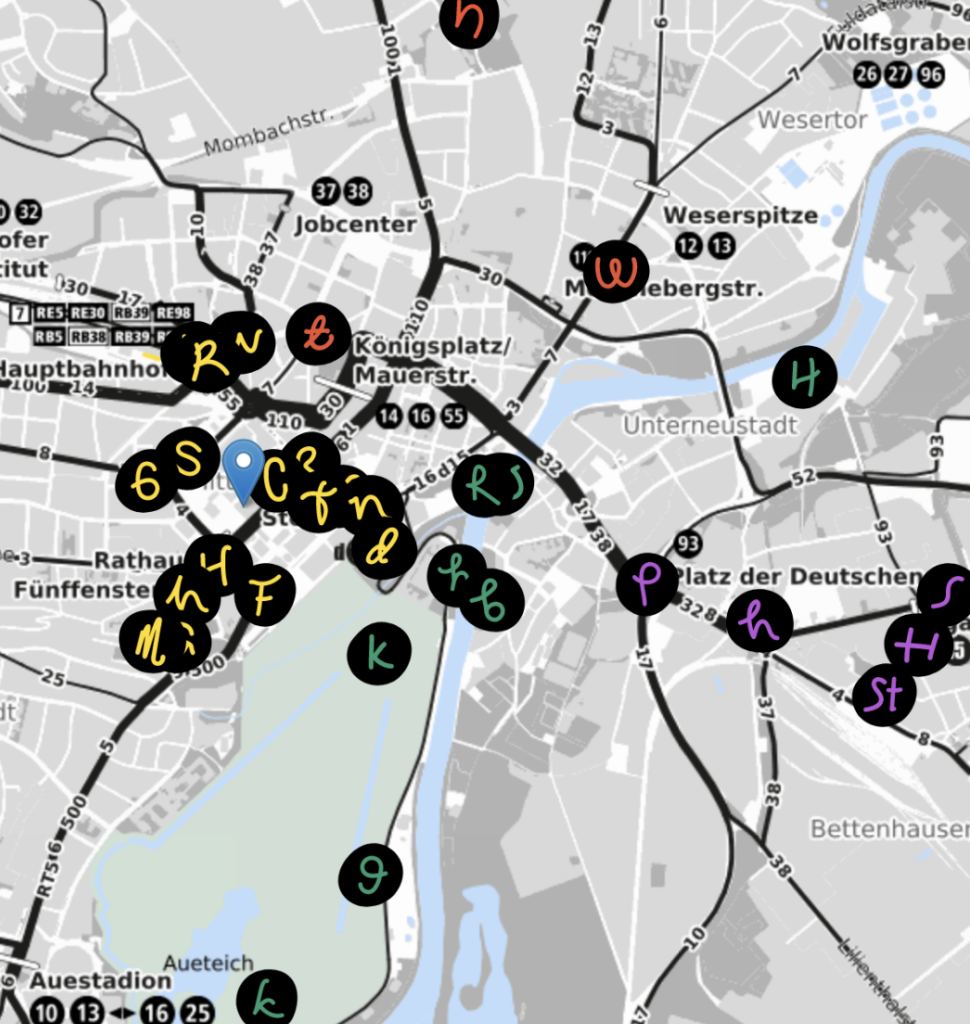
I spent two full days touring the endless exhibitions scattered around Kassel (as seen on the map below). documenta strives to offer compelling experiences for less privileged audiences. ruangrupa brought forward a whole generation of artists and types of practice for the 15th edition of Documenta delivering [a social] purpose, giving “some idea of what it is like to make art in precarious political, economic and social circumstances.”

Taring Padi

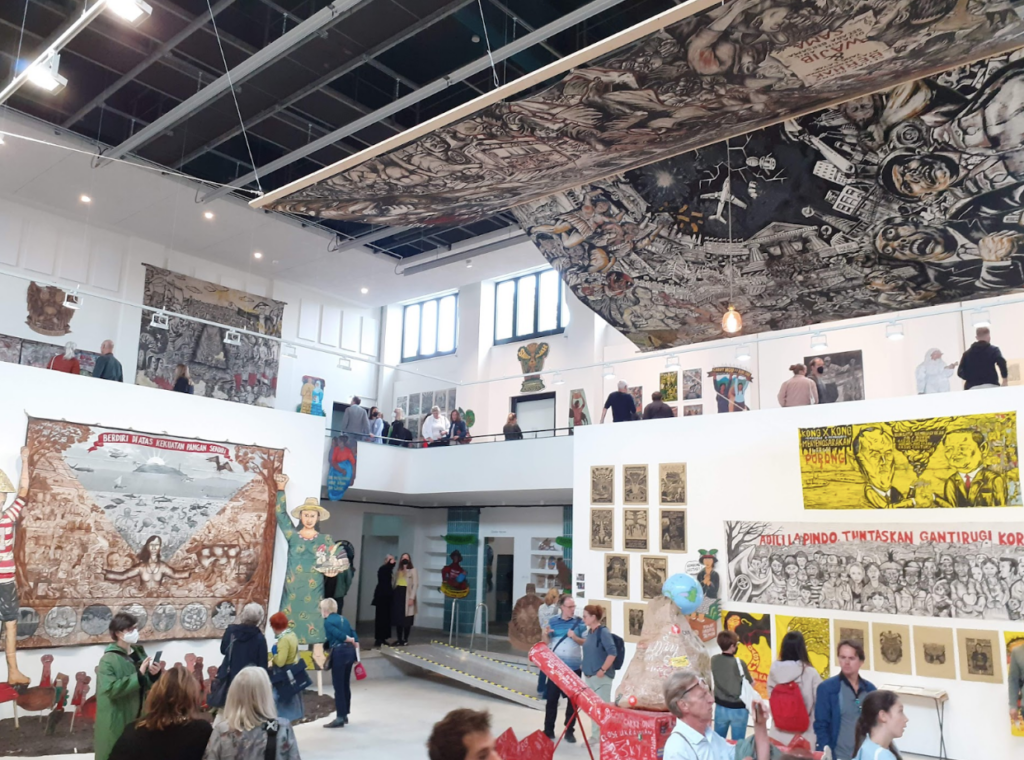
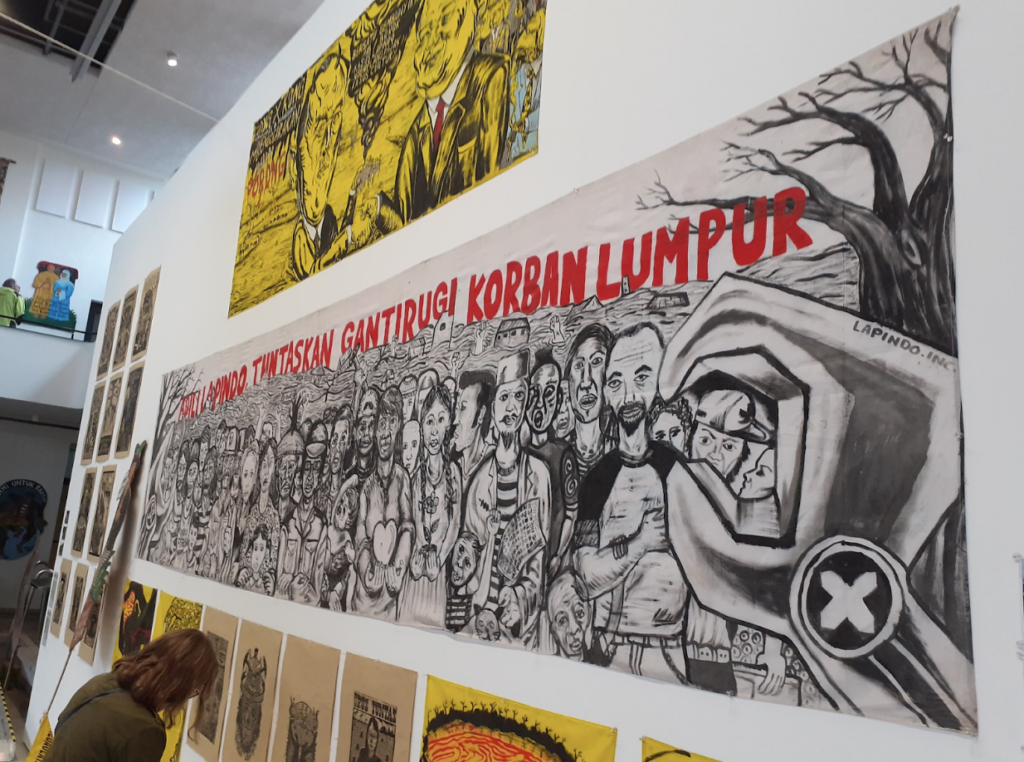
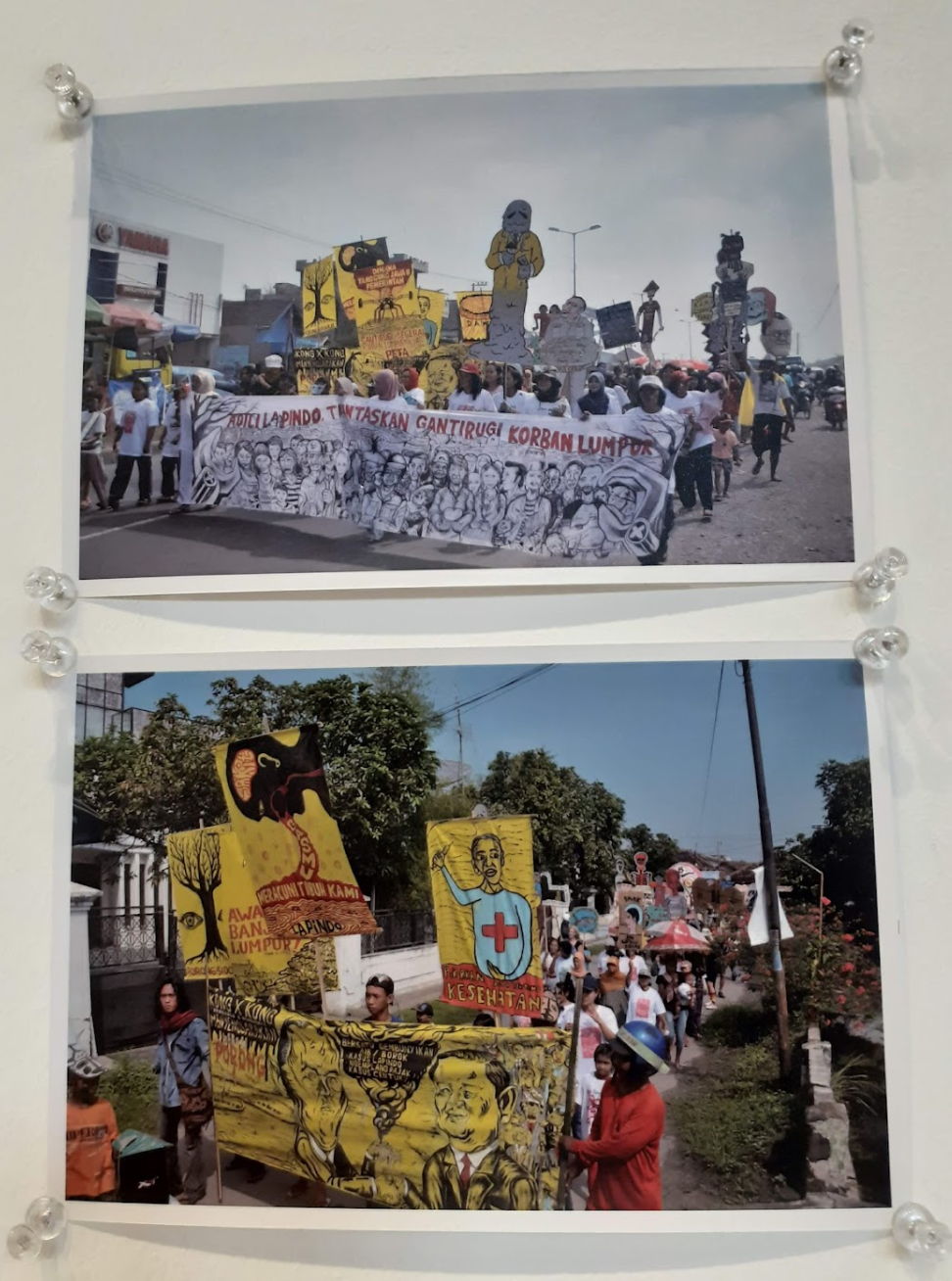
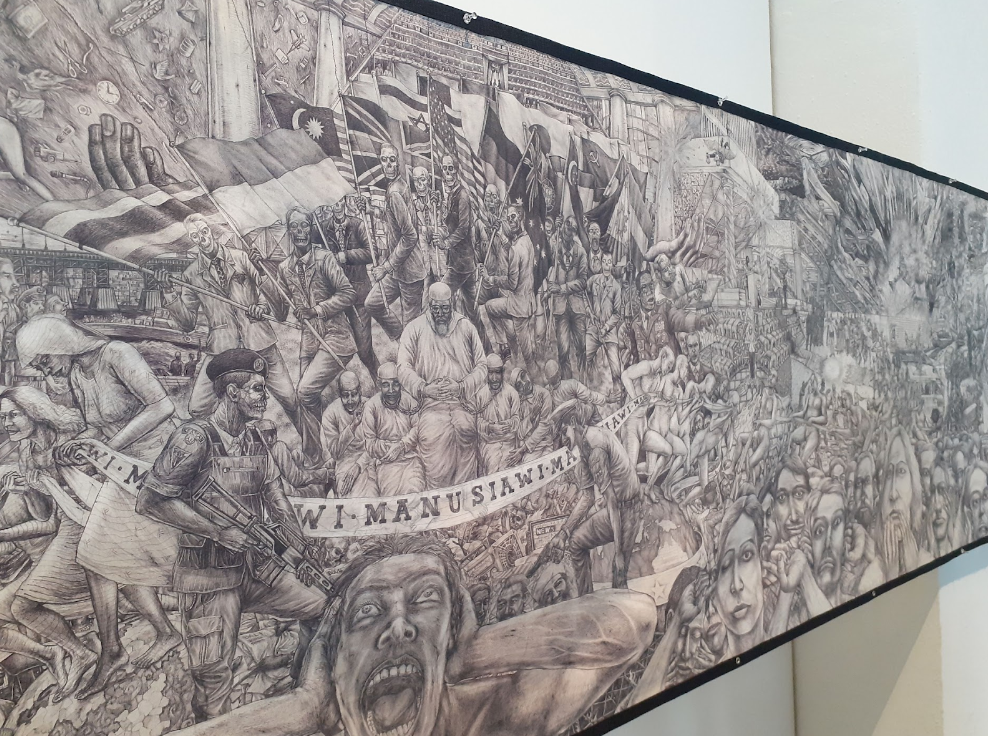
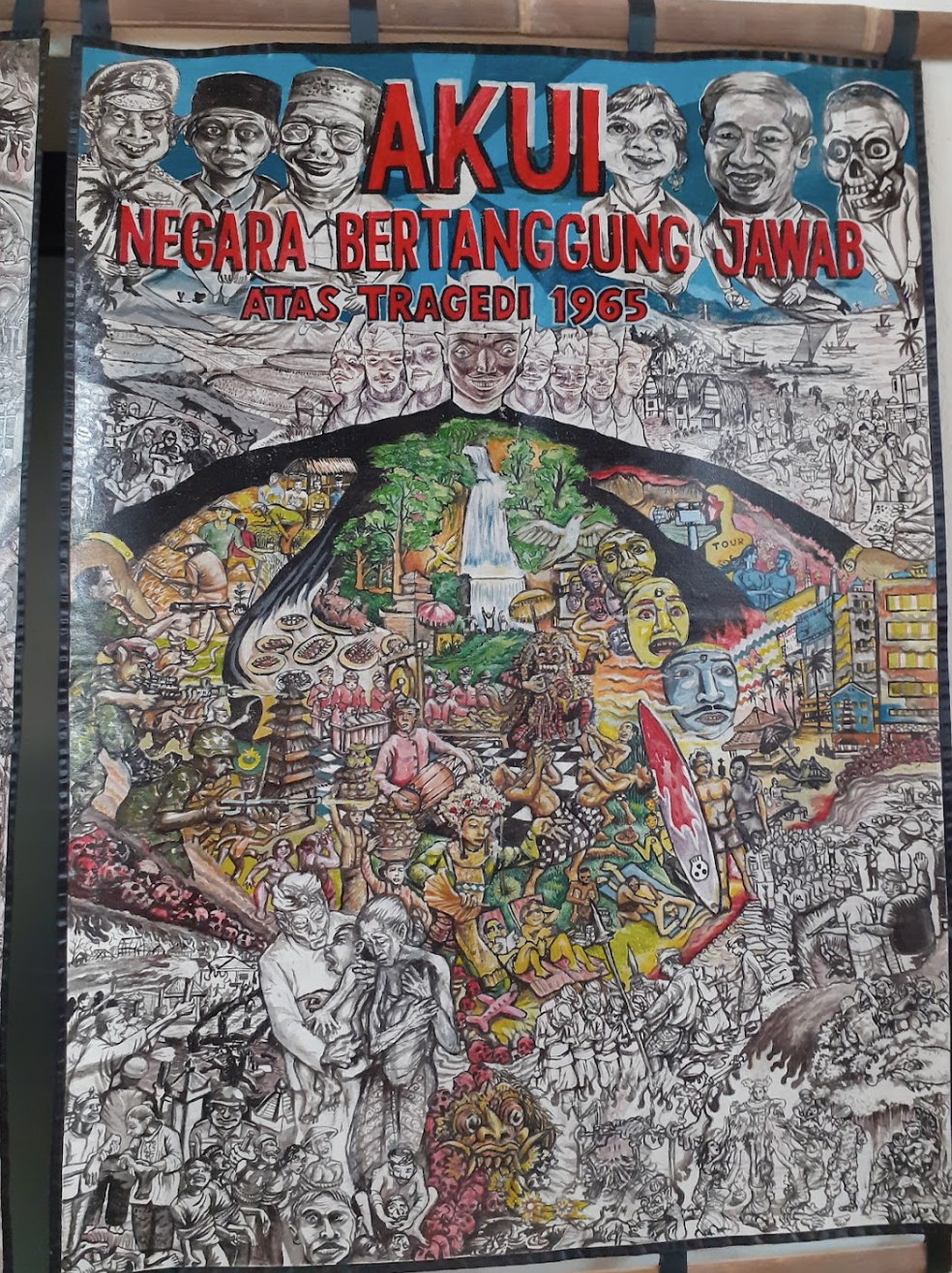
The Taring Padi dates back to 1998, founded by a group of progressive art students and activists in response to the Indonesian socio-political upheavals during the country’s reformation era. “In 2002 Taring Padi became a collective in order to further inclusivity and to facilitate personal dynamic of its members, whilst maintaining its progressive and militant character in realizing the potential of art as a tool for social change.” Over the years the group has produced a distinctive collection of banners, woodcut posters, and wayang kardus (life-sized cardboard puppets) which have produced examples for art as a tool for social change within socio-political and cultural solidarity and action. Taring Padi’s murals and painted works are colorful, using an array of vibrant—sometimes intentionally garish or, evidently, unintentionally offensive—symbols and figures. 

Regrettably, several pieces that were planned for display became “confronted with harsh, outlandish accusations of anti-Semitism.”  In an interesting element of the backlash against their now-removed mural People’s Justice (2002), their stated mission in documenta 15 is to communicate, as they write: “Flame of Solidarity: First they came for them, then they came for us”—a quote that, clanging against a furor about anti-Semitism evokes Martin Niemöller’s oft-referenced poem about the Holocaust:

“First they came for the Socialists, and I did not speak out—Because I was not a Socialist. Then they came for the Trade Unionists, and I did not speak out—Because I was not a Trade Unionist. Then they came for the Jews, and I did not speak out—Because I was not a Jew. Then they came for me—and there was no one left to speak for me.”

Smashing Monuments 

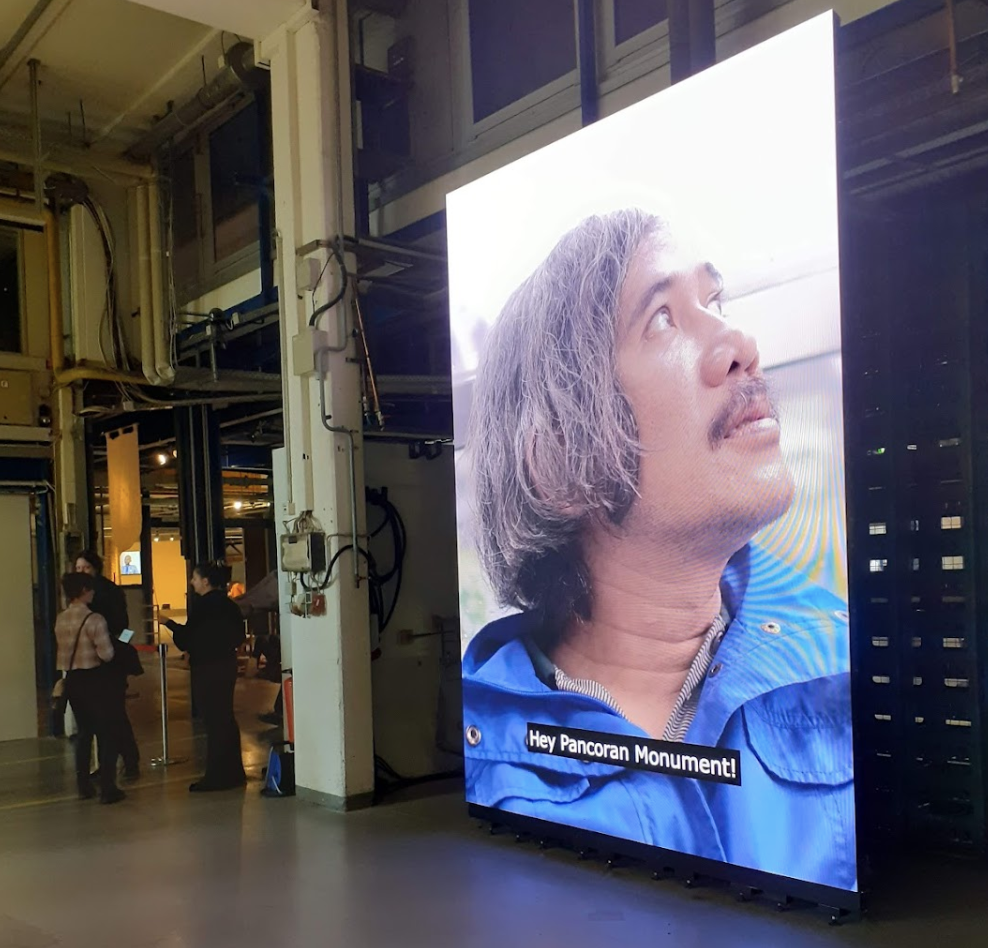
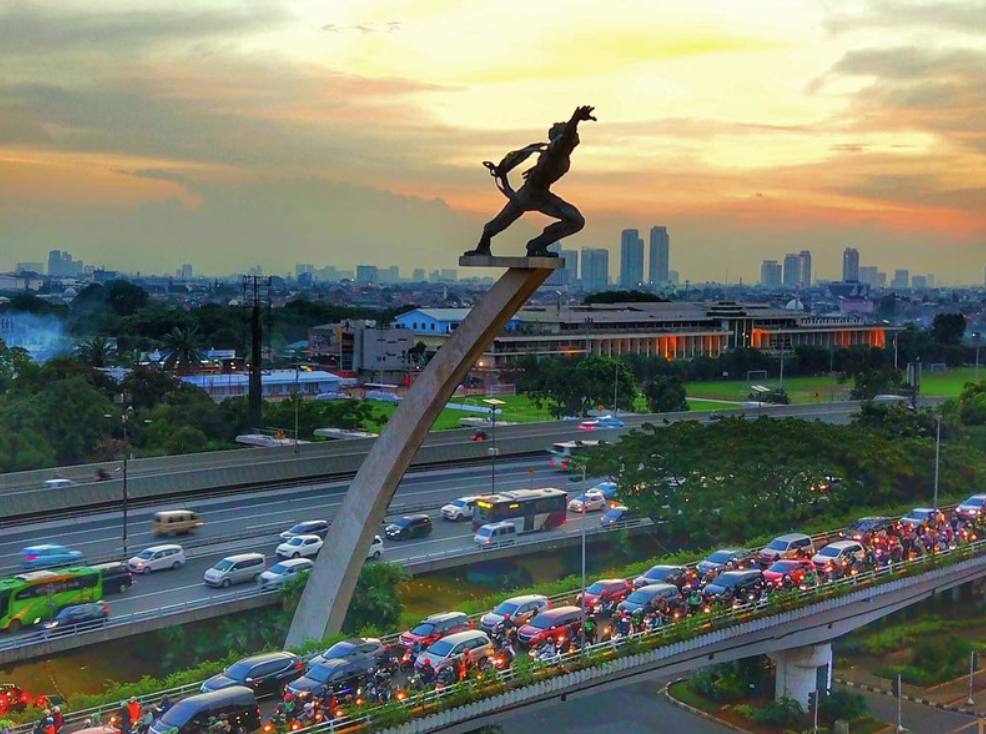
The film “Smashing Monuments” by Argentinian Sebastián Diaz Morales, interviews five ruangrupa members who surprisingly emerge from the group’s anonymity. Each artist visits a different monument from the 1960s to early 1970s and engages in friendly mocking dialogue with the figures from a time of nationalism and power struggles juxtaposed with Indonesia’s past and present. The dialogue with these monuments sculpted with intentional meaning, provokes a thought-provoking dialogue “questioning and appropriating reality” which “strip reality of its familiarity and distort it, making it seem like something else.” 

Photo courtesy of Instagram (@firmanyursak)/NOWJAKARTA

Tokyo Reels Film Festival

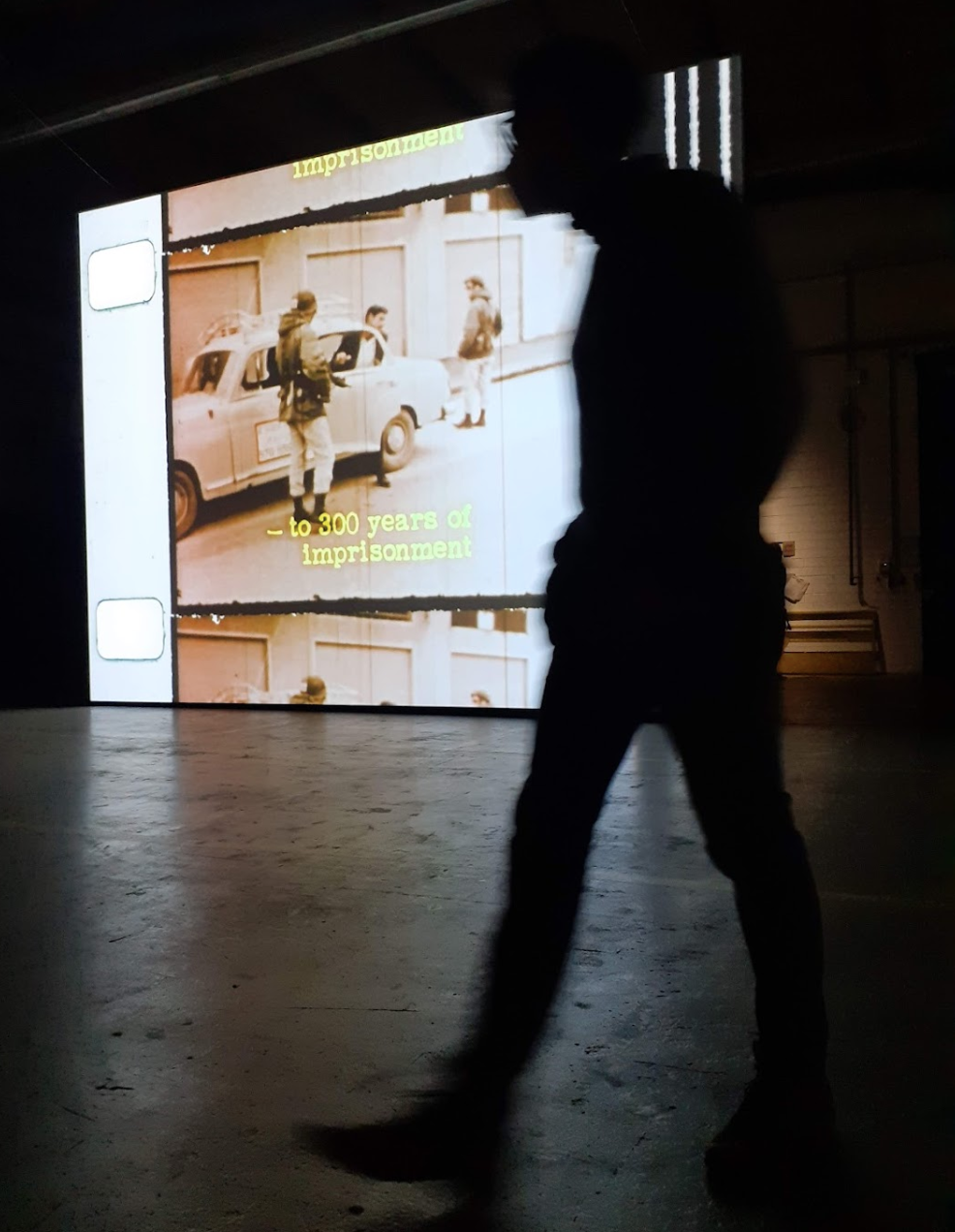
The Tokyo Reels Film Festival was presented by Subversive Film, a cinema research and production collective that aims to cast new light upon historic works related to Palestine and the region, to engender support for film preservation, and to investigate archival practices. Their long-term and ongoing projects explore this cine-historic field including digitally reissuing previously overlooked films, curating rare film screening cycles, subtitling rediscovered films, producing publications, and devising other forms of interventions. Formed in 2011, Subversive Film is based between Ramallah and Brussels.

documenta details that the screening of a recently restored film, sheds light on the overlooked and still undocumented anti-imperialist solidarity between Japan and Palestine. Subversive Film was entrusted with a collection of 16mm films and U-matic tapes, dozens of posters, and a full library safe-guarded by a Japanese solidarity group in Tokyo. The material, considered either lost or unknown to the public, was sent to Japan in several waves from 1967 to 1982.

Unsurprisingly, the Palestinian film was put on blast. As Dafoe writes “calling it “highly problematic,” the panel said the film is “filled with anti-Semitic and anti-Zionist set pieces” that are presented as objective fact. The artists’ “uncritical discussion” glorifies the “terrorism of the source material,” the committee argued.”

The Question of Funding

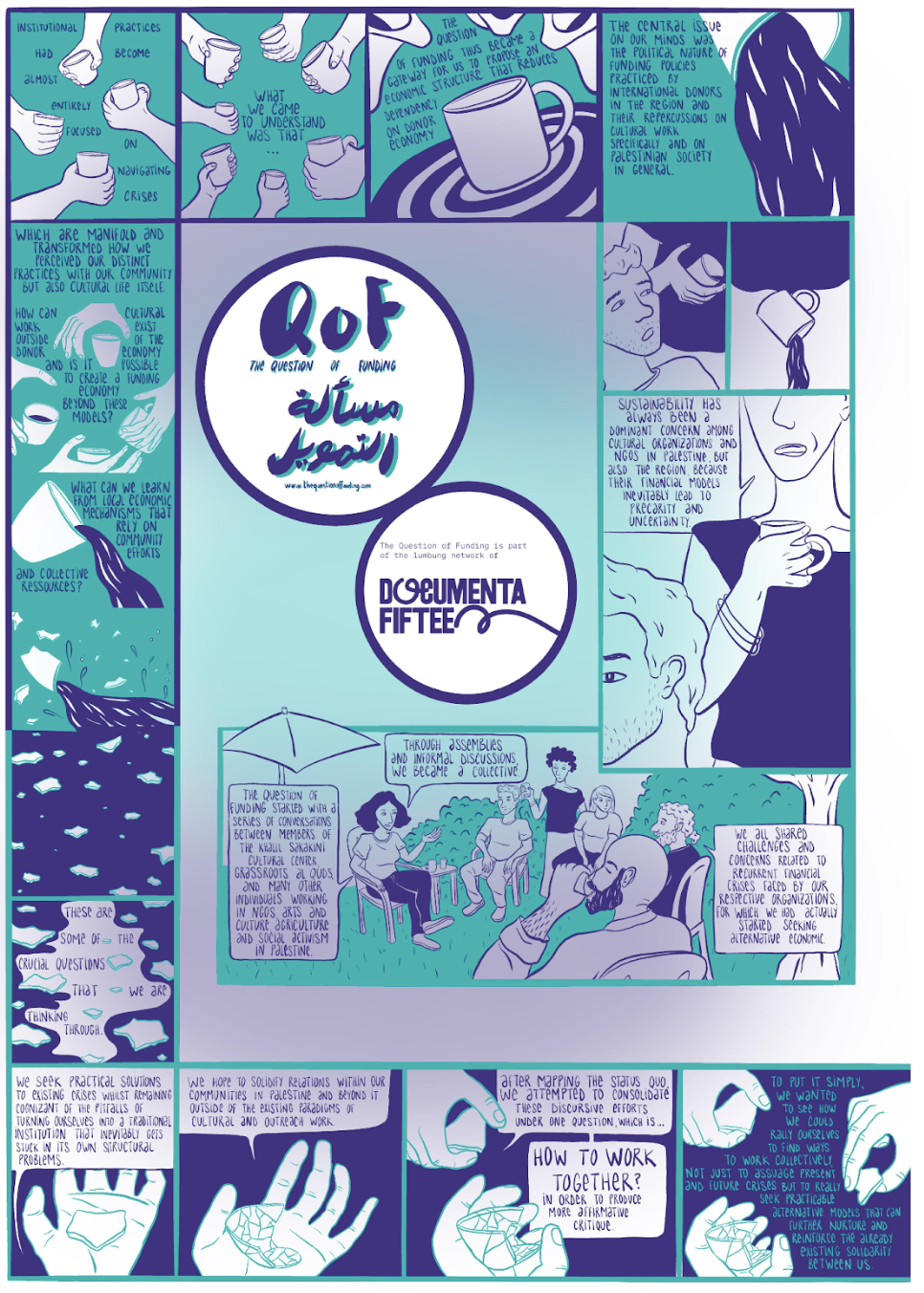
An exhibit offered by a growing collective of cultural producers and community organizers from Palestine called The Question of Funding focused on representing the ongoing process involved in producing, documenting, accumulating, and disseminating resources, experience, and knowledge with their wider community. It aims to rethink the economy of funding and how it affects cultural production both in Palestine and the world.

Born out of informal and open encounters within Palestine’s wider arts community, The Question of Funding sought to question, debate, and find solutions to the prevalent constrictive international funding models on which Palestinian cultural institutions continue to depend.* These encounters grew beyond the cultural sphere to include the wider Palestinian community. They touched on pressing issues concerning the political and economic roles of cultural work, both within and outside the institution, and their impact on cultural infrastructures in Palestine and worldwide.

Photo: https://thequestionoffunding.com/How-to-work-together

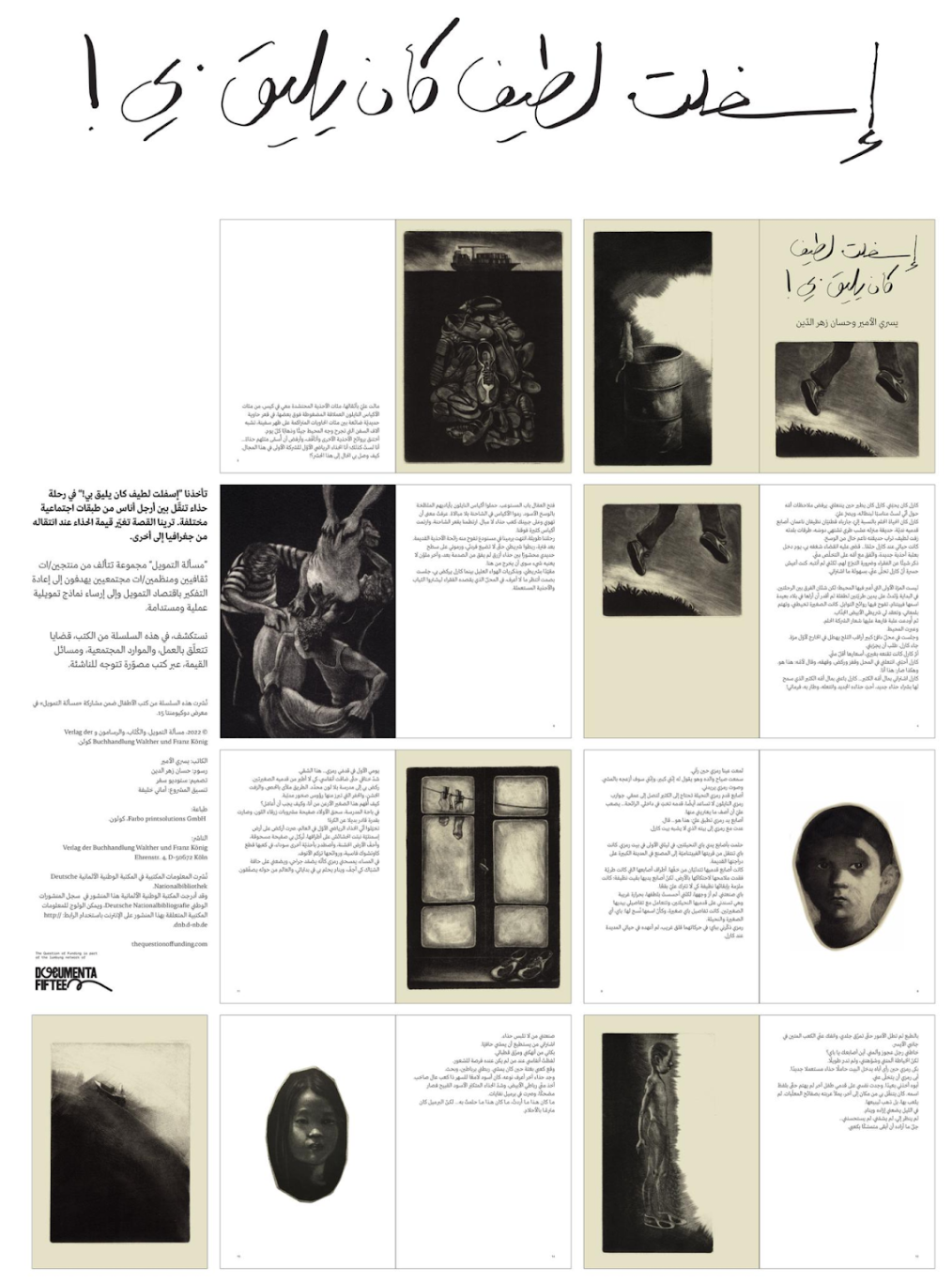
In addition to the detailed infographics (displayed above), the exhibition offers a creative approach to the questions about the financial burdens of cultural work and the economy more generally will take the form of four books in which they explore issues related to labor, communal resources, and value through illustrated stories addressed to the youth. Each story was translated and offered in Arabic, German and English to promote accessibility.

The Gentle Asphalt I Deserved is the journey of a shoe that travels between different owners and classes. The story explores how the shoe’s value changes from one geography to the next.

Photo: https://thequestionoffunding.com/How-to-work-together

Britto Arts Trust: rasad

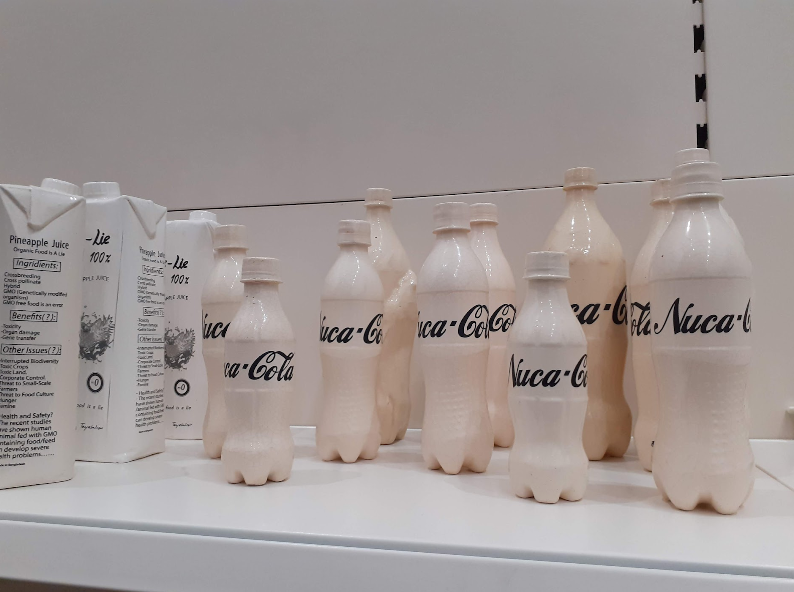
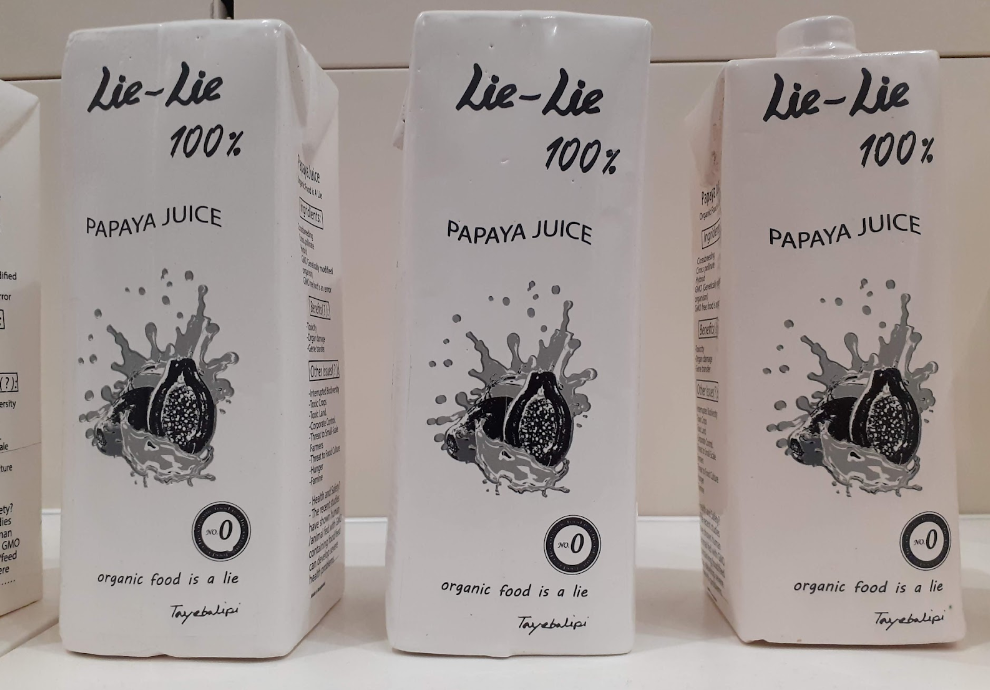
The rasad exhibit offers an elaborate twist on a visit to the market. A playful series of fake food objects—eggs, milk, vegetables, potatoes—is installed across a number of different shelves and inside a constructed pantry. These faux foods, made from surprising materials—including ceramic, plaster, plastic, cotton, and corrugated metal—include painted ceramic papaya juice cartons and squishy, embroidered cushions shaped like Campbell’s soup cans. Some, like painted cartons that remind viewers that “organic food is a lie,” are overtly political, drawing a thought-provoking connection between the international food trade, the legacy of colonialism, the slave trade, and ongoing economics of extraction and exploitation. 

documenta’s Dismal Labor Conditions

documenta’s last edition (documenta 14) made headlines regarding the “personal and political interests” that “led to lack of oversight ” and, allegedly, “borderline-illegal money transports”. Leading to bags of cash being transferred, and yet staff that earned well under the promised 9 euros/hour. Although the event happens every 5 years, there is plenty of time to see what else could go wrong. The ongoing anti-Semitism publicity and demonstrations became the focus, and this anger evolved into misdirected racist activity aimed at the staff themselves. “On May 28, the exhibition and living spaces of documenta were broken into and defaced with what can only be interpreted as a death threat.”

Gaining little attention were the continued poor labor conditions cast upon the staff of documenta. This open letter addressed to all members of documenta und Museum Fridericianum GmbH, outlines concerns from the  employees regarding their intense working conditions, high levels of stress and the devaluation of their role – feedback that was given, but completely ignored. The letter goes on to detail dozens of examples of mismanagement including: poor staff coverage during covid outbreaks, violent communication from top-down staff members and uncompensated workloads, to name a few. 

Overworked employees cast doubt over the documenta’s touted “lumbung spirit”. documenta employees provided context to their frustration:

“1,500+ artists have been invited to show work, requiring lots of extra red tape, from last-minute visas to readjusted wall labels.”

Unsurprisingly, the open letter mentions the problems are “rooted more broadly within the structures of culture work in Germany and beyond.” Here’s hoping documenta will finally turn a corner and start practicing what they preach in the godliness of their prestigious art platform for which they are internationally known. 


Eastern European racial capitalism

Romania’s economy is built on the expropriation of unfree Roma labor. It is time for reparations.


25/09/2022

On the grounds of one of Romania’s most famous monasteries, Cozia, stands an intriguing well. The inside of its walls is decorated by four statues, depicting the heads of a Hungarian, an Ottoman, a Wallachian Prince, and an enslaved Roma man. If the first two represent the enemies that the third defeated, the presence of the last statue might seem surprising. Historian Petre Petcuț, however, proposes an explanation: the Roma enslaved by the Cozia Monastery might have provided the labor for the 1517 renovation works that also saw the building of the well, a labor chronicled in the statuary record.

That the presence of this statue might come as a surprise is due to the collective forgetting and denial of Romanian chattel slavery. Indeed, the Cozia Monastery is the setting for the first historical mention of enslaved Roma on the territory of modern Romania: in 1388, Wallachian Prince Mircea the Elder gifted the Monastery 300 enslaved families. From the Middle Ages to the final abolition act of 1856, the unfree labor of the Roma was essential for Wallachia’s and Moldova’s economies, while racialized precarity is part of Romanian capitalism to this day.

A regime of coerced labor

The Roma in Wallachia and Moldova, two of Romania’s precursor states, were enslaved by the Crown, by the Orthodox Church, and by the nobility. Many were forced to labor in the fields and to maintain the vast domains of noblemen and monasteries. Others worked as skilled craftsmen, an economic domain that was virtually exclusively Roma during the Middle Ages. Some of them, as well as the Roma enslaved by the Crown to mine precious salt or pan for gold, would lead a nomadic lifestyle. Regardless of where they worked and by whom they were enslaved, the Roma all shared the same condition. They could be sold, gifted, sexually abused, or punished in any way the enslaver desired. And, according to the law, their children would be born into slavery.

During the Romanian Middle Ages, the Roma were marked as different because of their origins, language, and religion. As scientific racism was developing in Europe and the Americas in the 18th century, Roma enslavement too became racialized. But, as with other examples of slavery, racialization came as “part of a labor regime with an elaborate infrastructure.” Unfree, violently coerced labor built Romanian monasteries and courts. The crops, gold, salt, and craft and luxury products that created the wealth of noblemen, princes and the church were similarly the result of enslaved labor. This accumulation of wealth constituted the foundation of modern Romanian states’ capitalist economies and markets.

The study of capitalism’s dependence on unfree labor has a long history, especially in the Atlantic world. One of its milestones is the 1944 publication of Capitalism and Slavery, written by radical historian Eric Williams, later the first prime-minister of Trinidad and Tobago. In this book, Williams argues that not only had the Industrial Revolution been built on the labor of enslaved Africans, but abolition itself came when it was an economic necessity for the British Empire.

There are, of course, major differences between the histories of slavery in the Caribbean and the Romanian states. But, in this respect they are similar. After centuries of Roma resistance and maroonage, Romanian noblemen and politicians finally abolished slavery in the mid-19th century. This happened against the background of moral pressure from Western Europe, as the “shame” of being the last slaveholders on European soil was a common trope in abolitionist discourse. But it was also the result of economic pressure and part of the transition toward capitalism. In the same Western Europe, wealth was being produced in large-scale agriculture, factories, and trade. A mode of production based on enslaved labor could not function this close to the core of the capitalist world. Modern Romanian entrepreneurs needed employees, not enslaved people tied to monasteries and noblemen. Perhaps more importantly, early Romanian capitalists also needed the essential skills of nomadic craftsmen, especially the Roma blacksmiths. For them, abolition was followed by constant efforts at forced sedentarization and employment.

Roma laborers under capitalism and communism

It is no surprise that the Roma received no property or compensation after emancipation. “Free in the double sense” of being able to enter employment and having nothing else to sell but their labor power, they had no choice but to work for their former masters. Either at the center of budding industries or precariously employed in agriculture, Roma labor remained foundational to the Romanian economy. Some emancipated Roma continued to practice their crafts through towns and villages, but by the end of World War I, most were replaced by industrial production.

The Roma were nevertheless still marginalized within, or excluded from, the working class. Racialized differentiation and violence culminated in the horrors of the Porajmos. Afterwards, communism partially interrupted the precarization of Roma laborers. Through industrialization and collectivization, marginalized Roma workers were offered permanent employment. This employment, however, was in heavy industrial and agricultural labor, with still insufficient remuneration. Moreover, the “colorblind” communist approach to ethnic differences meant that racism was merely swept under the rug. This exploded after 1989, when pent-up racial resentment, together with political and economic uncertainty, triggered ethnic clashes throughout Romania, including anti-Roma pogroms that continued into the 2000s. Having entered communism with little to no property, Roma families also had little to gain from Romania’s rabid privatization. With no employment and no intergenerational wealth, the Roma were once again marginalized within Romania’s newly capitalist economy.

This economy nevertheless still depends on precarious, underpaid, and seasonal employment. Especially in constructions or agriculture (be it industrial or small-scale), informal employment predominates, without contracts, taxes, or social protections. Despite the stigmatizing discourse accusing Roma people of laziness and of lacking a “culture of work,” these sectors of the economy would simply not be profitable without precarious labor. Because of its structural expropriation of marginalized labor, capitalism coopts and reproduces racialized differentiations within the working class. In Romania, the Roma occupy these precarious margins as the result of centuries of slavery, economic coercion, racial violence, and geographic segregation. Of course, the masking of such structural divides under moralizing discourses is not without its purpose. By blaming the Roma, Romanian workers can look down on an inferior class that makes their own position look more stable and keeps them from identifying the structural sources of Romania’s poverty and corruption.

Toward reparations?

In the Americas, awareness of how slavery and colonialism built the wealth of the US and Europe led to calls for reparations. If the coerced work of African Americans made the US into what it is today, then they deserve a bigger slice of the pie; or, at the very least, acknowledgments and apologies. In Romania, this consciousness is still being born, due to the tireless work of Roma and gadjo (non-Roma) activists and scholars. Still, reparations are already being demanded. Political activist Ciprian Necula puts forth a “rough calculation,” as “an illustration of a potential direct contribution of the Roma over the centuries as slaves:”

“266,335 (slaves [recorded as being emancipated]) x 471 (years) x 365 (days) x 5.4 Euro (minimum [wage] per day) =247,249,700,235 Euro”

This is the money that the Roma did not receive for their work. As Necula notes, this is higher than Romania’s GDP, showing the “dimension of the contribution of Roma – with their own hands and skills – to modern Romania.” Margareta Matache, an activist and Harvard researcher, is another prominent supporter of reparations. She highlights the lack of acknowledgement and reconciliation efforts from the Romanian state, from the Orthodox Church, and from Romanian civil society. All these add up to a continuation of racial violence, one that erupted to new heights during the Covid pandemic.

Eastern European whiteness is complicated and ambiguous, but, at least in Romania, it can be better understood as what Matache calls gadjo-ness. Gadjo-ness is built on a foundation of anti-Roma racism and through an erasure of histories of violence and oppression. Gadjo-ness is also embedded in a material system, placing some in positions of domination and economic advantage over others. Romania (and not just Romania) was built, sometimes quite literally, by enslaved Roma people, and gadje benefit from this to this day. This history of Romanian slavery, of Eastern European racial capitalism, and the consequences that it has on European anti-Roma racism to this day can no longer be denied.

A Leap in the Dark: Italian elections before the hot winter.

The right wing looks set to easily win the coming Italian elections. The Left must regain its lost credibility


24/09/2022

The results of sunday’s elections are already written. The coalition led by the radical right leader Giorgia Meloni is going to obtain a large majority that may even allow for constitutional changes. The traditional centre-left has completed its transformation into an establishment party and was unable to propose a viable alternative. Conversely, the Five Star Movement completed its left turn and is now competing for the left political space. A reactionary turn in civil rights and an economic policy geared towards the protection of the declining Italian petit bourgeoisie is to be expected in the next years. Most worryingly, an authoritarian turn in the management of conflict and protests is a real danger in the upcoming months.

On the 25th of September, Italy is yet again called to an electoral round, this time with the July fall of the Draghi government. The swiftness gave little space for emerging political parties, especially on the left, to organize. Therefore we will see mostly a change in the balance of power between already established political parties.

Italy experienced one year of technocratic government under the leadership of Mario Draghi, former Italian and European central banker, and one of the main advocates of the regressive economic policies implemented in Italy since the 1990s. This government enjoyed vast support from the media, which started celebrating him even before he could take any real measure. For reasons related to power and ownership, Italian media have traditionally been expression of the will of a narrow circle of powerful business families and have managed to carry a remarkable influence in the way the population has made sense of crisis situations. This time, the media managed to frame Draghi as the almighty “saviour of the Motherland”, a figure that is very typical in Italian politics since the beginning of the 1990s, when the country’s political party system got dismantled. Criticizing Draghi was in itself a matter of stigma, and we may go as far as to say that Italians lived, for one year, in a handbook case of “cult of personality”.

In July, Italians discovered that political support for this semi-god was like the house of straw in the “Three Little Pigs” fairy tale. Conte decided that the Five Star Movement (M5S) would take a more critical stance vis-à-vis the government. Draghi decided to resign, although having the numbers to continue governing without the M5S. Draghi policy making style was extremely authoritative, and every dissent was silenced with a “take it or I leave” attitude. Draghi felt either he would govern with all or with nobody. In the speech before the vote of confidence, he vehemently criticized the right-wing coalition partners, without any apparent reason. Eager to capitalize, the right-wing Lega and Forza Italia parties removed their support to the Draghi government. Thus elections in September.

I will describe the general political situation before the elections and what we may expect in the future.

A black wall: the right-wing coalition.

The general prediction is an inevitable victory of the right-wing coalition. Surveys assess the coalition (Fratelli d’Italia (FdI), Lega and Forza Italia) with 43% to 49% of the vote. With the center-left coalition (in all possible configurations) less than 40% at best. The gap between the two coalitions is maybe as big as 19 percentage points. 

These elections signal an impending victory of a coalition led by a right party with roots in the post-Fascist party “Movimento Sociale Italiano” (MSI). Namely  Fratelli d’Italia (FdI), with around 22-24% of estimated votes in surveys. Their leader Giorgia Meloni has worked hard to create an image as a “reliable” moderate politician. But FdI is at the radical right, with many overtly neo-fascist members. For migration and civil rights she espouses rhetoric “against the LGBT lobby”, against more generous citizenship admission criteria, and migration. Economically, the party switches between neo-liberal proposals of a flat rate tax and more “social” proposals reflecting the radical right.  Meloni’s party is compared to Hungarian Fidesz or Polish PiS. But it is unclear if this is true, since those parties were in government, and sometimes took the “social” vocations of the radical right. For instance, Orbán introduced price caps on some goods and compelled international banks to convert the catastrophic mortgage debt of the private sector into Hungarian Florint (instead of international currencies). PiS also introduced social benefits for the poor that previous governments were not able or not willing to provide. It is difficult to predict whether Fratelli d’Italia will be more inclined to a “social right-wing” or a “neo-liberal right wing” agenda.

There are hints that the next government’s economic policy will mostly skew to the advantage of the petit bourgeoisie,  in Italy a numerically substantial electoral group. Why?

First, FdI will be in coalition with the Lega and Forza Italia. Both favour a flat income tax-rate, benefiting mostly the higher-middle class. Such a regressive measure, will hit the public budget harshly. 

Second, a July survey highlighted that, the voting intent for FdI is highest among the self-employed and entrepreneurs. The national average of 20.3% of votes,  increases to 22.5% and 24.8% among the entrepreneurs and self-employed. The FdI also holds strong among the lowest-income voters,  at 21.5%. In general, this cross-class party is skewed towards the petit bourgeoisie. This is relevant, since the Lega, (historically also a party of the petit bourgeoise), saw its consensus among these voters dropping, presumably to the FdI. This suggests FdI is the petit bourgeois party of the coalition, a position consistent a more “social” right.

Lega voter composition is also telling. Its’ national average of 15.3%, the Lega reaches 23.1% among workers in industry, and its consensus decreases with social class, with 19% among voters in the low-income class. This may be partially explained by Lega’s attempt to capitalize on leveraging the anti-migrant sentiment of part of the Italian population. Despite this socio-demographic shift, the Lega still promotes itself as the party of the small-medium sized enterprises, vocally pushing the flat-tax rate. The Lega competes for the base of FdI and Forza Italia. 

Overall, the right-wing coalition of Lega, FdI and Forza Italia accounts for 51.2% of the low-income voters in this survey, against a national average of 45.5%. By contrast, the centre-left coalition only accounts for 13.5% of the voters surveyed in this income class.

A centre left for the elites: the PD as the natural continuation of Draghi.

Since its creation in 2008, the centre-left Partito Democratico has always had an ambiguous political agenda. It periodically switches from very mild social democratic stances, to markedly right wing neo-liberal economic policy when in government. The technocratic neo-liberal governments that Italy experienced since the financial crisis found marked support from the PD. The Renzi government was markedly right-wing.

A the current time, the Partito Democratico is clearly positioned at the center or right-of-the-center of the political spectrum. It is similar to the Macron “En Marche” movement: a party of progressive views in civil rights, but highly reactionary in labour and economic policies. Nonetheless, the party tries to make ritual electoral cosmetic adjustments to persuade some left-leaning voters. The official programme and recent statements by politicians, sometimes raise topics like minimum wage, labour de-precarization and taxes on extra profits. Despite the mild to overt hostility that PD politicians have always had towards these topics. This party had promoted the flexibilization of the labour market as a way to “modernize” it, and it promoted stagnation or decline of healthcare expenditure during the Monti and Renzi governments. Hence paper political programmes rarely interpret the political stance of the party. Even the programme of the centre-right coalition includes more inclusive social security, higher minimum retirement benefits, environmental protection and funding for public housing. If even they can  pay lip service to social welfare, there is no reason the PD should not be doing so.

The real political paradigm of the PD was overtly for the “Draghi agenda”, and it tries to appear as the natural continuation of that government. This was confirmed by the alliances made immediately after the government fall. These were with the “Azione” and “+ Europa” parties, both economically centre-right and ordo-liberal. The initial agreement anticipated this would give them 30% of contended seats of the coalition, despite their joint political weight being estimated at 5-6% only. By contrast, the alliance with the social democrats of Sinistra Italiana and the Greens, with a comparable but slightly inferior political weight, only gave them 20% of contended seats. Ironically, the alliance with “Azione” was broken only by the will of the “Azione” leader. He suddenly decided that he did not want to ally with the social democrats and greens. Conversely, “+ Europa” remained as the ordo-liberal partner of the PD. To remove doubts, the PD also included in its lists the popular neo-liberal economist Carlo Cottarelli, IMF official and strenuous supporter of budget balance and pension reform.

The coalition with the ordo-liberals is fully consistent with the economic paradigm of the PD. It follows the “external constraint” imposed by the European institutions as a religious dogma. Keynesianism and deficit spending in times of crisis are taboos, what matters is that Italy does “its homework” silently and sticks to European guidelines. This neo-liberal dogma has basically destroyed democratic policy making in Italy in the last decade and has contributed to the stagnation. Italian ordo-liberals see European integration as a guarantee that national politics will be deprived of capacity to shape the economy, in favour of a supra-national market-enforcing and budget-disciplining leviathan. This paradigm is fully consistent with Hayek, but also with Italian neo-liberals such as Carli or Maione. The PD leader Enrico Letta is an integral part of this establishment, and was formerly in the Christian Democratic Party (DC) and subsequently on the centrist faction in the PD.

Even on migration, supposedly a civil-right issue, some members of the Partito Democratico often competed with the radical right. They advertised the “success” of an agreement of their former Minister of Interior Minniti, to reduce the number of migrant departures from Libya. But at the price of detaining thousands of migrants in horrific quasi-concentration camps run by Libyan authorities. It is not uncommon to hear PD politicians arguing that they “did better than Salvini” in this field.

The PD electoral campaign is mostly a campaign “in defence of the constitution” and “against the right”. But this defence does not include the most progressive parts of the constitution. Rather, it is interested to avoid a shift to a presidential system, and to ensure that Italian law remains constitutionally subordinated to European law.

The social composition of PD’s voters shows a consistent picture. Data from the previously mentioned survey (IPSOS, 2022), shows that the electoral base of the PD largely overlaps sectors with ordo-liberal thinking. First,  among the high-income voters, the PD holds for 31.4% against 20.9% of national average. The preferences for the PD shrinks together with the income class, obtaining only 10% of the voting preferences among the low-income voters (against 21.5% of the right-wing FdI). Other core-constituencies are entrepreneurs and self-employed (24.2%), teachers and white-collar workers (25.4%) and pensioners (29.2%). Conversely, only around 13% of factory workers and the unemployed expressed a preference for the PD. This largely confirms a previous data from the post-2013 election surveys (ITANES, 2013). Namely it is a party that gradually loses voters from the most disadvantaged social strata in favour of the wealthier ones. 

The left turn of the Five Star Movement.

After the end of the second Conte government, Giuseppe Conte, former Italian Prime Minister, decided to continue as the political leader of the Five Star Movement, replacing Luigi di Maio. The Five Star Movement’s leadership was now divided between Di Maio, for the moderate “pro-government” area of the Movement, and Conte, for the critics of the new Draghi government. This did not prevent Conte from giving Draghi a blank cheque for the whole first year of mandate, even in regards to the Russian-Ukrainian war. The Five Star Movement was fundamentally  a disciplined device to support the government and “rebel” parliamentarians who refused to vote for the Draghi government, like Pino Cabras, were expelled.

This changed in June this year, when Conte decided that the Movement should have been more critical vis-à-vis the government, especially on social policy and on weapons to Ukraine. This escalated  tensions within the Five Star Movement between pro-government and anti-government factions. It led eventually to Luigi Di Maio and his circle leaving the Five Star Movement to set up “Impegno Civico”, which placed itself as a “puppet list” of the Partito Democratico.

This final showdown enabled the Five Star Movement to quit the game and refusing to be part of the Draghi government. Nonetheless, Conte initially offered his “external support” to single measures, rather than the whole set of policies. However, Draghi was not eager to accept this and the government fell.

The reasons leading Conte to quit the government are still unclear. The main motivation given was the neglect of the Five Star Movement’s proposals for redistributive policies and social aid in the government coalition. A more critical,  realistic view – argues that this was an electoral strategy. With likely social unrest  this autumn due to gas shortages and inflation, The Five Star Movement did not want to lose its narrow political consensus by backing a government that, would become unpopular. As Conte put it: “at the election day, it is not journalists or tv commentators the only ones who vote”.

Most likely, both reasons hold truth. The Five Star Movement has steadily declined, dropping from 32% of voters’ preferences in 2018 to 10% this year.  Political survival demanded cutting its  subordination to the Partito Democratico and launching a “social agenda” occupying the left political space. This is framed as the Five of the Five Star Movement coming “closer to its roots” to capitalize on the social welfare and labour legislative achievements of the first two Conte governments. The genuineness of this left turn is questionable, since previously Conte himself did not seem concerned when the government watered down his “achievements”.

The social background of Five Star Movement’s voters reflects this “social” orientation. The Movement is over-represented among the unemployed, students, and the young age groups, although the loss of consensus compared to 2018 is still remarkable even in these groups.

Conte placed the Five Star Movement as the main left alternative to the coalition led by the Democratic Party and, so far, the strategy seems pay off. The last surveys place the Five Star Movement between 13 and 15% of preferences, a considerable gain from the 10-12% of reported voters’ preferences in July. This places the Five Star Movement as the only “left” alternative among the big competitors in the electoral arena.

The left and Unione Popolare

The big absence  is the Italian left, showing little sign of recovery from its two decades-long decline.

Leading up to the 2018 elections, Rifondazione Comunista (Communist Refoundation Party), together with other movements, contributed to the movement “Potere al Popolo”. The electoral result was poor, at 1.13% of total votes. The defeat and  internal conflicts led to Rifondazione Comunista quitting Potere al Popolo.

At the beginning of 2022, the wide consensus enjoyed by Draghi seemed consistent with 2023 elections. The fragmented left was thus caught by surprise when, the government fell and elections called for September. A rush to create a project began centring on some keywords.

After the ground-breaking result of NUPES (Nouvelle Union Populaire Écologique et Sociale) in France, Rifondazione Comunista, Potere al Popolo and other minor organizations did “march united” to an “Italian NUPES” – “Unione Popolare”. “Their” Mélenchon was the former Napoli Mayor De Magistris, popular for his victory in metropolitan Naples leading a coalition opposed to centre-left and centre-right.

However, De Magistris is far from Mélenchon. Both with respect to political experience and to his radicality. The UP leader surely can communicate with the spirit of times (i.e. in a populist manner), but he is highly ambiguous on the contents of his proposals.

Above all, on European treaties limiting deficit spending he is ambiguous at best. The programme reads that UP wants to “re-discuss” the Maastricht Treaty and the deficit parameters. However, nothing has been written regarding their intentions if this noble attempt is blocked by Europe, as previously. All governments have tried to re-discuss flexibility with Europe, with little success. We risk the trap, reminiscent of Greece, of a left that promises changes at the European level that will almost surely be denied. In that case, telling electors that you can obtain what you want by applying the treaties as they are is simple electoral fraud, and is not credible. By trying not to hurt the Italian mainstream on the European treaties, they want to challenge the mainstream on deficit spending, without realizing that the two are indissolubly connected.

Beyond this, the UP has an ineffective communication strategy. The “on paper” programme of Unione Popolare is highly ambitious and clearly left in orientation, including the extension of social security to the most vulnerable strata, taxation of the wealthiest, and even nationalizations of strategic sectors. However, people reading programmes on the webpages of parties are a very narrow minority.

In the general debate, Unione Popolare fails to distinguish itself with its’ proposals. In the economic sphere, the keywords were a cap on electricity and gas prices and introduction of a statutory minimum wage. However, both these proposals were also adopted by the Five Star Movement, and the centre-left coalition. Acknowledging this, the only argument for UP is that “the others are less credible”, but this is a poor strategy. Perhaps the most distinctive position of Unione Popolare, was favouring a more independent Italian stance on the war in Ukraine and pushing for a “diplomatic solution”. However, these arguments have not resonated in the Italian public. That is understandably more concerned with the gas bills, rather than with the international situation per se.

Overall, the average voter would struggle to vote Unione Popolare instead of the Five Star Movement, especially when the Five Star Movement is increasingly seen as the most credible opponent to the Democratic Party. The real challenge facing the left now is to take the little it may build in this pre-electoral period and develop it further at the grassroots after elections. Realistically, a mass left movement is not expected probably in the next ten years. The left should thus primarily get rid of its “electoralist bias” leading to these periodical rushes into “unitarian” projects that end up spending the energies of activists for a miserable 1% at the polls.

As capitalist analysts might say, the left must behave like a “long-term investor”; focusing on building ties at local level and achieving recognition by being present in the struggles of Italian workers, and synthesise their needs in a single nation-wide programme. Thereby working “at a loss” for a period, to keep motivation high for a later pay out

Conclusion: What comes next, what to expect.

The electoral game is clear. The right-wing coalition will win, with a strong  post-Fascist Fratelli d’Italia Party. What comes next is difficult to forecast, since the situation is unprecedented. But cautious guesses are possible.

Italy’s international position with respect to the Russian-Ukrainian conflict is unlikely to change in the foreseeable future. Despite the Democratic Party tries to equate the right-wing coalition and Putin, this is barely credible. Although Berlusconi and Salvini have historical ties to Putin and the United Russia party, they stuck to the Atlantic alliance once the war started, although Salvini was more cautious. It is highly unlikely that the right-wing government will be endangered by the war per-se.

The main conflicts are likely to rise in the economic field.

The self-employed workers cannot be ignored. These make up between 21 and 23% of the overall workforce and are right-leaning, and the main target of the right-wing coalition. The whole electoral competition between right-wing parties rotates on fiscal policy, on the flat tax rate. Originally an idea of the Lega, which took it from Orbán, Putin and Trump. It proved popular among the self-employed, hence the other two coalition parties, Fratelli d’Italia and Forza Italia, rushed to adopt a flat rate tax “of their own”. As a result, reducing taxes for the self-employed is a common electoral goal.

However, this flat taxation rate is more to the inclination of Fratelli d’Italia, which may require deploying  financial resources, while the flat-tax would cost itself billions of euros. Especially considering that the coalition wants to extend support to families hit by catastrophic energy costs, some compromise is to be done. It is highly likely that Salvini will use his strategy of not taking any responsibility and try to shift the blame of unfulfilled promises on Meloni’s Fratelli d’Italia. Similarly, Meloni will try to take a more assertive stance vis-à-vis Brussels on deficit rules, which may contrast with Berlusconi’s Forza Italia, – the “moderate” side of the coalition.

We can expect the next government to be stable as an effect of the large parliamentary support and, economically, to focus on the protection of the declining Italian petit bourgeoisie by subsidization.

On civil rights, the regressive stance of the government is clear to the public. It is however unclear which civil rights will be hit. The most likely scenario is a government blocking any new advance in civil rights, without fundamentally changing anything. It is very unlikely they will enforce a reactionary turn, since this is unlikely to pay electorally.

The danger is the authoritarian turn in managing dissenting voices and protests. When Salvini was Minister of the Interior in 2018, the perspectives already were bleak tending towards authoritarianism. The situation is not going to be any better from October onwards. Protests risk being harshly crushed, especially with the upcoming winter and huge social upheavals due to the energy crisis.

Italian unions usually remain silent under centre-left governments, so we may expect them to be more active in organizing mobilization under the right-wing. Equally, we may expect anti-union activity by government to increase, to weaken the bargaining power of unions, consistently with an idea of economic growth based on “internal devaluation”.

A left that wants to be effective in addressing its own social base has thus to start building credibility among people. In Italy no redistributive mechanisms are yet announced to avoid poor households ending up paying 900 euros or more for 2 months of electricity. Equally, taxation on extra profits of the national electricity companies are only on paper. Only 1 of the 11 billion Euros expected was collected by the State. These are the pressing issues the left is called to act upon, to develop a left movement in the upcoming years.

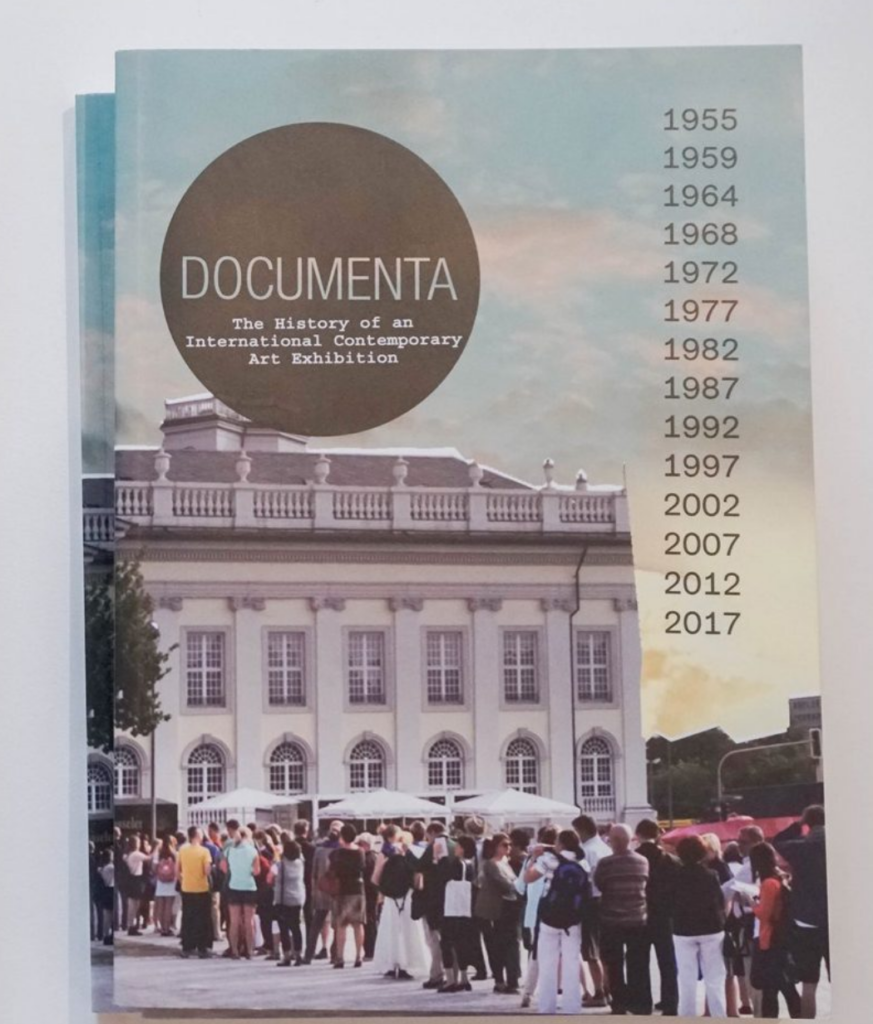
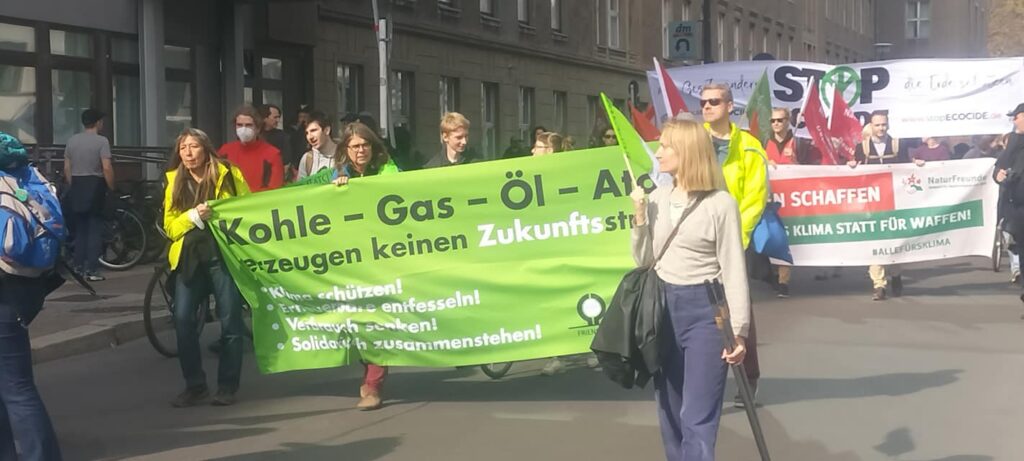
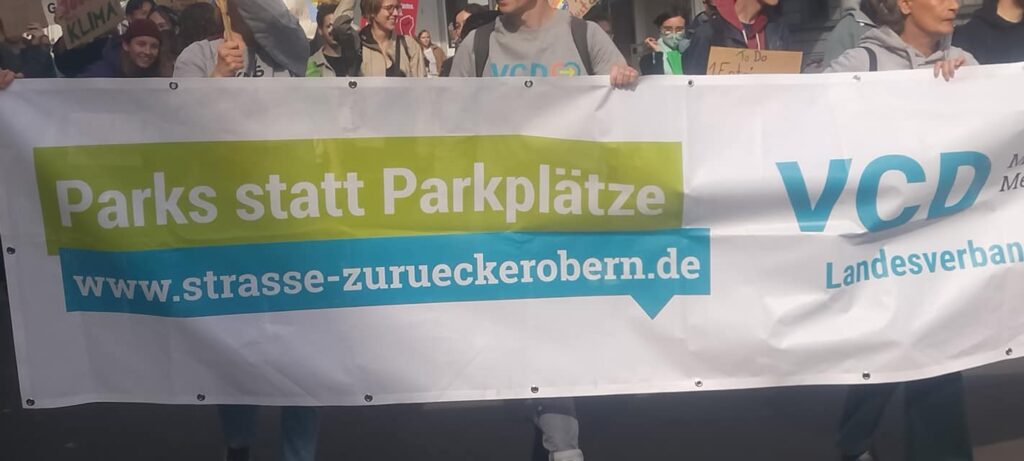
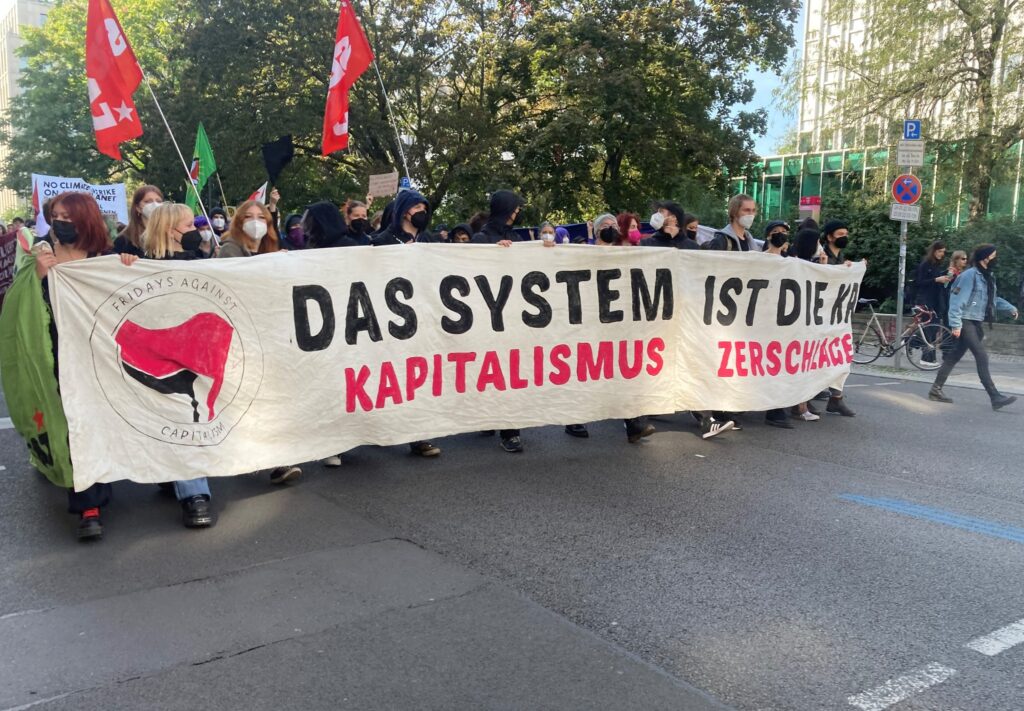
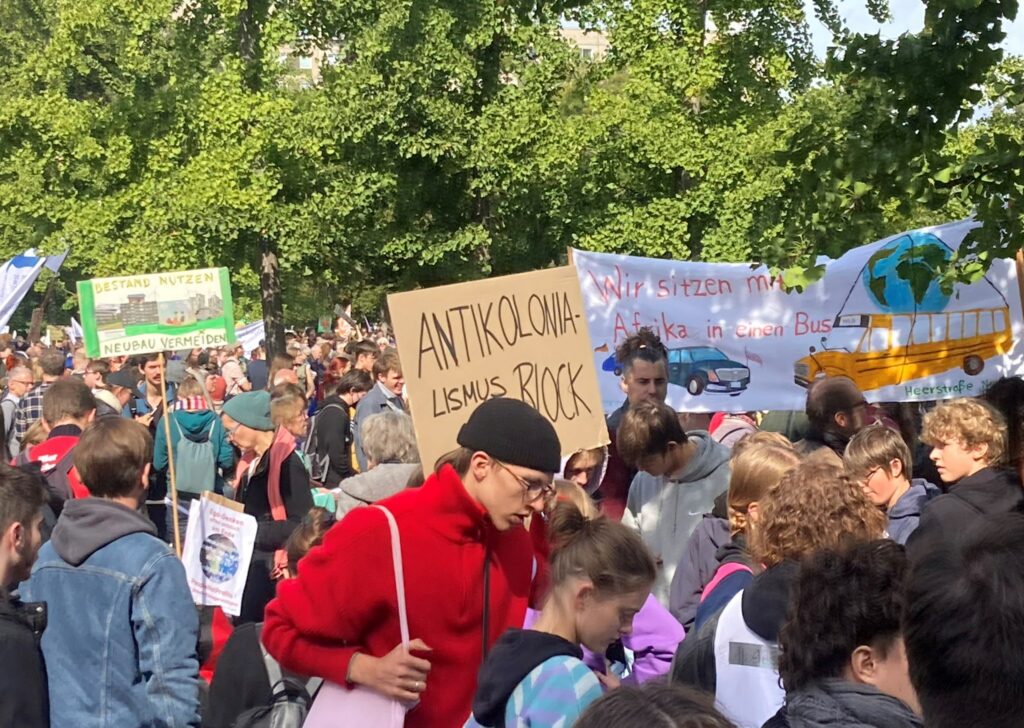
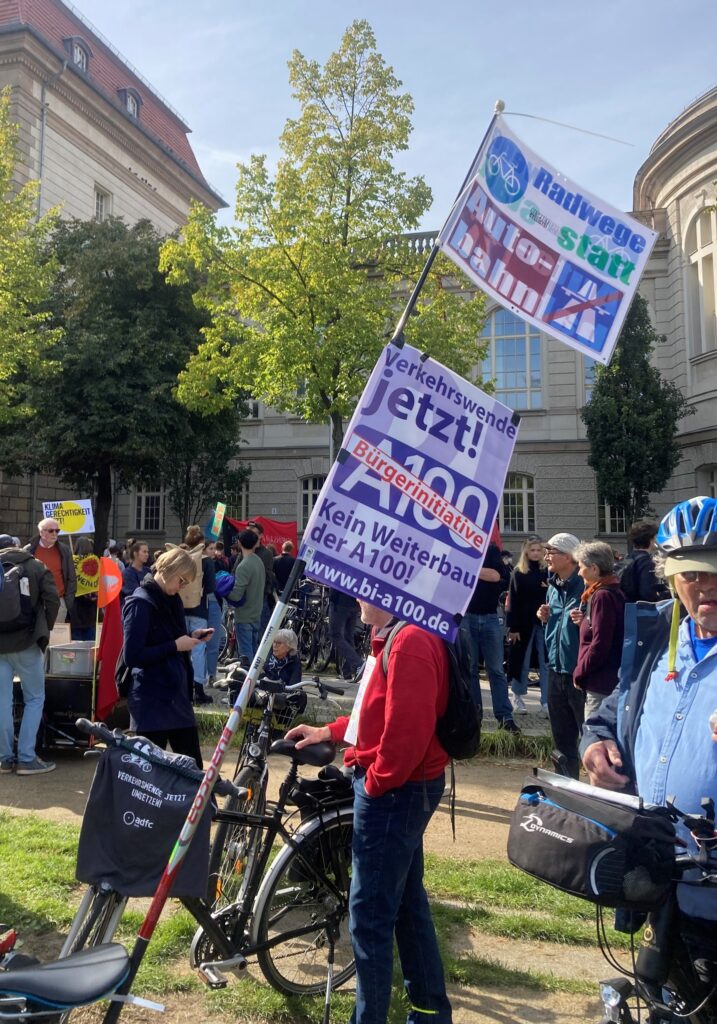
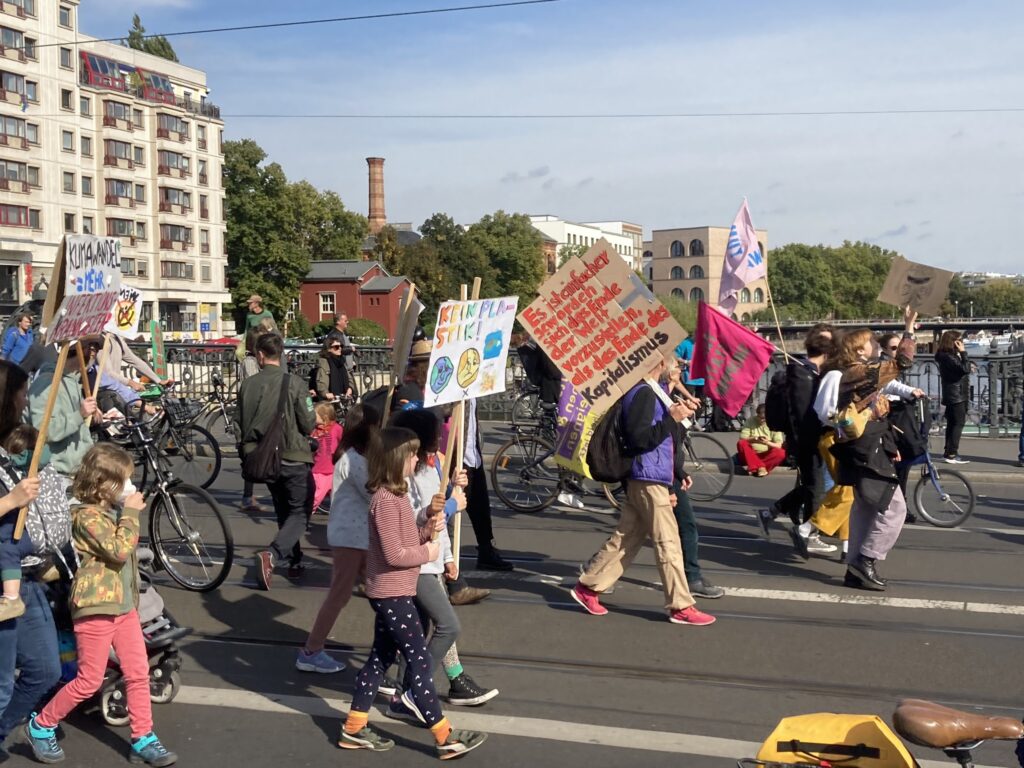
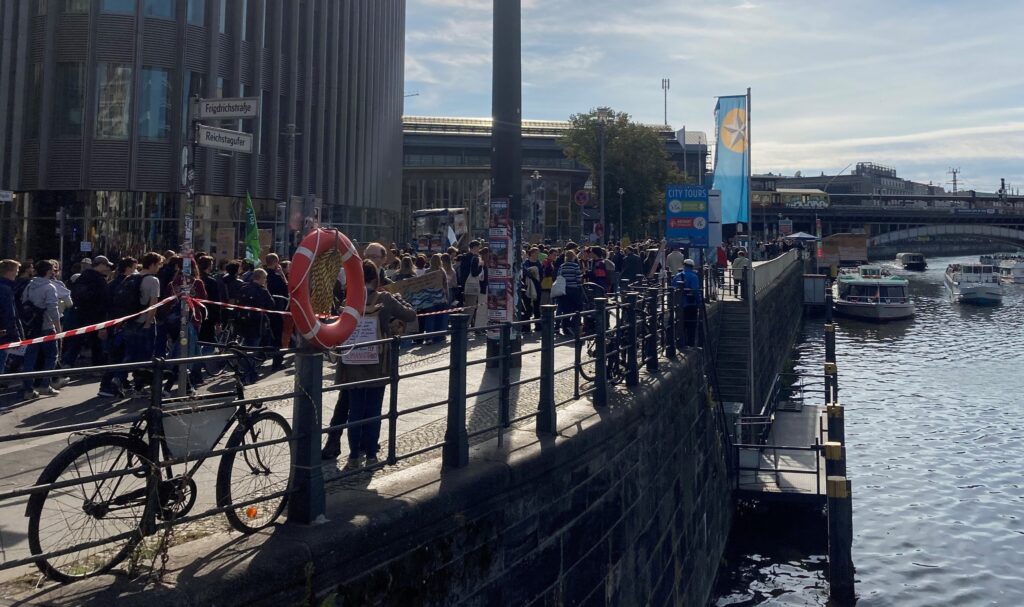
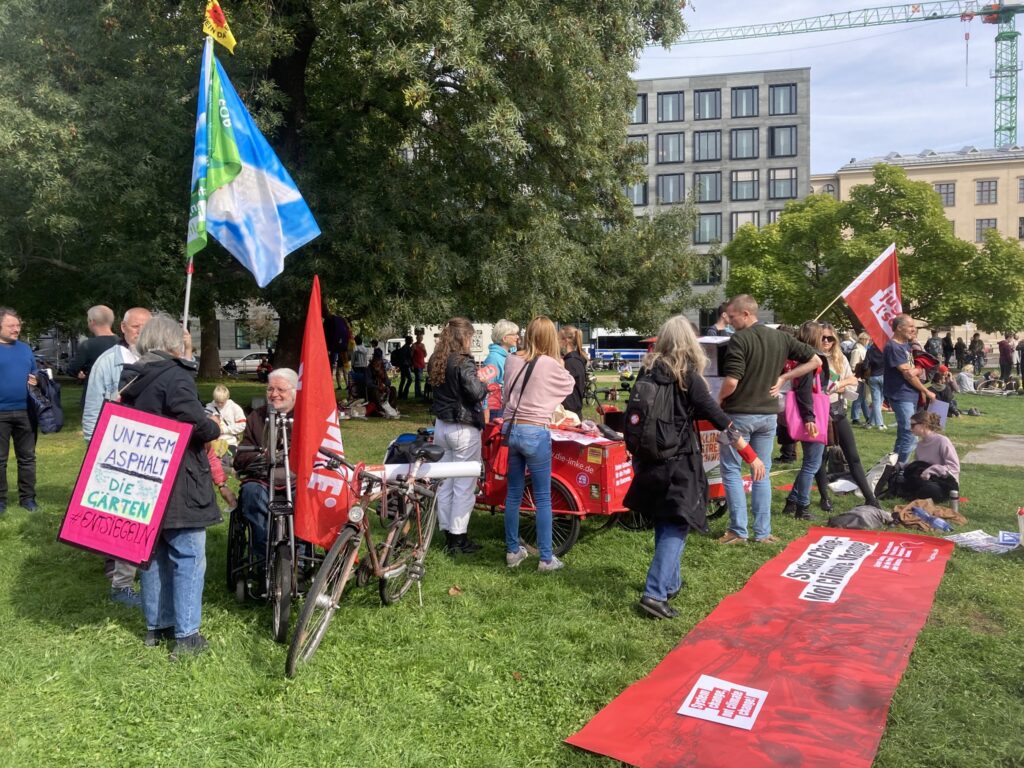
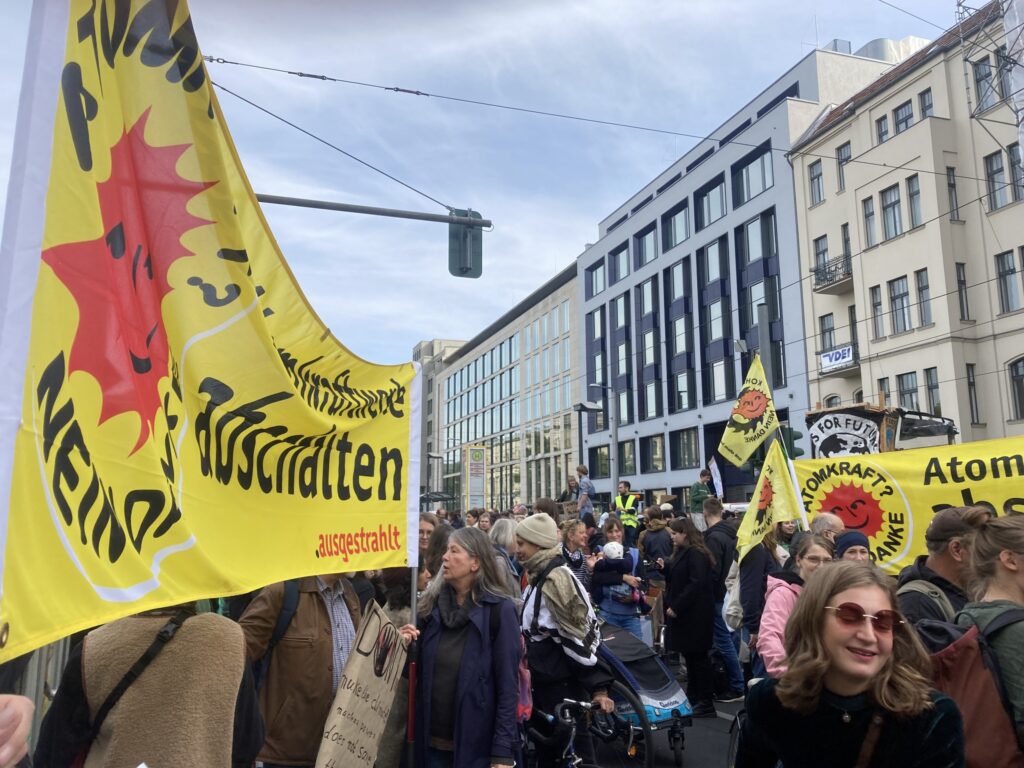
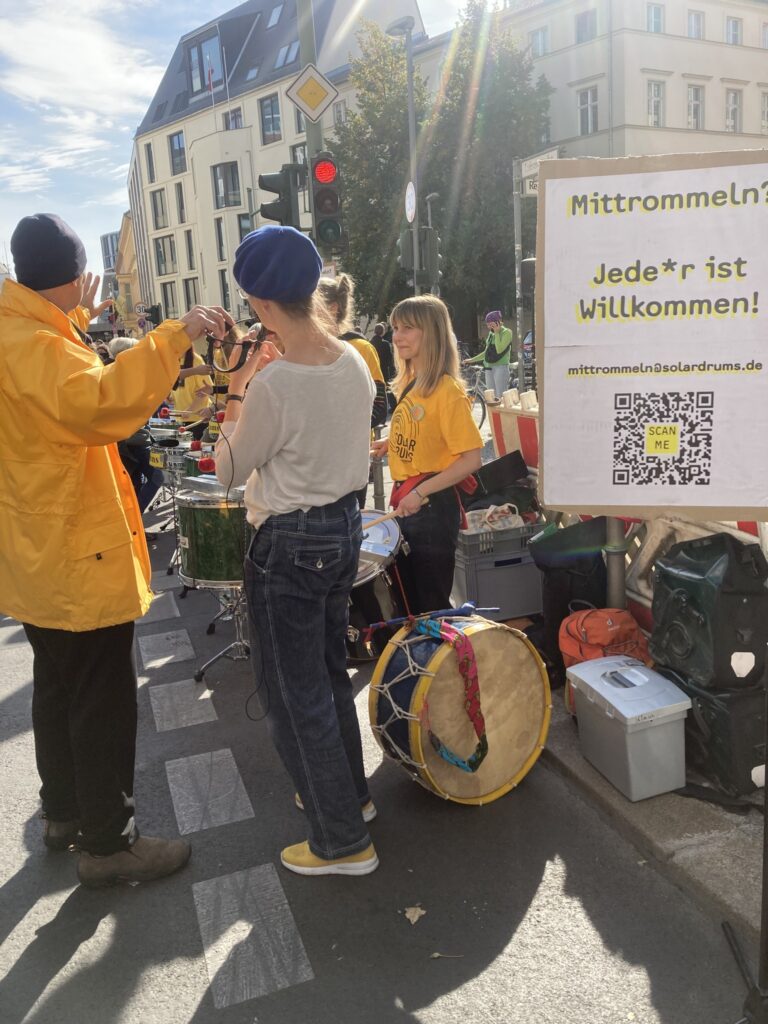
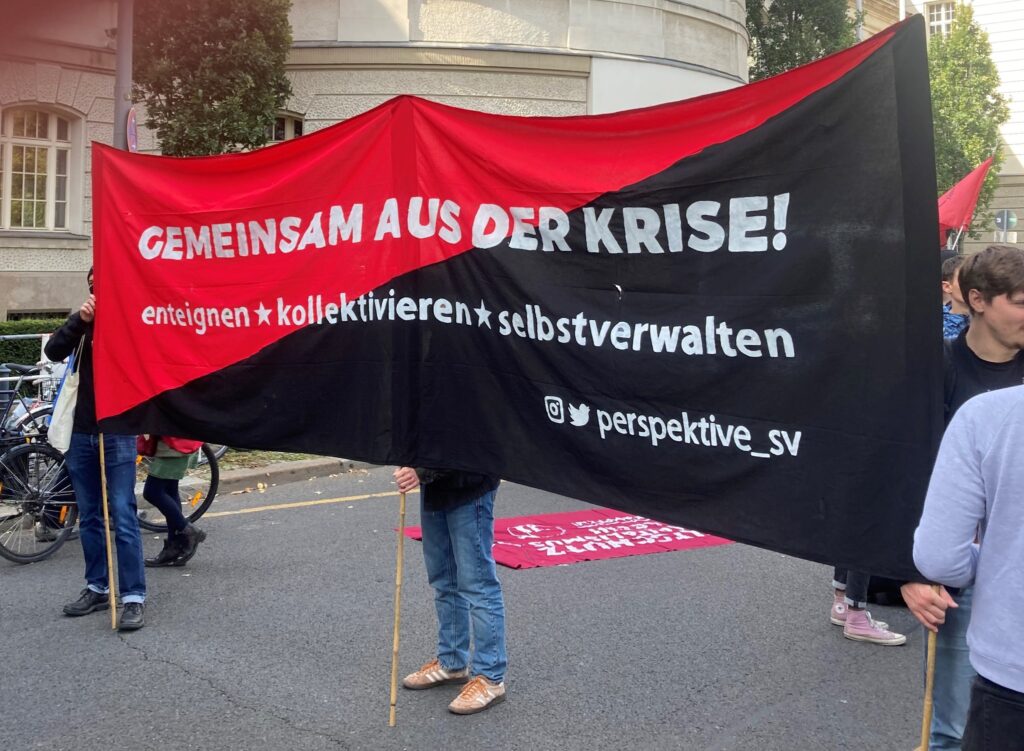
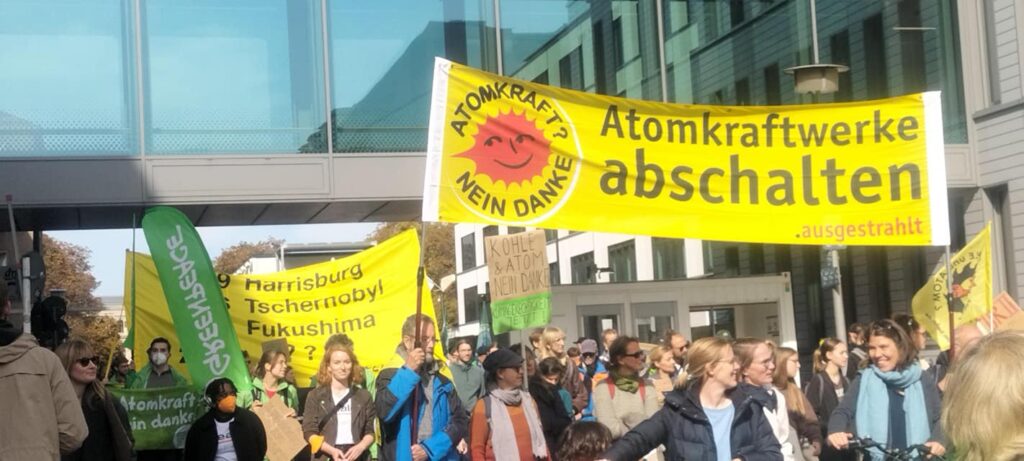
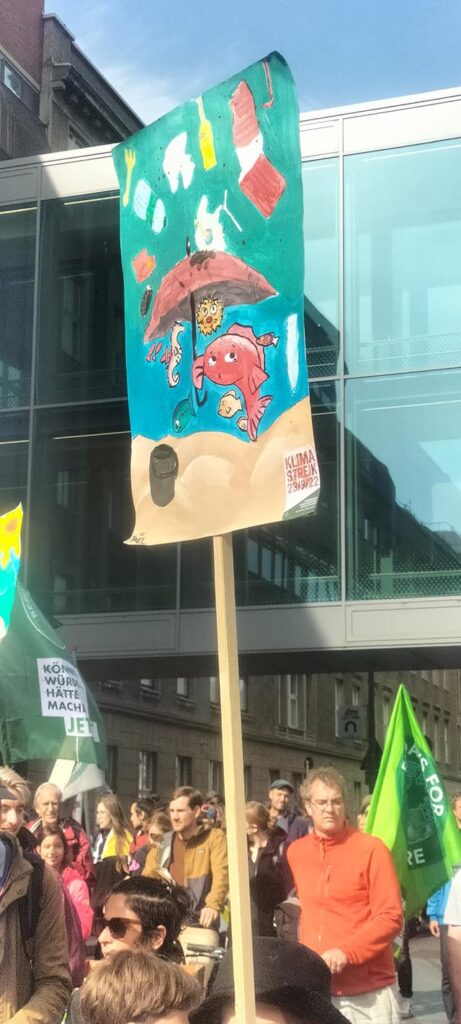
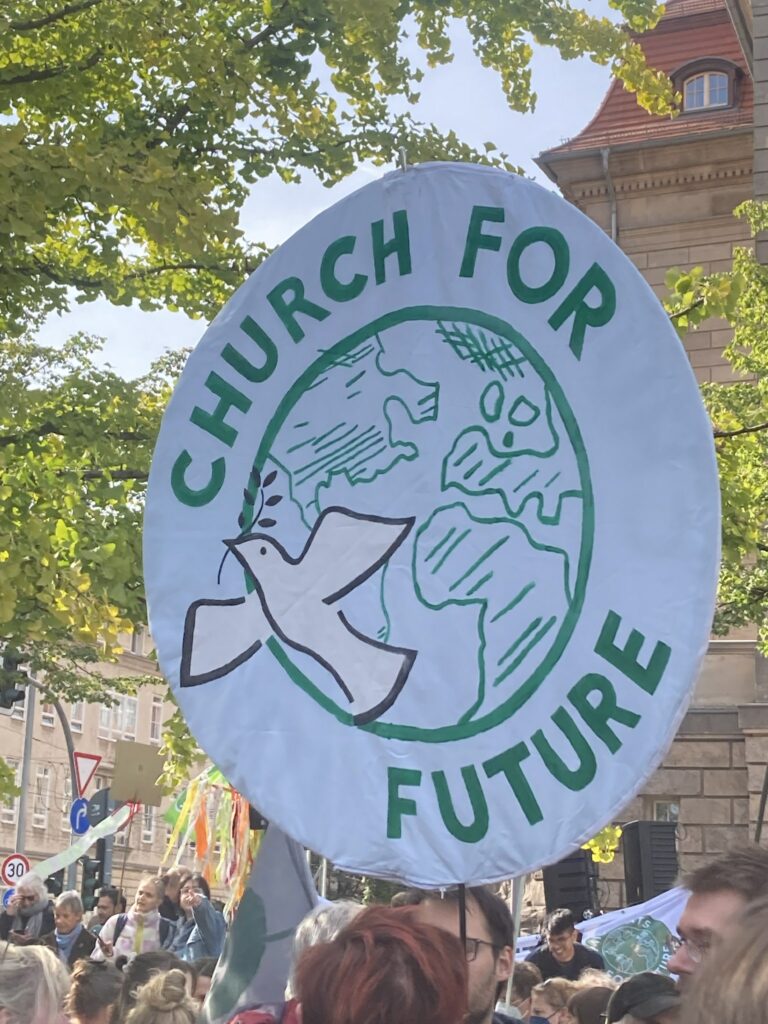
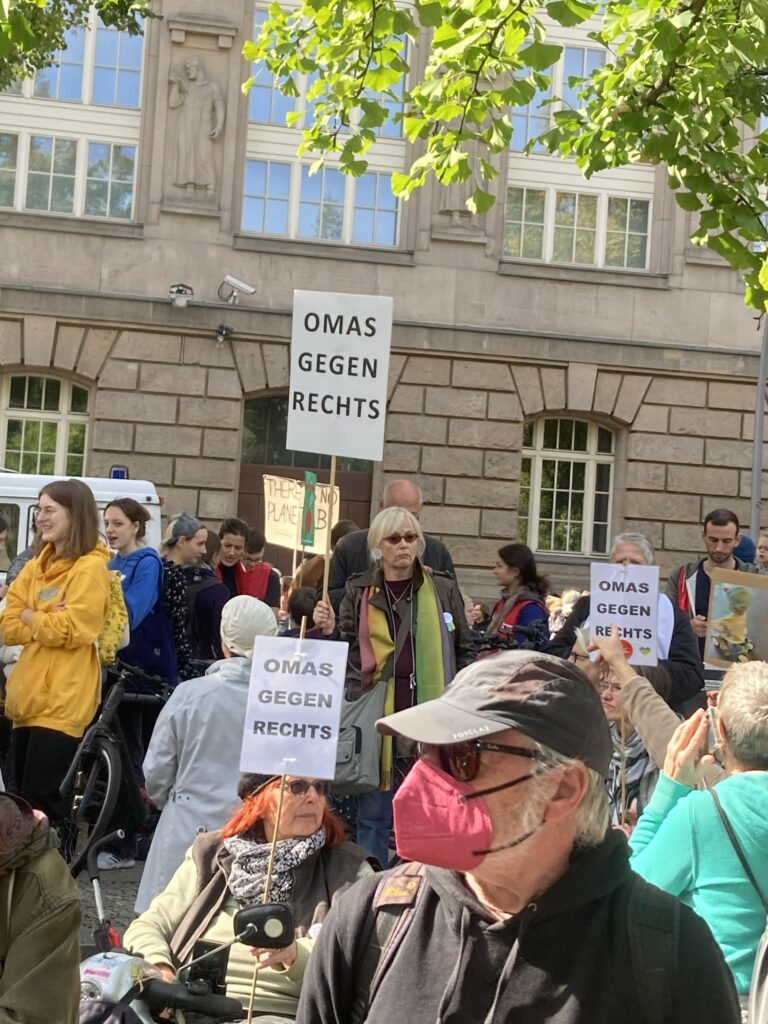
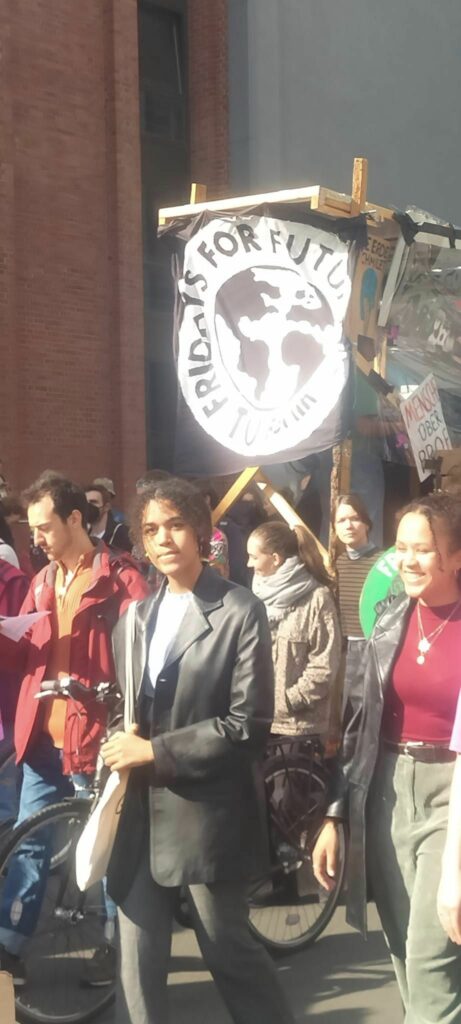
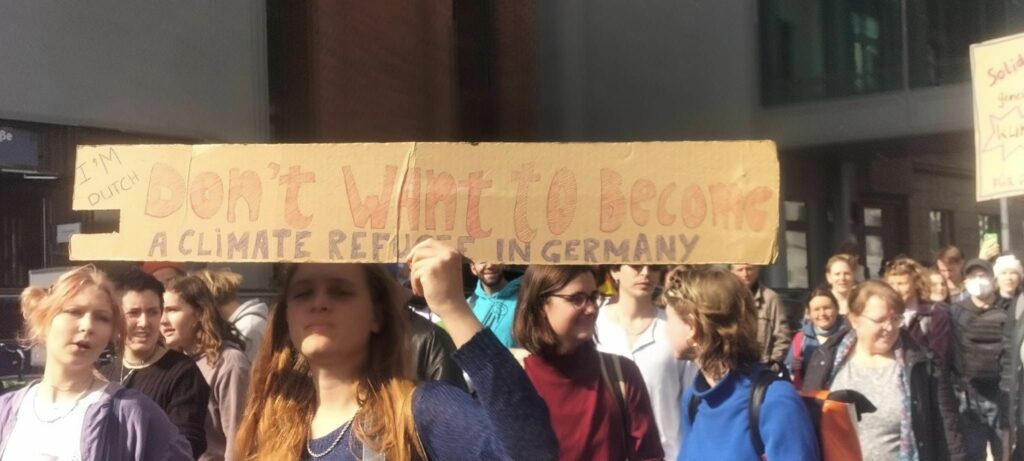
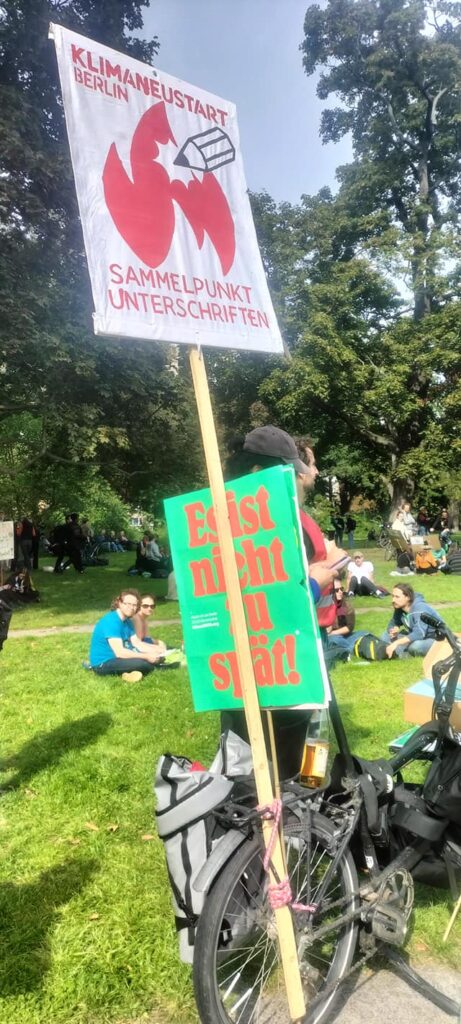
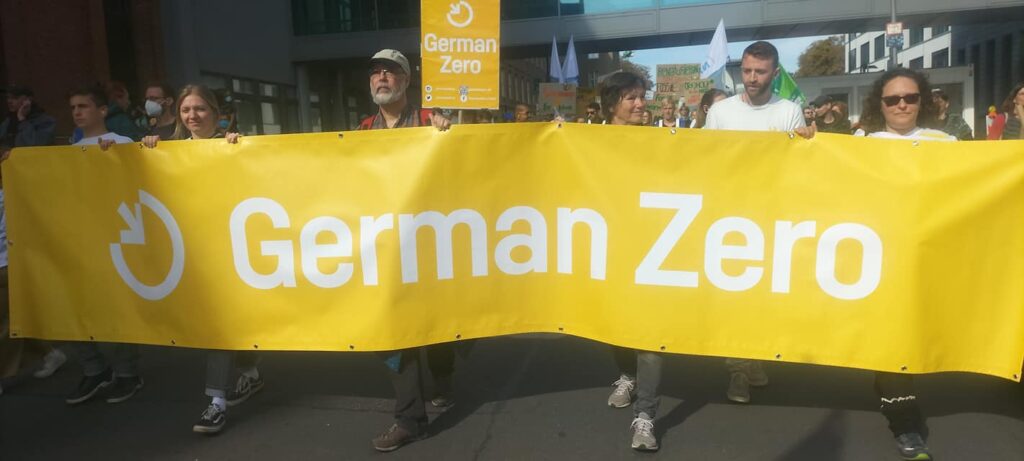
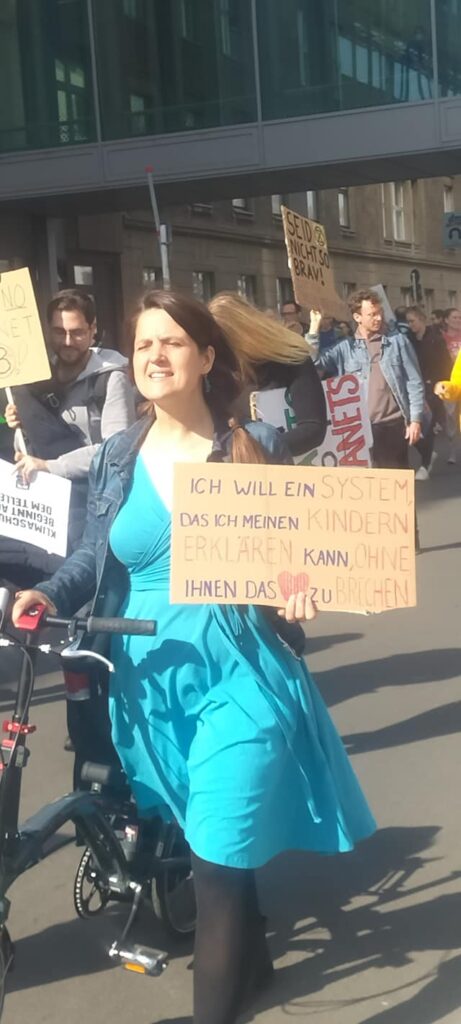
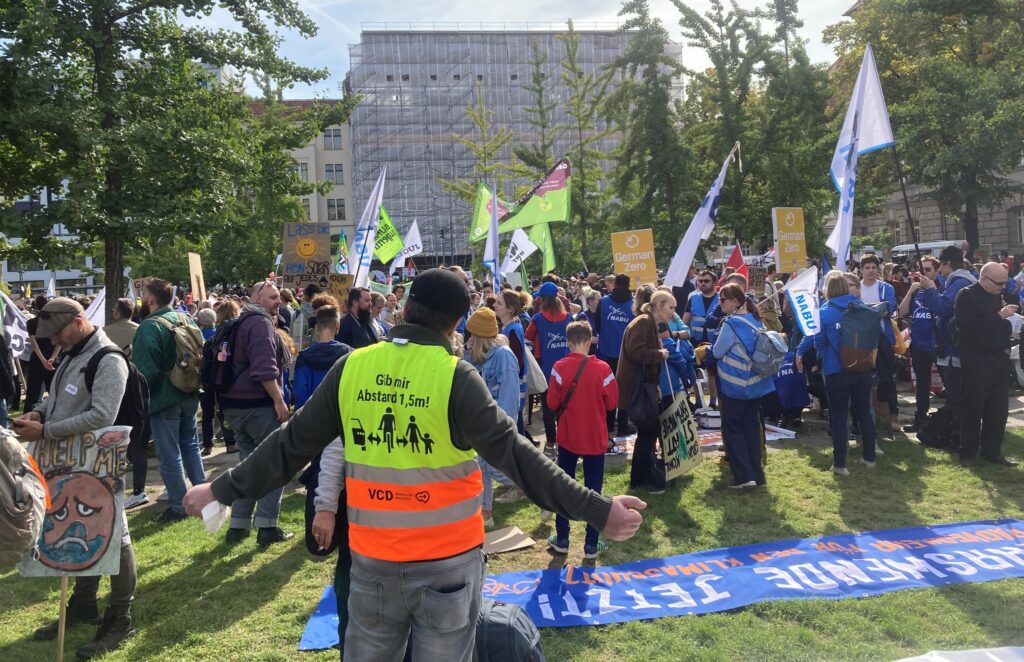
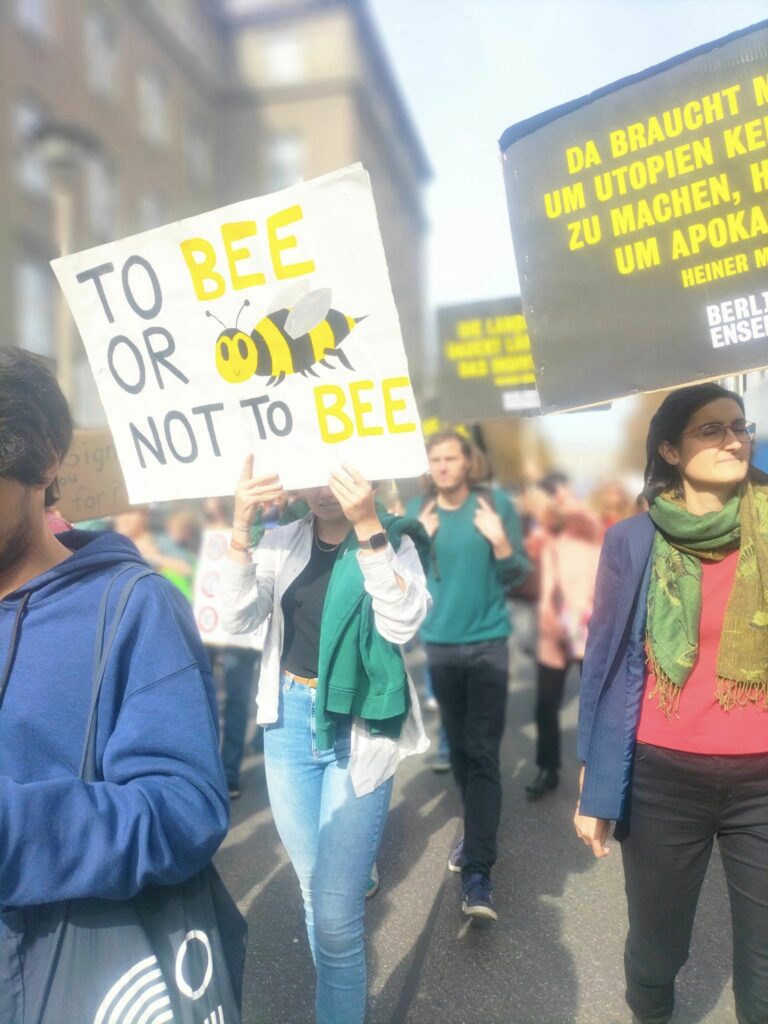
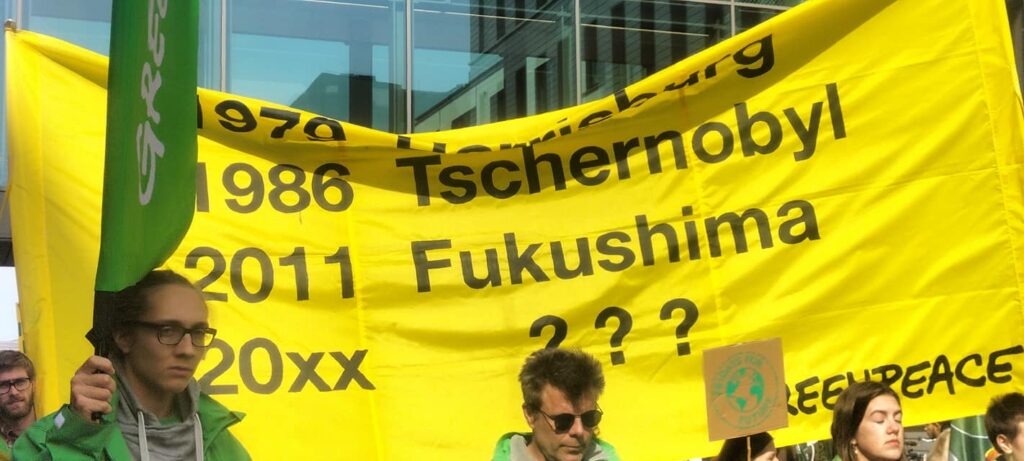
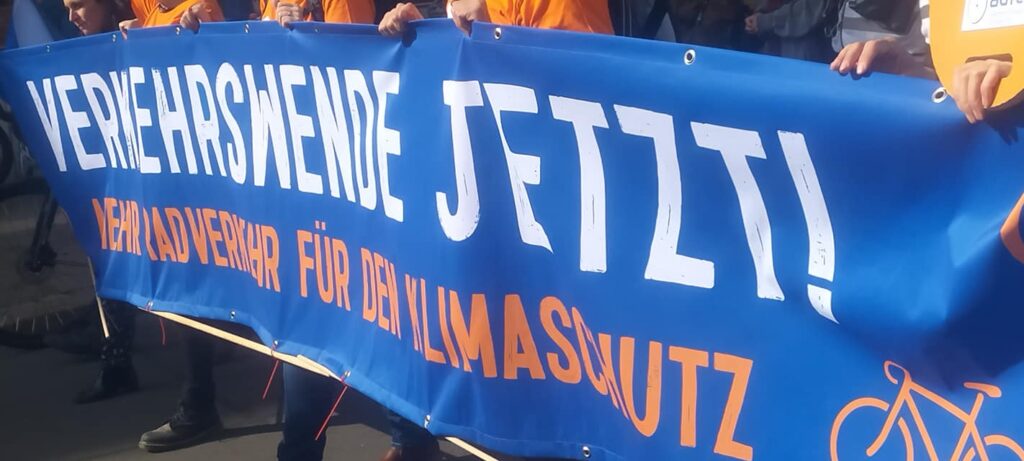
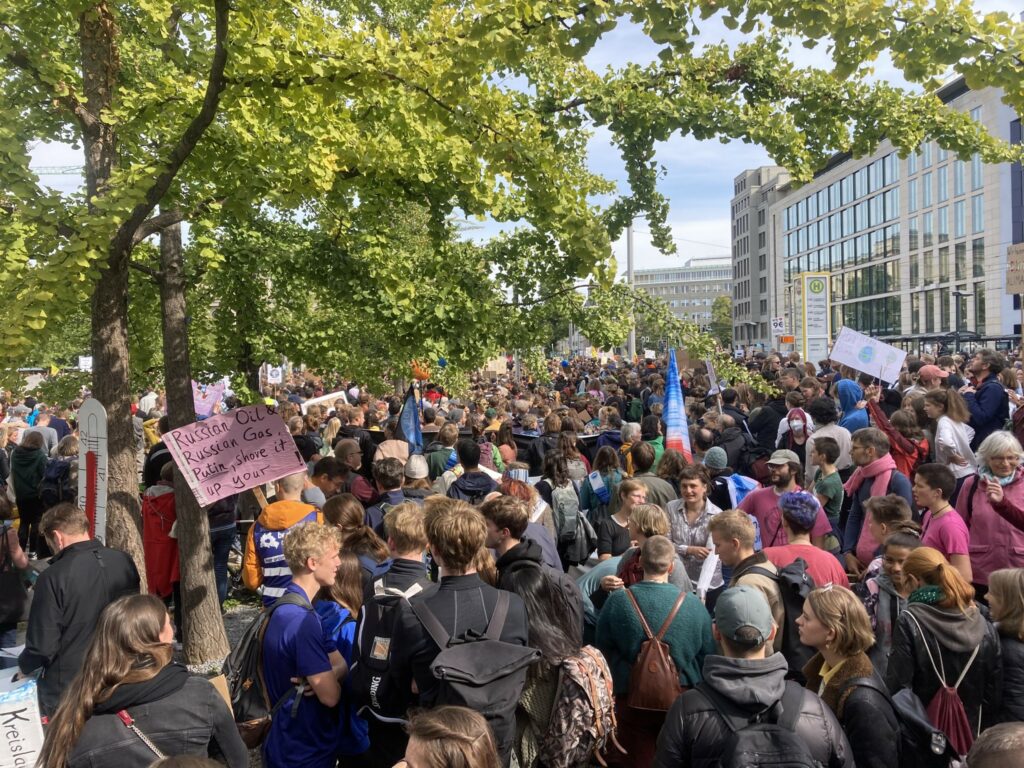
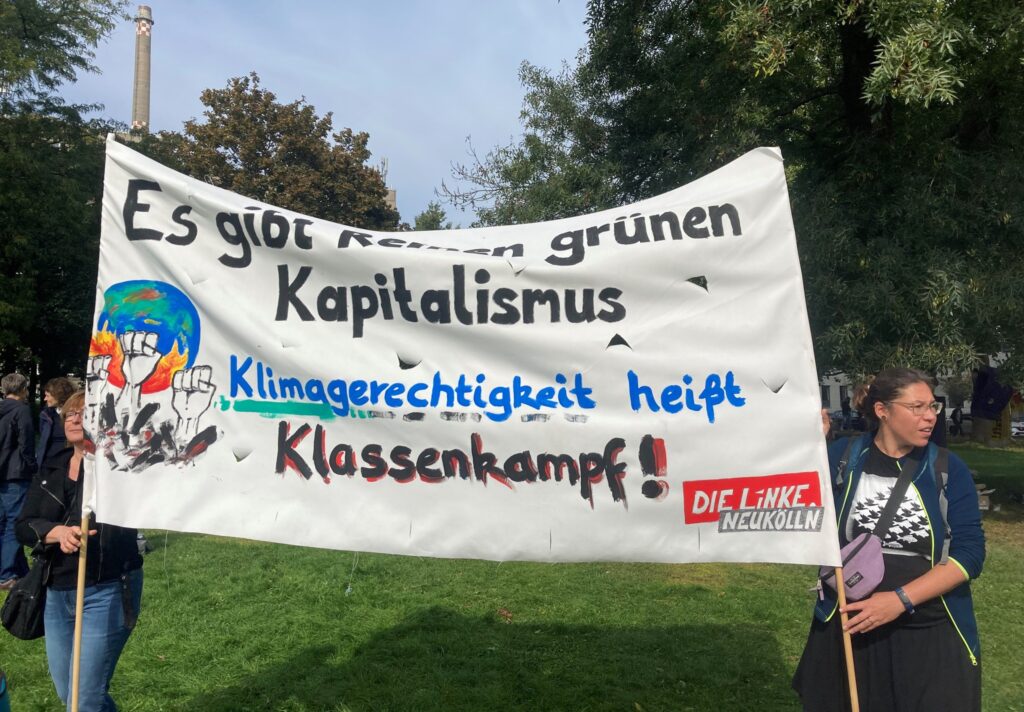
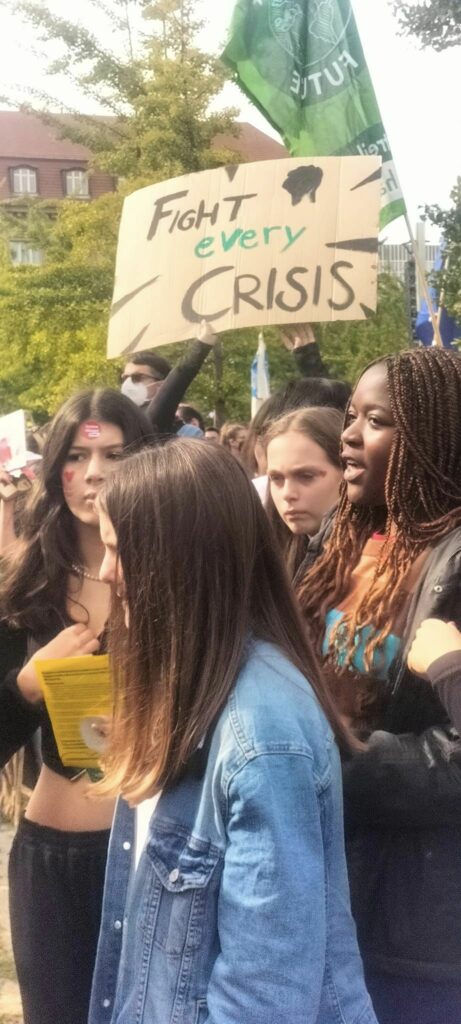
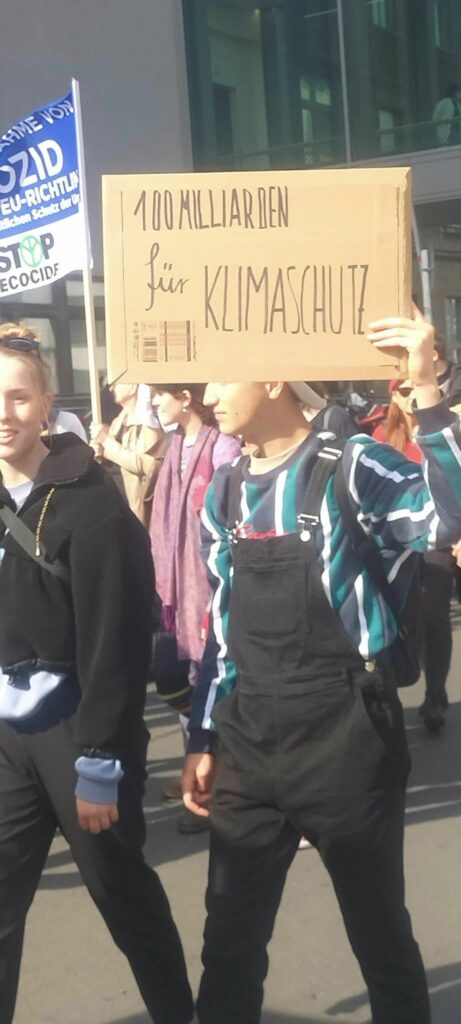
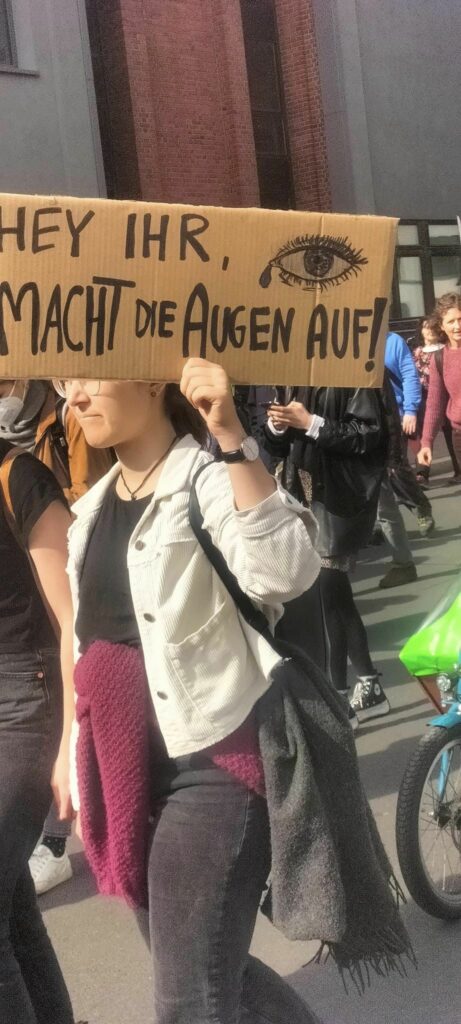
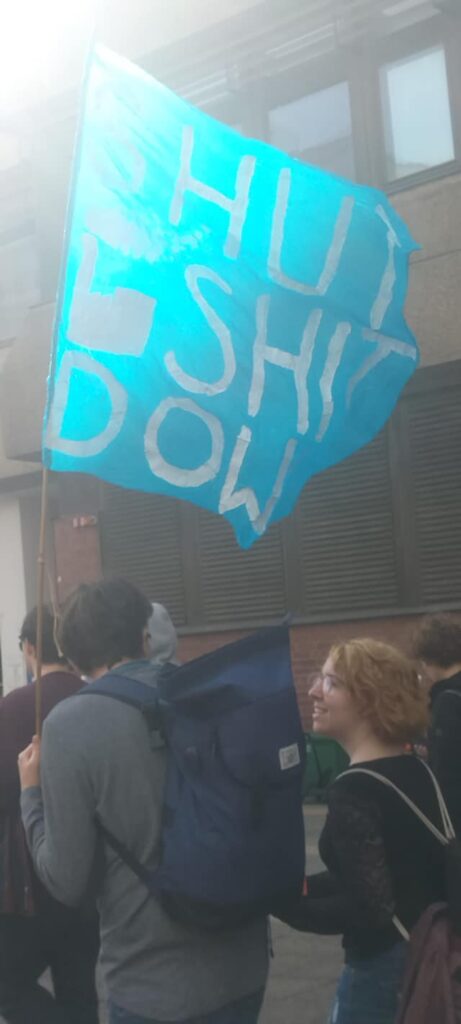
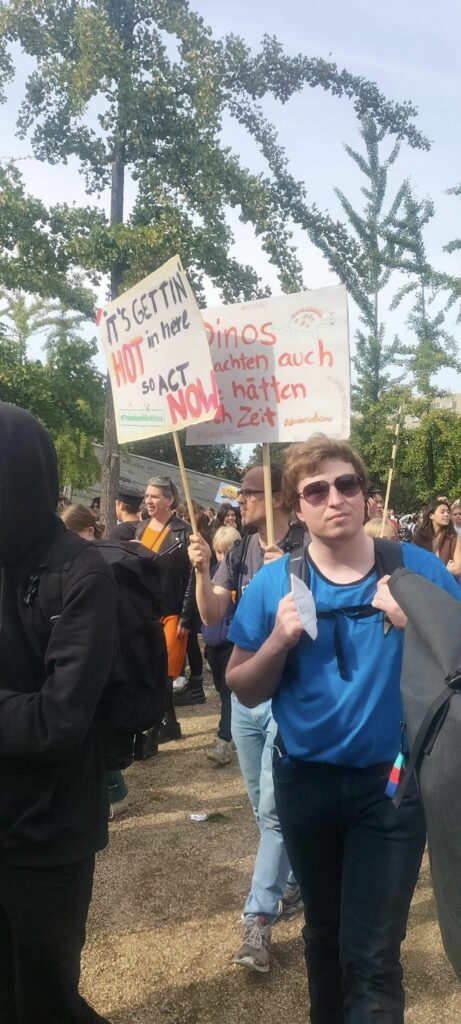
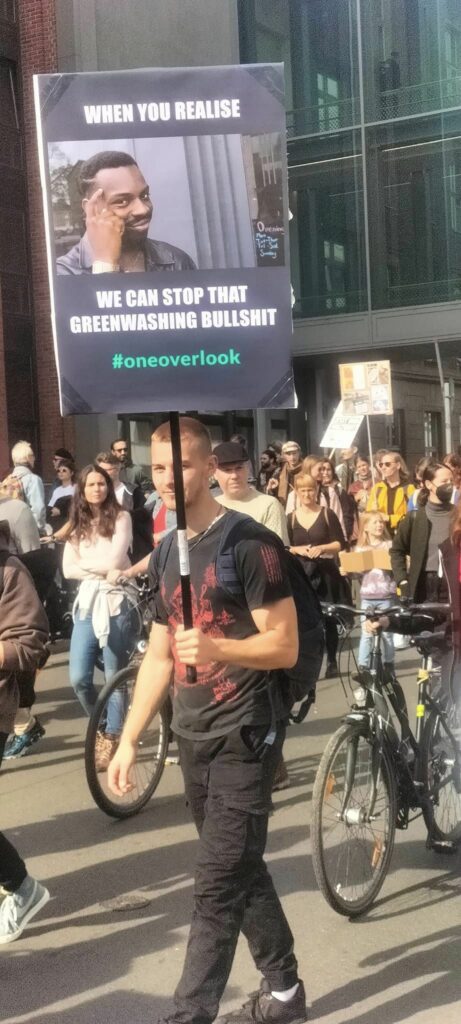
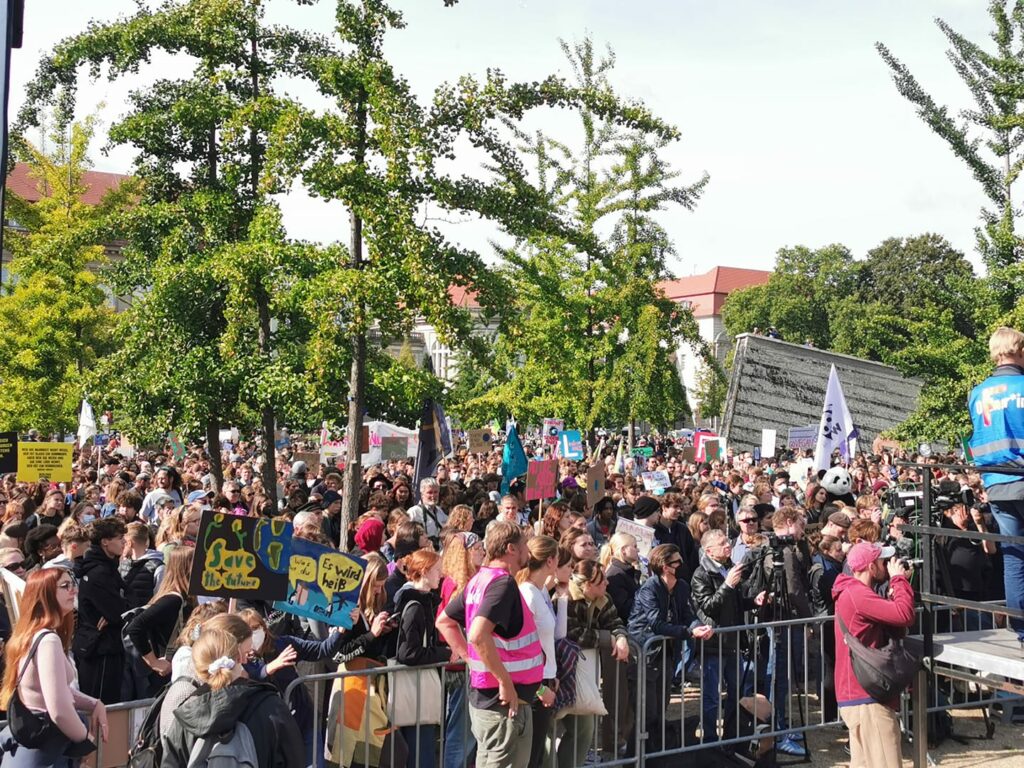
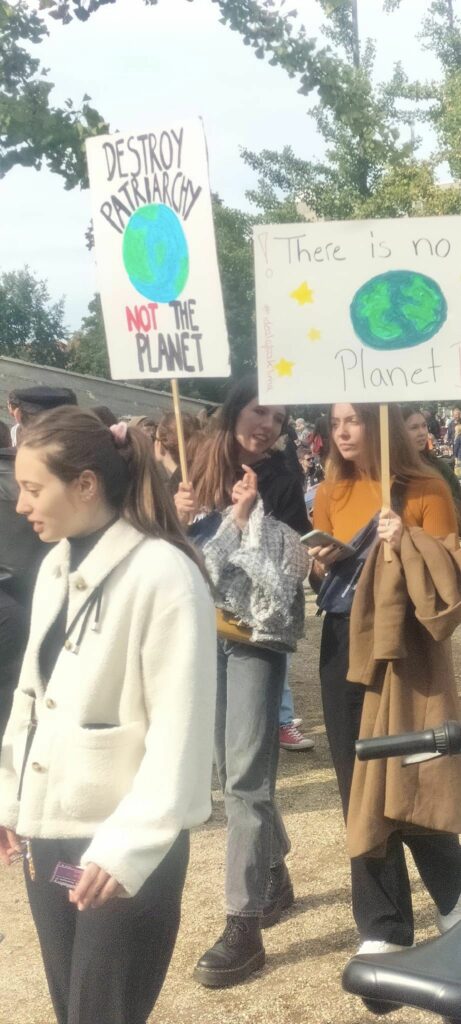
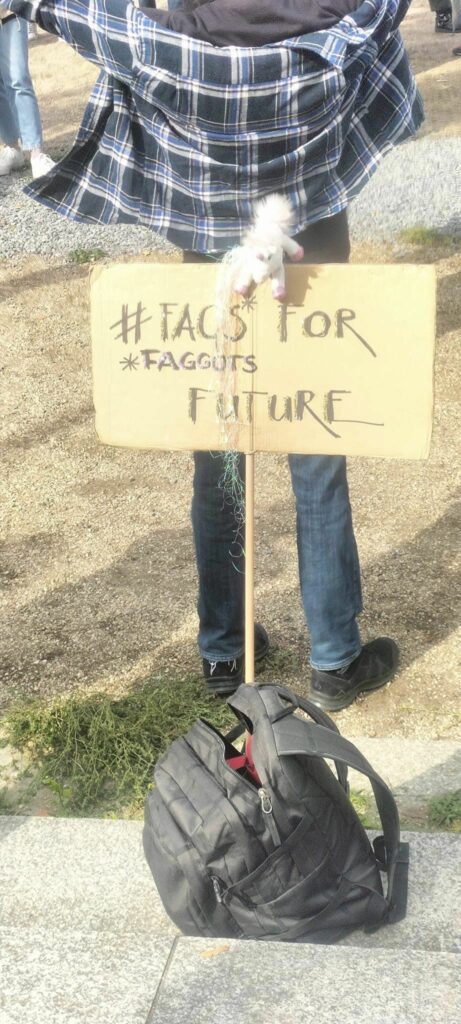
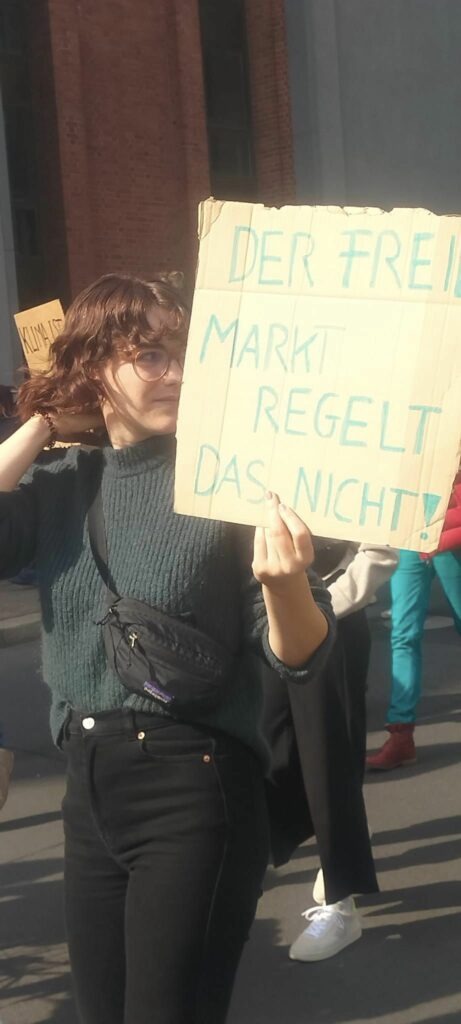
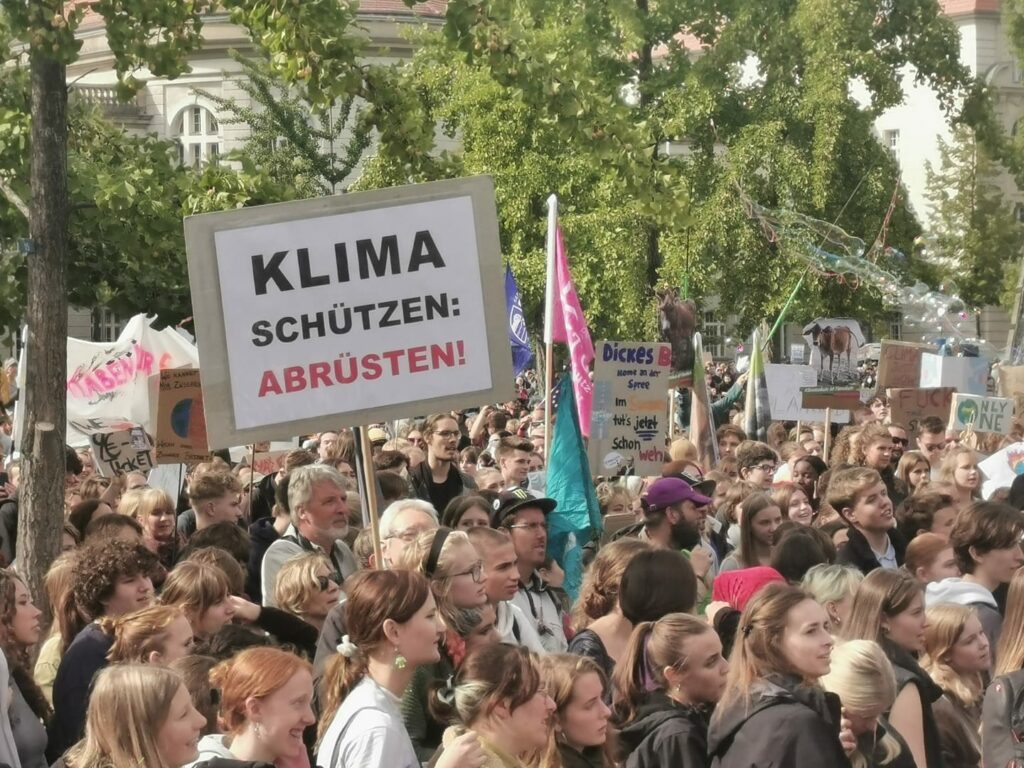
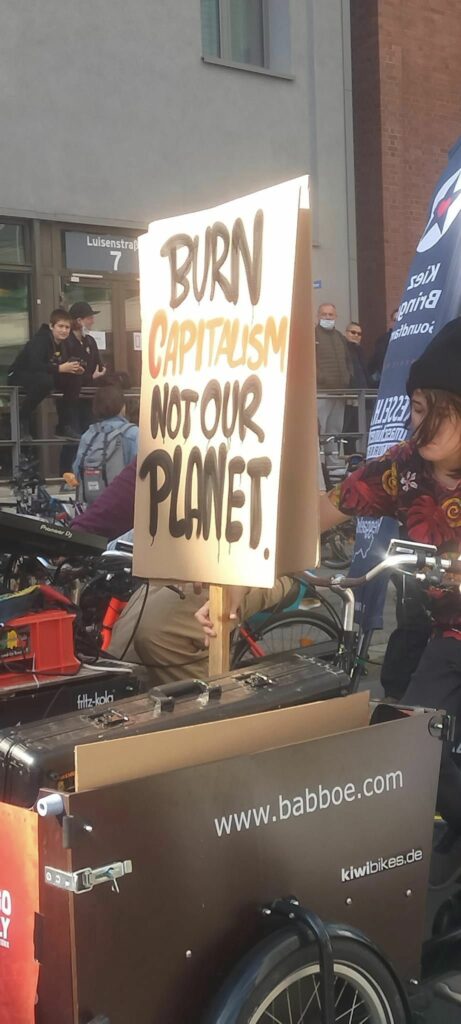
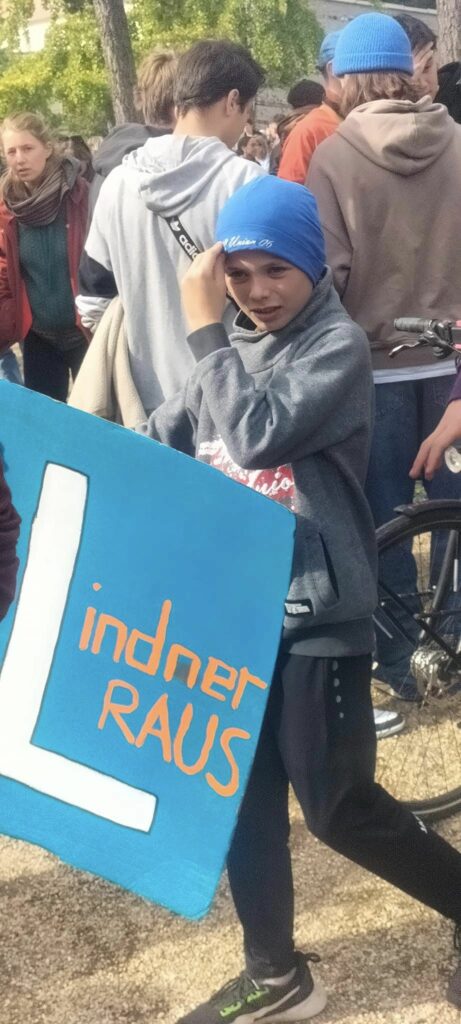
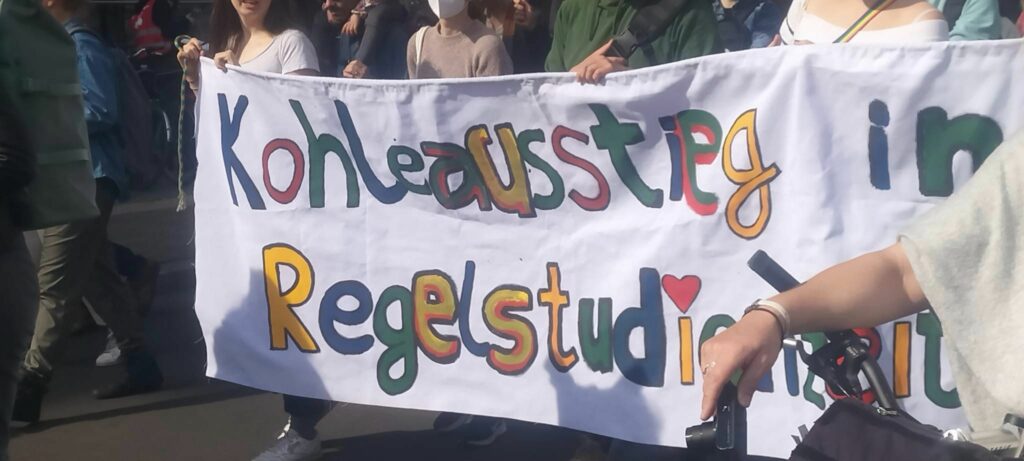
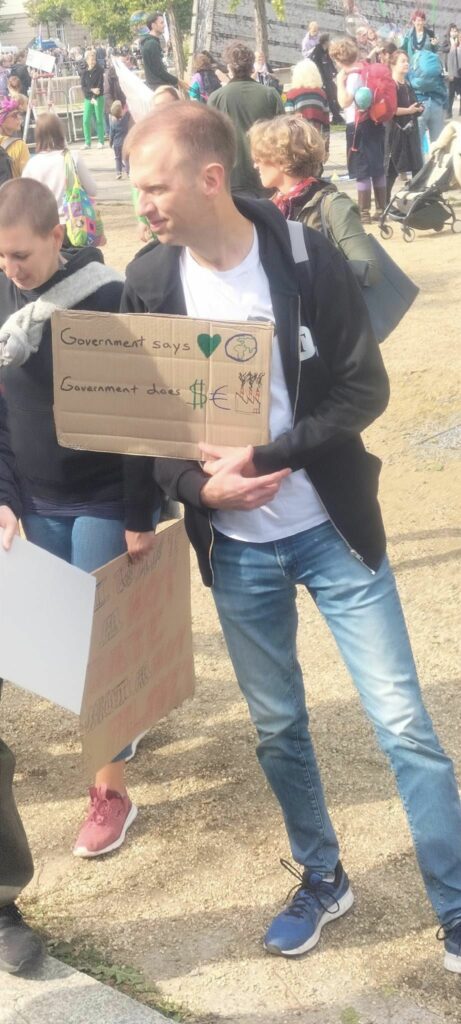
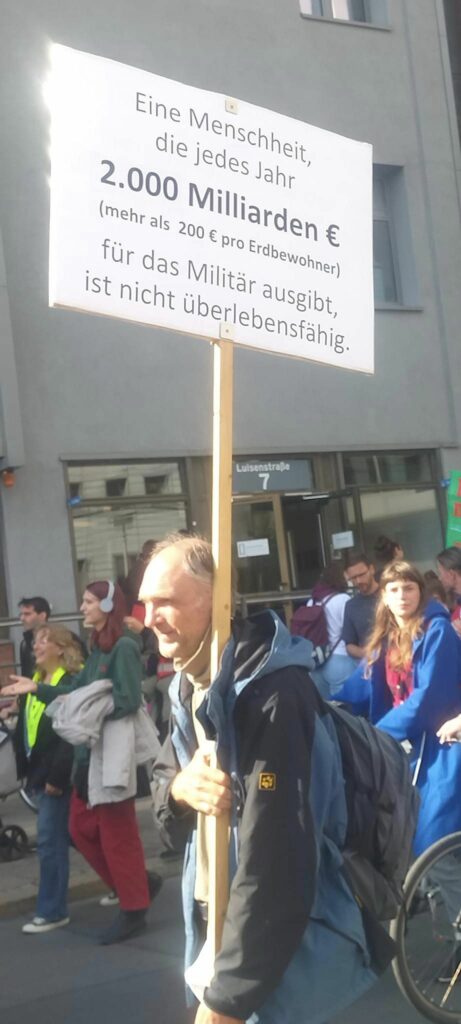
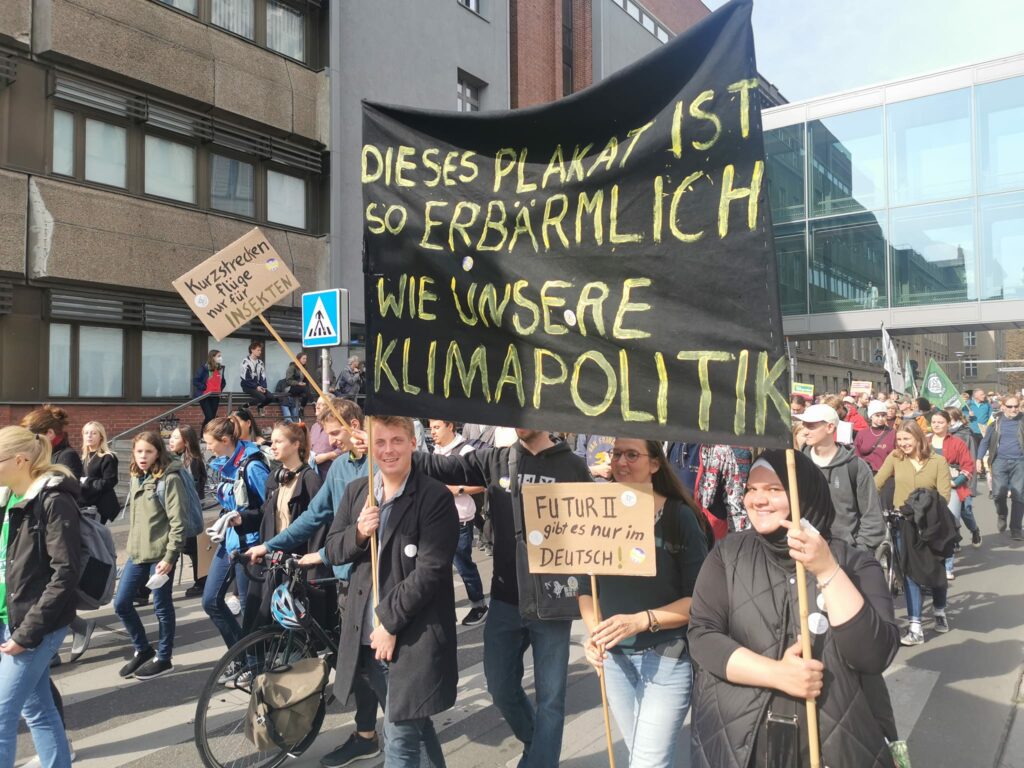
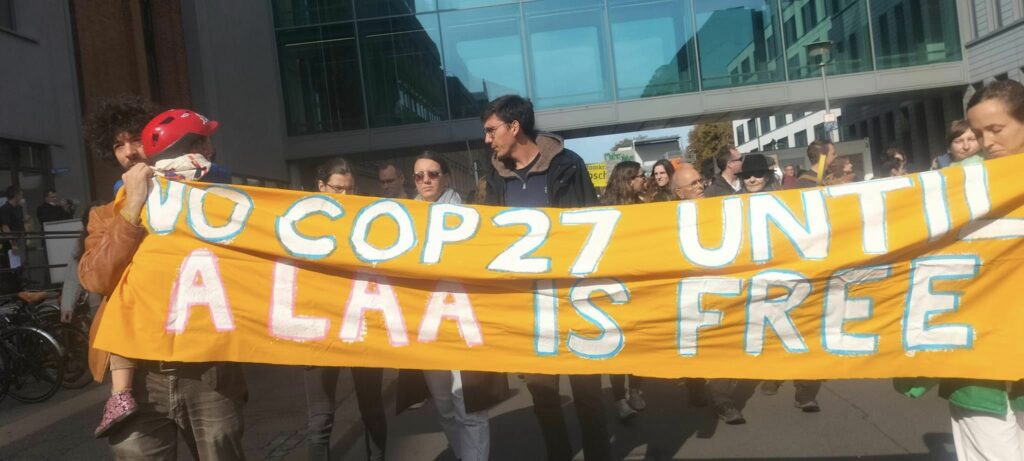
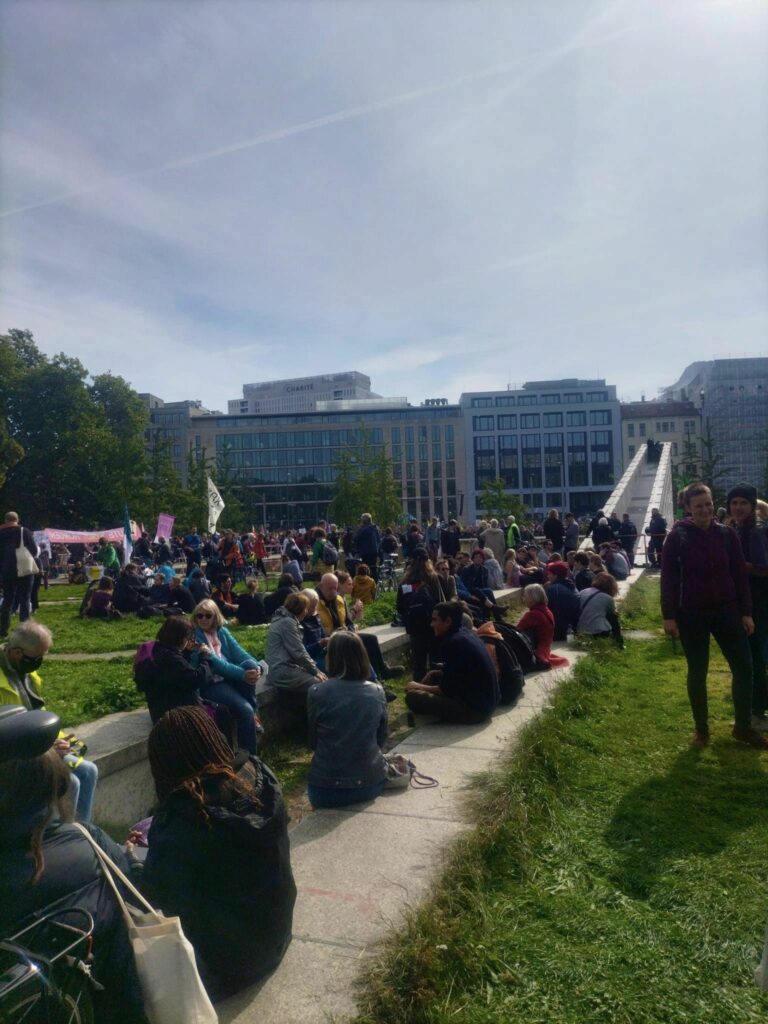
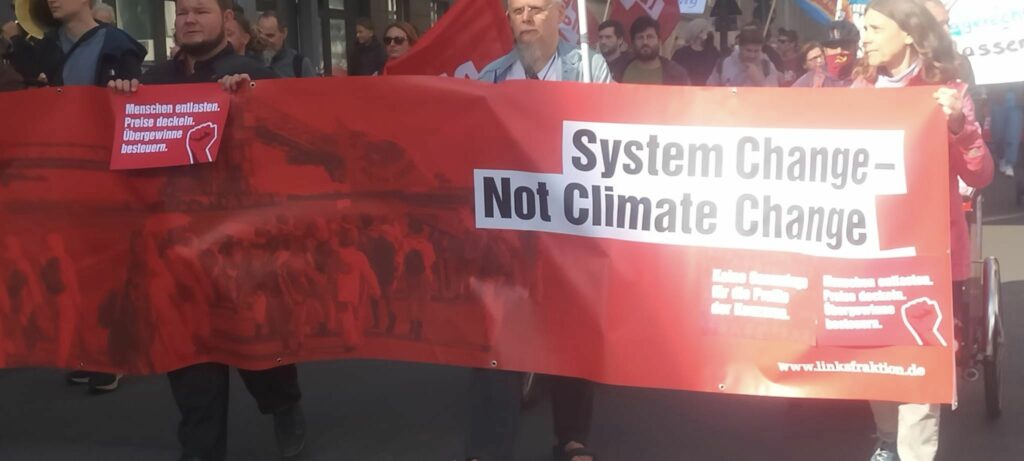
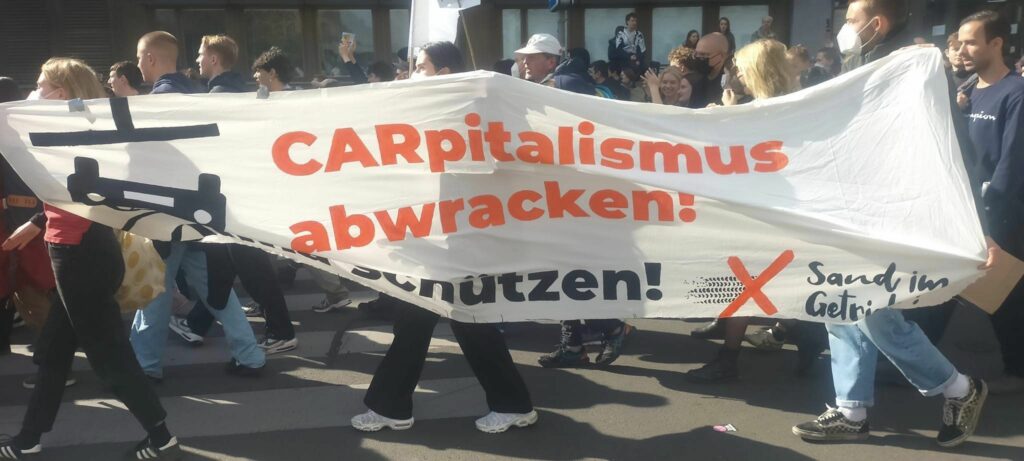
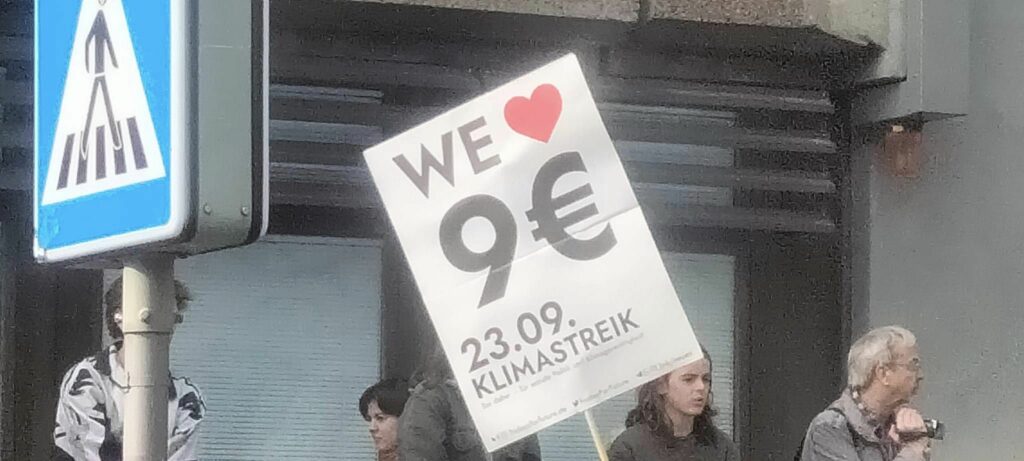
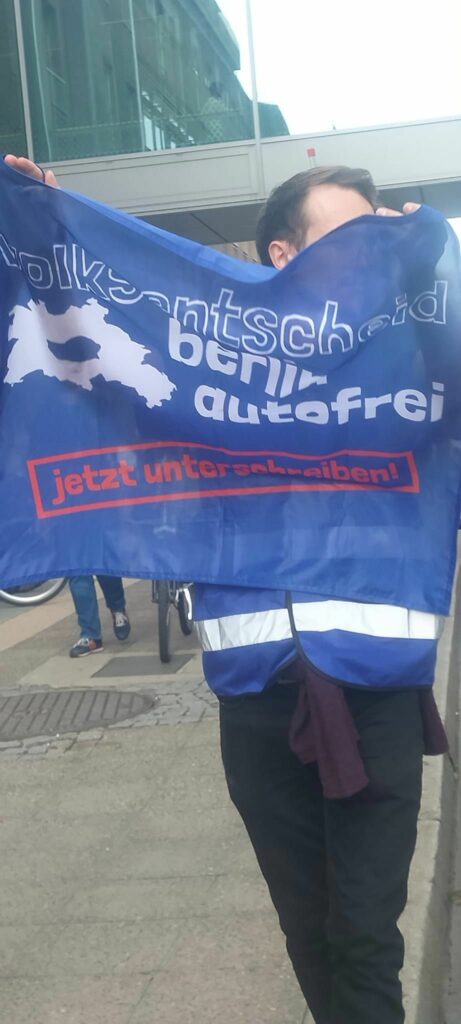
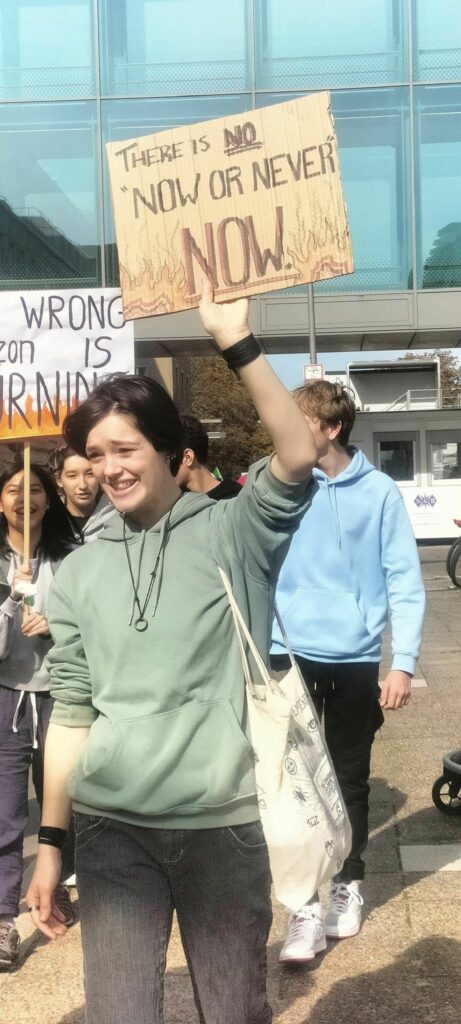
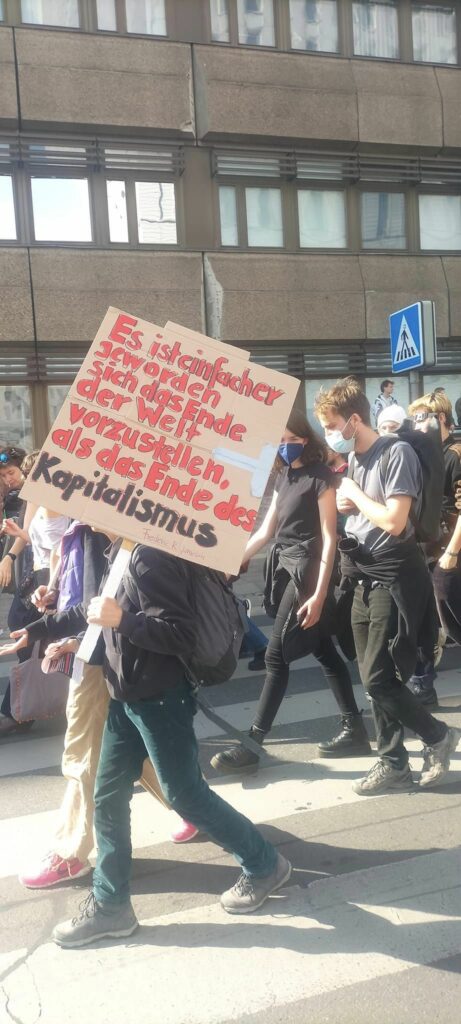
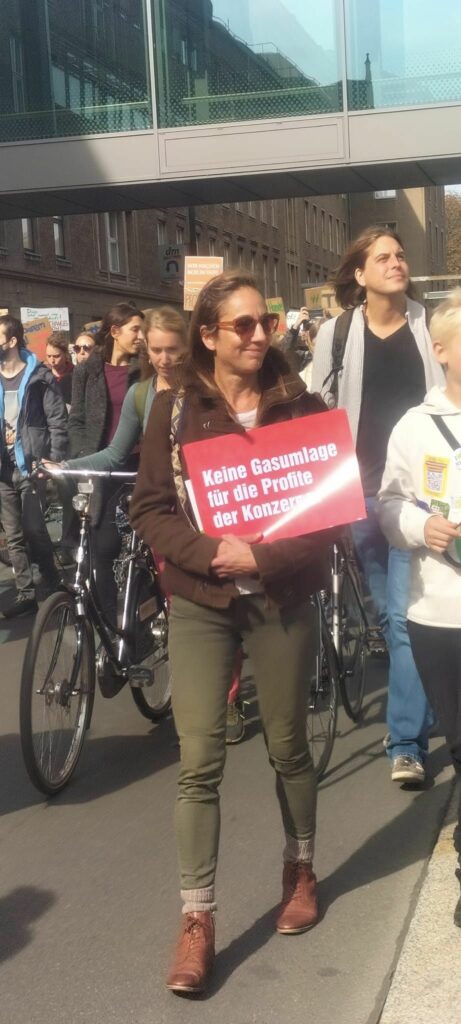
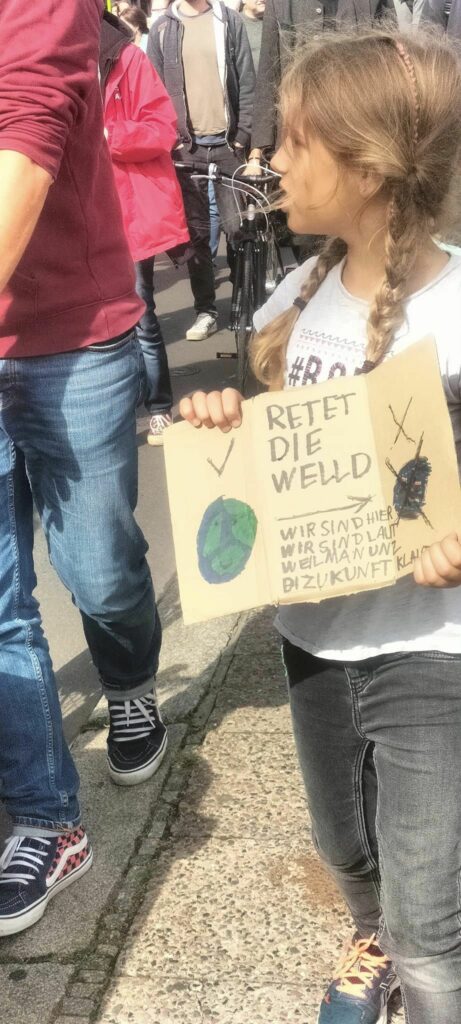
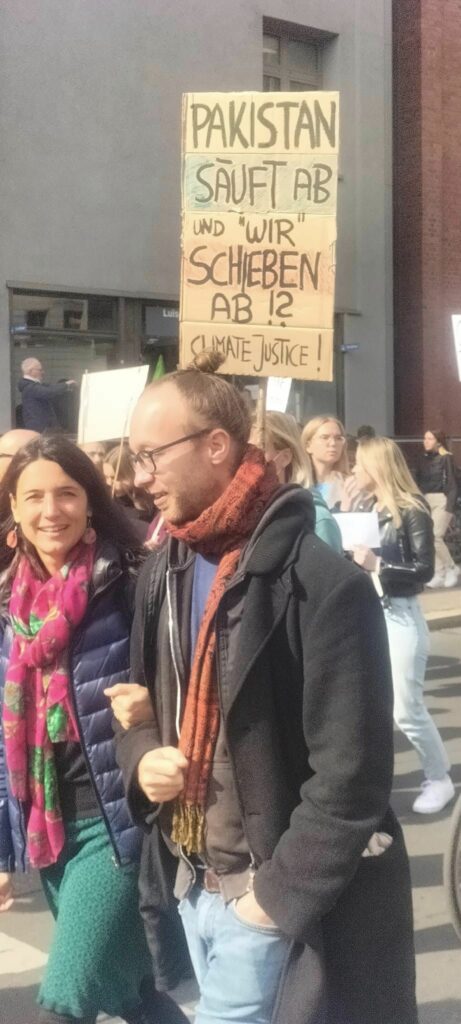
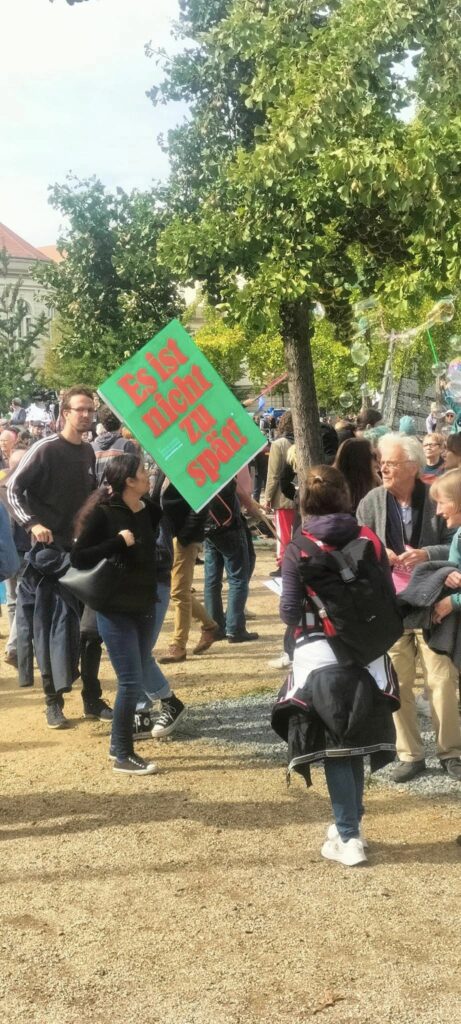
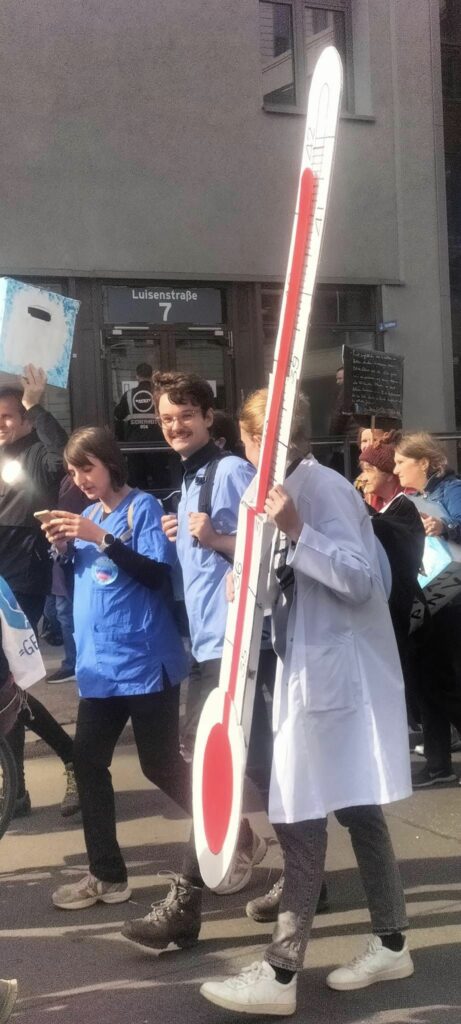
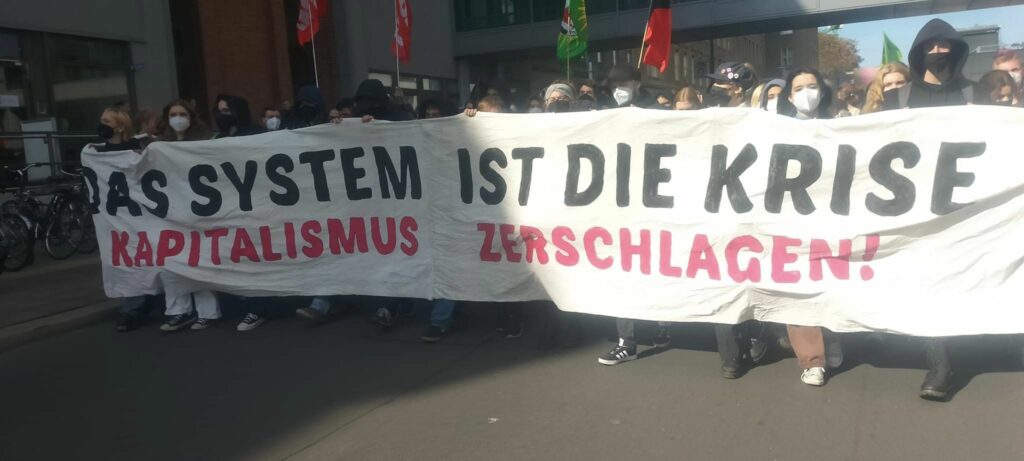
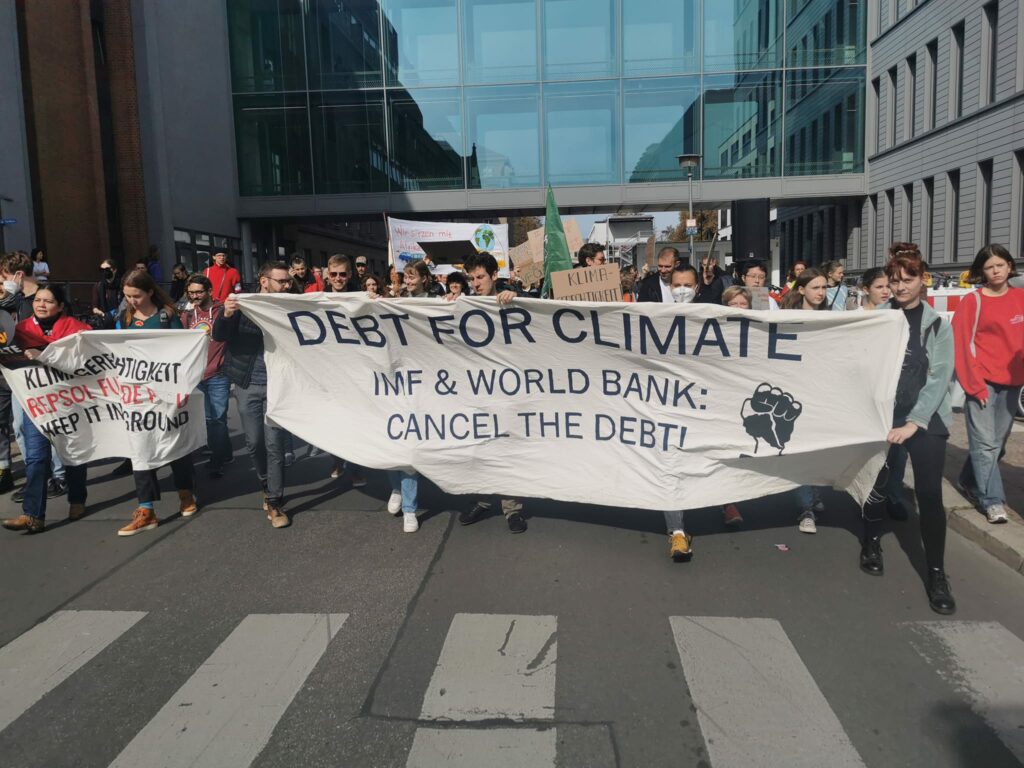
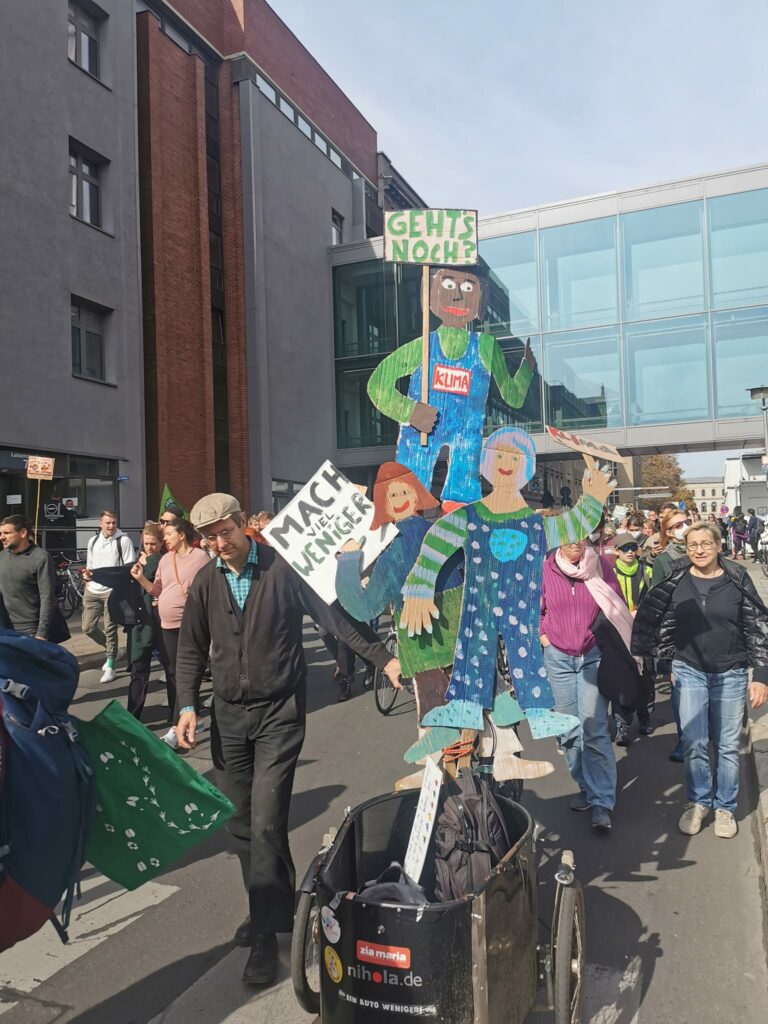
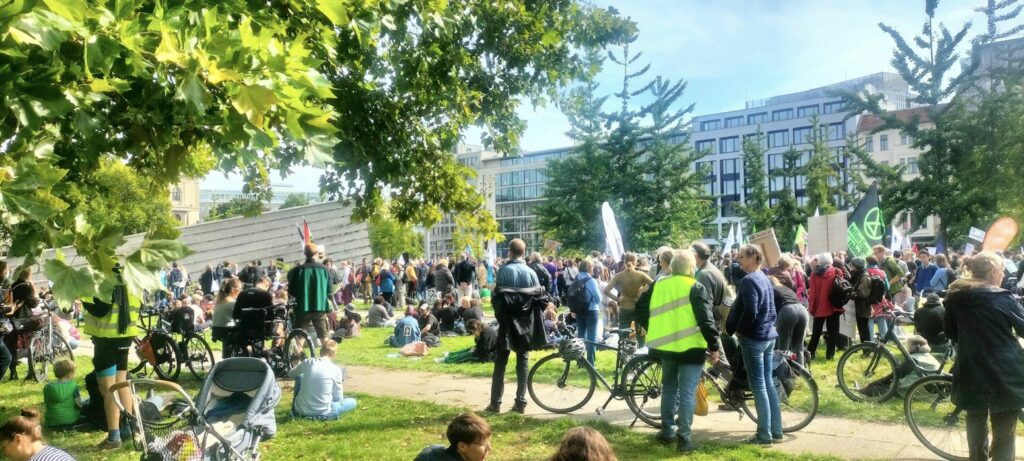
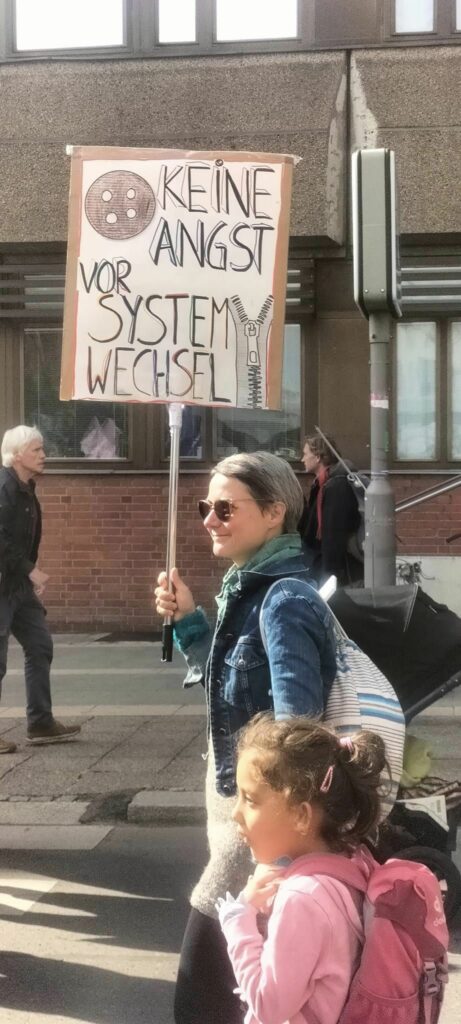
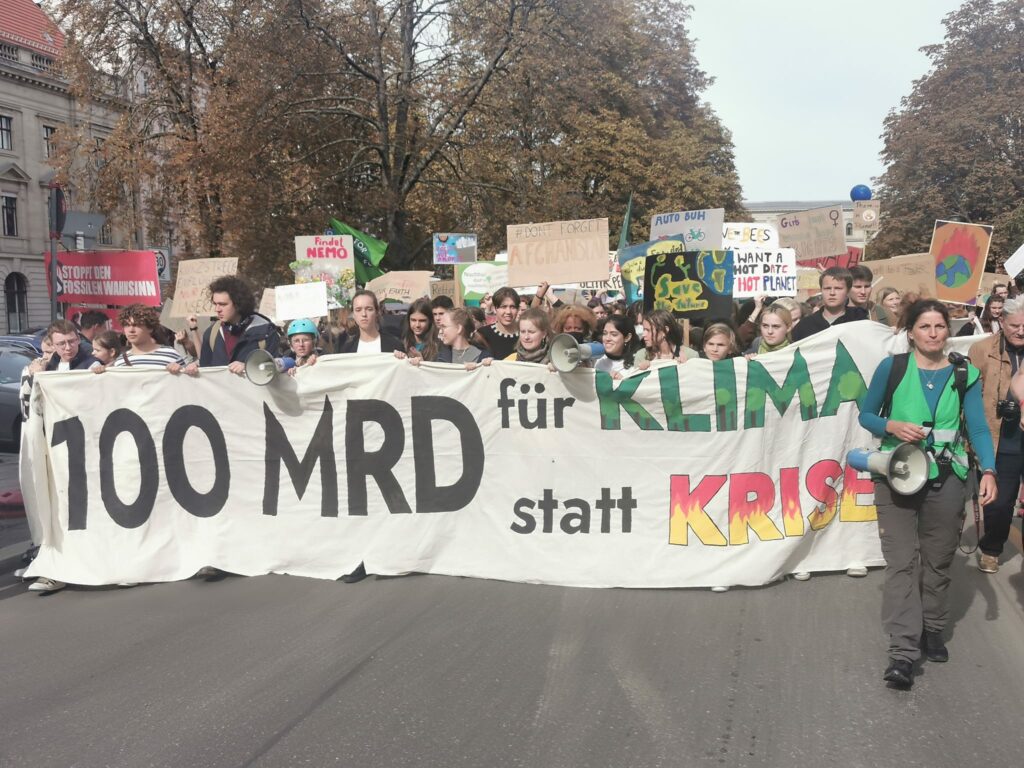
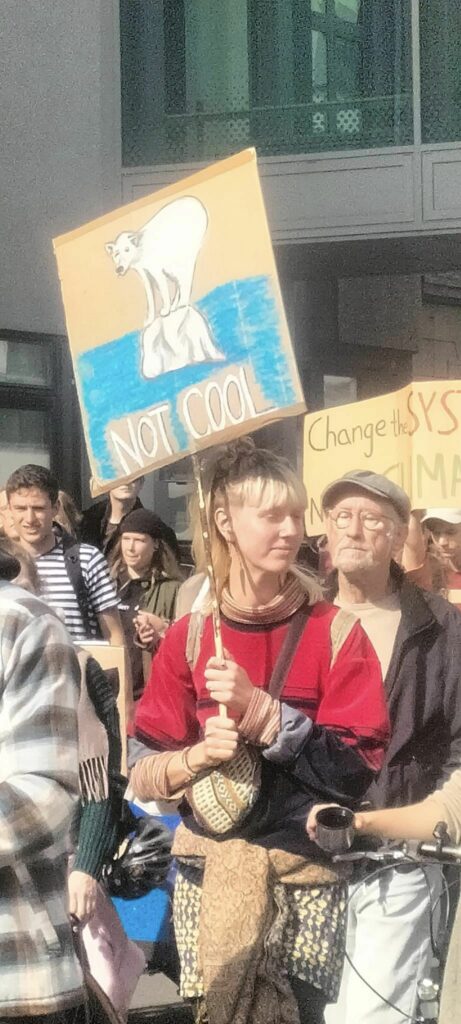
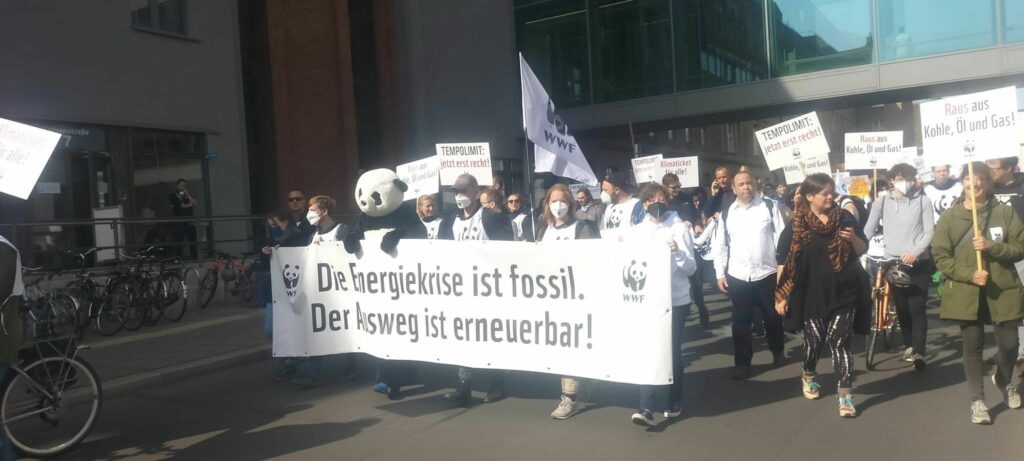
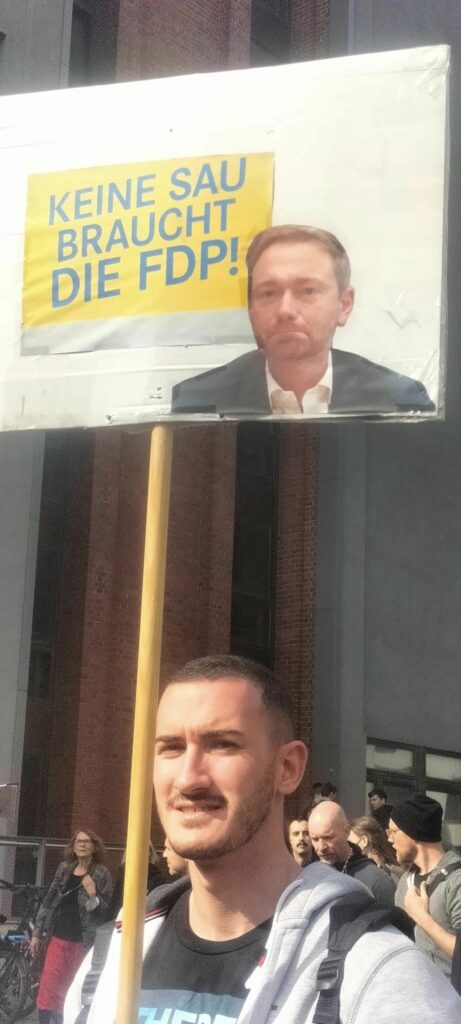
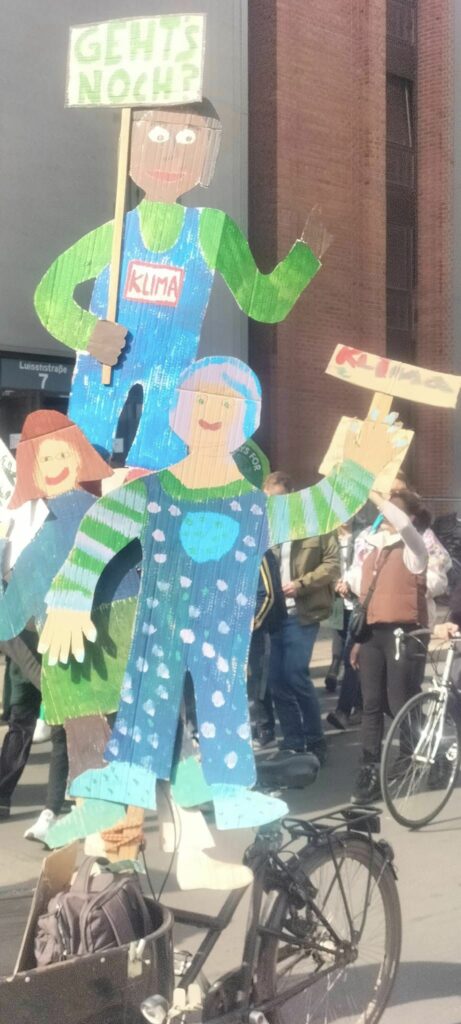
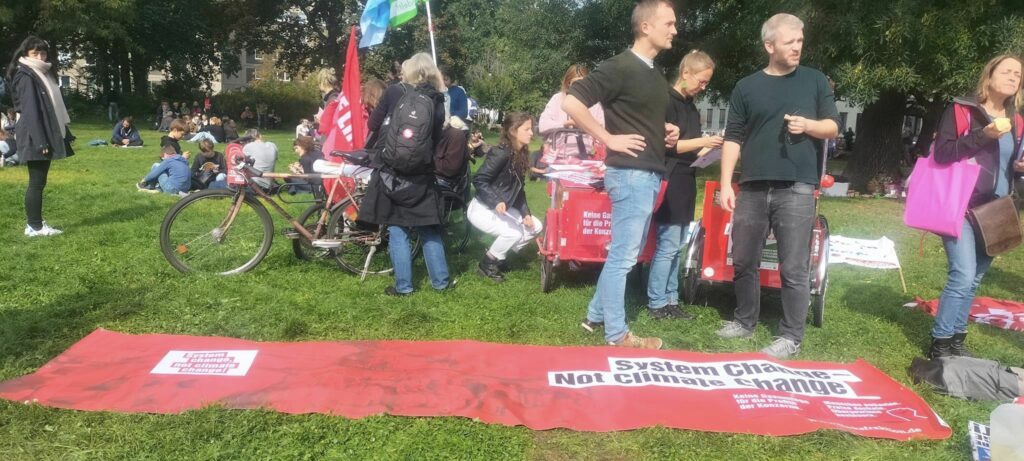
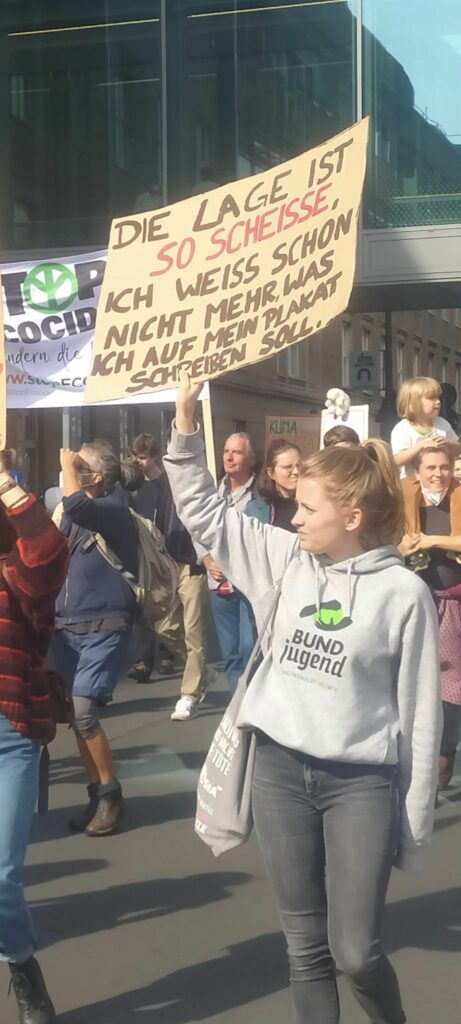
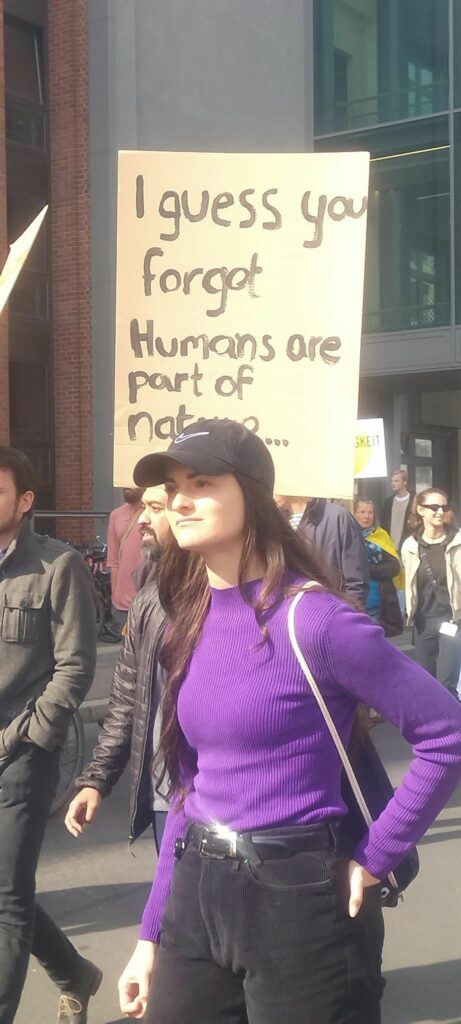
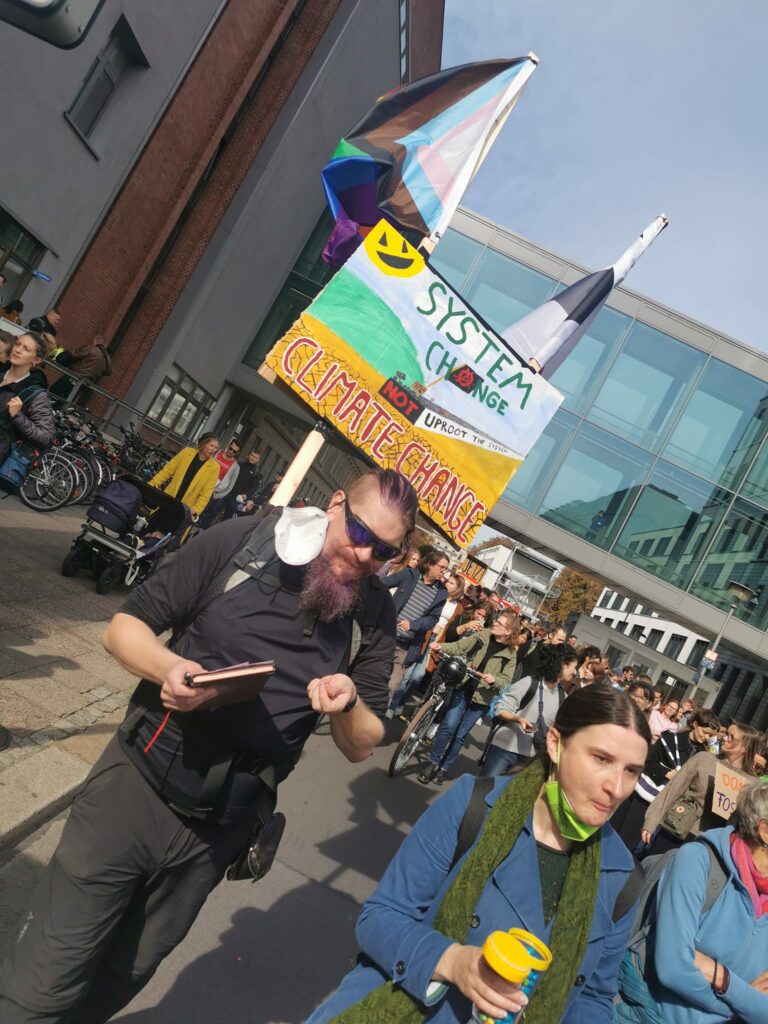
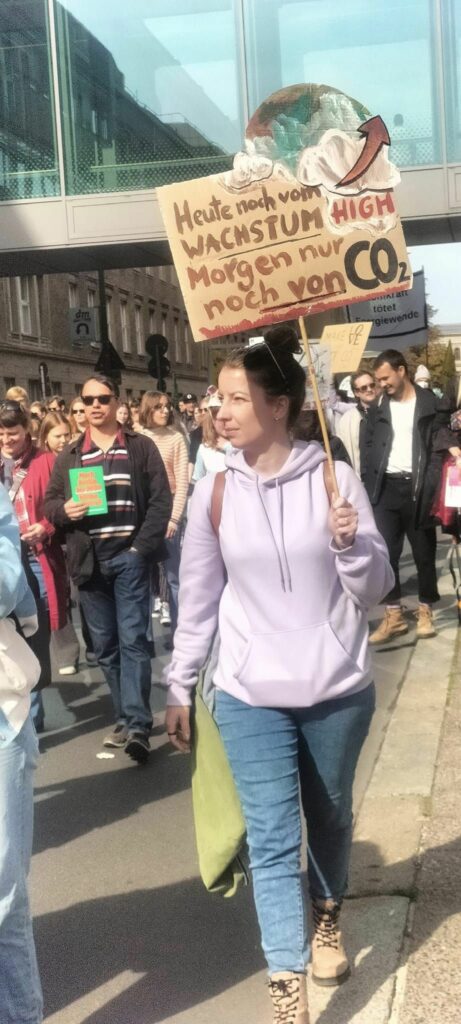
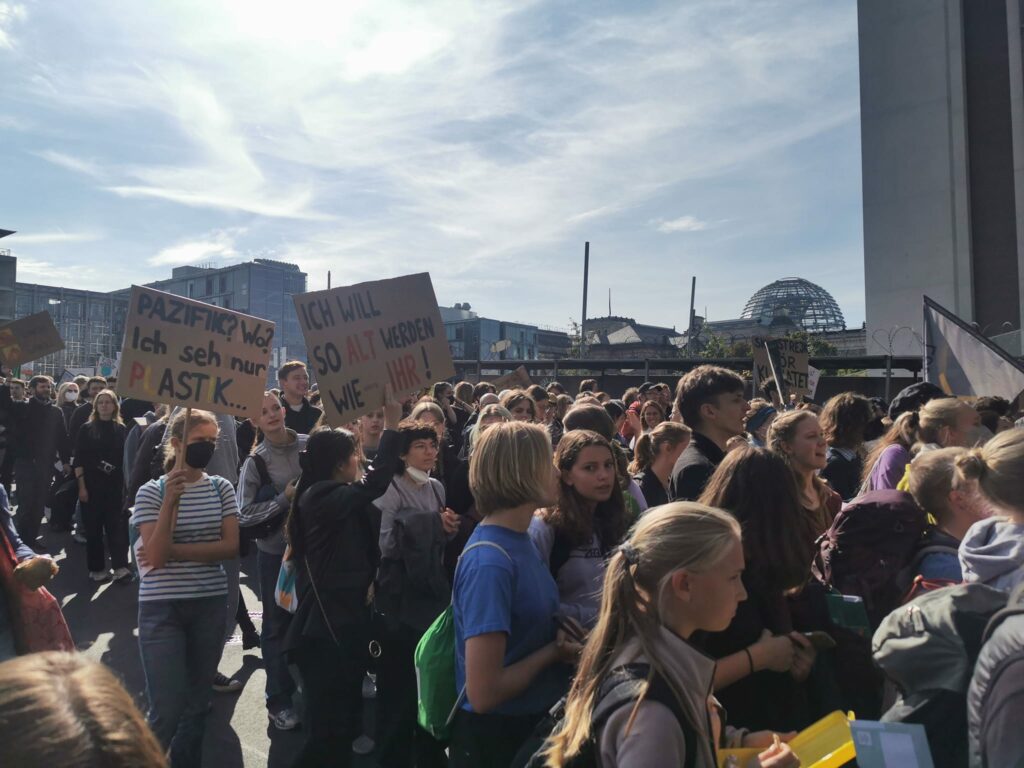
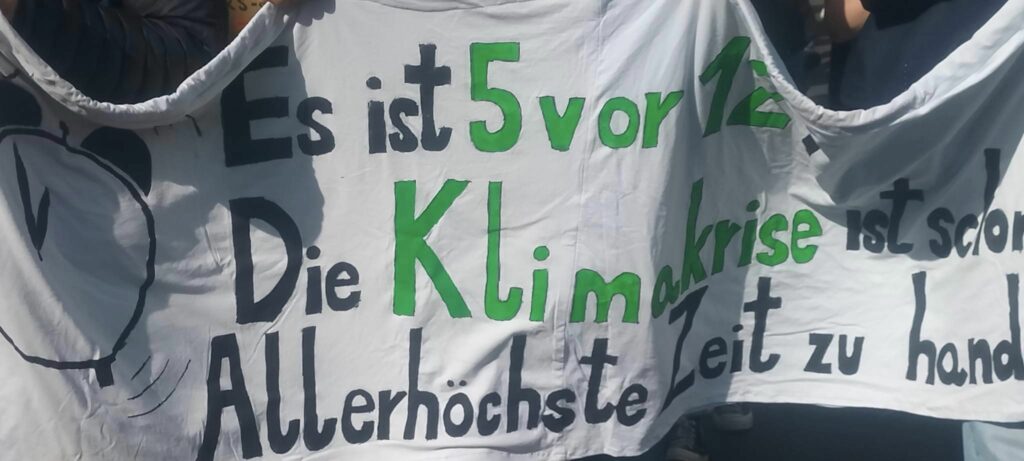
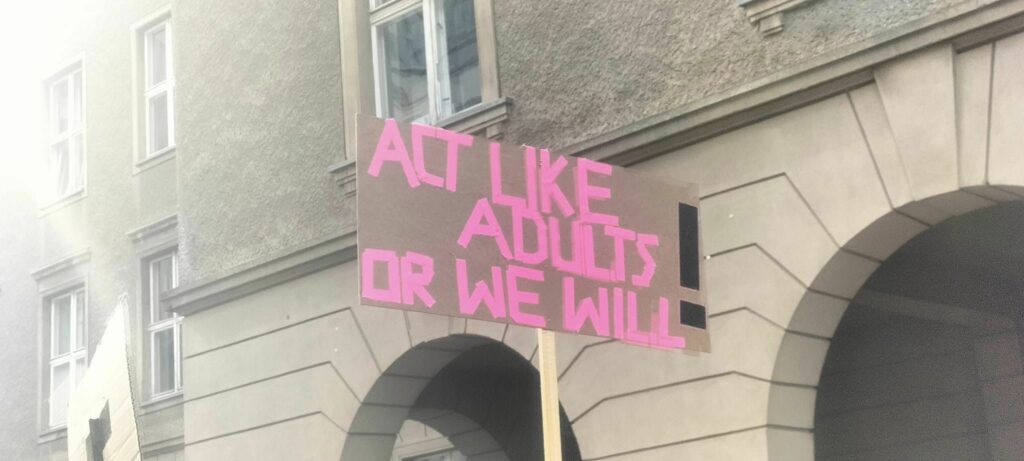
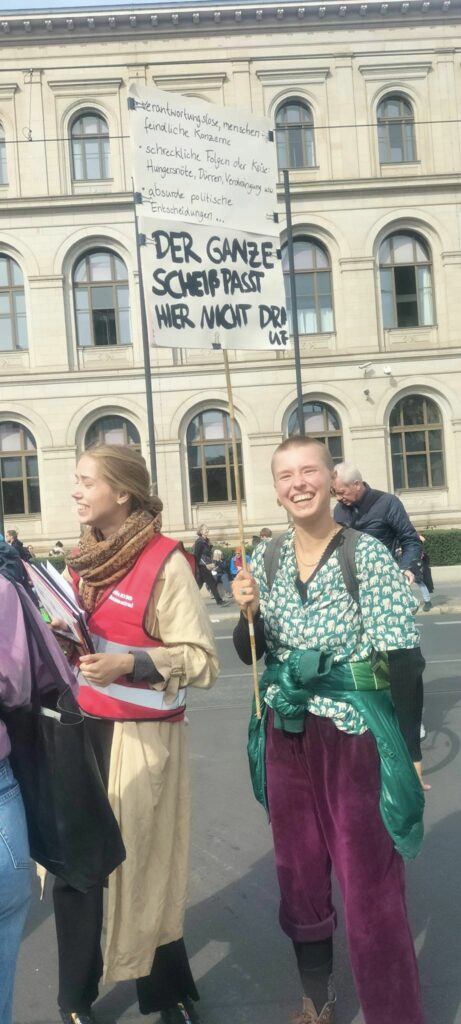
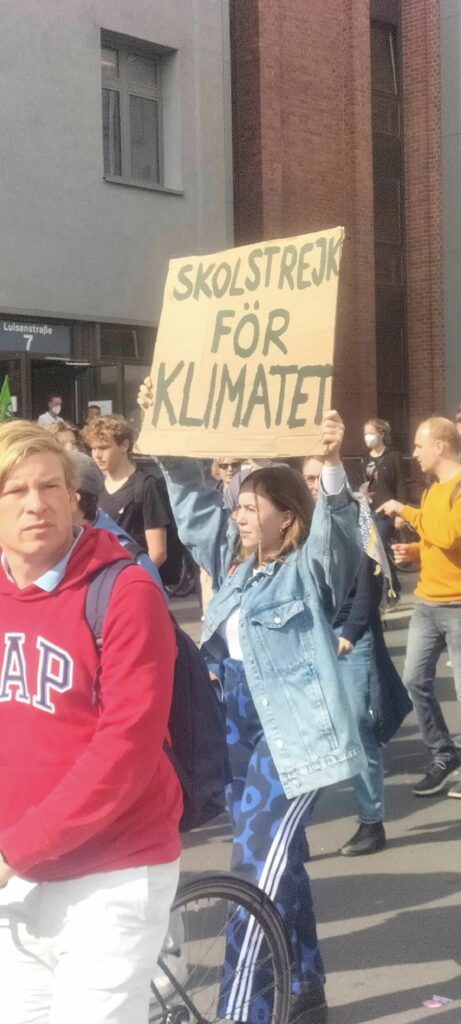
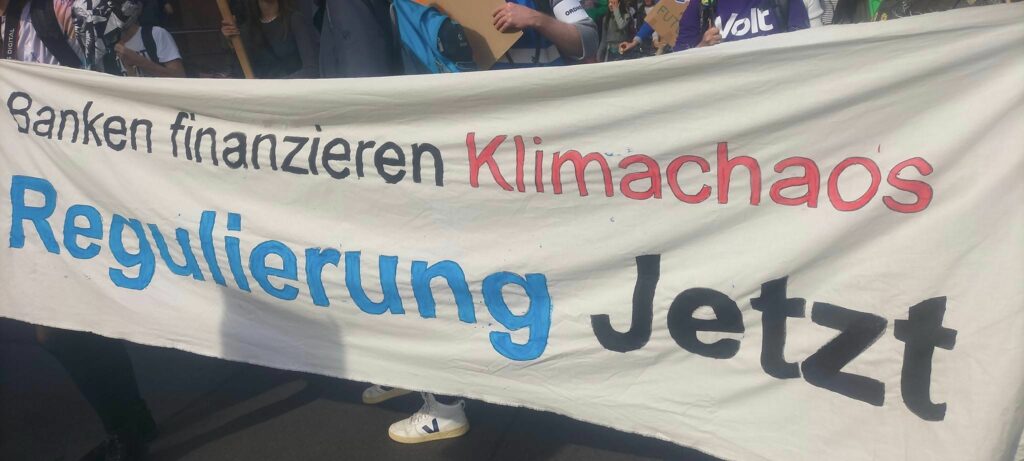
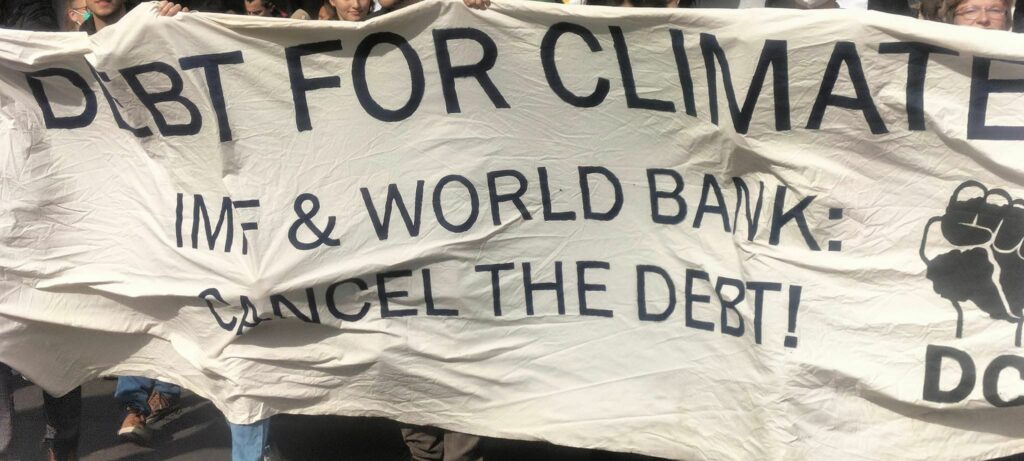
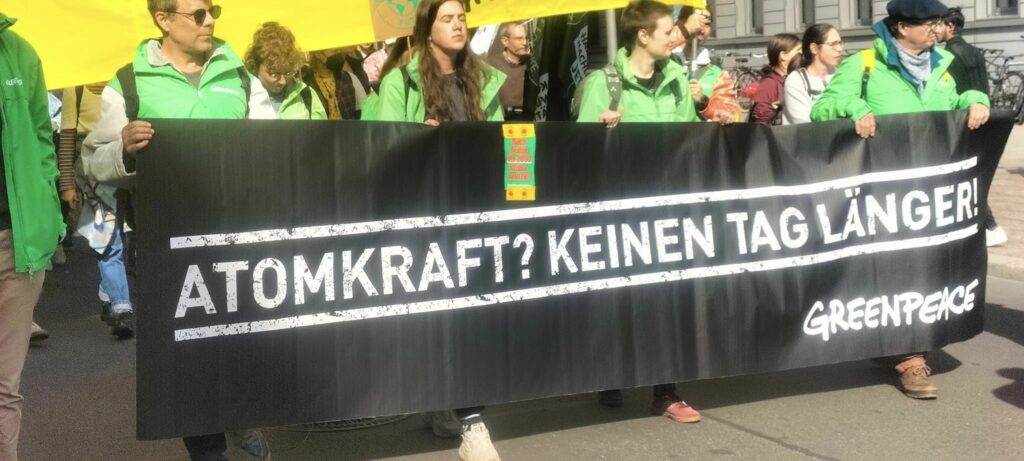
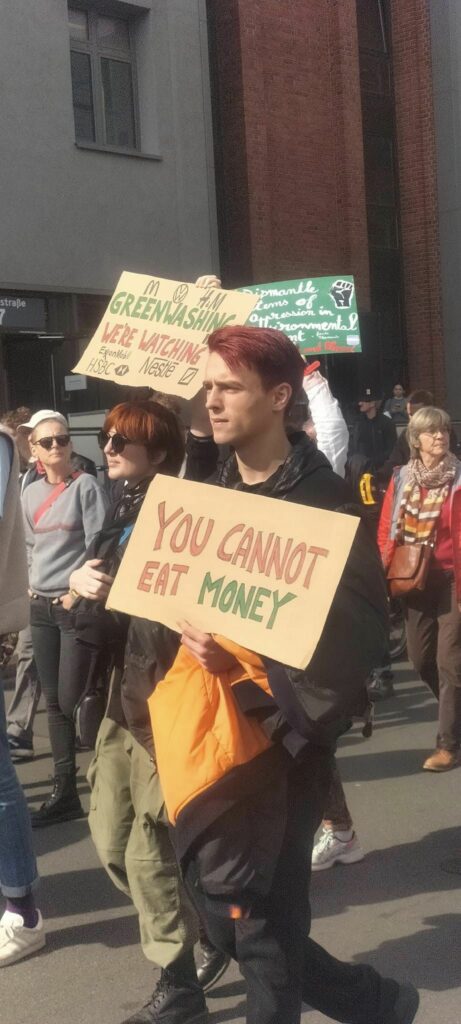
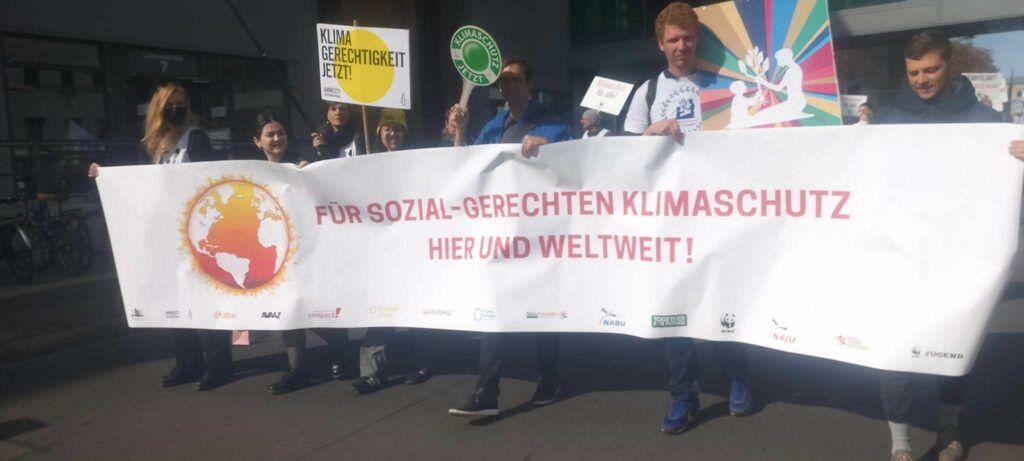
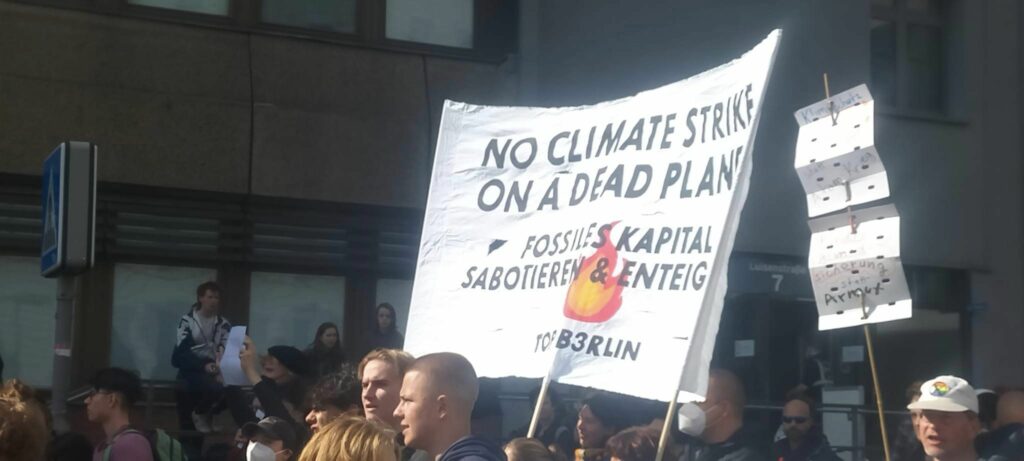
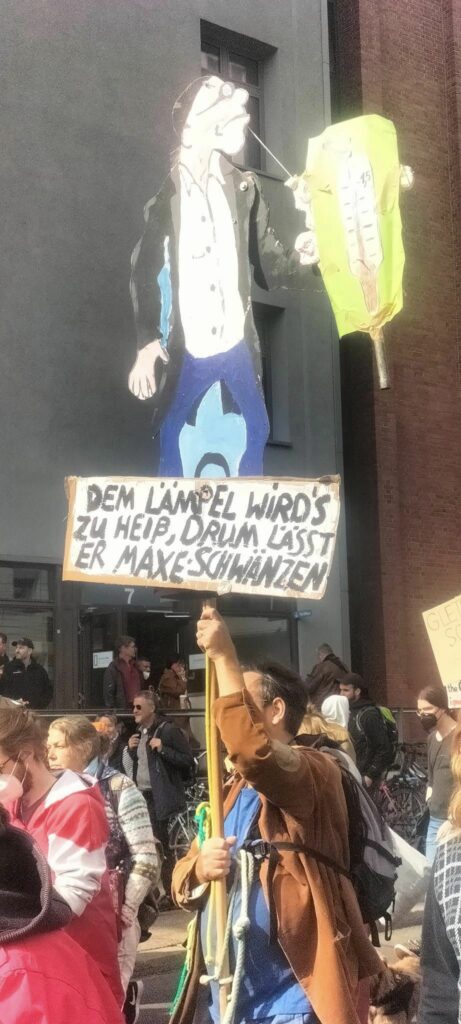
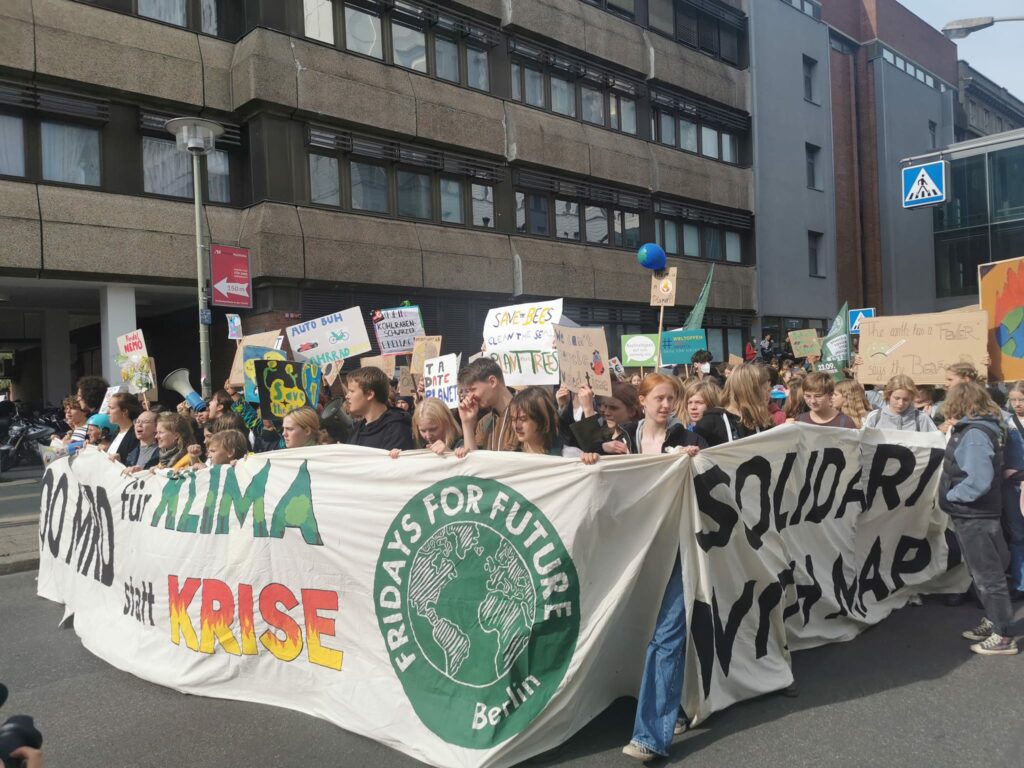
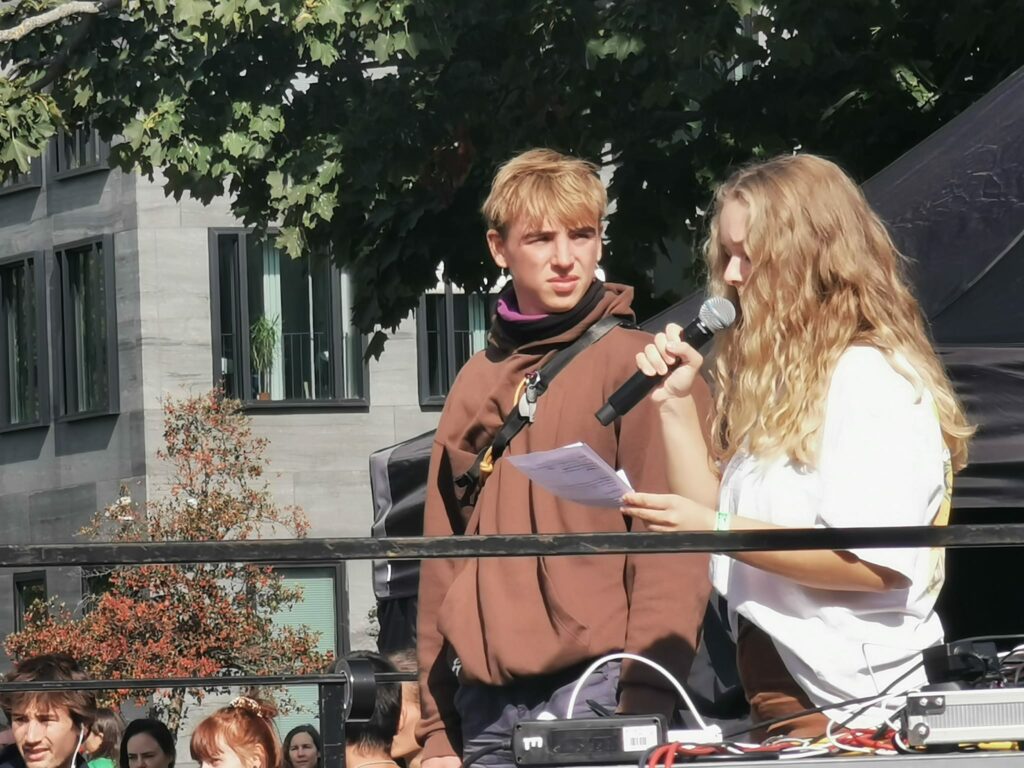
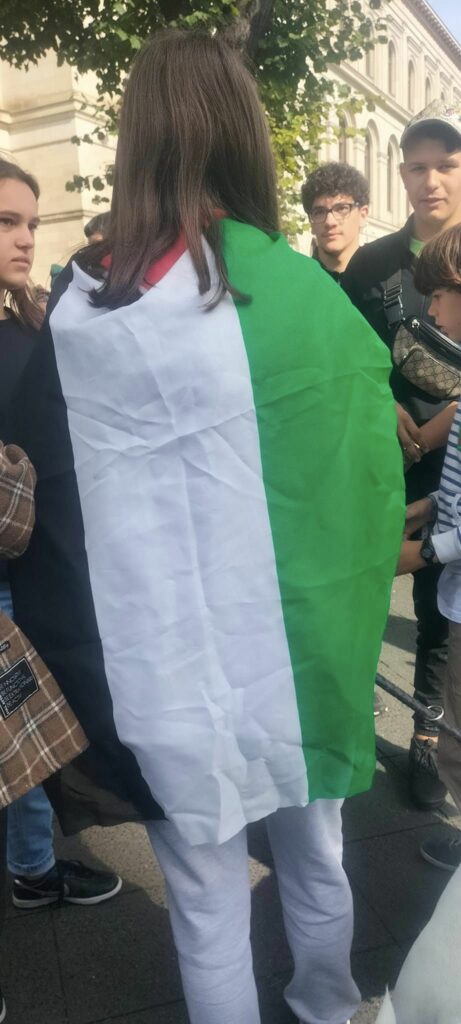
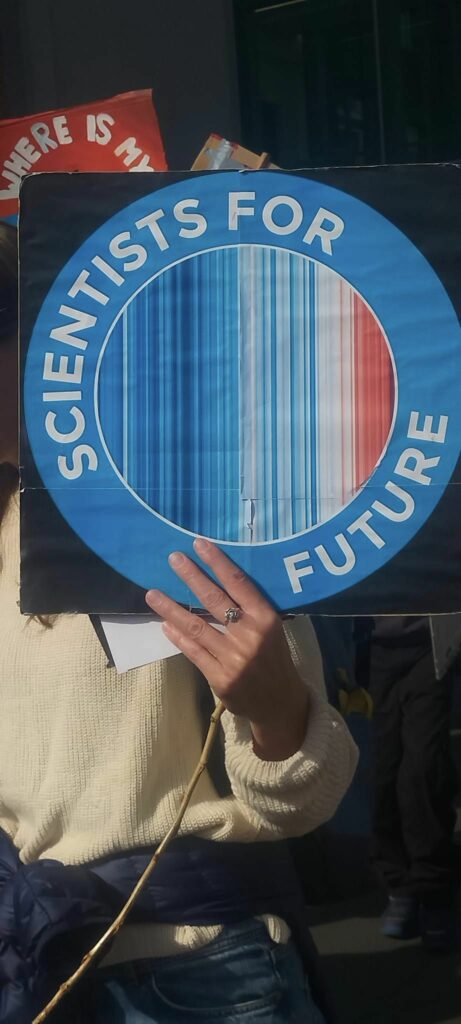
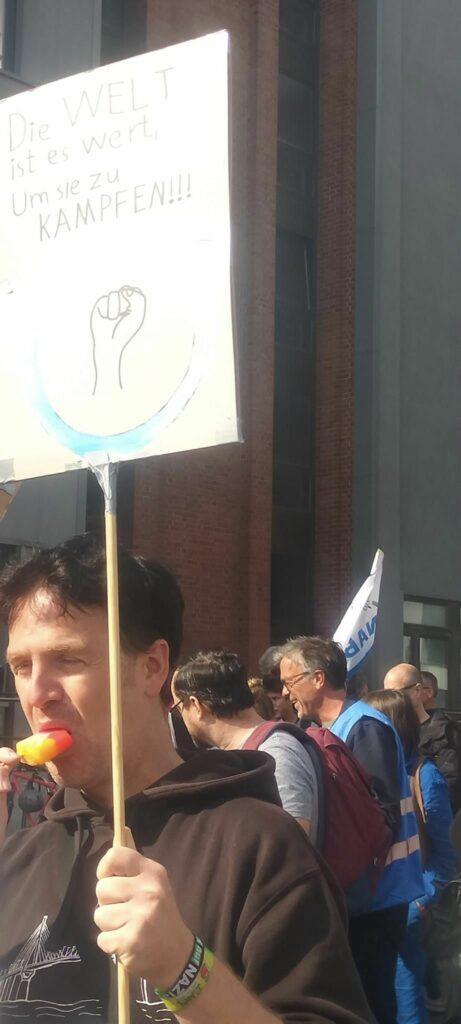
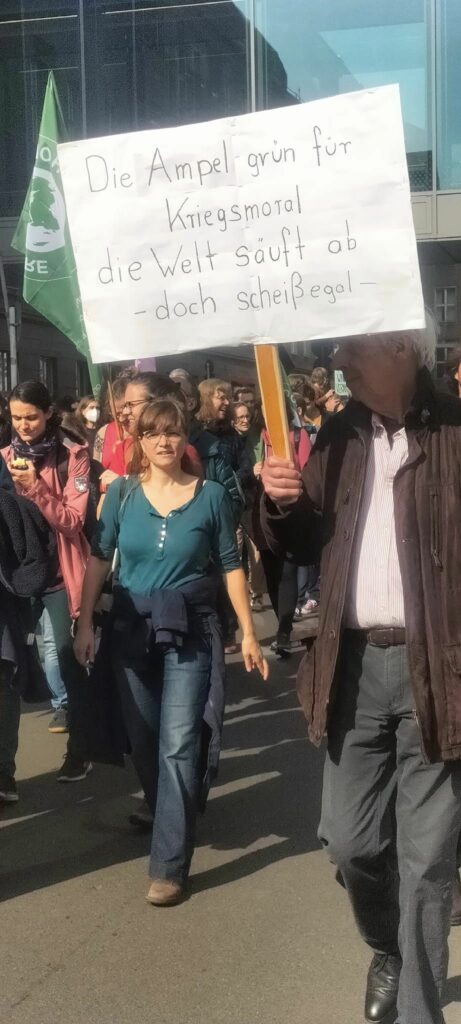
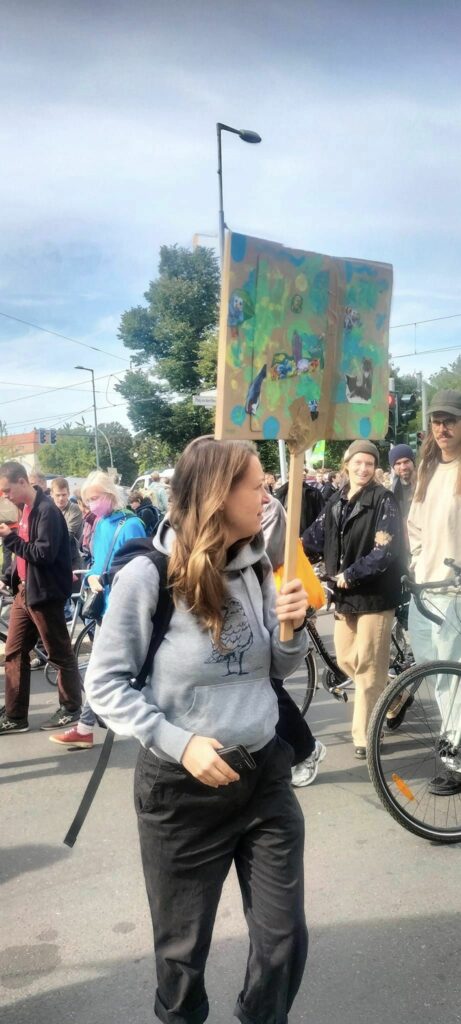
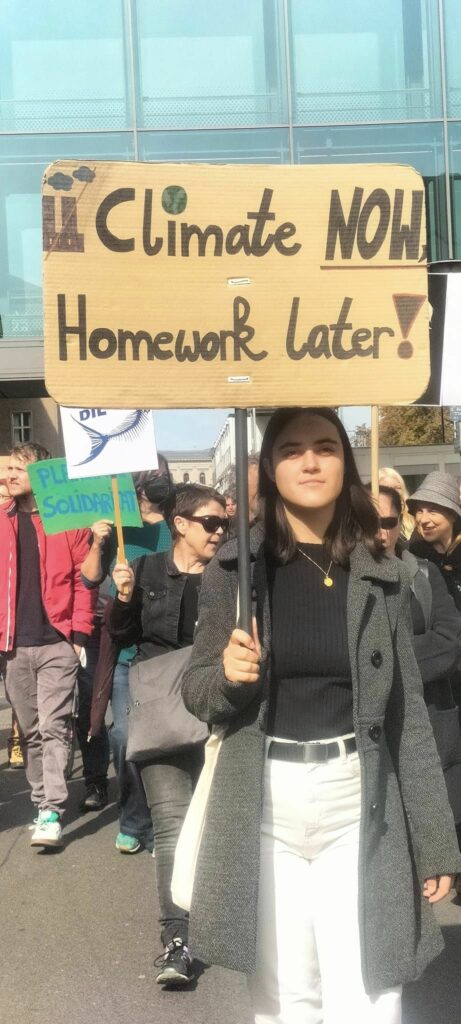
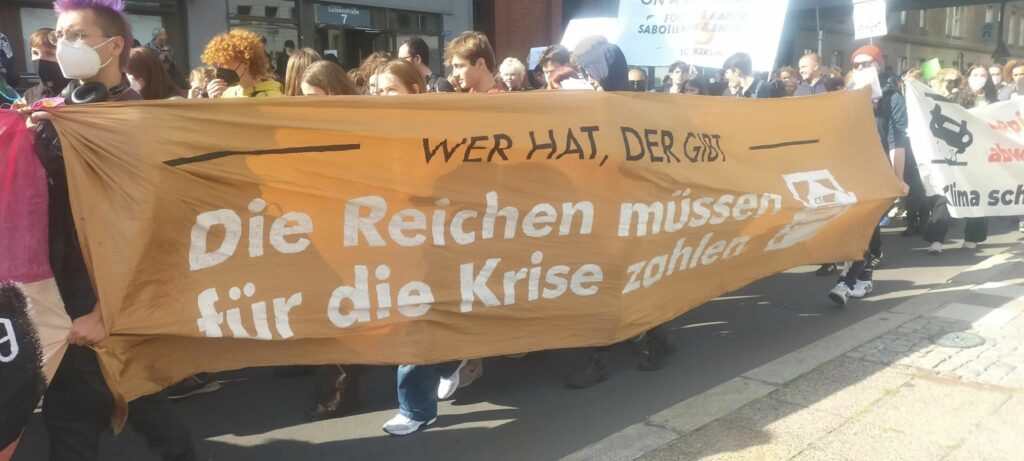
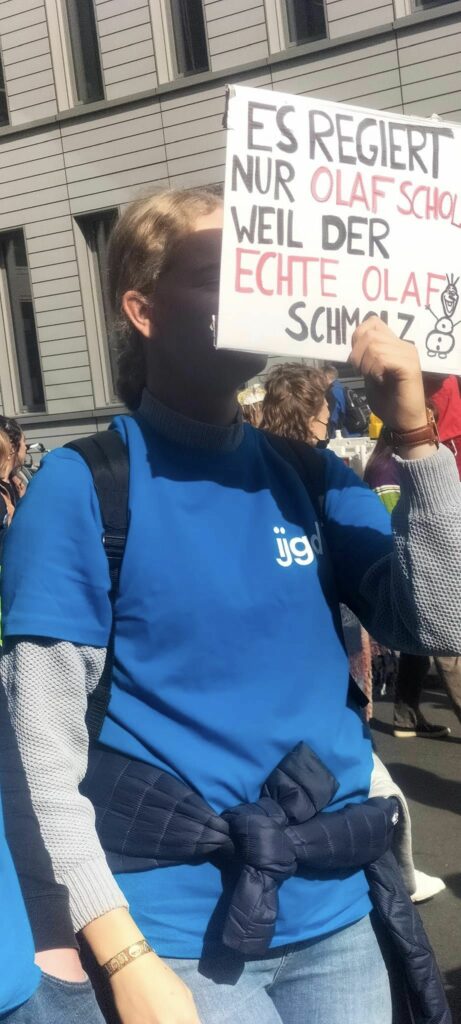
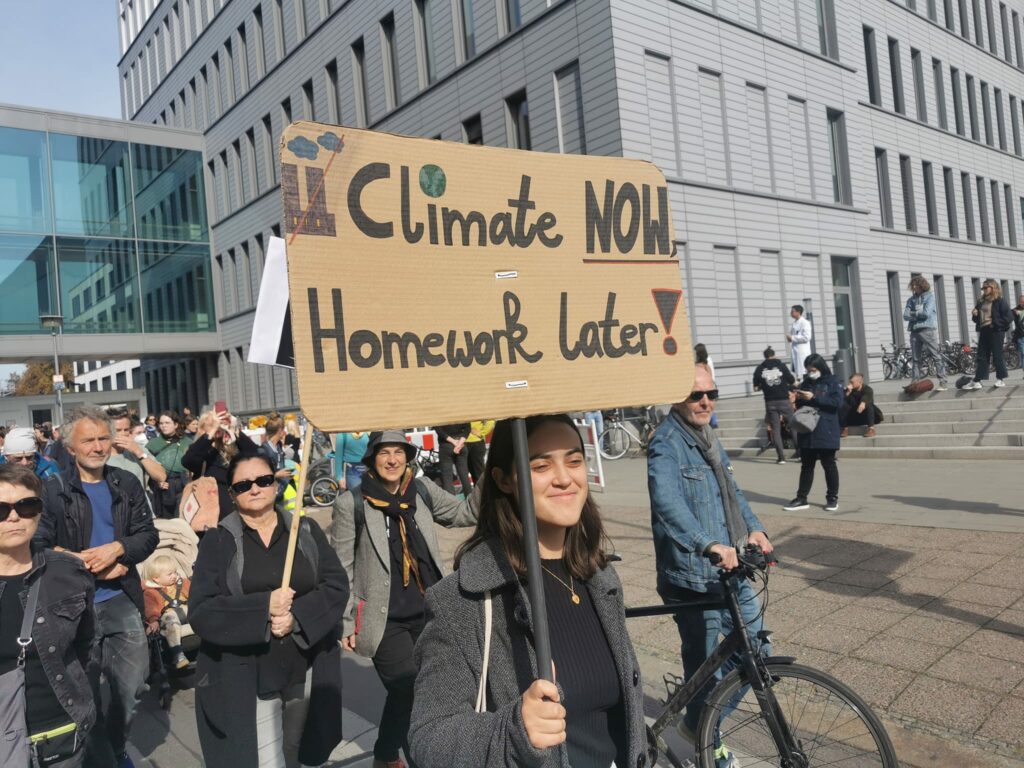
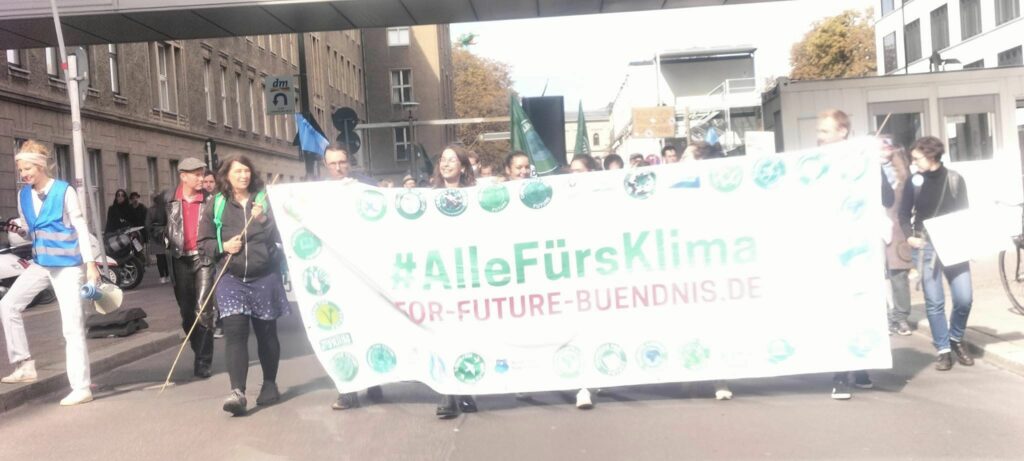
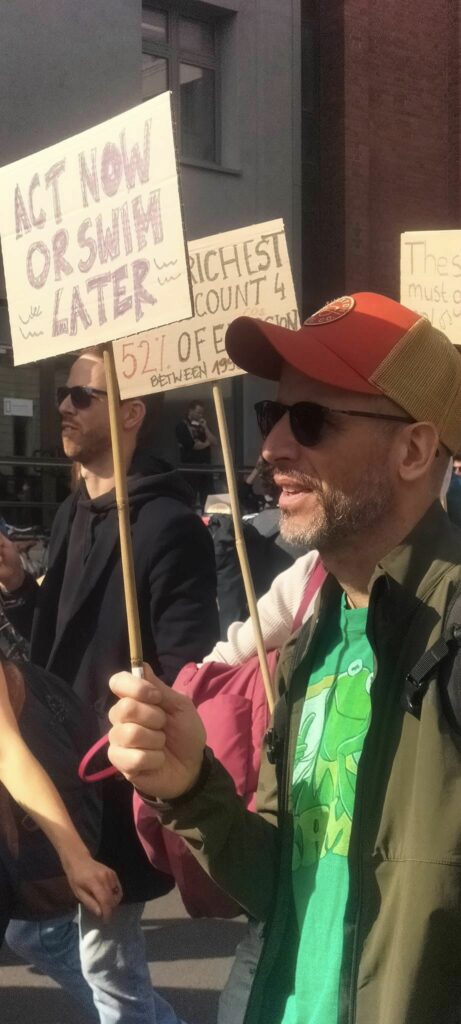
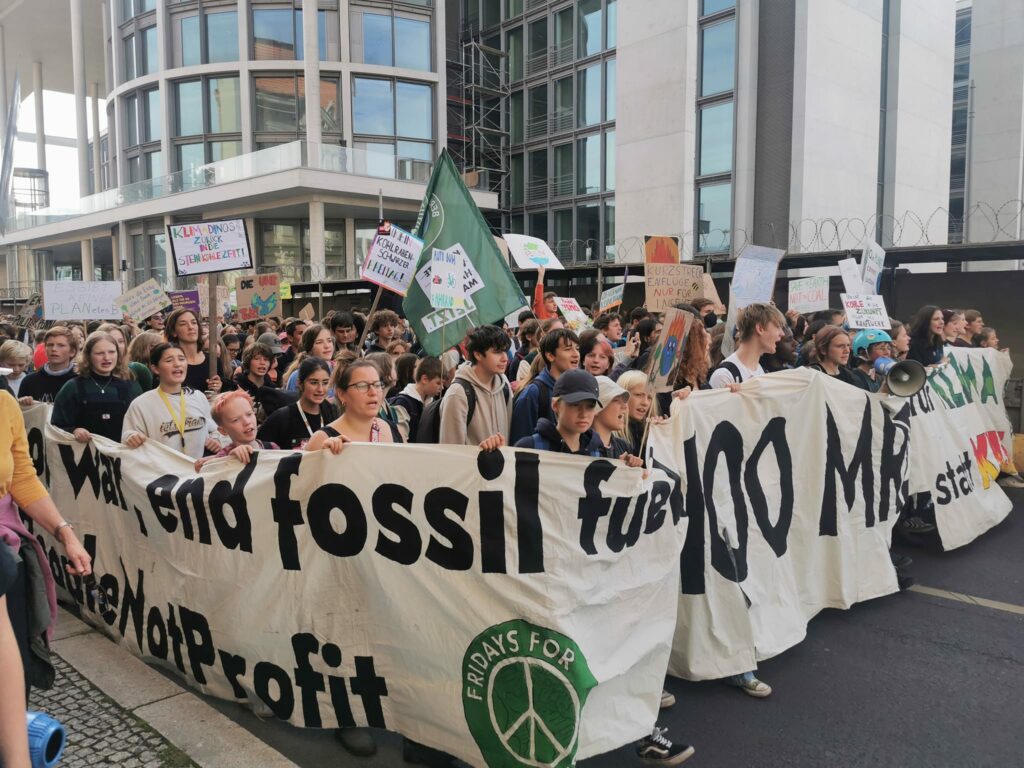
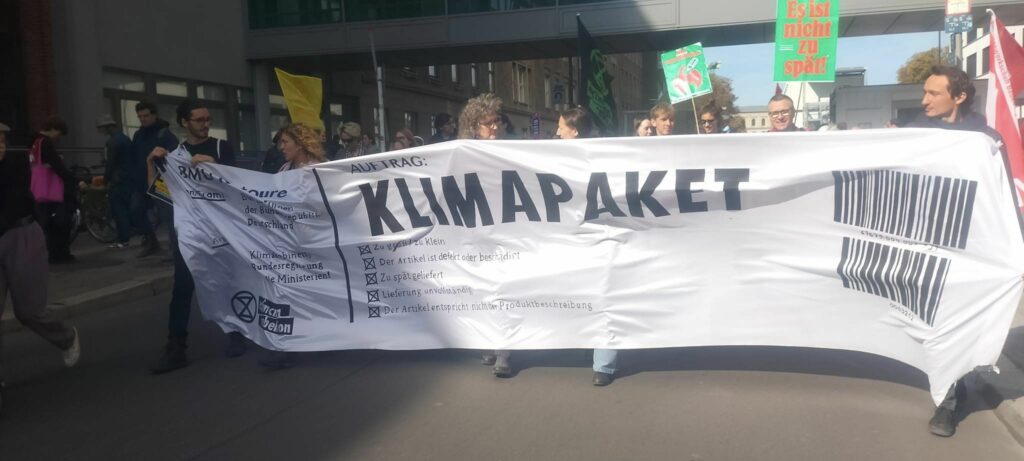
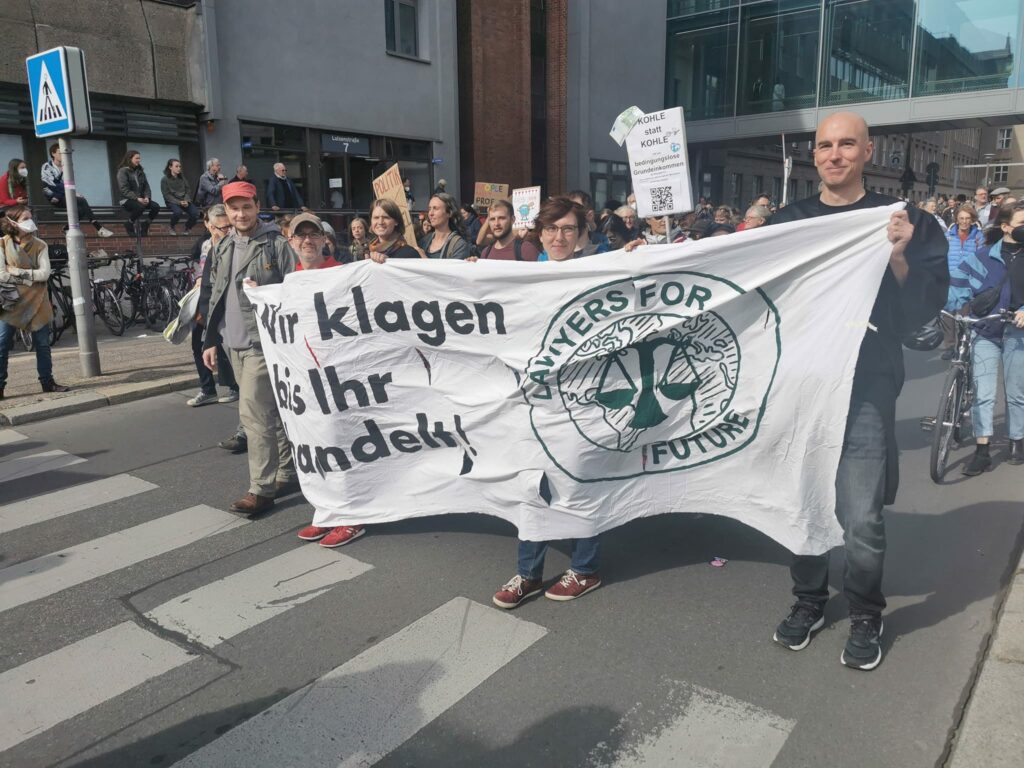
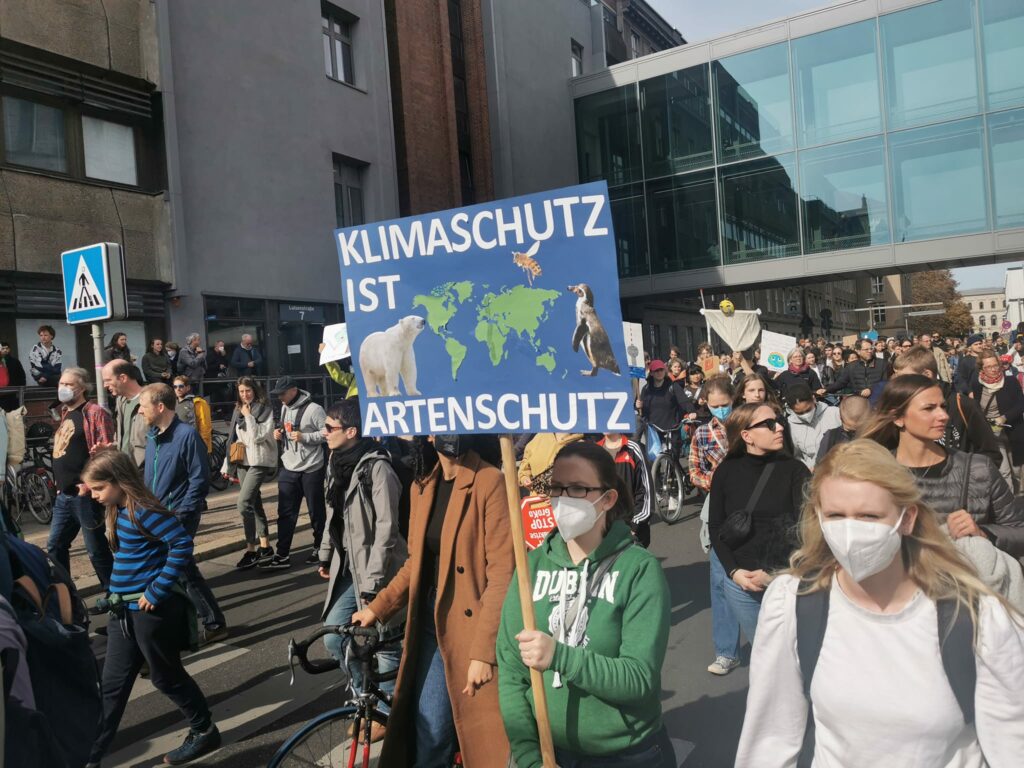
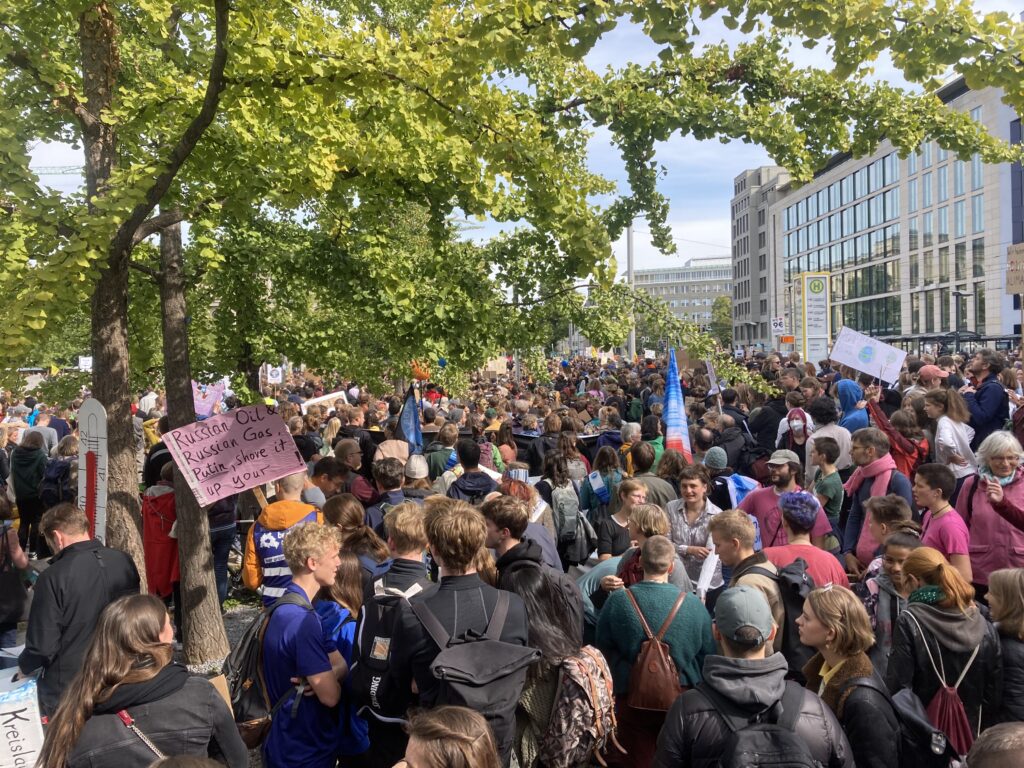
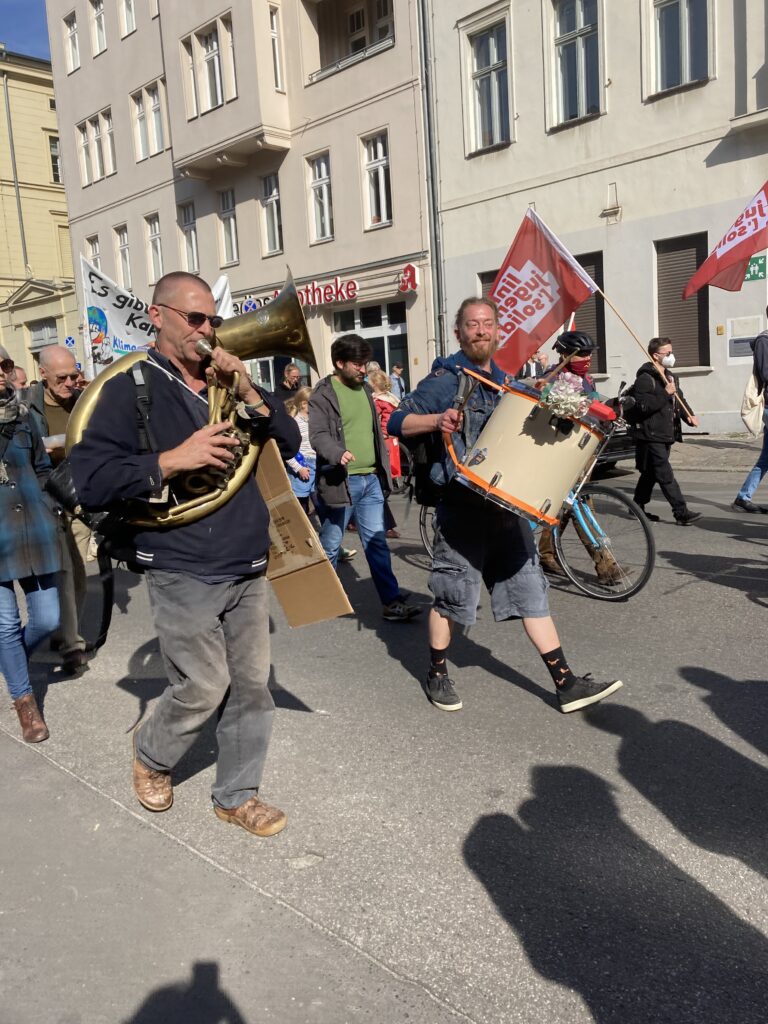
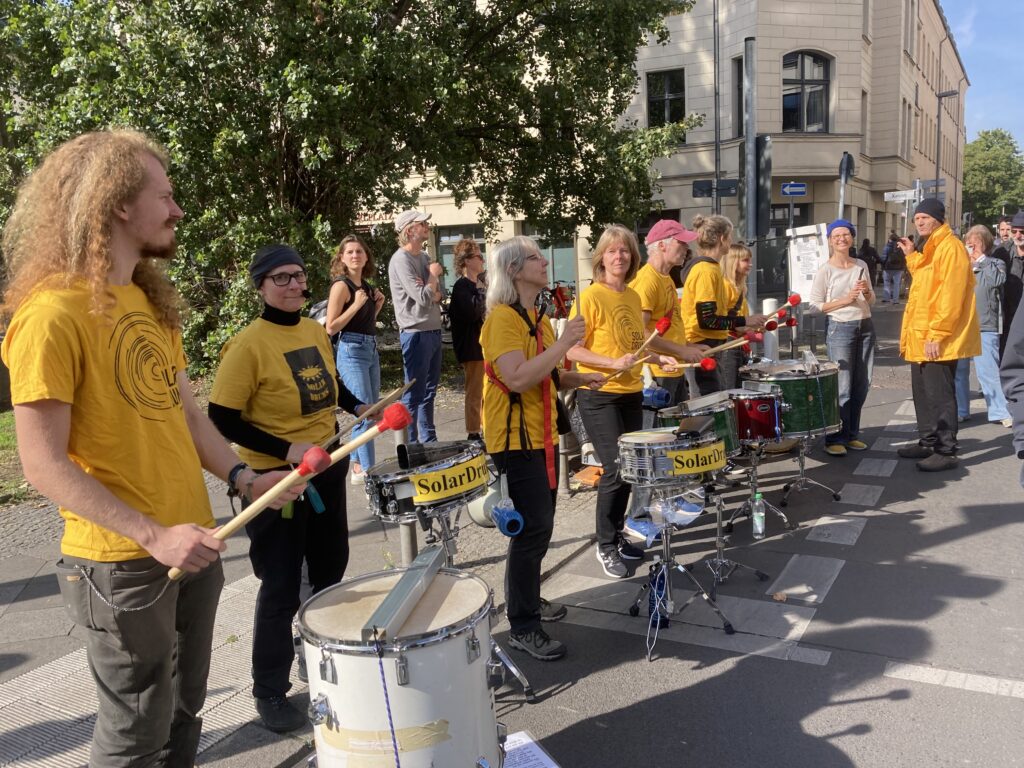
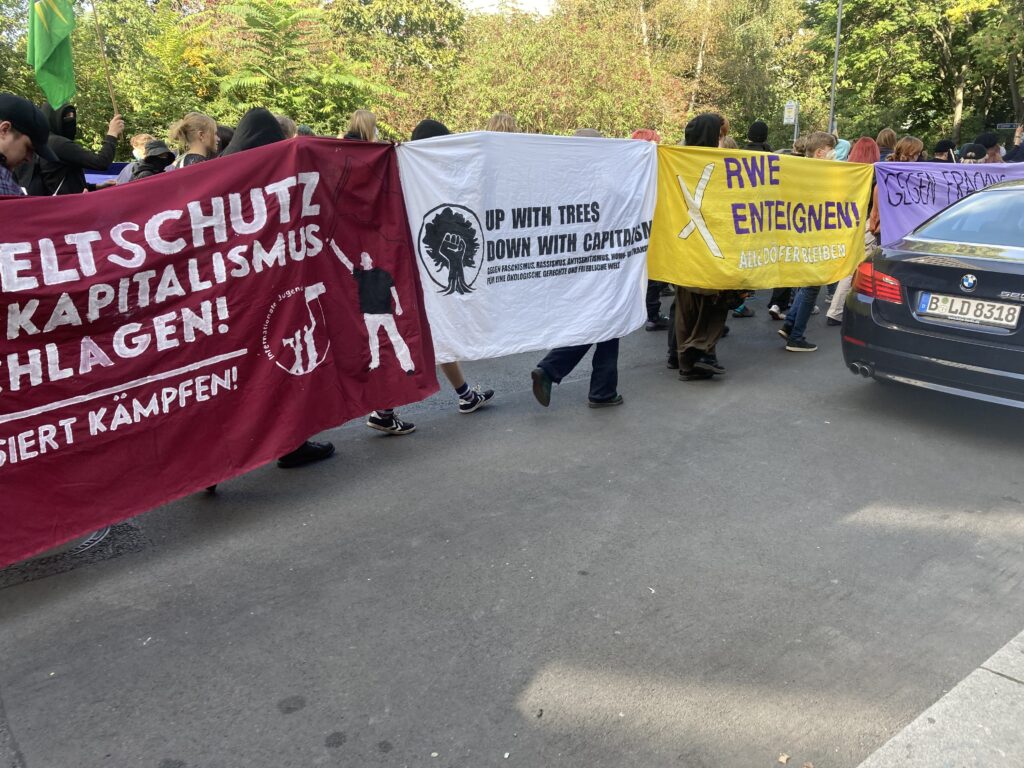
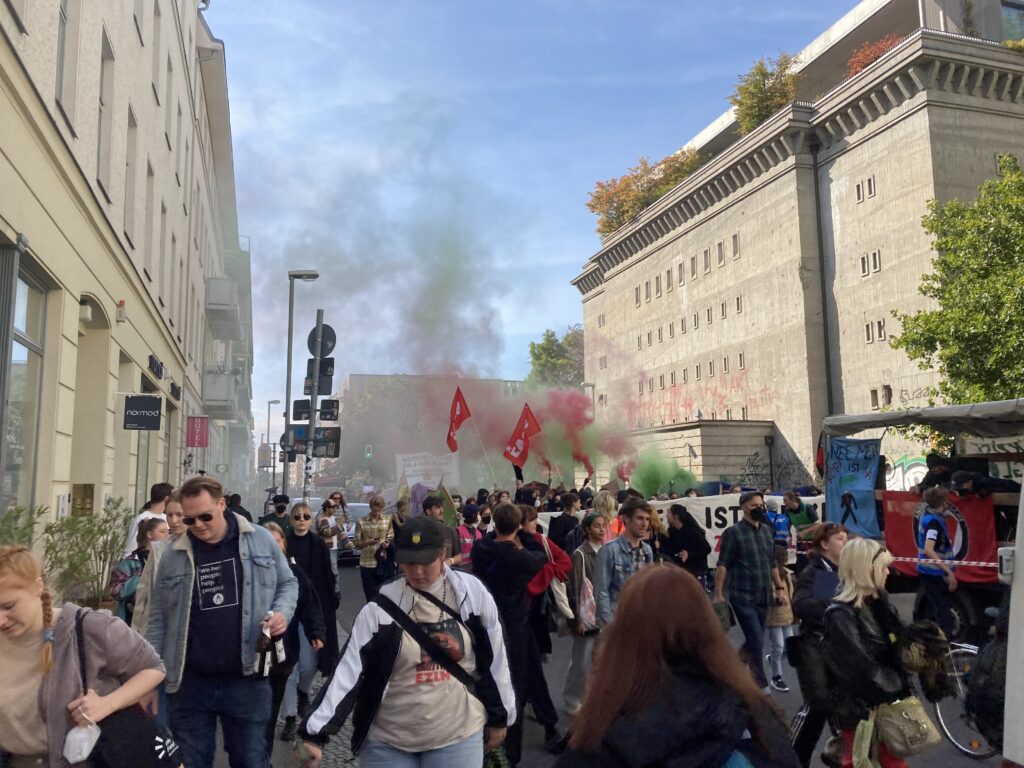
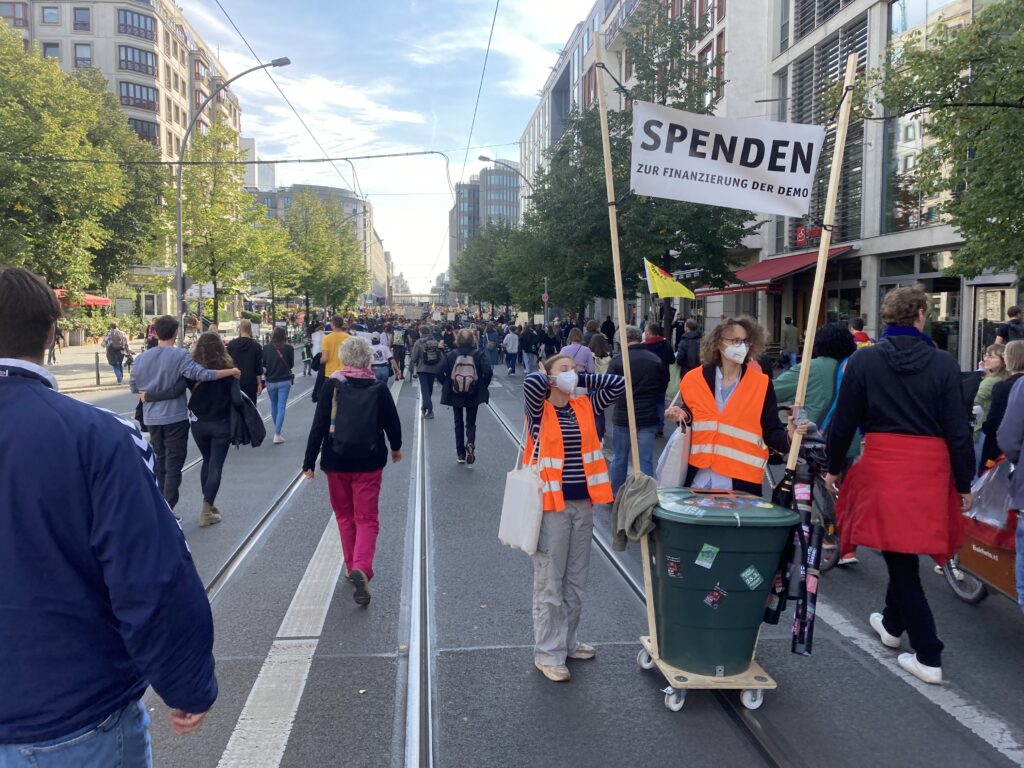
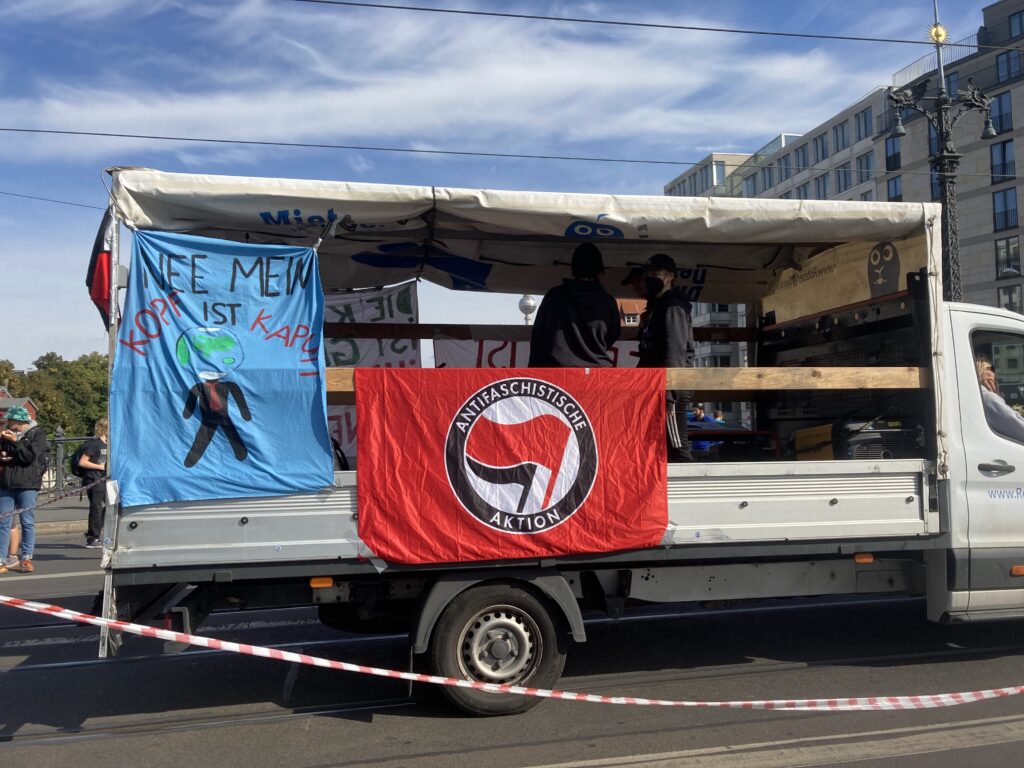
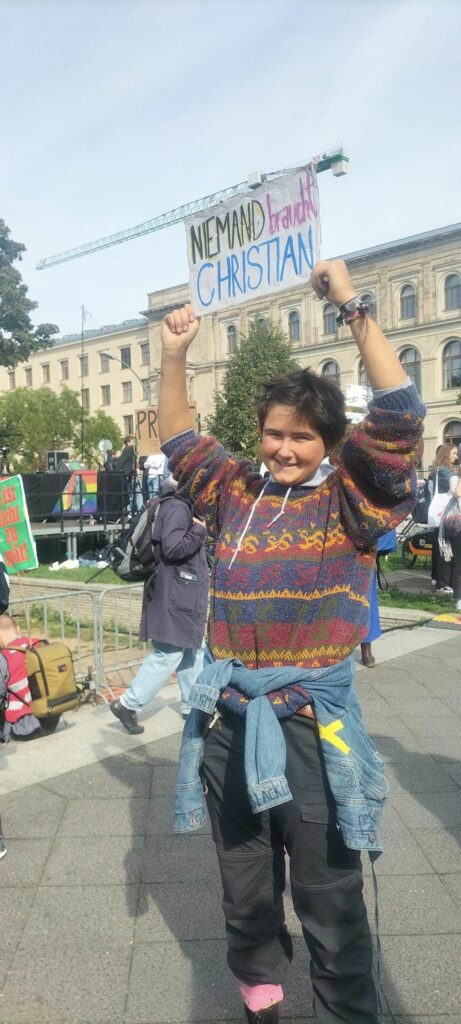
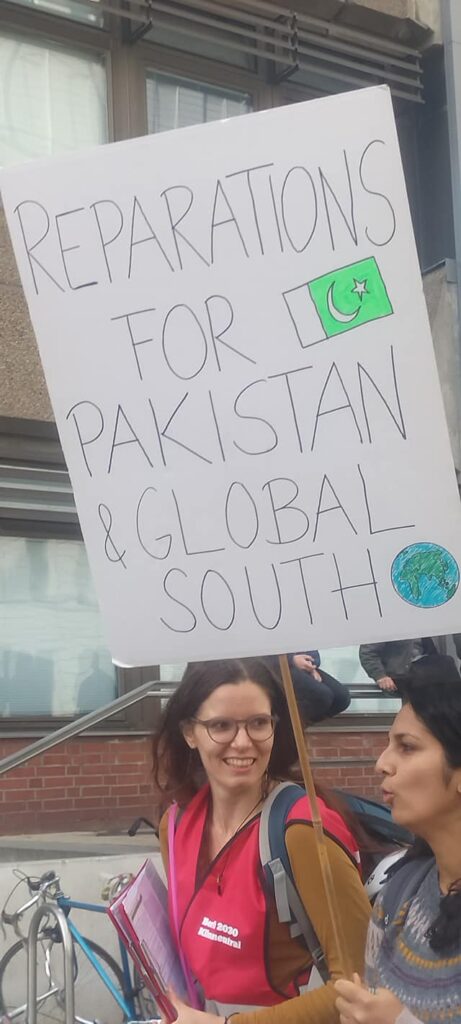
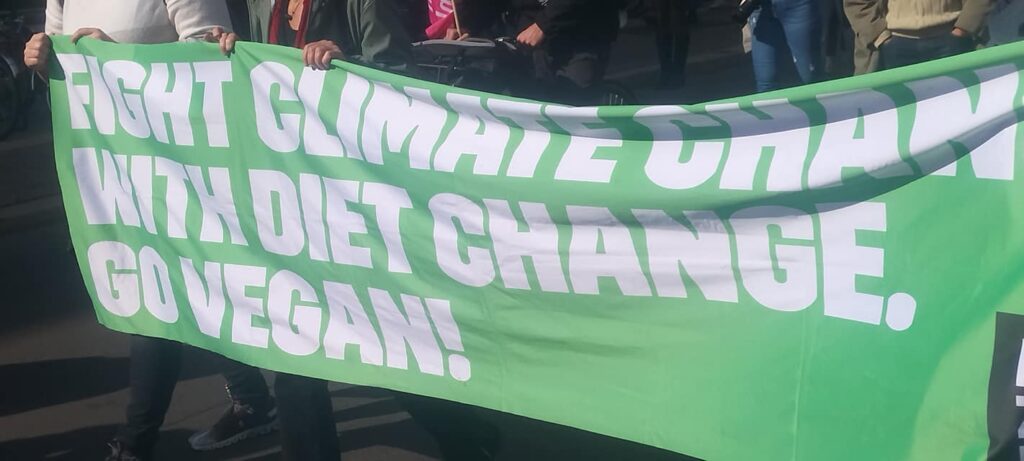
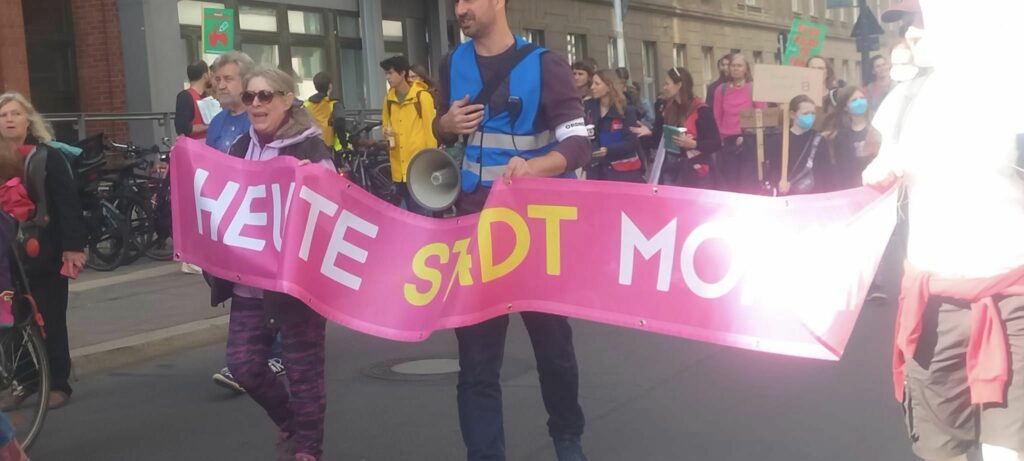
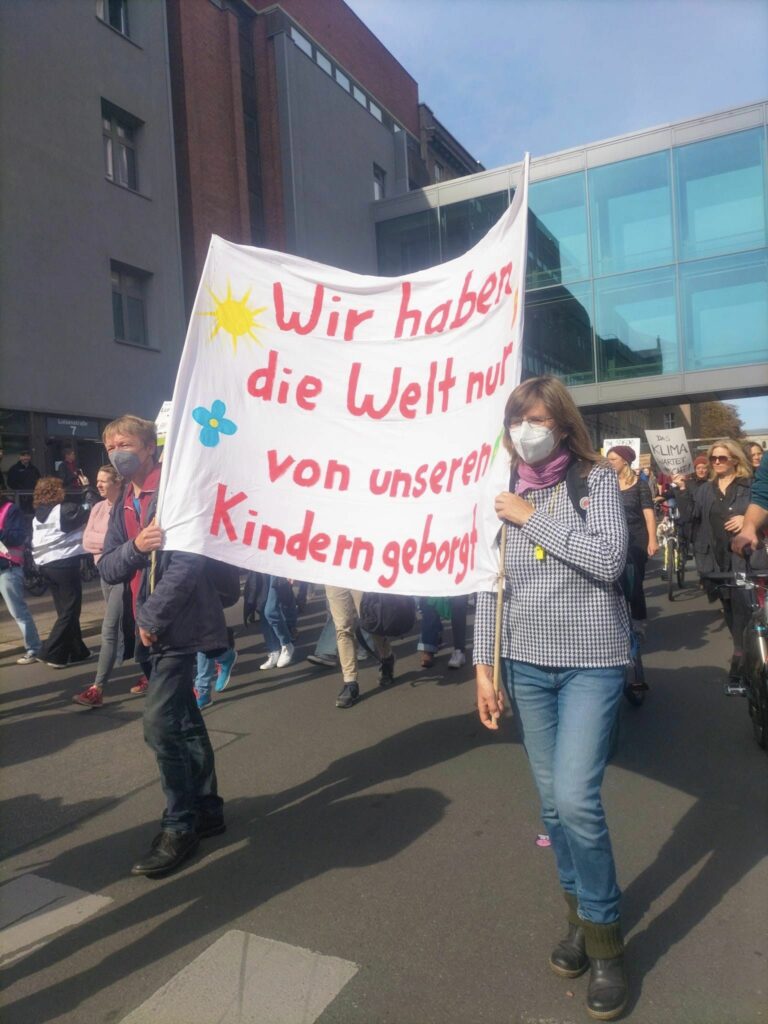
Photo Gallery – Climate Strike Demo, 23rd September 2022, Berlin

Photos: Phil Butland, Dave Gilchrist. Rosemarie Nünning

Farewell Jean-Luc Godard

The film maker, who died this week, was a product of his time, including the May 1968 movement


22/09/2022

Jean-Luc Godard’s death on September 13th had impact not only to cinephiles all over the world, but also to left-wingers, as his name is connected with both, radical cinema and political activism. So profound is the imprint he left, that after the emergence of his debut feature film “À bout de souffle (Breathless)” (1960), film theorists and historians have been talking about “cinema before” and “after” Godard.

Not everyone appreciates his cinematic work. While social network timelines have been flooded with photos of Godard films and praises over the “founder of modern cinema”, the “pope of Nouvelle Vague” or the last “iconoclast”, at the same time objectors describe films of boredom, elitism, insolence, incoherence, the latter being in a way implied by his own words: “A story should have a beginning, a middle and an end, but not necessarily in that order”.

This text stands basically in defense of Godard, the theorist, the filmmaker and the political being.

French New Wave

Godard was a pioneer, who walked upon challenging the course and the substance of cinema up to his time and sought to revolutionize it. He radicalized the visual and aesthetic of the film, turning cinematic rules upside down, inventing new notions and transforming tools: The “jump cut” – which until Godard’s innovations in “Breathless” was considered plainly an amateurish mistake – in his hands became a technique of deliberately eliminating segments of particular shots instead of removing the entire shot. Direct address to the camera, an element he introduced from Berthold Brecht’s epic theater, along with so called non-diegetic inserts (scenes coming from outside the made-up world of the film to be placed into the film). Breaking the fluid narrative that characterizes conventional cinema forces the viewers to take on more critical roles, connect the pieces by themselves, become participants in what is happening on the screen and, in distance from the protagonist’s struggle, get in the position to judge without sentimentality. Together with Francois Truffaut’s “The 400 blows” and Alain Resnais’s “Hiroshima mon amour” Godard initiated the French New Wave in cinema.

Nothing seemed to be the same anymore in the way of seeing and digesting a film. “Breathless” was the burst of this concept, but it continued throughout Godard’s so called first period, until 1968, with provocative and often controversial films, such as “The Little Soldier”, which was banned for years by the French authorities for addressing the Algerian War, “Masculine Feminine”, “Contempt”, “Pierrot le fou”, “Alphaville”, culminating with the “Weekend”, a virulent satire of the bourgeoisie, which premiered just before the events of May ’68 and actually introduced a new period, shaped by the rising of mass struggles in France (and worldwide). These films were diverse and radical, denouncing bourgeois values and authorities, the imperialist war in Vietnam, the consumer society (the children of Coca Cola) and their effect on human conscience.

Many critics argue that Godard simply ignored cinematic rules, because he was dogmatic and biased against Hollywood, or because he had not been trained in a proper film school. This is not the case.

Godard’s generation did not come out of the blue. Having worked on film theory around the magazine “Cahiers du cinema”, Jean-Luc Godard, François Truffaut, Jacques Rivette, Claude Chabrol, and Éric Rohmer, but also a circle including Alain Resnais, Agnes Varda, Chris Marker and others moved into directing as the “Nouvelle Vague” of cinema and engaged themselves into transforming art to a vehicle for change.

Far from being dismissive of American mainstream cinema, the group of Cahiers were film aficionados, who, before turning to directing had “devoured” hundreds of Hollywood movies and reflected and discussed the contribution of filmmakers such as Alfred Hitchcock, Howard Hawks and others to the making of cinema. Their transition to directing followed getting to know how cinema had worked before.

They challenged the notion of the cinema industry and the cinema moguls’ grip on the entire film production and juxtaposed the “auteur” theory, which emphasized the importance of the individual director, and the semi-mysterious concept of “mise-en-scène” (putting the scenes in order), essentially an attempt to analyze visual style. Of course, one would rightly argue that film-making is a collective process. But the criticism of the group of Cahiers referred to the big producers and to the market. At the end of the day, many of their films did, bear influence from the great Hollywood filmmakers and reference to genres.
Godard in May ‘68

Most of these people were actively involved in the May uprising, not just as filmmakers but also as activists of the revolutionary Left that emerged out of that period. The mood had already been heated by the dismissal of the founder of Cinémathèque française, Henri Langlois by the Minister of Culture Andre Malreaux three months earlier, and a defense committee had been created to support Langlois. These mobilizations were to be transferred to the Cannes film festival, which set off on May 10, 1968.
As demonstrations and strikes burst in Paris, Godard along with Truffaut and Claud Berri played a decisive role in delivering to the festival the calling of the general assembly of the people of cinema for the Cannes festival to be stopped, as a gesture of solidarity with the Parisian insurgents. Harsh political debate took place. In his famous address at the Cannes assembly Godard said “We are talking of solidarity with students and workers and you are talking dolly shots and close-ups!” It worked though. The jury and the artists were divided, and under the advance of the struggle in the rest of France, the festival was finally cancelled.

A few days later, a general assembly (États général) met in Paris and came up with a political manifesto for “cinema at the service of society and the revolution”. That was a formidable declaration, although its realization had to face practical and political obstacles. Soon, the assembly split into 19 different groups, each with its own concept of how to carry on the scope. Nevertheless, these initiatives were an original experiment for a cinema that would be determined not by dominant ideas and market laws, but by the creativity of its people and the needs of the movement. The main reason for this was of course the end of the mobilization and the return of France to “normality”, following an agreement between the trade union leadership and the political establishment.

Tziga-Vertov Group

Godard named the collective he created with Jean Pierre Gorin the “Tziga-Vertov Group” (DVG), a tribute to the Russian Revolution of 1917. He disavowed everything he had made up to that point as “capitalist” and declared that the collective “sought not just to make “political films” but to make films politically”. He was at the time identified as a devoted Maoist, which may seem grotesque today, however at that time Maoism was a dominant political current in the movement and stood critical to the French Communist Party which had capitulated to General De Gaulle’s maneuvers to end the revolt.

The films made by DVG are the most neglected of Godards, regarded strict and dogmatic by many, however they are challenging and, from a historic point of view a valuable documentation of the mood inside the working class and the movement during and in the aftermath of May ’68. For example, “A Film Like Any Other” is a non-narrative assemblage of filmed discussions between Renault workers and student activists intercut with footage filmed in the streets of France during the heated weeks of May 1968. “British Sounds” comments on the alienation of labour by involving quotes from The Communist Manifesto with striking car workers from Ford Dagenham and elsewhere. There is also a section on the then emerging women’s liberation movement. In the same spirit “Wind from The East” and “Struggle in Italy” attempt to speak on the politics bourgeois representation and the role of the left. “Vladimir and Rosa” is a parody of the Chicago 8 trial of the anti Vietnam War activists who were charged following protests at the 1968 Democratic Party convention. This was a clear attack on the criminalization of dissent and trial by media and the state. Godard would come back to these issues later.

This circle actually closed with fiction film “Tout va bien” (1972), where well-known actors Yves Montand and Jane Fonda were engaged to play a pair of middle-class intellectuals encountering a strike at a sausage factory. “Letter to Jane” was the epilogue to this film and the entire effort of the group, which dissolved soon after.

…and after

Godard went through a personal crisis, both physically (following a motor-cycle accident) and intellectually, and re-oriented himself and his activity. First in Grenoble, where he established his own studio and then to Switzerland. He took time to reflect on the retreat of the movement and the Left and came back with new stuff, dealing not overtly with class struggle, but with everyday life, relations, and sexuality, always retaining his political point of view. In the 1980s he produced films in a more refined artistical way, for which he received criticism from some of his earlier fans. More known are the melancholic “Prenom Carmen” (1983) and “Hail Mary”, which was condemned by the Catholic church as blasphemous. He declared once more his interest in cinema history with his 4.5-hour video project named “Histoire(s) du Cinéma” (1988–1998), denying the widespread notion of the 1990s that cinema was dead. On the contrary, his career would continue in the 21st century.

A supporter of Palestine

Godard remained during all his life committed to the Palestinian cause, defying the cost of being accused for anti-semitism. In the early days of the Tziga-Vertov Group, he and Gorin visited Jordan and spoke with Palestinian militants in order to prepare a documentary to be called “Till victory”. Tragically, most of those fighters were massacred by the Jordanian regime during the “Black September” of 1970 and the project was aborted, only temporarily, as Godard used the footage a few years later in his “Ici et ailleurs (Here and elsewhere)” film. In “Film Socialisme” (2010), he chose Palestine as one of his six “homelands” to visit in the last section of the film named “our humanities”.

In 2010, after the Academy of Motion Picture Arts and Sciences announced plans to award Godard an honorary Oscar, pro-Israel groups revolted, calling on the Academy to rescind the Oscar. Godard rejected the allegations by insisting that he was an “anti-Zionist”, not an anti-Semite, a fact that could easily be proved by the way he has depicted the holocaust in his documentaries. He did not hesitate to endorse cultural boycotts of Israel.

Legacy

“All you need to make a film is a girl and a gun” Godard once wrote, and proved it with “Breathless”. What he did not know is that with a girl and a gun he would change cinema. He transformed the way we see a film, what we expect from a film, and for that cinephiles owe him.

Godard followed with commitment the path of questioning and renewing his means of expression. The camera was for him a tool for artistic and political intervention. A Marxist and deeply politicized, he did not miss the opportunity, both with his films and with his life standing and his statements, to “disturb” all sorts of establishments in the artistic field and in society. Unapologetic, disobedient, stubborn, committed to the cause of socialism and communism, he never stopped seeing the world from the “left bank”.