The Left Berlin News & Comment

This is the archive template

“I am an activist in parliament”

The anti-fascist Ferat Kocak was the victim of a right wing arson attack. Now he is sitting for die LINKE in the Berlin parliament.


16/11/2021

taz: Mr. Kocak, you have spoken out against a coalition with the SPD and the Greens, but the coalition talks are continuing. Are you already regretting standing for parliament?

Ferat Kocak: No, quite the opposite. I can now defend my position in parliament. I want to be the voice of social movements, to give them space and to make my resources available to them. That means that I will now meet again with DW Enteignen treffe, with the hospital and climate movements and anti-racist initiatives to talk with them about their minimum demands for coalition talks. If we understand ourselves as a party which makes politics for and with the movements, we must know them.

What is the argument against joining a government?

We are only the third force, we’ve lost percentage points and we have not received a mandate. In the discussion paper [between the SPD, Greens and LINKE] I recognize above all the handwriting of [Berlin SPD leader] Franziska Giffey, and little from die LINKE, little radical politics. A traffic light coalition [SPD, Green, FDP] would not have produced a radically different paper. If this is the basis for coalition talks, we should not have any fear of going into opposition.

What would be better then?

Then we wouldn’t have to hold back on our criticism of the SPD and Greens and could win much better social movements for us. I want to say to voters: “Vote us and we will fight together”. Not “Vote us and we will govern for you”. Also, we can’t hand over criticism of the government to right-wingers and conservatives.

Were the previous five years of the LINKE in government then a weakening of the social movements and their demands?

Not in all cases. But look at the demands for a commission of inquiry for the Neukölln-Komplex [legal case against two alleged neo-Nazi fire bombers], which many victims of right wing terror and very many anti-fascist groups make. Die LINKE has passed two unanimous conference resolutions for this, but we still couldn’t push it through. This is symbolic. We say that we are against deportations – the SPD deports. We are against the eviction of left-wing spaces– the SPD enforce this. And because we are in the government, our criticism is not too loud. With this we shut the doors to the left.

Would anything have been different if die LINKE were in opposition?

As an opposition party we would at the very least been able to propose a commission of inquiry and exert much more pressure on the SPD and Greens to vote for it. It would have been difficult for them to hide. The evictions might have still happened, but it wouldn’t be put on us. We would also have been able to give a much louder voice to the people who were fighting against it.

How do you want to prevent Red-Green-Red still?

I’m not saying that I reject joining a government in all cases. But me must enforce more of our minimum demands: carry out the [fair rents] referendum, no building on Tempelhofer Feld, stop the privatisation of the S-Bahn, no deportations, a €365 ticker for public transport. I know that compromises must be made for a colaition, but with Franziska Giffey that will be difficult.

You already know her from Neukölln.

Giffey comes from the Buschkowsky tradition [Heinz Buschkowsky, right wing former SPD mayor of Neukölln who faced several charges of racism], that already says everything. At the time she staged media appearances, saying that she was working with Michael Kuhr from the security services against litter in Neukölln – instead of against right wing terror. If she had dealt with this in time, there may not have been the attack against me. Giffey makes populist politics.

Do you understand yourself now as a politician or still as an activist?

I can’t identify myself with the word “politician”. I am an activist in parliament. It is important to keep on telling myself this, to sustain a relationship with the street and to prevent a Mind Change up to adapting to this system. I’ve been an activist on the street since I was 16, In principle since my birth, because my parents were active in left-wing Turkish and Kurdish groups and always took me with them. I don’t know anything else, apart from us fighting on the streets and making the politics that they felt was correct. I don’t wanr to do the same as what I have experienced all the time.

Will that be easy or will compromises be necessary?

I don’t know. I’m very stubborn. My mother always says this.

The discipline of the parliamentary fraction?

I am very undisciplined.

But your party knows who they have brought into parliament?

I want to build the party. I have already said that I be paid according to the rate of die LINKE – that is only to earn as much as the people who work for me. I’m trying to ensure that there is no hierarchy between party workers and mandate. The rest will go to the work at the basis in Neukölln, to build structures. Otherwise, I think that there are different opinions about what a Left looks like. It is not my way to always show consensus. It will certainly be hard to me, when it depends on my vote, but I believe that because of the majority relationships [between SPD, Greens and LINKE], it is unlikely that this will happen.

How are you preparing yourself for your new role?

I must understand how the whole system functions, which bureaucracy I must do. Actually, I hate bureaucracy.

And with which content?

I’m learning how protection of the climate is functioning on the parliamentary level, as I am currently part of the negotiations in this group. Here I am reading and also meeting with Michael Efler, our former spokesperson on the climate. To strengthen the fight for the climate from out of the parliament, it makes sense that I am currently getting on board here.

I thought that you would deal with domestic politics, with strategies against the Right?

In domestic politics, my opinion is quite different to the party. From an Antira perspective, I believe that we should have been speaking about “Defund the police” for a long time, so less money for the police and a different understanding of security than the expansion of the police – asindeed our manifesto demands. But I fear that any coalition would collapse on this issue. Of course I will bring my experiences in the areas “strategies against the right wing” into the parliamentary work of the LINKE fraction.

What should your party get out of this area?

A very important subject for me is Racial Profiling, as this is like a strike from a whole State against individual people. Young people who are confronted with this can’t show any more trust. There must be laws which criminalise this behaviour – and we need a reversal of the burden of proof. The police must have to prove that they haven’t monitored people because of racism.

Neukölln still needs a Commission of Inquiry?

Yes! All three parties demand this. Even Giffey has said this at a panel discussion during the electon campaign, so it must come now. For me it is important that we bring in experts from the Mobilien Beratung gegen Rechtsextremismus (mobile advice against right wing extremism) up to the victim advisors ReachOut, and discuss with them how we can implement this so that we can have an Output at the end. We must go into the depth of the errors of the security authorities which were made during the eleven years of right wing terror. I want to gain an understanding why during all these years there was a detection rate of zero per cent. Is the Verfassungsschutz (state agency to protect the constitution) involved here? Are there V-men [police informants]? In parallel, there must be a round table with anti-right-wing initiatives, which observe the commission from outside and perhaps carry out something like a tribunal.

In 2018 your car was set on fire by Nazis, and the fire spread to your house. As a parliamentarian, you will now be more in the public eye. Does this increase the level of danger for you?

I an certain that in recent years, my anti-fascist engagement has caused Nazis to have their sights on me. If they find a moment, certainly something will happen. But I am trying to minimize these moments.

Do you already know how AfD councillors will encounter you in parliament?

I have already encounter two.

And?

I didn’t enter their lift. I just watched them. Maximum distance. But if it comes to it, of course there can also be confrontation.

This article first appeared in the taz. Translation: Phil Butland. Reproduced with permission

A righteous man – Obituary: Rolf Verleger

Psychologist, professor, human rights activist: the Jewish humanist Rolf Verleger has died


13/11/2021

Rolf Verleger died in Lübeck on Monday. After graduating in medical psychology this is where he had taught at the university for many years. Rolf grew up in a religious household with parents who had escaped from the Auschwitz and Stutthof concentration camps. This also shaped him through his political 1968 years and led him back to religion, again and again. Neither Kant nor Marx were his mentors, but Rabbi Hillel (died 10 BCE) and Akiba (died 135 BCE), along with the Torah: “In the Torah, all ways are ways of goodness, and all its paths are peace,” he wrote in 2017 in his book One Hundred Years of Homeland? “I grew up with this directive. I was inculcated with it by my parents, I thought of it when I was at home or on the road, when I lay down at night and got up in the morning.”

That remained the case when he later helped to build up the Jewish community in Lübeck and integrated the numerous Jewish immigrants in the 1990s. Judaism, as represented by the then President of the Central Council of Jews in Germany Ignatz Bubis, was his home. The Judaism of charity and active morality, not that of the nation, or the Israeli state.

This was bound to lead to a confrontation with the new Central Council, to which he was appointed in 2005. In an open letter, he sharply criticised Israel’s military action in Lebanon and attacked the attitude of the Central Council: “Is this still the same Judaism (…) whose most important commandment our Rabbi Akiba named: ‘Love your neighbour as yourself’? No one believes me nowadays that this is the ‘real’ Judaism in a time when the Jewish state discriminates against other people, punishes them in collective responsibility, practices targeted killings without trial, has ten Lebanese killed for every compatriot killed and lays whole neighbourhoods to waste. Surely I can expect the Central Council of Jews in Germany to at least see this as a problem.” However, he was recalled and lost his chairmanship of the Lübeck Jewish Community.

But Rolf Verleger did not resign. He fought for his “homeland”, that is, the Judaism of charity and a state at peace with its Arab neighbours. His criticism of the settlement policy, the violence of the occupation army and the settlers, the wars against Gaza intensified as the violence escalated. He became involved not only in the “Jewish Voice for a Just Peace in the Middle East”, but also in the “German-Arab” and the “German-Palestinian Societies”. In 2016, he founded the “Alliance to End the Occupation in Palestine”, which is now called the “Alliance for Justice between Israelis and Palestinians”.

I met Rolf Verleger at the formation of this group, which he asked me to join. I saw in him the authentic voice of a Judaism of reconciliation and the great humanist Jewish tradition. He was not against the Jewish state, he even felt an unambiguous “belonging” to it, but his criticism of the governments’ wars and excesses of violence was without compromise. That he is now no longer with us is an immeasurable loss, not only for those who knew him and worked with him, but for all those who fight for peace between the two peoples. Rolf said that his daughter once told him during his conflict with the Central Council: “You will live and die as a righteous man.” And so it came to pass.

This obituary first appeared in German in the junge Welt. Translator: Ana Ferreira. Reproduced with permission. For a junge Welt interview with Rolf Verleger on the constructed connection between criticism of Israel and anti-Semitism (published in 2017) click here.

To celebrate its 75th birthday , the junge Welt has started the action “Newspaper for peace”. You can give your loved one 75 issues of the jW for €75. After this, the subscription ends automatically, and must not be cancelled.

The politics of Greta Thunberg

Greta Thunberg has so far played an exemplary role in the climate movement. But sooner or later she may have to make a difficult choice on how to go forward


11/11/2021

I’ve been watching a lot of documentaries about climate change activists lately – it seems to be the latest trend, particularly in German cinema. They introduce us to a number of inspirational activists, who are serious about wanting to change the world. But most of these activists share the same political flaw – they see change coming from getting a seat at the table where government representatives talk about “blah, blah, blah”.

One of these films is Now in which young environmental activists are excited when the UN invites youth delegates to a session on climate change. Another is Dear Future Children in which Hilda from Uganda relishes her invitation to speak at the Copenhagen Climate Summit. It may be worth mentioning that the film’s other main characters, Rayen and Pepper are resisting police tear gas in Chile and Hong Kong respectively.
Let me be clear. These filmsand others like them – are good, sometimes great, and offer a realistic view of the current state of the climate change movement. The trouble is that many activists appear to want to transcend the fact that the Great and the Good are ignoring their demonstrations by allowing themselves to be co-opted by the governments and big business who are the cause of the current environmental crisis.

And then there is Greta

Not so Greta Thunberg. For a few years, she has been following a strategy of both acknowledging that Climate Summits are happening and calling them out for what they are. Her recent intervention dismissing the “blah blah blah” of the COP26 summit in Glasgow is just the latest of a series of statements in which she speaks truth to power.

One note about style in this article. I am not going to refer to Greta as “Thunberg” like a dispassionate journalist. She is one of us, a comrade in arms. We may disagree on individual points of theory, but she is a passionate and courageous fighter. who is on our side. I’m going to call her Greta.

Let’s look at Greta’s record in the 3 years after she sat outside the Swedish parliament with her now famous “Skolstrejk för Klimatet” placard. In Katowice in 2018 at the COP24 summit, when Greta was still 15, she said “I don’t care about being popular. I care about climate justice and the living planet. Our civilisation is being sacrificed for the opportunity of a very small number of people to continue making enormous amounts of money.”

In January 2019, she tweetedI was given the opportunity to speak at a lunch in Davos today… On the panel was Bono, Christiana Figueres, Jane Goodall, Will.i.am and Kengo Sakurada. #wef.” From “lunch in Davos” to “Bono” there are enough trigger warnings here for us to expect the worst. But here’s what she actually said in the video attached to the tweet:

Some people, some companies, some decision makers in particular have known exactly what prices and values they have been sacrificing to continue making unimaginable money, and I think many of you here today belong to that group of people.”
In September 2019 at the UN climate action summit, Greta said: “We are at the beginning of a mass extinction and all you can talk about is the money and fairy tales of eternal economic growth. How dare you!” So, yes, Greta has attended climate summits, but never at the cost of her own silence. She has regularly and consistently called out the organisers of the summits for the inadequacy of their response. She has refused to help them pretend that everything is ok.
The run up to COP26

How did Greta react to the recent COP26 climate summit? In a speech at a Youth4Climate meeting in Milan before the summit started, Greta complained that “of course, we need constructive dialogue, but they’ve now had 30 years of blah blah blah and where has that led us? … They invite young people to meetings like this to pretend that they are listening to people. But they are not. They are clearly not listening to us. And they never have.”

Around the same time, she wrote in the Guardian: “The climate and ecological emergency is, of course, only a symptom of a much larger sustainability crisis. A social crisis. A crisis of inequality that dates back to colonialism and beyond. A crisis based on the idea that some people are worth more than others and, therefore have the right to exploit and steal other people’s land and resources … It’s naive to think that we could solve this crisis without confronting the roots of it.”

In an interview around the same time, she said “Nothing has changed from previous years really. The leaders will say we’ll do this and we’ll do this, and we will put our forces together and achieve this, and then they will do nothing. Maybe some symbolic things and creative accounting and things that don’t really have a big impact. We can have as many COPs as we want, but nothing real will come out of it.”

Greta’s attacks on the system have made her resistant to being co-opted by even the most liberal politician to greenwash what they have actually done in office. In the same interview, she was asked what she thought about New Zealand prime minister Jacinda Ardern speaking out about climate change being a matter of “life or death”.

Greta’s response was typical: “She looks sceptical. ‘It’s funny that people believe Jacinda Ardern and people like that are climate leaders. That just tells you how little people know about the climate crisis.’ Why? ‘Obviously the emissions haven’t fallen. It goes without saying that these people are not doing anything.’ In April, it was revealed that New Zealand’s greenhouse-gas emissions had increased by 2% in 2019.

Greta in Glasgow

Greta did not participate in COP26. A few months before the conference started, she made a statement saying: “Of course I would love to attend the Glasgow #COP26. But not unless everyone can take part on the same terms … Inequality and climate injustice is already the heart of the climate crisis.” The point became moot after Greta was not invited to attend. Instead, she attended a number of demonstrations and addressed the press on her own terms.

At a march in Glasgow, Greta said: “It is not a secret that COP26 is a failure” and addressed the culpability of world leaders: “The leaders are not doing nothing, they are actively creating loopholes and shaping frameworks to benefit themselves and to continue profiting from this destructive system. The COP has turned into a PR event.” Pointing at the crowd, she continued: “Our leaders are not leading. This is what leadership looks like”.

Also speaking in Glasgow was Barack Obama, who was hailed by many journalists when he told young people: “You are right to be frustrated. Folks in my generation have not done enough to deal with a potentially cataclysmic problem that you now stand to inherit.” Yet the solution that Obama offered was to “Vote like your life depends on it, because it does.”

But many climate change activists are disenfranchised because of their age. And let’s remind ourselves – Obama was US President for 8 years. During this time he told the audience at a gala for Rice University’s Baker Institute “I know we’re in oil country and we need American energy. You wouldn’t always know it ,but it went up every year I was president… Suddenly America is the largest oil producer. That was me people … say thank you.”

Greta’s continued interventions give a clear sign that Obama and Ardern’s greenwashing are clearly inadequate (and this is before we get to governments run by conservatives and climate change deniers). She has a different vision of where our strength lies. As long ago as 2018 she was arguing: “If solutions within this system are so difficult to find, then maybe we should change the system itself … The real power belongs to the people.”

There is a dialectical relationship between Greta’s appearances at demos and the climate change movement. Her appearances and statements help mobilise the demonstrations, and the main reason for the size of her public platform is the large movement behind her. But can this last forever?

Quo vadis Greta?

In the 1980s, long before they had an international hot single, the anarchist pop group Chumbawamba wrote a song, Ulrike, about Ulrike Meinhof, leading member of the Red Army Fraction (RAF, popularly known outside Germany as the Baader-Meinhof group). In the song, they asked: “Who wants to be a Green MP? I don′t”.

This is not the place for a detailed discussion of a 1970s ultra-left organisation, but briefly: the RAF tried to continue the mass movement of 1968, and retained a substantial amount of popular support (including from my CDU-voting German teacher). But as the active movement went down, they increasingly resorted to desperate acts of individual terrorism.

In the absence of a mass movement, prominent supporters of the RAF variously ended up as the SPD Interior Minister, a member of the Nazi NPD, and indeed a Green MP. The party leaders either committed suicide or were murdered by the State in Stammheim prison, depending on whose version of history you believe.

What has this to do with Greta Thunberg? The Guardian reporter Simon Hattenstone remarked “Career-wise she always tells Svante [her father] she’d love to do something that’s nothing to do with climate, because it would mean that the crisis has been averted. But they both know it’s a fantasy.” For the moment, at least, there seems to be little chance of Greta relinquishing her activism to become a Green MP or work for an NGO.

And yet we should still ask the question: what would happen to Greta if the climate change movement dies down? Another recent film Aufschrei der Jugend, about Fridays for Future Berlin, shows how the lack of obvious gains for the movement has led a number of activists to drift off into travelling the world or (shock, horror) finishing their studies. We can’t guarantee that the climate demonstrations can sustain their current size.

We could approach a fork in the road where Greta is forced to take a decision that she has not yet had to make: does she move to the right and allow herself to be co-opted or to the left and risk losing some of her support?

Appeal to workers

We recently saw a development in her politics when she invited striking workers to join her at the COP26 protests. Referring to ongoing strikes by Scottish rail and bin workers, she tweeted: “Climate justice also means social justice and that we leave no one behind. So we invite everyone, especially the workers striking in Glasgow, to join us. See you there! #UprootTheSystem @fff_glasgow”.

This is not just a vague intersectional attempt to bring different campaigns together. It was also an appeal to the climate movement to work with the people who do have the power to stop capitalism in its tracks.

Workers responded in kind. Refuse and Cleansing Convenor Chris Mitchell tweeted from the GMB account: “This is a message of thanks and solidarity to Greta Thunberg, who tweeted yesterday inviting every striking worker to rally in Kelvingrove Park on the 5th of November to march from there to George Square in solidarity for climate justice and social justice, where no one gets left behind.”

As James Plested argues in an article entitled Why Greta Thunberg is cooler than you:

“The other thing that makes Thunberg so cool is what she says about our side in the climate struggle. Unlike the leaders of the more mainstream currents of the environment movement, whose approach centres on mobilising people at best only as a kind of adjunct to the ‘real work’ of behind the scenes lobbying, Thunberg has again and again laid out a perspective for change that puts ‘people power’ front and centre.”

We don’t know where Greta will end up, but for the moment, her role in the climate movement is exemplary. But history is made by movements, not individuals. This is why it is essential that the whole of the climate change movement recognises who our allies are and who are our enemies. At the moment, we could do worse than listening to some of Greta’s speeches.

Single Mothers Don’t Need Pity or Contempt – They Need Support

Without the sustained picture of poor pitiful single mothers, many women would no longer be living with their partners


08/11/2021

Back when my teenager was a very small child, a married colleague came by to visit my little flat in Rigaer Straße in Berlin-Friedrichshain. I was renting two rooms at €279 (those were the days, hey!) “Your ex pays for this flat, right”, she asked. “How”, said I, “Do what?”

The colleague was Irish, just a little older than me. And married to a German guy called Nils. “Nils told me”, she said, “how it works in Germany. He said that you don’t pay your rent on your own. Your ex pays for you. Now he’s got to pay for two flats, because you’ve decided to leave him! I dunno, I feel kinda sorry for him.” You could literally smell her disapproval – but I was more confused than anything else. “Paul’s still a student”, I said. “And he doesn’t have to pay anything. Actually, it’s the Job Centre who pays the rent right now.”

I am a social scrounger, not a gold digger!

GET IT RIGHT, BITCH, I thought. I’m a social scrounger, not a gold digger. Why did Nils say something so strange? My colleague seemed about to shudder.

“I could never do this myself!”, she said. She was almost shivering with fear. “Live on your own! With your children! Without a man! Compleeeeetely alone. It’s just terrifying! Alone in bed every night – so cold, the very idea! No-one who you can call when the washing machine isn’t working. Oh, absolutely. I would have to…:” now she whispered very quietly, so that the children wouldn’t hear. “…kill myself!” I nodded.

This wasn’t the first time that I’d heard something like this. And I find this pity people openly feel for single mothers, really interesting. It’s always pity, never empathy. Pity mixed with contempt. The poor single mother, alone with the kids. Alone with the washing. Alone in a cold bed. Alone, alone, alone. You feel pity for these poor women – these wretched women. With their empty lives in their cold flats, in their cold beds!

I think it’s a problem when people feel sympathy or pity for others – without any real empathy for their problems or curiosity about what the realities of their lives are. If people were truly interested, if people had any kind of curiosity for the reality of single mothers’ lives in Germany, they’d know that our beds are really not that cold – mine isn’t, at any rate.

Our problems have nothing to do with loneliness!

Like many other single mothers in Germany, I live in a WBS flat – that is a flat with a ‘Wohnberechtigungsschein’, which entitles you to subsidized housing. A three-room apartment. This mean I don’t have my own bedroom – I sleep in the living room. So, almost every night, at around three o’clock in the morning, my toddler runs from his bedroom into the living room, jumps on to my sofa bed, and informs me that sleeping alone just isn’t “comfy”. This means that we sleep together on my small bed settee, his hot body pressed against mine. Sometimes he takes so much space that I fall onto the floor, and he wakes up, looks at me with interest, and asks curiously what I’m up to. Yeah, ok, probably if I did have a bedroom, he’d still be running into my room at some time in the night.

But the point I am trying to make is this: The problems of single mothers have nothing to do with loneliness. Our lives are difficult, but they’re not lonely or sad. We often have colourful, full, warm lives. But often also lives which are bloody hard. They’re not hard because we’re lonely, or because we’re missing a man, a husband to complete us. Single mothers’ lives are hard because society has made conscious decisions to make them hard.

People spend a lot of time and energy on pitying poor single mothers. During Corona, in the election year, or whenever it suits politicians, basically, many, many crocodile tears will flow because of us poor single mothers! So much pity. Because of single mothers, lockdown had to be ended immediately – because of single mothers the speed limit on the motorway could not be removed. Seems like single mothers are the perfect victims sometimes. Well, it’s nice to be thought of every now and then – but forgive me for thinking that this pity for single mothers only comes into play when it’s useful. If something needs to be changed which would ONLY benefit single mothers – well, then the tears don’t flow quite so hard.

The biggest losers of all time

It’s a weird paradox really: on the one hand, single mothers serve as a symbol for the biggest losers of all time – portrayed as people for whom things couldn’t be worse. Yet at the same time, the most paranoid fantasies circulate about how easy things are for us! Apparently, if you’re a single mother you IMMEDIATELY get a nursery place, a married mother told me in the playground. Or if you’re a single mother you’ll be given your WBS certificate IMMEDIATELY, according to my good friend Lina. And when you’re a single mother, the youth welfare office pays your nursery costs, doesn’t it?, asked my good friend Stefan. Right? Right? Right? Or the other day on the internet, a white young childless guy assured me that if you’re a single mother, you just have to show a WBS voucher to a housing company like Degewo, and you IMMEDIATELY receive a flat – assigned to you!

These paranoid fantasies remind me of the fantasies Pegida supporters have about refugees who are driven in taxis paid for by the welfare office to cosmetic surgery clinics paid for by the state health insurance. It’s interesting, though, that these crazy fantasies about single mom privileges are more or less believed by everyone – even by people who are not misogynist or sexist or classist in the slightest. This is because so little is actually known about the lived reality of single motherhood. It really makes you wonder: if our society really gave so many privileges to single mothers, why would people have to pity us?

The function of pity for single mothers

And it’s important to recognise that this pity has a function: it demonstrates contempt. We are meant to understand that we are shit, basically lonely, sad, marginal figures. Why did Nils tell my ex-colleague that I get “my rent” paid for me by my ex? He didn’t want her to see that it is possible for a woman to live independently from a man – he wanted to show her that I’m to be pitied. I think that the reason for this pity is to scare off married women. Oh, the poor single mothers – their life is so cold, so gruesome, so terrible – compared to the happy married women. I honestly think: if the single mother wasn’t such a tragic figure – if society showed more solidarity and fair treatment for single mothers – there would be far fewer women who stay with their male partners.

And we mustn’t forget that the term “single mother” can be used to describe many different people in many different life situations. There are single mothers who are white German women in secure, well paid jobs, who live around the corner from their mama and share everything 50/50 with their ex. Such women really don’t need so much pity! There are single mums too, who are, white foreign women, who don’t even know the father of their child – and earn so much that they can pay a nanny. Princess Diana was also a single mother, as her boys lived in boarding schools (yeah, okay, she is a single mother who deserved our pity!) But single mothers’ struggles can be quite different. We are not all in the same boat – far from it. However, even the truly “poor” single mothers – the ones who live from Hartz IV or precarious work: they don’t need your pity either. What single mothers need is empathy, support and a fairer society. And a WBS voucher for a flat with a bedroom!

This article first appeared in German on the Edition F website. Translation: Phil Butland. Reproduced with permission.

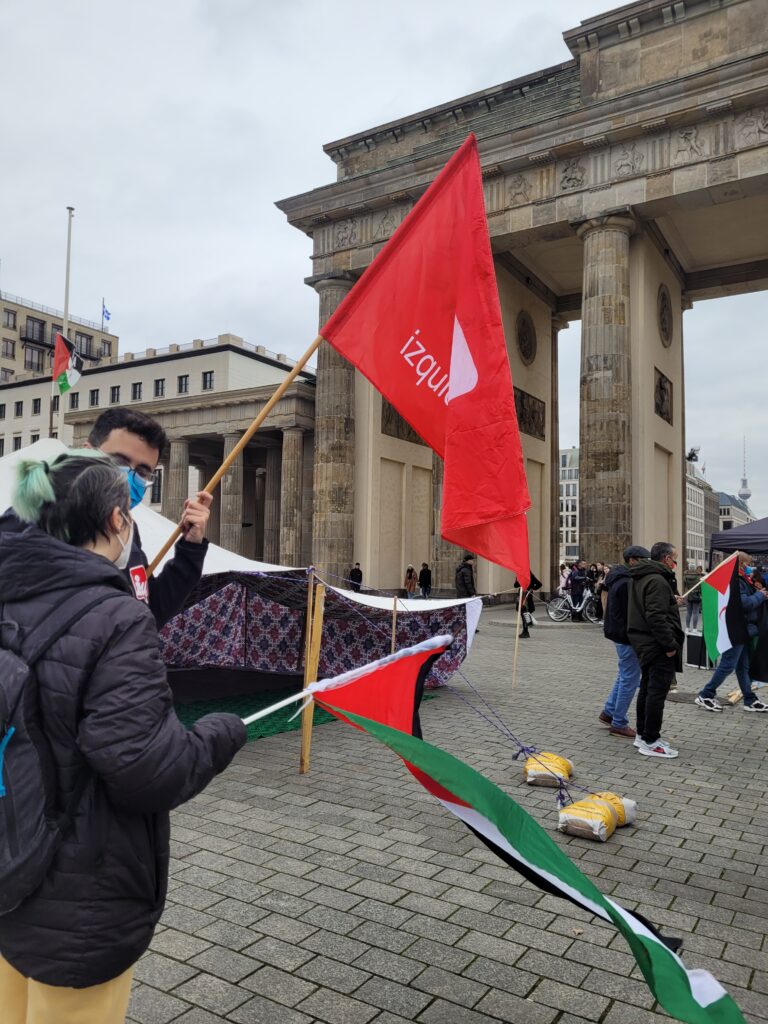
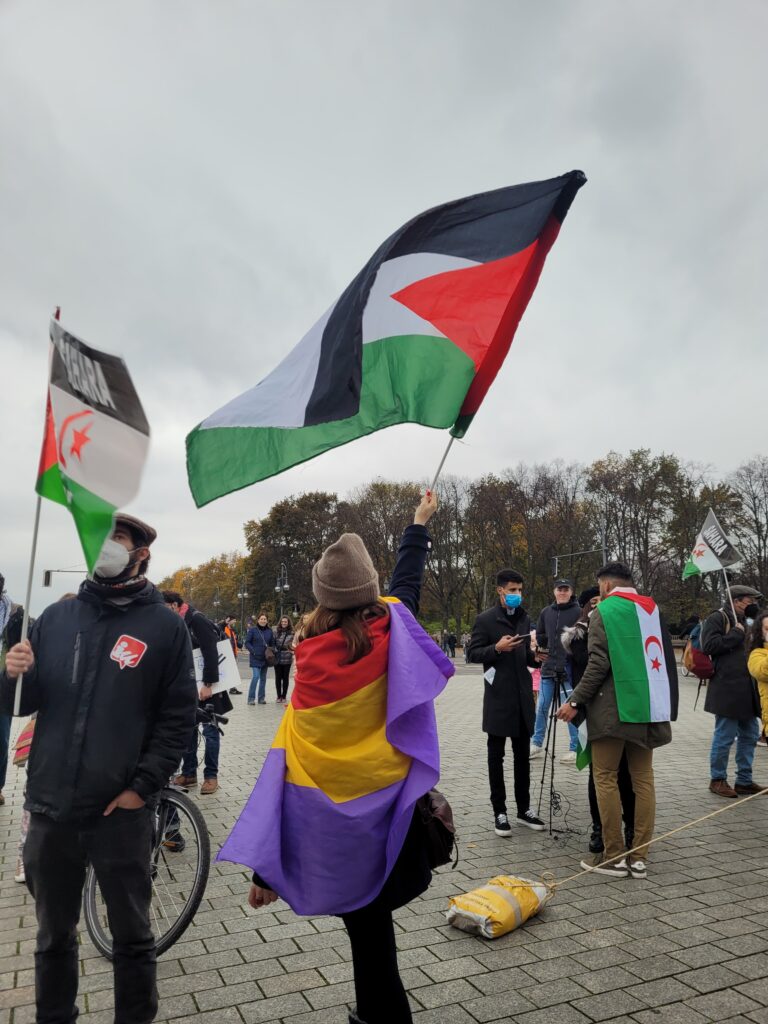
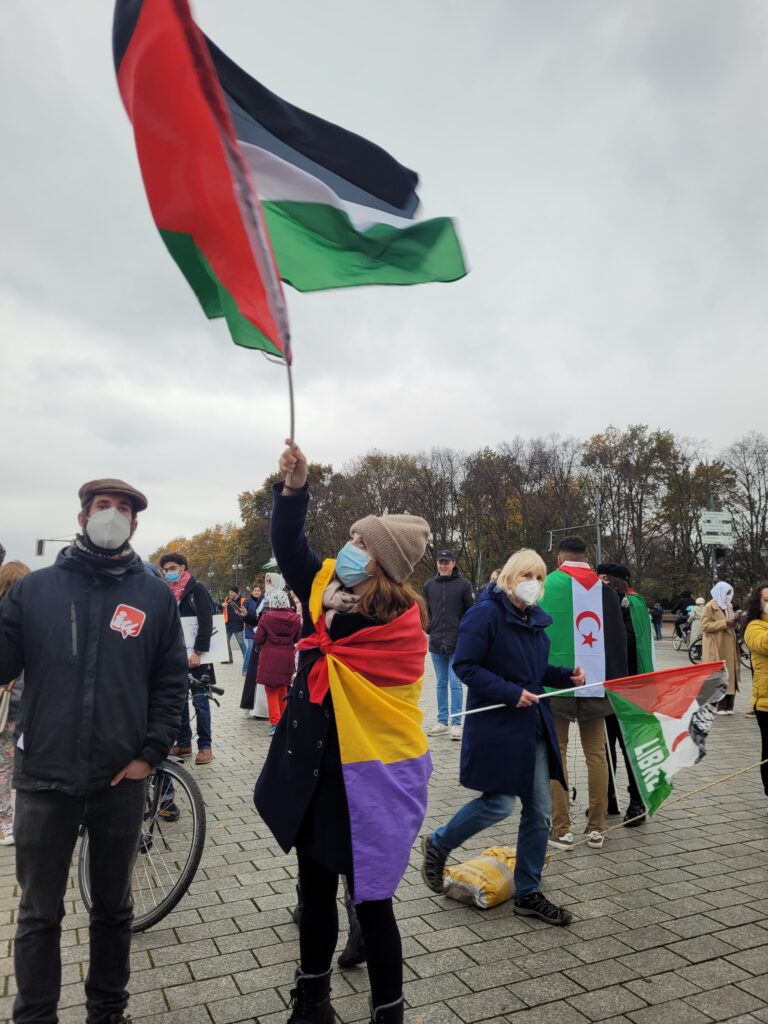
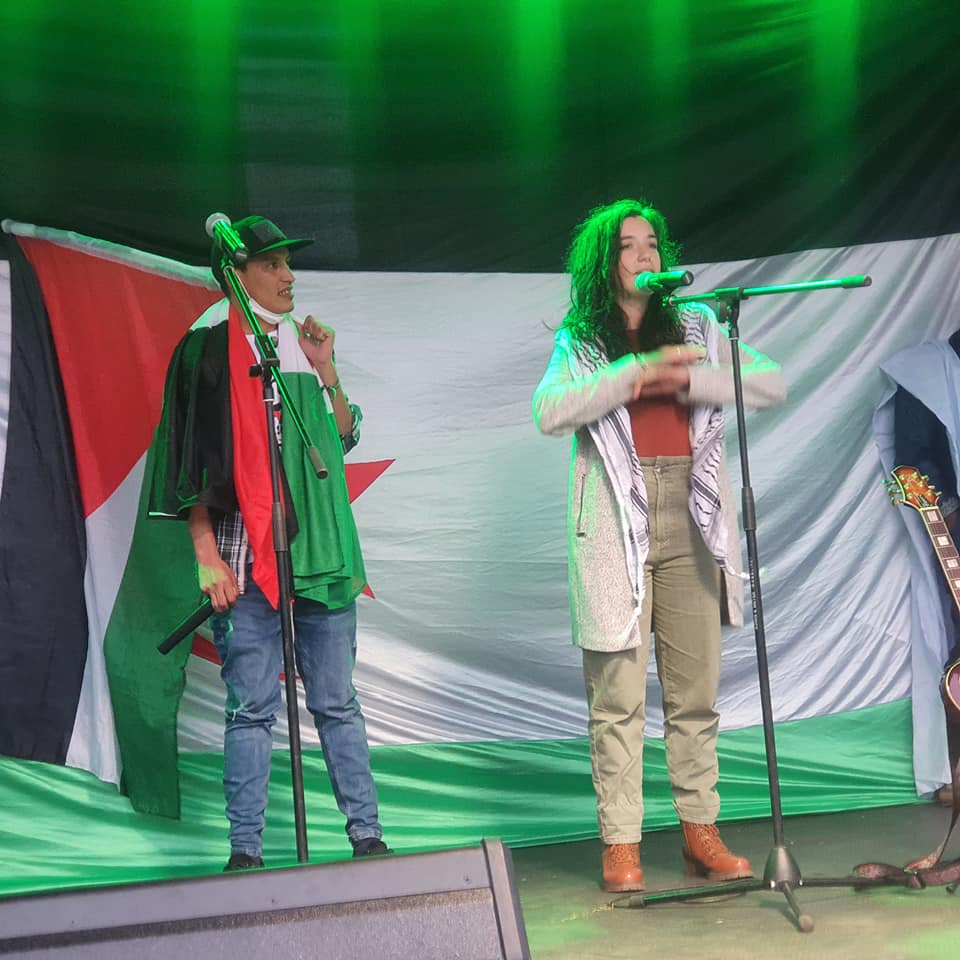
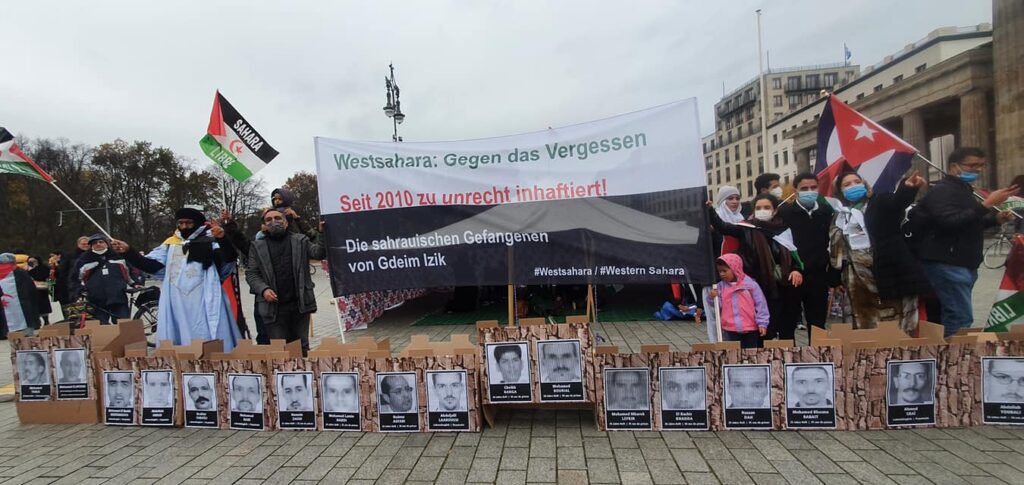
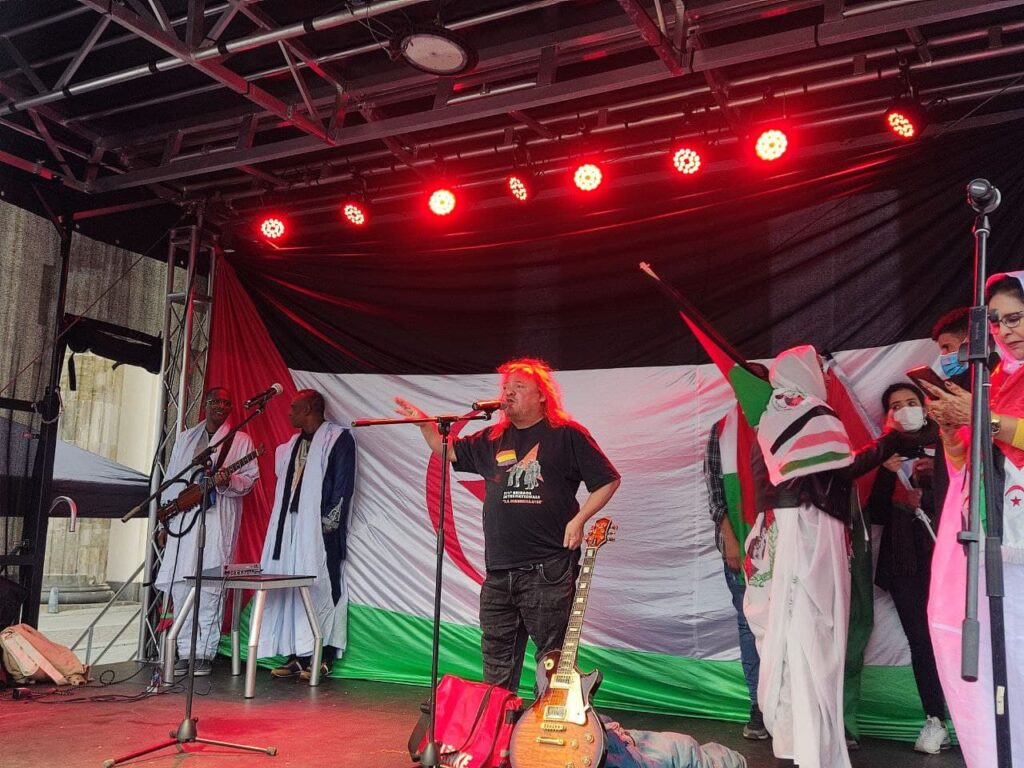
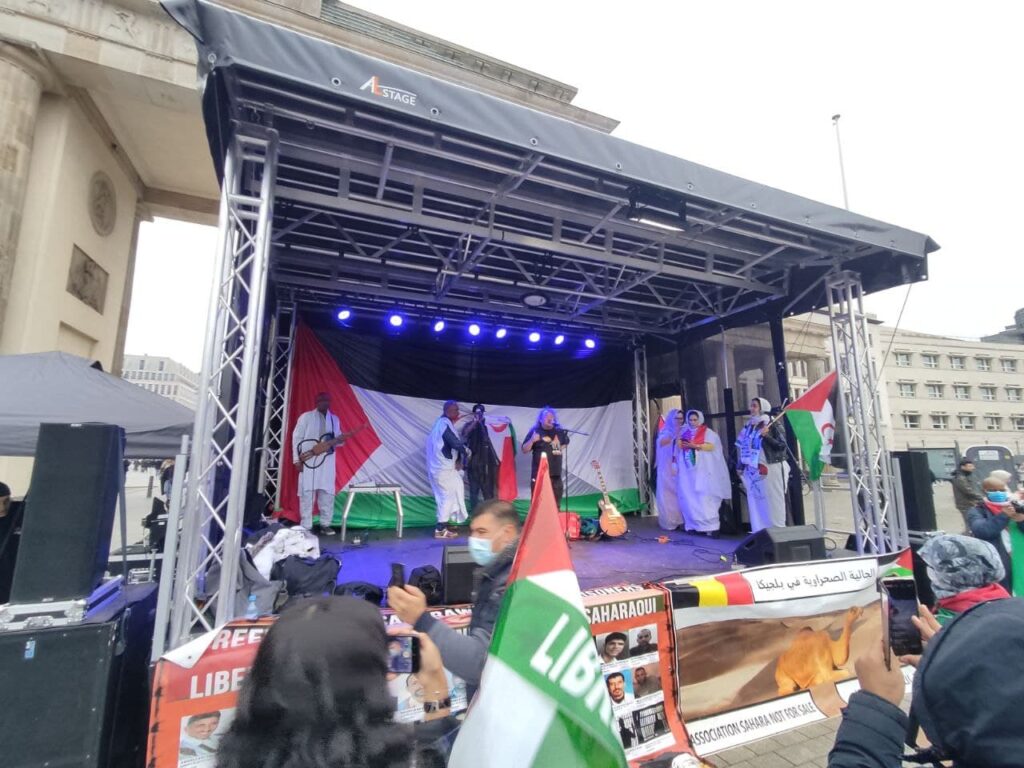
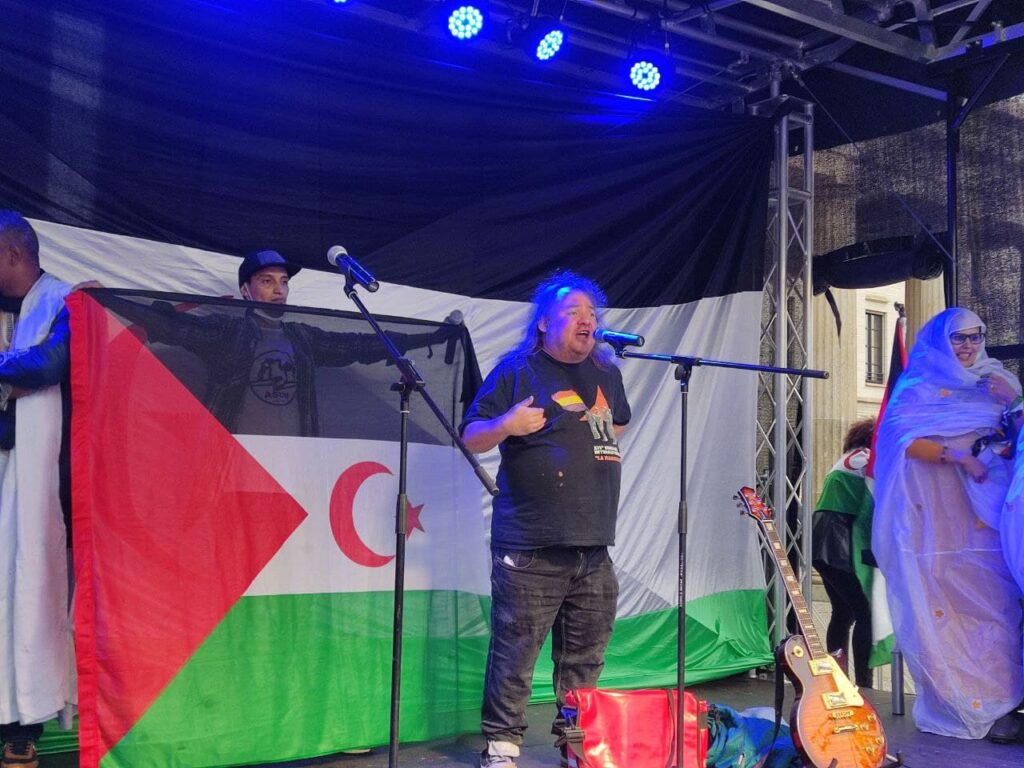
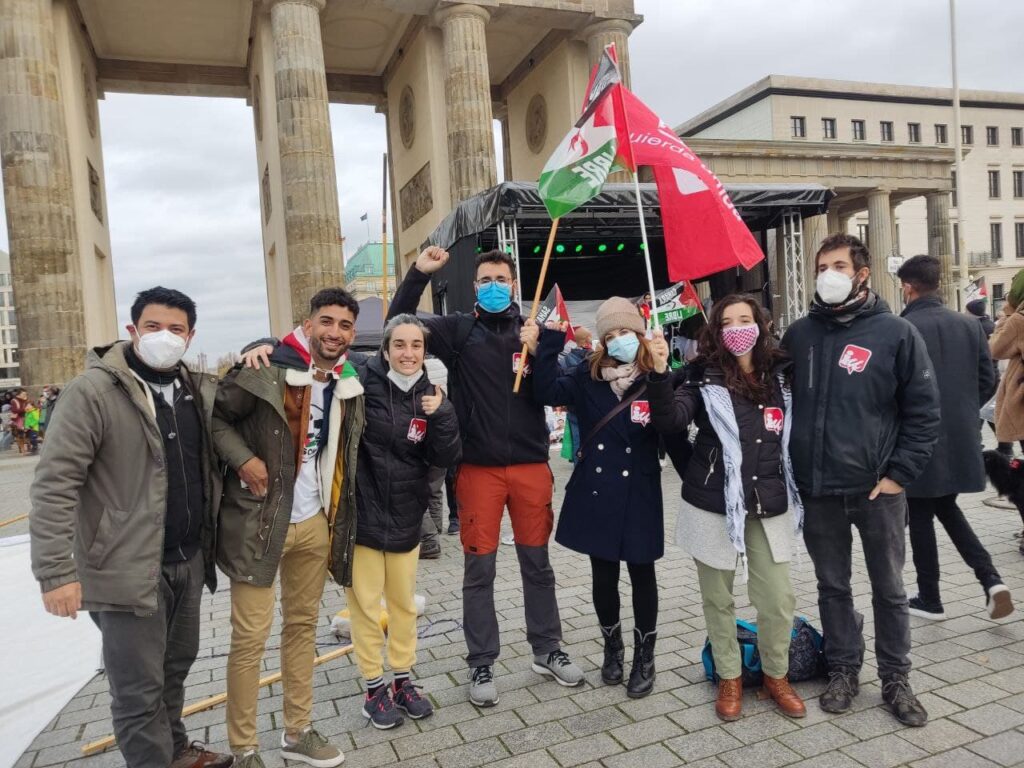
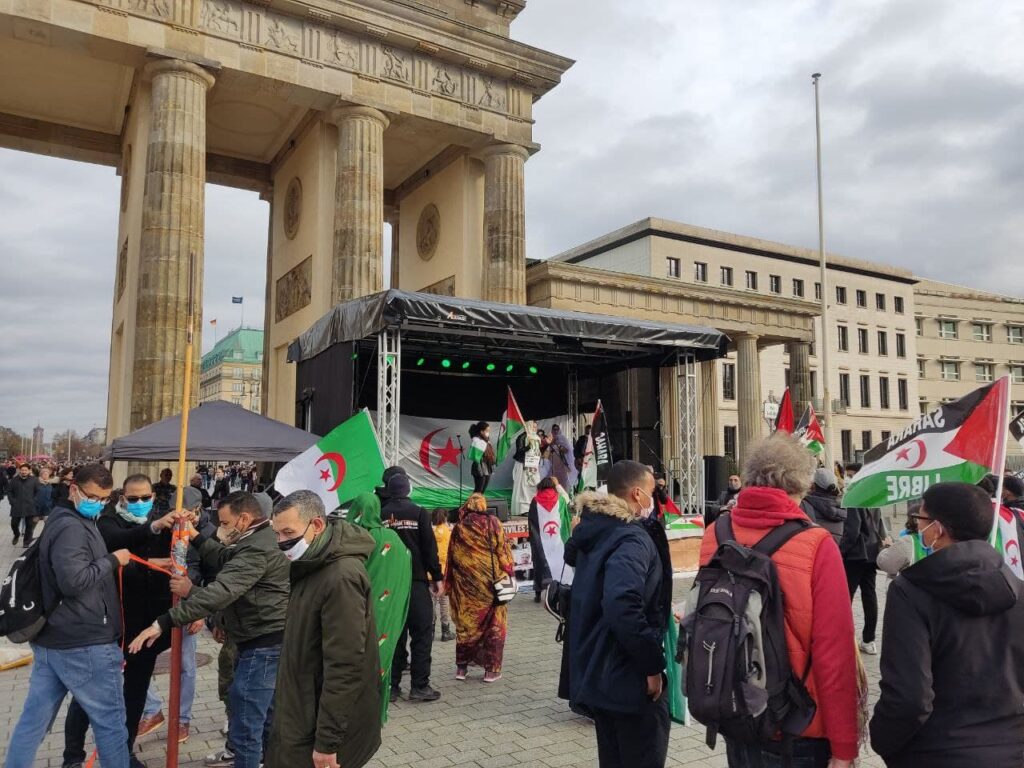
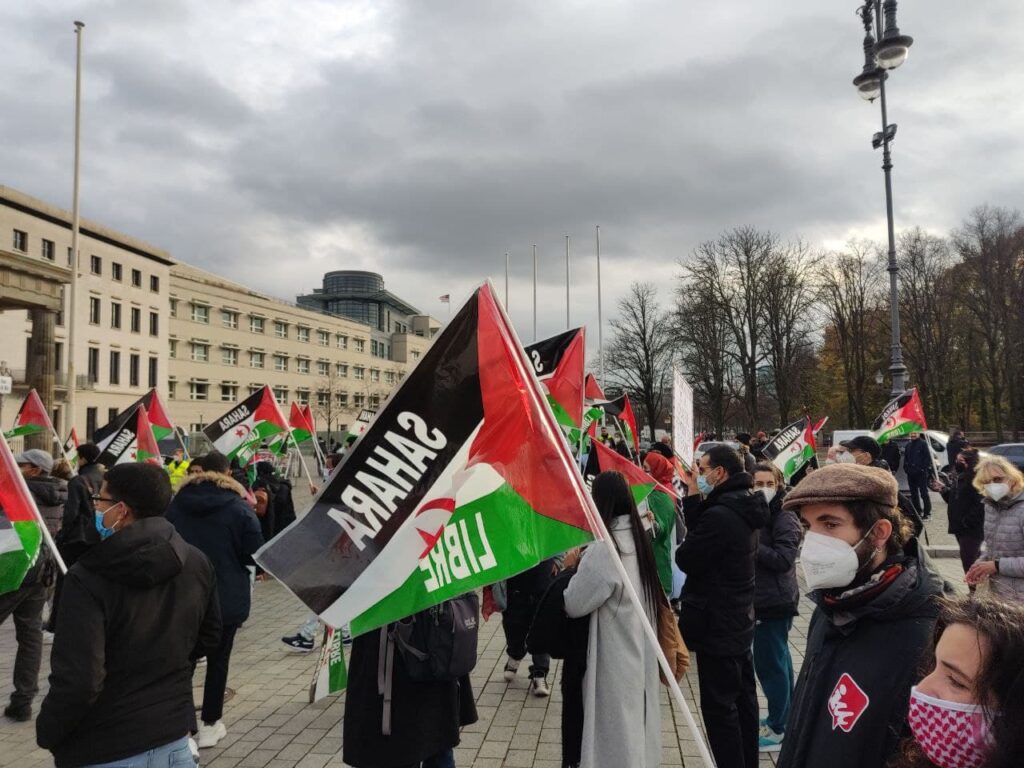
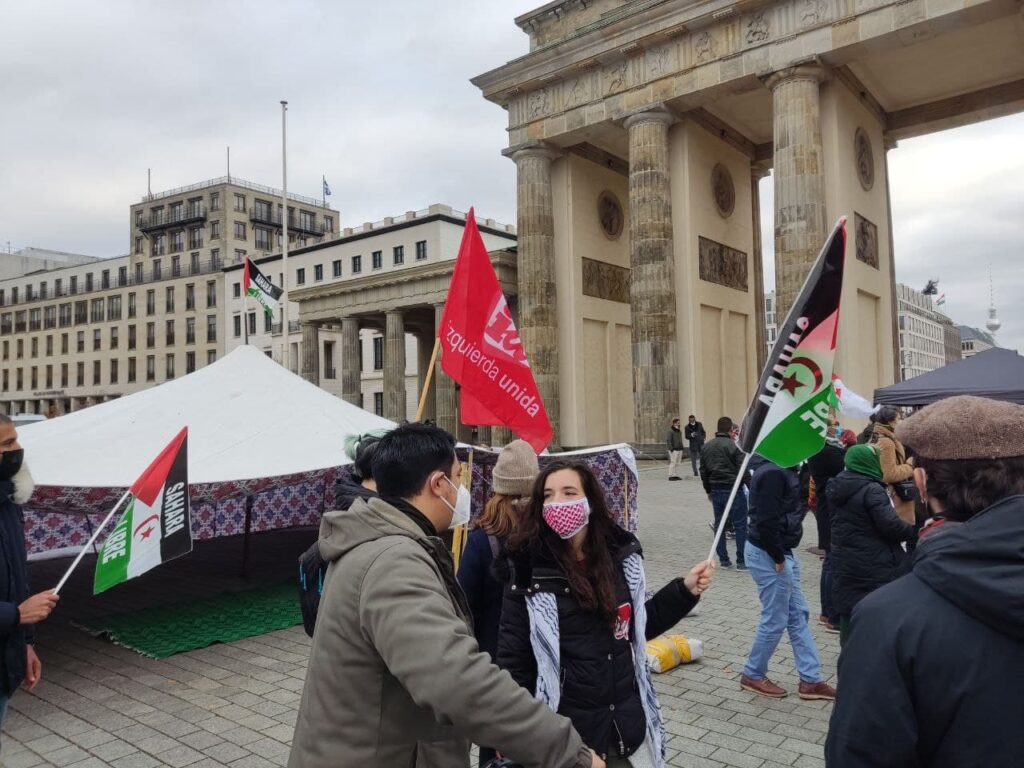
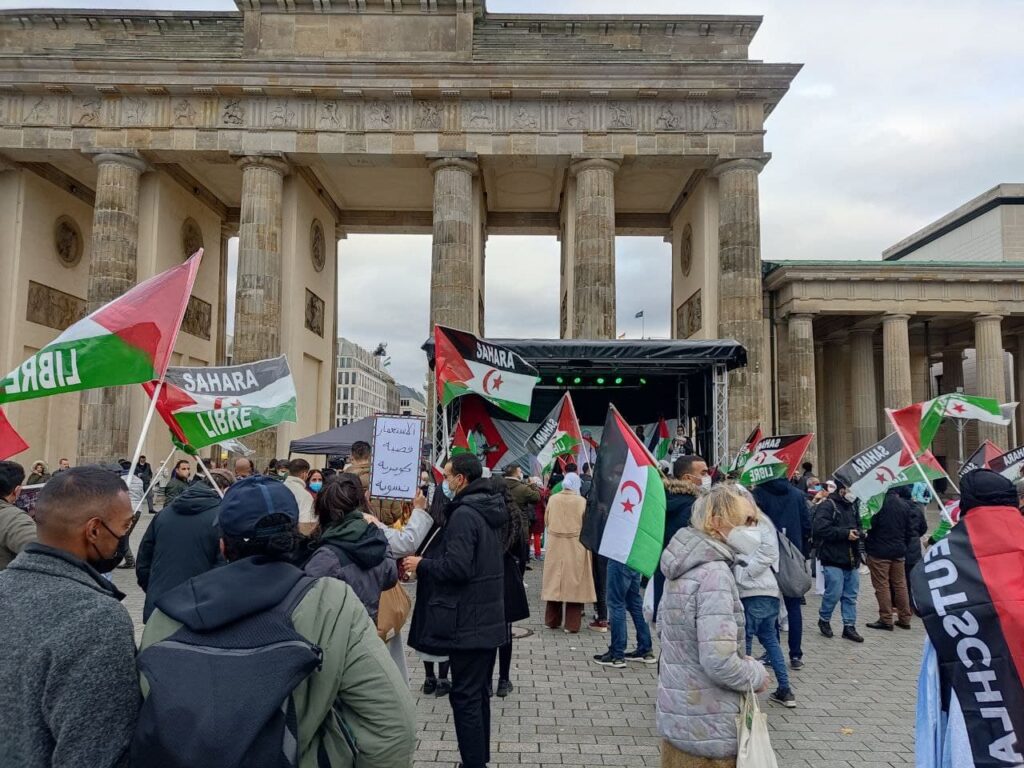
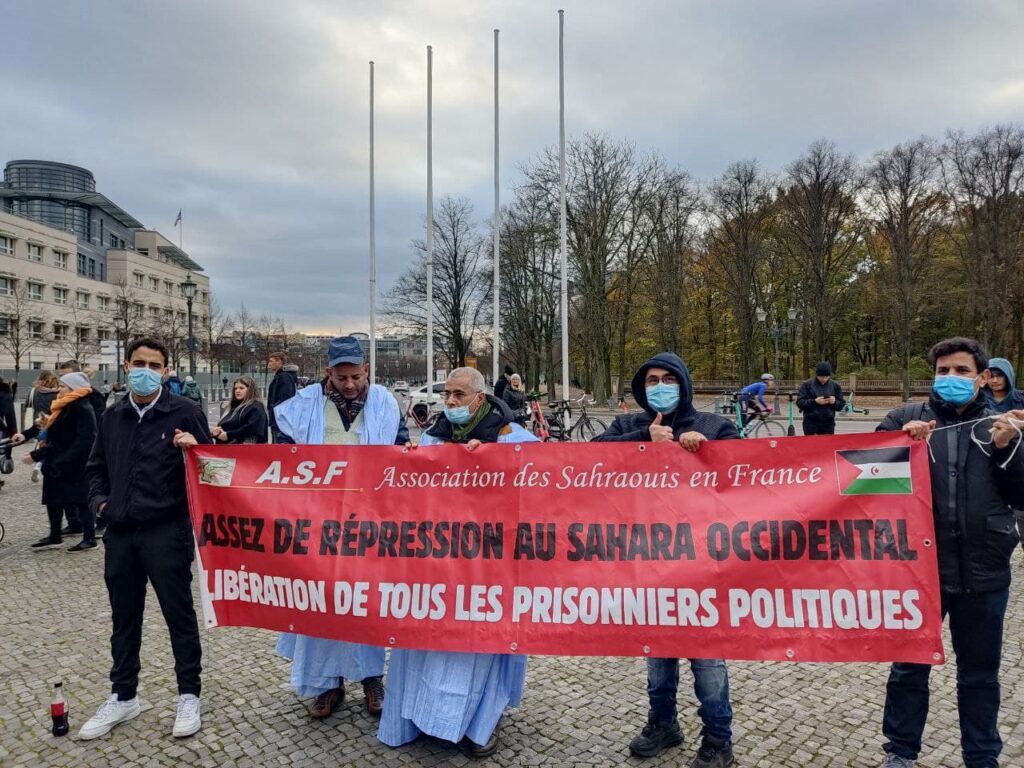
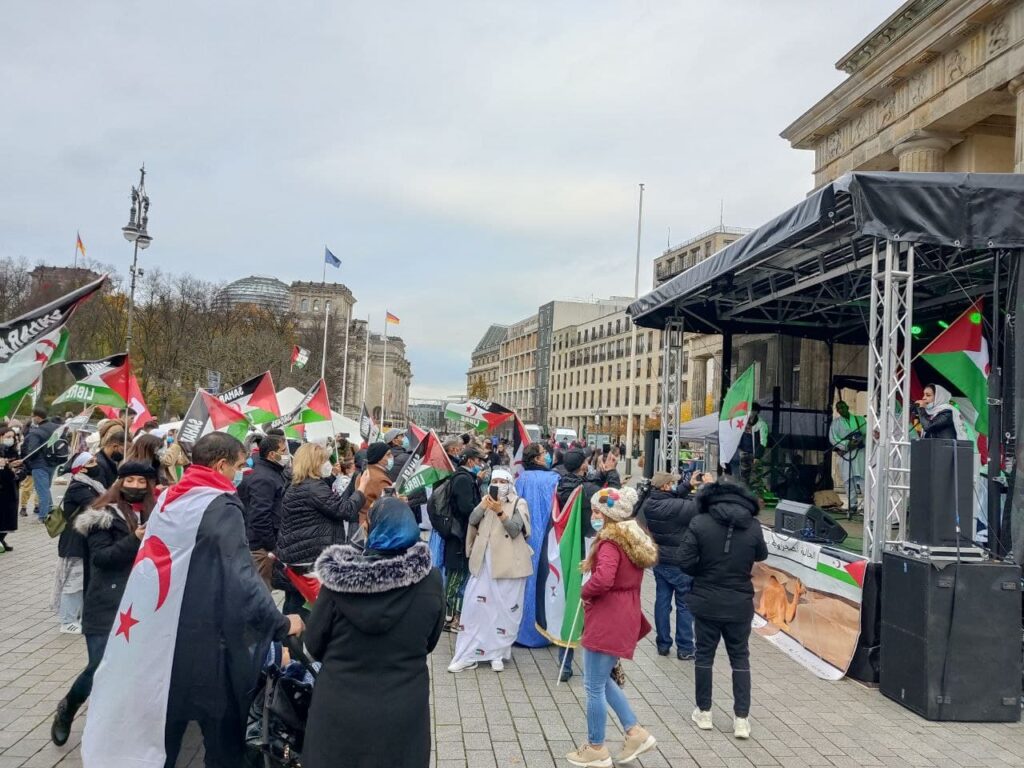
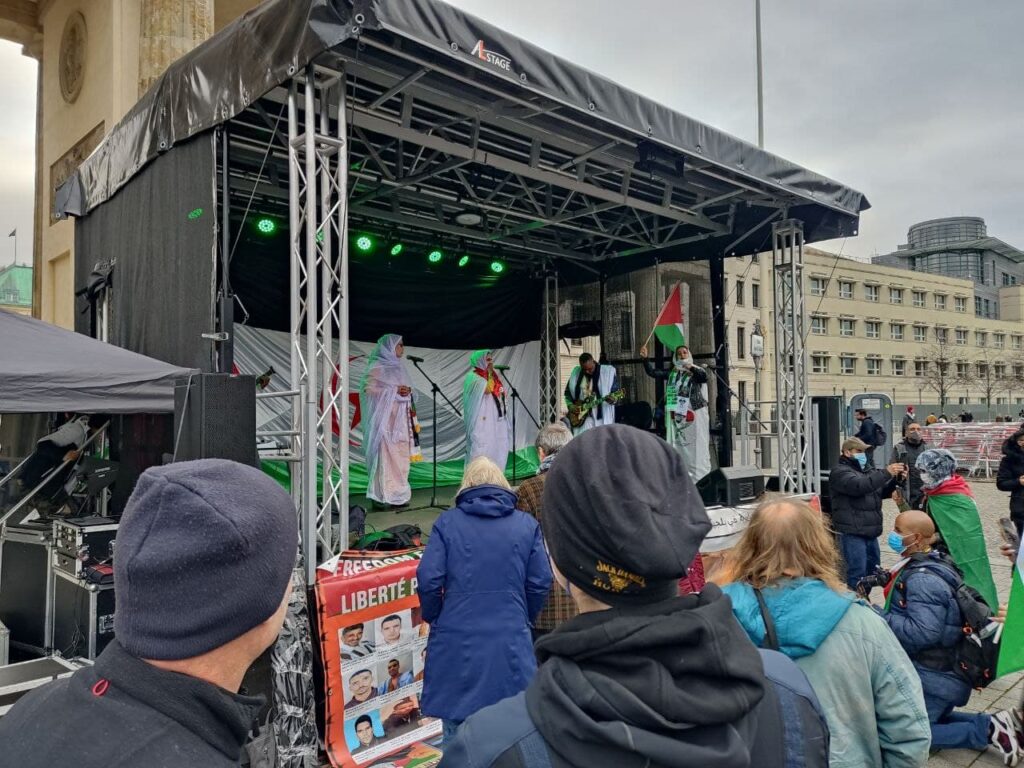
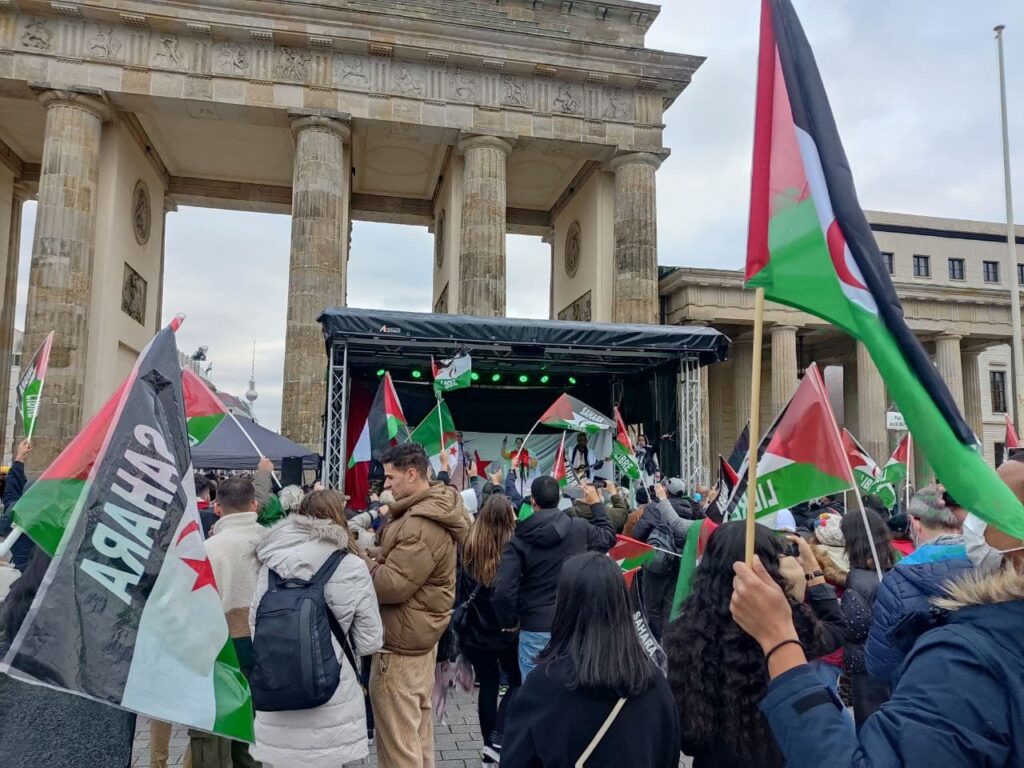
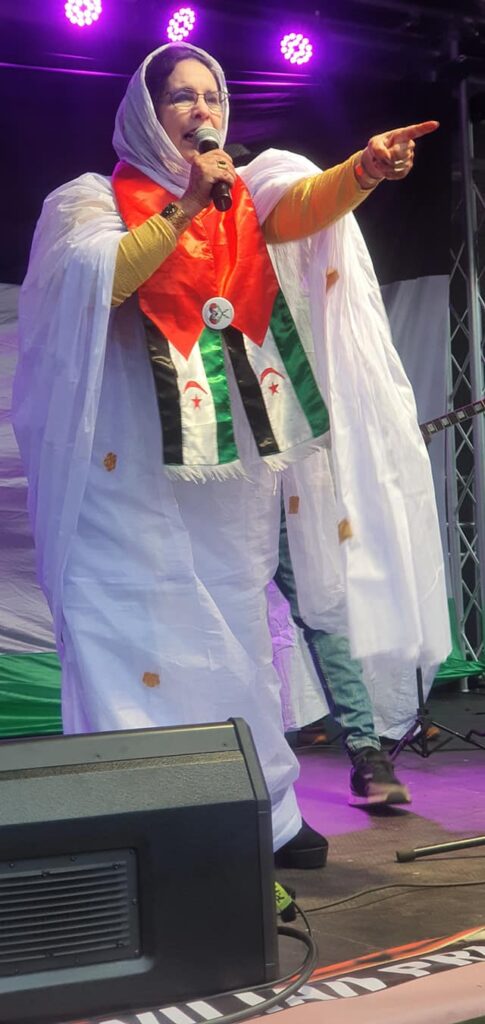
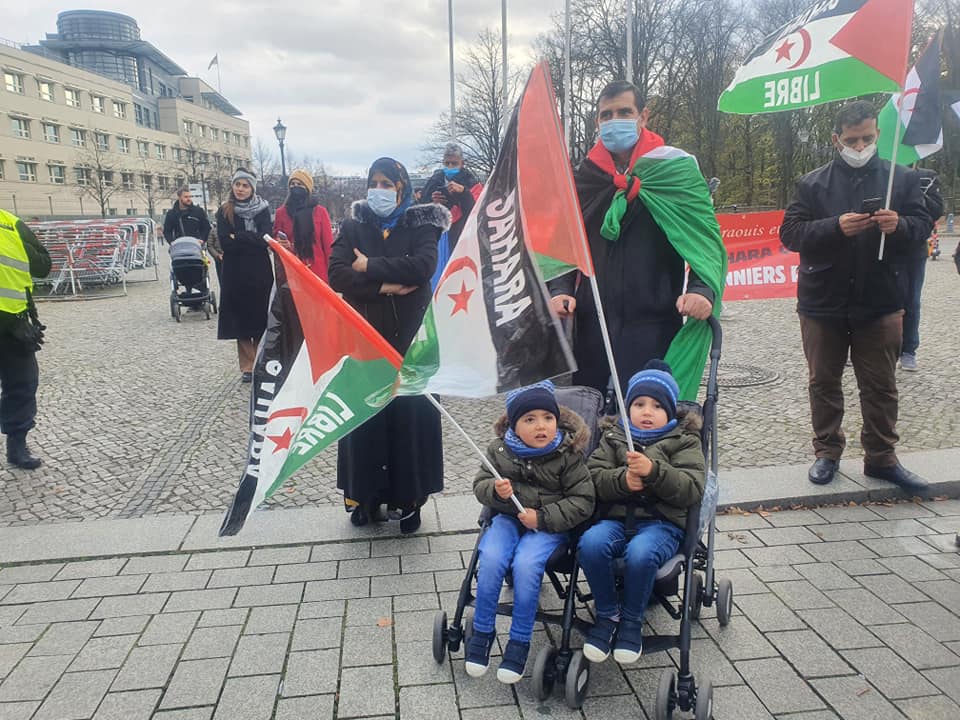
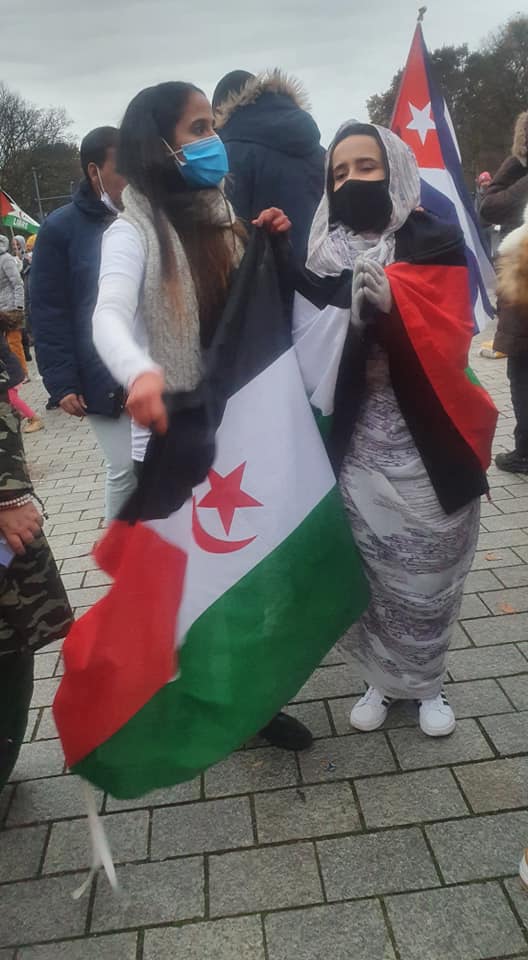
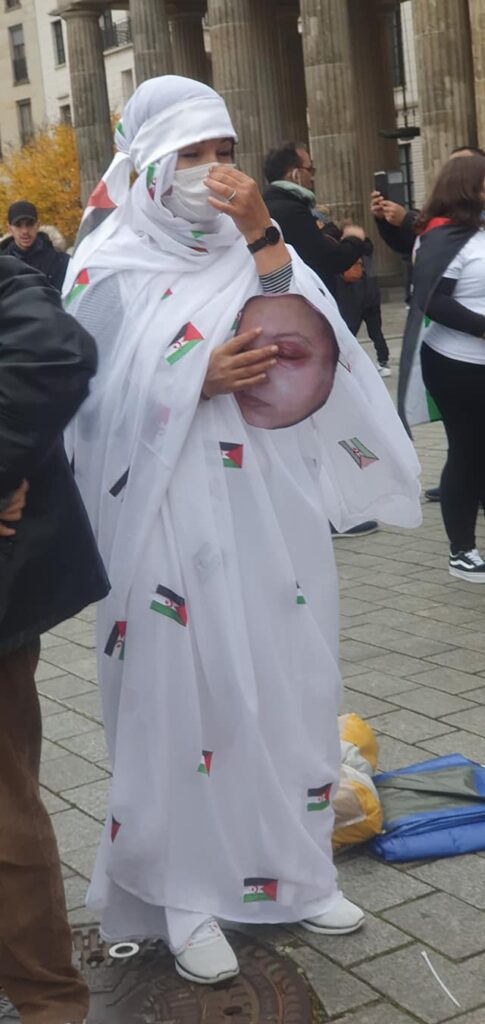
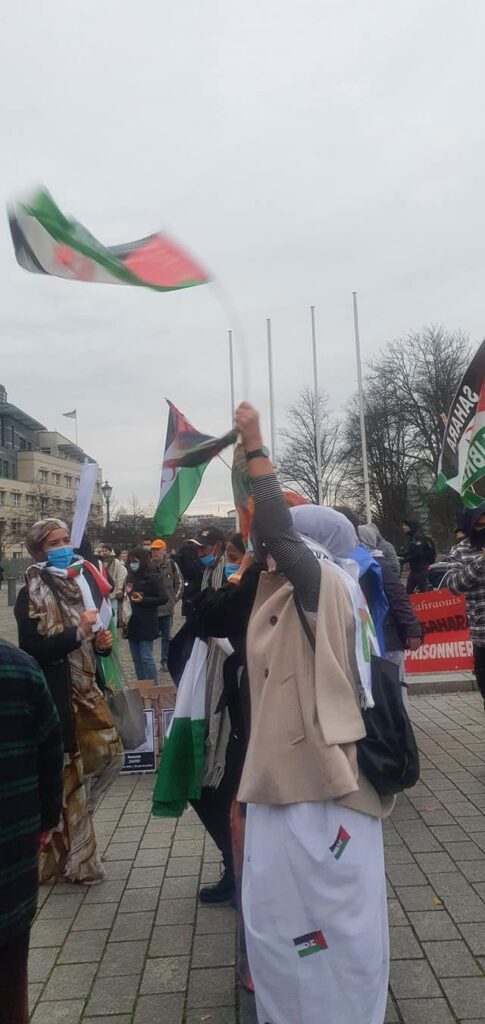
Why Demonstrate in Berlin for Western Sahara?

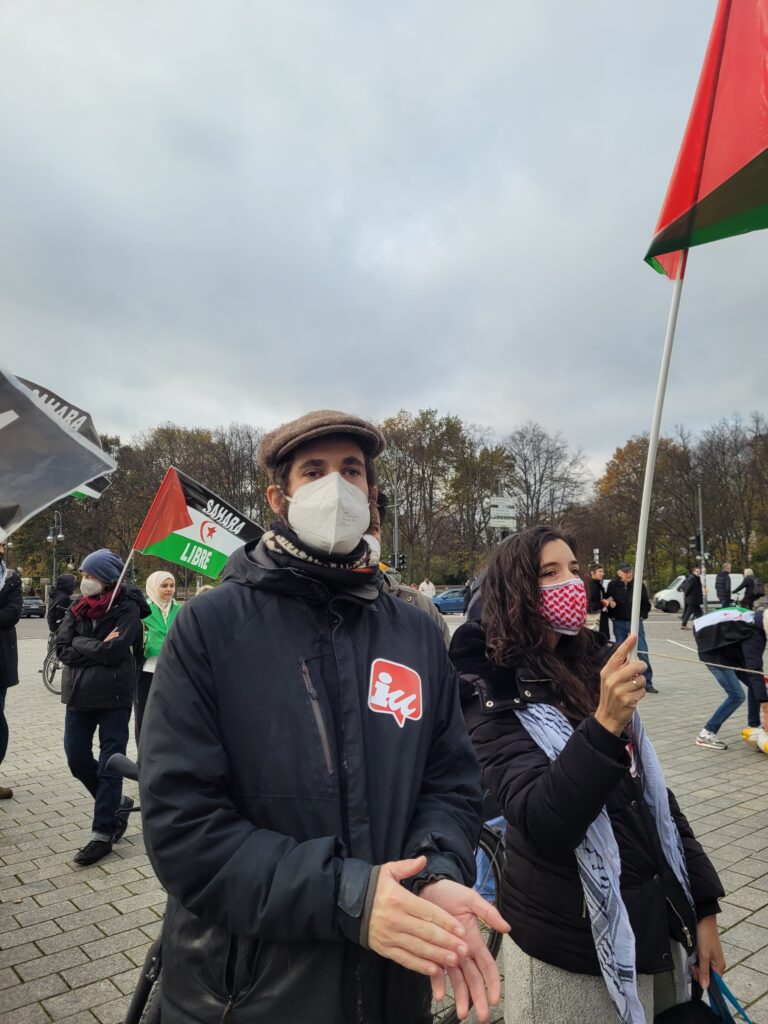
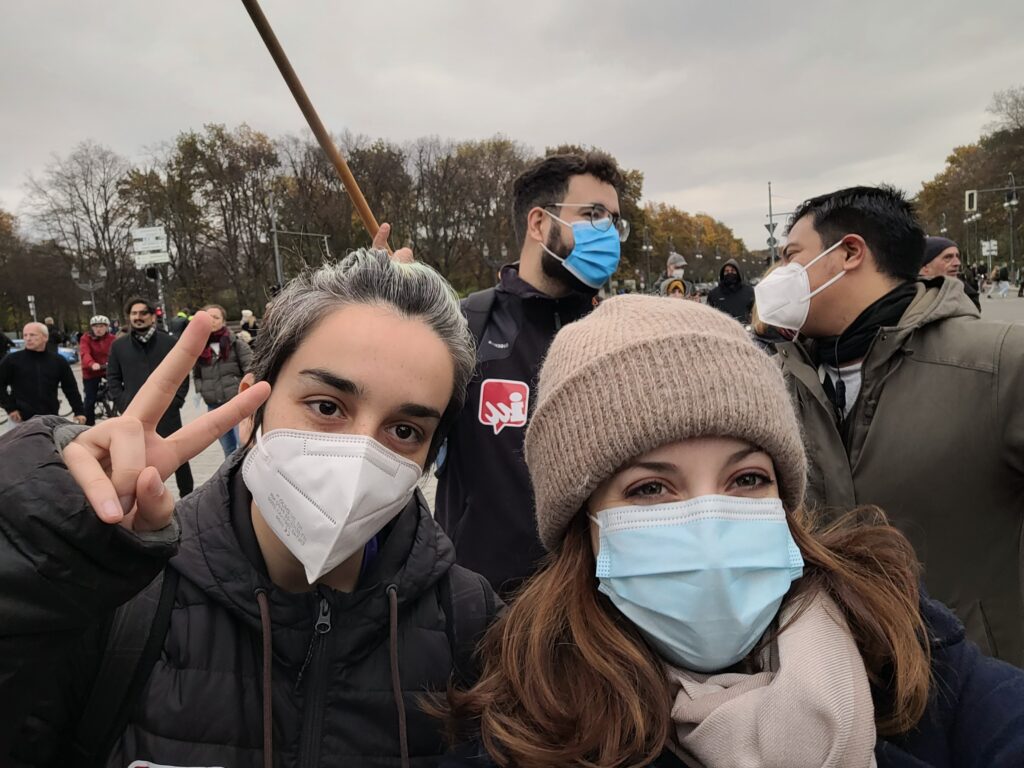
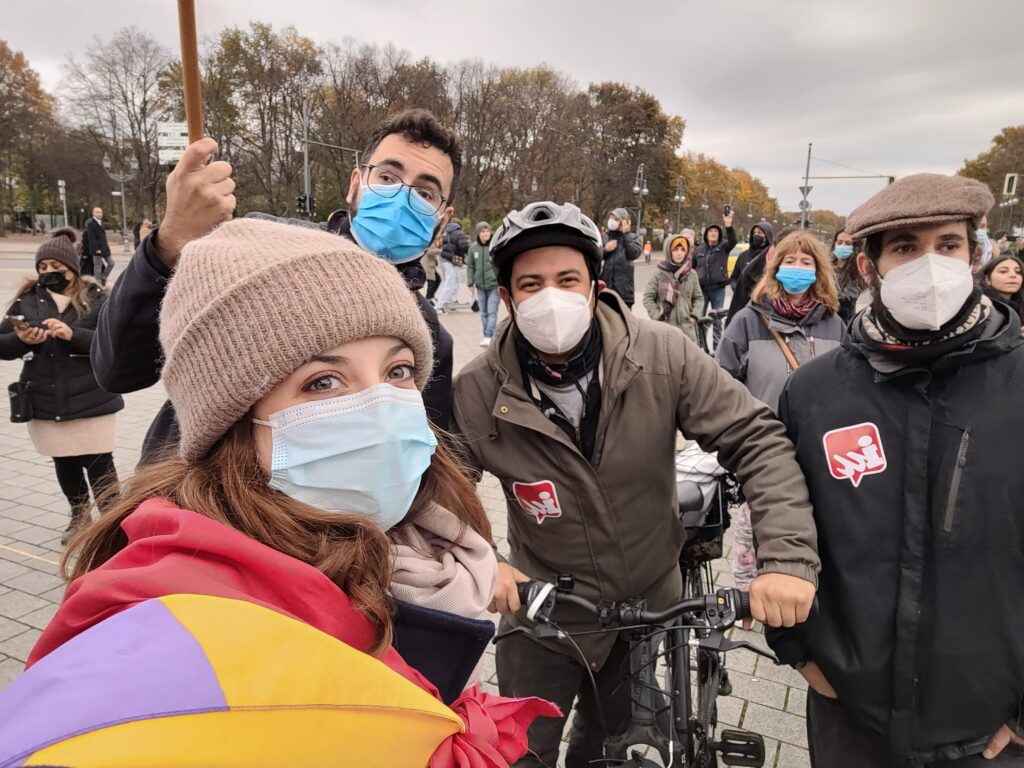
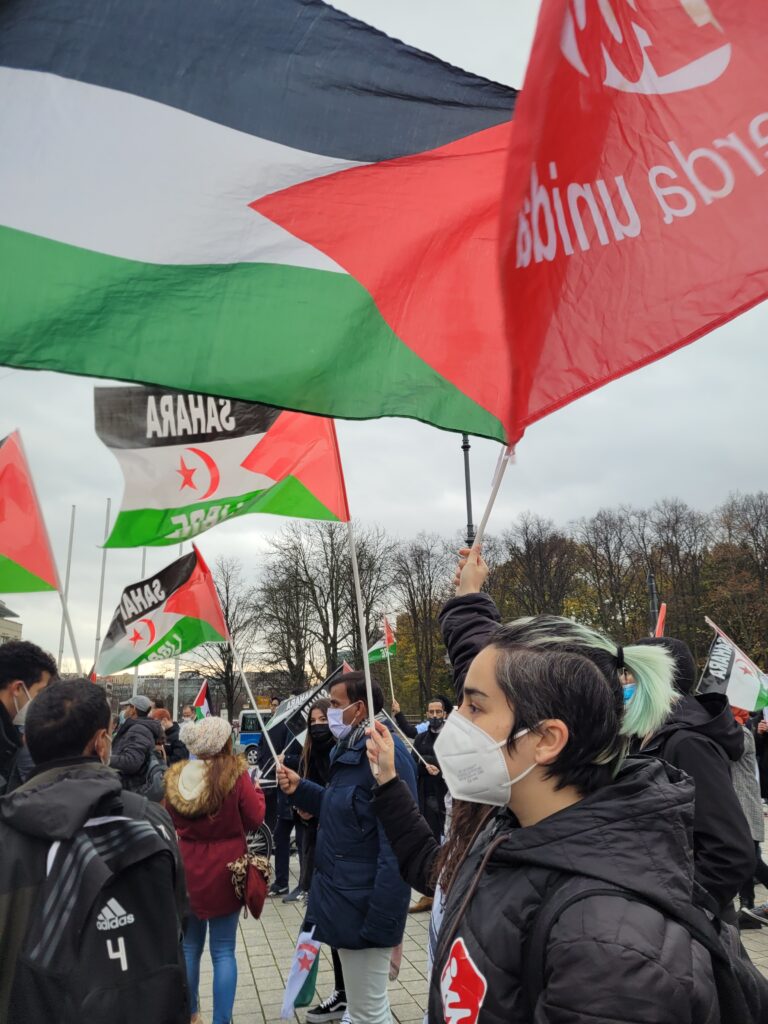
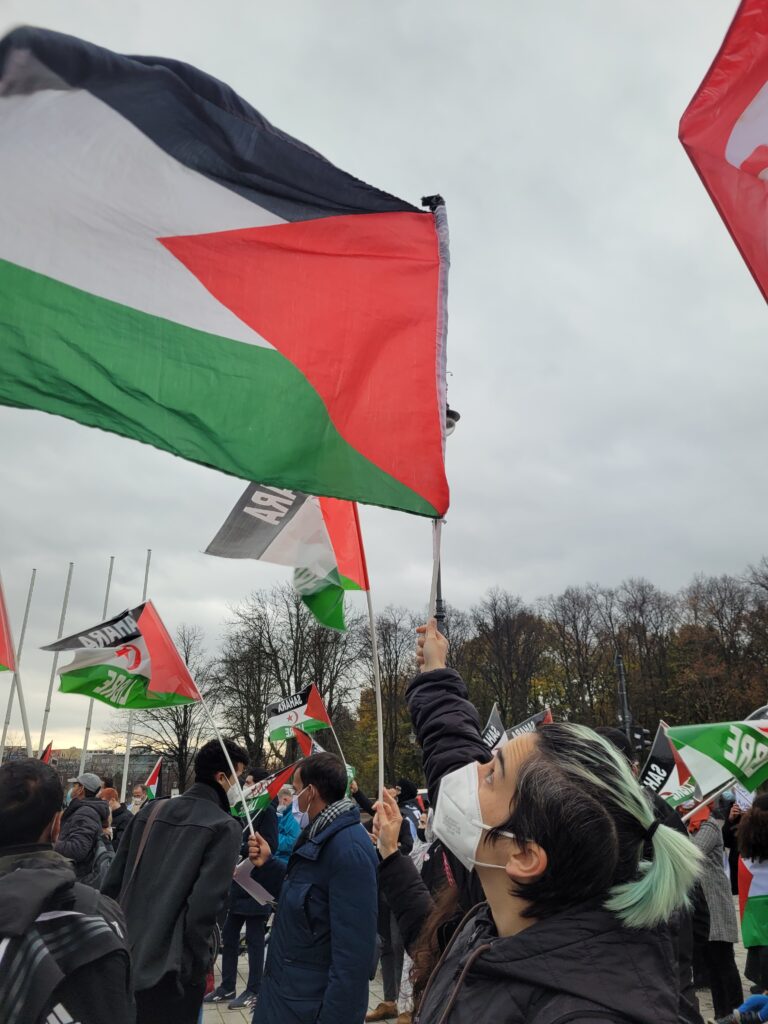
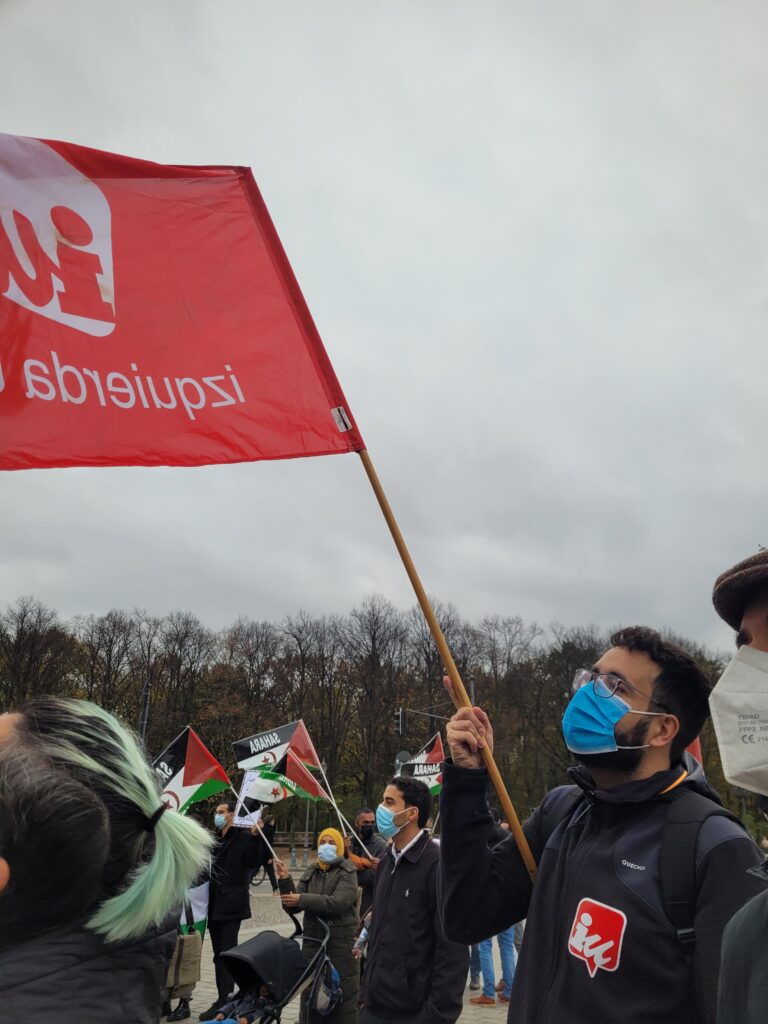
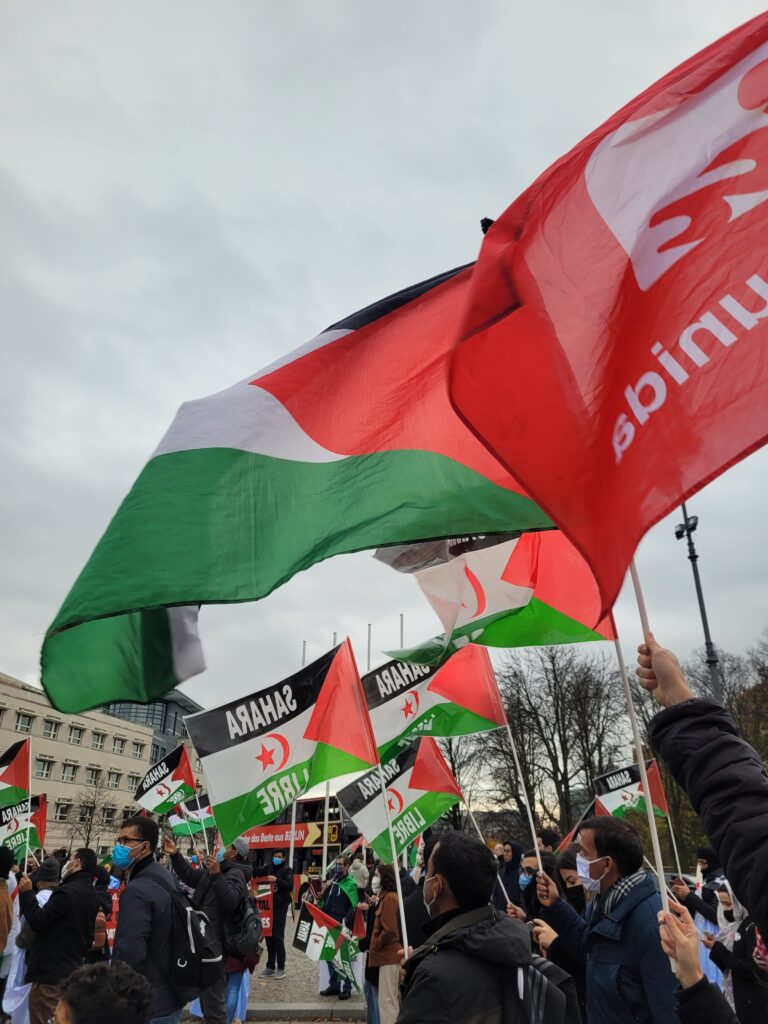
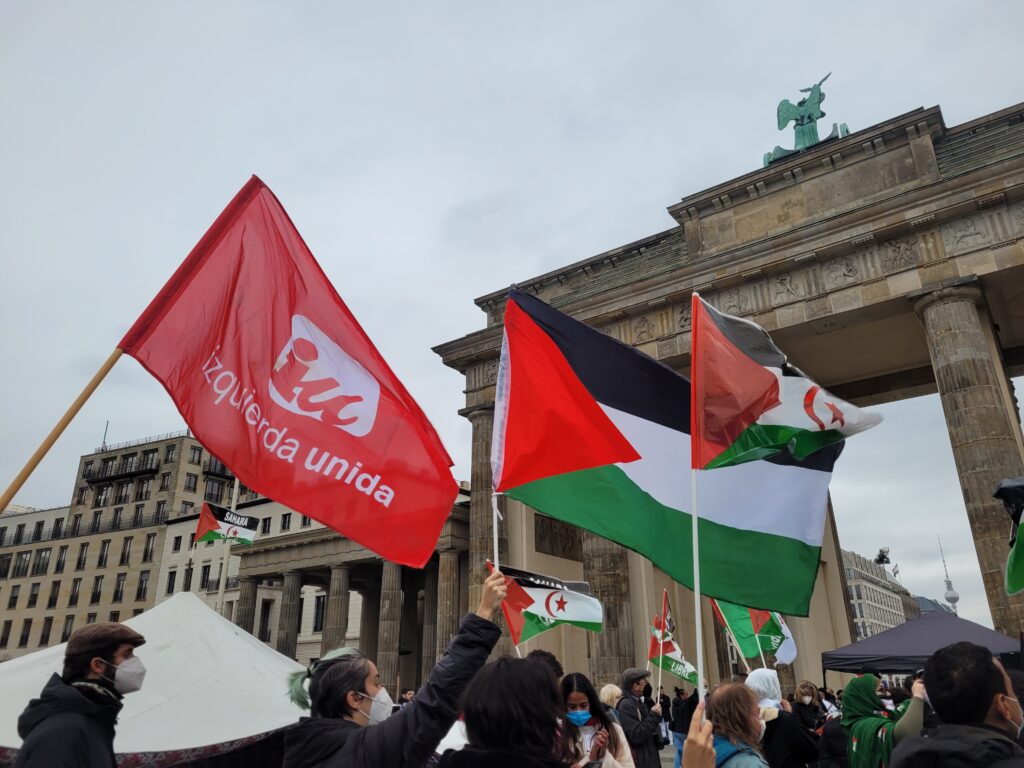
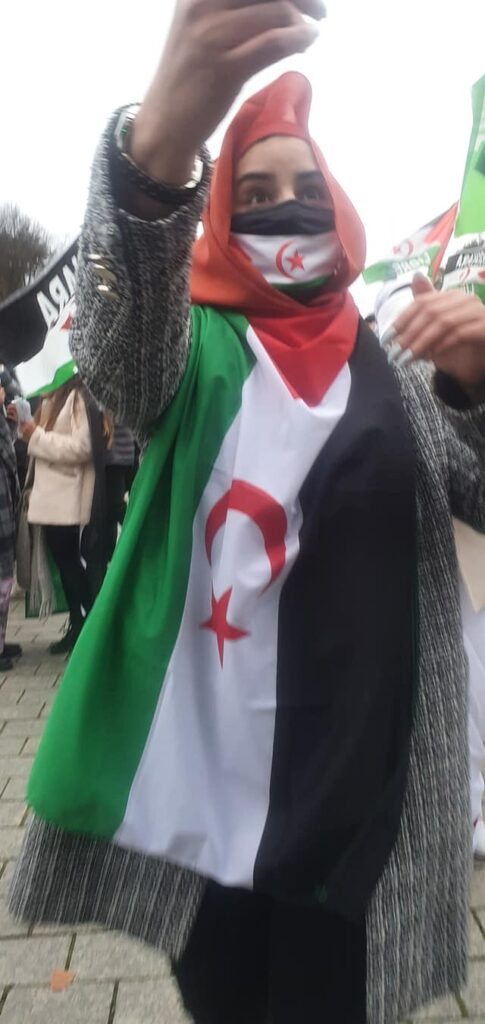
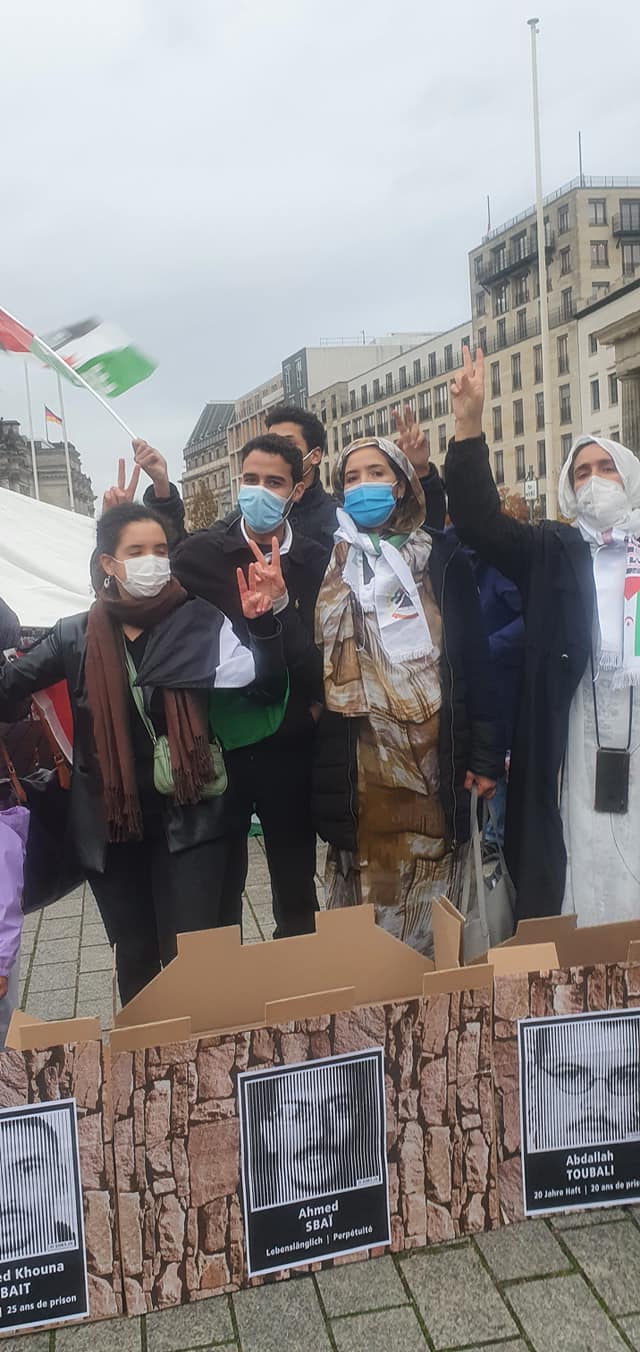
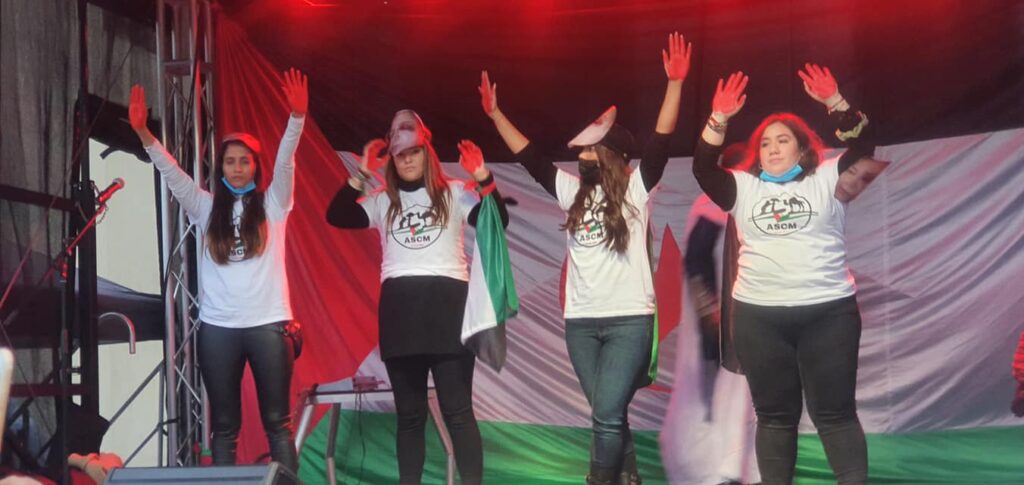
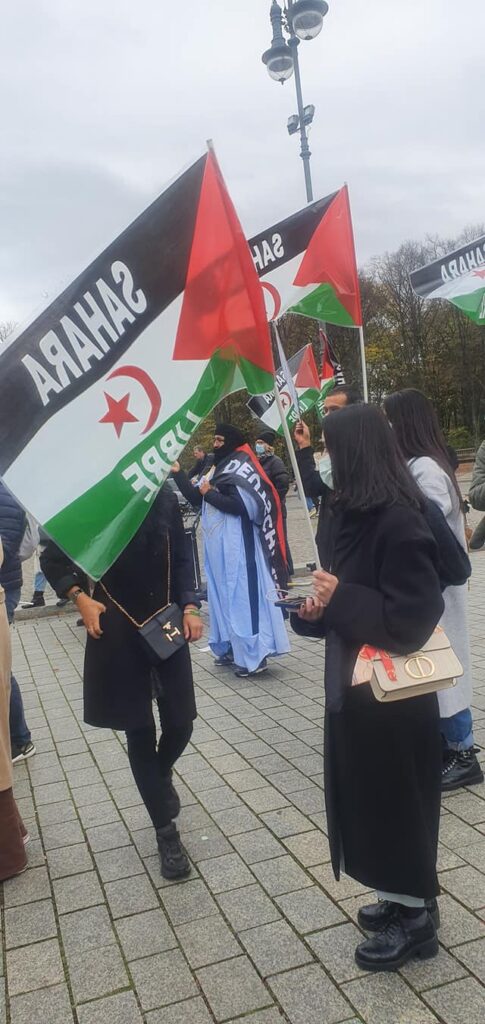
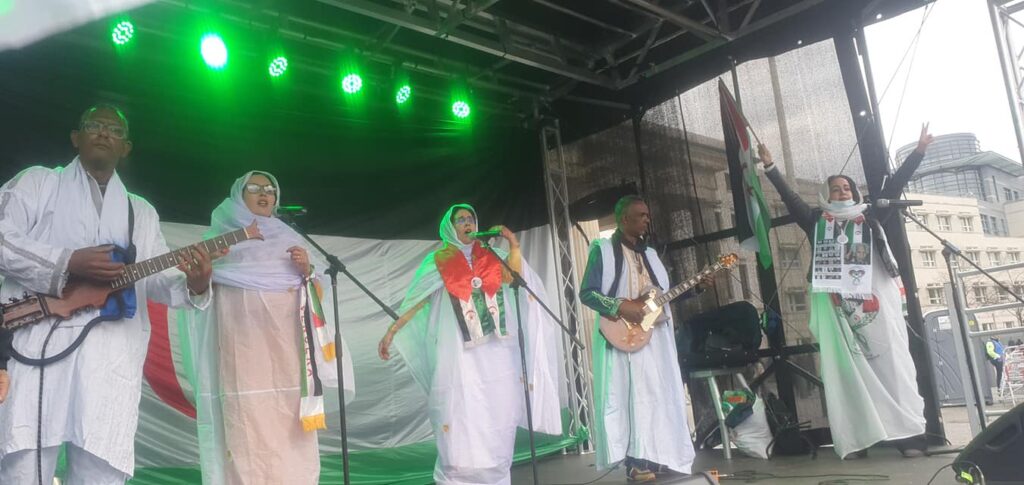
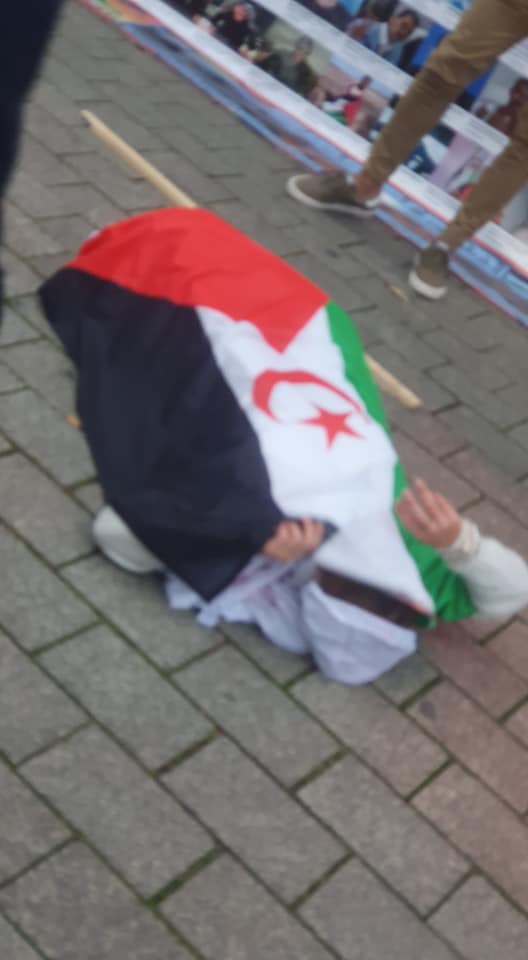
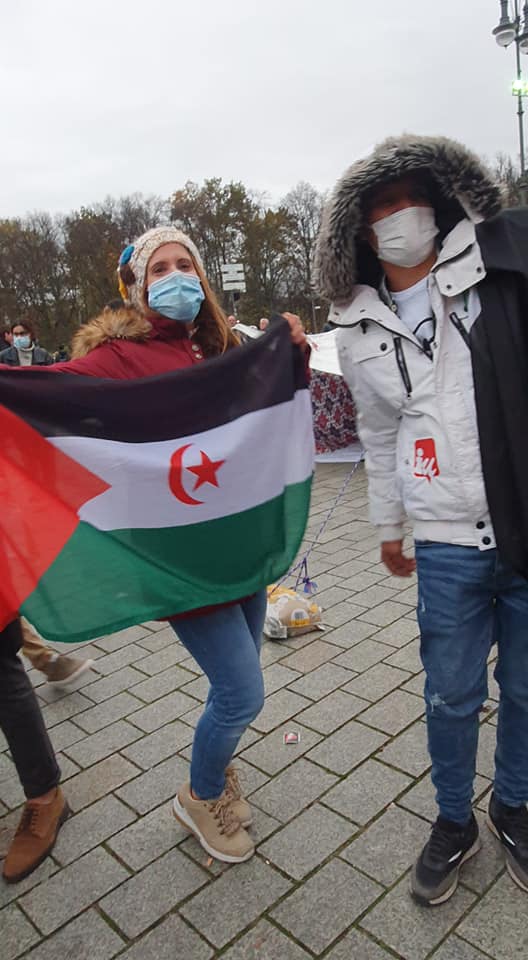
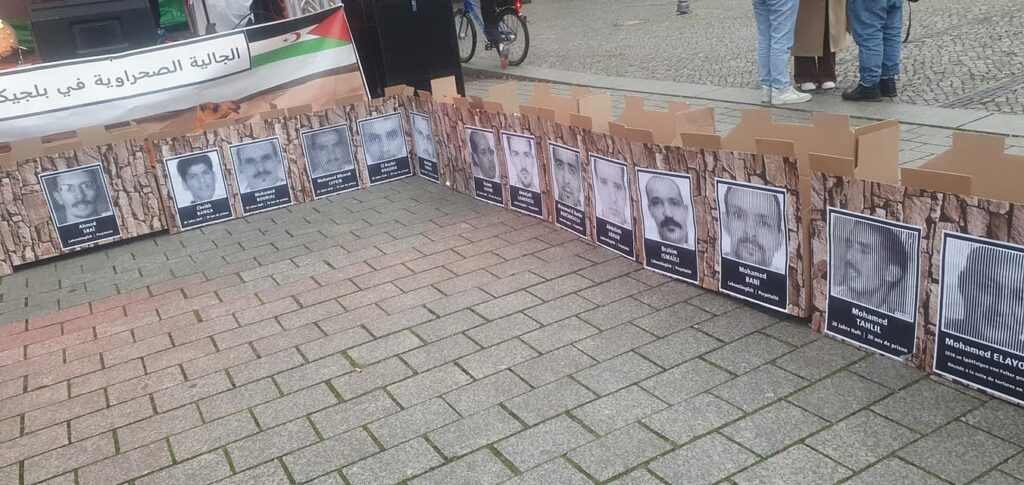
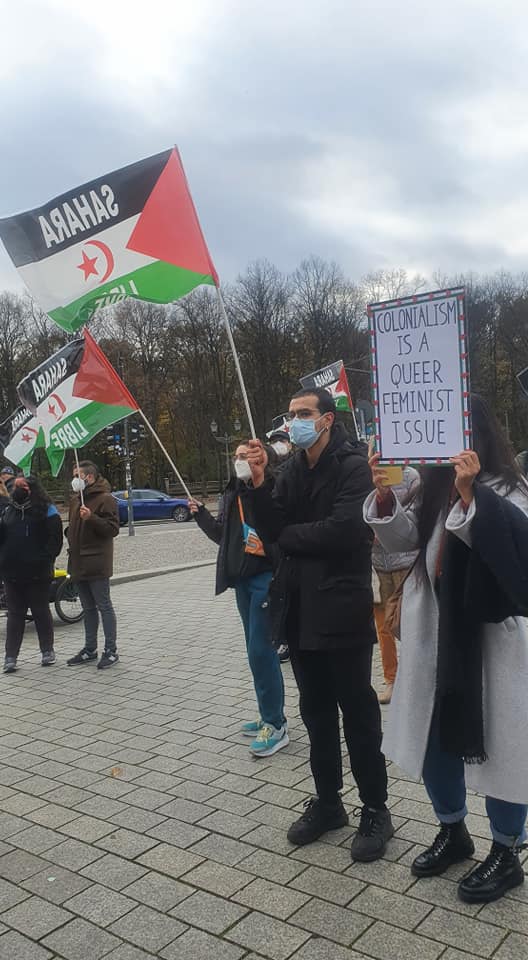
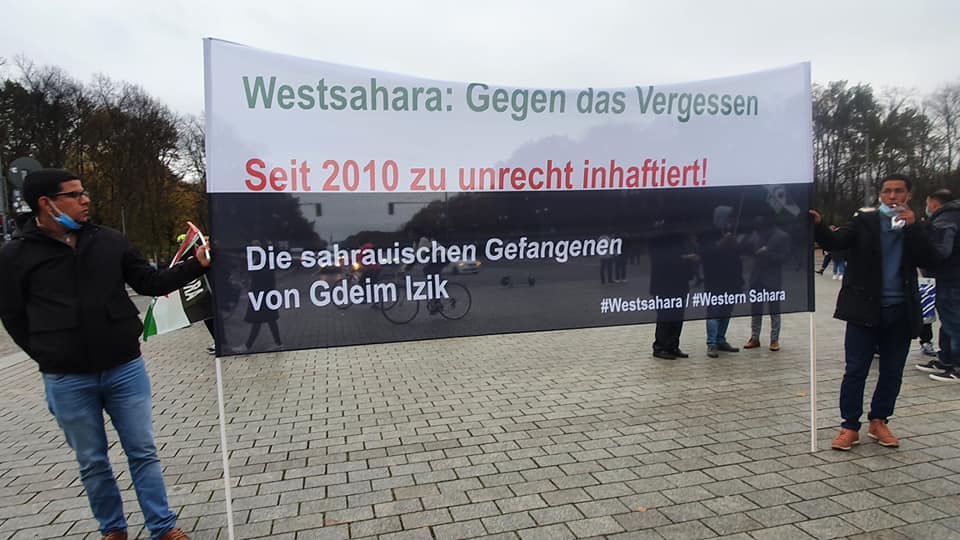
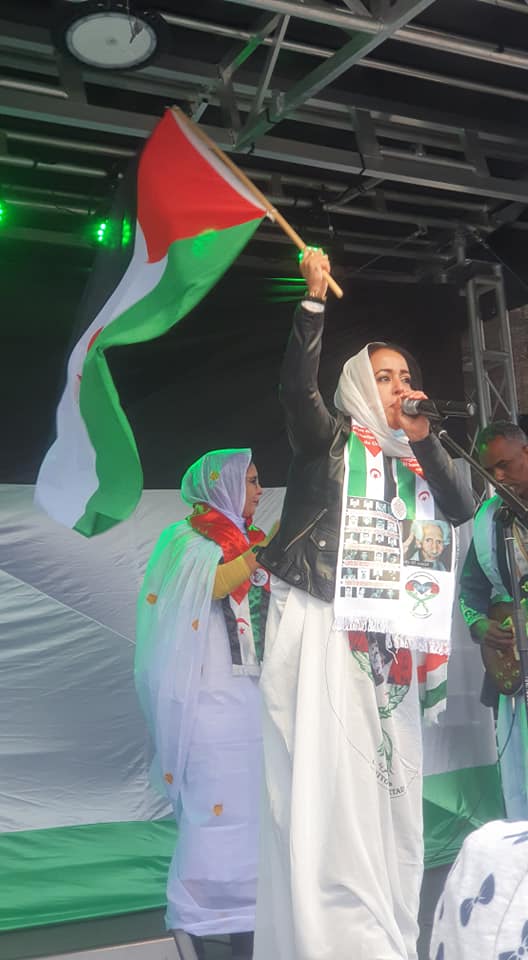
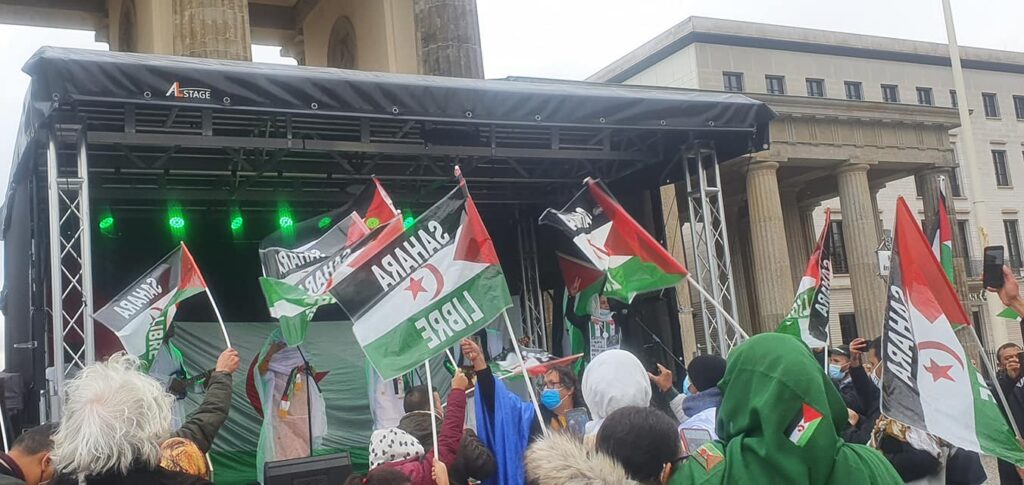
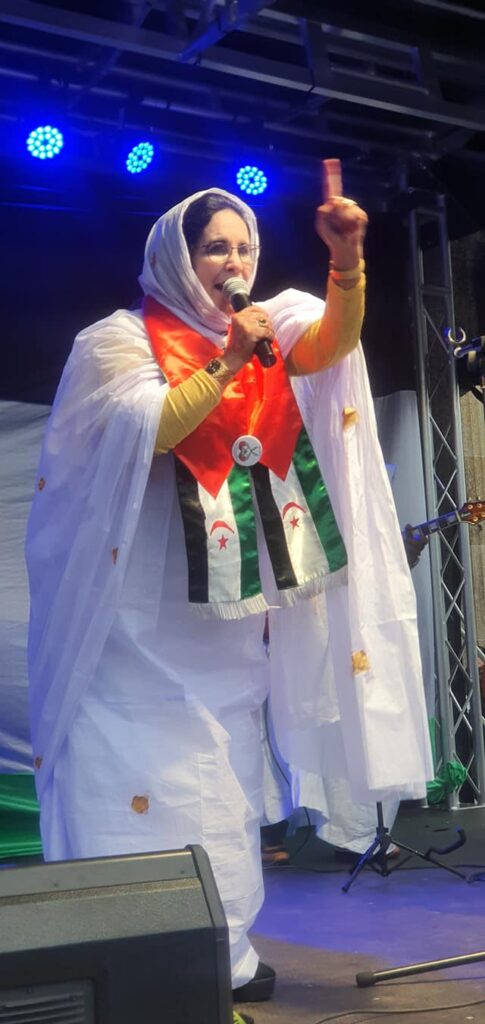
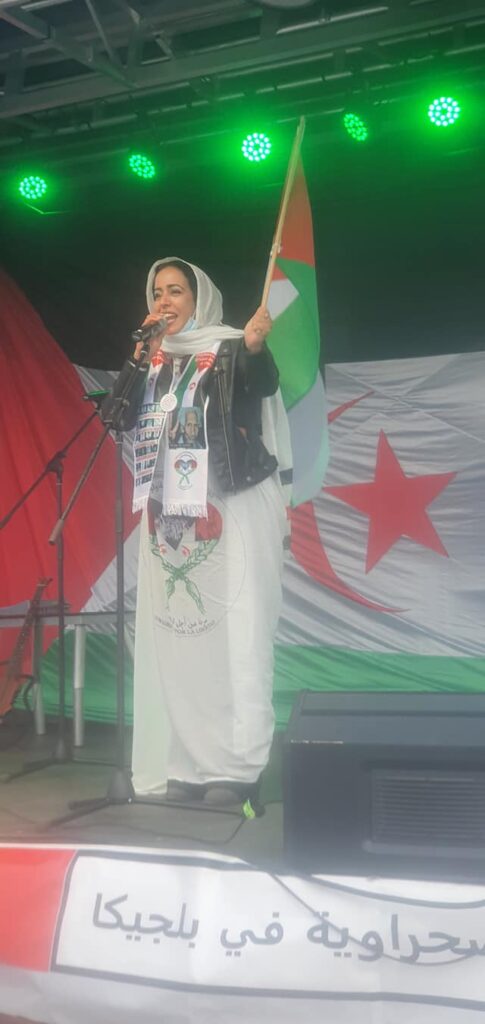
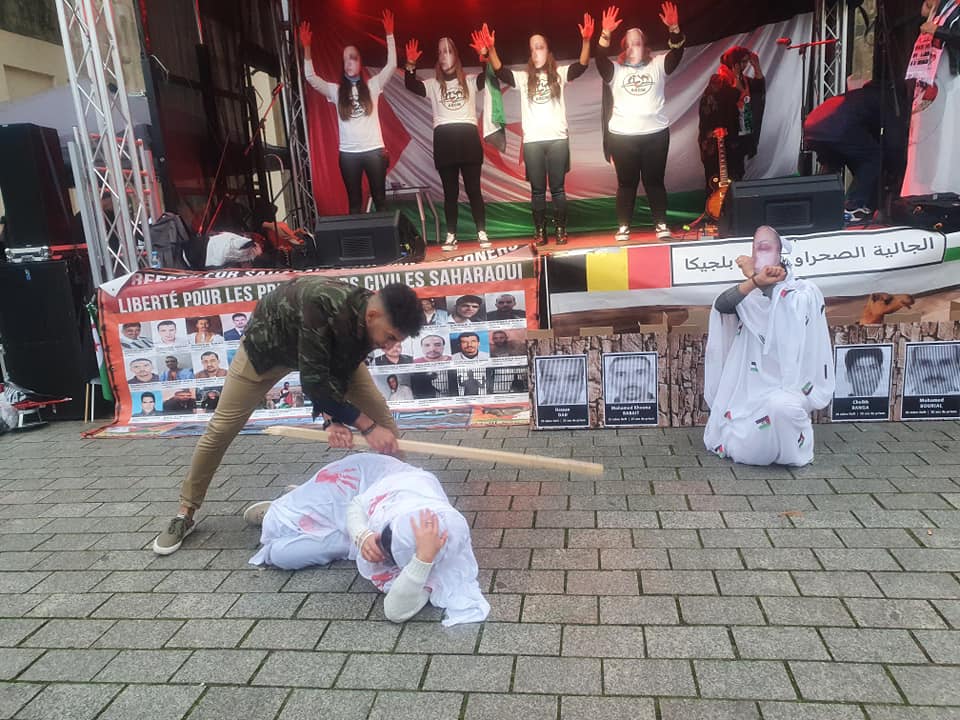
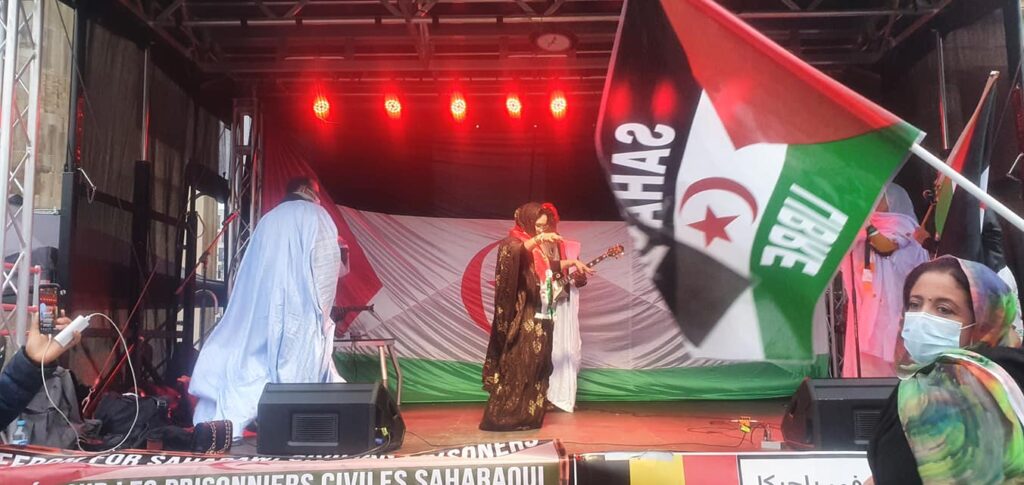
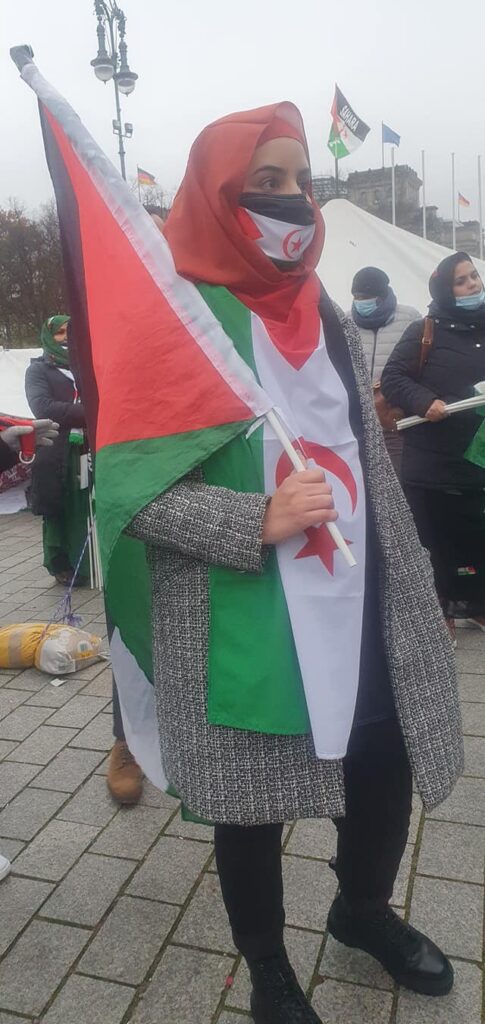
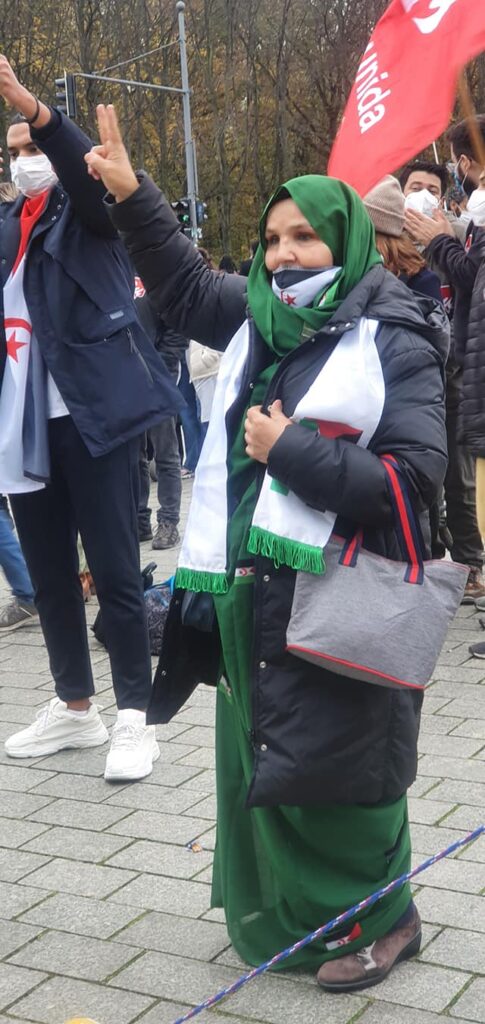
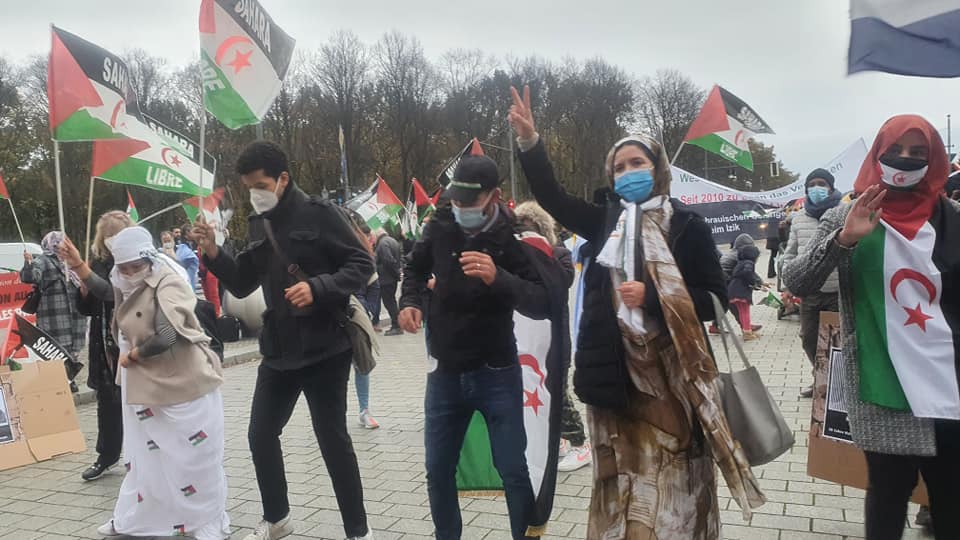
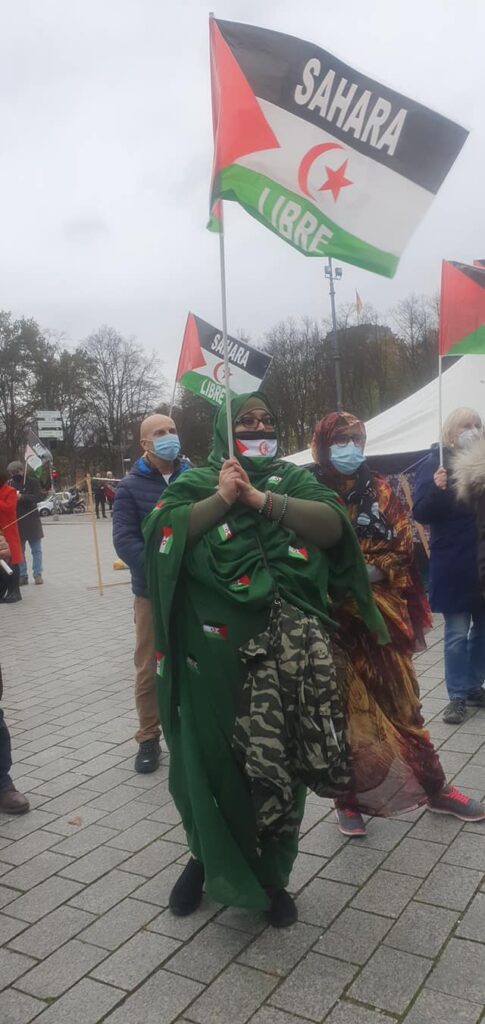
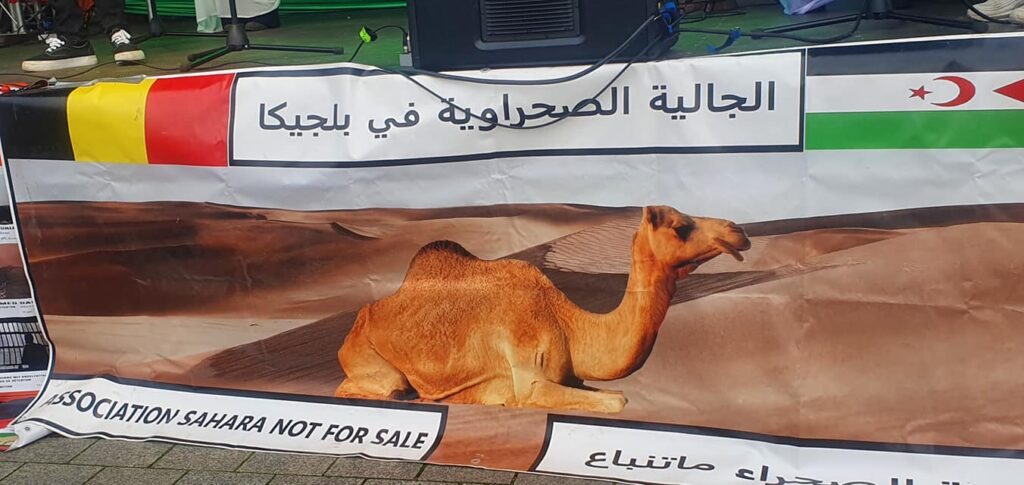
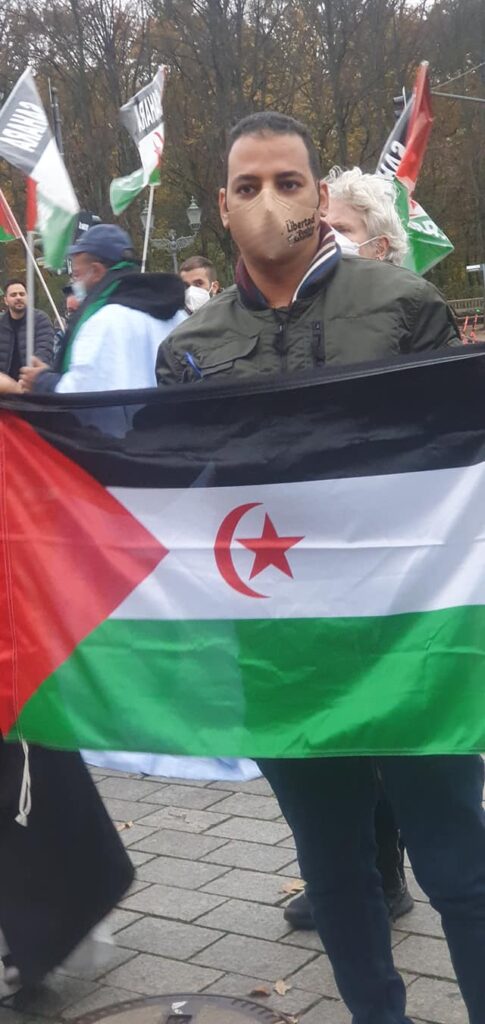
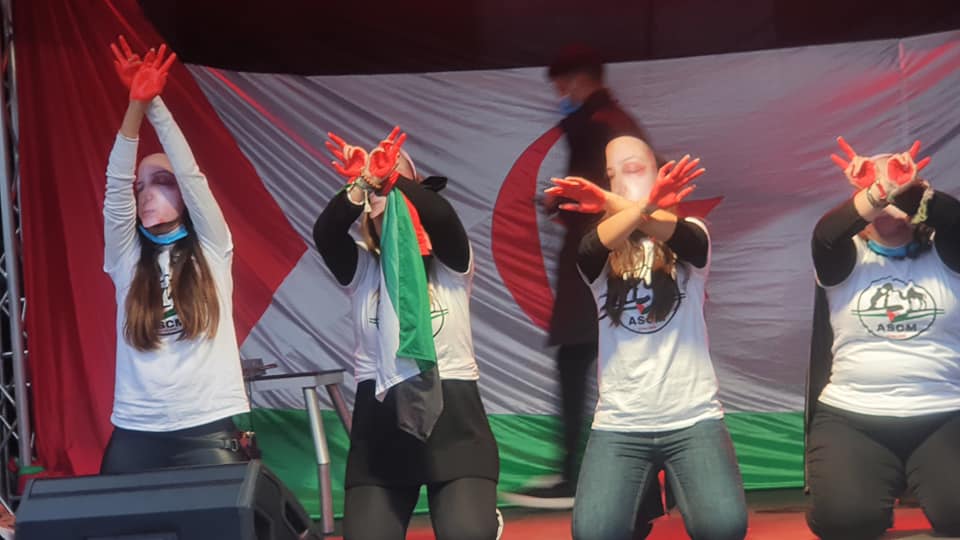
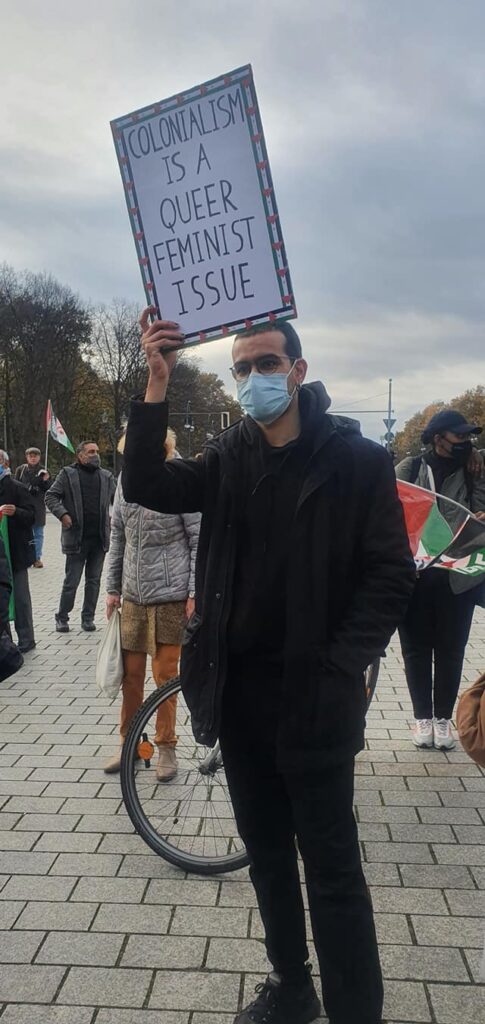
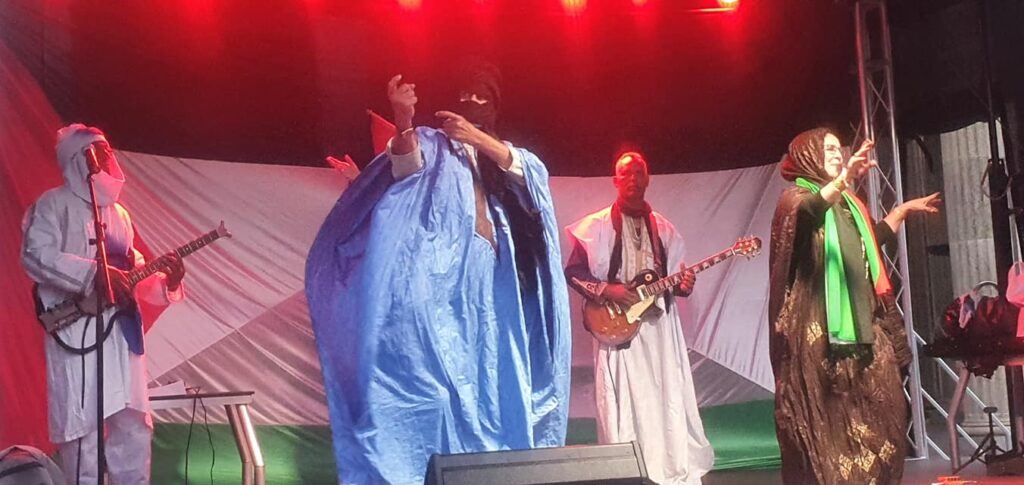
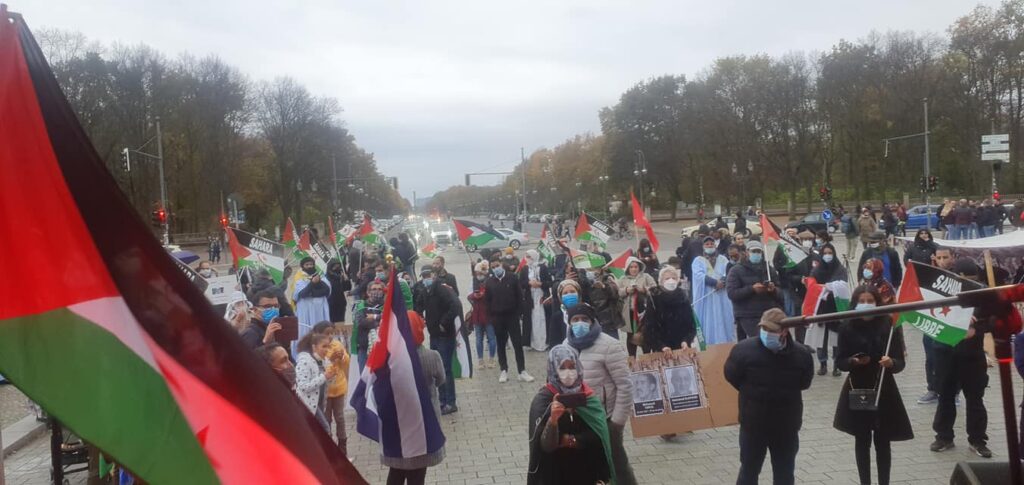
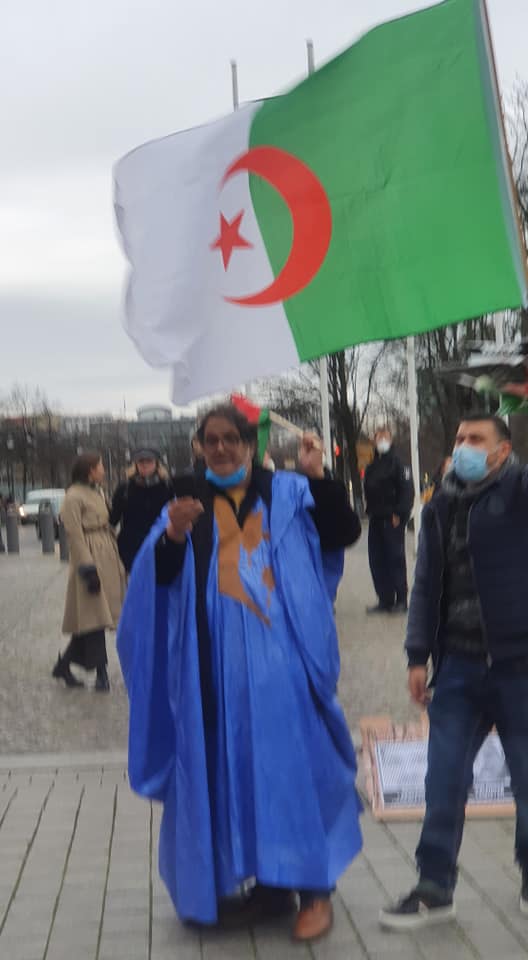
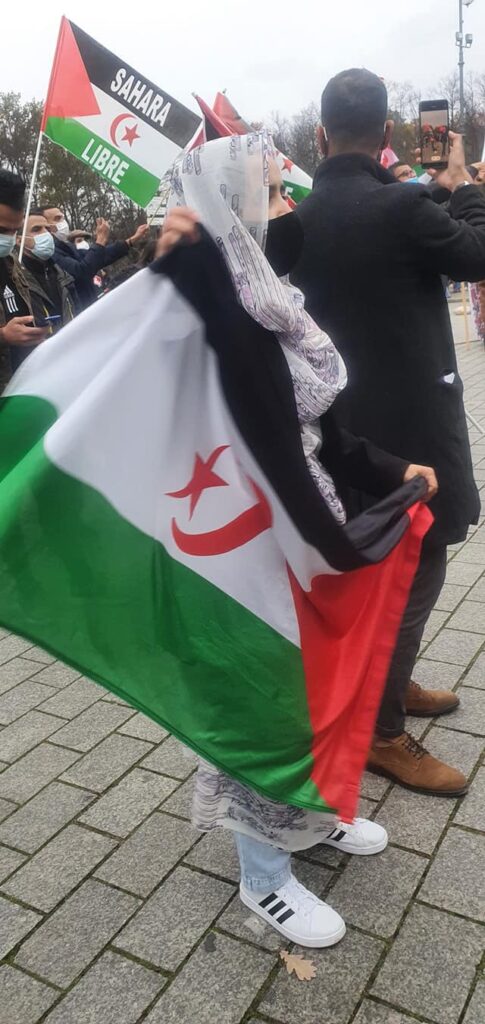
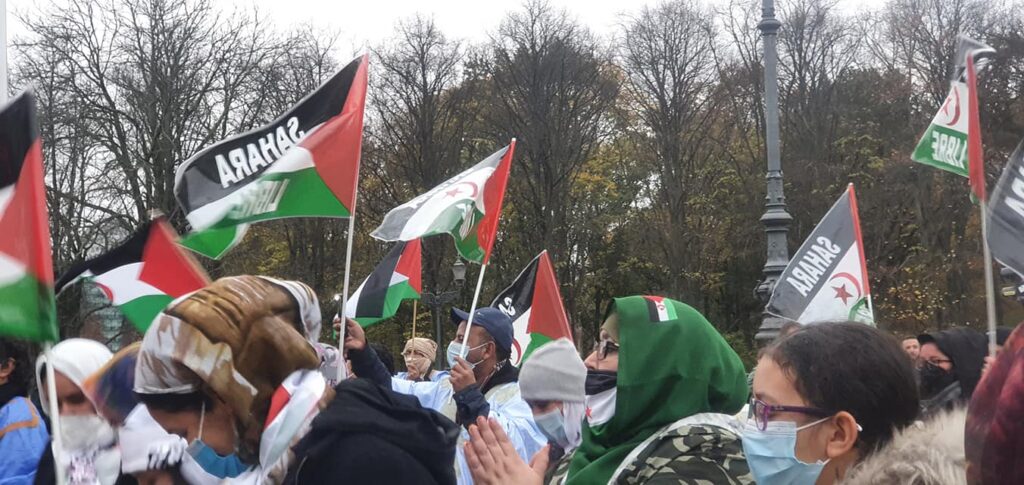
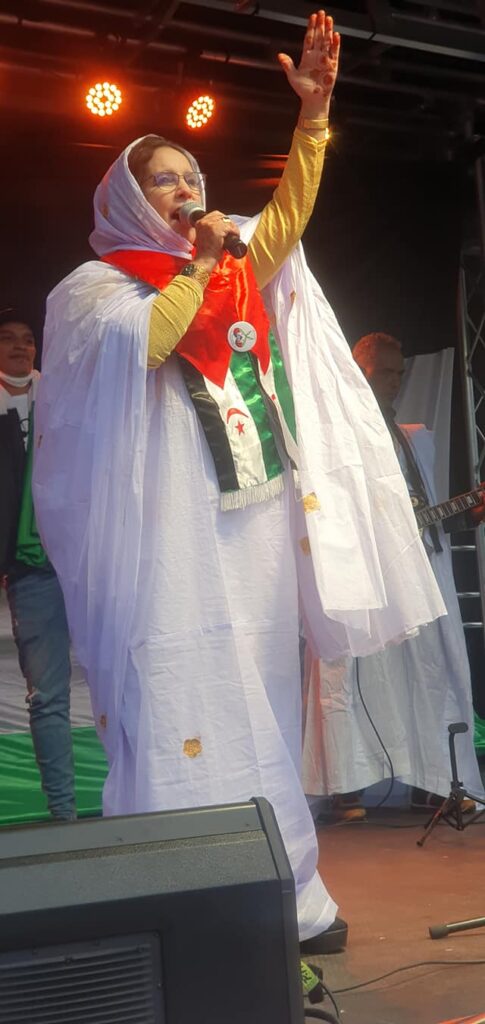
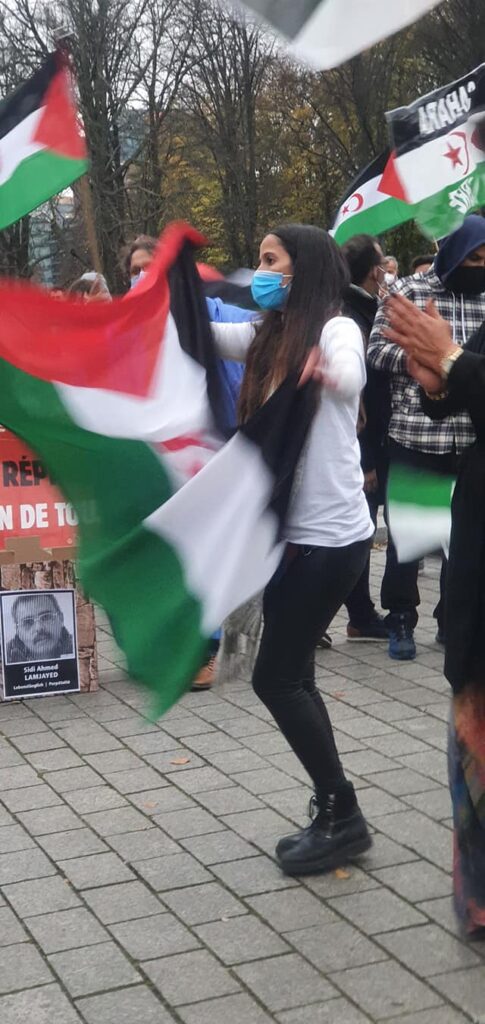
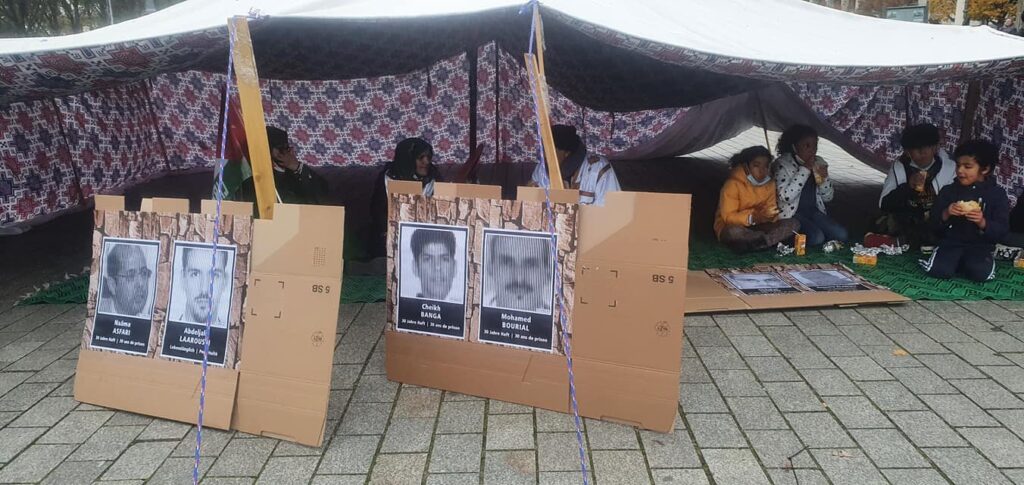
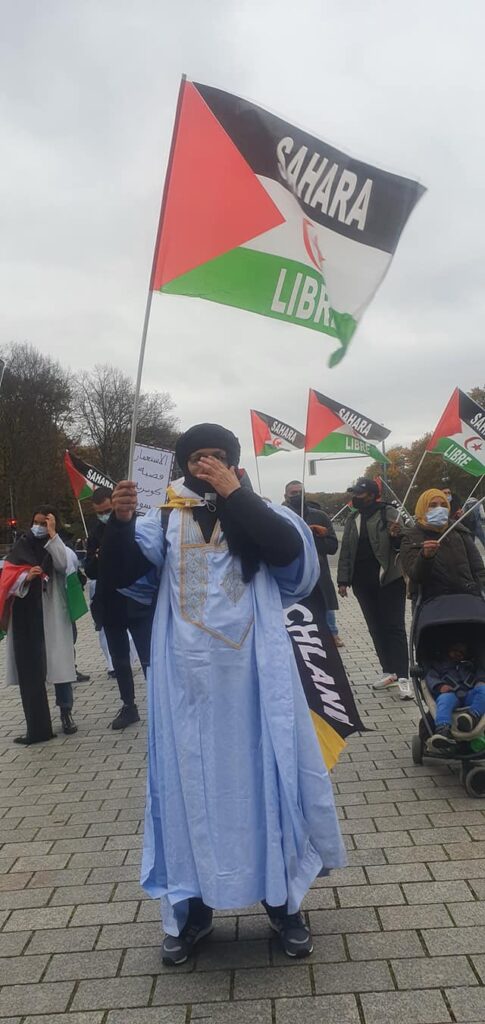
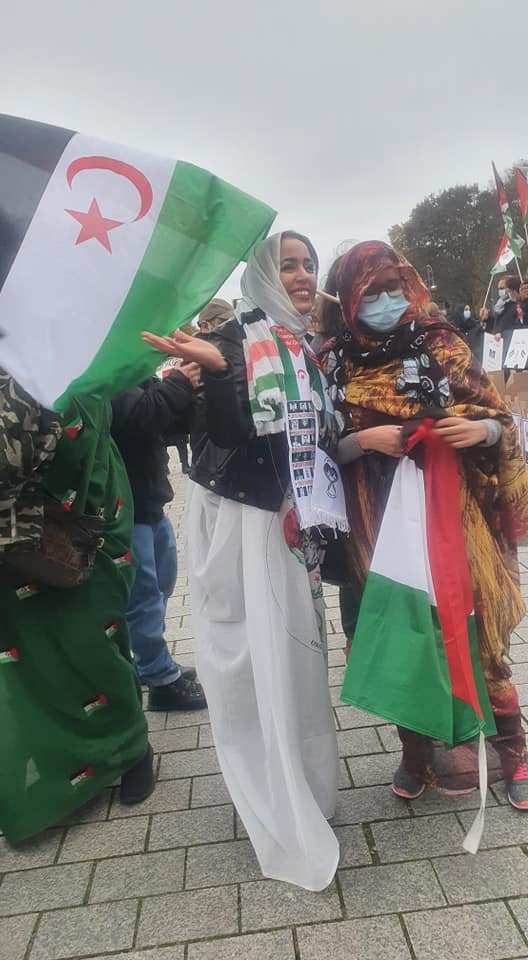
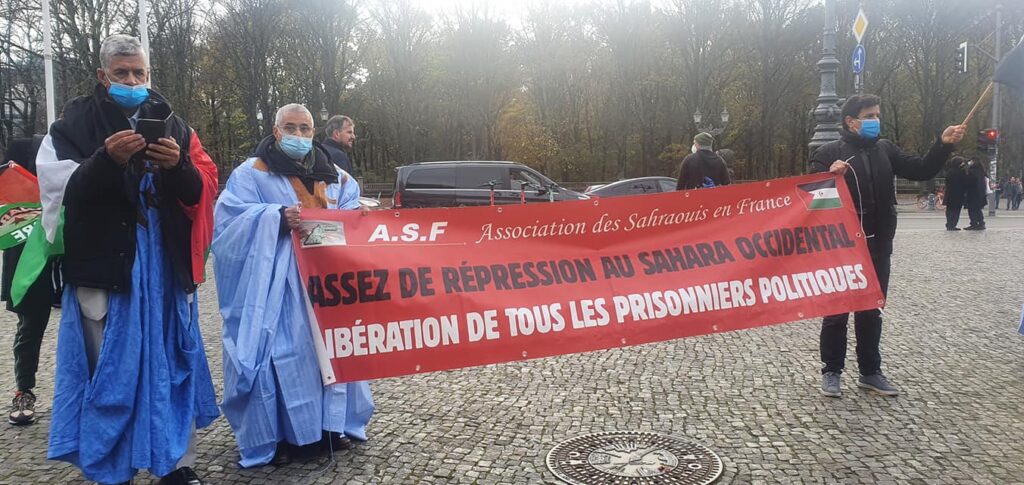
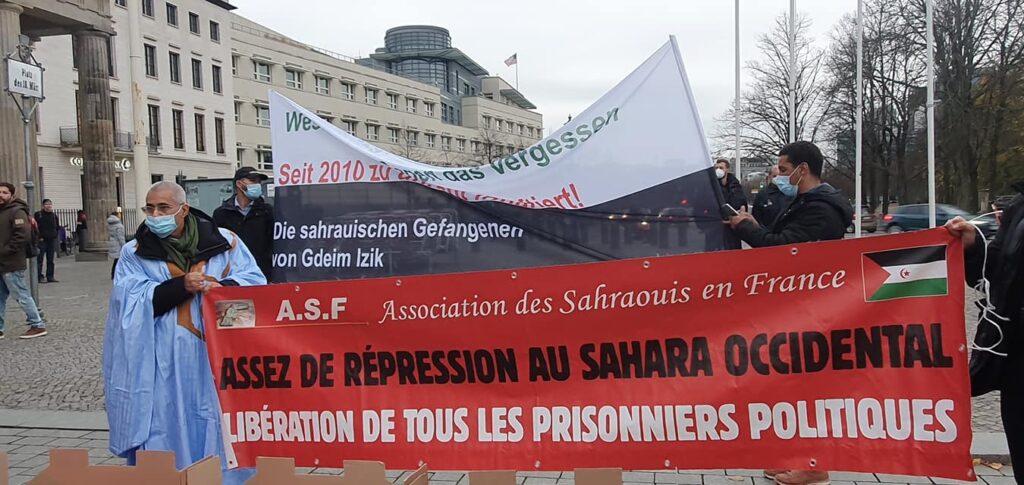
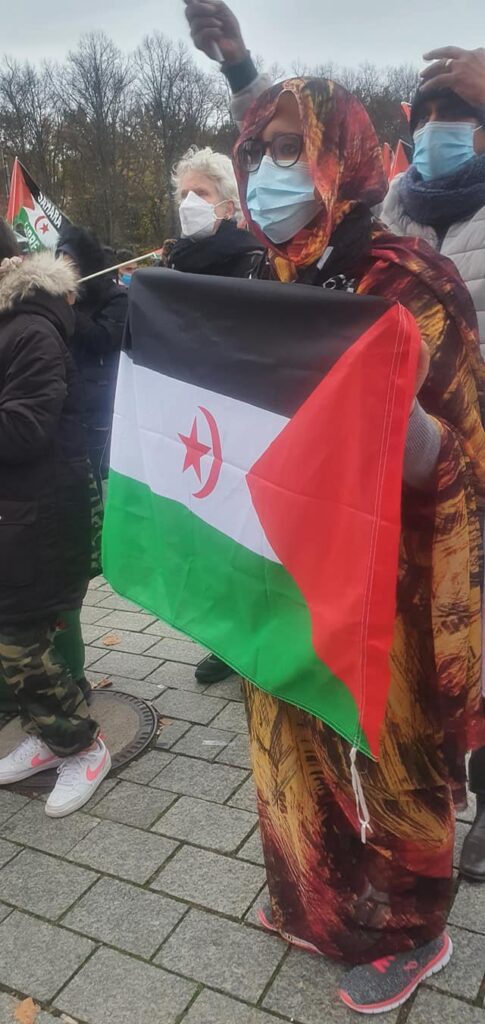
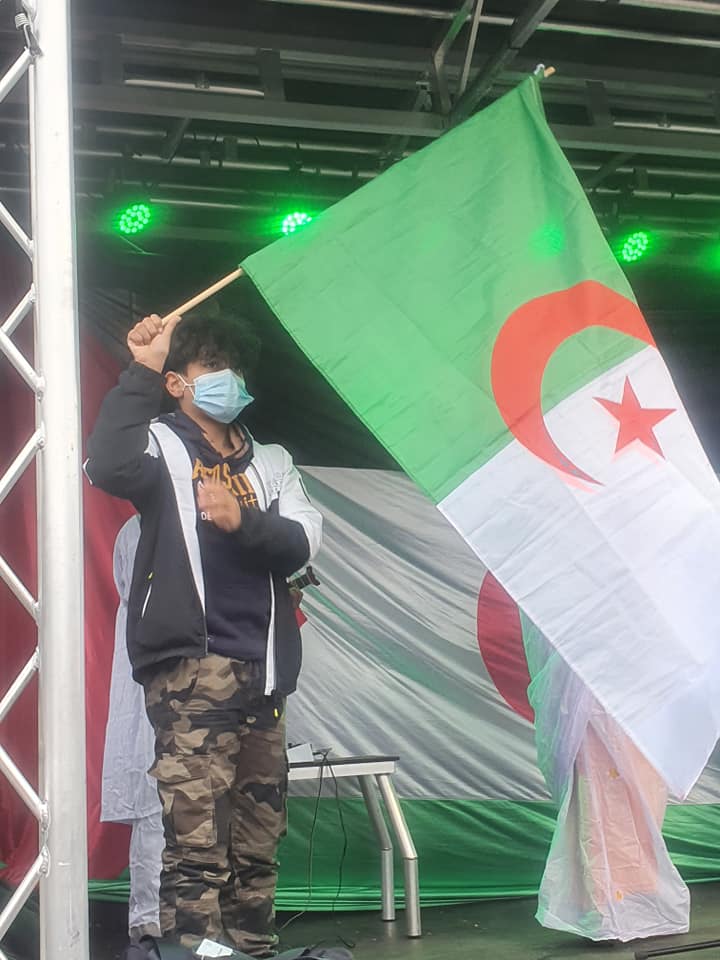
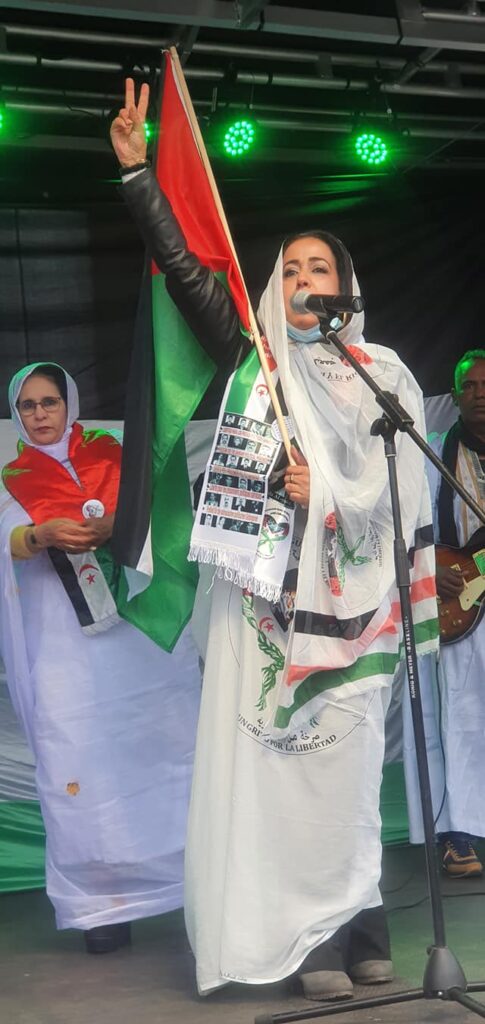
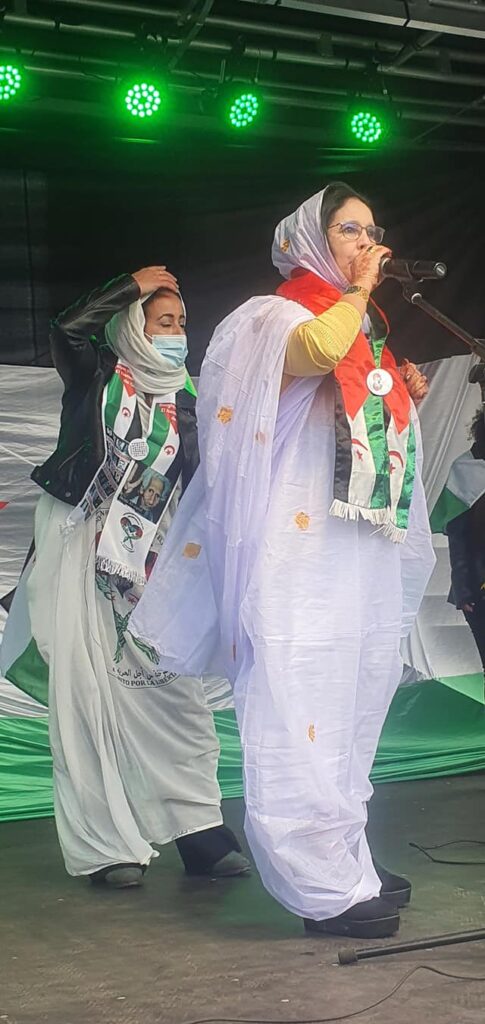
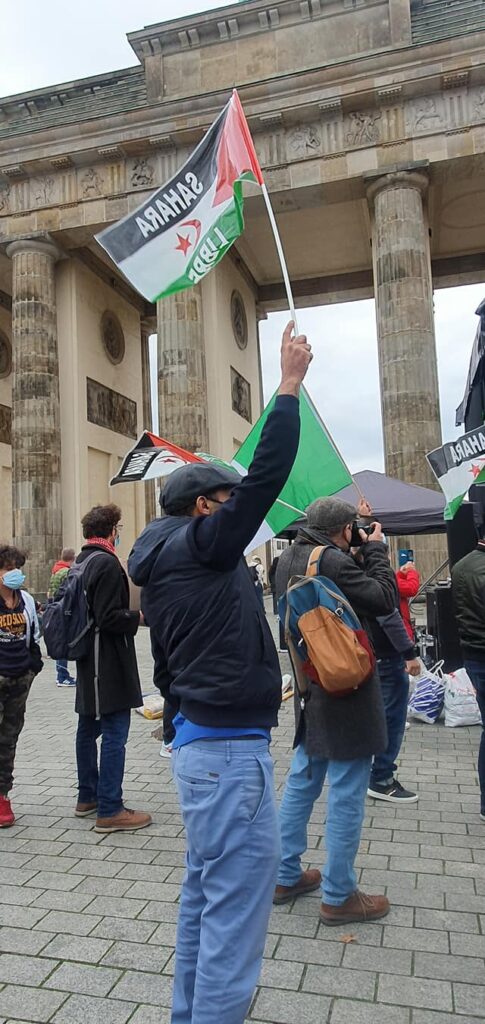
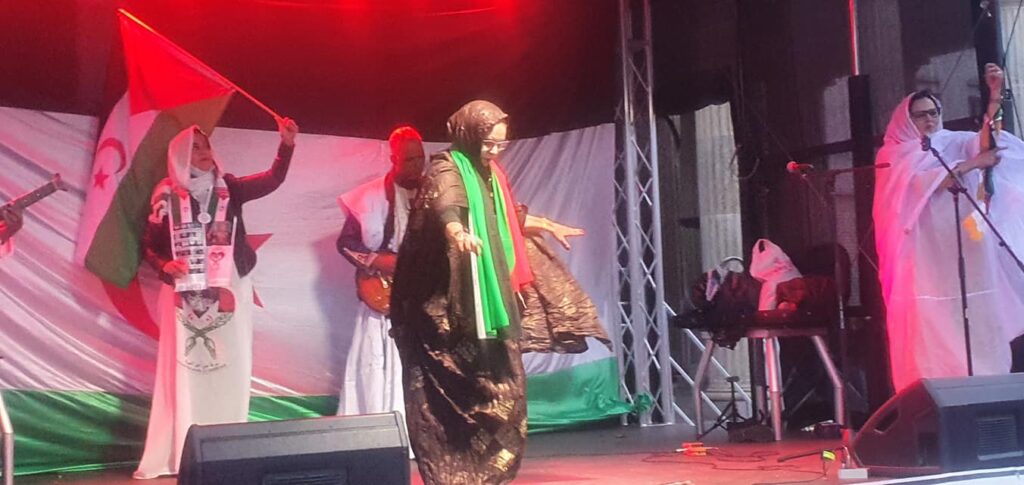
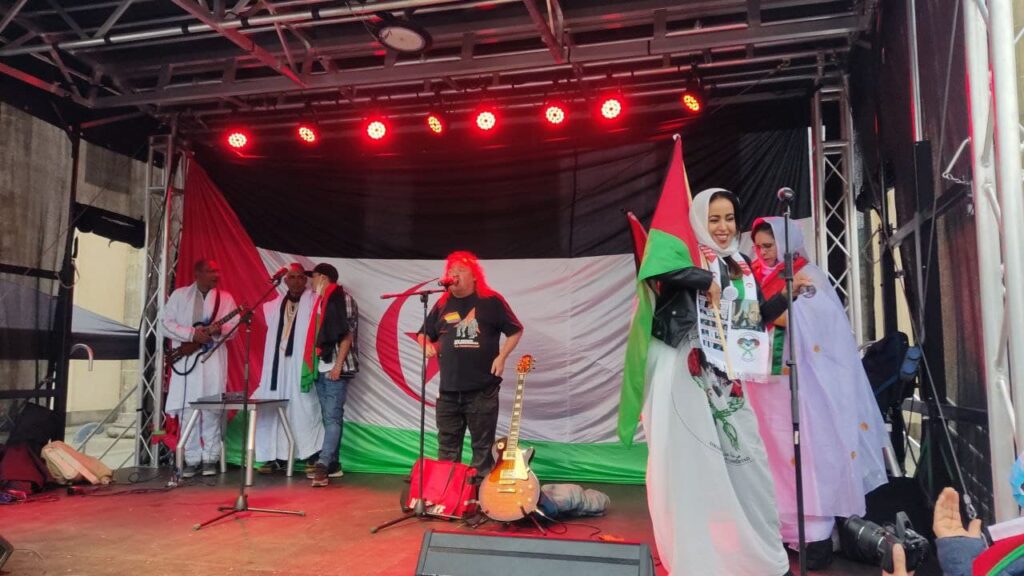
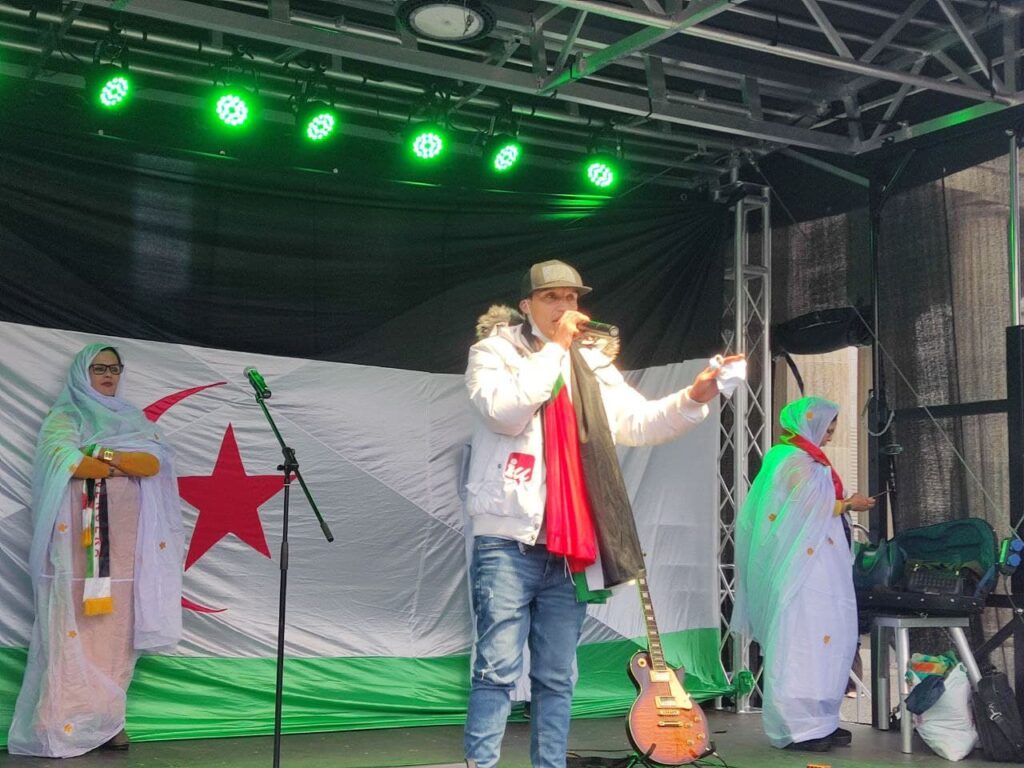
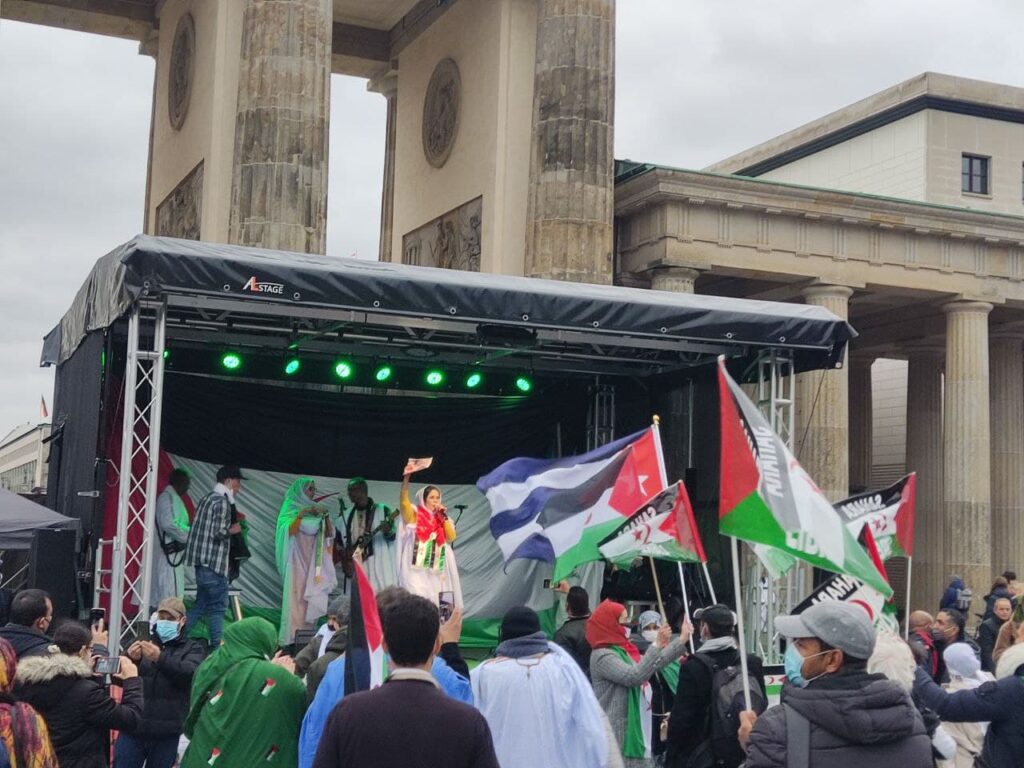
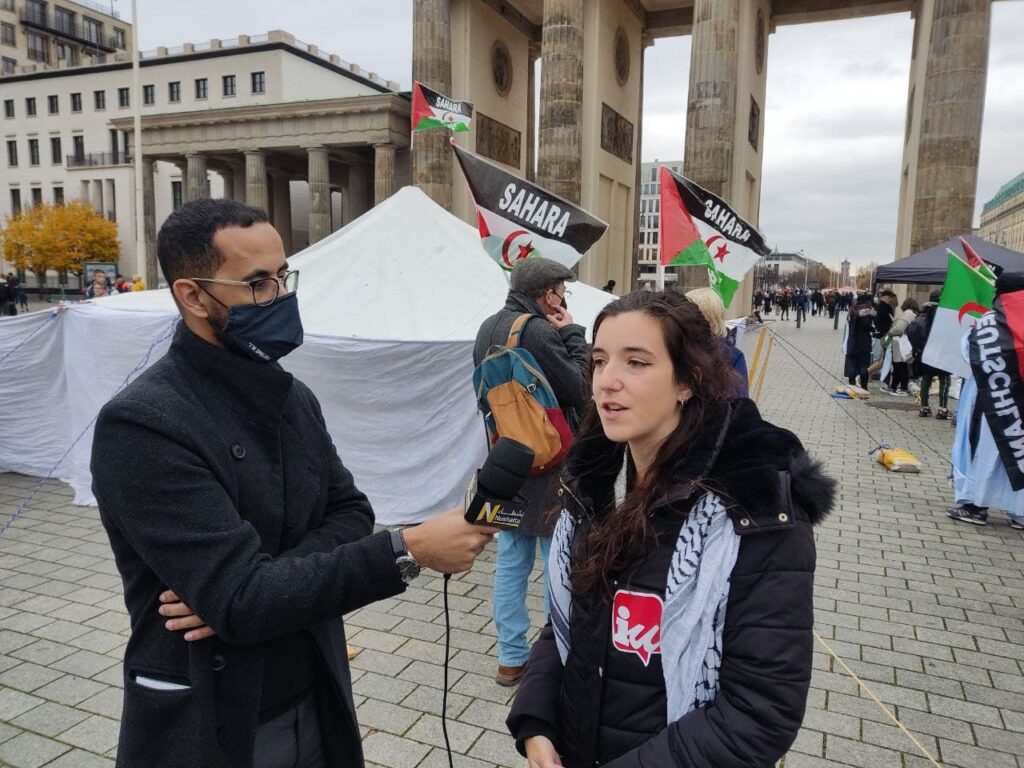
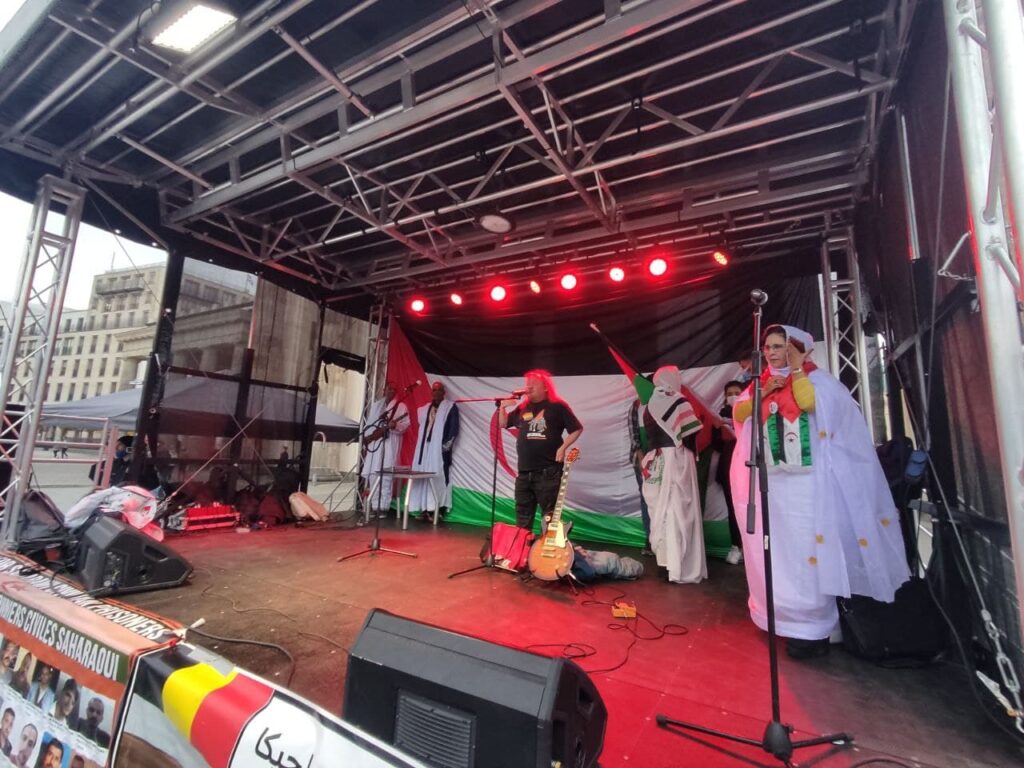
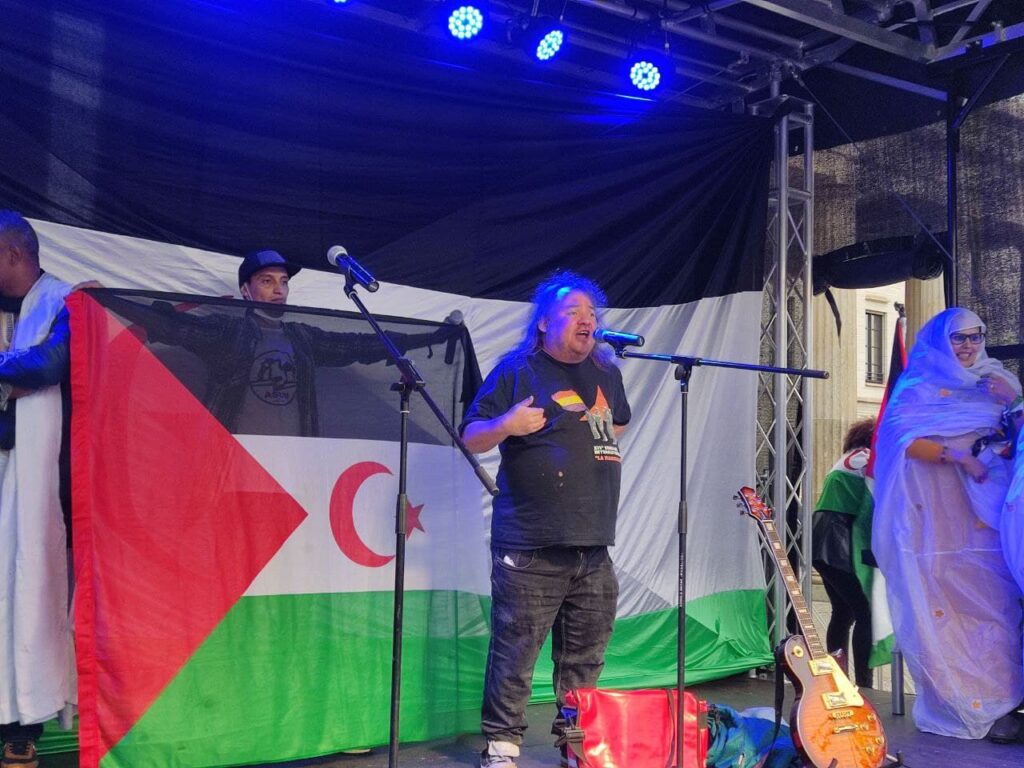
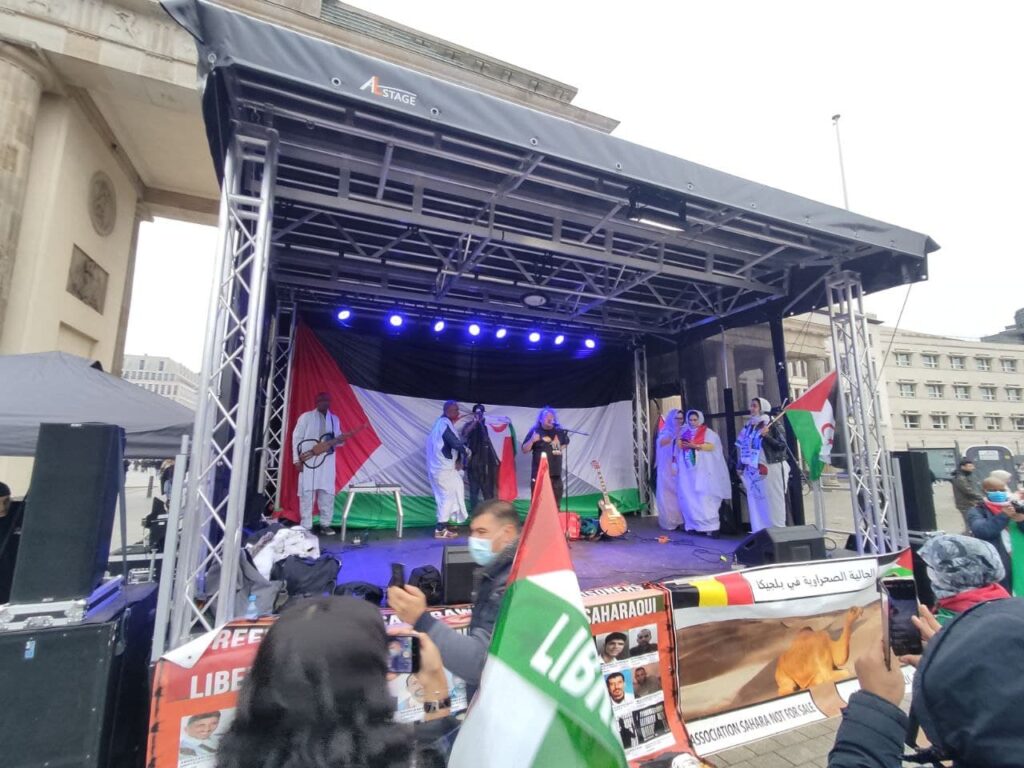
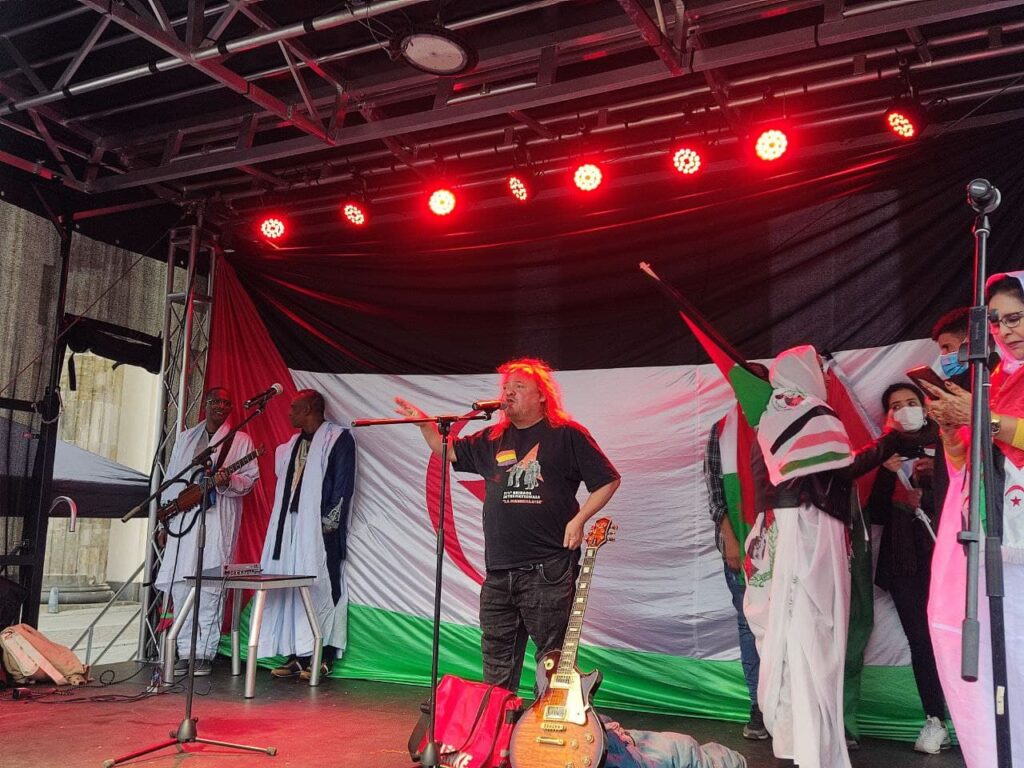
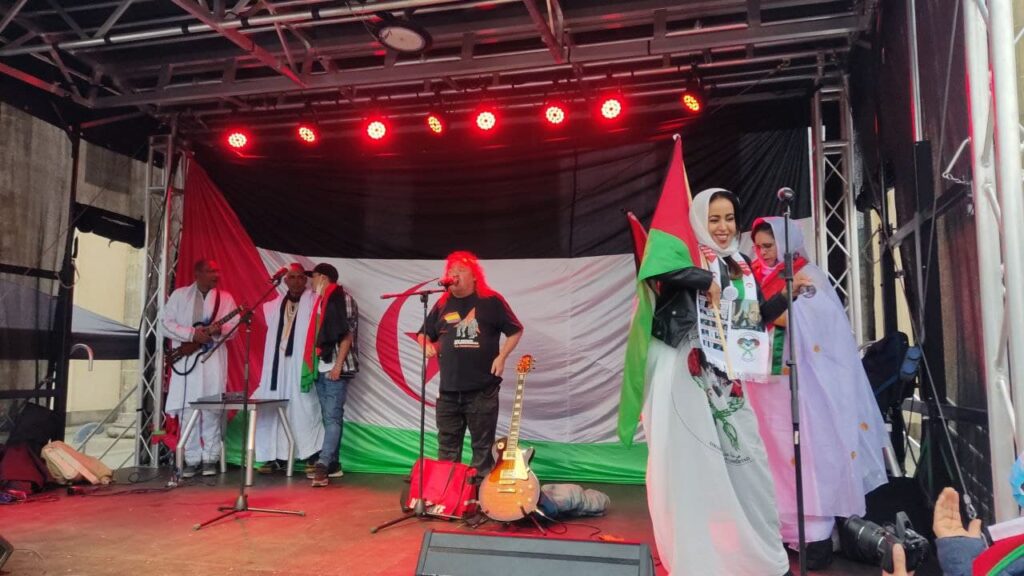
Speech at the rally for Western Sahara, Brandenburger Tor, 6th November 2021. Plus Photo Gallery


07/11/2021

Why should we demonstrate in Berlin for Western Sahara? Apart from International Solidarity and the fact that Europe is the home of colonialism.

Firstly, because Germany is a leading country in the EU. It is the EU which is responsible for the sufferings of the Sahrawi people. Spain was the original coloniser of Western Sahara, and even though it formally handed over the country to Morocco – and not to the Sahrawi people. It is still the administering power. The EU must be clear about its role in supporting and perpetuating occupation. We demand that the German government oppose the occupation of Western Sahara.

Secondly, because EU companies are profiting from the country’s natural resources. These include German companies like Heidelberg Cement. It is not a coincidence that Heidelberg Cement is also responsible for similar exploitation of the Palestinians and cooperation with the occupying Israeli government. We demand that German and European businesses stop profiting from exploitation and occupation,

Thirdly, because Germany is a member of the UN. The UN promised a referendum on independence over 30 years ago, but has still failed to act. We demand that the German government uses its influence in the UN to push for a referendum. This is the very least that the Sahrawi people deserve.

Germany, the EU, and the UN are failing to act because they are profiting from exploitation and oppression. They will only act if we force them to act. This is why we must unite our struggles in one fight.

Last week, many of us were demonstrating in Berlin against the coup in Sudan. In previous weeks, we have demonstrated for Palestine, for Kurdistan, for Egypt. These are all parts of the same struggle against the same people.

The Berlin LINKE Internationals are doing our best to link up the different international organisations in our city. Now one quarter of Berliners do not have a German passport. We have many separate struggles, but we must bring these struggles together.

This is why we call on the EU and Germany to recognise the Frente Polisario as the legitimate representatives of the Saharwi people.

This is why we say

Free, Free Palestine!

Free, Free Sudan!

Free, Free Western Sahara!

One Struggle, One Fight!

Photos: Phil Butland, Norma Lorenzo and Jaime Martinez Porro