The Left Berlin News & Comment

This is the archive template

Macron and France in the Deluge

The epidemic in France has already claimed 2 000 lives, and it is early days yet. Two presidential speeches, Thursday 12th March and Monday 16th March, have transformed life in France, closing school, universities, non-essential shops, parks, cinemas, restaurants and so on. The speeches also transformed French politics, I think, for the next decade, and they […]


20/03/2020


The epidemic in France has already claimed 2 000 lives, and it is early days yet. Two presidential speeches, Thursday 12th March and Monday 16th March, have transformed life in France, closing school, universities, non-essential shops, parks, cinemas, restaurants and so on. The speeches also transformed French politics, I think, for the next decade, and they posed the crucial question of how this crisis will affect class struggle in a country where class consciousness and activity have been high these last years. This is a once-in-a-lifetime test for the capitalist state, but also for anticapitalists.

Macron has understood the extent and the depth of the present sanitary crisis and of the economic slump which will follow. He is positioning himself as a reliable representative of the medium-term interests of French capitalists. He is finding huge sums of money he had said did not exist, mostly to prop up companies, but occasionally to help workers and their families.

This is the biggest political crisis since the Second World War. Although it is not comparable to the war (despite Macron’s repeating “We are at war” a number of times in his speeches), what is certainly true is that the flourishing of any political or class organization, Left or Right, reactionary, reformist or revolutionary in the decades to come, depends on its proposing now initiatives to defend the interests of its class. In Macron’s case, of course, capitalists; for the Left, the working people.

Radical decisions

Shaken by the stock market crash and the real risk of incredibly high mortality from the virus, which could threaten social stability, particularly in a country where workers are used to fighting back and Yellow Vest demonstrations and riots have marked the last year, Macron took some radical decisions. No-one is to leave home without having printed and signed a document saying where they are going and why, and there is only a very short list of acceptable reasons. Funerals and weddings are not allowed.

Huge amounts of money have suddenly been found (and Macron has announced his support for the European Central Bank’s decision to spend 750 billion euros buying up debt). Most of the money will be to help big business, but, for political reasons, Macron emphasized the help for small companies: electricity bills and rent for small businesses and for the self-employed will be suspended. All businesses can postpone their payment of national insurance contributions. There was also money to expand considerably workers’ rights to sickness benefit, to benefit for staying home to care for children, and to benefit if you are laid off (though this is lower than one’s wages).

Macron is doing far less than what is needed. Very little was announced for the homeless, for prisoners and for refugees in detention centres. No massive requisition of the industry necessary to produce ventilators, masks, gel, gloves and other necessities. Indeed, no figures at all for what will be spent on the health system as it comes under tremendous strain. At the end of March, as hospitals are stretched to the absolute limit, it is clear that the government is doing only a quarter of what is needed.

Suddenly forgetting the massive cuts in numbers of hospital beds, which he has presided over, and the vicious police violence unleashed on striking nurses in recent months, Macron hailed health workers as “heroes and heroines” in his second speech, promising state-funded taxis and hotel rooms for them throughout the crisis, and emergency child care provision.

More surprisingly, for those who had not understood the depth of this crisis, was Macron’s announcement on March 16th that all the neoliberal reforms in progress are to be suspended. This includes pausing the vicious attack on pensions which has led to more powerful strikes than we have seen here for decades. (see previous articles here : https://www.theleftberlin.com/john-mullen). It also includes stopping harsh reforms of unemployment benefits and a radically Thatcherite all-out attack on universities, against which resistance was growing.

Macron is hoping to show the bosses and the stock market that he has a plan for the recovery, that, even if it involves spending billions, he has a fighting chance of building sufficient national action and consensus to take France through the next few months without half a million dead or mass rioting in the streets. The markets hate uncertainty, and anything which walks like a plan and quacks like a plan is a relief to them.

A week later, on the 25th March, Macron spoke again, pledging a “massive plan of investment” and higher wages “for all health service occupations”, promising that they would not be forgotten once the crisis is over. Naturally, presidential promises are cheap. Nevertheless, in a context of massive, unheard-of expressions of support by millions in the nightly “clap for health workers” events, the promise represents Macron’s response to a balance of forces, and will make it easier for our side to fight for better wages and conditions in hospitals.

Macron’s weaknesses

Macron has plenty of political difficulties too. It is becoming clear that he could have announced a lockdown and other measures weeks earlier. The Minister for Health, Agnès Buzyn, who was moved to a different role in mid-February, has now revealed that she warned the government at the end of January of “the tidal wave” which was coming, saying the municipal election campaigns should have been cancelled.

The tremendous unpopularity of Macron’s neoliberal attacks (as well as the low level of local implication of his ramshackle newish party) meant that in the first round of municipal elections, (Sunday 15 March, between Macron’s two speeches) his candidates did very badly. And every day which passes is showing graphically and murderously how useless his neoliberalism is in fighting the deadly virus.

A head of state who announces a highly necessary lockdown might hope to gain some popularity in an atmosphere of national unity, and Macron this week is repeating the word “unity” at every opportunity.  It may be too late for him though, since two years of vicious cuts and repression have left him with a very narrow support base. So, on March 26th , an opinion poll shows 59% consider government measures “insufficient” while only 43% are satisfied. 83% think the government is too slow ramping up testing numbers, while an overwhelming 88% think they are too slow getting production and distribution of masks moving.

Macron had in any case intended to make some small reforms favourable to workers in the second half of his mandate, in the hope of re-election. As this unprecedented crisis rolls out, he has the chance to thoroughly test his plans for the survival and the future of French capitalism, using all the resources and legitimacy the presidential throne provides. There will be further radical and surprising measures.

Naturally, Macron will also try to profit from the crisis to move against workers. A law passed this week allows, for the next two years, bosses “in essential sectors”, including transport and freight, to ignore regulations about maximum number of hours worked in a day or in a week. Workers will be made to work up to 12 hours a day and up to 60 hours a week. Sunday work will be deregulated. Rather than hire the unemployed, workers’ health will be put at risk. These measures were bundled up with other lockdown provisions and rushed through parliament. The 17 France Insoumise MPs and the 12 Communists voted against. The 26 Socialist Party MPs abstained.

The Left

A crisis where it is best for everyone to stay at home for several weeks presents a completely new challenge to the organized Left, and some of it still seems stunned, leaving some individuals on the Left tempted by multiple versions of what are basically conspiracy theories

There are three aspects that the Left must focus on. Firstly, getting involved in local mutual help schemes. Secondly, demanding that health comes before profit. Housing must be requisitioned immediately for the homeless, production of essential items such as ventilators and masks must be accelerated without respect for patents or profits, companies must be nationalized to avoid mass redundancies, all non-essential production must be closed down until the virus is beaten, the development of drugs and vaccines must be massively funded and organized by public bodies. Adequate health protection for essential workers must be an absolute priority.  There will be many more demands.

Finally, we must patiently explain all the ways in which capitalist austerity, the dictatorship of profit, and the division of the world into competing national economies have made this crisis a thousand times worse than it could have been in a real economic democracy, a socialist production system.

Across France, neighbourhood help groups are being set up. A particular symbol is the increasingly popular 8pm appointment, when we all go to our windows to applaud the health workers and other essential workers (this is in buildings which have no real tradition of collective initiative). In my town the Communist mayor has set up a council-led system to make sure isolated or vulnerable people are not forgotten. Even some commercial companies are taking some good decisions – one supermarket chain has set up a toll-free number offering free delivery of groceries for the elderly.

Education unions have generally been able to pressurize the administration to agree that hourly-paid teachers will not lose money even if their classes cannot take place. The CGT has demanded that industry be shut down if it is not necessary to fight the epidemic, and is mobilizing to insist on protective measures for those who must work. Macron declared on the 19th March that any work which cannot be done online must continue (despite the known and massive danger), while one of his ministers accused those wanting to shut down building sites of “defeatism”! At the same time the government is theatrically denouncing people who go out of their homes too often, as if they were the main problem!

The France Insoumise, a left reformist grouping that got around 14.5% nationally in last week’s elections is asking people to sign up “I want to be an activist from home”, and giving advice on how to organize group discussions via internet around FI videos or how to intervene in debates in the national press. One of the most popular of the FI members of parliament, François Ruffin, is collecting people’s experiences and writing a book collectively with others through an online tool where one can read each day where they have got to.

The France Insoumise in parliament voted against the lengthening of the working week, and is proposing that paying dividends to shareholders be banned in France until January 2022. The group has presented a list of 11 key demands, including 10 billion euros for the health system now, requisition of factories for health supplies, mass testing for the virus and an end to hospital charges for all patients.

The New Anticapitalist Party is insisting that workers should have time off on full pay in all sectors of production which are not essential to fighting the virus, and calling for massive recruitment in the hospitals, as well as a ban on all redundancies. The Communist Party support similar demands, while in a series of cases around the country, including lorry drivers, bus operatives, chemical industry workers, bottle manufacturers and Amazon employees, strike action has been called to demand better safety conditions.

The future

Because, over the centuries, working people have fought for rights and respect, our rulers cannot just react to the virus by saying “three percent of the population dying, mostly old people, won’t affect profits too much: bring it on!» But because working people have not managed to overthrow the dictatorship of profit, humanity is fighting the virus with both hands tied behind its back, due to austerity, neoliberalism and nationalism. This crisis will test political organizations and ideas like nothing else has for 80 years, as both capitalists and anticapitalists try to persuade that their vision deserves to guide the future of humanity.

As French airline companies alone are now asking for 185 billion euros in government help to prop up their profit-making (almost 3 000 euros for every person in France – far more than a month’s wage for every worker), we need to unite and fight for the idea that our health comes before their profits.

Germany is protecting the economy, not the people

Angela Merkel’s speech to the nation called for “social distance”, but health protection in the workplace is neglected


19/03/2020


Things are getting worse in Berlin. The government is so slow that it cannot control the spread of the pandemic here. Just one shopping in a supermarket is enough to understand that the Merkel government is doing a bad job. The employees are in permanent contact with many people. And yet: No protective masks, no hand disinfectants, no protective suits or gloves… Nothing!

The policy of the German government is highly contradictory. While on the one hand »maximum social distance« is demanded (Merkel) and public life is severely restricted: cafés, restaurants, universities, schools, playgrounds, shops, cinemas and daycare centres are closed – a debate about a strict curfew is coming. On the other hand, health protection for employees is neglected. Millions of people still have to go to work and are thus exposed to unhealthy working conditions. It is a contradiction to demand »social distance« on the one hand and to allow »social contact« in industrial companies or in many service sectors on the other. It would also be consistent to reduce industrial production and service companies, which are not urgently needed, and to make jobs »corona-safe«.

Merkel and her government first underestimated the dynamics of the corona pandemic (as many government does) and now they are afraid. The federal government is doing almost everything to protect the economy and almost nothing to really protect the people. »It is serious. Take it seriously too,« Merkel said in a television speech to the nation. Merkel was probably also talking to herself.

Merkel’s words of thanks to the nursing staff and doctors are untrue, in view of the decades of ruined savings in the health system by her government. Merkel’s appeal to the individual, on the other hand, fits in well with the dogma of neoliberalism. But shifting the responsibility for containing the pandemic onto the individual is wrong. It is a political question, not an individual one.

The government would have to create the social conditions so that all people (especially the workers) can learn and practice »social distance«. How could this be done? The government of the Canadian province of Quebec pays 573 Canadian dollars (362 euros) per week to all workers in the province who have to isolate themselves! You fill out the application online and the money will be in your bank account within 48 hours. Why doesn’t the German government distribute protective suits, masks and disinfectants free of charge for everyone in risk areas and big cities?

Repressive policies such as border closures, restrictions on freedom of travel or curfews are of little help under the current conditions, because they are distracting from the actual more important tasks (massive expansion of health care) while at the same time creating new problems. For example, the closure of the Polish-German border has caused a permanent traffic jam for miles, leaving thousands of truck drivers trapped in nirvana. Nevertheless, the number of infected people in Germany continues to rise. it really doesn’t look good.

Yaak Pabst is a political scientist, member of die LINKE and on the editorial board of marx21 magazine.

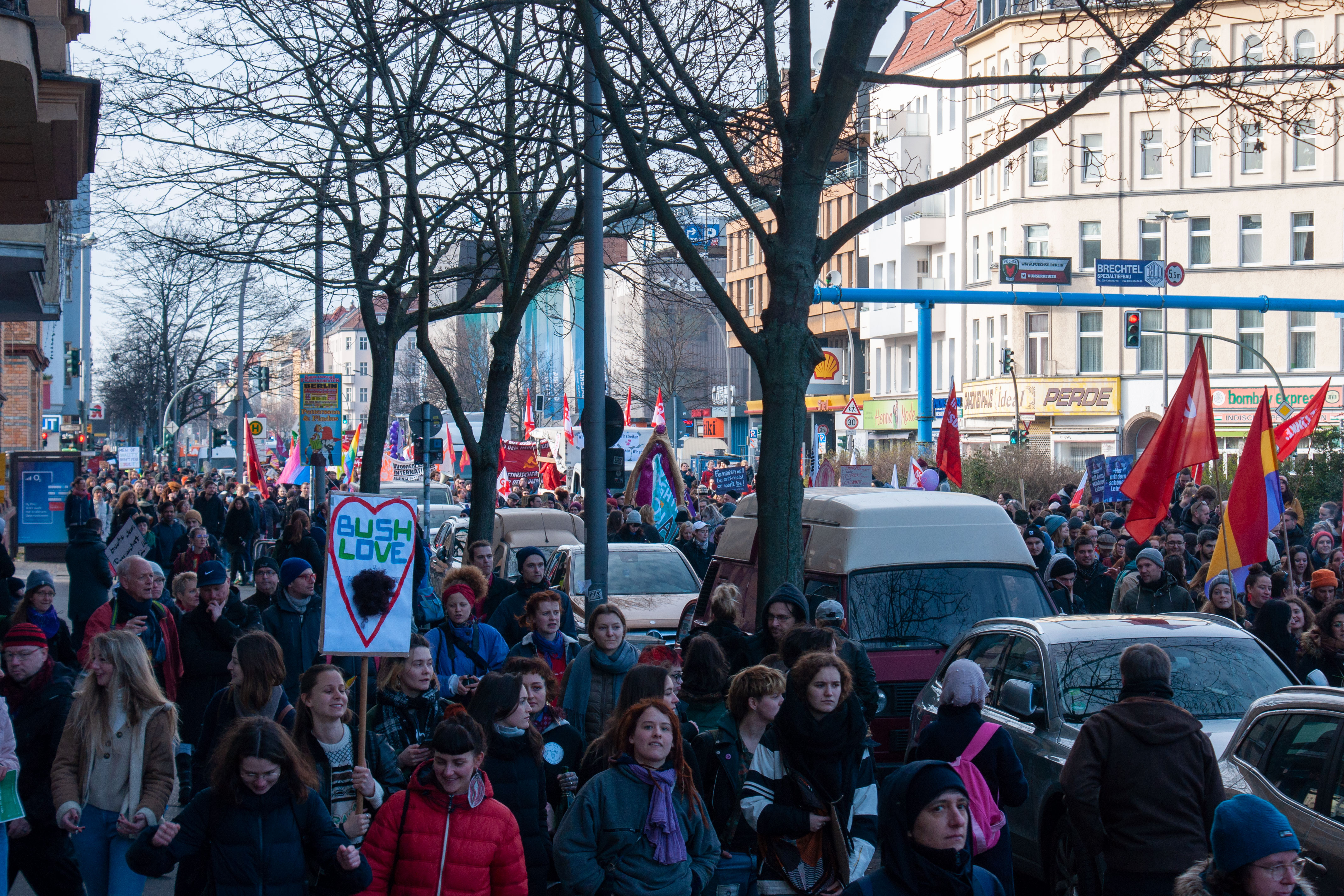
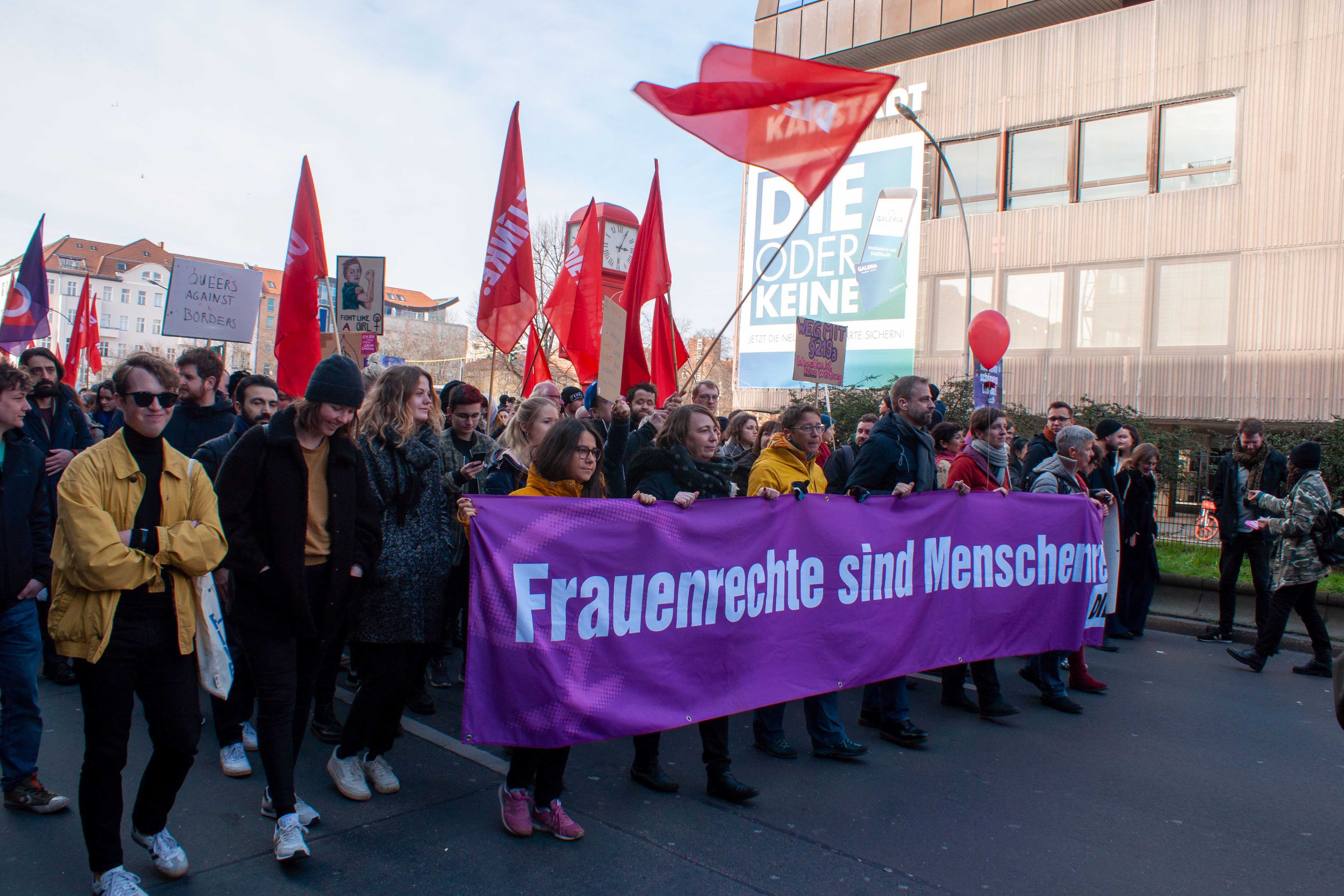
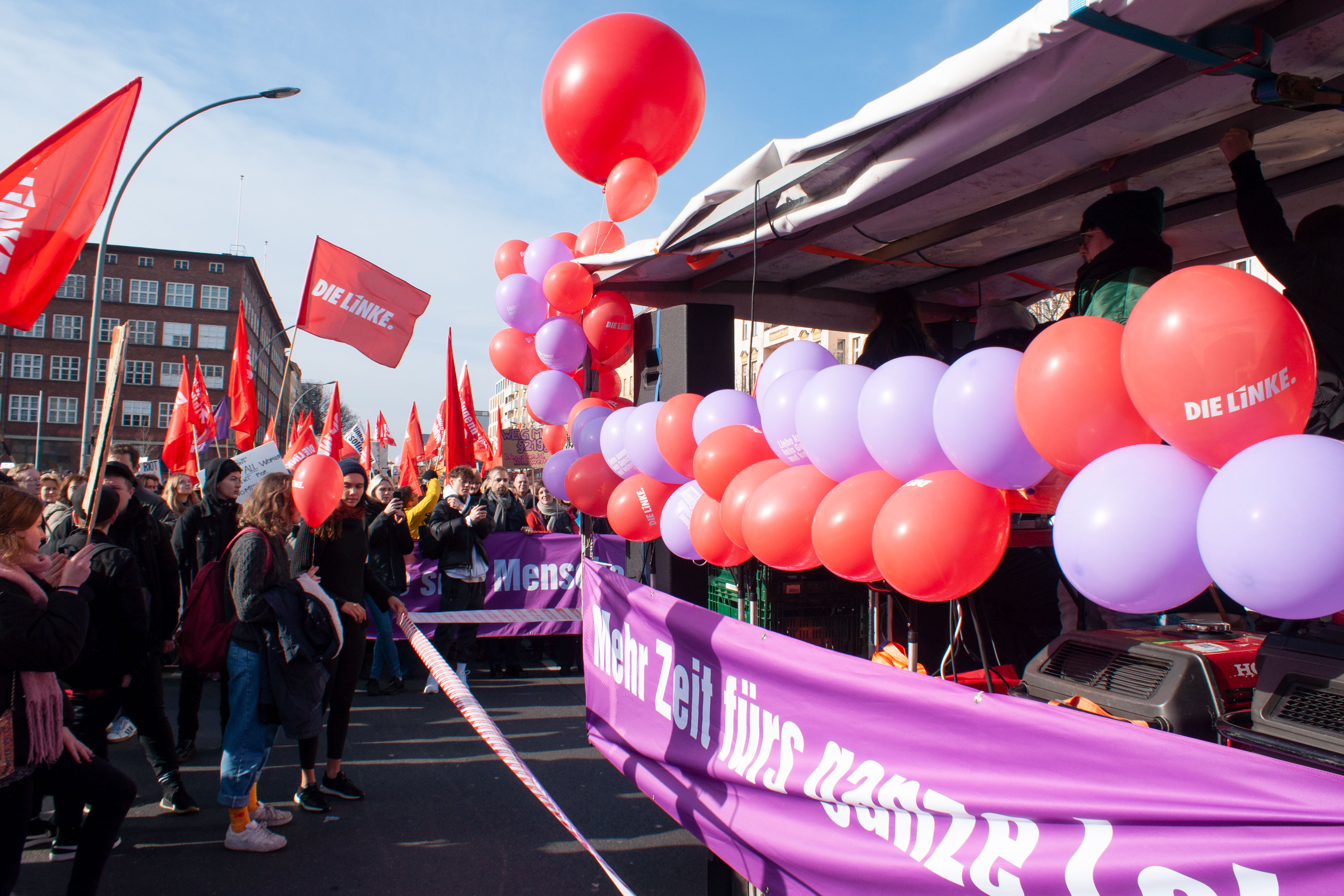
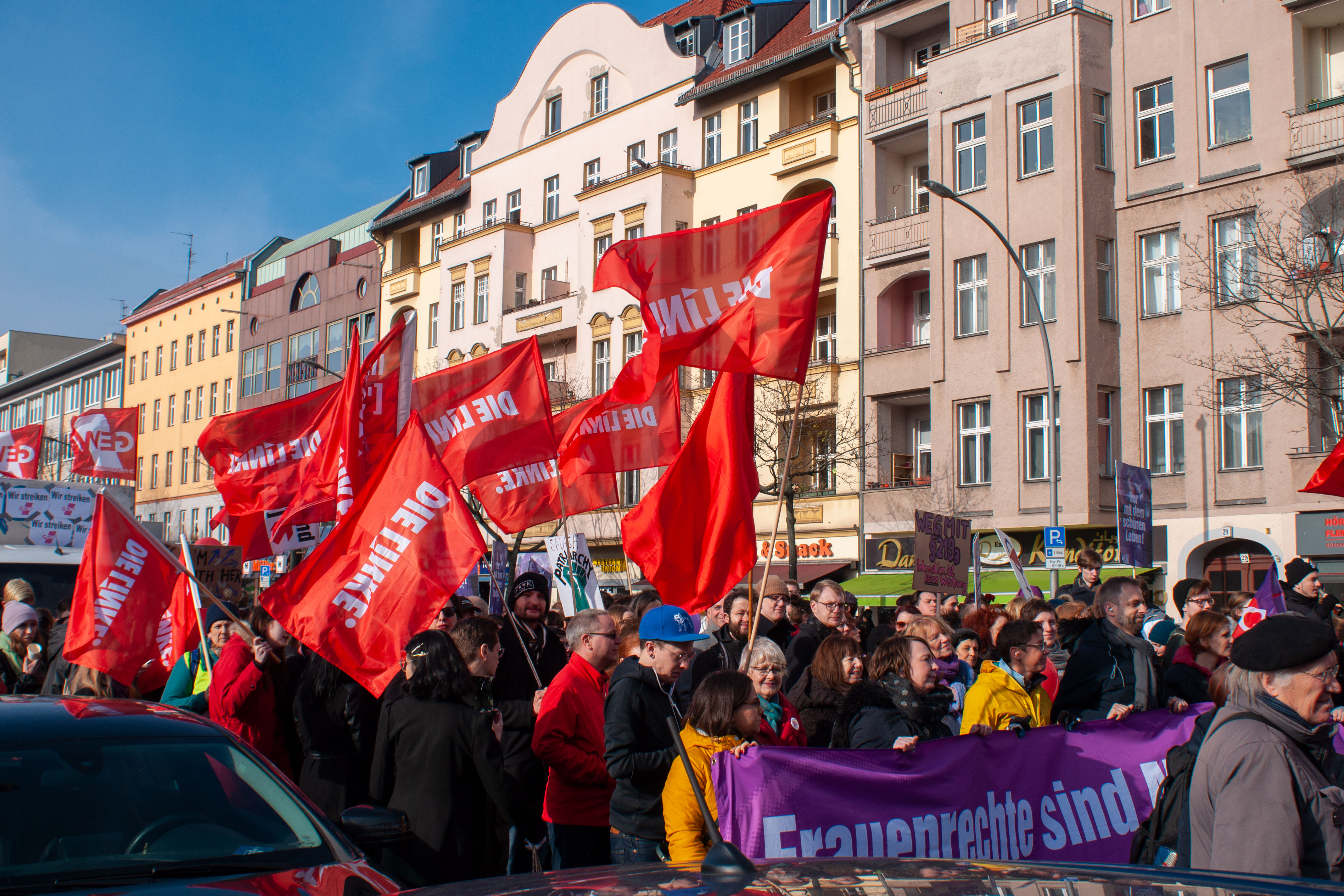
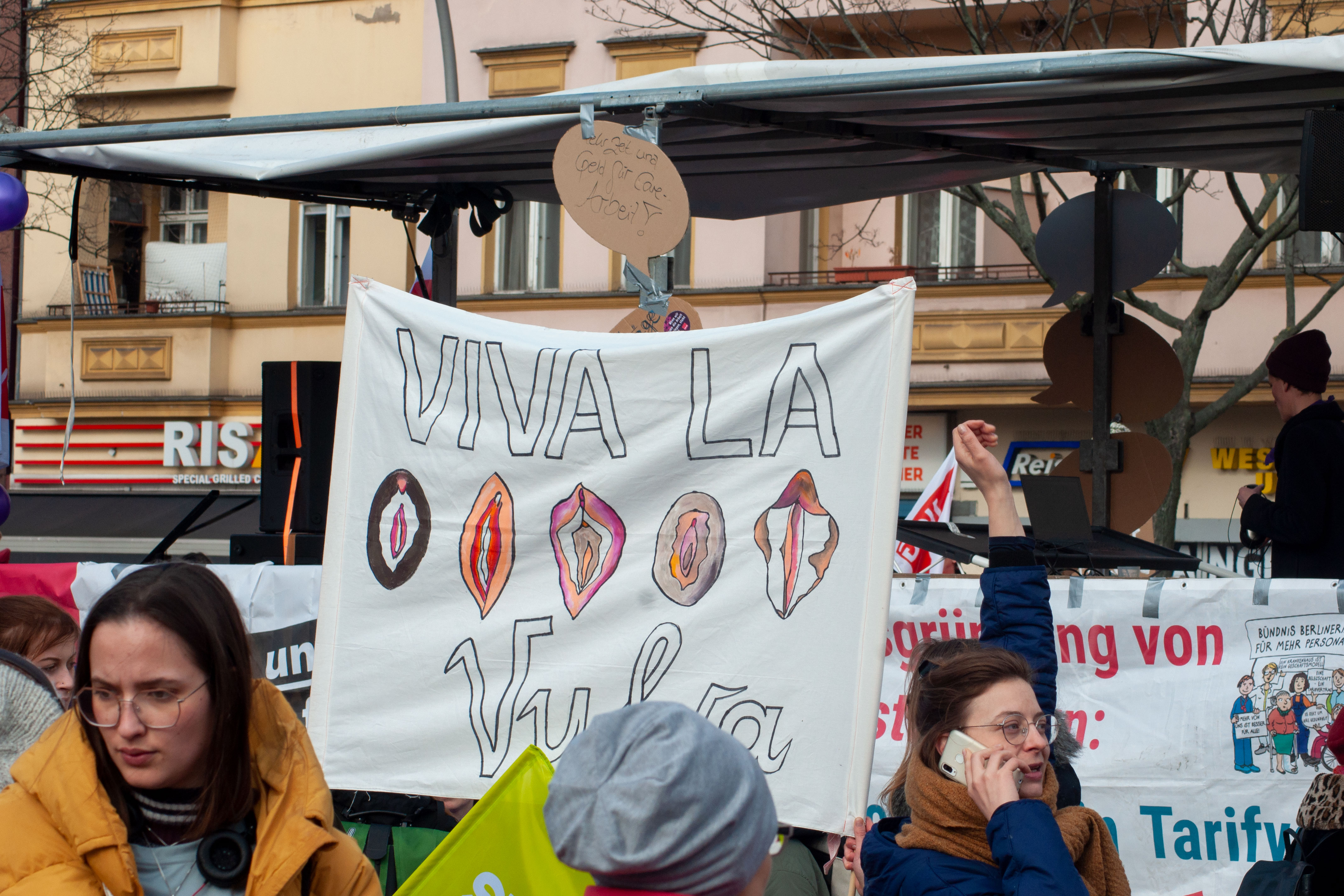
Photo Gallery: International Women’s Day, 8 March 2020

Photos by Antony Hamilton and Karsten Schmitz


08/03/2020


Photos by Antony Hamilton and Karsten Schmitz

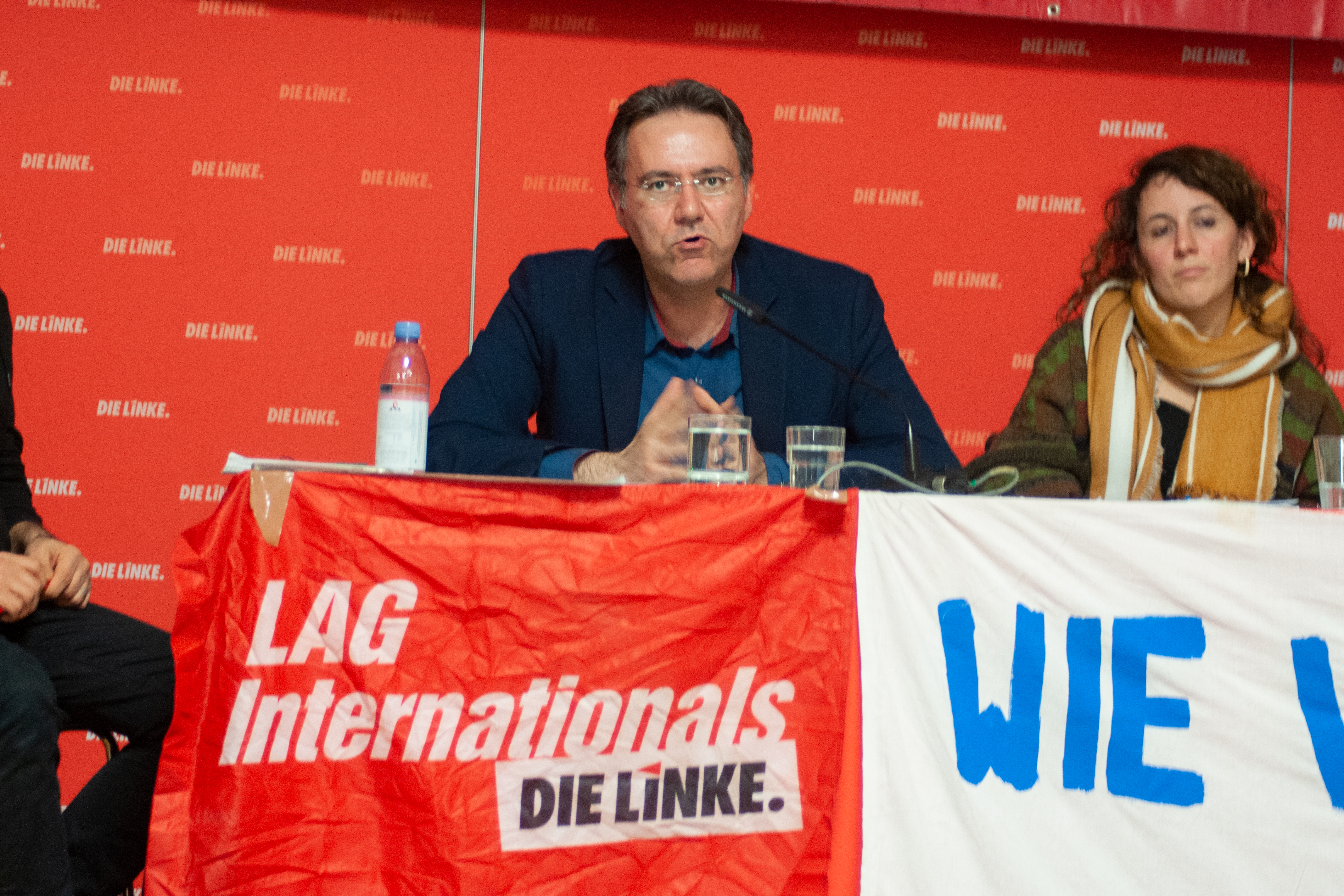
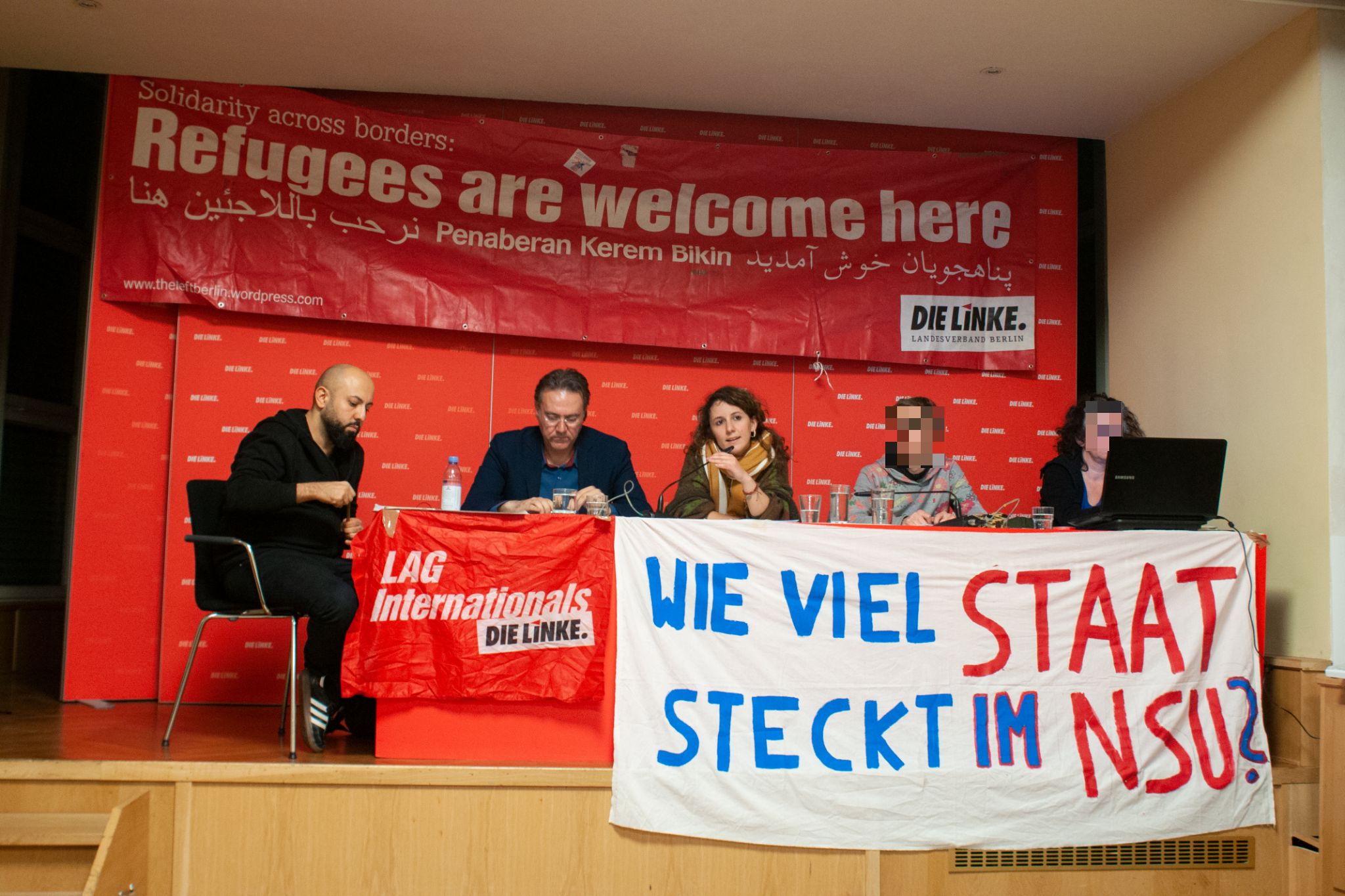
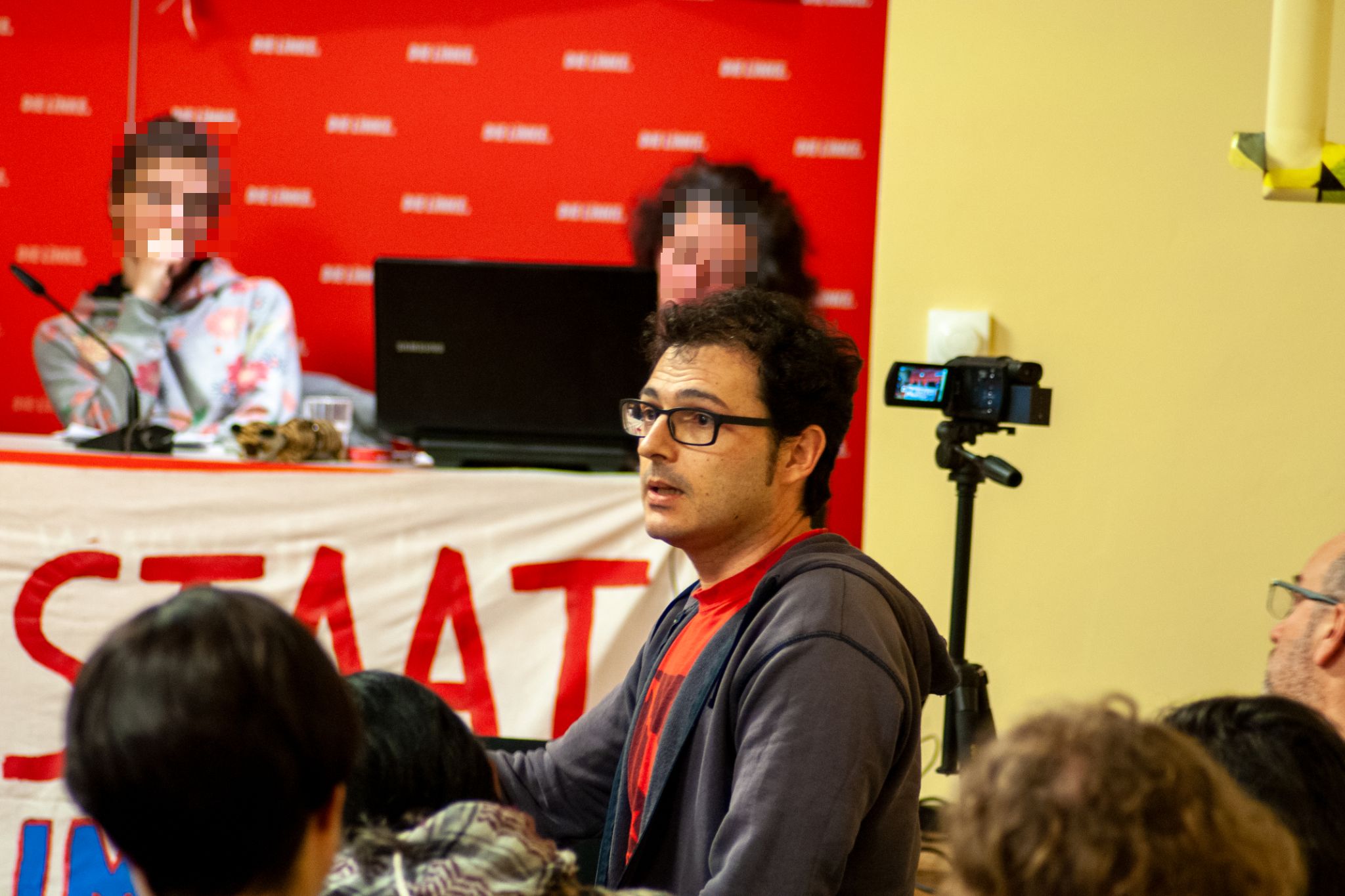
Photos from our meeting: Fighting Fascism from Greece to Germany

7 March 2020, Karl Liebknecht Haus


7 March 2020, Karl Liebknecht Haus

A Perspective of the current USA electoral process

At the best of times, leftists are divided about what to make of electoral politics. Opinions range from those who argue they will never result in meaningful change for the unprivileged members of society. Other argue that Leftists must engage in the democratic process.   As the USA elections are a brazen frenzy of money, […]


22/02/2020


At the best of times, leftists are divided about what to make of electoral politics. Opinions range from those who argue they will never result in meaningful change for the unprivileged members of society. Other argue that Leftists must engage in the democratic process.
 
As the USA elections are a brazen frenzy of money, theatrics and posture – cynicism about USA elections on the left is palpable. But this election round seems even more bizarre than usual. After all, the incumbent is manifestly a liar whose impeachment was averted by a partisan Republican refusal to even consider the charges against him. Surely, such a scoundrel could not get re-elected…. or could he?
 
George Soros, the multi-billionaire financier who is no fool, thinks he might get re-elected. Especially with the influence over social media he exerts. Soros points out:
“Facebook helped Trump to get elected and I am afraid that it will do the same in 2020… there appears to be “an informal mutual assistance operation or agreement developing between Trump and Facebook” in which Facebook will help President Trump to get re-elected and Mr. Trump will, in turn, defend Facebook against attacks from regulators and the media.” [1] And his Democratic opponents are in an internal dog-fight, while some economists and Trump himself – tout the USA economy as ‘rosy’. It seems that the Great Liar Trump might have a decent shot.
We consider 3 questions: (1) How rosy in fact, is the position of ordinary people under Trump’s economics? (2) Why are the Democratic Party and Republican Party at such logger-heads? (3) Should the USA progressives and workers support the Democratic Party?
 
(1) How ‘rosy’ is the position of ordinary people under Trump’s economics?
 
At the January 21, 2020 meeting at Davosof world leaders and plutocrats, President Trumpsaid: “Since my election we’ve created 2.4 million jobs and that number is going up very, very substantially. Small business optimism is at an all-time high. New unemployment claims are near the lowest we’ve seen in almost half a century. African-American unemployment reached the lowest rate ever recorded in the United States and so has unemployment among Hispanic-Americans.” [2]
 
This has been refuted by many, including the Nobel Prize winner Joseph Stiglitzwho distributed a fact-sheet in the audience after Trump’s speech. [3] Here we will make only two points: Firstly, Figure 1 below, shows real wages have been going down under Trump (notnominal wages which are notadjusted for changes in the cost of living). [4]
The second point to make is shown in Figure 2. This is that under Trump, despite his huge bonuses to company directors and the top 1%, his tax cuts have definitely not turned the USA economy around. Below is a figure that shows the Real GDP Growth rate has been less than 3 %. Recall that Trump had boasted on December 16 2017, that: “The economy now has hit 3 percent. Nobody thought we’d be anywhere close. I think we can go to 4, 5, and maybe even 6 percent.” [5]
The Trumpian spin on the USA economy, and the actual effects on the ordinary worker in the USA, is best summarised by the commentator Sonali Kolhatkarfor ‘Truthdig”: “When compared to actual facts, Trump’s rhetoric on the American economy exists in the realm of fantasy.
 
The official unemployment rate in the U.S. is indeed at a record low of 3.5%, according to the latest jobs report.That number suggests that only 3.5% of all Americans capable of working are currently unemployed and that more than 96% have jobs. But digging into the numbers offers a much different picture… the 3.5% unemployment figure is misleading; only about half of all employable Americans are working full time, 10% are working part time, 2.1% are actively seeking work but are unemployed, and 1.8% are not seeking work but want a job. A whopping 35% are out of the job market and not actively seeking work.
 
The situation is worse for people of color, whom Trump likes to claim have benefited greatly under his presidency. Black Americans are far more likely than whites to be “underemployed”— a term for those who work part-time but are seeking full-time jobs.
 
Additionally, the racial wealth gap in the U.S. remains strikingly high. According to a recent study,“The median black household holds just 10% of the wealth of median white household, and while blacks constitute 13% of America’s population, they hold less than 3% of its wealth.” [6]
 
So – there is a deep reservoir of unhappiness about the Trump era in the population – notwithstanding the Trump ‘populist base’. But can this be turned into an electoral wave against him? First we should understand whether there are real differences between the two major parties.
 
2) The Republican Party versus the Democratic Party – a real fight or a myth?
 
It is indisputable that both major parties in the USA have overseen a steady rise of power and wealth into the hands of the wealthiest top 1% of the USA. Thus surely it should be acceptable to state, that they both represent the ruling class of the USA? And yet, they are clearly in a no-holds bar struggle against each other.
 
What explains this? There material differences between them in the segments of the ruling class their policies support. The main big company supporters of the Republican Party are in the small manufacturing, and oil and gas sectors. The main big company supporters of the Democratic Party have been the financial speculators and big banking sectors.
 
Trump was propelled into power by such power-brokers as the Koch Brothers. [7] Their conglomerate likes to stay in the shade, but they have coordinated a huge ultra-rightist movement in the USA, targeting any ‘regulation’:
“Koch Industries is one of the largest private corporations in the world with vast interests in fossil fuels, pipelines, chemicals, paper products, commodities trading and, most recently, a Wall Street-esque investment group, Koch Equity Development, that in November invested $650 million alongside Meredith Corporation to help it acquire Time Inc., publisher of iconic magazines like Time, Fortune and Sports Illustrated. Charles Koch is the Chairman and CEO of Koch Industries. Together with his brother David, they are majority owners of the company they inherited from their father which has grown to estimated annual revenues of $100 billion. Each brother’s net worth is listed by Forbes as $51 billion. Their vast wealth has been used for decades to fund a dizzying maze of interconnected nonprofit groups pushing an anti-regulatory agenda in Washington, leading to the sobriquet, the Kochtopus.” [8]
To attract this segment of big firms, Trump promised and delivered a crass pro-energy industry and pro-manufacturing industrial base. In addition Trump has fought the ‘off-share’ movement, whereby USA industries over 20 years moved from their USA to base manufacturing in overseas countries to take advantages of lower pay and rights for workers.
 
This explains his attack on trade agreements. As Gillian Tett, USA Managing Editor of the Financial Times put it “instead of celebrating “free” trade, American executives are calling for “fair” trade, along with “reciprocity” and “equalisation” of trade deals. This is a euphemism for better terms for US companies.“ [9]
 
In contrast the main company sector support for the Democratic party has been the financial and banking industries. This was vividly shown by Democratic President Obama’sbailout to industry and banks during the great recession and crash of 2008. As he himself put it bluntly, he was the saviour of the major banks:
“Summoning the chief executive officers of the major banks to the White House in the spring of 2009, Obama told them, “My administration is the only thing between you and the pitchforks.” [10]
And the main donors to the failed electoral bid of Hilary Clintonwere from the financial sectors: “According to the Center for Responsive Politics, Citigroup ranks as one of the top five donors to Hillary Clinton over the course of her career in public office. J.P.Morgan Chase and Goldman Sachs also register in the top five. (The monies come from employees and/or family members or PACs of the firms, not the corporation itself.)
 
Citigroup has also paid the Clintons massive sums in speaking fees over the years and provided a $1.995 million mortgage to allow the Clintons to buy their Washington, D.C. residence at the end of Bill Clinton’s presidency – a time when Hillary Clinton says the couple was “dead broke.” Citigroup has also committed $5.5 million to the Clinton Global Initiative, a controversial charity run by the Clintons.” [11]
 
(3) Should Progressives support the Democratic party in this election?
 
What does this rivalry between the leaders of the Republicans and the Democrats, mean for the average worker in the USA? It seems both major parties support the big companies – just different ones. Does this affect working people? You bet it does.Since Trump became President, he has flamed out an explosive contempt for working peoples of America – especially African-Americans, and the peoples of the world.
 
Trump’s contempt takes the form of open racism against African-Americans and Hispanics; a fierce defence of the ruling class enrichment at the expense of workers as expressed in his tax cuts; reactionary attacks upon women, immigrants, education, the legal system, and the environment; and all this is combined with recent conservative dominated Supreme Court legal rulings to attack workers, immigrants and democratic voting rights.
 
But clearly, the Democratic Party has forfeited several areas of support. In one major example, Obama flouted the mandate he had been given. The perception of the “perfect Obama” is contradicted by black voter turnout in 2016, which declined for the first time in 20 years, falling to 60 percent from 67 percent in 2012.
 
Other indicators that the Democratic Party is becoming “seen through” are direct questions about the Obama period:“In 2009, 71 percent of African-Americans thought Mr. Obama’s election was “one of the most important advances for blacks.” By the summer of 2016, that number had dropped to 51 percent. In 2012, only 20 percent of African-Americans believed that the country was “headed in the wrong direction,” but by 2016 that number had risen to 48 percent”. [12]
 
An electoral victory of the Democratic Party will not lead to a socialist USA. Yet the ability of the progressive movements to organise themselves will clearly improve; and likely open racist attacks on African-Americas and Latinos would decrease. I believe it would be foolish of socialists to dismiss the small benefits of the electoral victory of the Democratic Party. But, socialists shouldbe organising a broad left party for much more wide-sweeping changes, than the Democratic party has been capable of to date.
 
The question of whether any of its current contenders can participate in that broader agenda is still to be answered. For many socialists, hopes are pinned on Bernie Sandersas articulated by Daniel Denvir. [13] The largest grouping in the USA of leftists, or socialists are the Democratic Socialists of America (DSA), who are firmly behind Sanders. [14] But I believe such enthusiasm must be tempered.
 
Firstly Bernie Sanders’s history has long been one of vacillation. A quick example is his 1972 support for George Wallacethe racist Southern Democrat. [15] Secondly, it is far from clear that the hierarchy of the Democratic Party will enable a radically different path from within its confines. It is notable that even the DSA states: “But we also know that neoliberal Democratic Party elites offer a tepid vision of “inclusiveness” that refuses to challenge the oligarchic nature of U.S. society.“ [16]
 
Thirdly the entry of even more money into the elections as represented by Bloomberg, changes the equations somewhat. [17]
 
All bets are off right now. But progressives in the USA need to make their voices heard – ‘Down with Trump’; and ‘For socialist change’. But they had better organise a left party not beholden to the hierarchy of the Democratic Party.
Hari Kumar 22 February 2020
 
Footnotes
  1. George Soros, “Mark Zuckerberg Should Not Be in Control of FacebookThe social media company is going to get Trump re-elected — because it’s good for business; Jan. 31, 2020; New York Times; https://www.nytimes.com/2020/01/31/opinion/soros-facebook-zuckerberg.html
  2. Full text: Trump Davos speech transcript; by ‘politico’ staff; 01/26/2018 https://www.politico.com/story/2018/01/26/full-text-trump-davos-speech-transcript-370861
  3. Pictured in Conrad Duncan, “Trump’s Davos speech instantly shot Trump’s Davos speech instantly down by leading economist… Acclaimed professor hands out fact-check sheet challenging president’s speech’; 21 January 2020; London; ‘The Independent’; at https://www.independent.co.uk/news/world/americas/us-politics/trump-speech-davos-2020-greta-thunberg-wef-economy-a9294466.html
  4. David Salkever, “Real pay data show Trump’s ‘blue collar boom’ is more of a bust for US workers, in 3 charts”; at http://theconversation.com/real-pay-data-show-trumps-blue-collar-boom-is-more-of-a-bust-for-us-workers-in-3-charts-131264;
  5. Michael Roberts, “Trump’s trickle dries up”; 4 February 2020; at the ‘Michael Roberts Blog; https://thenextrecession.wordpress.com/2020/02/04/trumps-trickle-dries-up/
  6. Sonali Kolhatkar Trump’s Rosy Economic Outlook Is a Big Lie”; Jan 23, 2020; “https://www.truthdig.com/articles/trumps-rosy-economic-outlook-is-a-big-lie/”
  7. Alan Zibel for ‘Public Citizen’;“How The Koch Brothers’ Agenda Has Infiltrated The Trump Administration”; November 30, 2017; https://www.citizen.org/sites/default/files/public-citizen-koch.pdf
  8. Pam Martens: Koch Industries Is Staffing Up with Voter Data Scientists to Tip the November Election to the Extreme Right“; Counter-punch; July 23, 2018; https://www.counterpunch.org/2018/07/23/koch-industries-is-staffing-up-with-voter- data-scientists-to-tip-the-november-election-to-the-extreme-right/
  9. Gillian Tett; Financial Times, June 1, 2017
  10. Joshua Green;” The Biggest Legacy of the Financial Crisis Is the Trump Presidency – How the forces Obama and Geithner failed to contain reshaped the world we live in.”; 30 August 2018; at https://www.bloomberg.com/news/articles/2018-08-30/the-biggest-legacy-of-the-financial- crisis-is-the-trump-presidency
  11. Pam Martens and Russ Martens: Hillary Should Ask Jamie Dimon What Kind of Genius Loses $6.2 Billion”; Blog Wall St on Parade, a Citizen Guide to Wall Street; October 4, 2016; at http://wallstreetonparade.com/2016/10/hillary-should-ask-jamie-dimon-what-kind-of- genius-loses-6-2-billion/
  12. Keeanga-Yamahtta Taylor; “Democrats Gave Obama a Free Pass. That Could Hurt Us on Election Day. We refuse to talk about how his failure to deliver major changes may have fed voter disaffection in 2016”; https://www.nytimes.com/2020/02/05/opinion/obama-clinton-2016.html
  13. Daniel Denvir, “What A Bernie Sanders Presidency Would Look Like?” January 7 | january 2020 issue “in these times”; http://inthesetimes.com/features/bernie-sanders-presidency-climate-mobilization.html
  14. Musa Al-Gharbi, “Bernie is Democrats’ Best Shot in 2020, Even if the DNC Refuses to See It”; February 19, 2020; Democratic Socilists of America; at https://www.dsausa.org/democratic-left/bernie-is-democrats-best-shot-in-2020-even-if-the-dnc-refuses-to-see-it/
  15. Joseph Simonson; “Bernie Sanders praised segregationist George Wallace as ‘sensitive’ in 1972”; | January 30, 2020 https://www.washingtonexaminer.com/news/bernie-sanders-praised-george-wallace-as-sensitive-in-1972
  16. Joseph M. Schwartz, “A History of Democratic Socialists of America 1971-2017 – Bringing Socialism from the Margins to the Mainstream”, for the DSA National Political Committee, July 2017; at: https://www.dsausa.org/about-us/history/
  17. Alexander Burns and Nicholas, “Kulish Bloomberg’s Billions: How the Candidate Built an Empire of Influence”, Feb 15, 2020; New York Times; at https://www.nytimes.com/interactive/2020/02/15/us/politics/michael-bloomberg-spending.html