The Left Berlin News & Comment

This is the archive template

Lucy Parsons, Claire Lacombe and Pauline Leon

Rebellious Daughters of History #18 by Judy Cox Racism, Riot and Unceasing Revolt: Lucy Parsons (1851-1942) Lucy Parsons was born in Virginia in 1851, the daughter of a slave. In 1863, she was moved to Texas where she worked as a seamstress and a cook for white families. In 1870, Lucy was living with a […]


07/06/2020


Rebellious Daughters of History #18

by Judy Cox

Racism, Riot and Unceasing Revolt: Lucy Parsons (1851-1942)

Lucy Parsons was born in Virginia in 1851, the daughter of a slave. In 1863, she was moved to Texas where she worked as a seamstress and a cook for white families. In 1870, Lucy was living with a former slave, Oliver Gathing, and had a baby who died at birth. In 1871, Lucy married a white man, Albert Parsons. They were driven out of Texas by racists and settled in Chicago, Illinois.

Lucy began writing for The Socialist and The Alarm, the journal of the International Working People’s Association. In the 1880s, she led marches of seamstresses in Chicago. On 4 May 1886, Albert addressed a rally at Haymarket Square, organised to protest against police violence during a May Day strike.

Lucy was in the crowd when police moved in, a bomb was thrown at them and they shot several protesters dead. The authorities arrested eight men and, despite a lack of evidence, executed four activists. Albert was one of them. Protests against these judicial murders were beginning of May Day labour rallies in the US.

Lucy refused to be silenced. She spoke alongside William Morris and Peter Kropotkin during a visit to Great Britain in 1888. In the 1890s, she published Freedom: A Revolutionary Anarchist-Communist Monthly. In 1905 Lucy joined in the Industrial Workers of the World (IWW), and began editing the Liberator. She organized the Chicago Hunger Demonstrations in January 1915.

In the 1920s, the Chicago Police Department described Lucy as “more dangerous than a thousand rioters”. In 1925 she worked with the National Committee of the International Labor Defense in 1927, a Communist-led organization that defended labour activists and victimised Black people. Historians believe that Lucy joined the Communist Party in 1939.

In her 80s, Lucy continued to speak out against capitalism. One of her last major appearances was in 1941 when she addressed striking workers at International Harvester.
Lucy died on March 7, 1942, in house fire. Her lover, George Markstall, died the next day from injuries he received trying to save her.

She was approximately 91 years old. After her death, police seized her 1,500 books. She is buried near her husband, near the Haymarket Martyrs’ Monument in Forest Park, Illinois.

Revolutionary Republican and Armed: Claire Lacombe (1765-?) and Pauline Leon (1768 – 1838)

Claire was an actress but when she arrived in Paris in 1792, in the middle of the Great French Revolution, she left acting to become a revolutionary. Pauline was born to a family of Parisian chocolate makers and became a political radical after witnessing the execution of leaders of a bread riot.

Like many working women, Claire and Pauline asserted their right to speak, to vote and to bear arms in defence of the revolution. Pauline took part in the women’s march to Versailles in 1789. During the insurrection of 10 August 1792, they both took part in the storming of the Tuileries. Claire was shot through the arm but kept fighting and was awarded a medal for her courage.

In May 1793, the two women united to set up The Society of Revolutionary Republican Women, the most radical female revolutionary organisation of the French Revolution. The society first acted as Jacobin Sans Culottes and then the more radical Enragés. They demanded that women be armed to defend the revolutionary republic and that women should have the right to vote in the councils of the Revolutionary Committee.

Claire lived with Théophile Leclerc, leader of the Enrages, and supporter of women’s rights. They broke up and Pauline married him. Under the Reign of Terror, the Enragés were suppressed as was the Society of Revolutionary Republican Women.

On September 16 1793, Claire was publicly denounced as a counter-revolutionary to the Committee of General Security. She was arrested and released in August 1795. She went back to the theatre but soon left and vanished into obscurity. In May 1794 Pauline and her husband were arrested and held separately in prison but later released.

Pauline died at home on 5 October 1838.

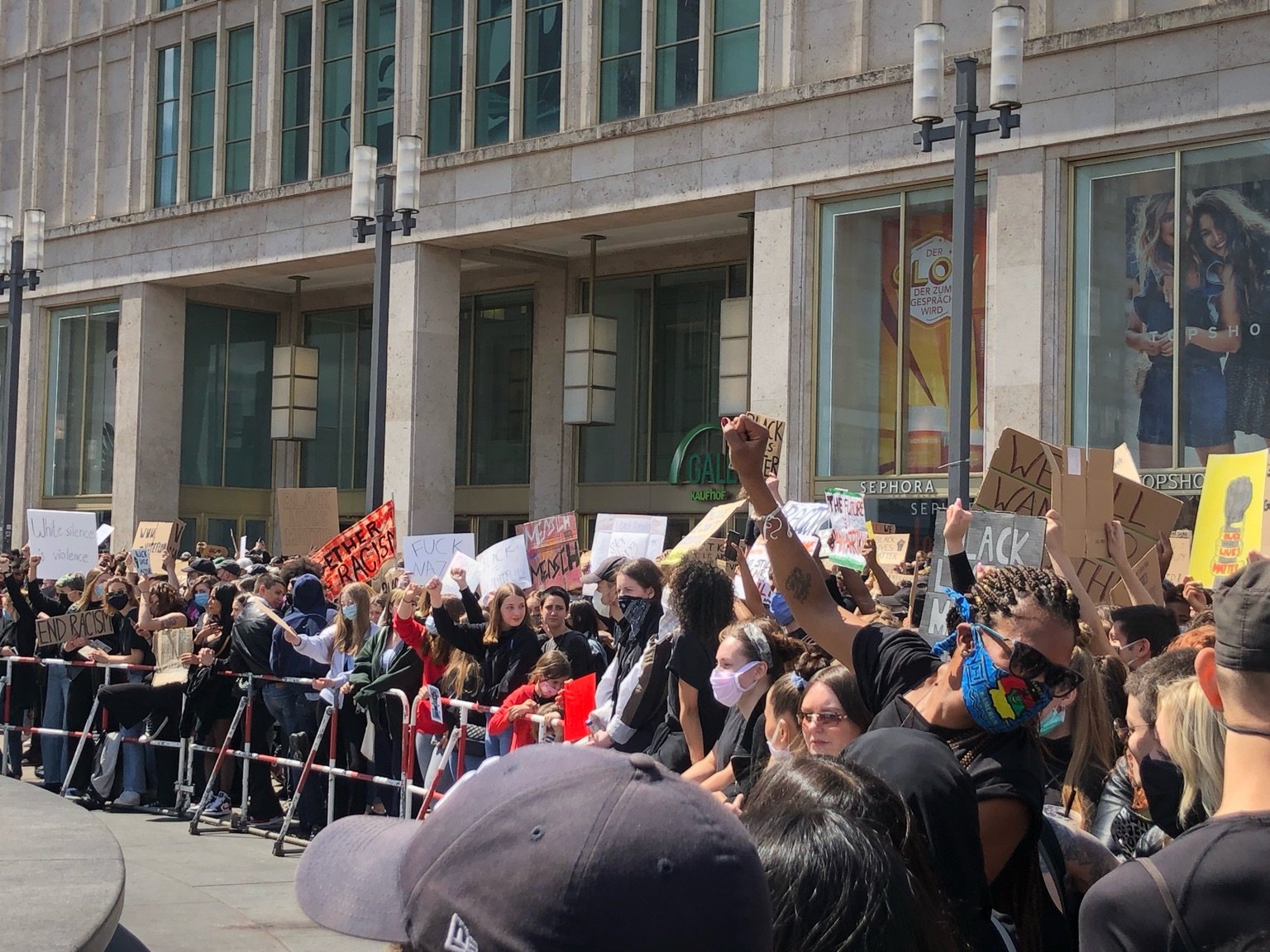
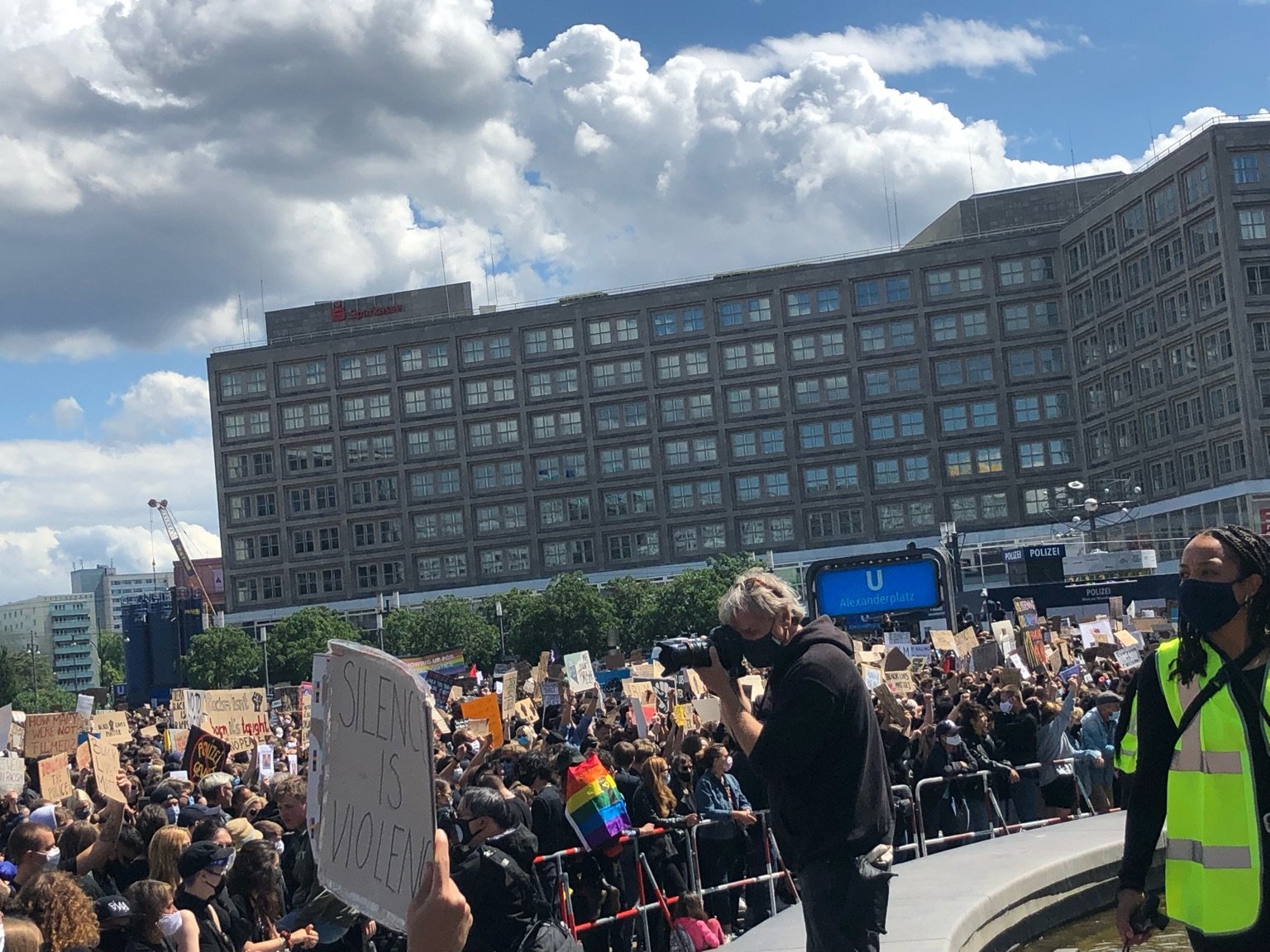
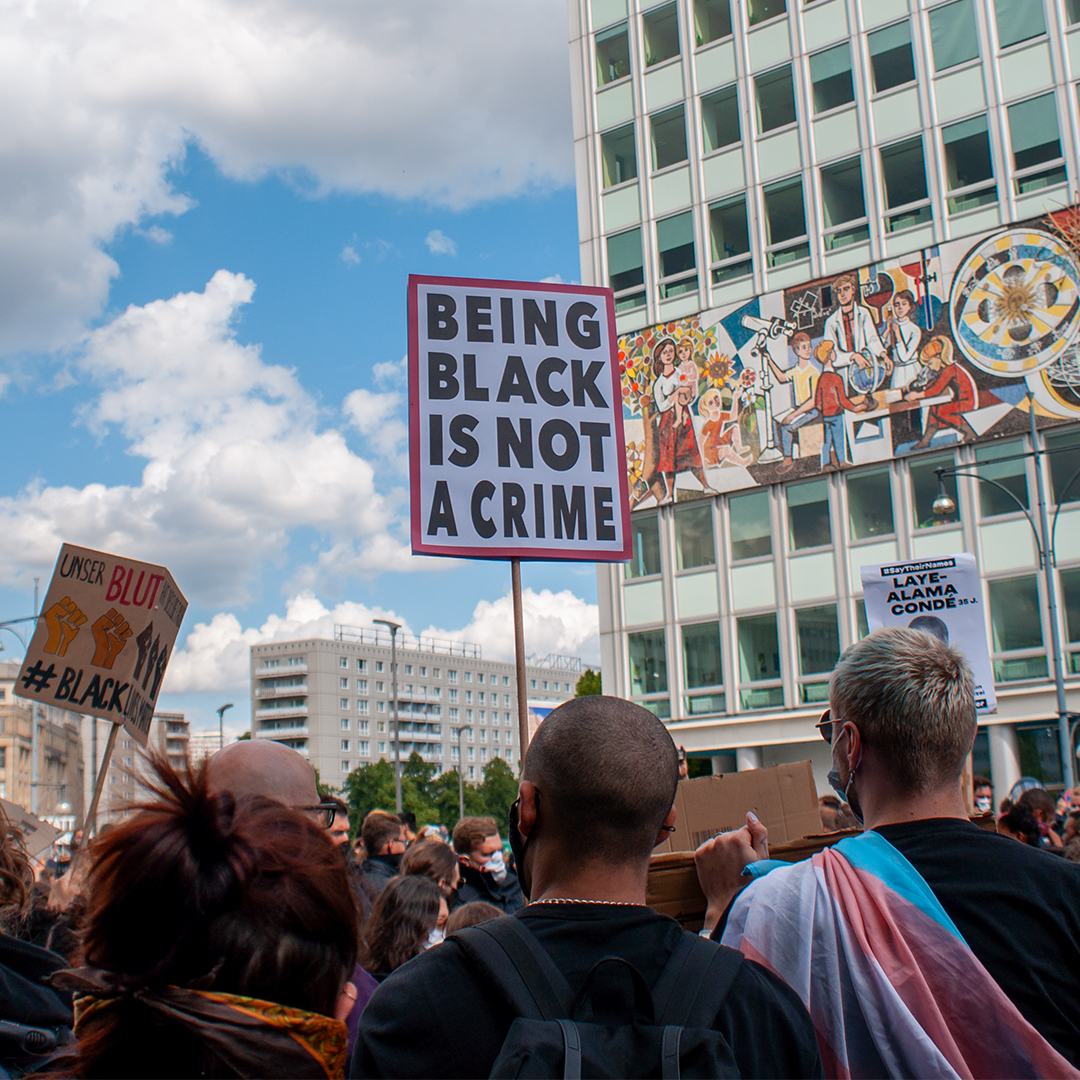
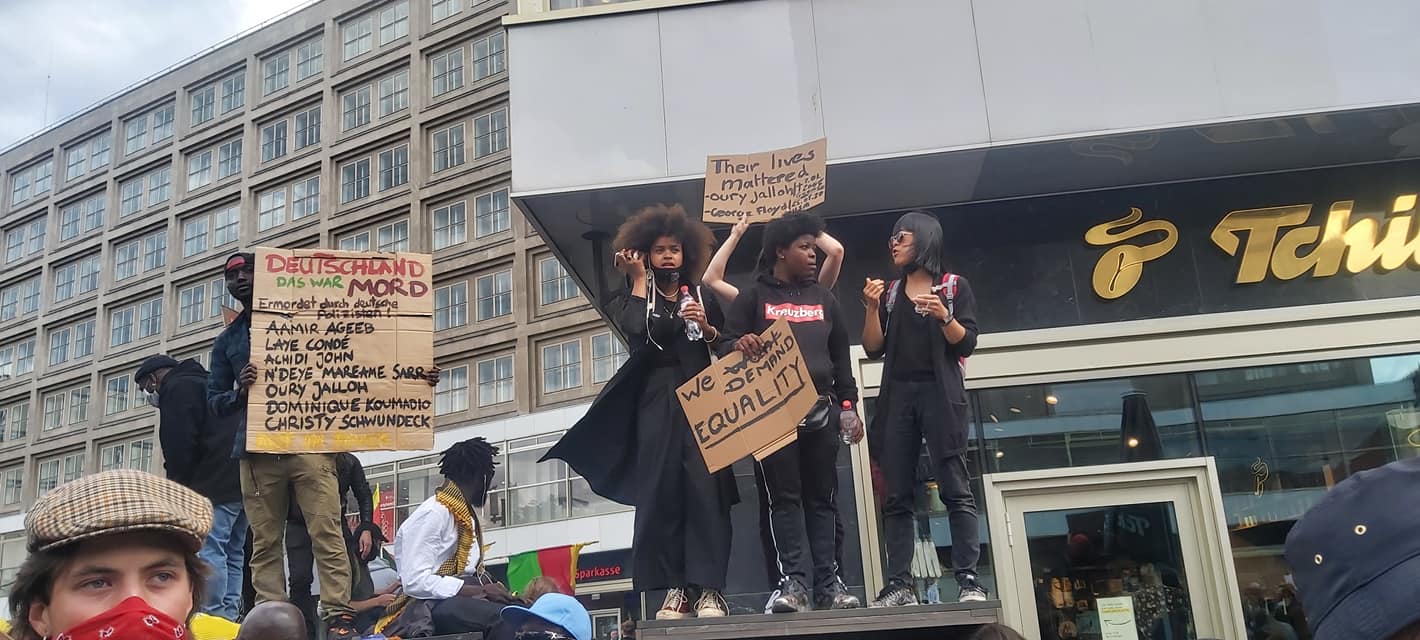
Photo Gallery: Berlin against racism

Alexanderplatz 6 June 2020 Photos by Phil Butland, Ian Clotworthy, Walker Gawande, Hanna Grześkiewicz, Antony Hamilton, Franziska Hofmann, Ferat Kocak, Bridget Kronqvist, Thom McGath, Julie Niederhauser and Antigoni Ntonti


06/06/2020


Alexanderplatz 6 June 2020

Photos by Phil Butland, Ian Clotworthy, Walker Gawande, Hanna Grześkiewicz, Antony Hamilton, Franziska Hofmann, Ferat Kocak, Bridget Kronqvist, Thom McGath, Julie Niederhauser and Antigoni Ntonti

Rose and Nellie Cohen and Anastasia Bitsenko

Rebellious Daughter’s of History #17 by Judy Cox From suffrage to Stalins Purges: Rose and Nellie Cohen The Cohen sisters were the daughters of Maurice and Ada Cohen, refugees from Poland who settled in Whitechapel in 1884. Rose was born in 1894. As teenagers, Rose and Nellie joined Sylvia Pankhurst’s radical women’s suffrage Movement in […]


Rebellious Daughter’s of History #17

by Judy Cox

From suffrage to Stalins Purges: Rose and Nellie Cohen

The Cohen sisters were the daughters of Maurice and Ada Cohen, refugees from Poland who settled in Whitechapel in 1884. Rose was born in 1894. As teenagers, Rose and Nellie joined Sylvia Pankhurst’s radical women’s suffrage Movement in East London.

In 1913, Nellie became Sylvia Pankhurst’s personal secretary. Nellie and Rose moved into a flat on Grays Inn Road with two comrades from the East London Federation of Suffragettes. Everyone in the flat became Communists.

In March 1917, Sylvia addressed a meeting organised by the East London Jewish community to welcome the overthrow of the Tsar. The Cohen sisters shared this enthusiasm for the Russian Revolution.

In 1919, Sylvia tried to set up a communist organisation in Nellie and Rose’s flat and appointed Nellie to an organisation which built support for Soviet Russia. Rose became a prominent figure in the group which won the approval of the Comintern, the Communist Party of Great Britain, founded in 1921.

In the 1920s and 1930s, Rose was entrusted with a series of missions for the Comintern, taking her to Paris, Moscow and Berlin. Rose met David Petrovsky, a Comintern agent. They married and, in 1929, Rose gave birth to their son Alexey in Moscow, where she had settled.

That same year, Nellie had a daughter, Joyce. The father was a married man who was unaware of Nellie’s pregnancy. Nellie’s friend went to live in New York’s communist circles. She returned to England and worked in the Soviet Embassy in London.

In Moscow in the 1930s, Rose worked as the foreign editor of the USSR’s only English-language newspaper, the Moscow Daily News. In the late 1930s, a wave of arrests and executions were unleashed on the Soviet populace. In 1937 Stalin’s secret police came for Rose and her husband.

David Petrovsky was arrested and executed in September. Rose was also arrested, distraught at the fate of her son. Prominent British Communists such as Harry Pollitt appealed for her life.

Nellie did not grasp the severity of her sister’s situation. On 14 August 1937, she wrote a letter to her sister filled with family anecdotes. The letter was returned to sender. Three months later, Rose was executed.

Nellie remained a committed member of the Parliament Hill Fields branch of the Communist Party of Great Britain until her death in 1979.

Revolution, Guns and Peace: Anastasia Bitsenko (1875-1938)

Anastasia Bitsenko was born into a peasant family in a small village but managed to qualify as a teacher. During a famine in 1899, she organised communal kitchens. She then went to Moscow to continue her studies. There, she met and married Mikhail Bitsenko, a member of the Socialist Revolutionary Party. In 1901, they were arrested and banished from Moscow for organising student disorders.

In 1903, Anastasia left her husband and travelled to St Petersburg, where she became a full-time activist for the Social Revolutionaries (SR). The next year, she joined a member of a women’s terrorist group which planned to assassinate the minister of the interior, but she was betrayed, arrested and exiled to the Arctic Circle. Anastasia escaped and returned to Moscow, where she was in charge of organising rail workers before joining a SR flying combat detachment.

In 1905 Anastasia volunteered to assassinate the Minister of War, who had brutally repressed a peasant revolt. She marched into his office, placed a draft of his death sentence on his desk and shot him dead. She was arrested and sentenced to death, but this was commuted to life imprisonment. She spent 11 years in penal servitude.

Anastasia was released by the February Revolution of 1917. During the October Revolution, she served on the Petrograd Military Revolutionary Committee and the Central Executive Committee of the Soviets. Anastasia was a highly-respected revolutionary.

She was appointed to the Soviet delegation to the Brest-Litovsk peace negotiations which ended the fighting on the Eastern Front. Sitting amidst the uniformed Generals, with their medals and monocles, Bitsenko stood out as the only women present, and almost certainly the only delegate who had shot a minister of war.

Back in Russia in November 1918, she joined the Communist Party and served on several important committees. Anastasia fell victim to Stalin’s purges. She was sentenced to death and shot on 16 June 1938.

Angelica Balabanoff and Helen Keller

Rebellious Daughters of history #16 by Judy Cox International revolutionary Angelica Balabanoff (1878-1965) Angelica Balabanoff, was by any standards an extraordinary person. Born to Jewish parents, in Kiev, Ukraine in 1878, she left home aged 19 to study at a radical university in Brussels where she met Russian and Italian Marxists. After graduating, she continued […]


05/06/2020


Rebellious Daughters of history #16

by Judy Cox

International revolutionary Angelica Balabanoff (1878-1965)

Angelica Balabanoff, was by any standards an extraordinary person. Born to Jewish parents, in Kiev, Ukraine in 1878, she left home aged 19 to study at a radical university in Brussels where she met Russian and Italian Marxists.

After graduating, she continued to study under the Marxist philosopher, Antonio Labriola then she settled in Switzerland becoming a lecturer and journalist for the Italian Socialist Party. She was the party’s delegate to the Congresses of the Second International in 1907 and 1910.

In 1910, Angelica moved to Italy where she organised low-paid immigrant women in the textile factories. She served on the Socialist Party’s central committee and co-edited the party’s paper, Avanti. She opposed the First World War and was active in the anti-war Zimmerwald Movement.

In 1917, she returned to Russia to support the revolution and was deeply moved by what she witnessed:

‘You cannot form any idea of what is taking place here. One witnesses daily the miracle of re-organization of an old, decrepit and rotten system which only the new regenerative forces can put life into; one looks on at this work of constant renewal going on amidst attempts to boycott it, to sabotage and blockade it in all directions.

The spectacle is infinitely inspiring; it fills you with pride; it revivifies your faith in human power and the divine potency of the ideal’.

Angelica became secretary to the Communist International in 1919, working alongside Lenin and Trotsky. She opposed the measures they took to defeat the White Armies during the Civil War and left Russia, eventually settling in New York where she campaigned to raise awareness of the danger represented by Benito Mussolini and Italian fascism.

At the end of the Second World War, Angelica travelled once again to Italy and resumed her activity in Italian socialist politics. She died in Rome in 1965. In her memoir, My Life as a Rebel, Angelica wrote,

‘The experience of over 40 years has only intensified my socialist convictions and if I has my life to live over again, I would dedicate it to the same objectives’.

Disability and Socialism: Helen Keller (1880-1968)

Keller is remembered as an advocate for people with disabilities. She was also a suffragette, pacifist, and radical socialist.

Helen was born in Tuscumbia, Alabama. Her family were confederates. When she was 19 months old, Keller contracted an illness which left her both deaf and blind. In 1886, Keller, was referred to Alexander Graham Bell and went to an institute where she met Anne Sullivan, who became Keller’s instructor and life-long companion.

Helen joined the American Socialist Pary in 1909 and by 1912, she had become a national voice for socialism. In 1913, Helen joined the militant Industrial Workers of the World (IWW) saying that parliamentary socialism was “sinking in the political bog”.

In 1916 she supported strikes against World War One. She welcomed the Russian Revolution and defended Lenin and campaigned for an end to the blockade on soviet Russia. Many of her speeches and writings were about women’s right to vote. The FBI kept a file on Helen.

In the 1930s, Helen became increasingly isolated from socialism although she never stopped campaigning for the disabled.

In “Why I Became an IWW”, Keller explained her motivation for activism:

“I was appointed on a commission to investigate the conditions of the blind. For the first time I, who had thought blindness a misfortune beyond human control, found that too much of it was traceable to wrong industrial conditions, often caused by the selfishness and greed of employers”.

Keller also cited the 1912 strike of women textile workers in Lawrence, Massachusetts for inspiring her support of socialism.

In 1911 she wrote,

“The few own the many because they possess the means of livelihood of all … The country is governed for the richest, for the corporations, the bankers, the land speculators, and for the exploiters of labor.

The majority of mankind are working people. So long as their fair demands—the ownership and control of their livelihoods—are set at naught, we can have neither men’s rights nor women’s rights.

The majority of mankind is ground down by industrial oppression in order that the small remnant may live in ease.”

Dominic Scummings

Dominic Cummings. Typing the name causes an involuntary shiver of disgust. Cummings is currently the Chief Adviser to UK Prime Minister, Boris Johnson. Cummings was also the campaign director of the successful Vote Leave (pro-Brexit) campaign, and a special adviser to Michael Gove between 2007 and 2014. Some credentials. Despite often portraying himself – as […]


Dominic Cummings. Typing the name causes an involuntary shiver of disgust. Cummings is currently the Chief Adviser to UK Prime Minister, Boris Johnson. Cummings was also the campaign director of the successful Vote Leave (pro-Brexit) campaign, and a special adviser to Michael Gove between 2007 and 2014.

Some credentials. Despite often portraying himself – as an anti-establishment, northern outsider – the private school and Oxford educated Dominic Cummings is well in with the establishment. Variously described as “a cheat” [1], “a liar” [2] “a career psychopath” [3] and “Dominic Scummings” [4]; this odious man has pissed off a lot of people.

In an exclusive story broken by the Daily Mirror and Guardian newspapers on 22nd May, Cummings was found to have broken the very lock-down rules that he, as a government adviser, had helped to write. For those who have not been closely following the ongoing farce that is UK politics, read on for a shameful tale of contempt for ordinary people, a vile willingness to spread a lethal virus and undermine vital public health messaging, in exchange for one man’s selfish desire to do what he feels like.

The UK lock-down began too late. The shameful fact that the UK now has one of the highest excess death rates in the world bears testament to this [5]. From late February 2020 it was clear from the experience of other countries that a lock-down was required in order to stop the spread of Covid-19 throughout the UK. However, the Johnson government, advised by Cummings, spent a crucial period of time flirting with the idea of ‘herd immunity’ rather than taking action.

Although the government now deny that they had a herd immunity strategy, it was spoken of in public several times, including by Sir Patrick Vallance, the government’s chief scientific adviser. [6] Prime Minister Johnson famously said in his press conference on 12th March: “I must level with the British public: many more families are going to lose loved ones before their time”.

After this strategy was met with disapproval from many scientists and the public and the predicted death rate of this strategy was calculated at 250,000 deaths [7], the government changed tack and belatedly announced a lock-down on 23rd March 2020.

The Sunday Times reported that Cummings was arguing against the government implementing lock-down measures at a private event towards the end of February. His view was summarised as “if that means some pensioners die, too bad”. [8] Cummings and Downing Street deny that he said this.

Once the UK lock-down was announced, the rules were fairly clear. People with symptoms of Covid-19 were to self-isolate at home for 14 days, along with the rest of their household. Outside trips for those without Covid-19 symptoms were limited to infrequent shopping trips for necessities and one form of exercise per day. Visiting family members outside of the household was prohibited. Essential travel was permitted but expressly did not include visits to second homes or similar, whether for isolation purposes or holidays.

Cummings’ wife, Mary Wakefield, a commissioning editor for right-wing publication The Spectator, became ill with Covid-19 symptoms in late-March. Cummings first broke the lock-down rules by going to work when Wakefield had symptoms. Cummings, Wakefield and their 4 year old son then drove 260 miles north to Durham to stay at Cummings’ parent’s farm, which has a cottage in the grounds and a private woods. The reason given by Cummings was that it was necessary in order to access child care for his son. During their time in Durham, Cummings also drove his wife and child to Barnard Castle, a scenic town half an hour’s drive from his parent’s farm, on his wife’s birthday.

When the Cummings breaching lock-down story broke there was a huge swell of anger towards him all across the UK. Thousands of ordinary people who had followed the lock-down rules and been unable to care for or visit sick and dying loved ones took to social media to express their outrage at his selfishness, and his being apparently ‘above the rules’.

Forty-five Tory MPs openly called for his resignation, with many more muttering anonymously to the press. Journalists wrote critical opinion pieces calling for him to be sacked, including for The Spectator; Wakefield’s publication. [9] The leaders of two opposition parties, the Scottish National Party and the Liberal Democrats, called for him to resign. The leader of the Labour Party, Sir Keir Starmer, was notable in his silence. Even the virulently right-wing Daily Mail newspaper led with a headline calling for him to be sacked.

However, the UK government rallied round their man. Johnson stood by his Chief Adviser, insisting that Cummings was correct to act in this way, stating “I think he followed the instincts of every father and every parent. And I do not mark him down for that”. Cabinet ministers including Health Secretary Matt Hancock, Foreign Secretary Dominic Raab and Chancellor Rishi Sunak tweeted in defence of Cummings.

Dominic Raab tweeted

“It’s reasonable and fair to ask for an explanation on this. And it has been provided: two parents with Coronavirus were anxiously taking care of their young child. Those now seeking to politicise it should take a long hard look in the mirror”. [10]

Essentially, this felt like a big ‘screw you’ to all parents who had followed the lock-down rules despite also caring for young children. In some cases people were unable to be with their dying children or attend their funerals. In this interpretation of events, Dominic Cummings – a man who put his small child in a car with a symptomatic parent for several hours and drove the virus to another part of the country – is a better parent than you plebs who cared for your kids at home to protect others and contain the spread of the virus. “How dare you, the public, politicise this?” Sickening.

Cummings was allowed to give his own press conference in the Downing Street Rose Garden, a very unusual thing for a special adviser to do. Advisers are not supposed to become the story, their role is supposed to be advising behind the scenes, but Cummings is different. An extra-special Special Adviser. Cummings’ defence of his actions was both patronising (“I understood the rules and did the best for my child”, unlike you plebs) and bizarre (“I drove to Barnard Castle in order to test my eyesight.” Yes, really).

The infuriating thing is, that now the media frenzy has died down, he seems to have got away with it. He has not offered to resign, indeed said that he never considered resigning, and has not been sacked. He is carrying on as normal, when so many people who have followed the rules cannot. He is sticking two fingers up at all the non-special people who followed the rules for the greater good. So much for his anti-elitism.

The Prime Minister’s chief adviser breaking the lock-down rules has, perhaps fatally, undermined the public health messaging of the government: stay at home, do your duty, we are in this together. A YouGov poll carried out on 3rd June found that 21% of people polled said that in the week following the story breaking they had followed the lock-down rules less strictly. Of this group, a third cited Cummings as the reason. [11] “If he is above the rules”, people may think, “why should I follow them? If he went out repeatedly, then it must be safe for me to do so”. No one likes to be told ‘do as I say, not as I do’ by those in power.

This undermining of important public health messaging could have a significant impact on the UK’s containment of the virus. In the last week, the UK government has announced a relaxation of the lock-down, perhaps in an attempt to justify Cummings’ breach of the rules, perhaps in pursuit of the herd immunity strategy that they definitely aren’t pursuing. All of the scientific evidence suggests that it is far too soon to be doing this. By backing Cummings the government have lost any moral authority they had on this issue. If the government later needs to lock-down harder again, will people comply?

The question that needs to be asked is, why is Dominic Cummings so important to the UK government? How does this man who was not elected and is not accountable for his actions wield so much power? The Tories have seriously damaged their credibility and their position in the opinion polls by not sacking him. It would make political sense to sack him and move on.

Does he have scandalous dirt on the PM, and/or other senior ministers? Is the PM completely incompetent, unable to do his job without his ‘Svengali’ at his side? Are the rest of the cabinet also devoid of competence? Do they buy into the idea that he is an anti-establishment genius who can connect to working class voters in a way that they cannot? Or is it a case of simple ruling class solidarity?

I reckon it’s probably a mixture of all of the above. The UK has a weak, incompetent PM and a cabinet lacking in conviction and ideas that believe Cummings is essential to keep their operation going. He may have dirt on them and he is one of them, a member of the elite he claims to disdain.

Either way, if there is a second wave of Covid-19 deaths in the UK, Scummings will have innocent blood, the blood of our loved ones, on his hands.

Anna Southern is an active member of Labour Berlin. This article was written for theleftberlin.com.


Footnotes

1 https://www.mirror.co.uk/news/politics/boris-johnson-under-growing-pressure-22079521

2 https://www.ft.com/content/6aa50a68-a186-11ea-94c2-0526869b56b0

3 David Cameron, former UK PM, quoted in The Guardian, 18th June 2014.

4 Me

5 https://www.ft.com/content/6b4c784e-c259-4ca4-9a82-648ffde71bf0

6 https://www.theguardian.com/world/2020/apr/29/revealed-the-inside-story-of-uk-covid-19-coronavirus-crisis

7 https://www.theguardian.com/world/2020/apr/29/revealed-the-inside-story-of-uk-covid-19-coronavirus-crisis

8 https://www.thetimes.co.uk/article/coronavirus-ten-days-that-shook-britain-and-changed-the-nation-for-ever-spz6sc9vb

9 https://www.spectator.co.uk/article/why-dominic-cummings-must-go

10 Dominic Raab, @DominicRaab, Twitter, 23rd May 2020

11 https://yougov.co.uk/topics/health/articles-reports/2020/06/03/one-five-have-started-breaking-lockdown-rules-more