The Left Berlin News & Comment

This is the archive template

News from Berlin and Germany, 8th November 2023

Weekly news round-up from Berlin and Germany


08/11/2023

NEWS FROM BERLIN

Thousands take part in demonstration in Berlin

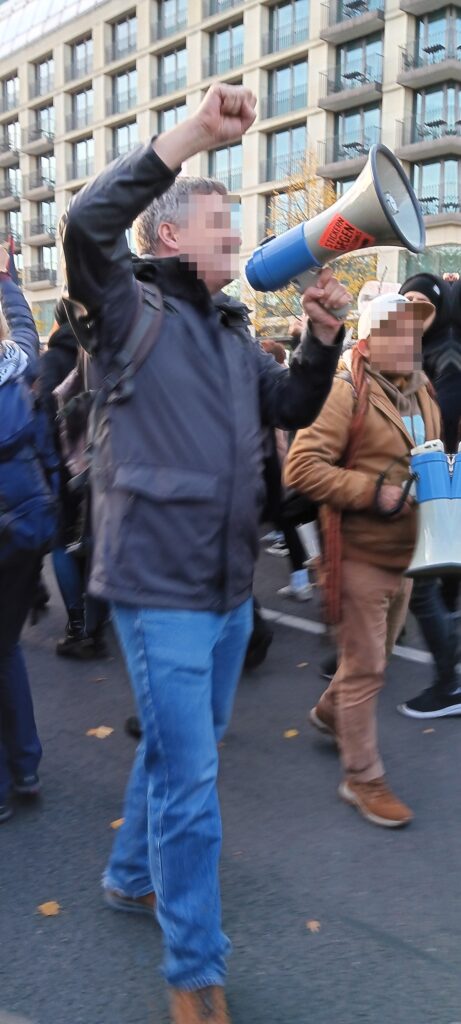
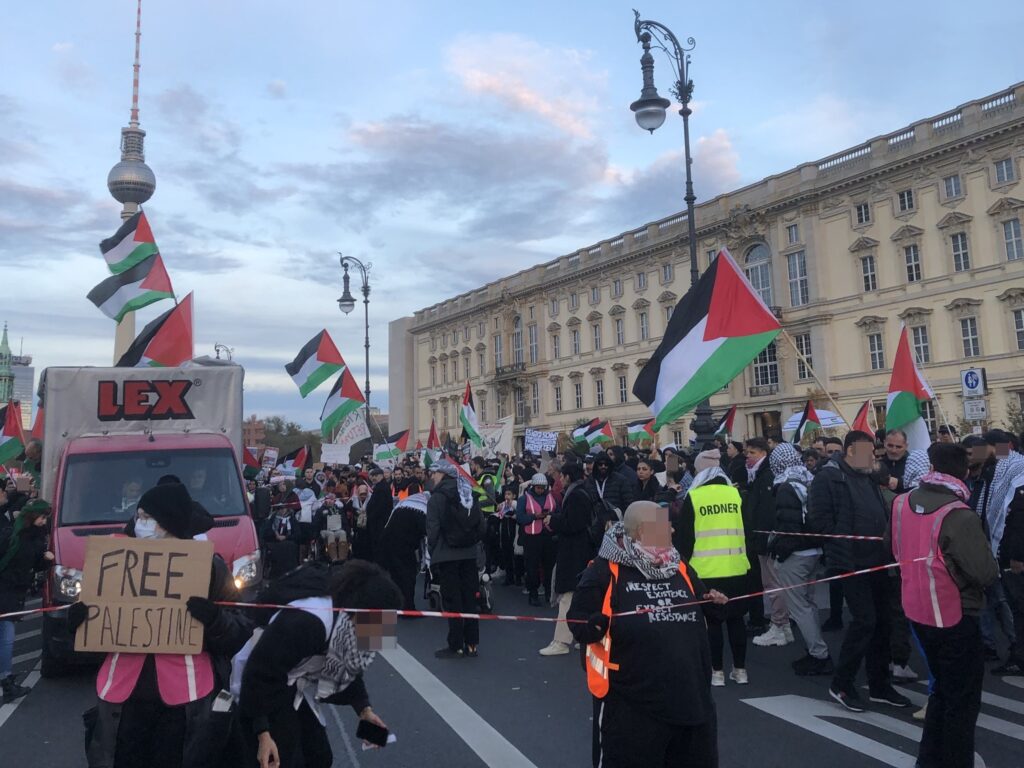
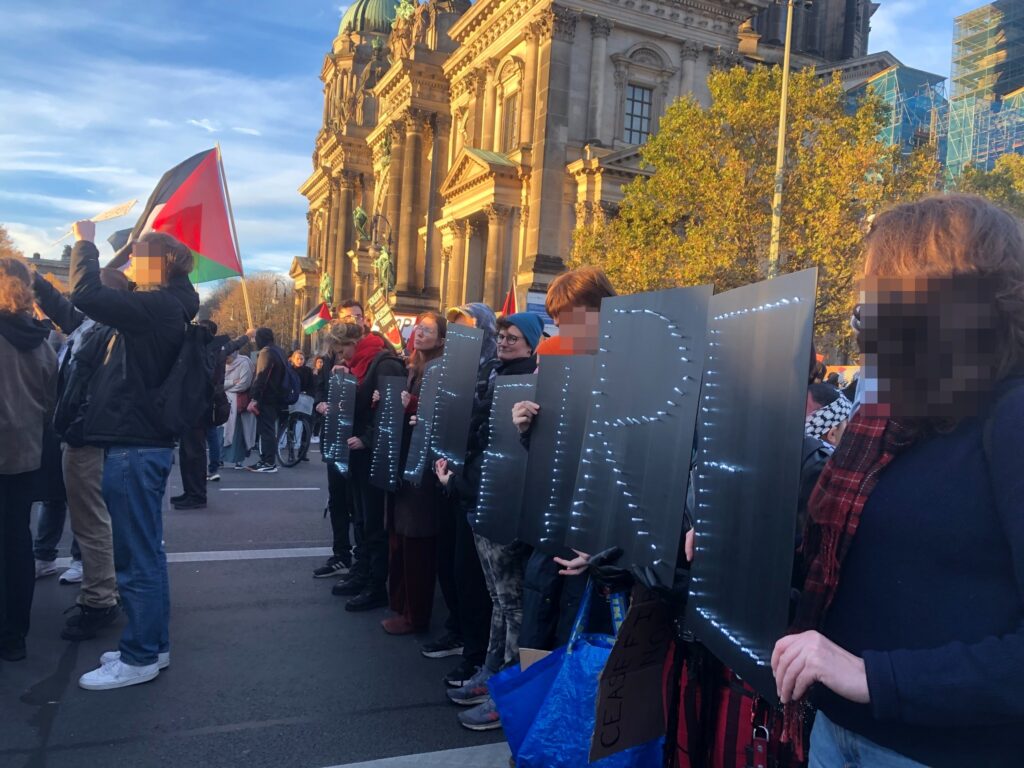
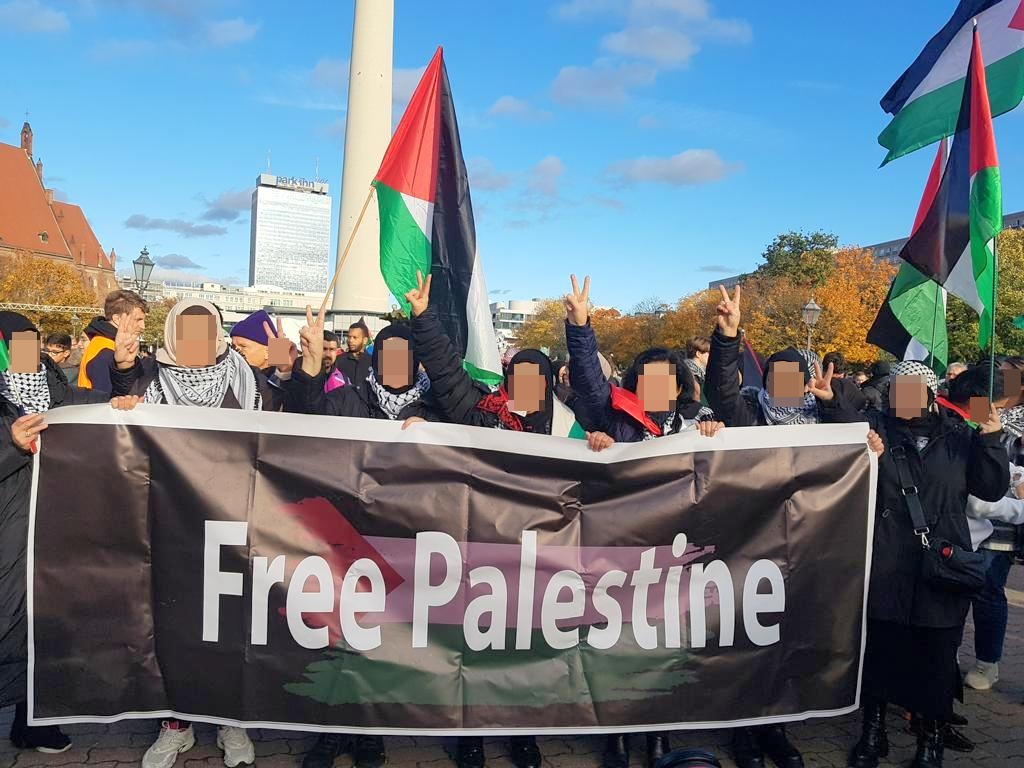
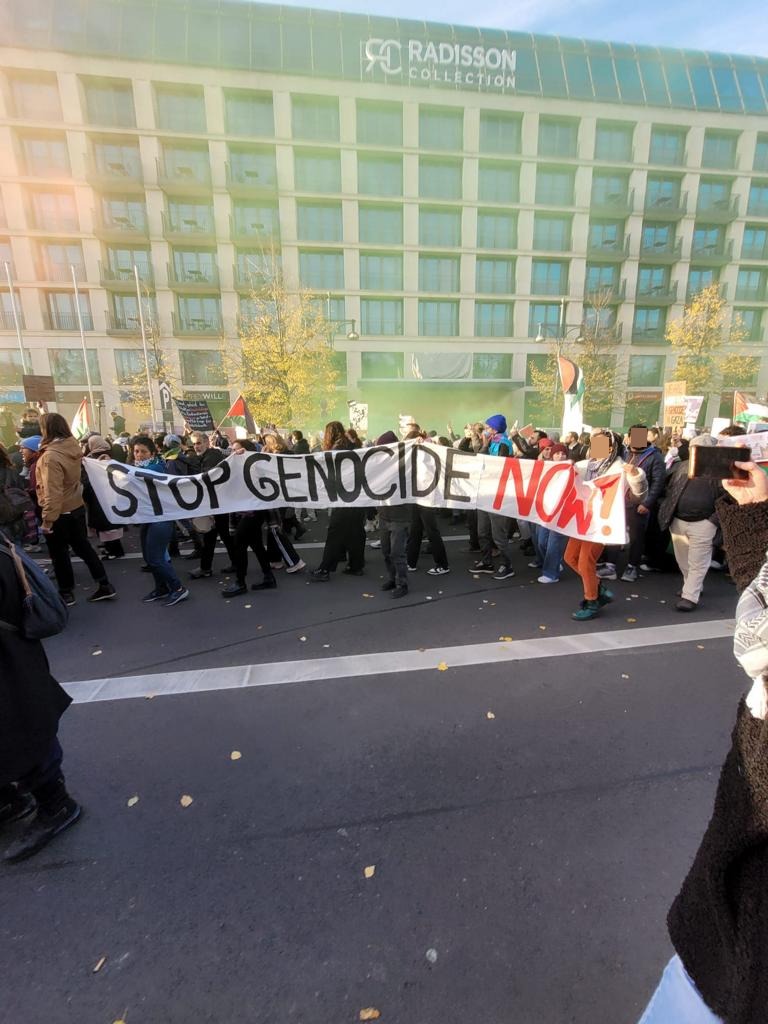
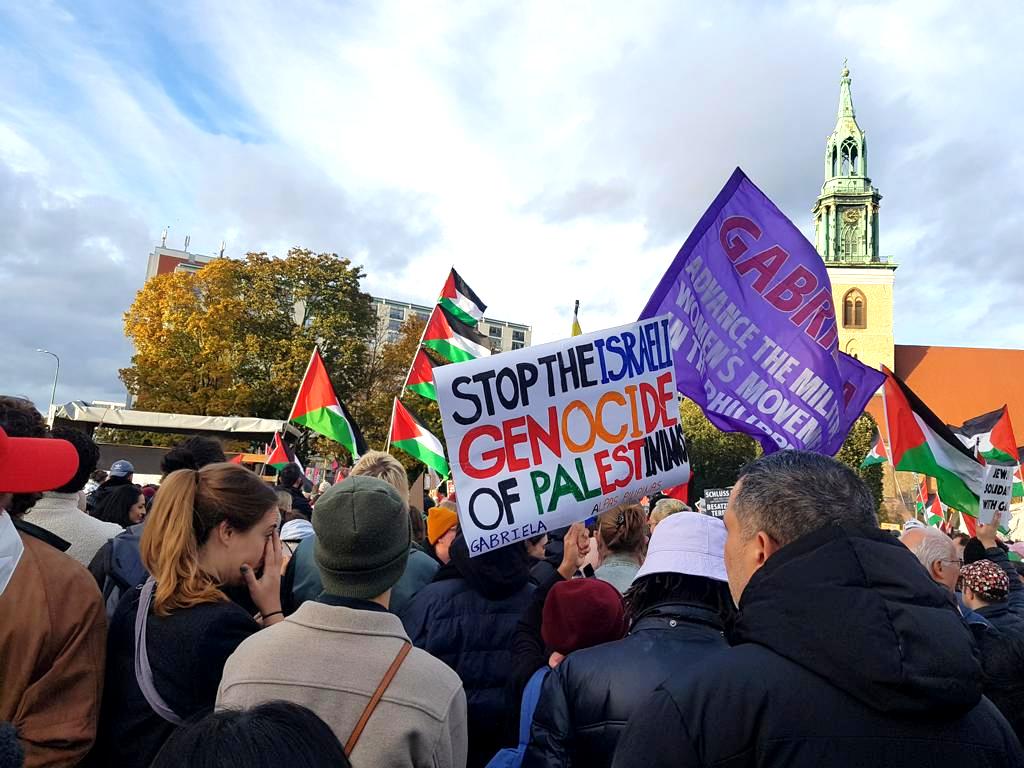
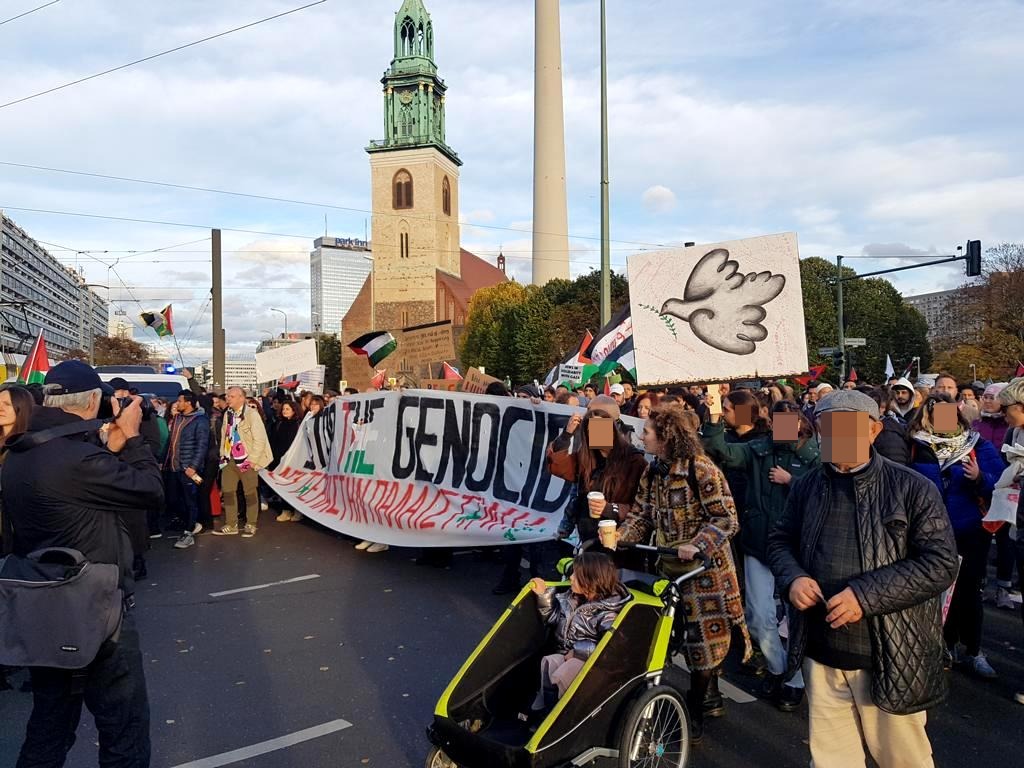
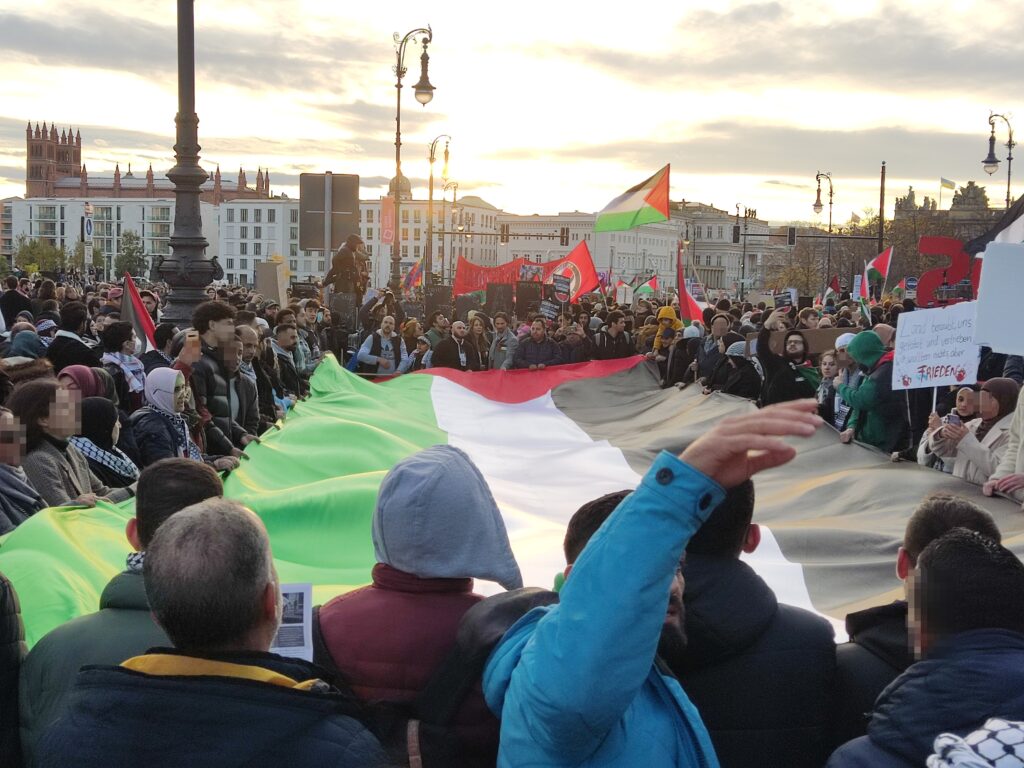
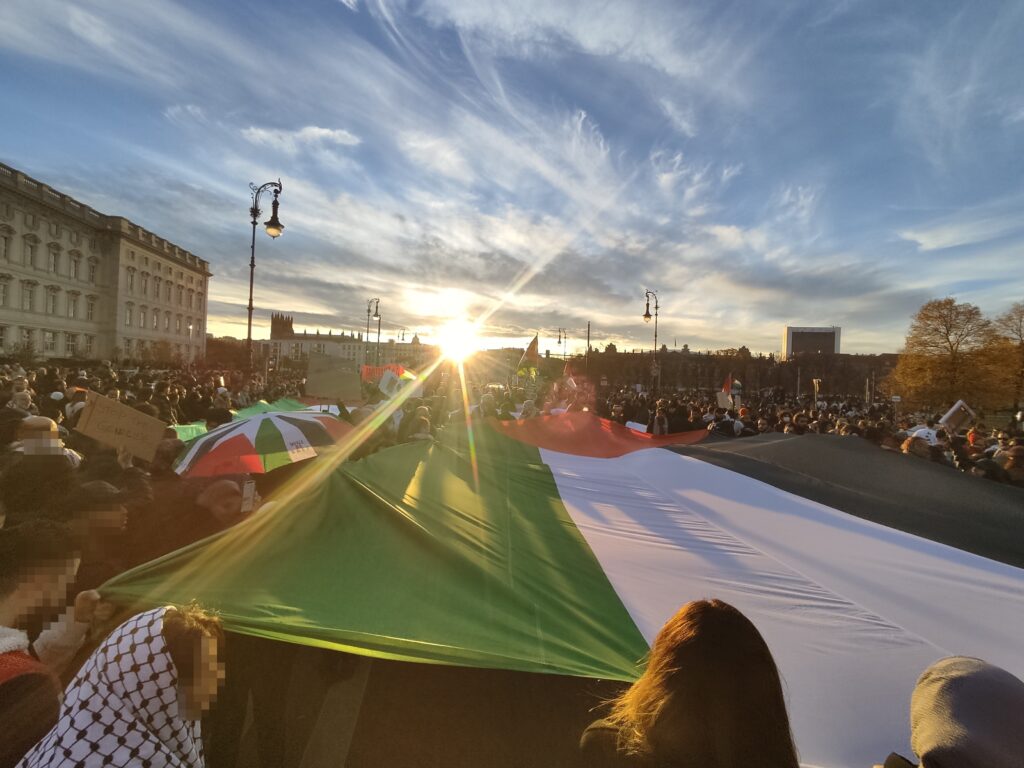
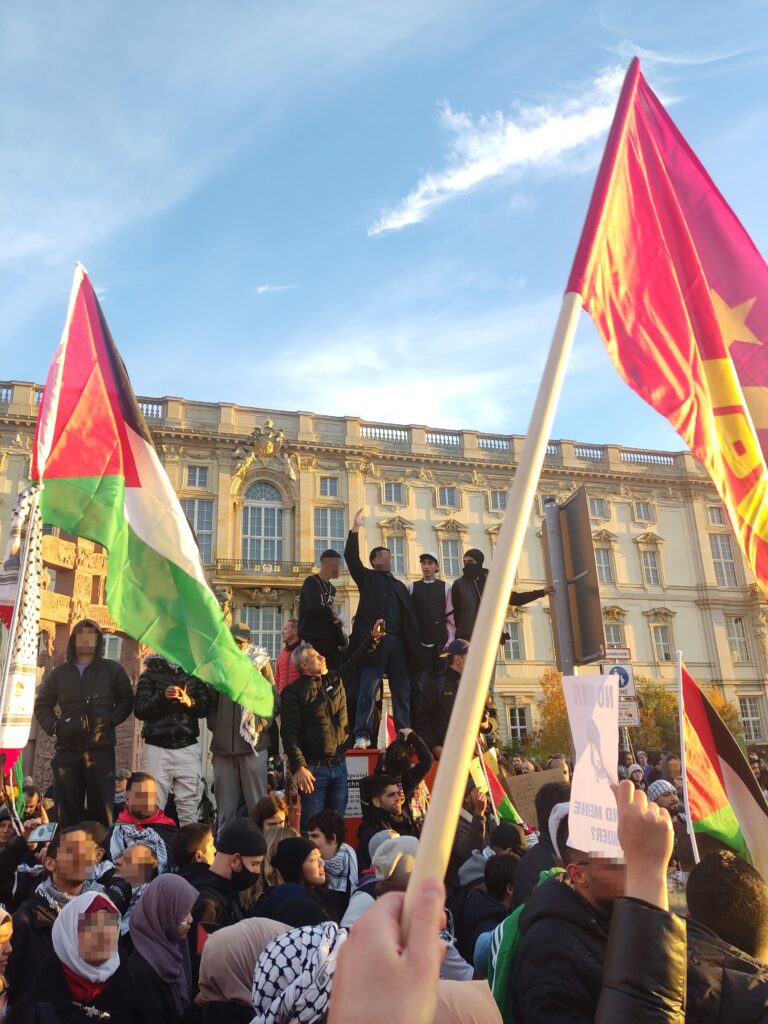
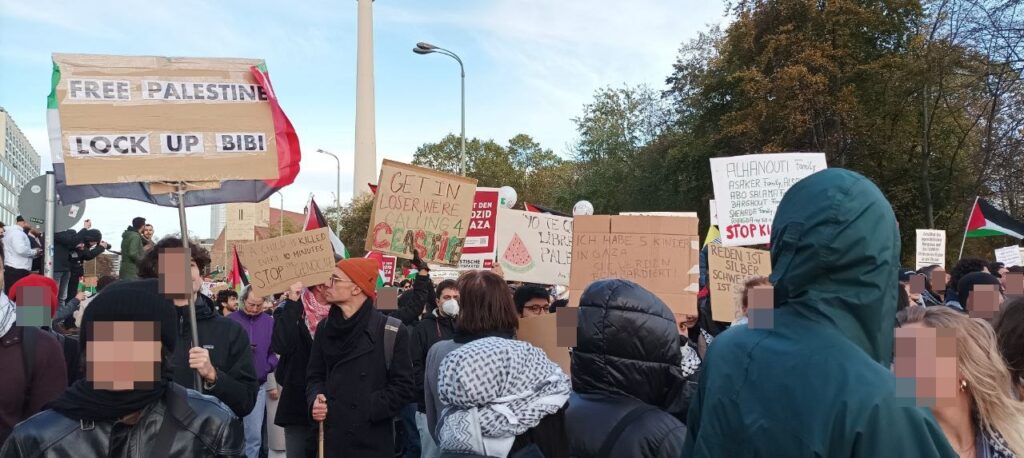
A pro-Palestinian demonstration marched through Berlin-Mitte last Saturday afternoon. More than 8,500 people took part in the protest. The march was “mostly peaceful”, police spokeswoman Anja Dierschke told the rbb.  The demonstration was loud, but the atmosphere was not heated. According to the authorities, around 1,400 police officers were on duty throughout the day in connection with the Middle East conflict. Contrary to the demands of the police union, there was no support from other federal states. Since the 7th of October, there have been repeated rallies in the capital. According to the police, a total of 45 pro-Palestinian demonstrations have been registered, 20 of which have been banned. Source: tagesschau

NEWS FROM GERMANY

No street for Kurt Goldstein in Dortmund?

Anyone who is no longer very young might remember Kurt Julius Goldstein, tirelessly active against Nazis. Goldstein was awarded the Federal Cross of Merit. He was surprised at the time, as a “German, Jew and communist” would not usually be honoured, he said. Now, 16 years after his death, commemorating him is controversial. In Dortmund, his hometown, a tiny new street is planned to be named after him. The naming should have been decided last week, but it was pointed out that Goldstein had “also held high offices in the SED regime in the GDR,” a revelation that apparently led the CDU to reconsider and postpone the decision. Source: nd-aktuell

German voters see antisemitism on the rise

Vice-Chancellor Robert Habeck (Greens) caused a stir when he posted a video with a speech in which he warned of growing antisemitism in the country — among Islamists, right-wing extremists, but also “in parts of the political left.” Habeck stressed that criticism of Israel’s policies is permitted in Germany, as is standing up for the rights of Palestinians. However, “antisemitism should not be tolerated in any form — none whatsoever.” The politician seems to have hit a nerve: the pollster infratest dimap recently conducted a survey among eligible voters and found out that 52% of respondents believe there has been a rise in antisemitism. Source: dw

Warning strikes announced in the state-level public sector

Due to the wage dispute in the public sector, state employees will be called out on warning strikes and protest actions in the coming days and weeks. This was announced by the ver.di trade union last Friday. Schools, university hospitals, the police, and the administration of justice will be affected. For Berlin, Hamburg, and Bremen, unions are demanding a monthly state allowance of 300 euros. The demands thus tie in with the wage agreement reached in April of this year for the federal government and local authorities. The unions demand 10.5% higher income, but with a minimum increase of 500 euros. Source: rbb24

Germany set to tackle refugee issues

Germany is reexamining its refugee policy, and Chancellor Olaf Scholz (SPD) is under pressure to make changes. So far in the current year, more than 200,000 migrants have made their initial applications for asylum. In October, 600 of Germany’s 11,000 municipalities took part in a survey conducted by Mediendienst Integration together with migration researchers from the University of Hildesheim. Among the outcomes, almost 60% of them described the situation as “challenging, but still feasible.” But 40% percent report being “overloaded” or even said they were “in emergency mode.” The lack of accommodation is just one factor, together with a shortage of administrative staff and related infrastructure. Source: dw

Super-rich, please pay!

The SPD wants to create one million new jobs by 2030 with a large-scale climate-neutral reorganisation of the economy. In a key motion adopted on Monday for the upcoming federal party conference, the party’s executive committee proposes a state “Germany Fund” that would activate private capital and create an annual investment volume of 100 billion euros. “We have presented a comprehensive plan for the modernisation of Germany,” said party leader Lars Klingbeil. The SPD wants to reform income tax, inheritance tax, and gift tax, as well as the debt brake. The super-rich should also pay additional taxes. The Left Party criticised the proposal as an election campaign tactic. Source: taz

Germany agrees cuts for energy transition, NGOs fear lower standards

With a wide range of measures to cut red tape and ease licensing procedures, Germany wants to speed up investments in and construction of renewable power installations, among others. Following a meeting with all 16 state premiers, Chancellor Olaf Scholz hailed the agreement on a “Pact for Germany” as a landmark achievement. He also said Germany could no longer afford such a bureaucratic approach if it wanted to get infrastructure projects done faster. However, environmental groups are concerned the compromise could ultimately undermine environmental protection by reducing citizens’ abilities to participate and shrinking the room for legal intervention by conservationists. Source: cleanenergywire

We still Need to Talk

Stop censorship of Culture in Germany. Protest on Friday, 10th November.


07/11/2023


Join us to loudly protest the ongoing erosion of the German public sphere. In recent years, there has been a narrowing of space for cultural events in Germany. It has become increasingly hard for certain voices to be heard, for certain events to take place. Symposia, public talks and academic events have been cancelled. Concerts and performances have been shut down. Theatre pieces have been disallowed. Book prizes have remained ungiven. Invitations to artists, cultural workers and intellectuals have been withdrawn.

Our cultural events are frequently cancelled because their content is ‘too sensitive,’ because ‘it is not the right time’ for us to come together to talk, to debate, to share ideas, to perform, to write, to sing, to exhibit, to protest, to mourn. Our events are cancelled ‘for the sake of our own safety,’ we are often told. All the while, neo-Nazis and ethnonationalists continue to march the streets of Germany under police protection, and support for the AfD continues to grow. How is it possible that our voices—as cultural workers—are deemed more dangerous to German society than those of white supremacists and far right movements?

Silencing voices that are inconvenient or uncomfortable is a feature of authoritarian regimes, as is the stigmatising and side-lining of progressive intellectuals and artists. A healthy democracy must allow for the inclusion and participation of a broad range of voices, including voices that are critical of mainstream narratives.

This protest will be led by a coalition of leftist Jews and/or Israelis who work in the realm of culture. We invite allies of all descriptions to join us in protest. We are tired of being silenced in the country that murdered our ancestors. We refuse to remain silent as peaceful Jewish and Palestinian voices are stigmatised and censored.

Please support us by posting your own version of this post. Use this caption. Post yourself holding up the sign in the visual above (or just the slogan if you prefer). Make your own version or download our sign here.

PROTEST DETAILS:

Berlin, Friday 10 November, 17h00-19h00

Exact location to be confirmed soon. Watch this space for more info. Please leave all national flags at home. Our protest signs will include:

  • WE STILL NEED TO TALK
  • NEVER AGAIN
  • NOT IN MY NAME
  • RELEASE ALL HOSTAGES
  • CEASEFIRE NOW

Rooted: Embroidering Our Existence, Stitch By Stitch

As Palestinians face a renewed attempt at their erasure, their tradition of embroidery becomes another act of self-preservation.


06/11/2023

We are being erased off of the face of the map. This was the first thought that crossed my mind when the renewed and ongoing genocide carried out by the Zionist entity against our people in occupied Palestine started on October 7th. Anyone following our anti-colonial struggle for more than 100 years, realises that erasure of the Palestinian being, identity and existence in any meaning that this term encompasses, has been the core intention of the colonial Zionist “state” since its establishment 75 years ago. At the time, although they pushed close to one million Palestinians off of their native lands, and mass murdered thousands who are unaccounted for, they did not manage to annihilate us. What is happening today is a fast tracked attempt to do just that and finish the job they started back in 1948.

Springing from Canaanite times, embroidery is rooted in us as descendants. Its motifs are not just pretty designs. They reflect our deeply instilled connection to the land, its trees, herbs, sea, birds and animals.

As a Palestinian born and bred in exile, the homeland for me existed in books, stories by family elders and on the TV screen. It existed in paintings, photographs and other art works. It also existed in the embroidery that my mother, aunts and grandmothers from both sides of my family spent time creating. As I was growing up, Palestinian embroidery, specifically the falahi cross-stitch was present everywhere, almost in every minute of the day. It was present on the walls, sofas, clothes and even bookmarks. I touched it, admired it and wore it. Eventually, at around the age of ten years, I extended a hand, took a needle, a piece of fabric, thread and started stitching.

When one reads and examines the evolution of Palestinian embroidery, it becomes apparent that its ancient 4000 year existence is in fact resistance. Springing from Canaanite times, embroidery is rooted in us as descendants. Its motifs are not just pretty designs. They reflect our deeply instilled connection to the land, its trees, herbs, sea, birds and animals. They reflect our politics through rockets, barbed wire and officers’ belts. They reflect our rich social fabric through symbols of brides, the elderly and the mother-in-law’s classic clash with her son’s wife.

In short, Palestinian embroidery is a reflection of you, the Palestinian.

I remind myself of the maternal figures in my life and their relentless patience while moving the needle steadily and rhythmically through the fabric. They stitched the seeds of love for Palestine in my heart.

In the past two years, as I moulded myself into a visual artist, it was not an urge that I felt but a nagging internal voice telling me that whatever longterm project I end up working on must incorporate the infamous Palestinian cross-stitch. And indeed, I am applying it in my work. While I researched how other peers in this art form mixed different forms of needle work in the production of imagery, I found beauty, colour and creativity. However, apart from Egyptian photographer Rehab Eldalil, who’s works beautifully illustrated the persistent culture of the Sinai communities, many of whom are originally Palestinian, I did not find anyone else who employed embroidery in the photographic practice to convey deeper meaning beyond aesthetics. I saw that, through her body of work titled “The Longing Of the Stranger Whose Path Has Been Broken”, Rehab nurtured her own Palestinian roots. This is exactly what unites us, as a community, in spite of being shattered across the world map: our roots. Once a Palestinian, half or quarter a Palestinian, always a Palestinian.

As I write this, I struggle to continue. I pause for long minutes to check my phone and learn how many of my people have been buried under the heaps of heavy rubble created by the cowardly Zionist bombs. I check how many of my people have received a bullet, were wrapped in a white sheet, were handcuffed and blindfolded. I read the names, hear the cries and count the numbers. My heart is heavy, my brain is foggy and my fingers are frozen. Seeing the homeland for the first time ever only two months ago, rendered what I have lost in Palestine very tangible. It is not abstract anymore. I finally visited, touched and breathed in a place on this planet that smells like me. With every waking hour, with every breath I take, I ask myself: “how can I go on without a Palestine in my life?”

Then I remind myself of our resistance, our steadfastness and stubbornness. I remind myself of our freedom fighters on every inch of our land, those young humans who deserve a full life and who have chosen to carry arms and push our existence forward beyond the siege, the tank and the wall. I remind myself of all our women who have lost beloved fathers, brothers, lovers and children. Those are the same women who ululate at funerals, get up the next day and carry what remains of their families on their shoulders to equally advance our struggle ahead. I remind myself of the maternal figures in my life and their relentless patience while moving the needle steadily and rhythmically through the fabric. They stitched the seeds of love for Palestine in my heart.

My love for Palestine is a choice I make every day, against any odds. I express it through all available means, including the needle and the thread. This is why I will now continue to teach Palestinian embroidery to other fellow Palestinians. Together, we stitch our roots, resist erasure and insist to exist.

Embroidery workshop with Rasha Al Jundi

Sunday, 12th November, 12.00 – 3pm.

Please register via this Google Form

There will be a small fee of €5 to cover material costs. Any other donations will go 100% to Gaza. Open to those of Palestinian or Arab roots in the city.

Rasha Al Jundi (1984) is a Palestinian visual storyteller based between Nairobi, Kenya and Berlin, Germany. Her ongoing project that combines portraits and Palestinian embroidery titled “When the Grapes were Sour” can be followed on Instagram via @embroidered_exile

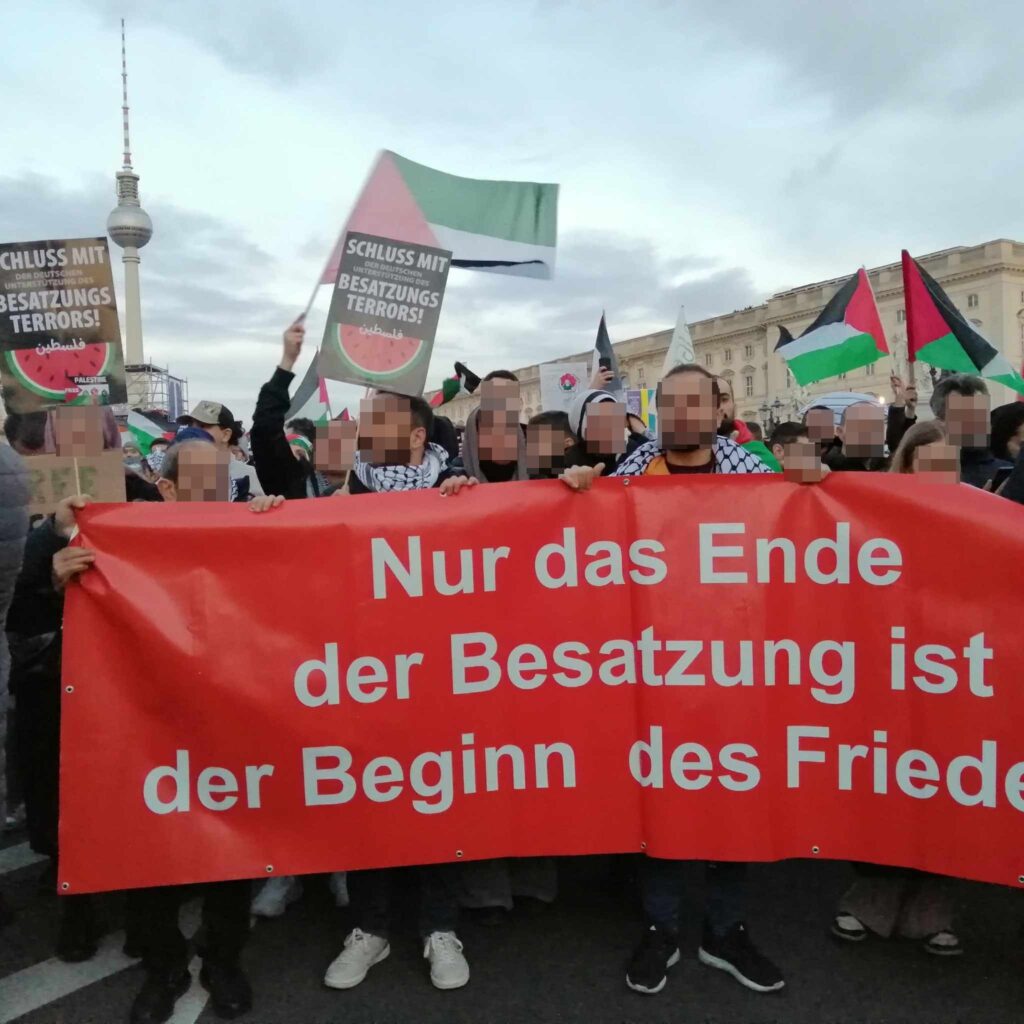
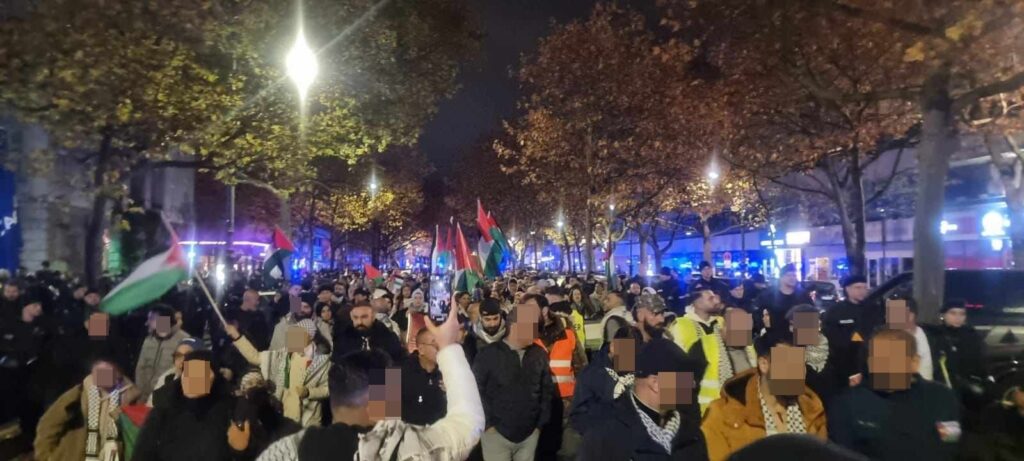
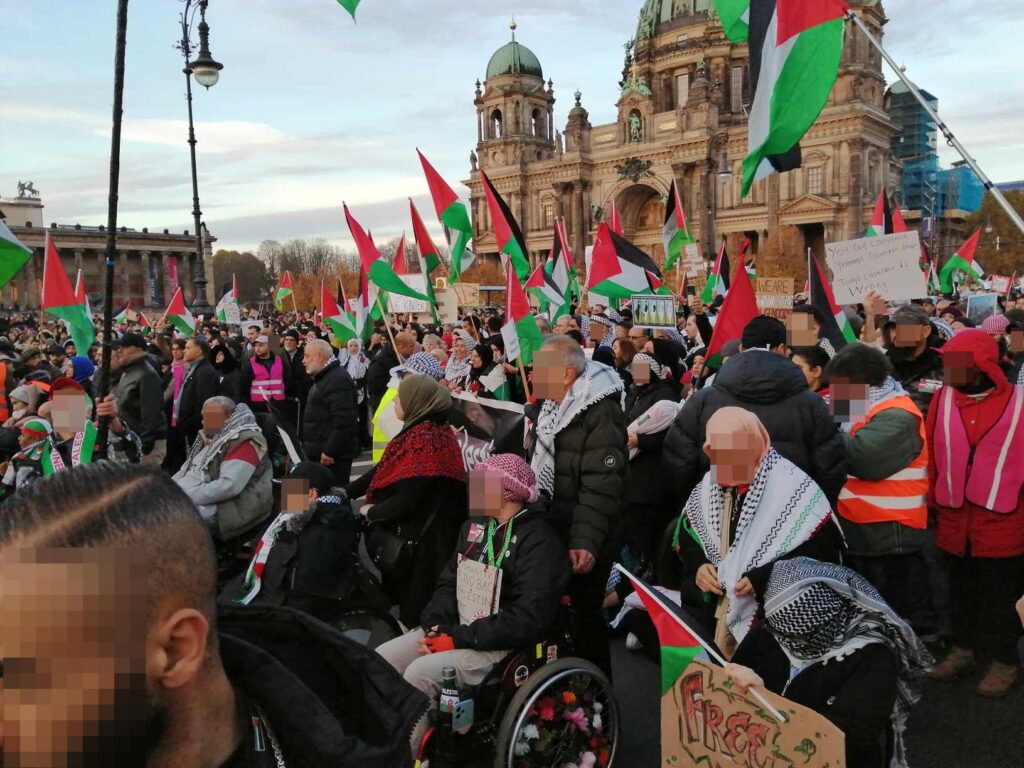
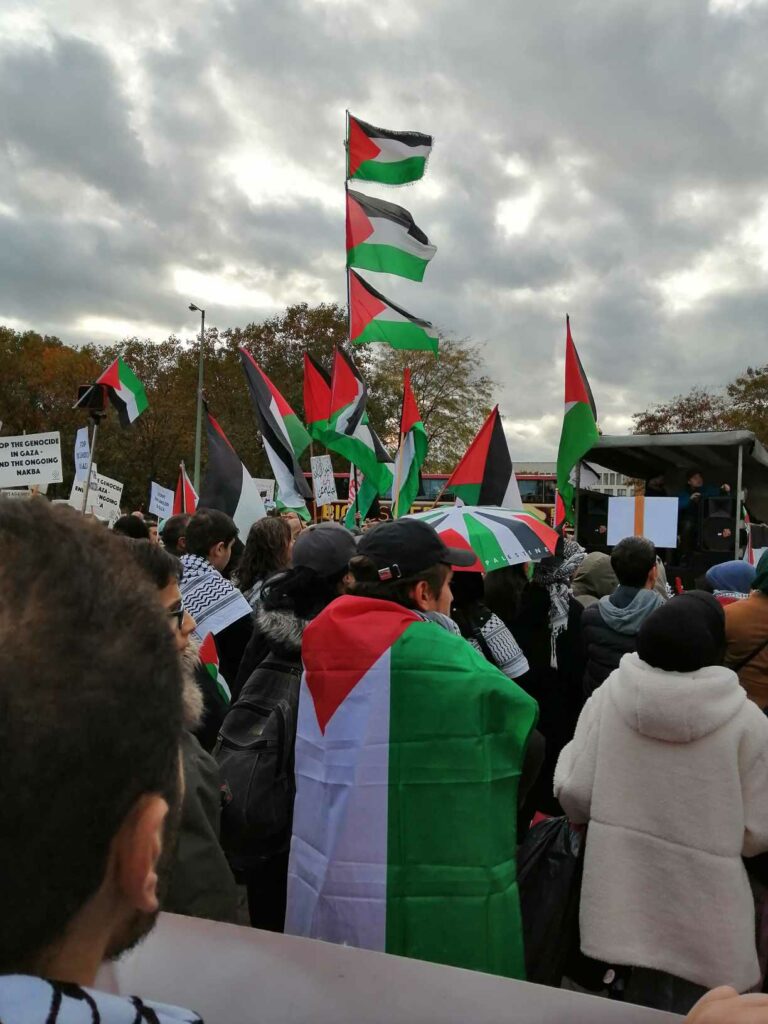
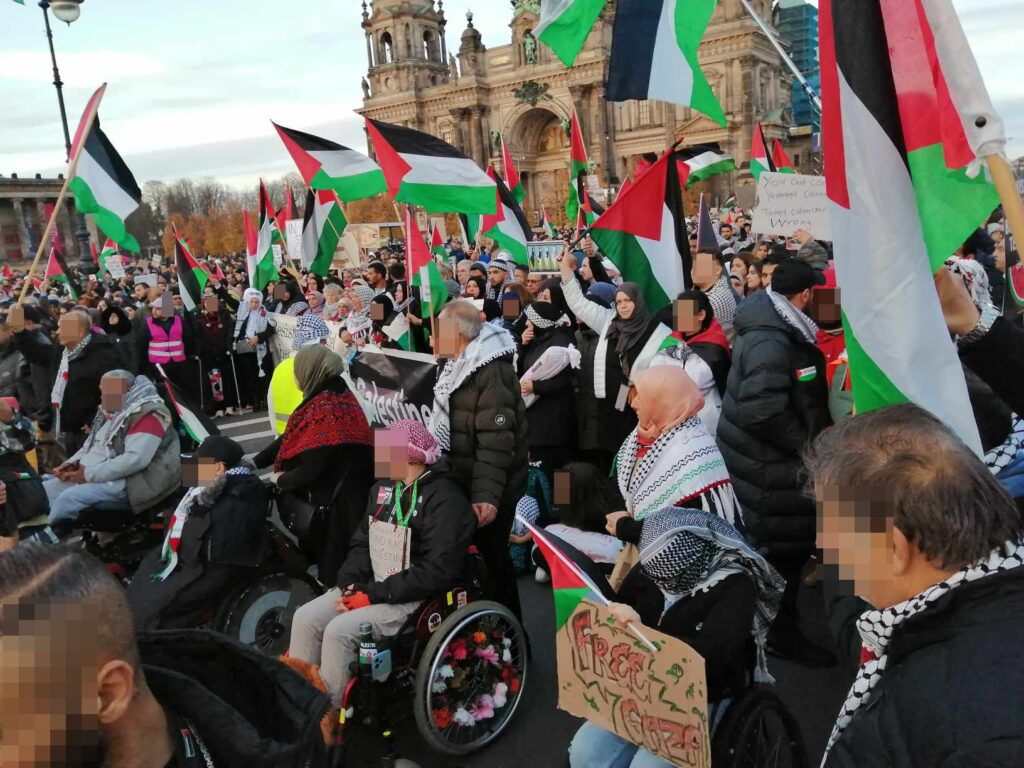
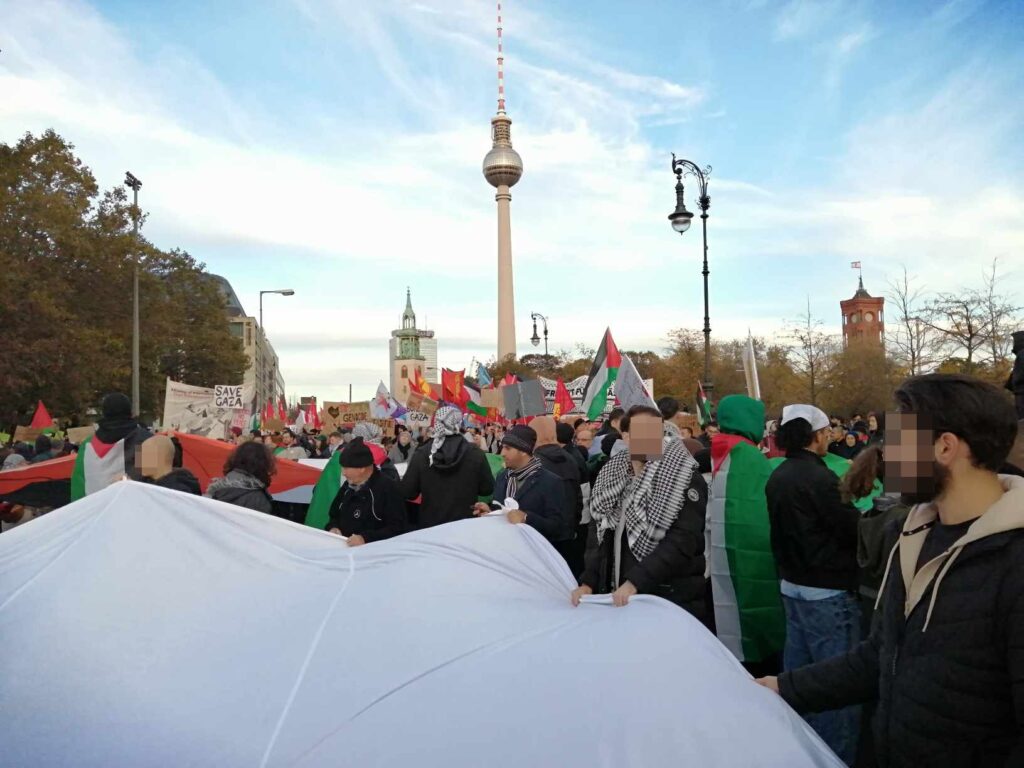
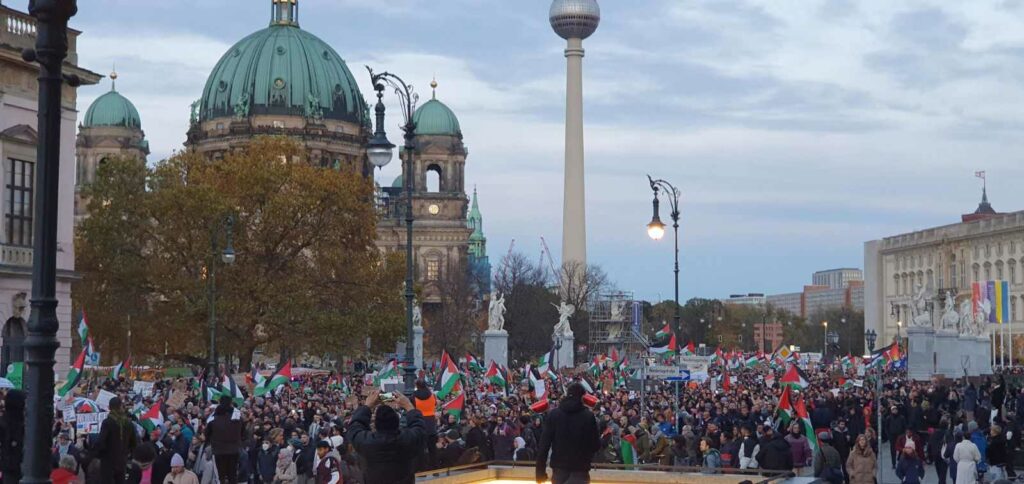
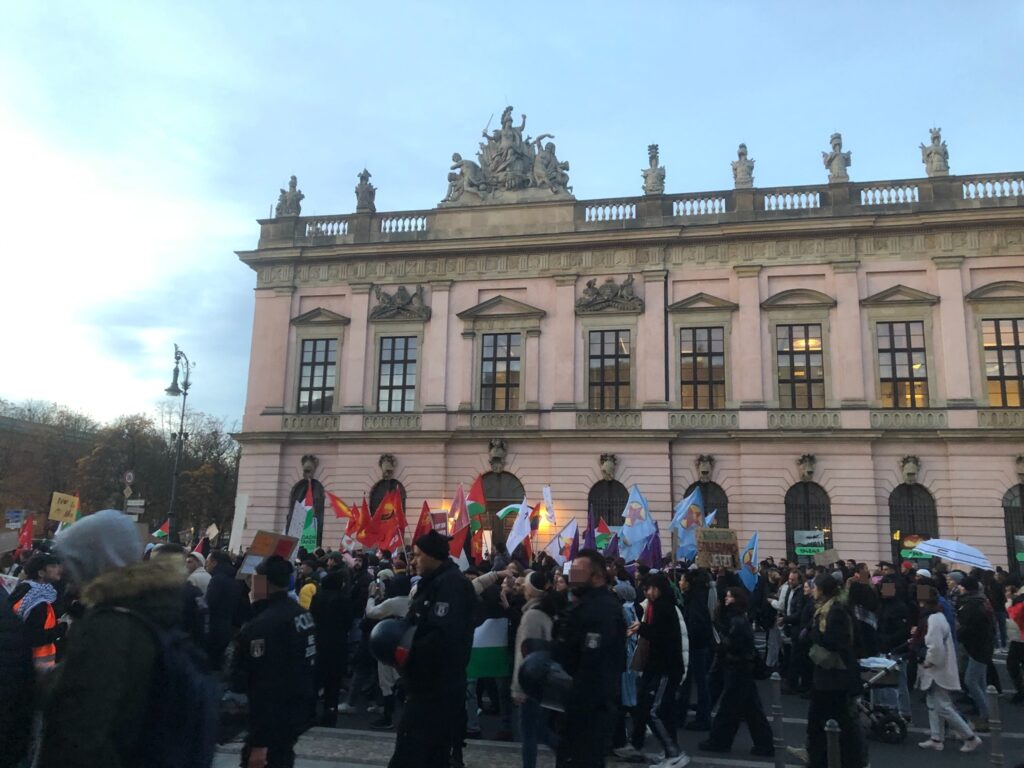
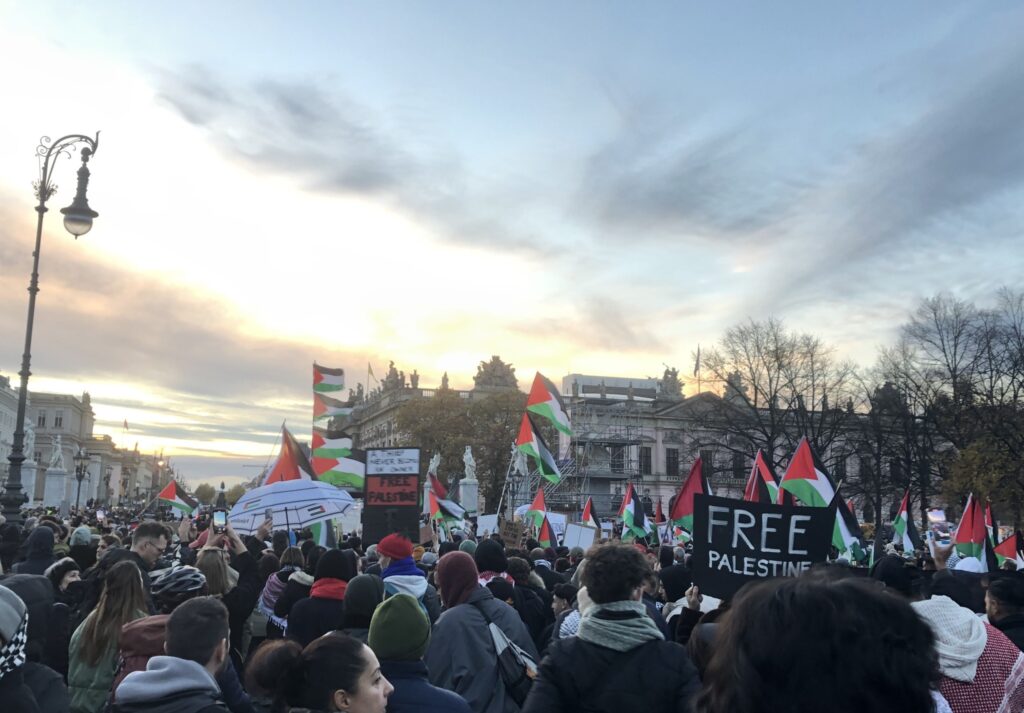
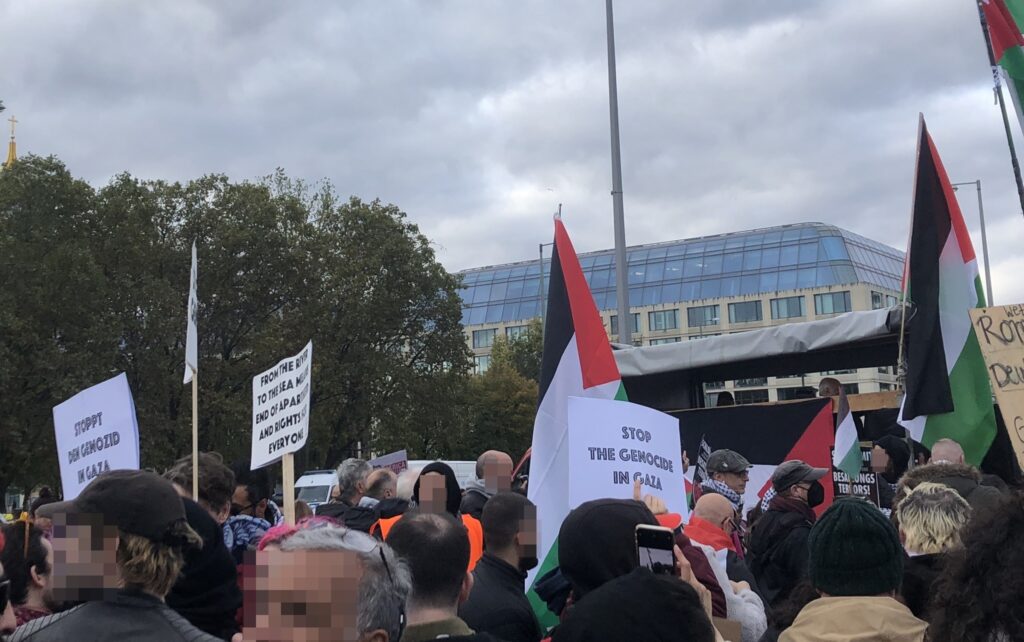
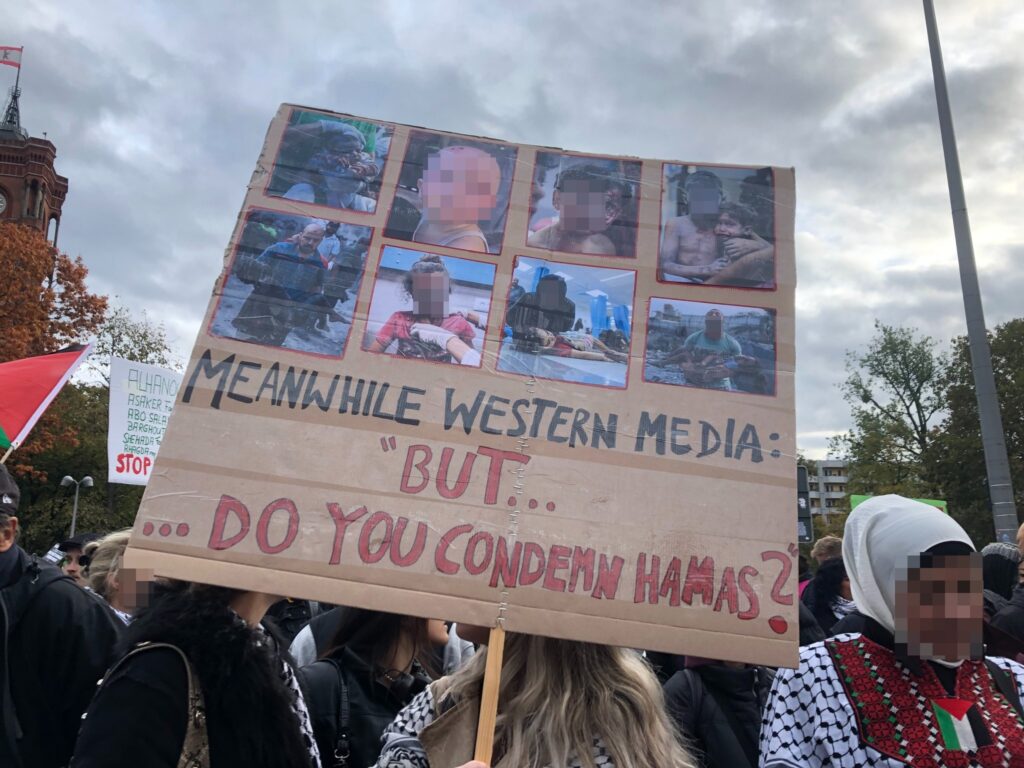
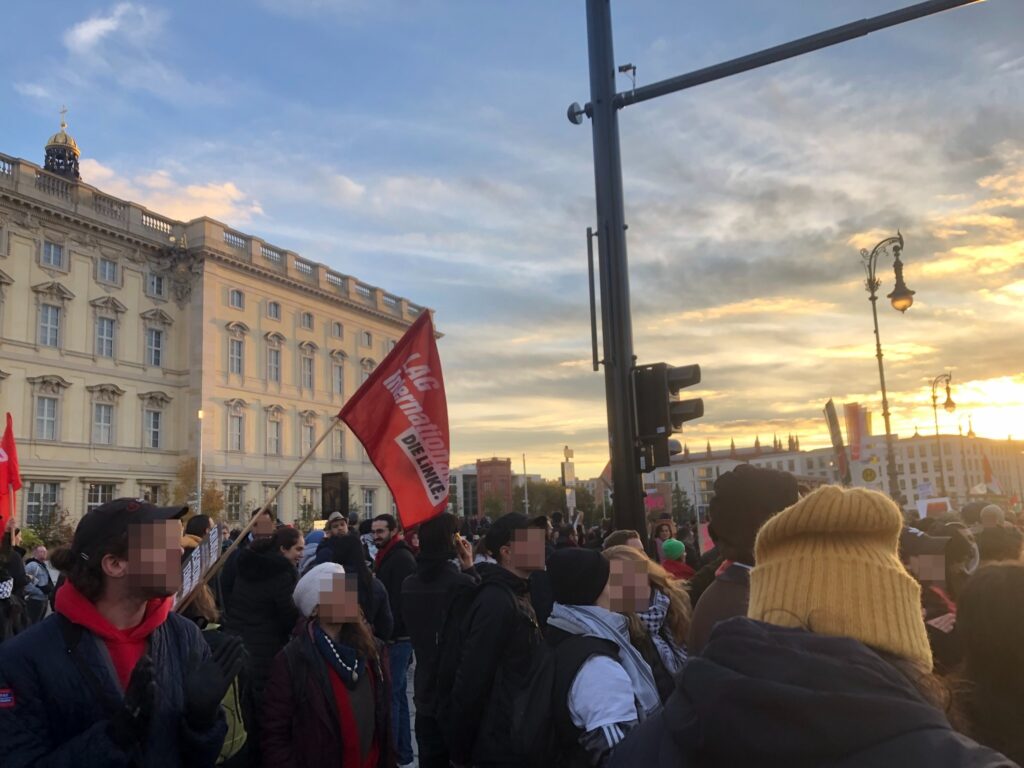
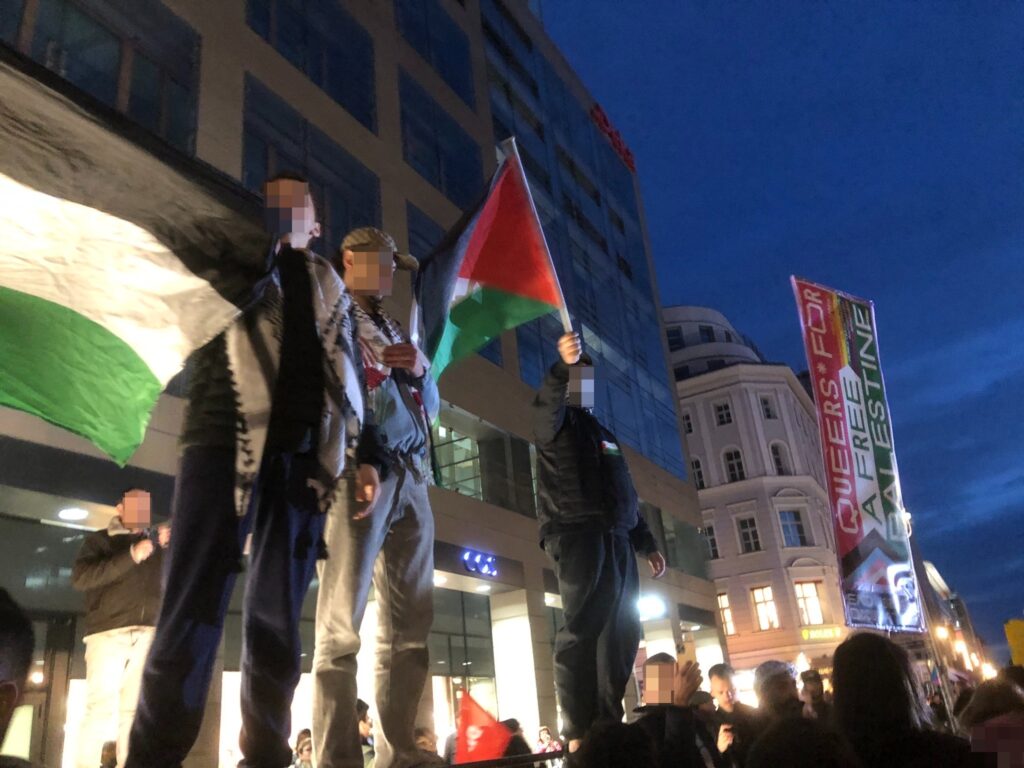
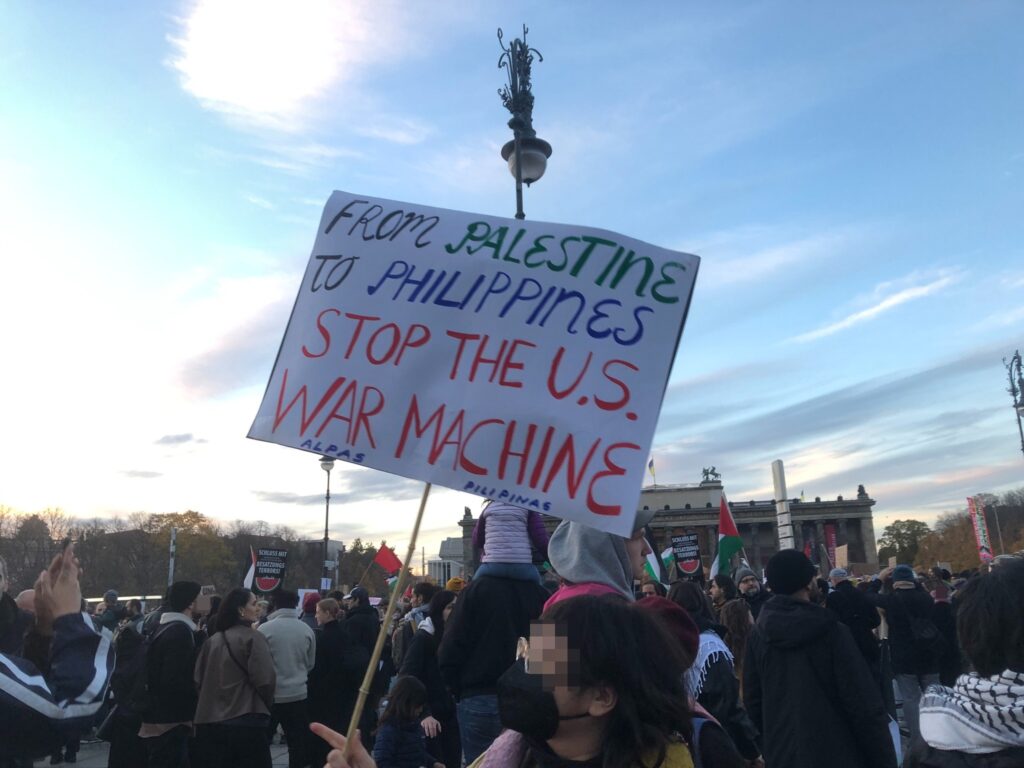
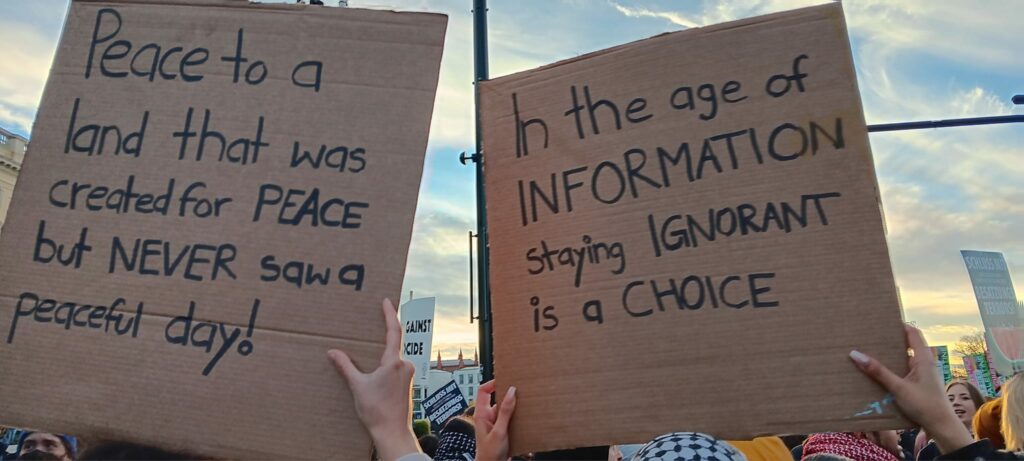
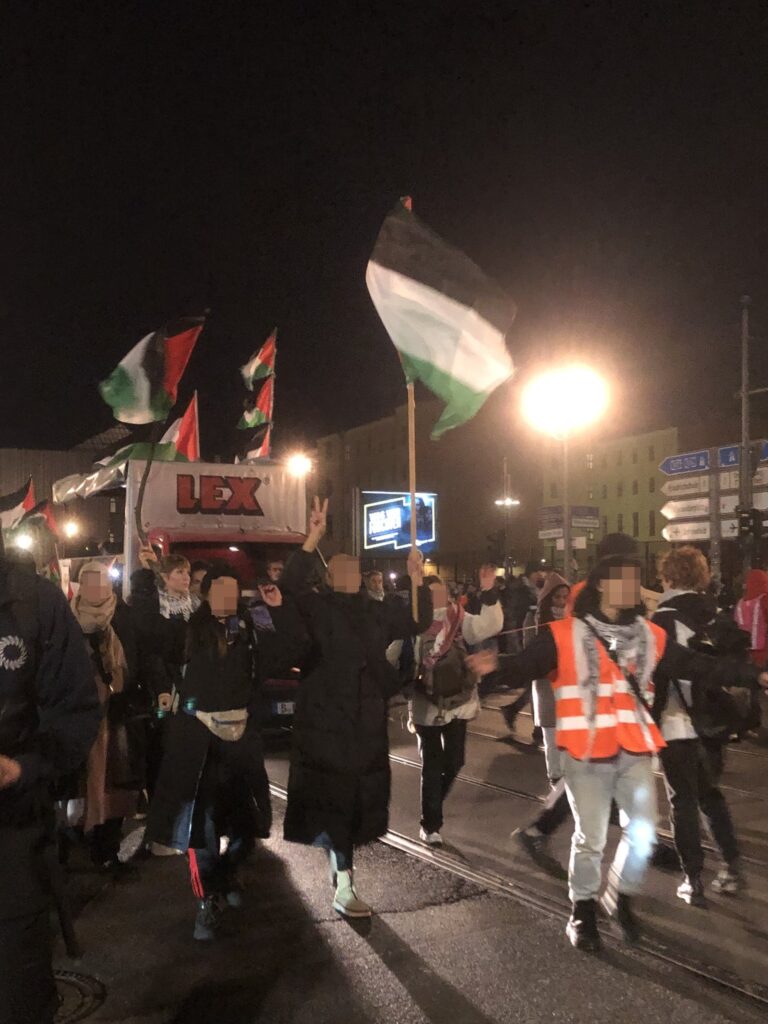
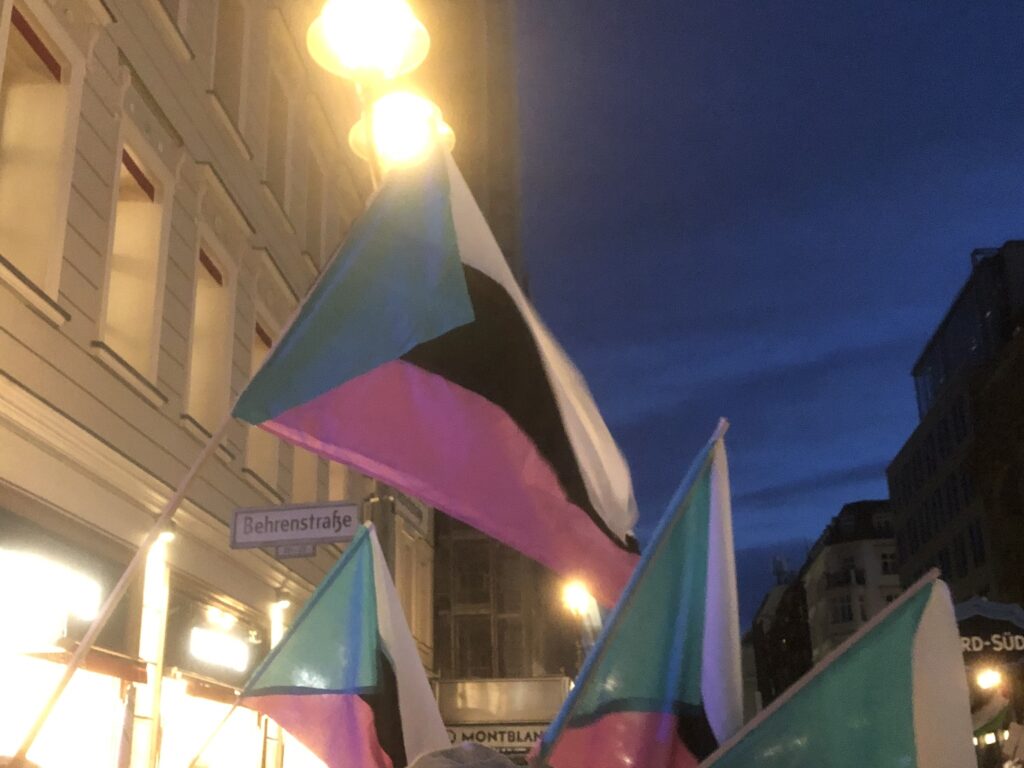
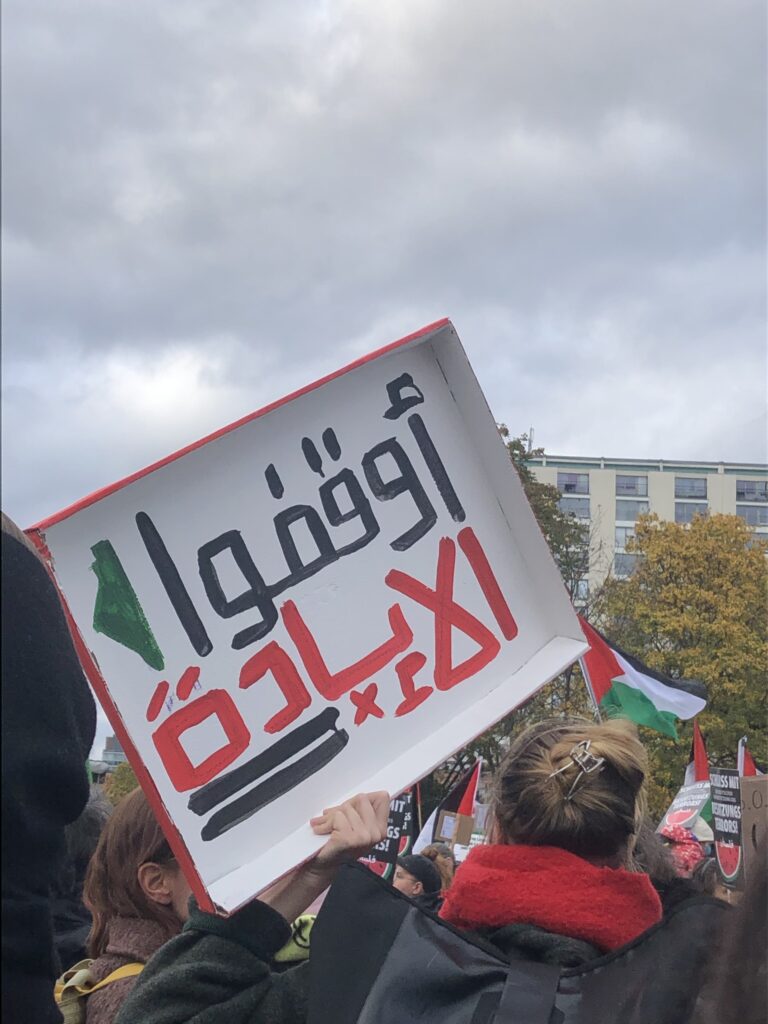
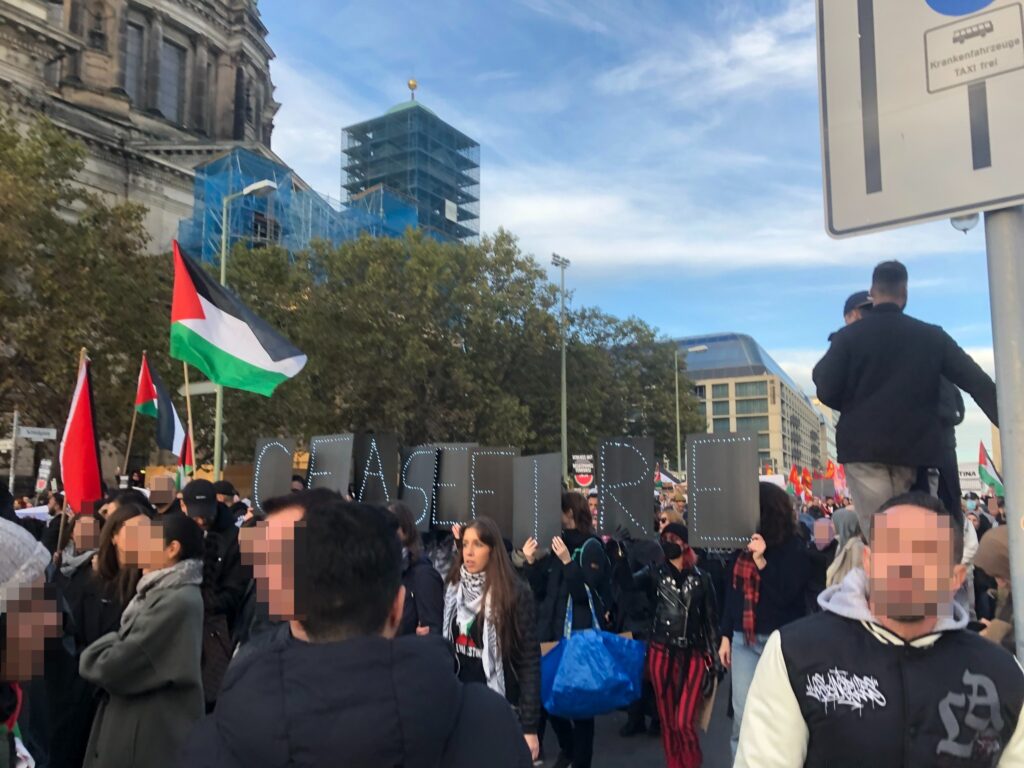
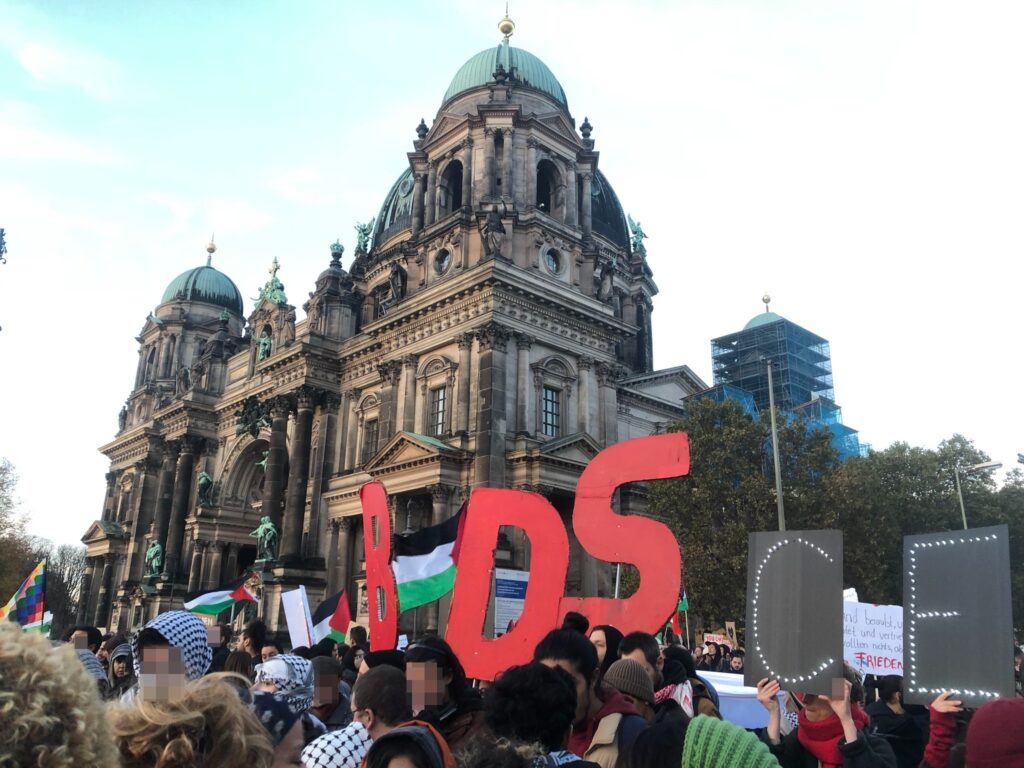
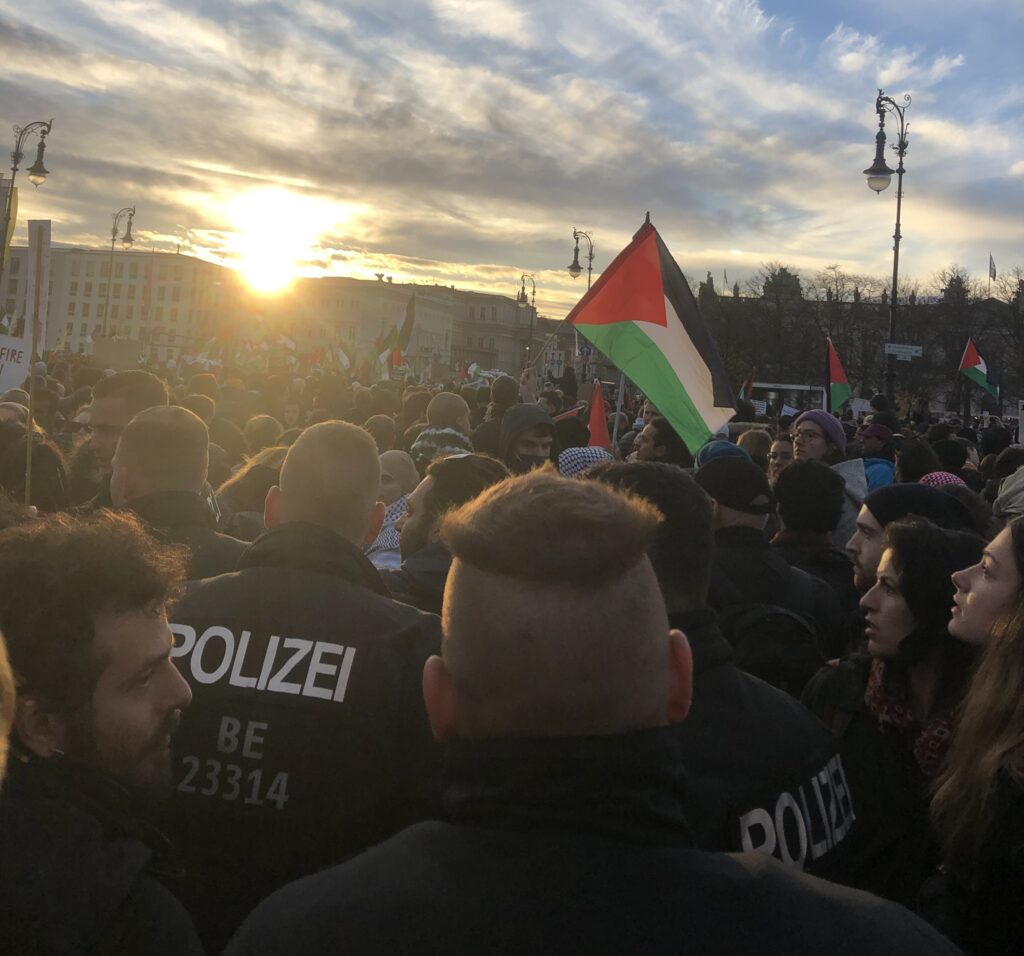
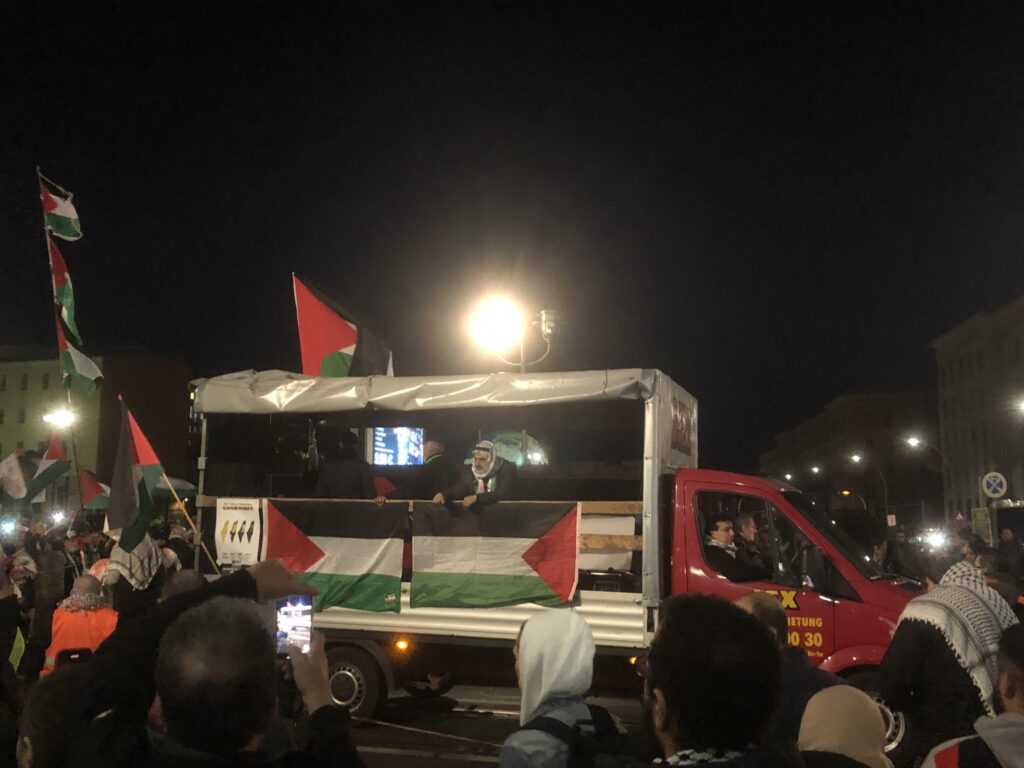
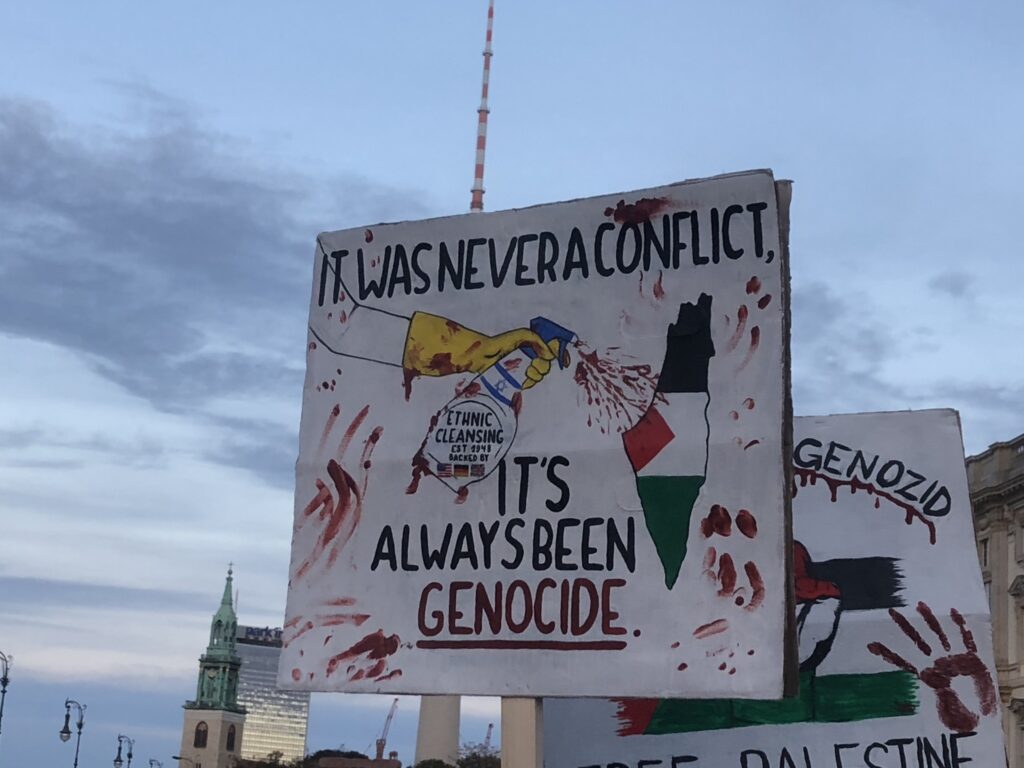
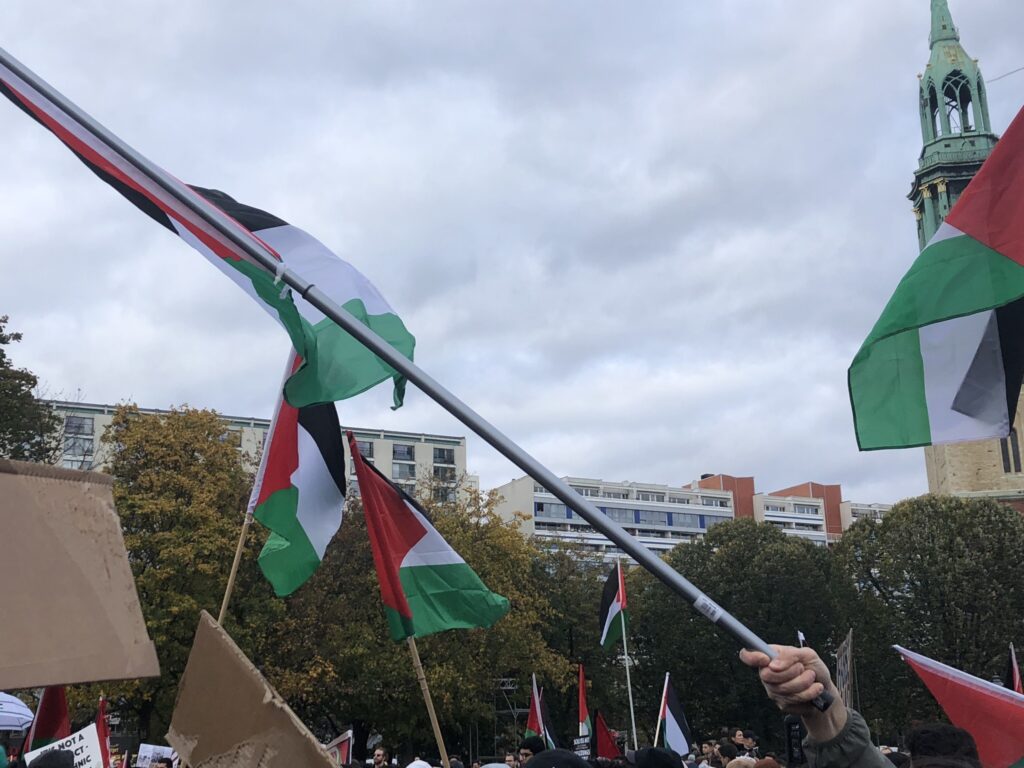
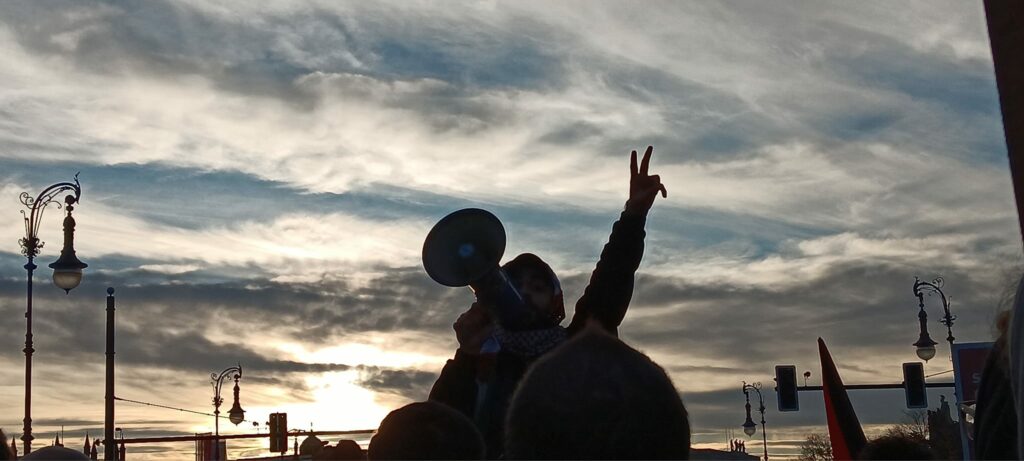
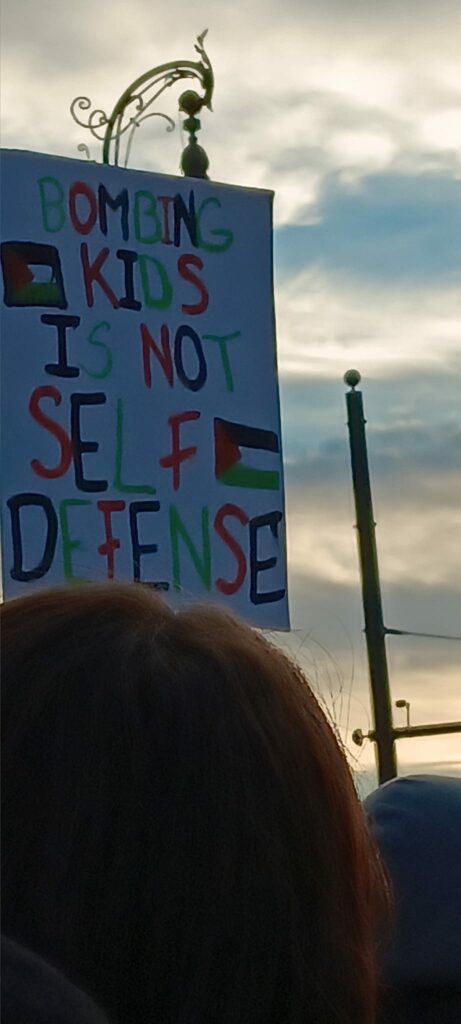
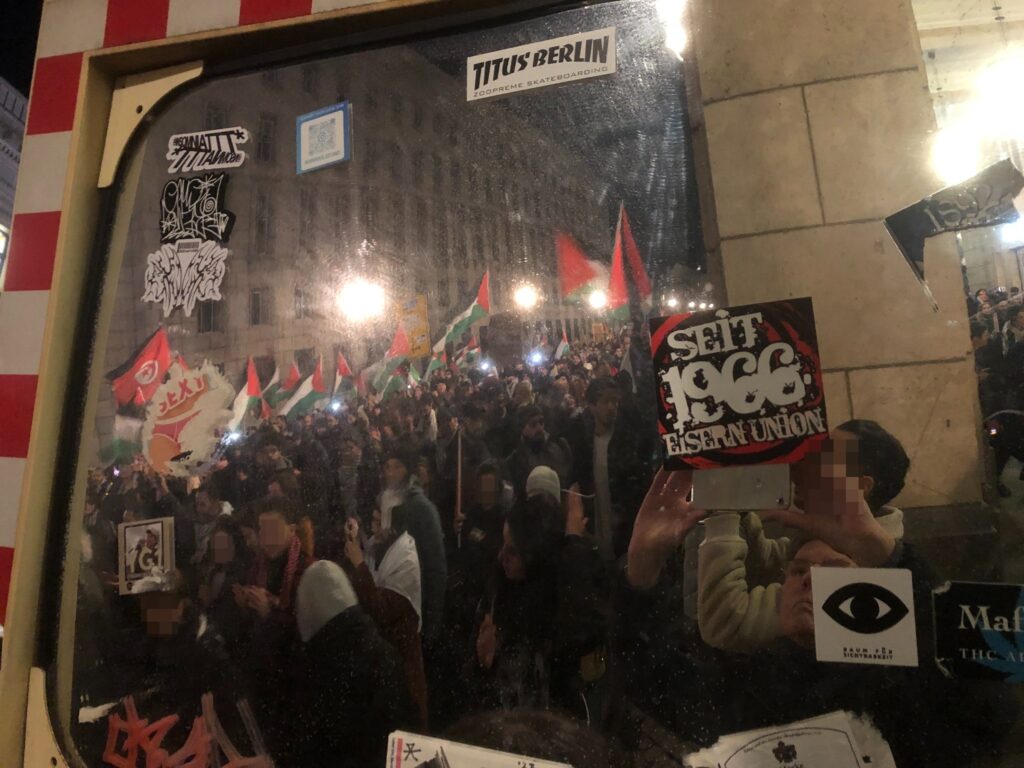
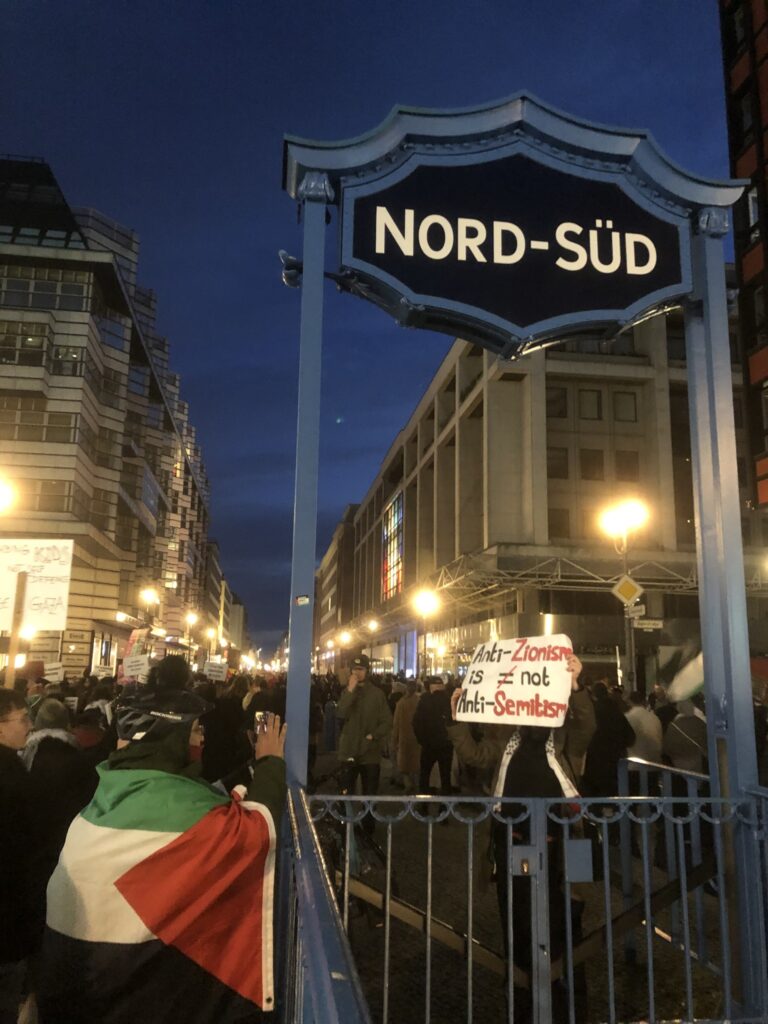
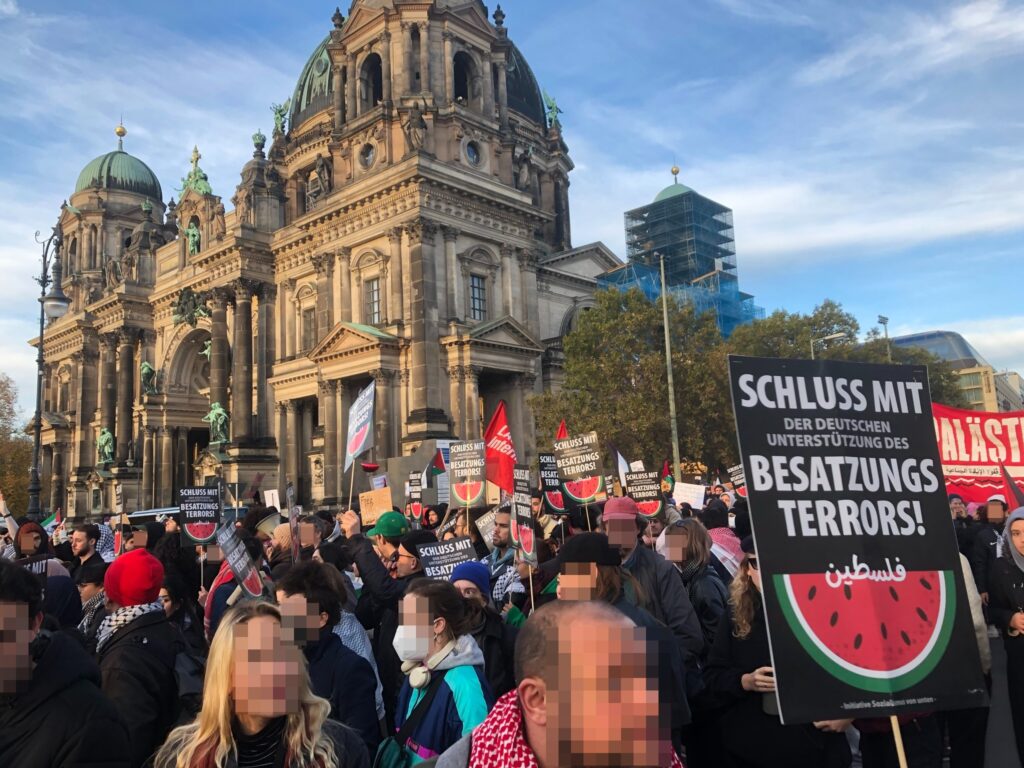
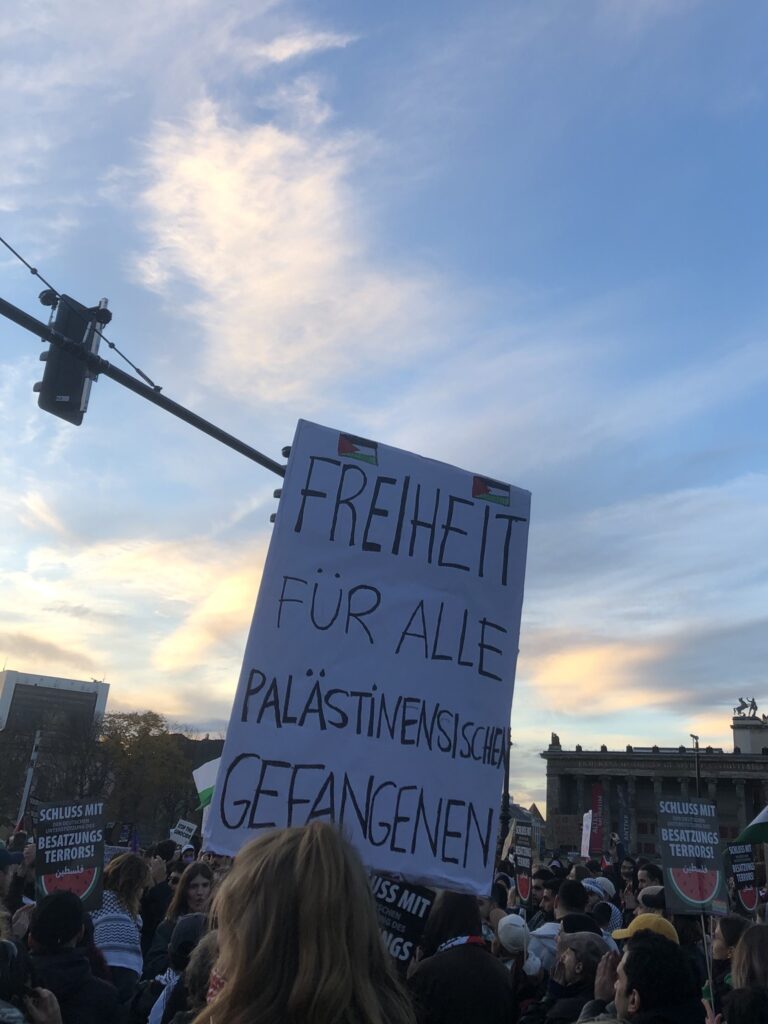
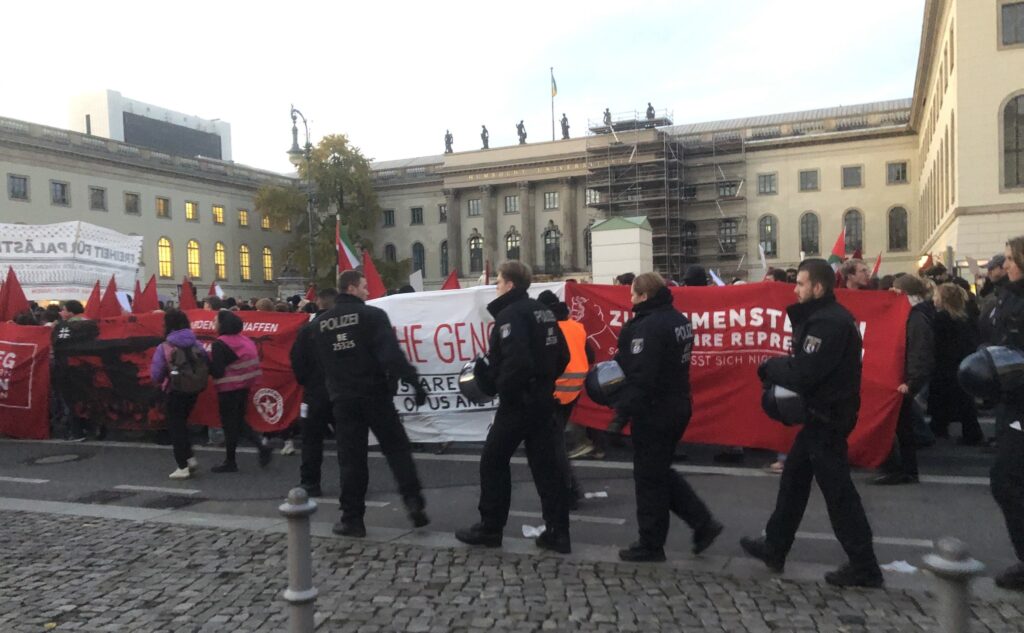
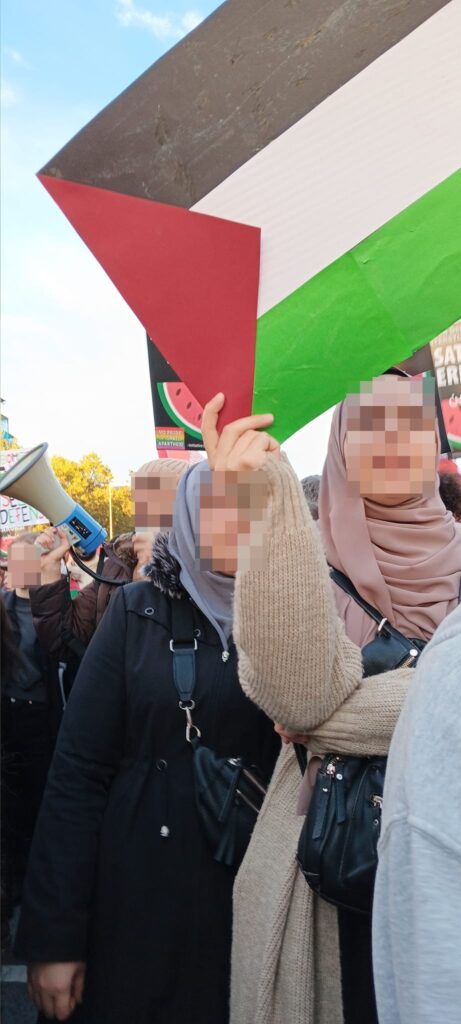
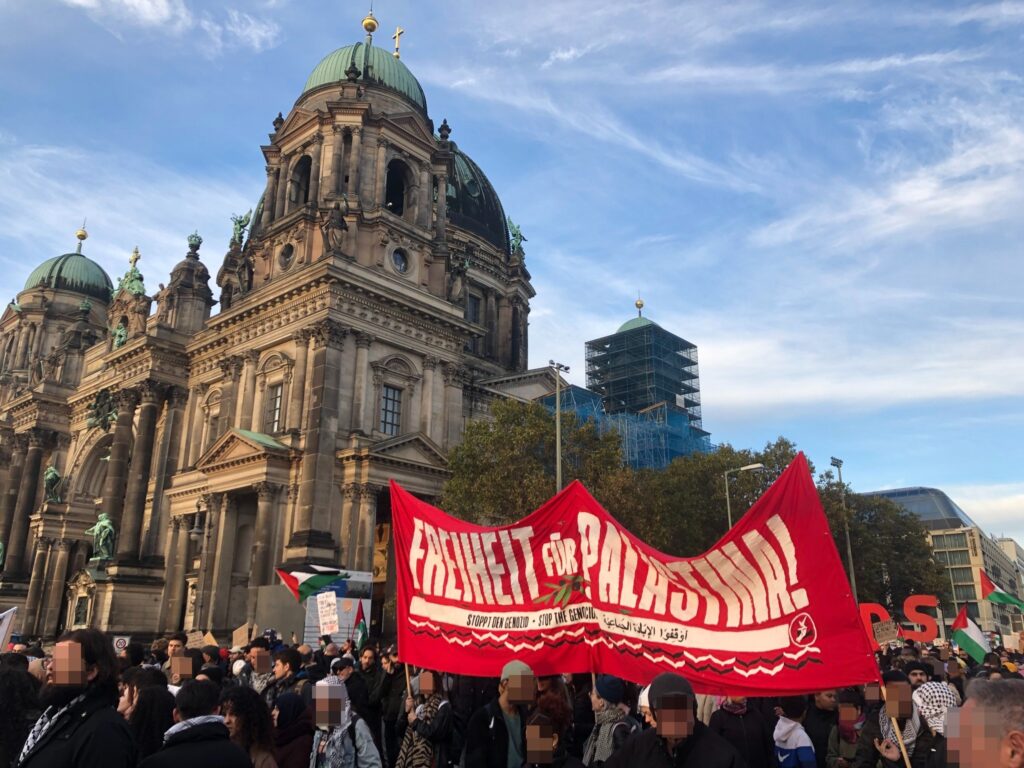
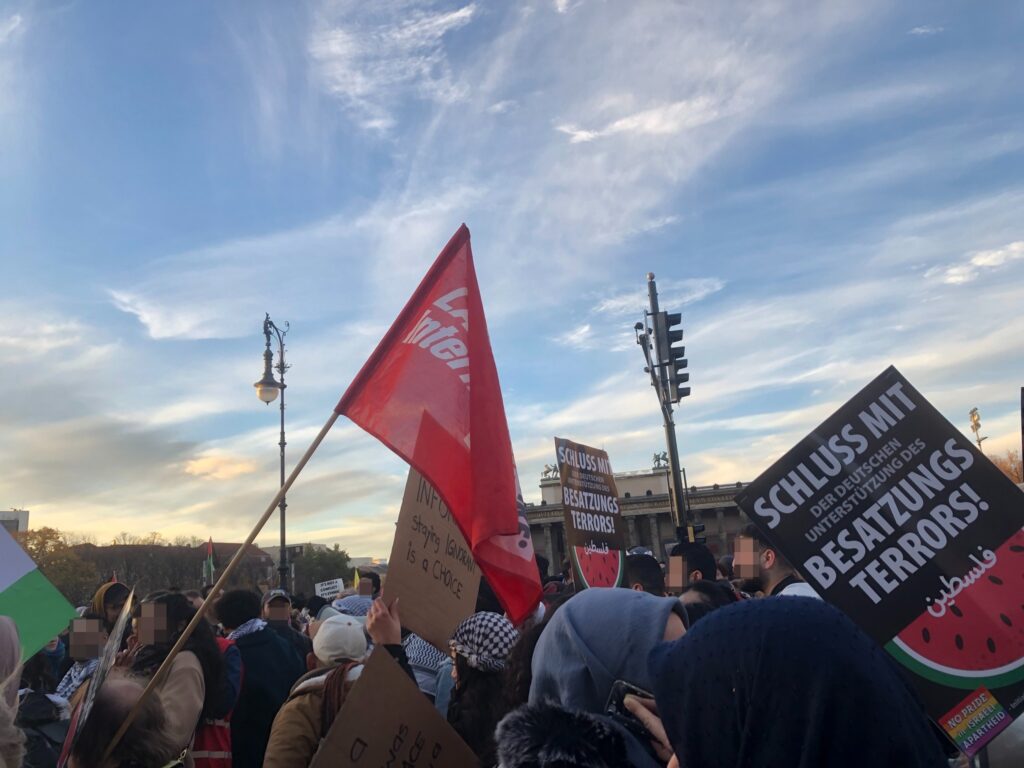
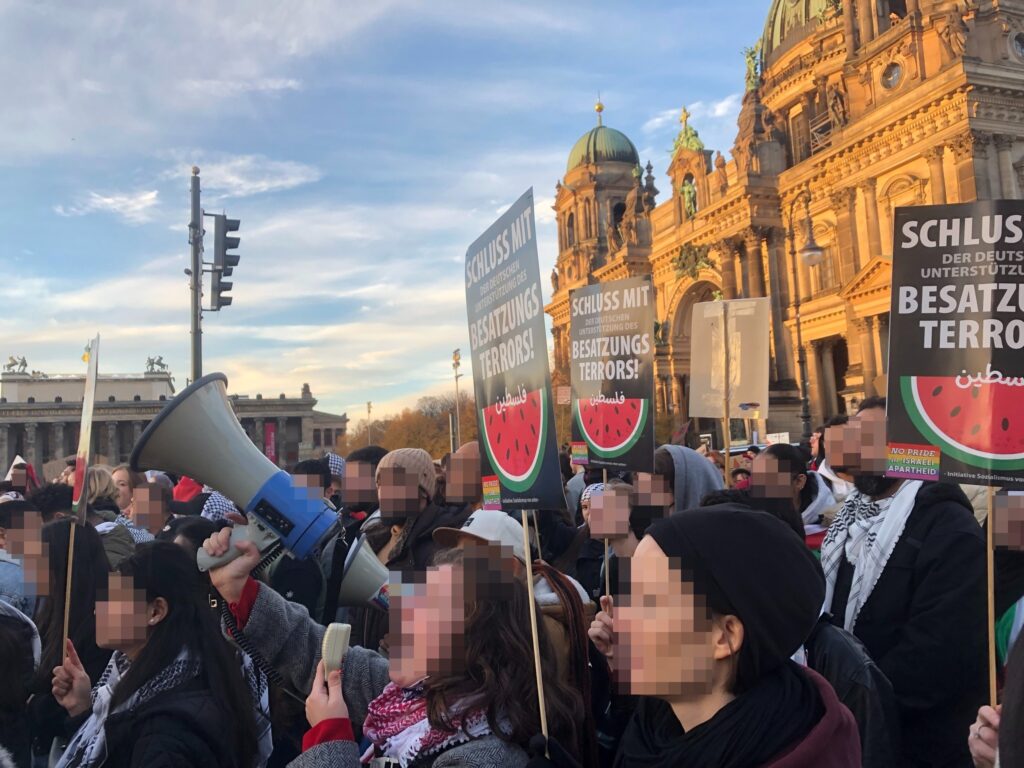
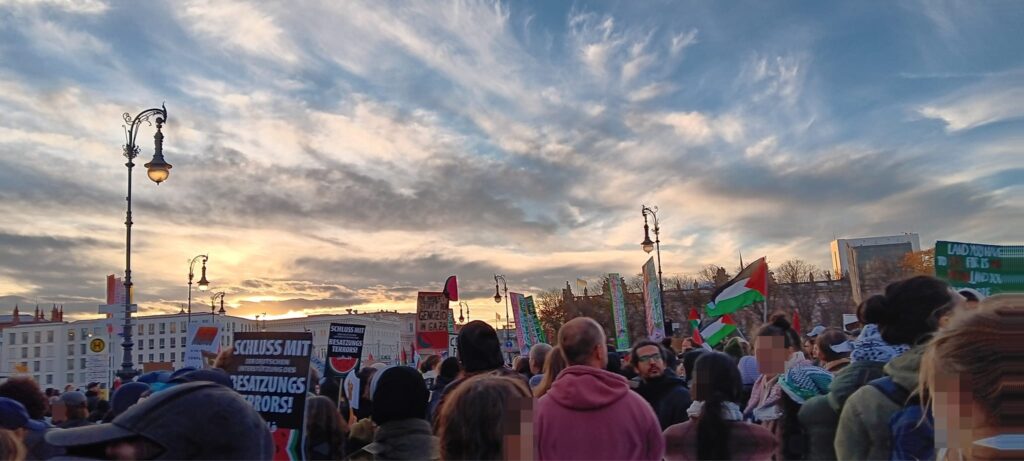
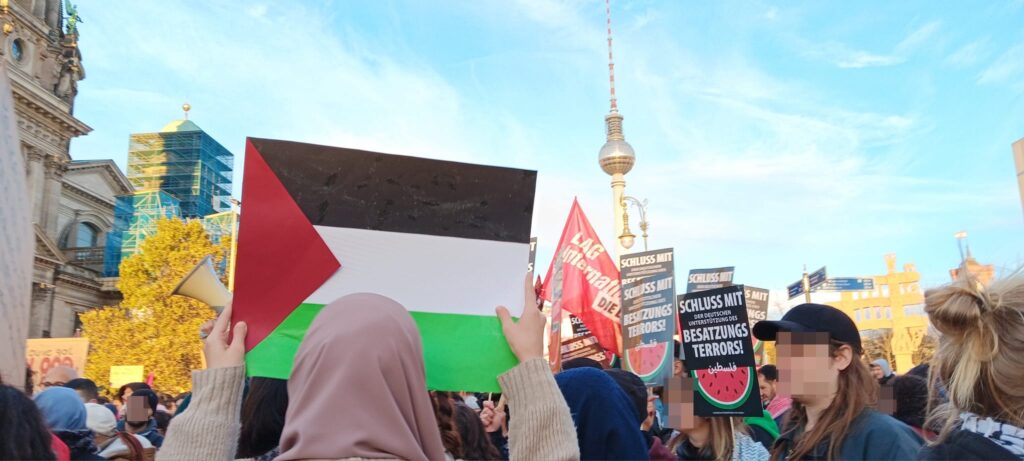
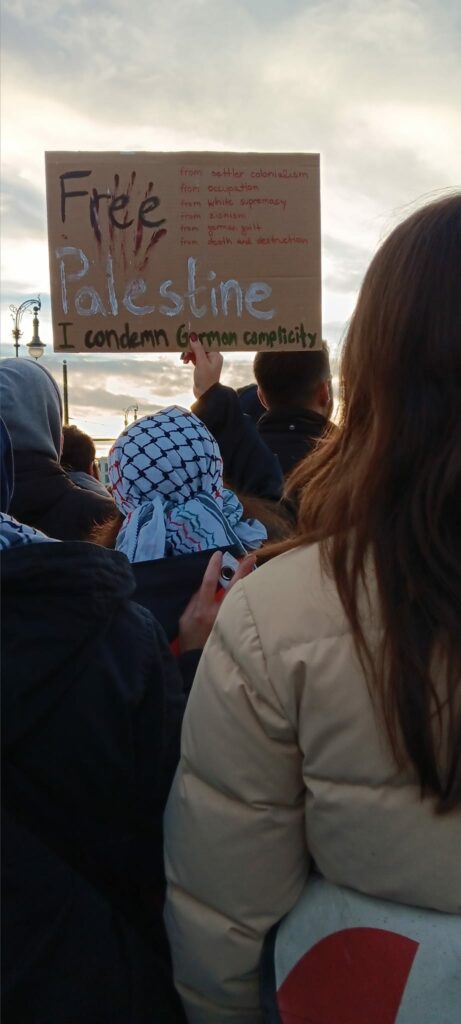
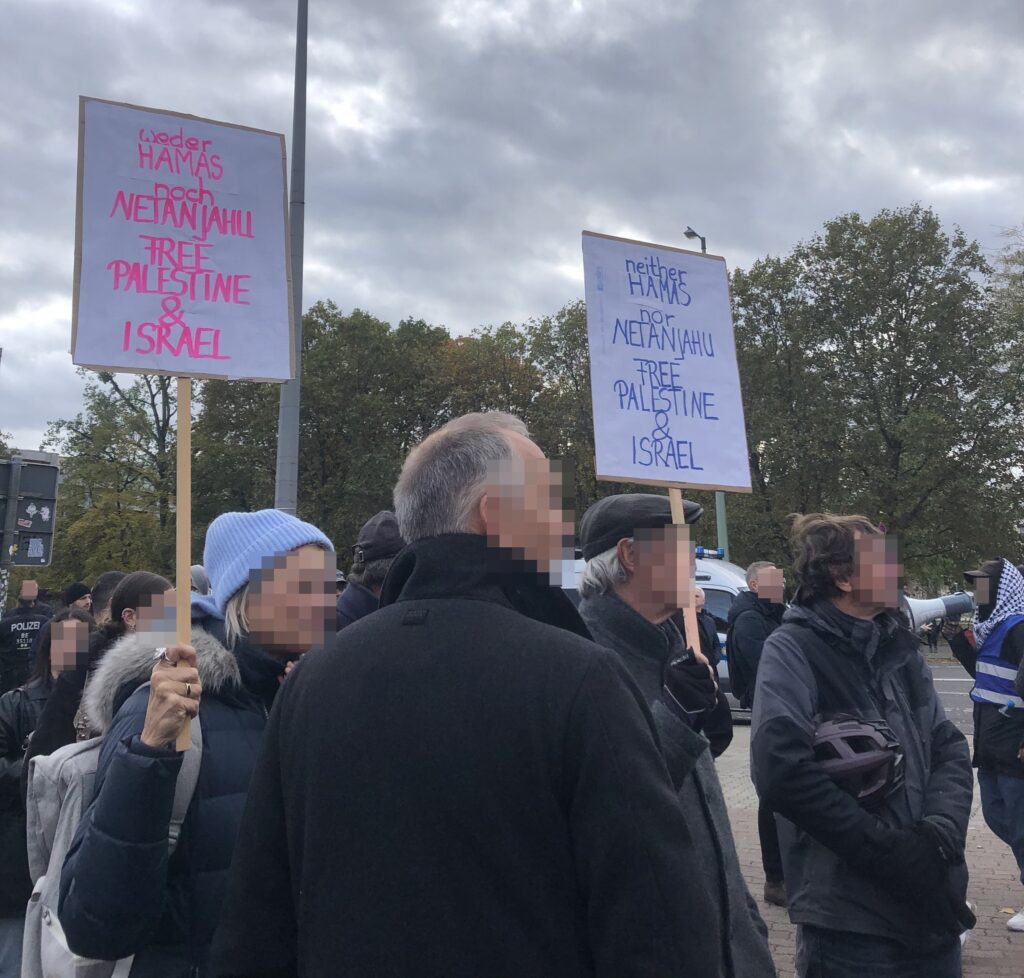
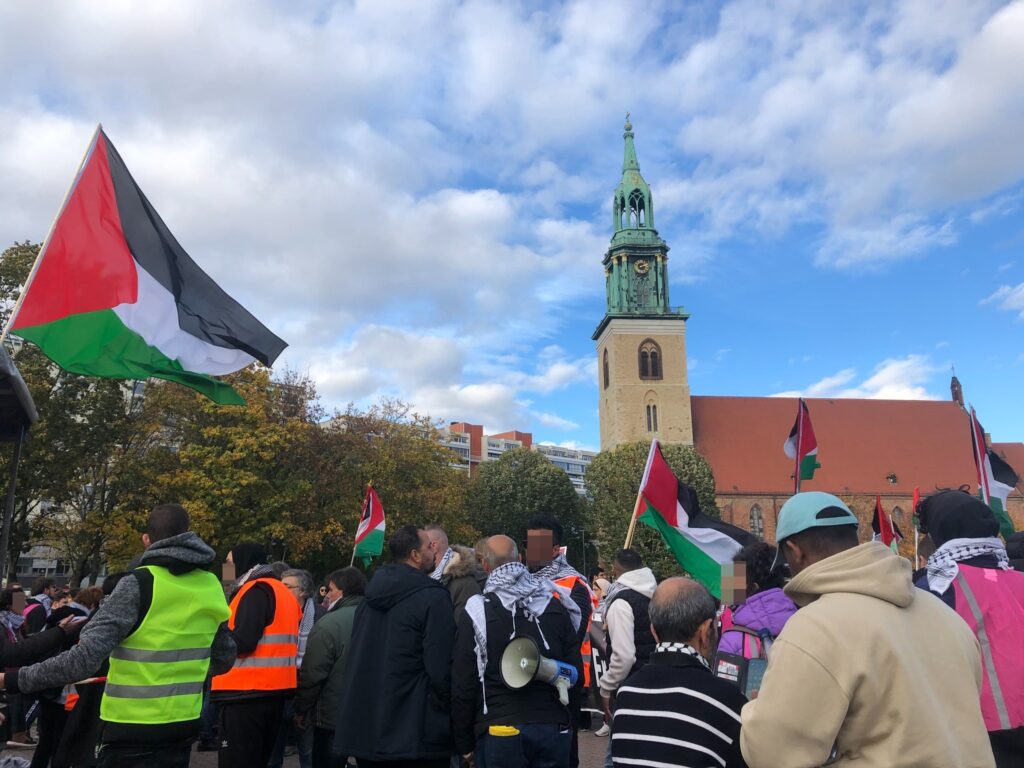
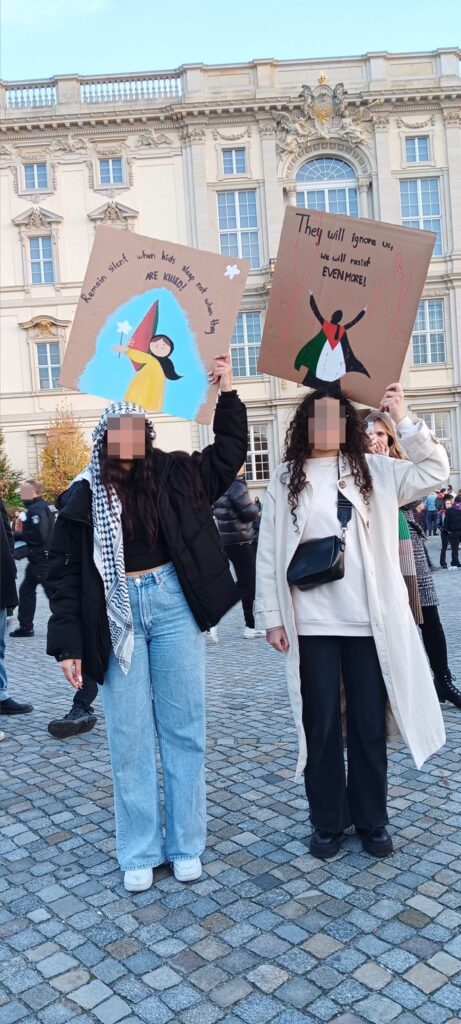
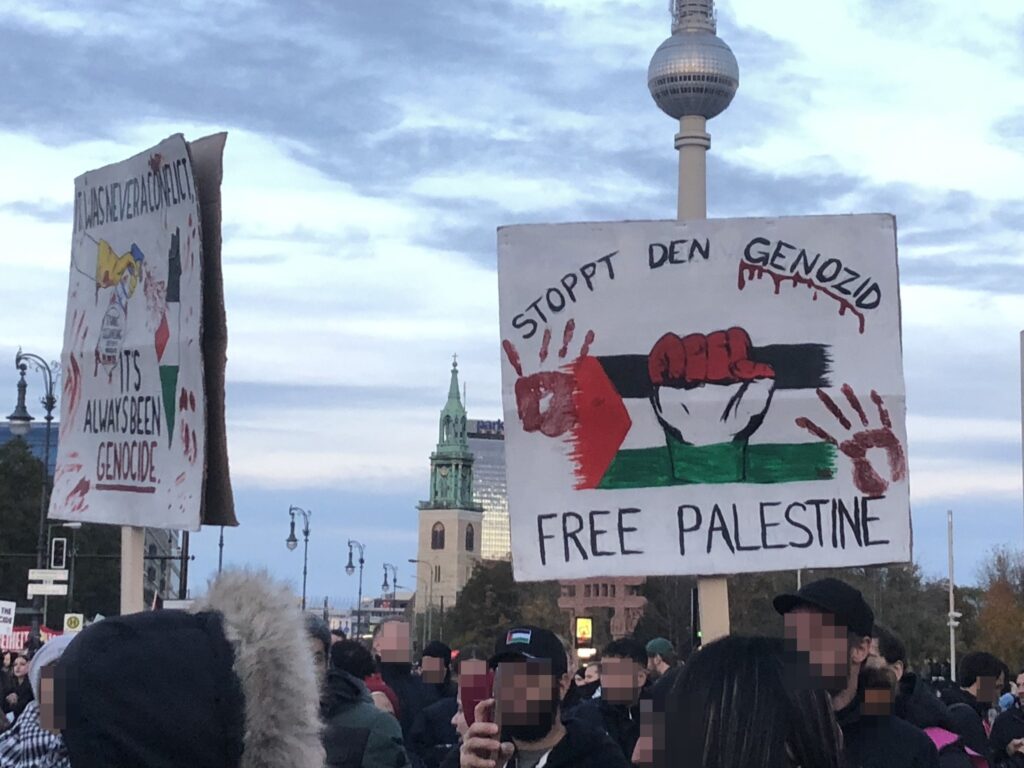
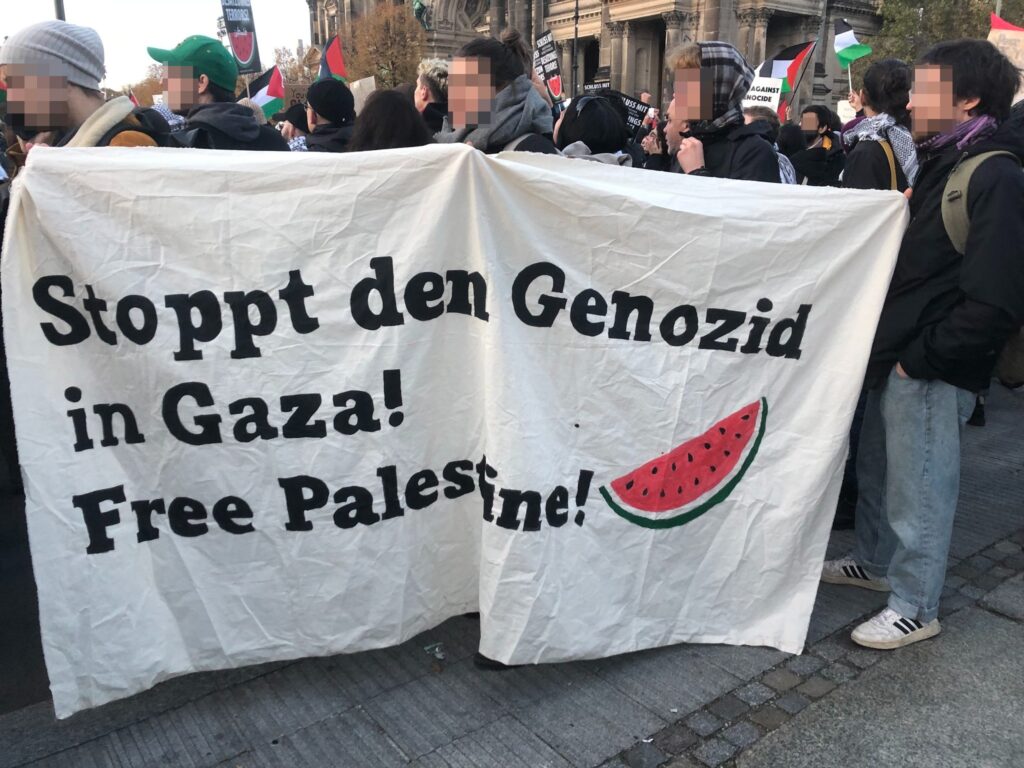
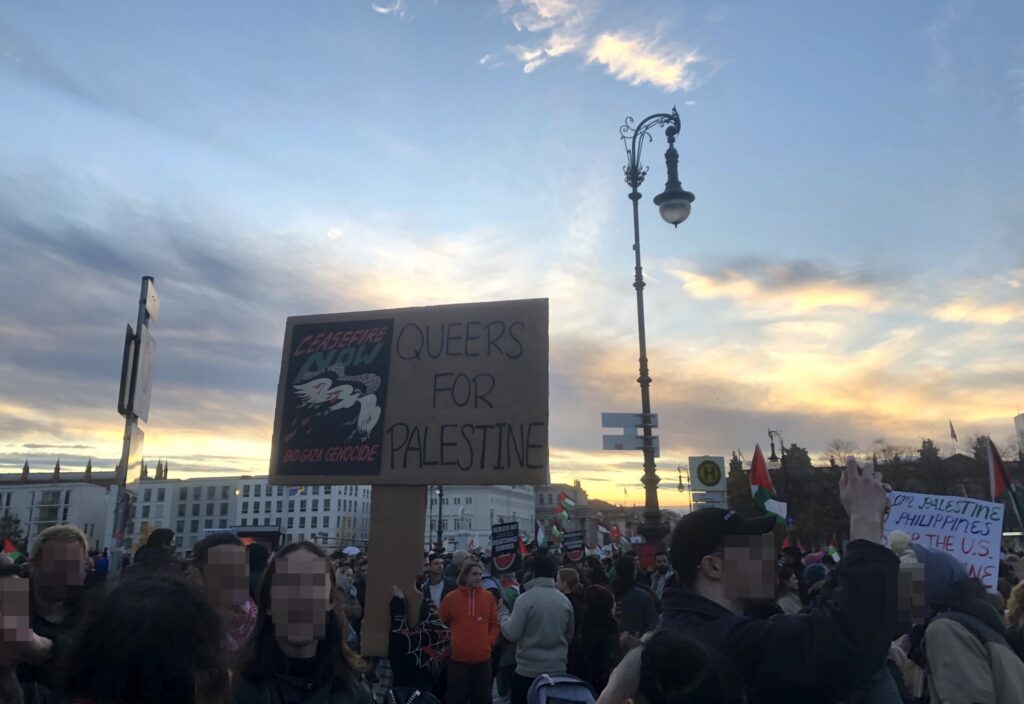
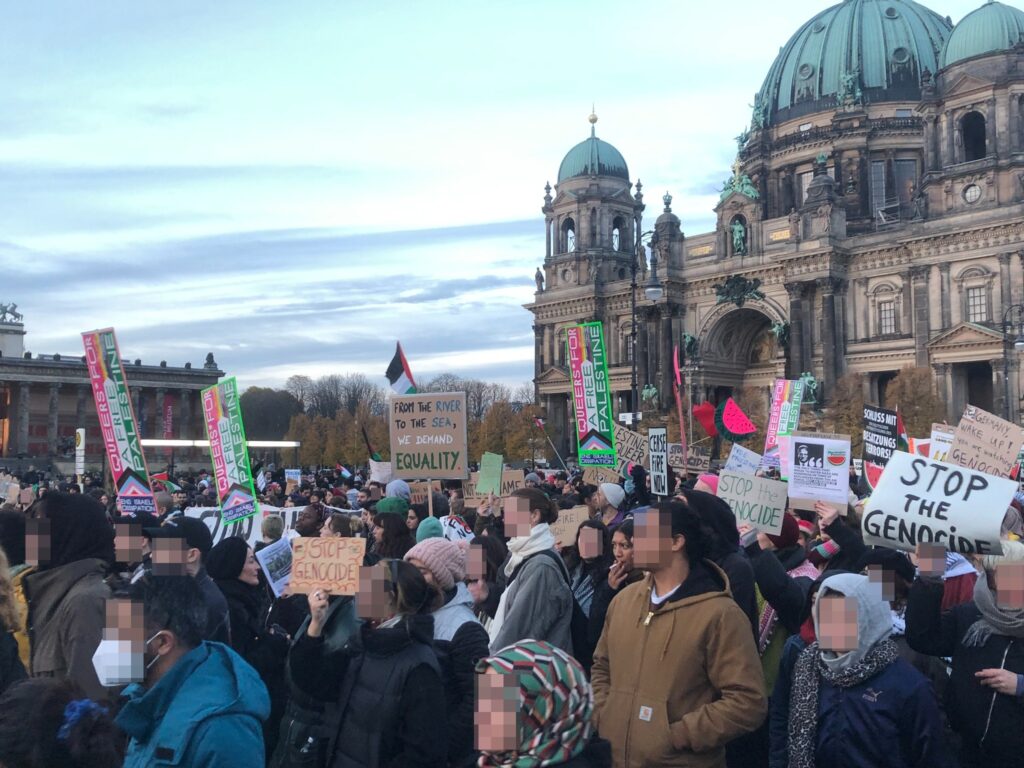
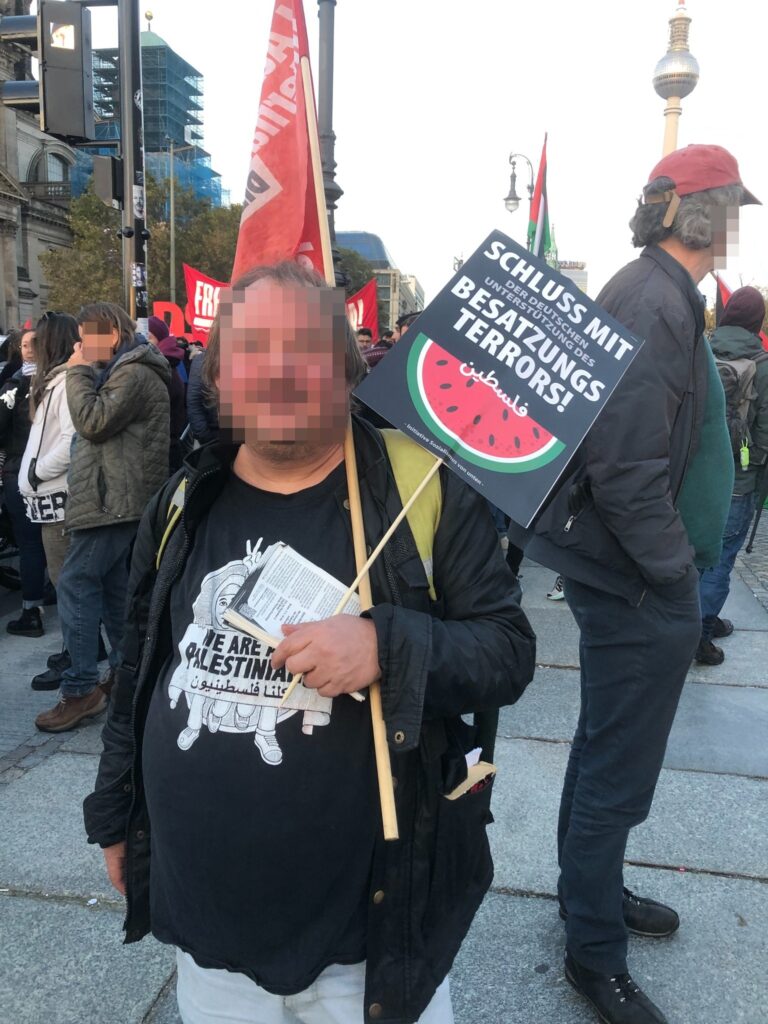
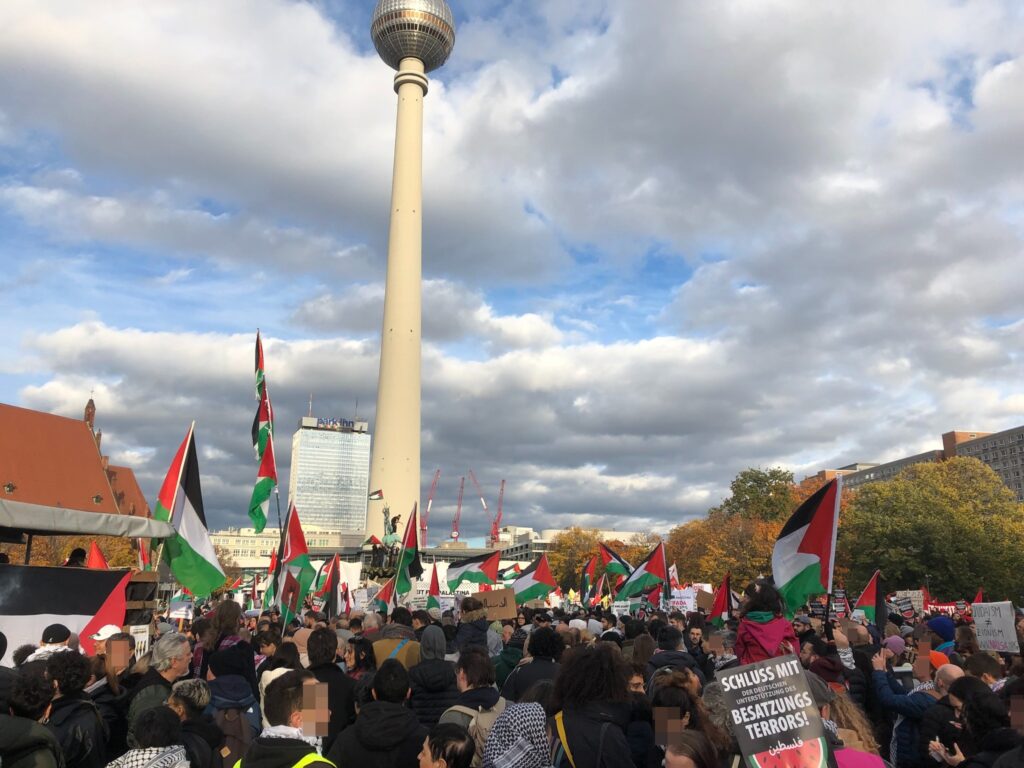
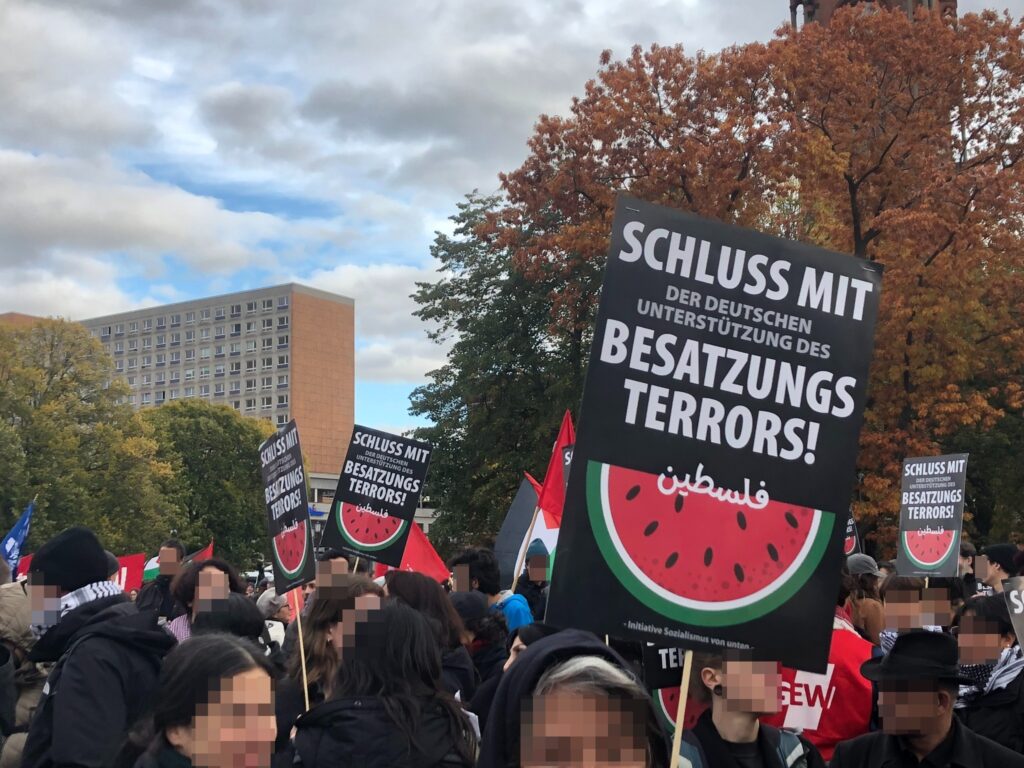
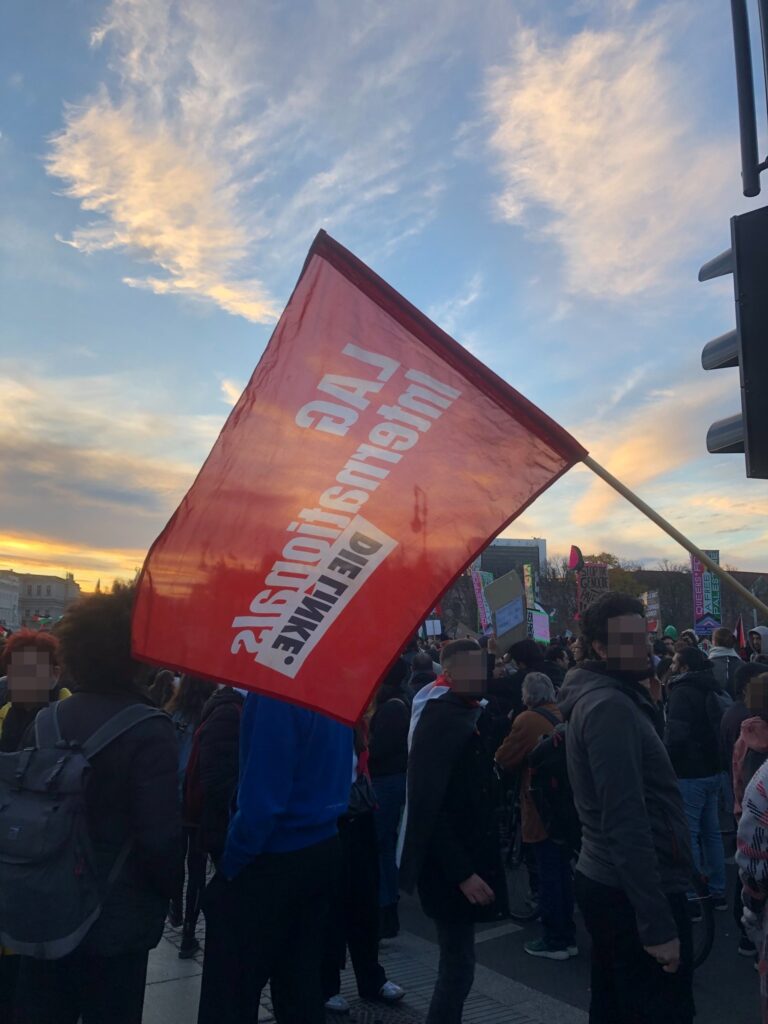
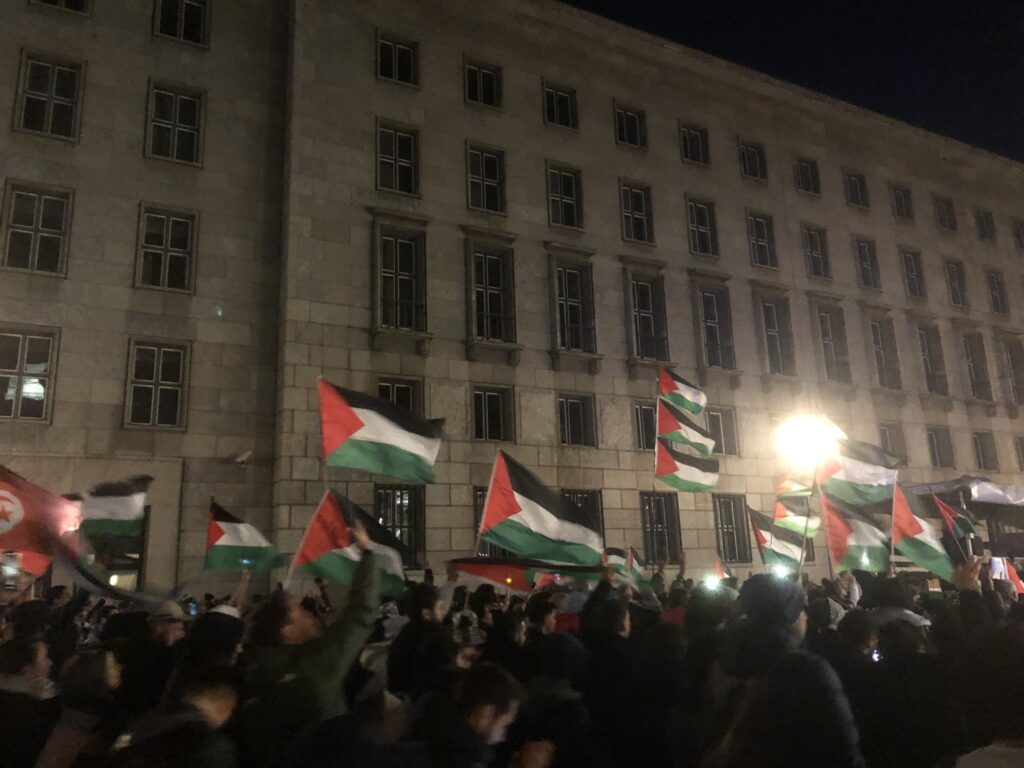
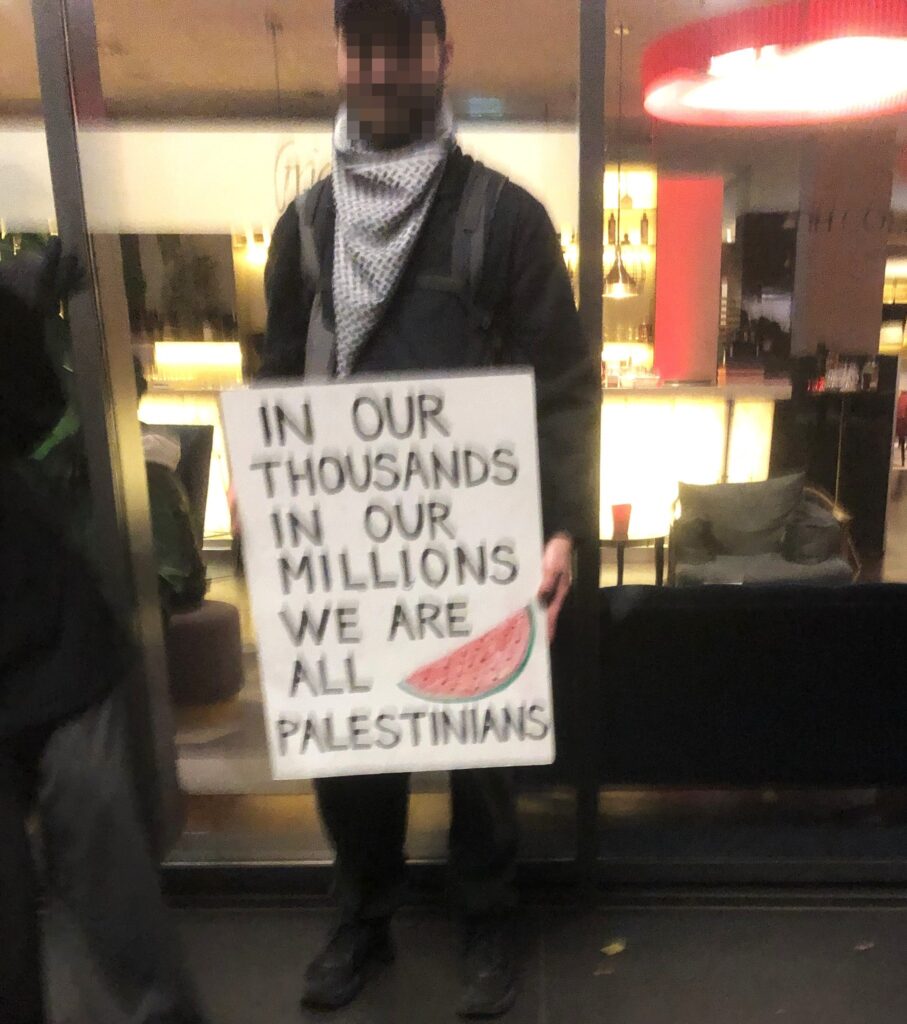
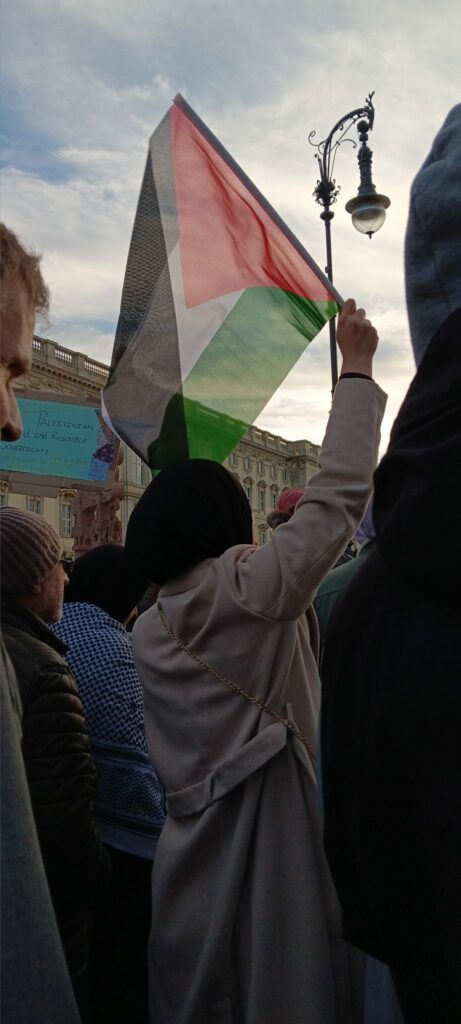
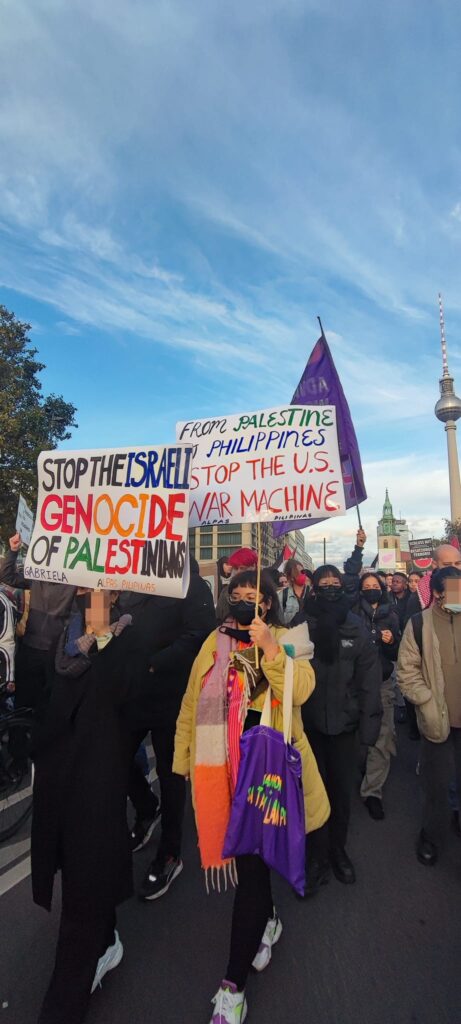
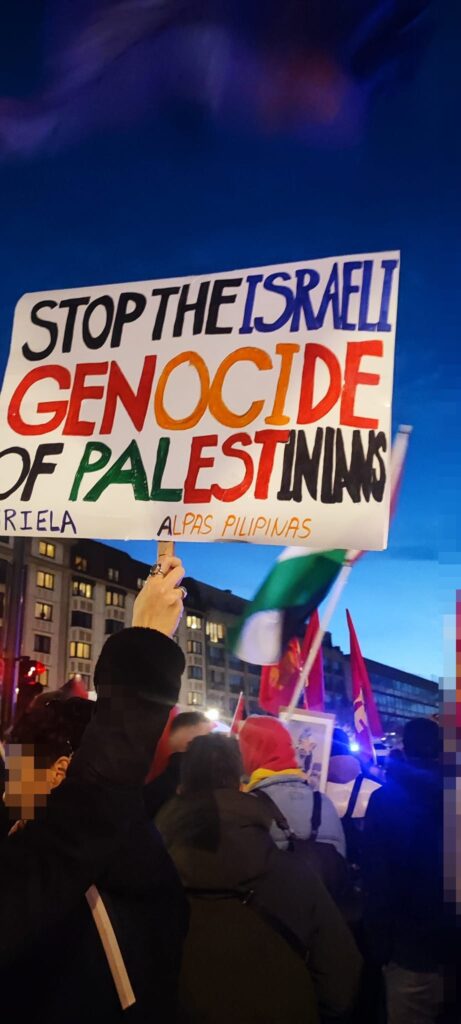
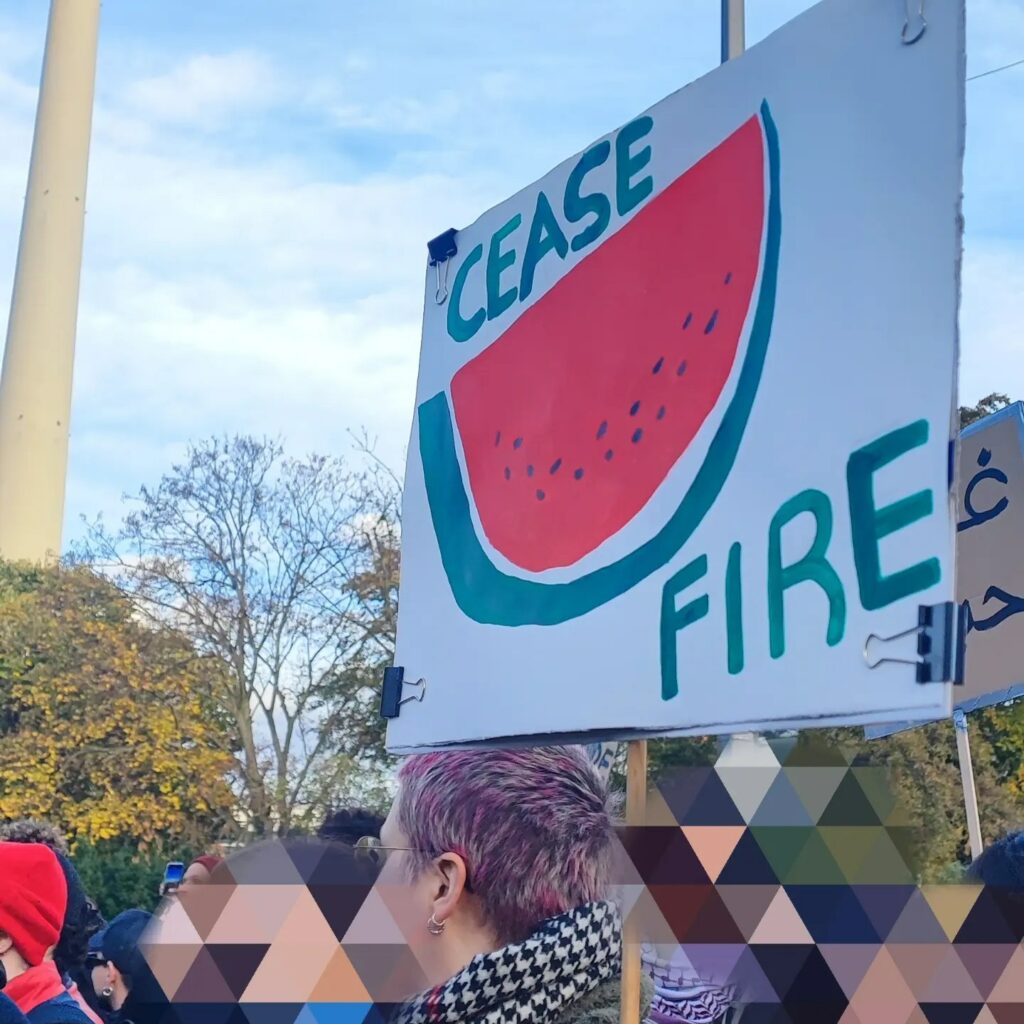
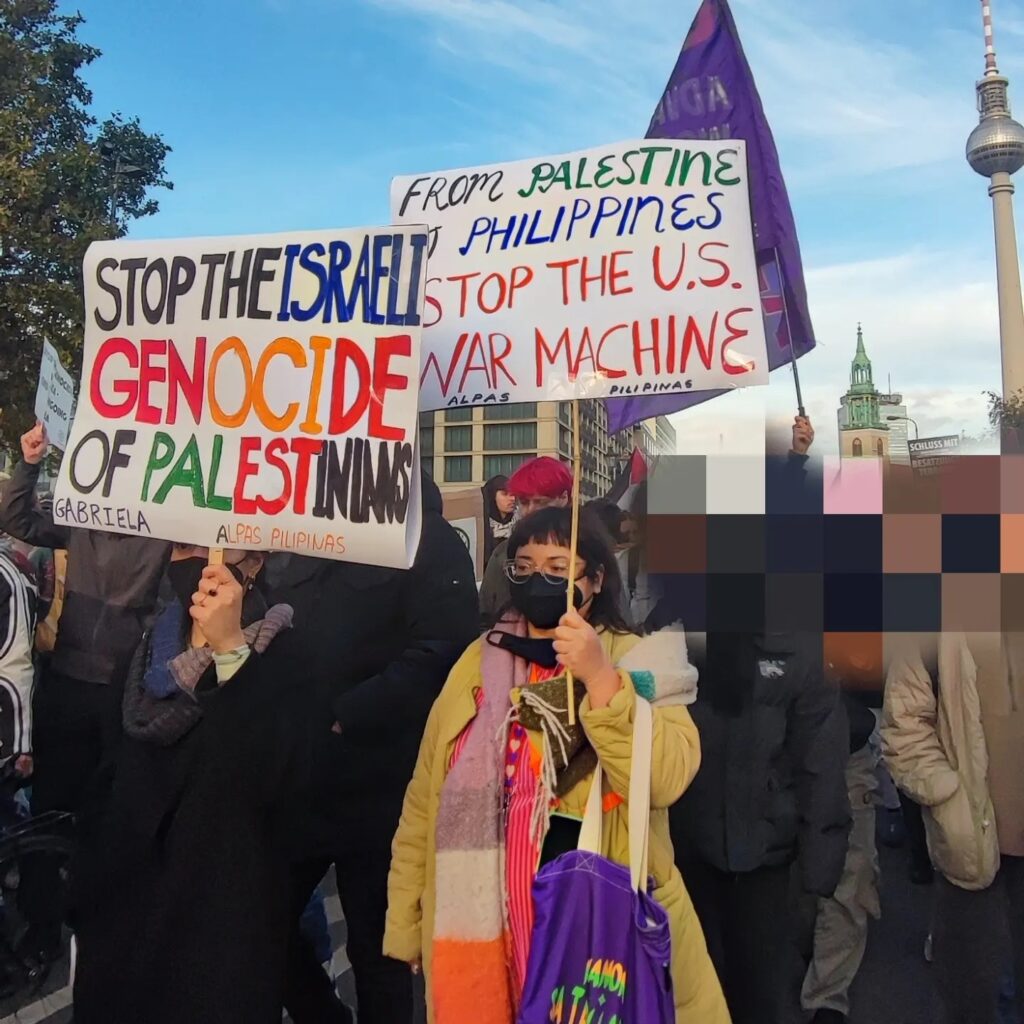
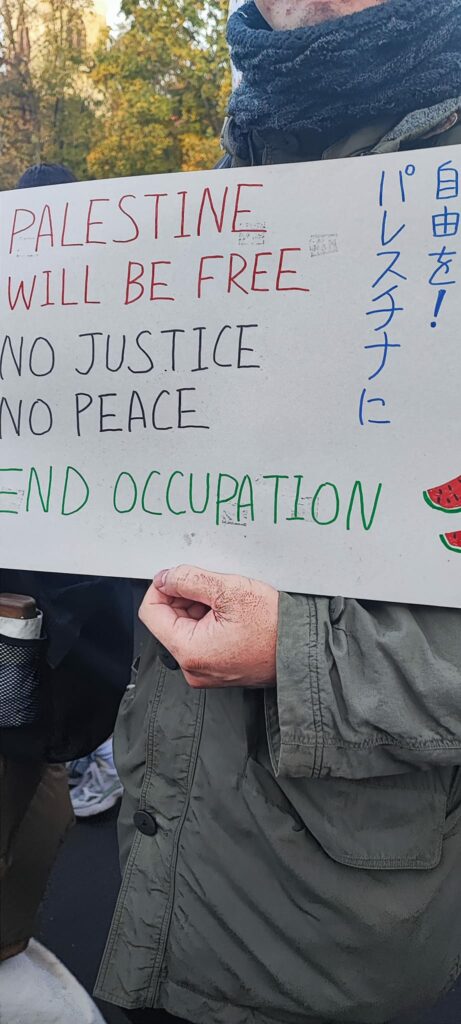
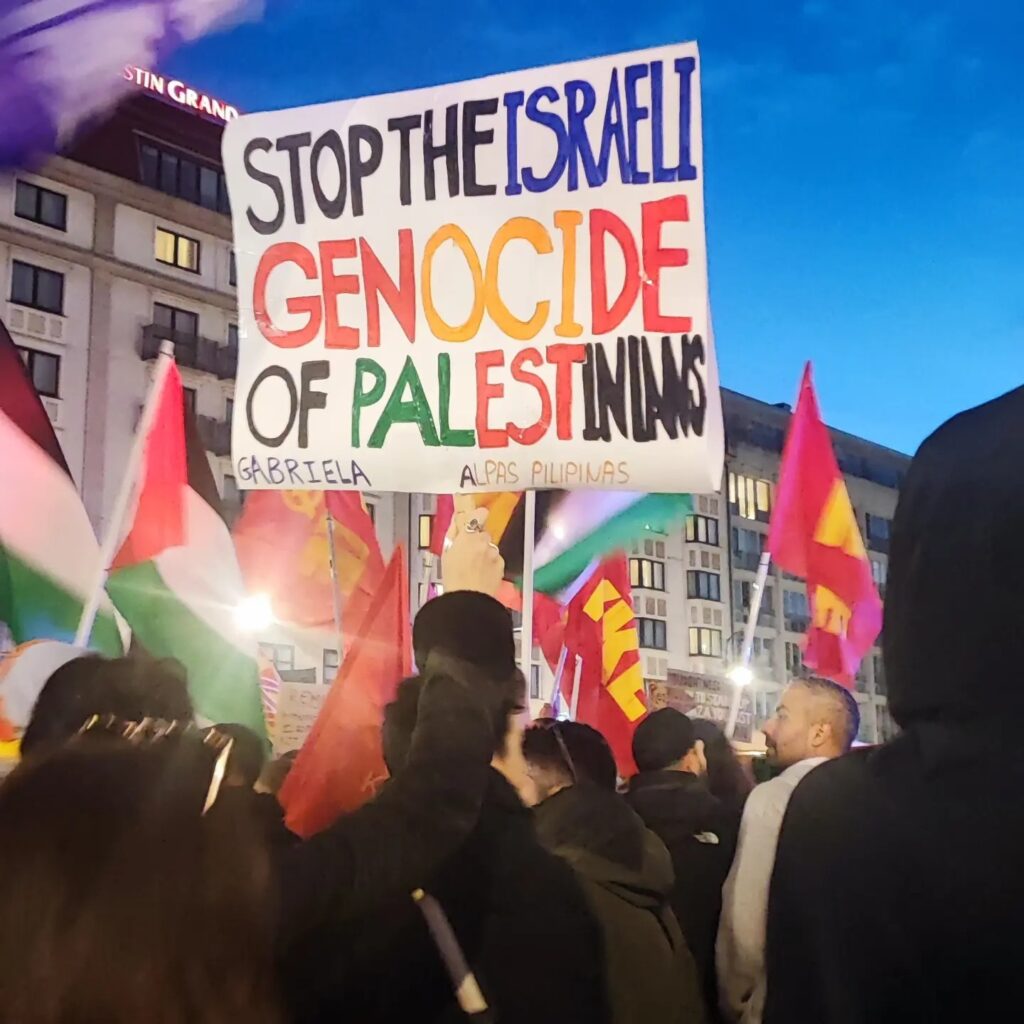
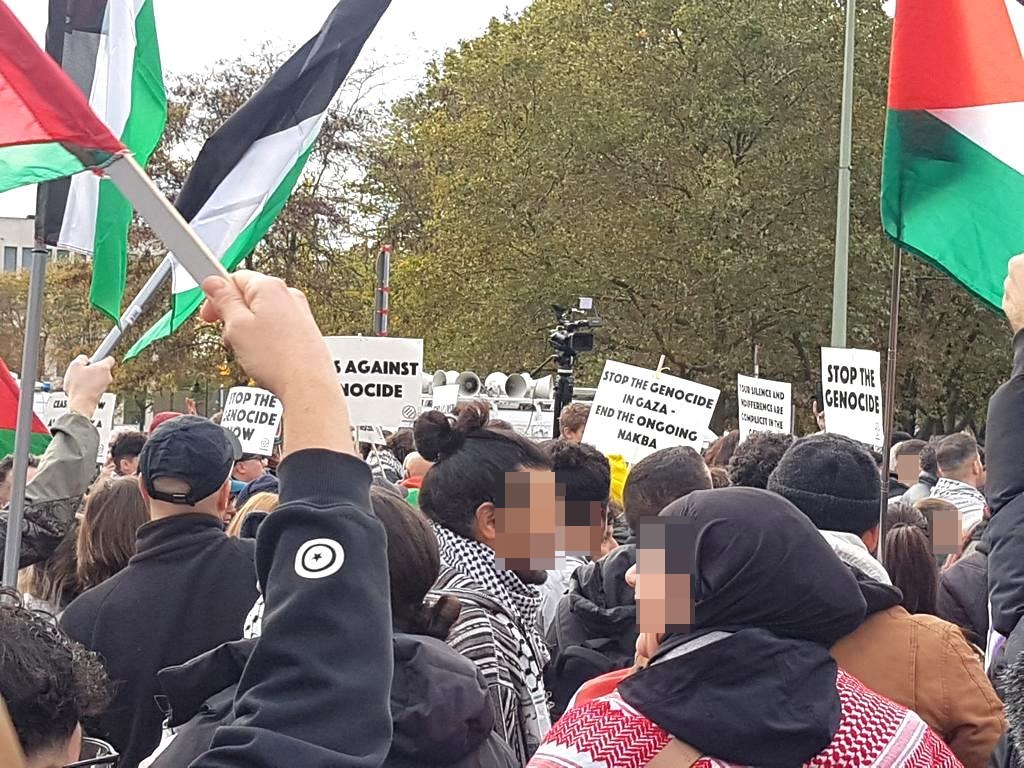
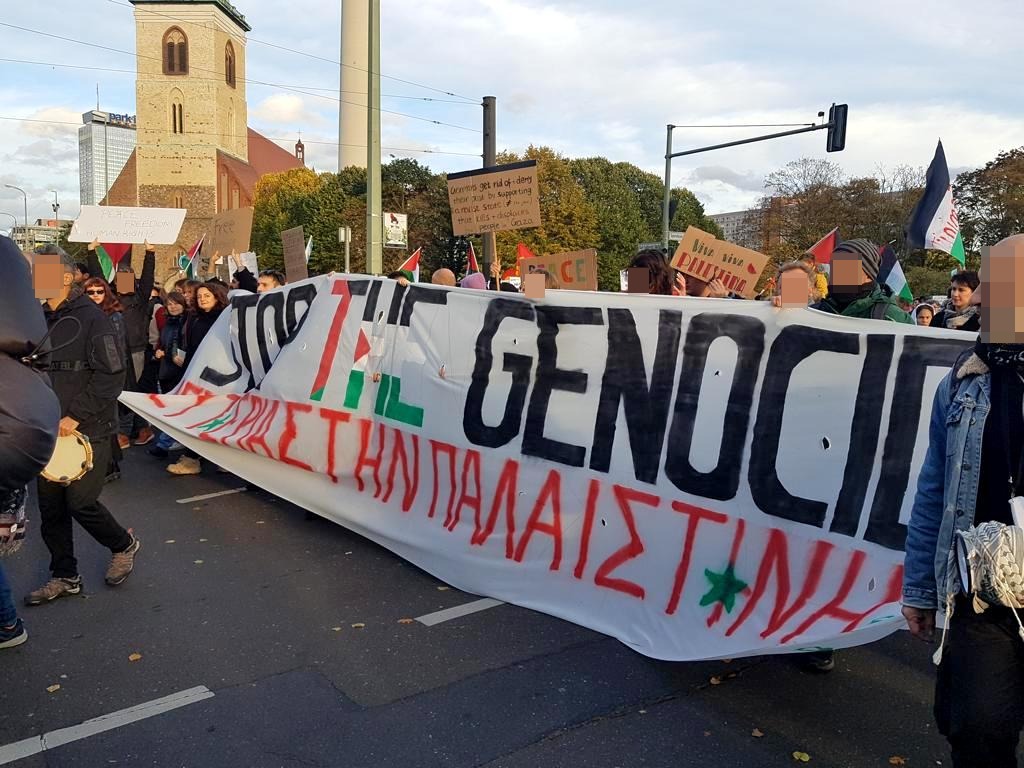
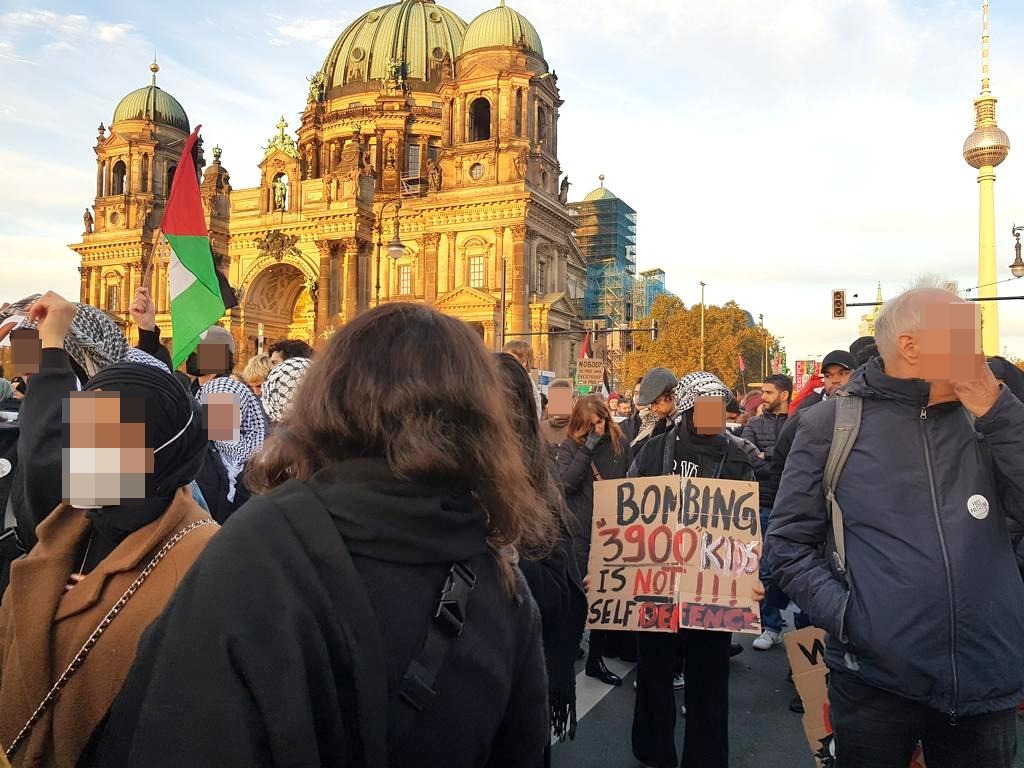
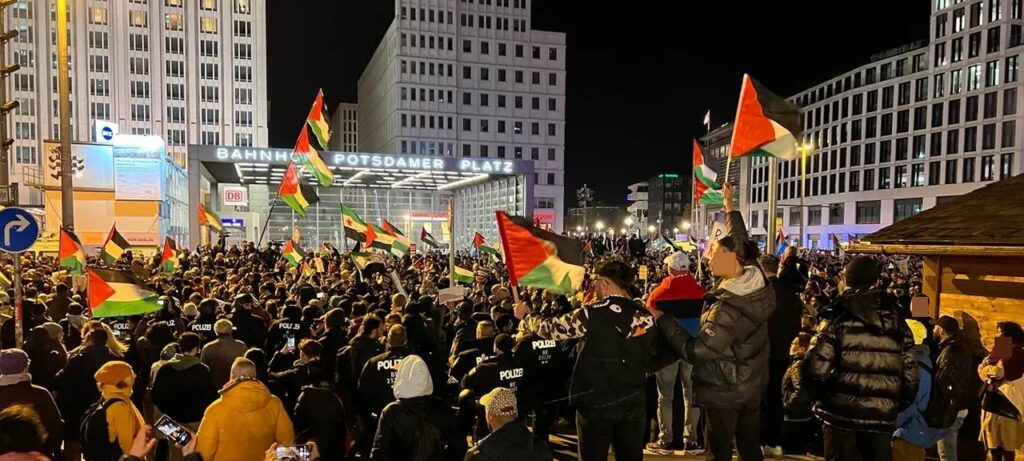
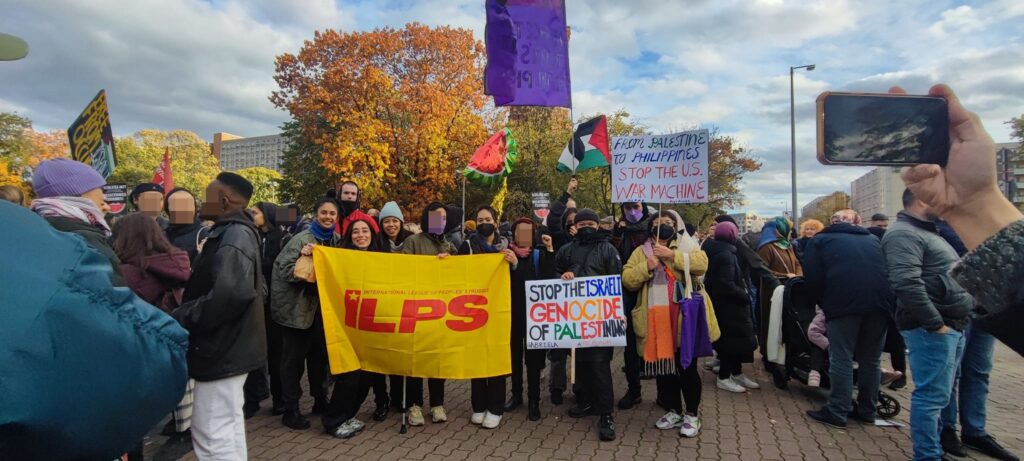
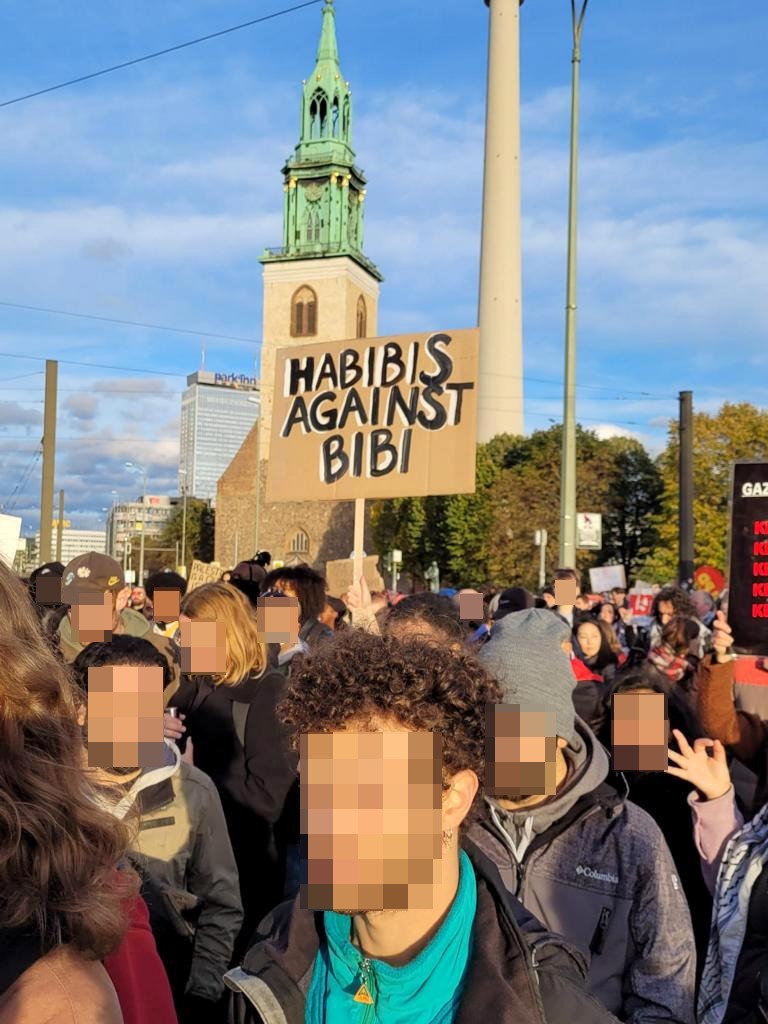
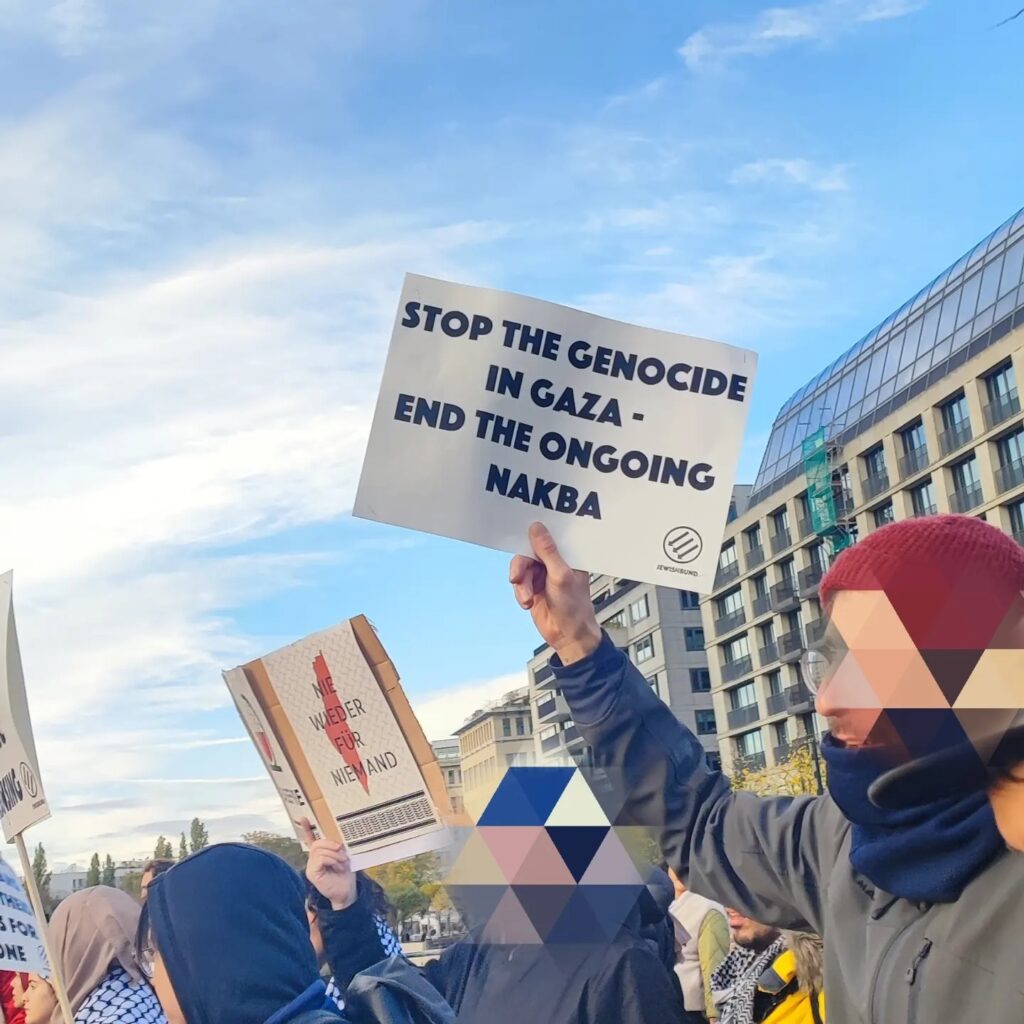
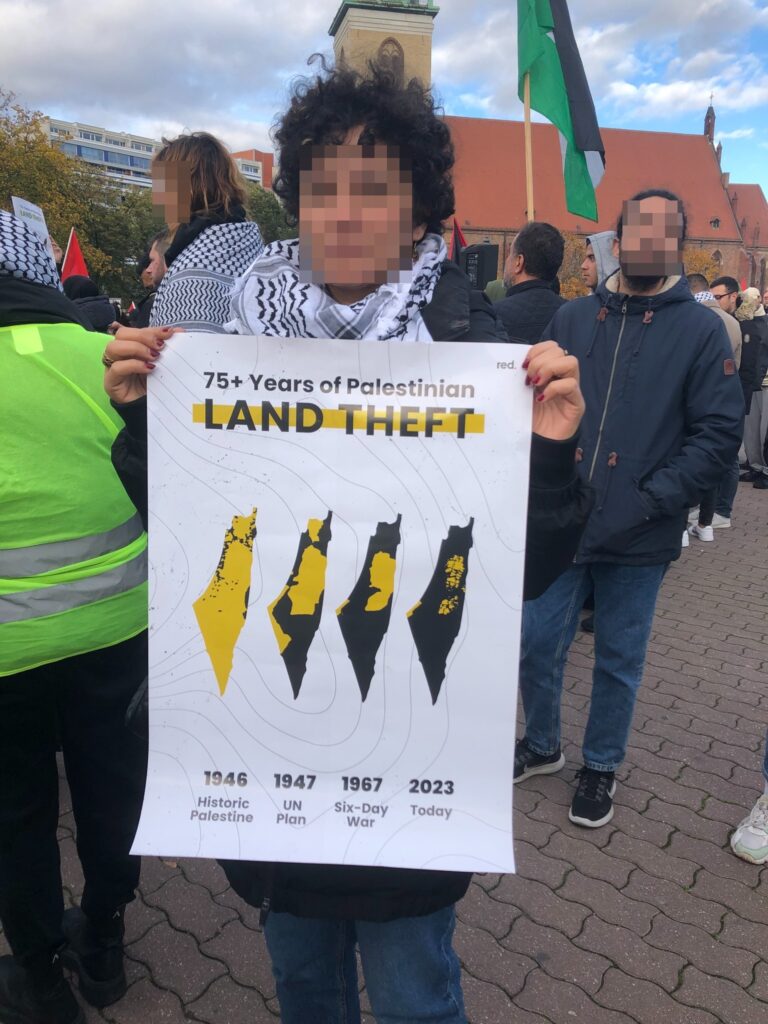
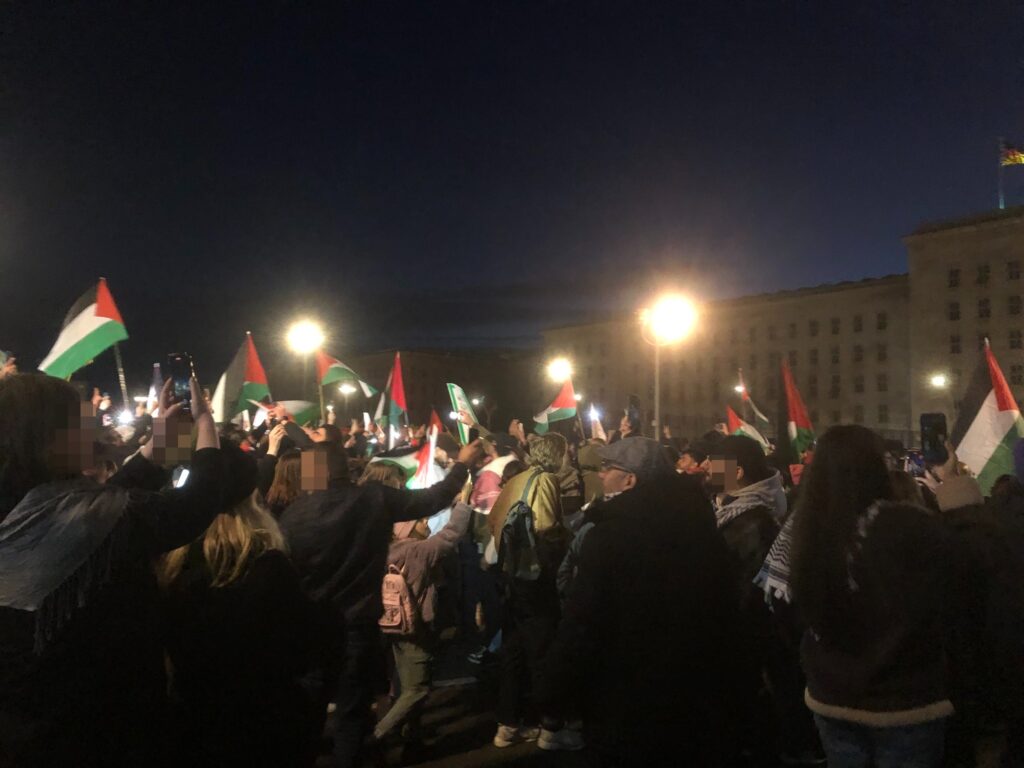
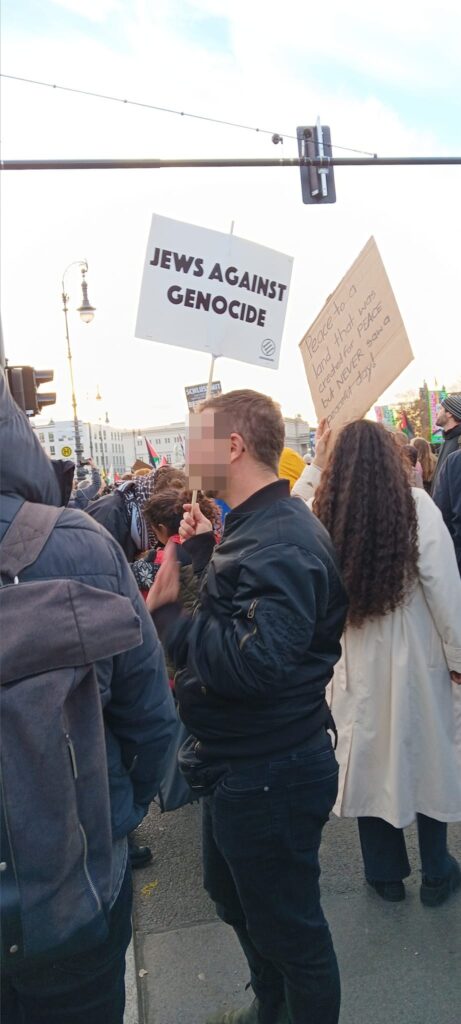
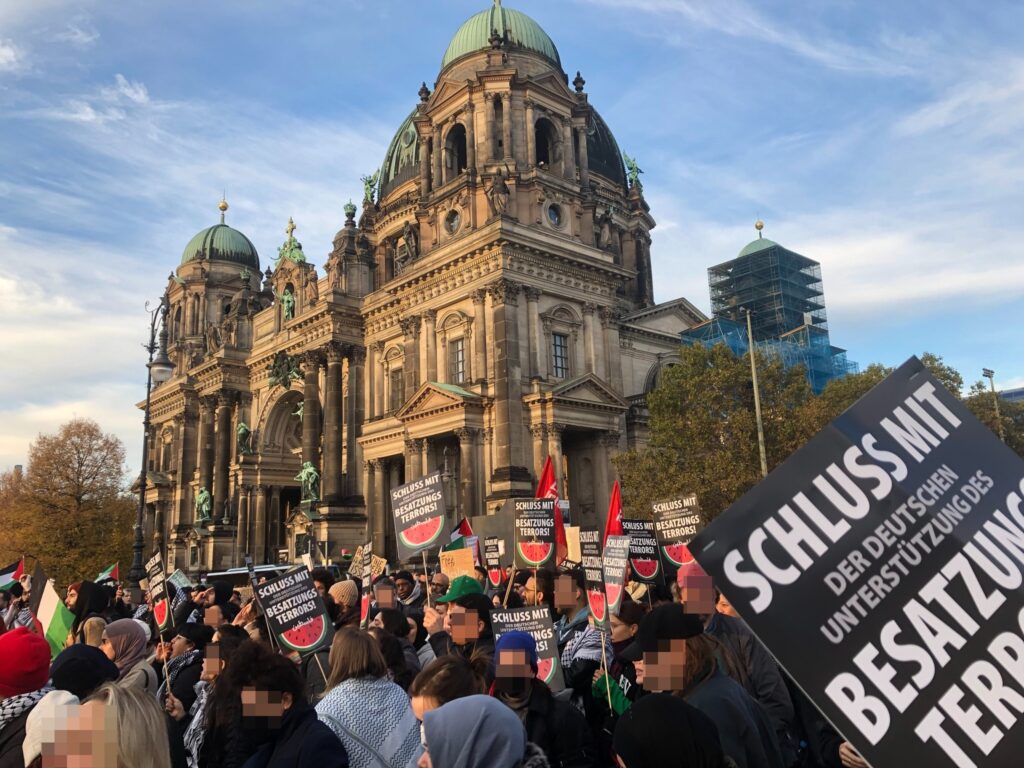
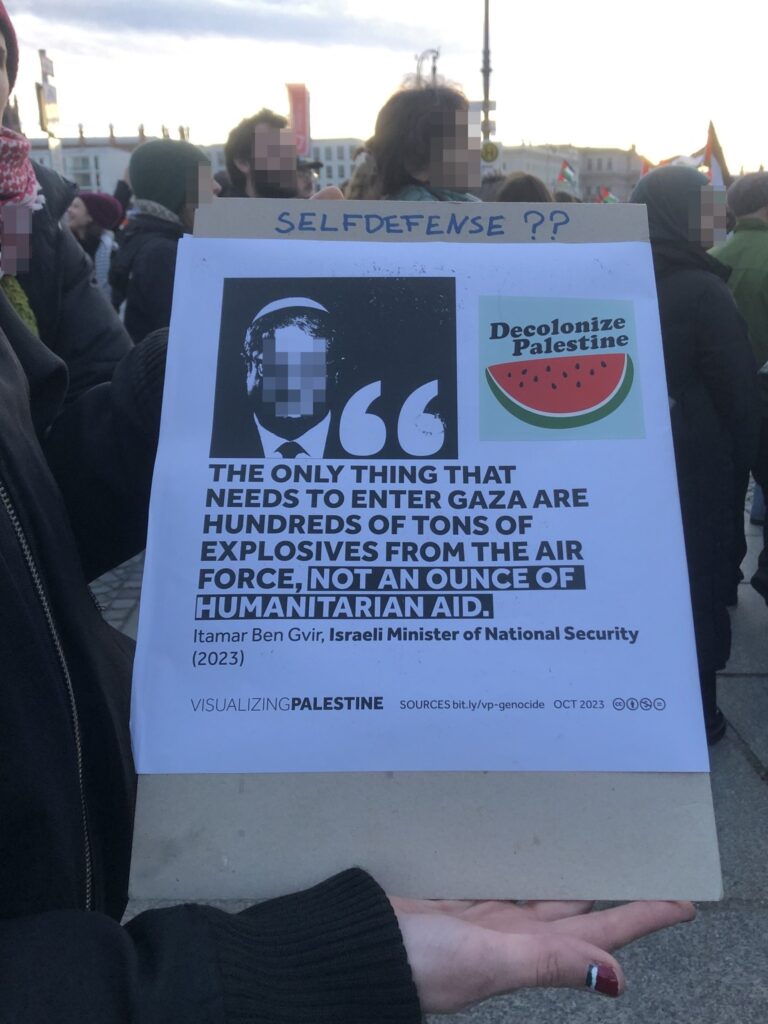
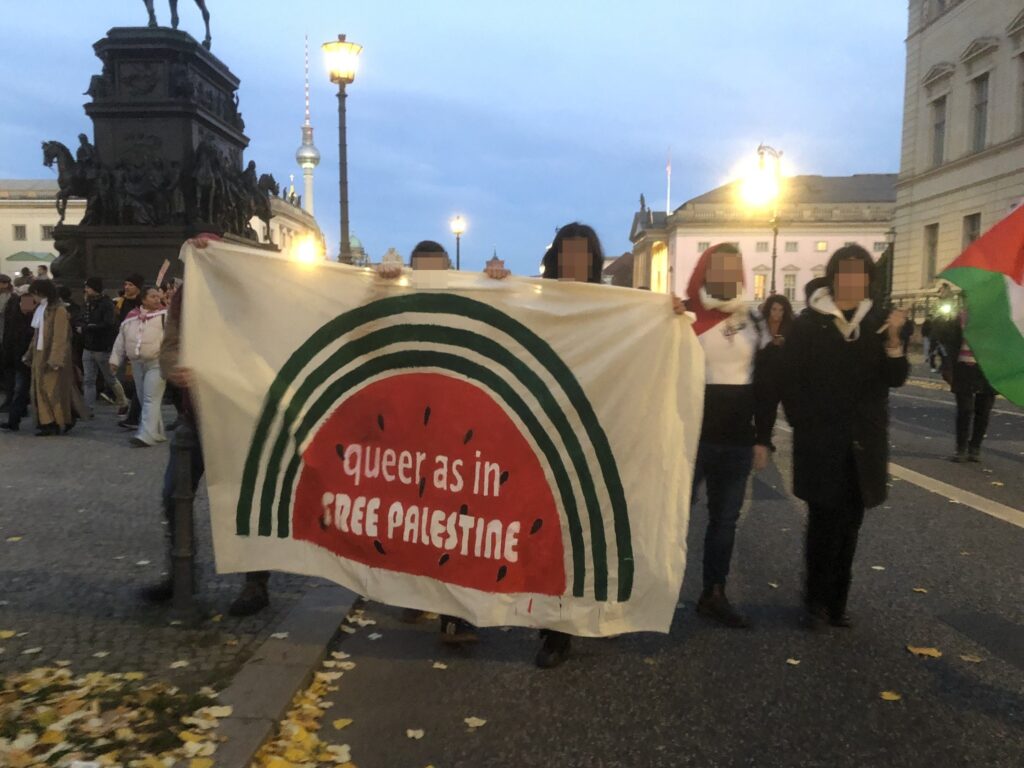
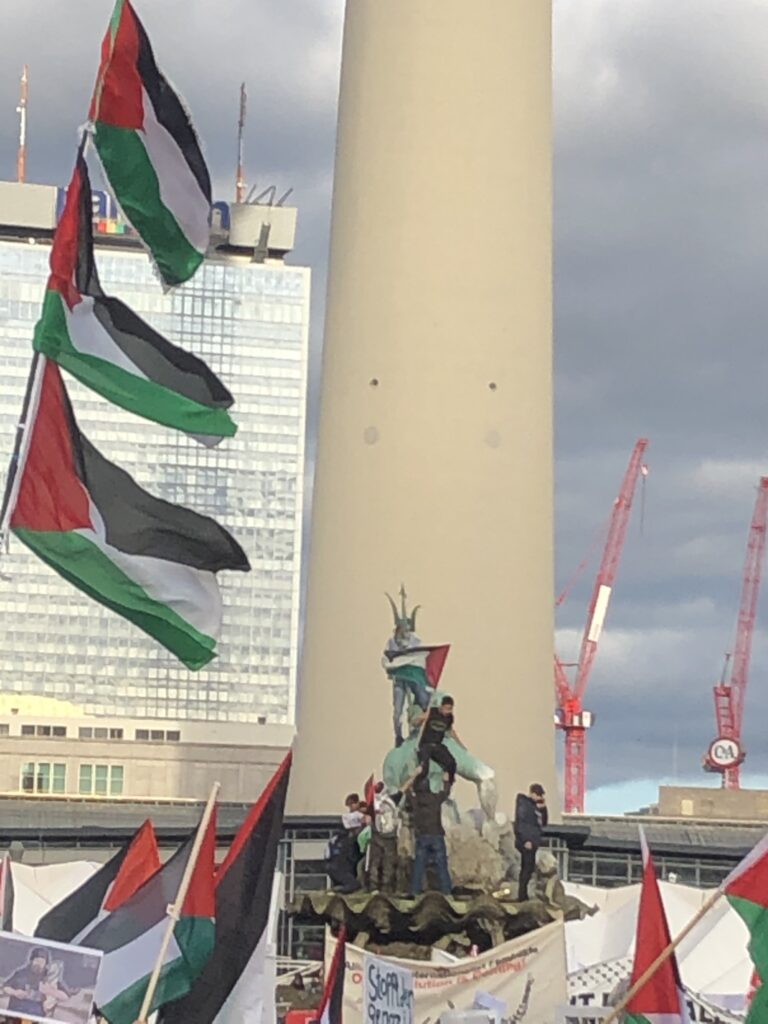
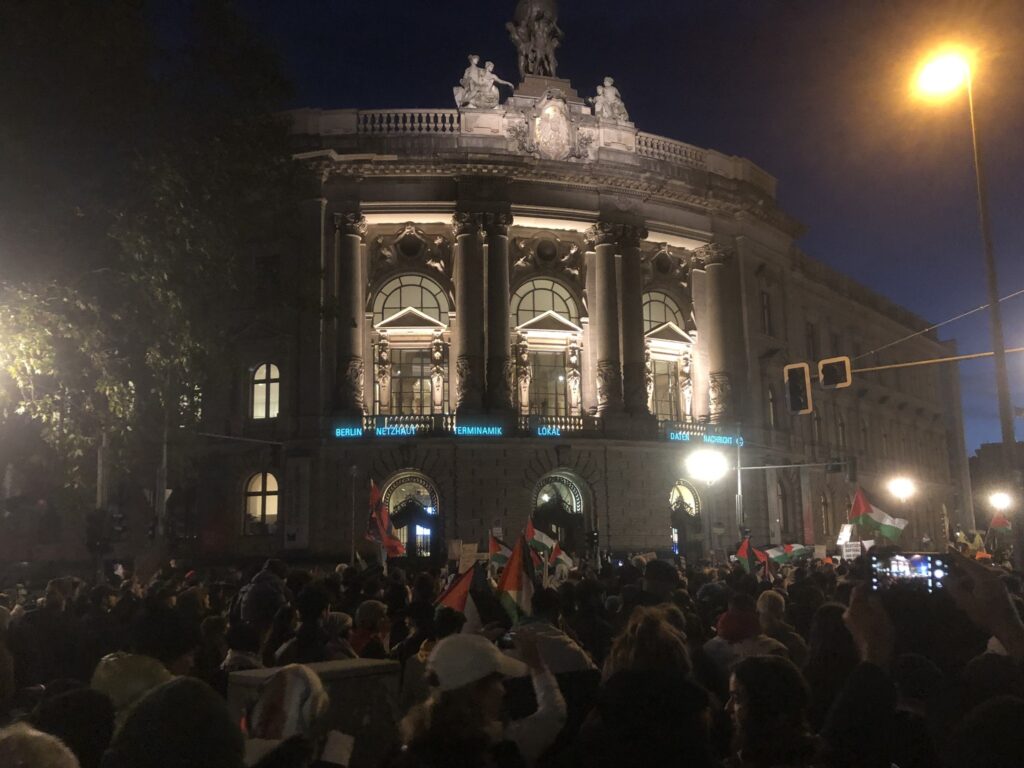
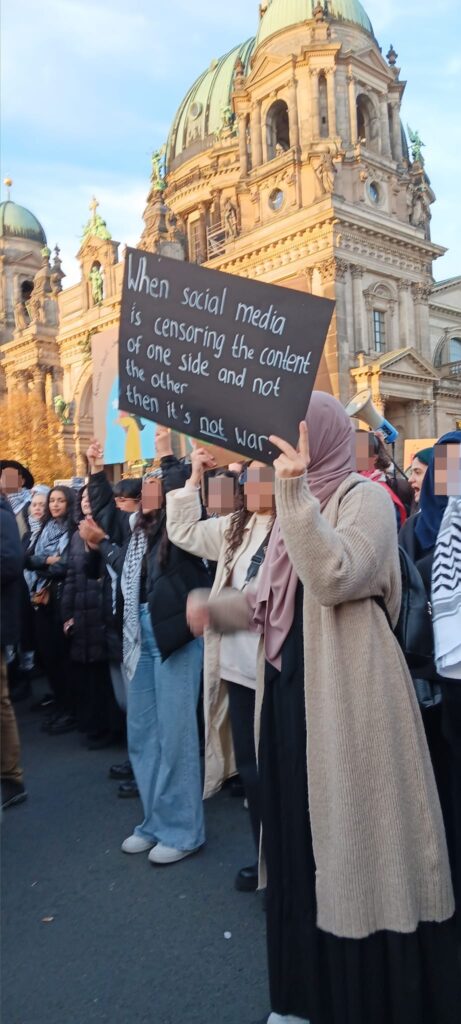
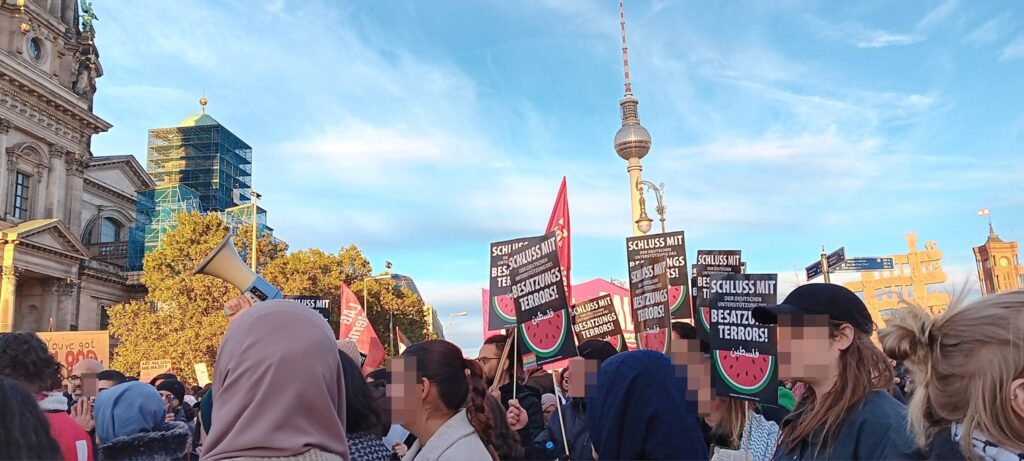
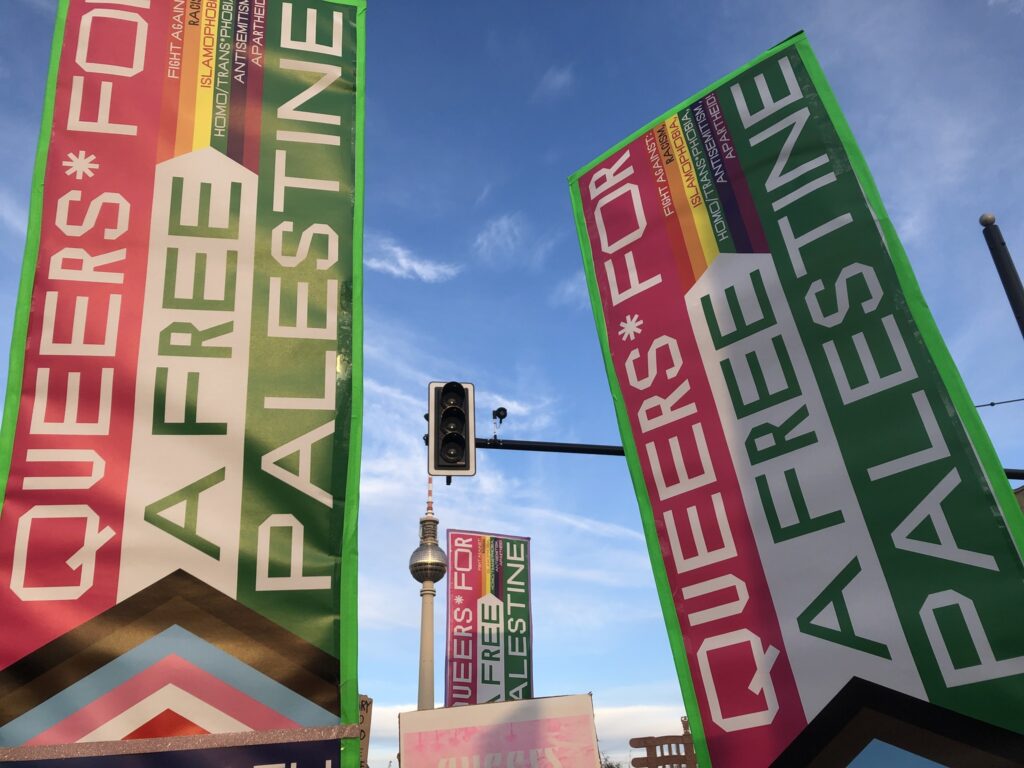
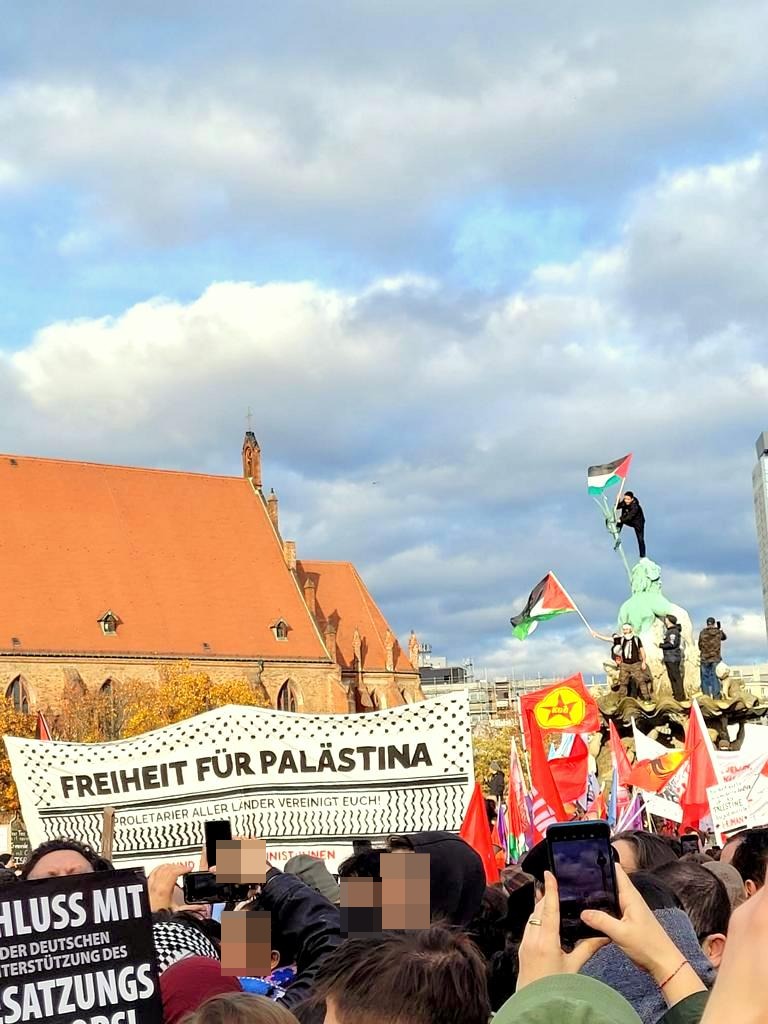
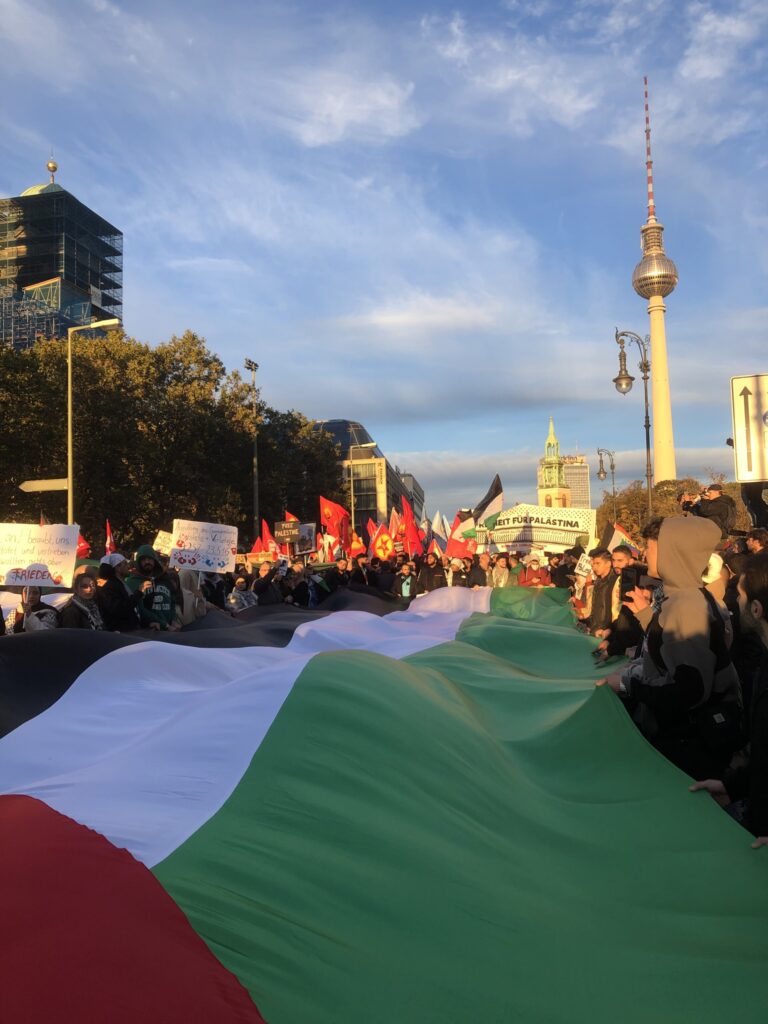
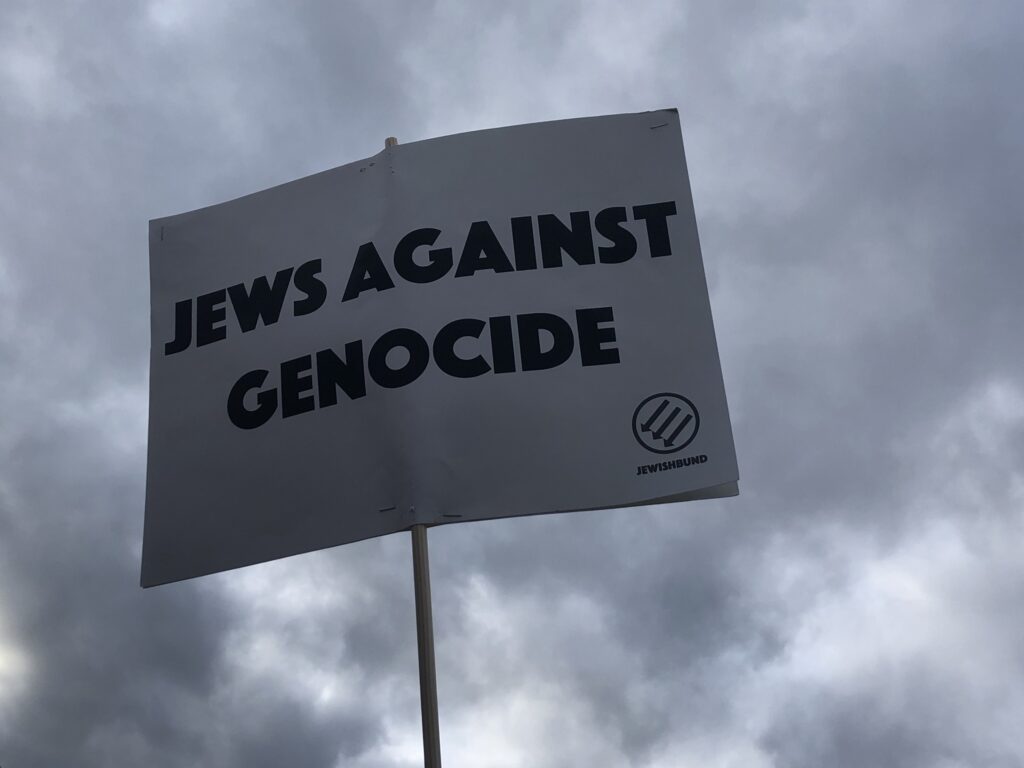
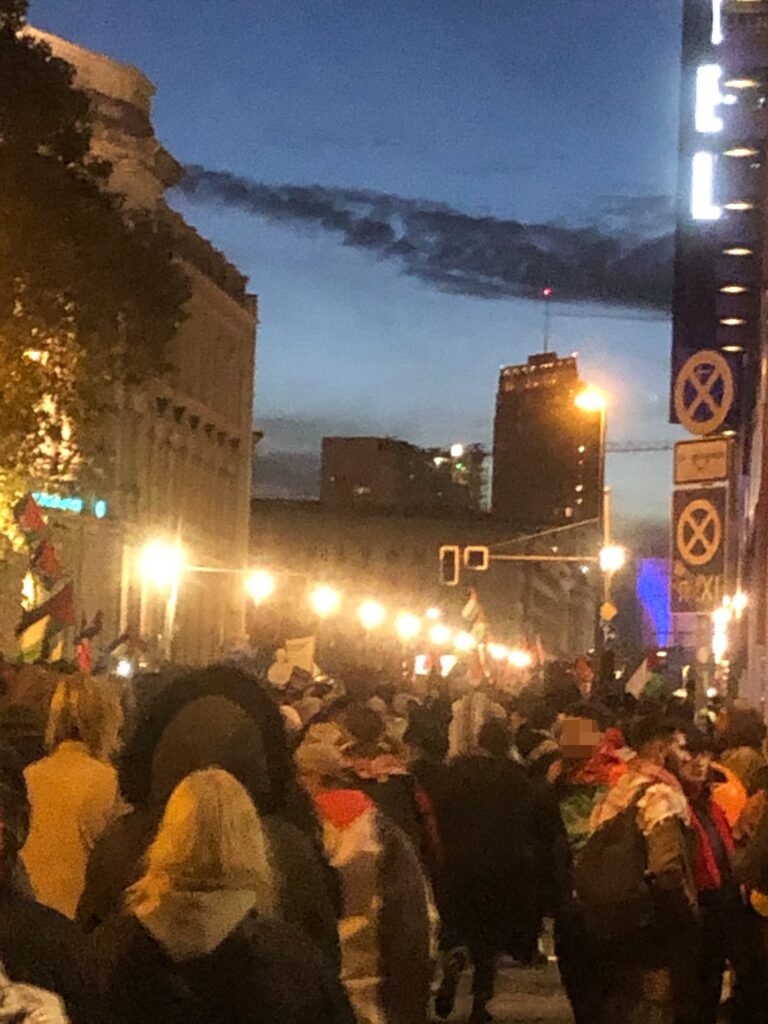
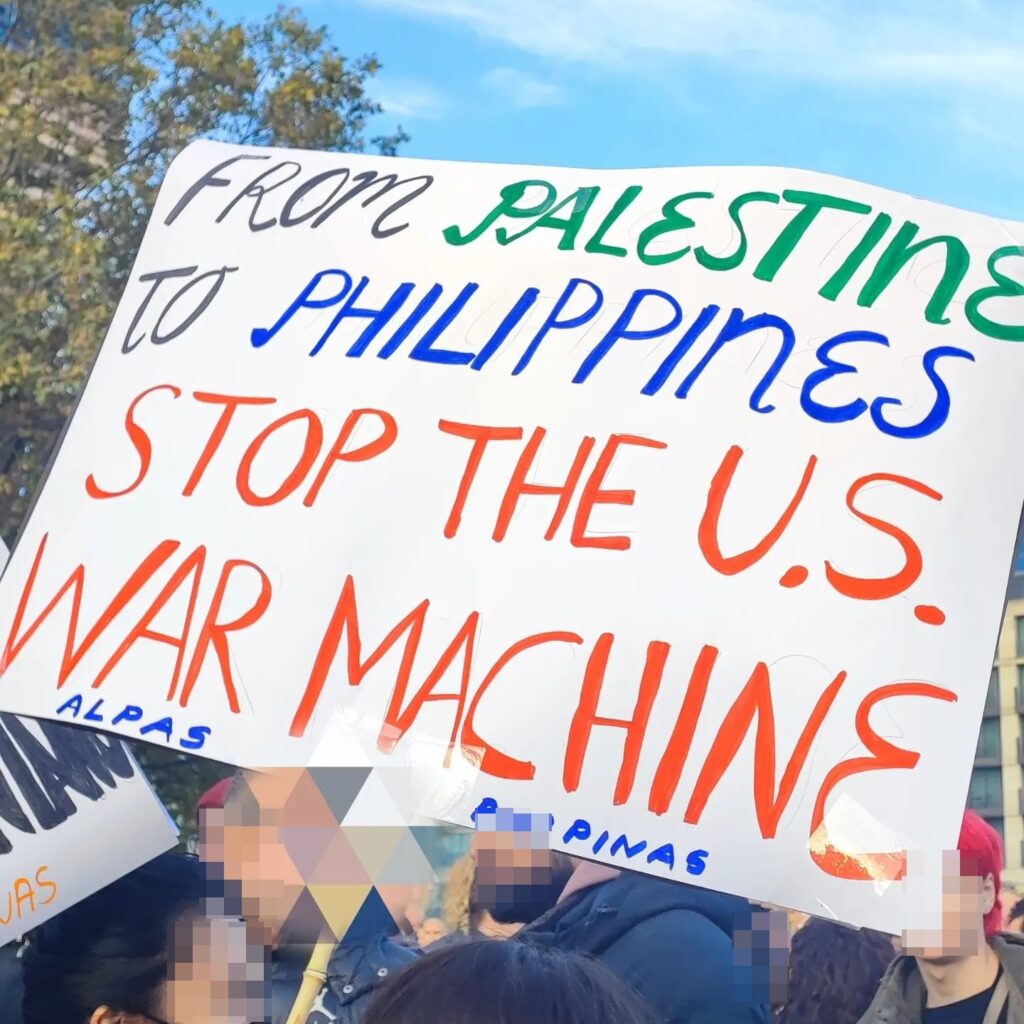
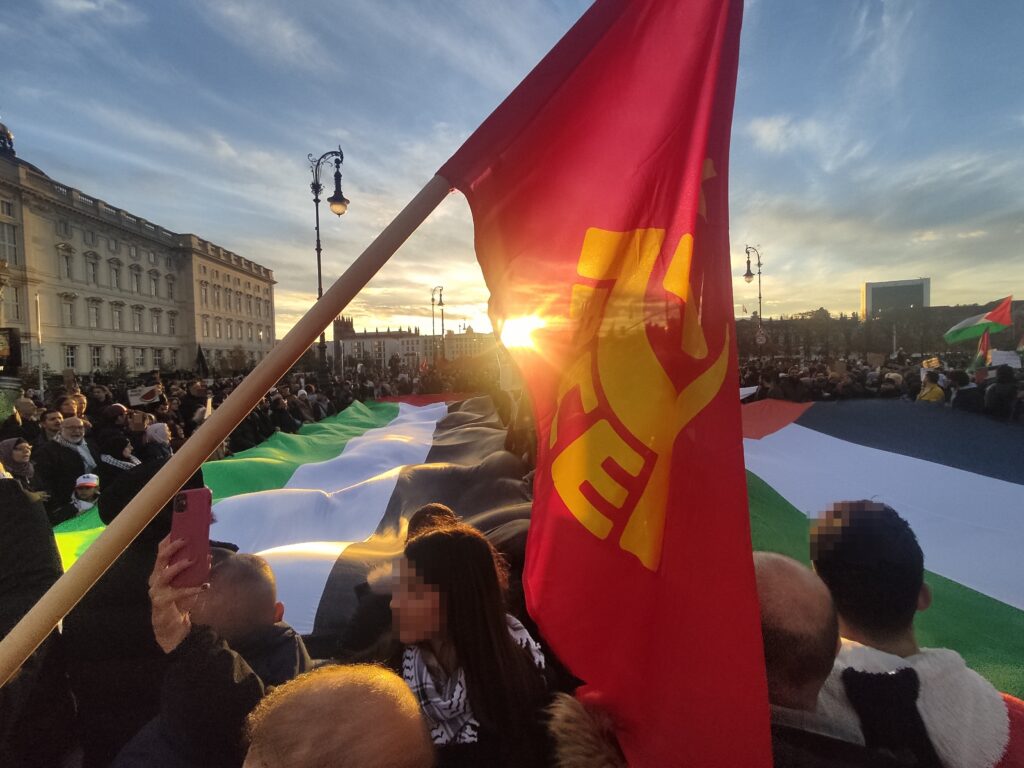
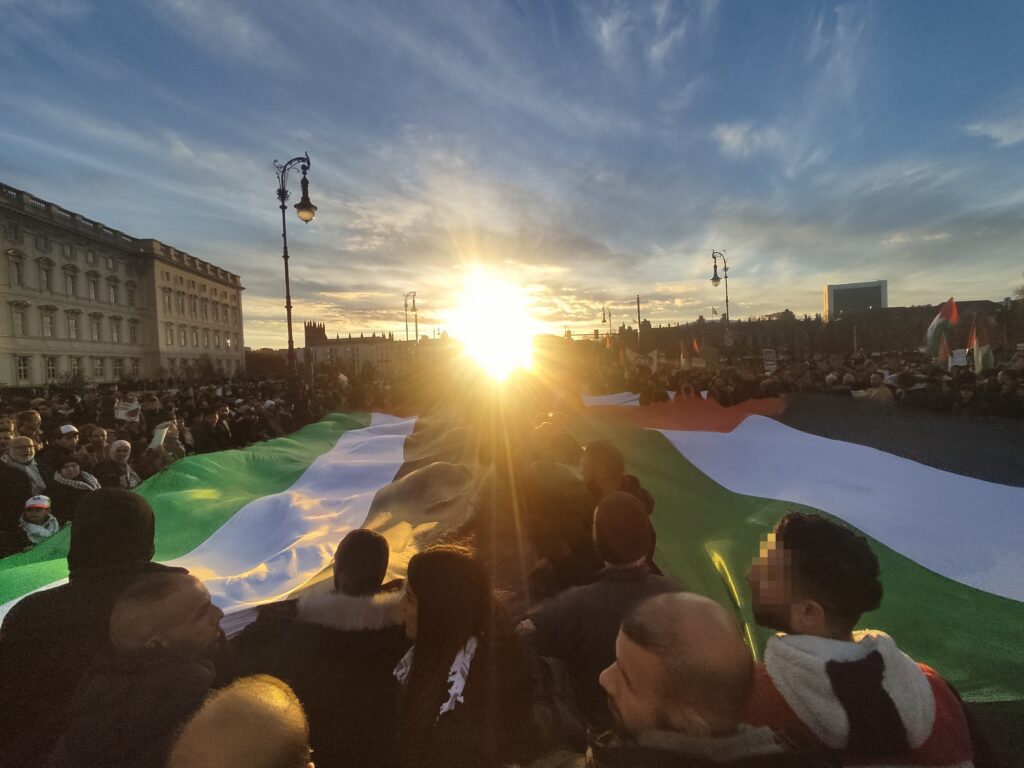
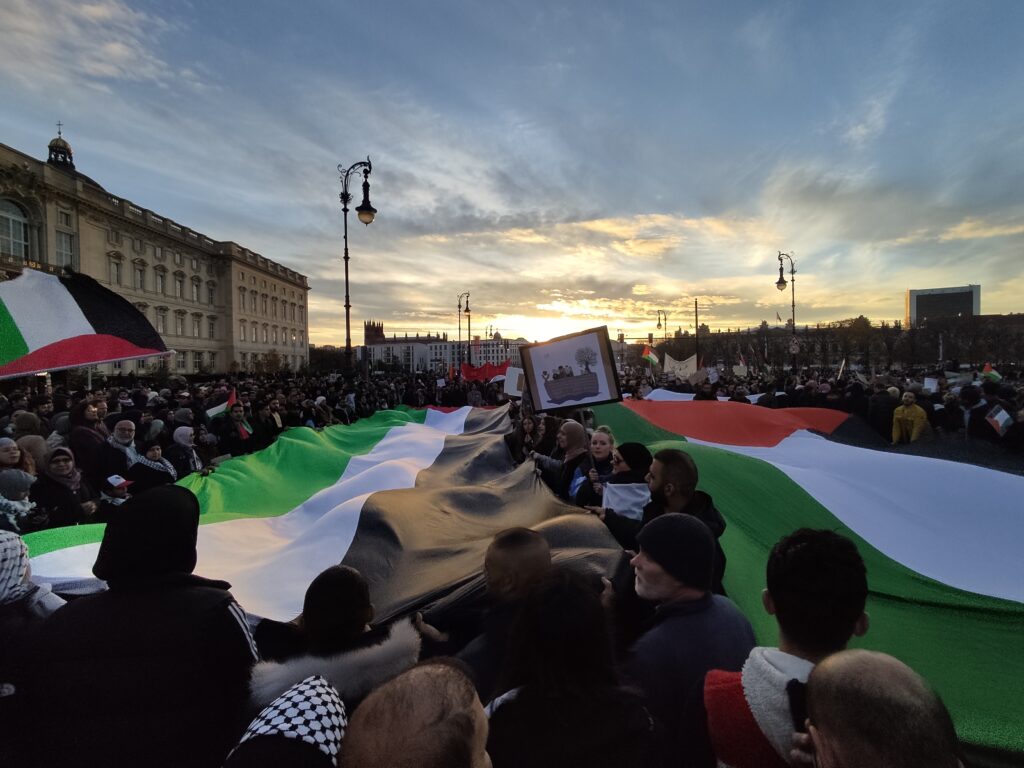
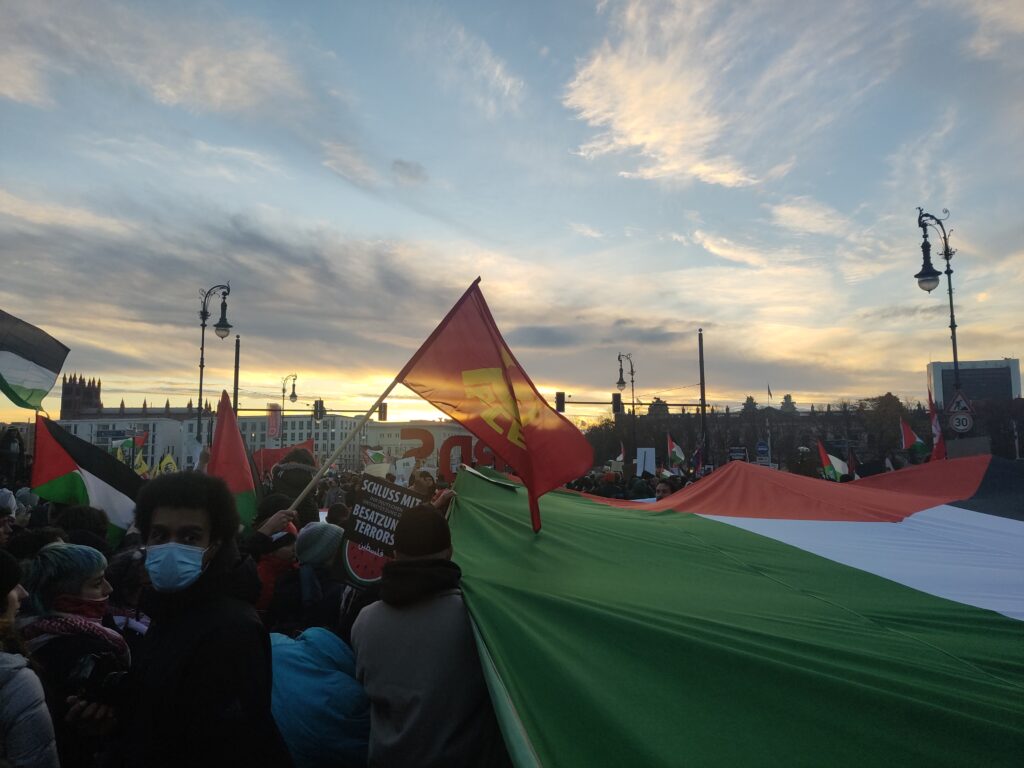
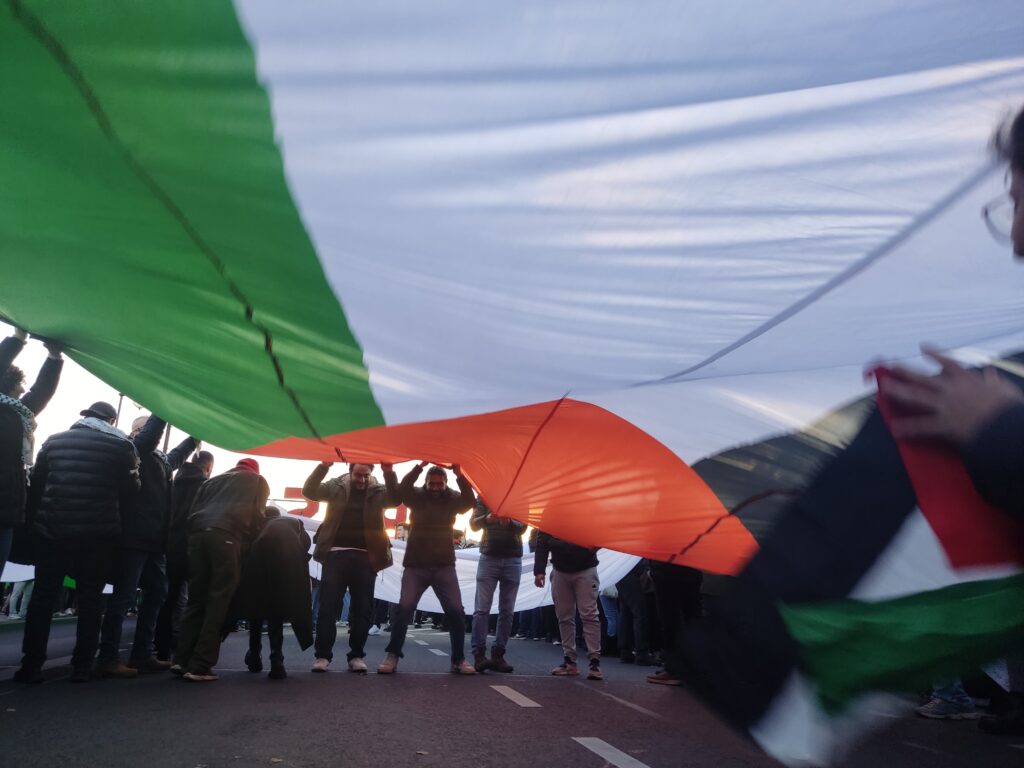
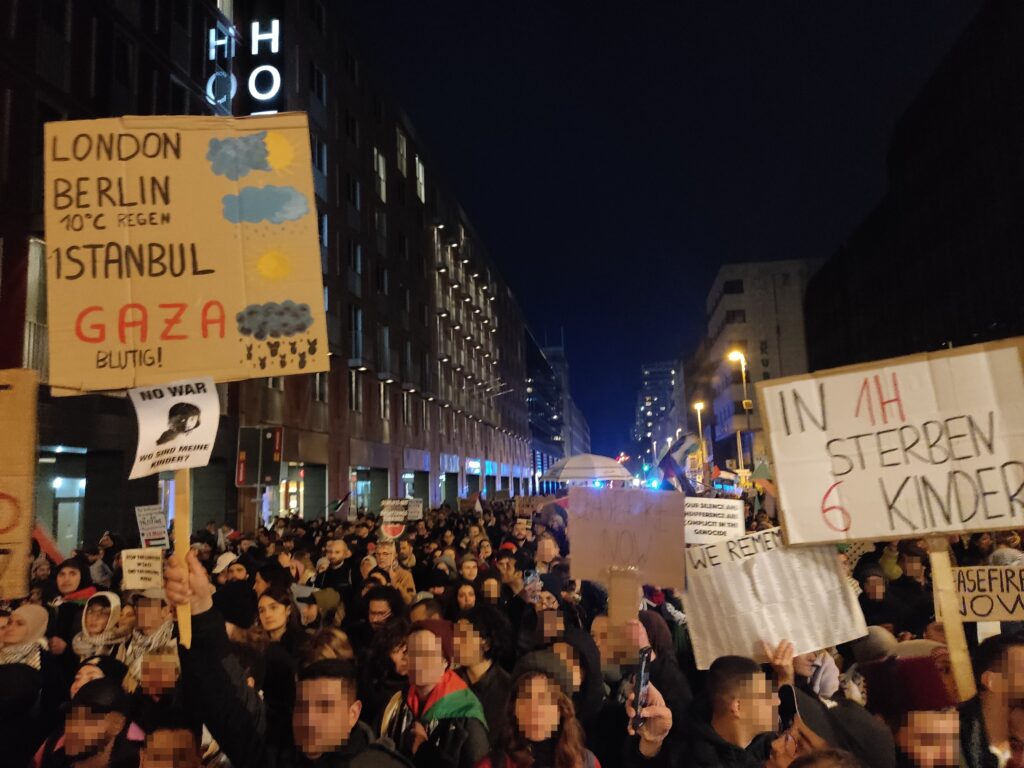
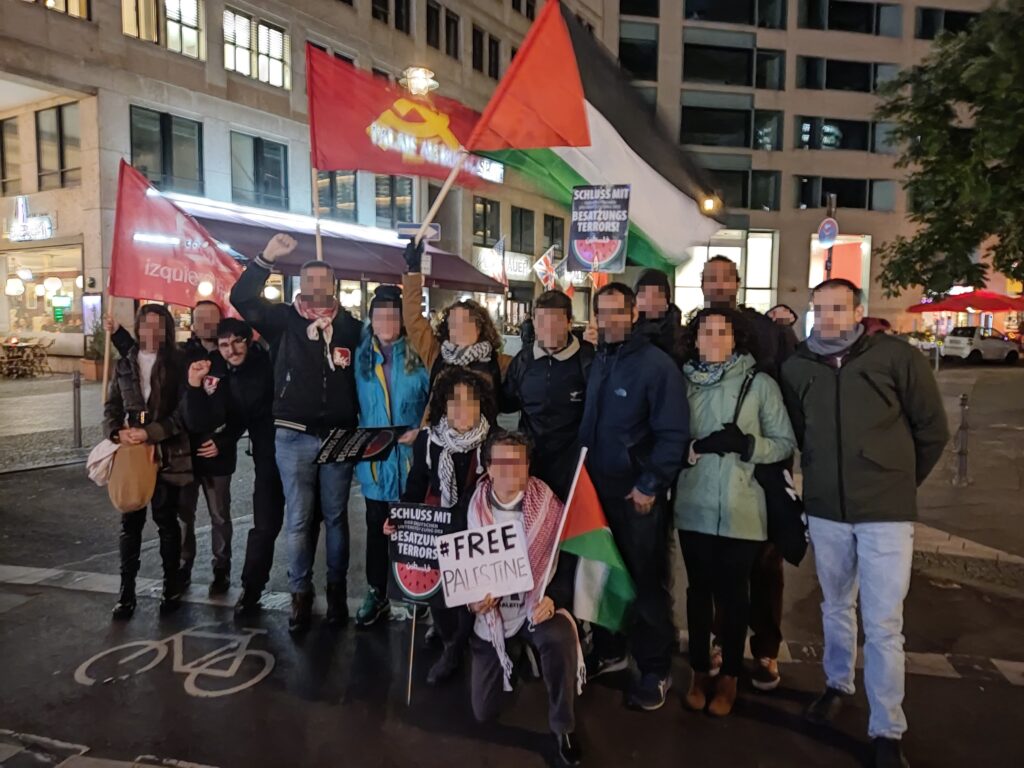
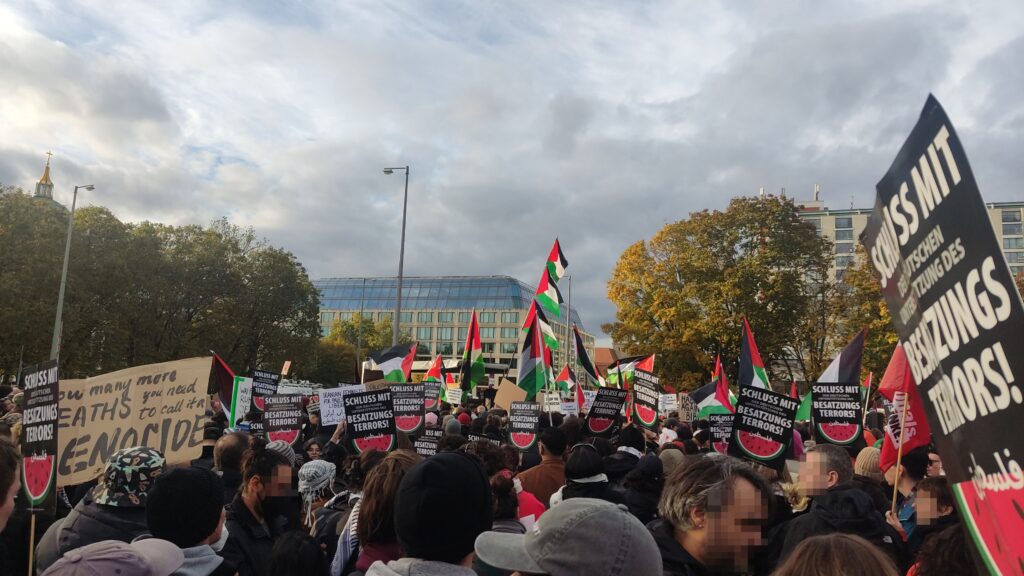
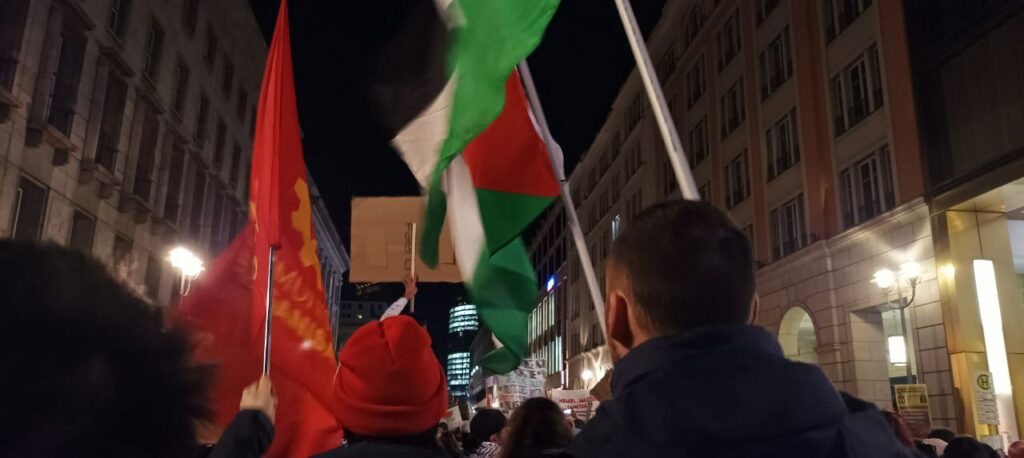
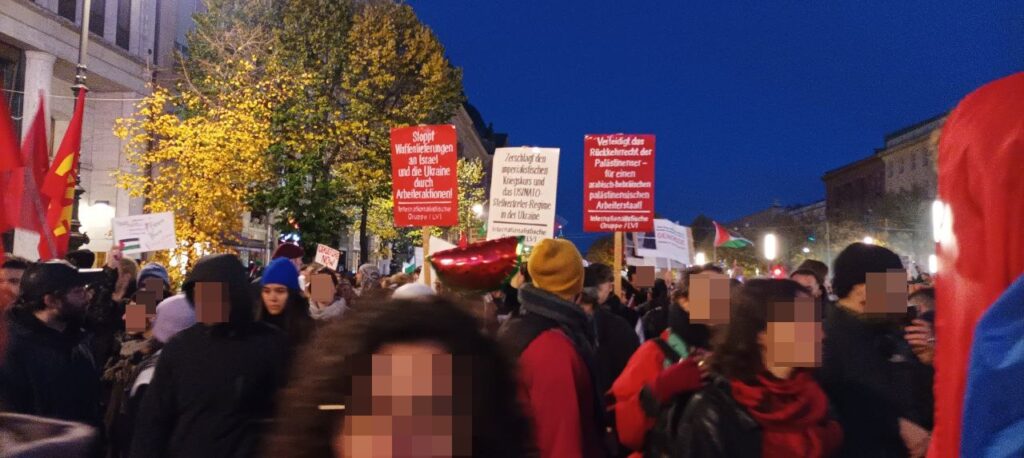
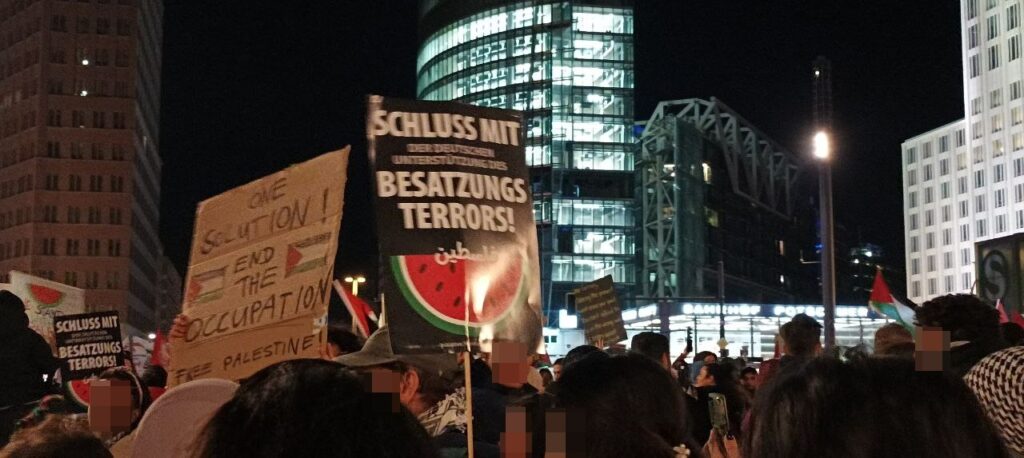
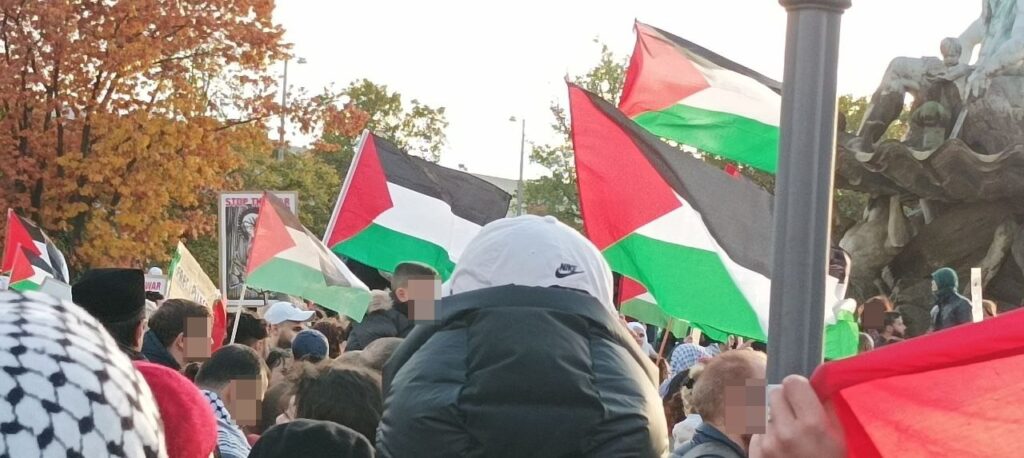
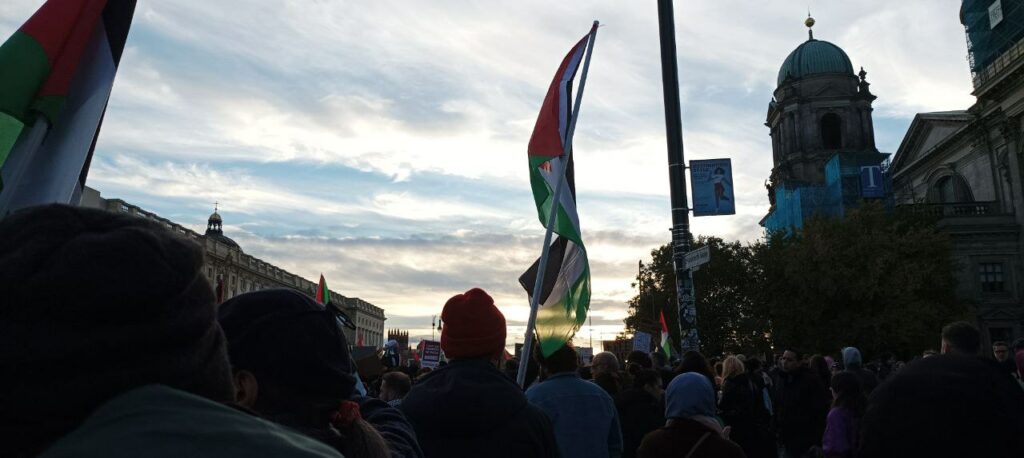
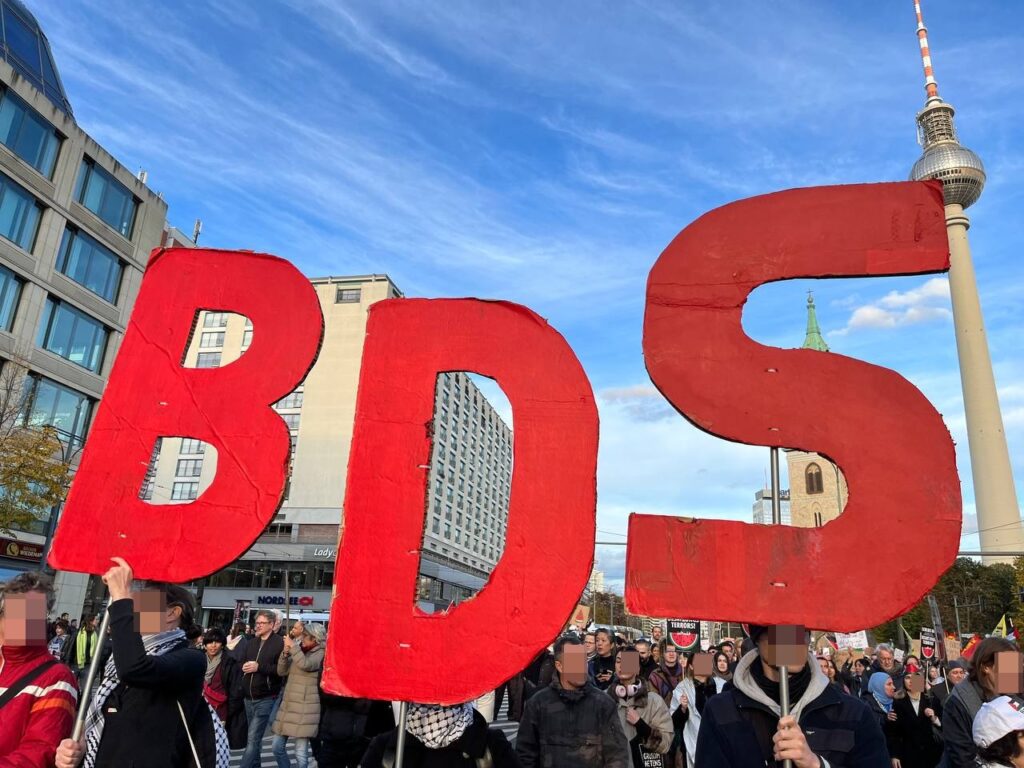
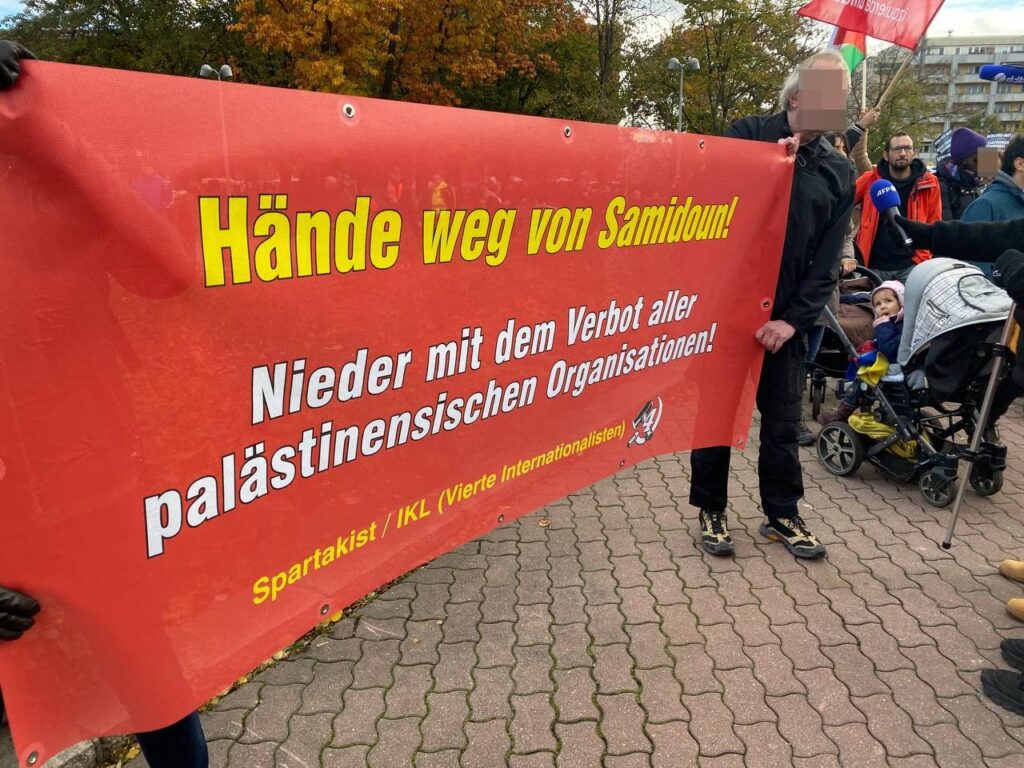
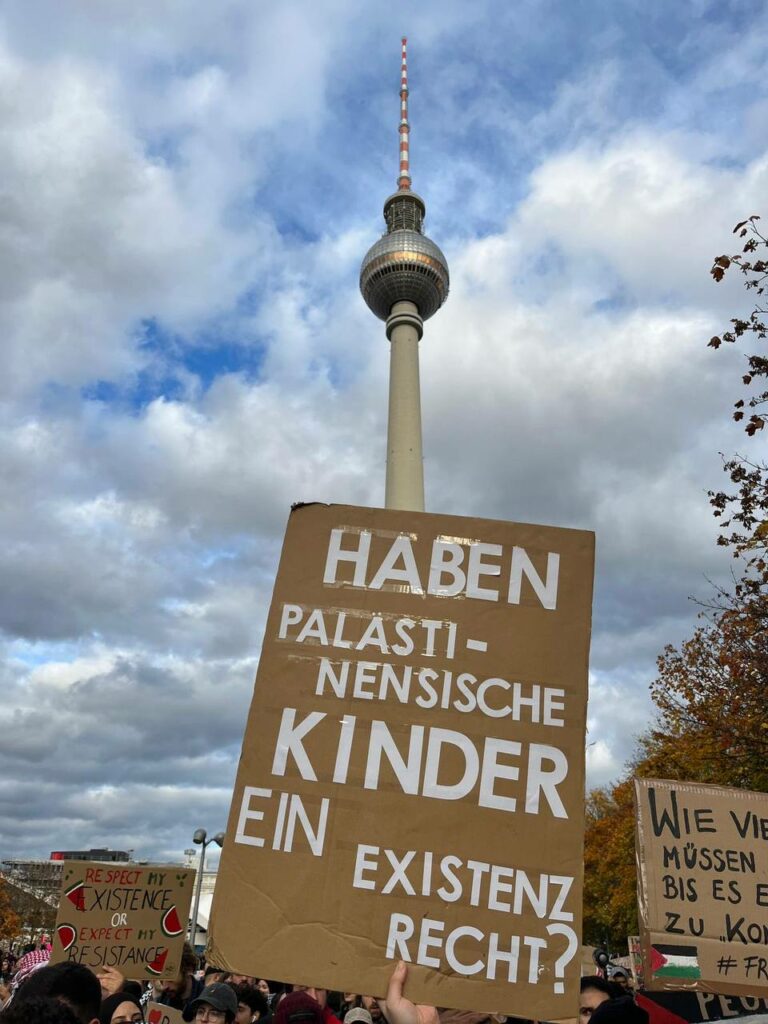
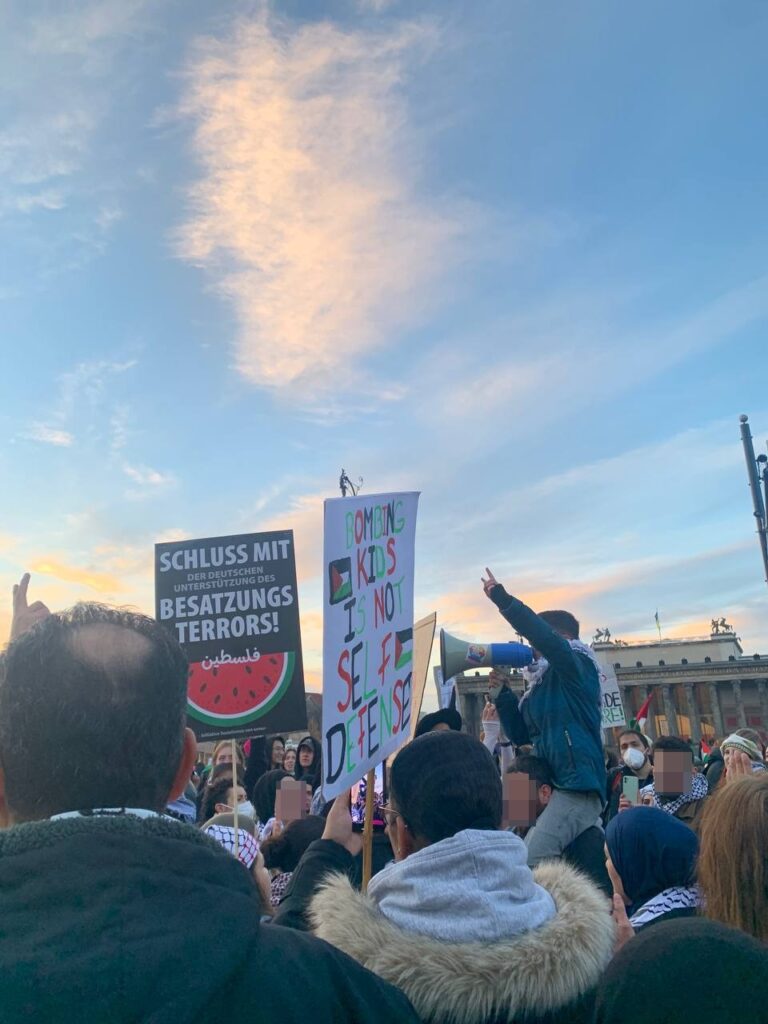
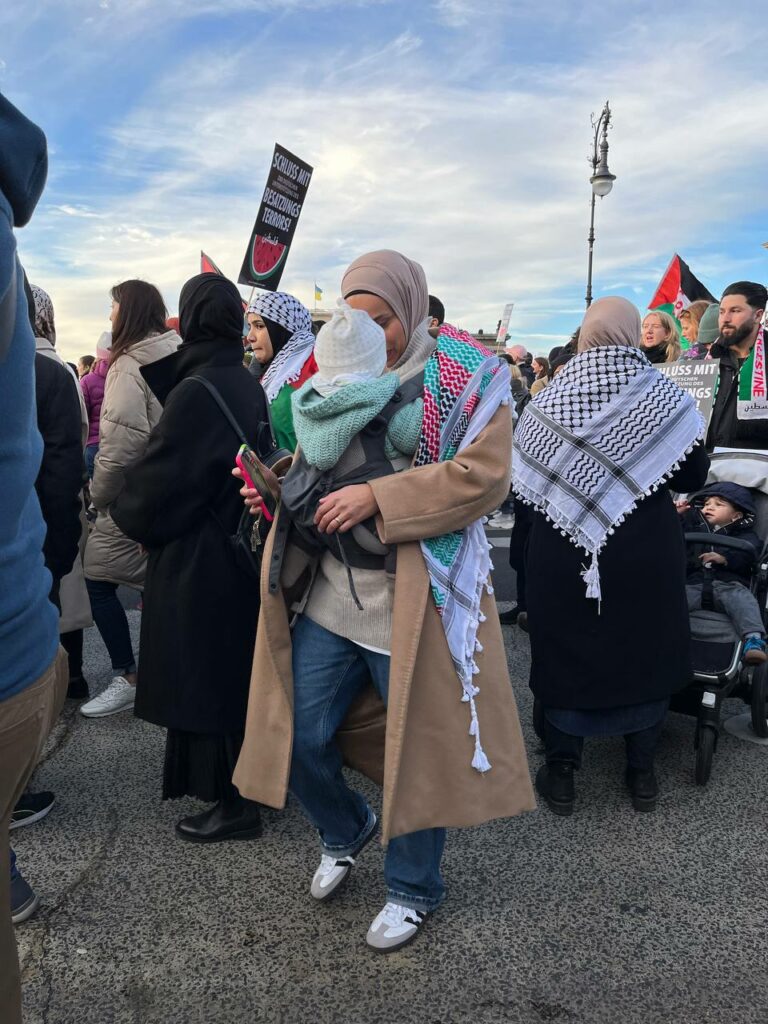
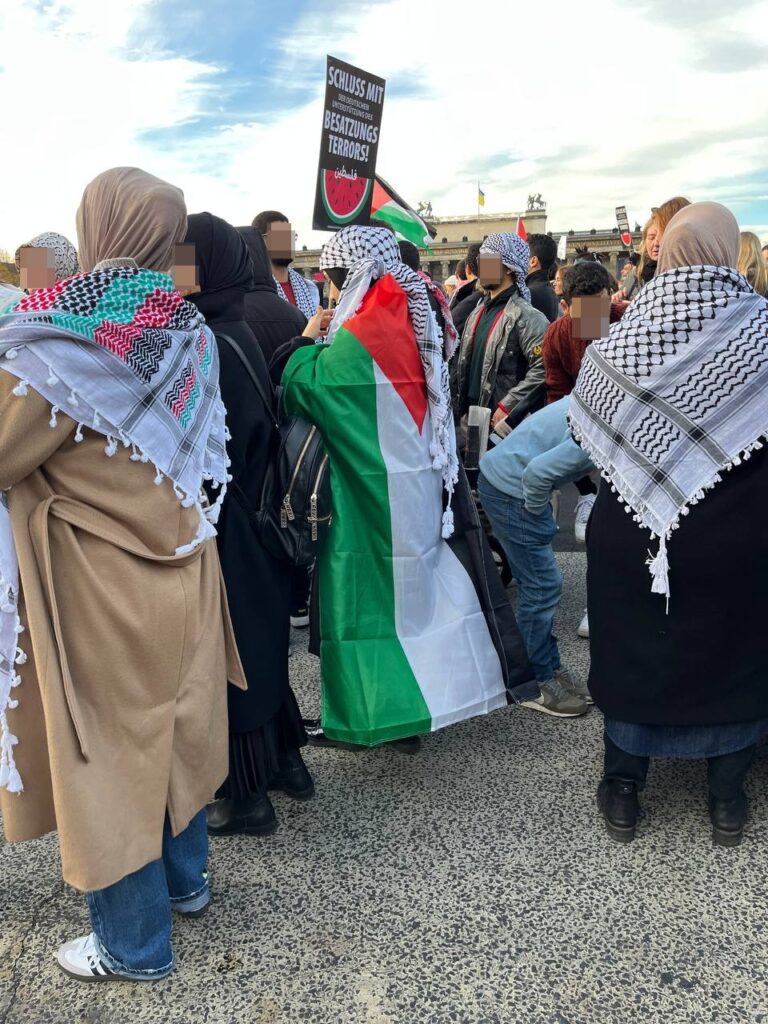
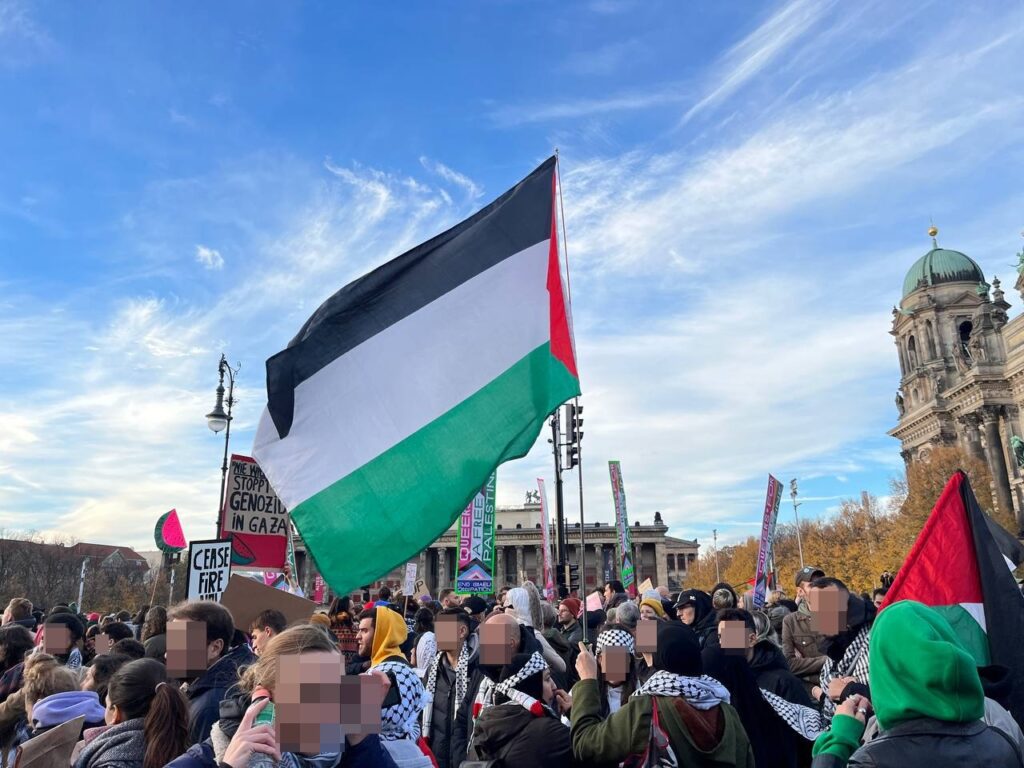
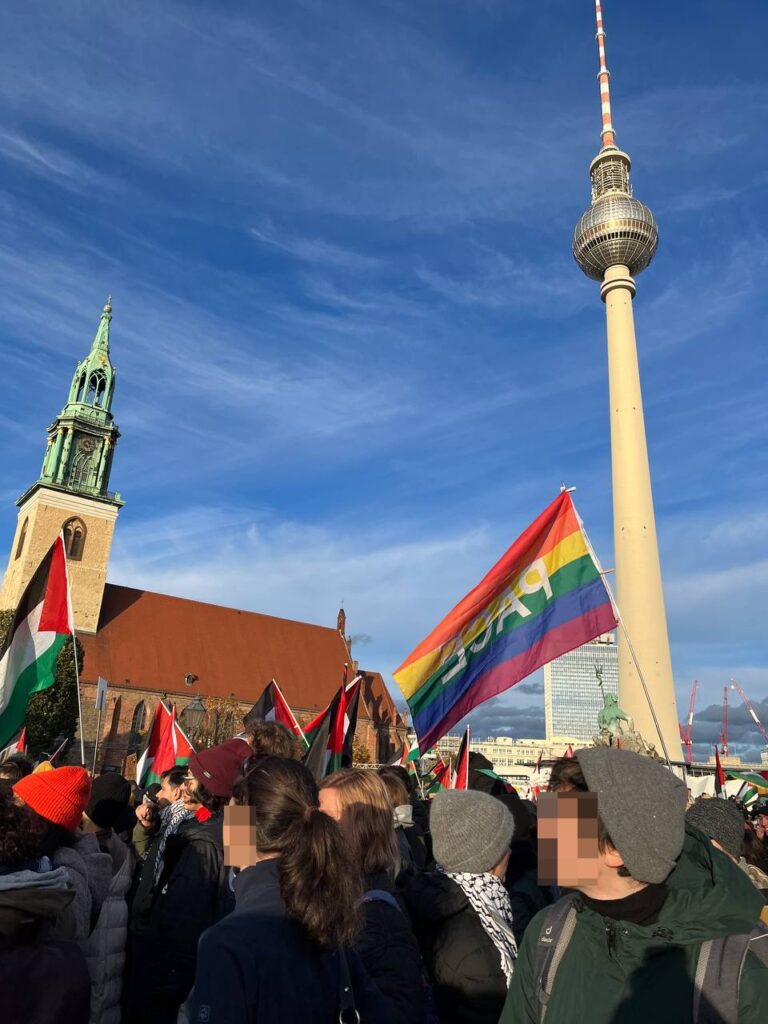
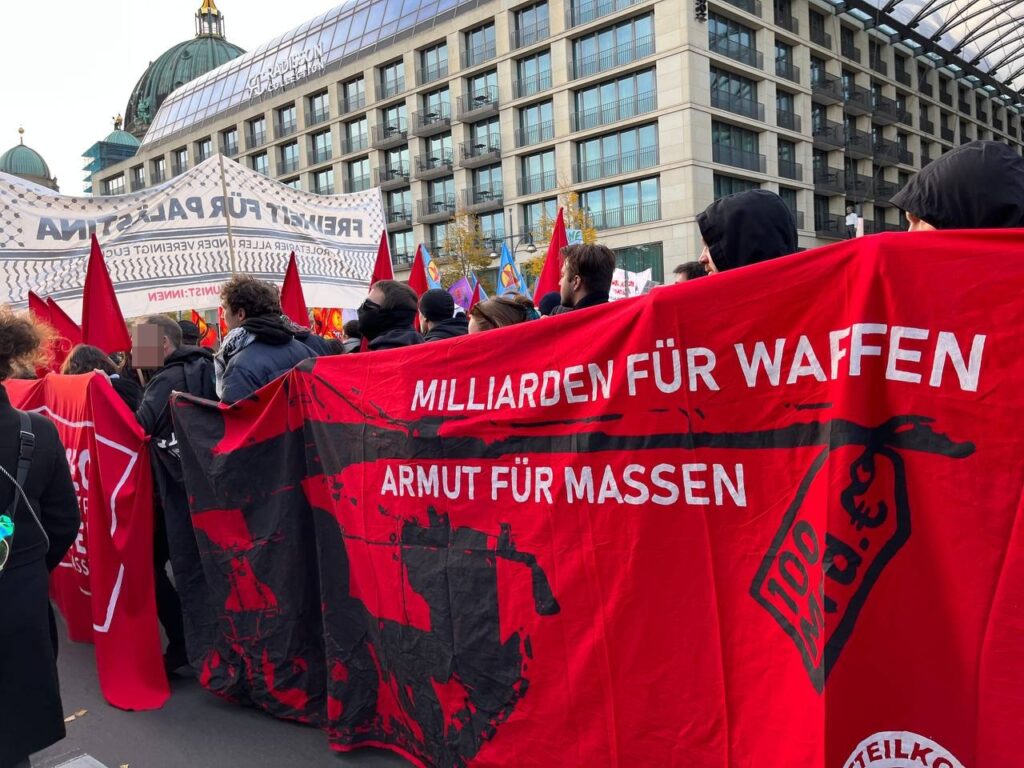
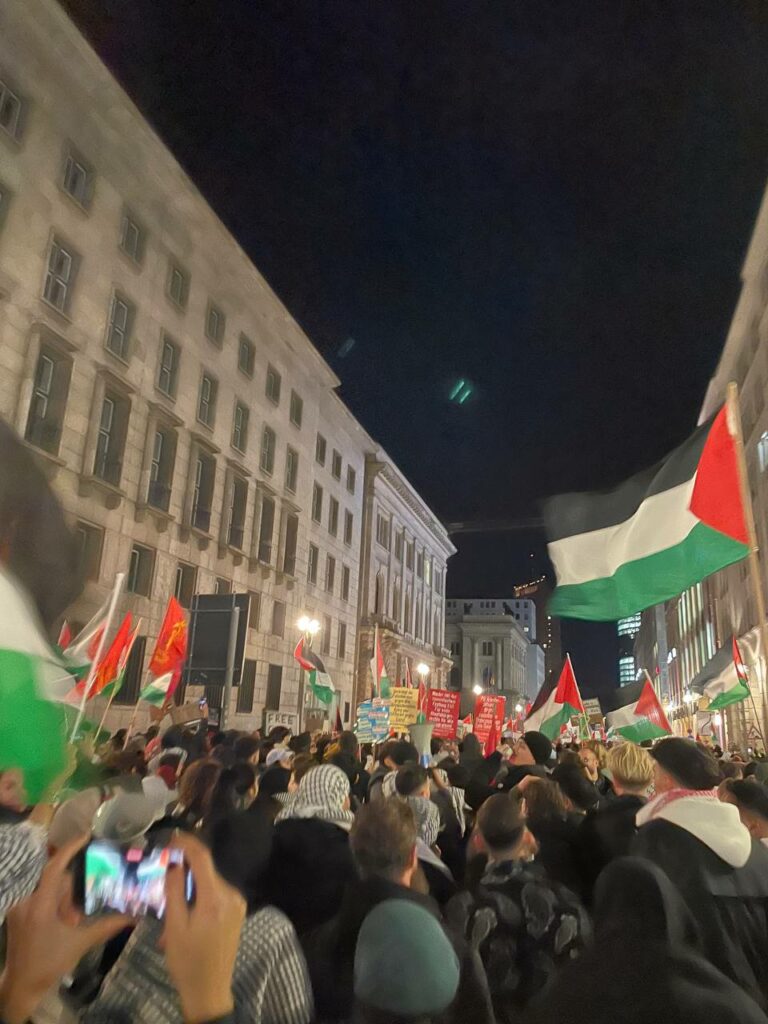
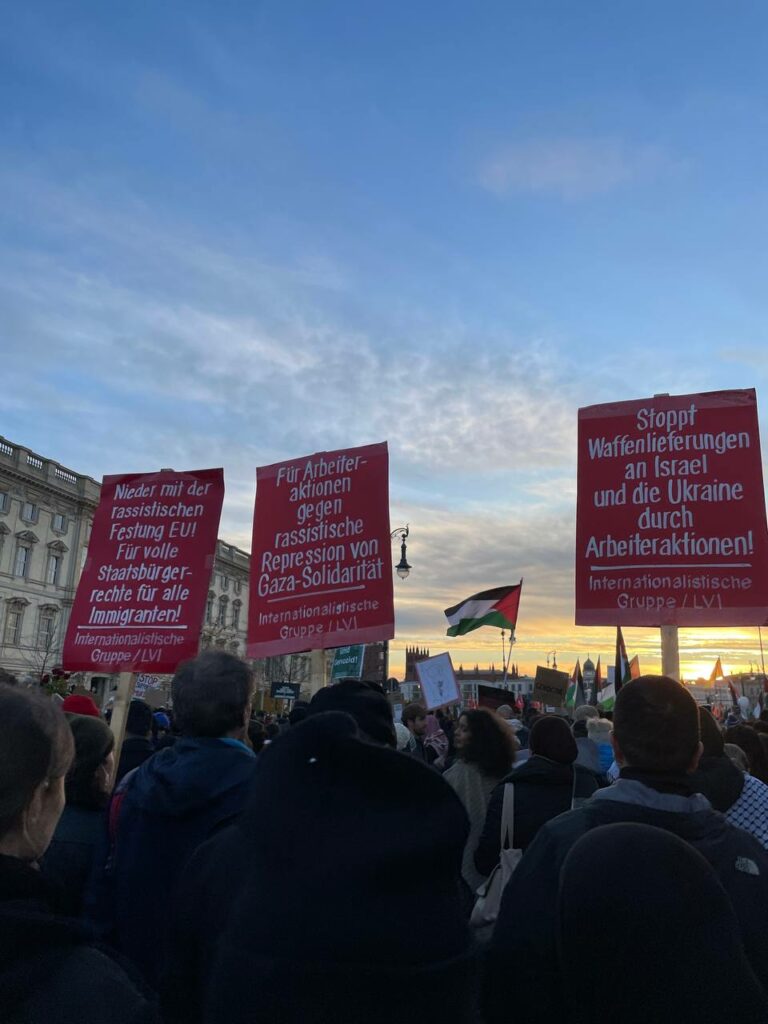
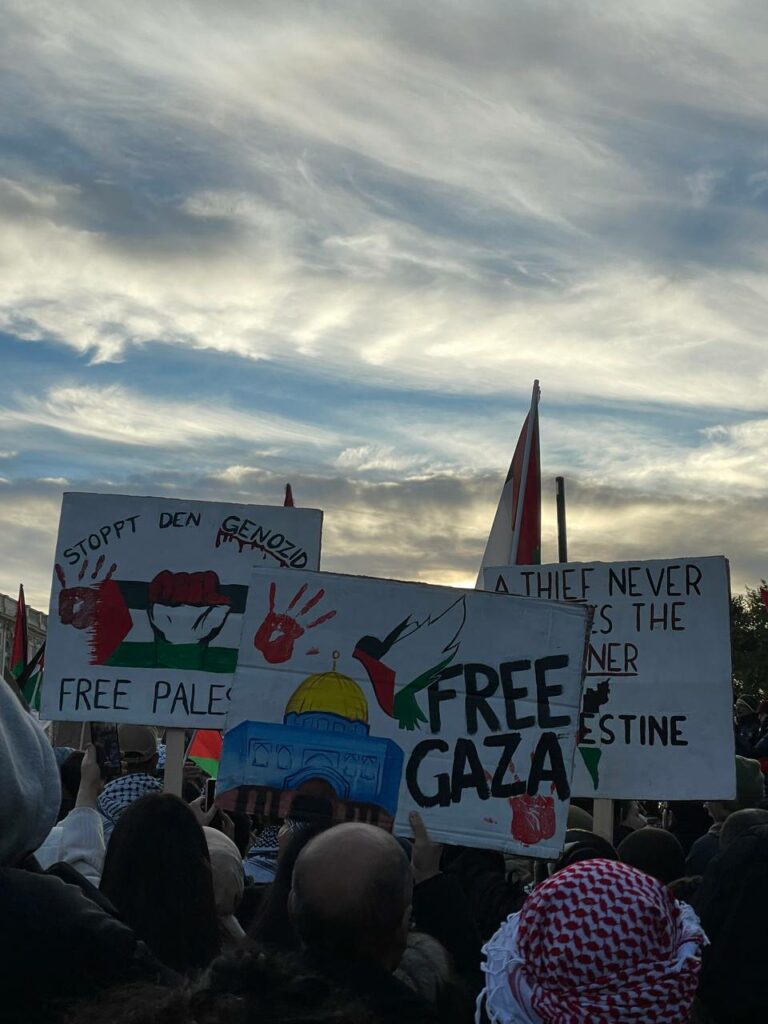
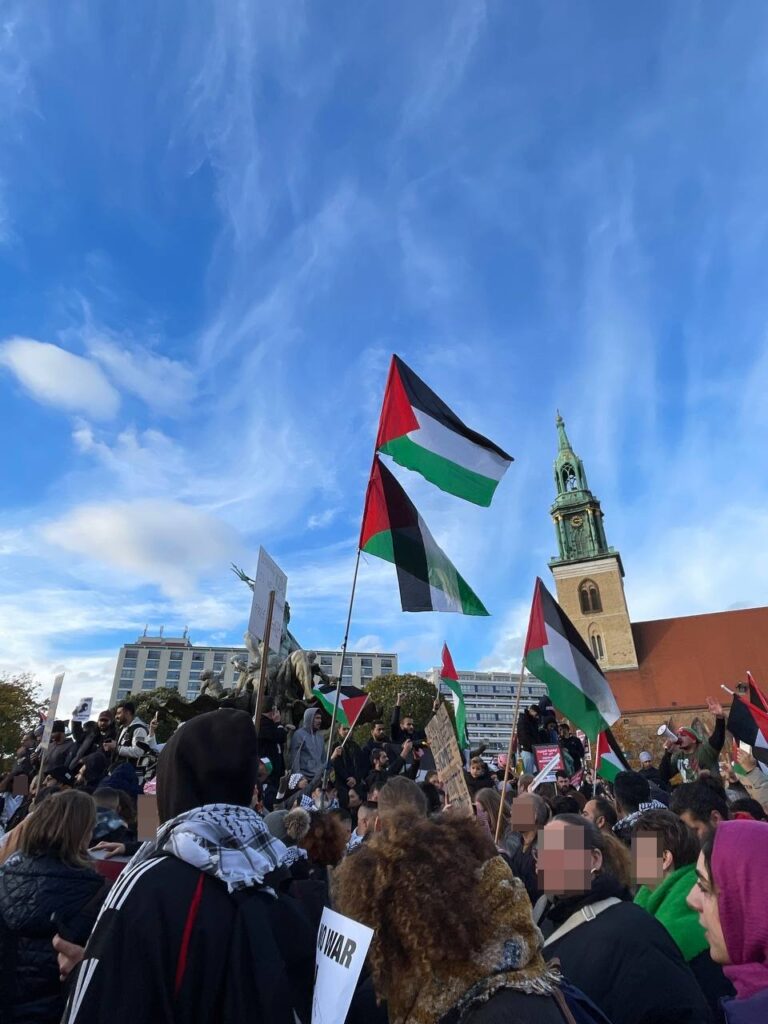
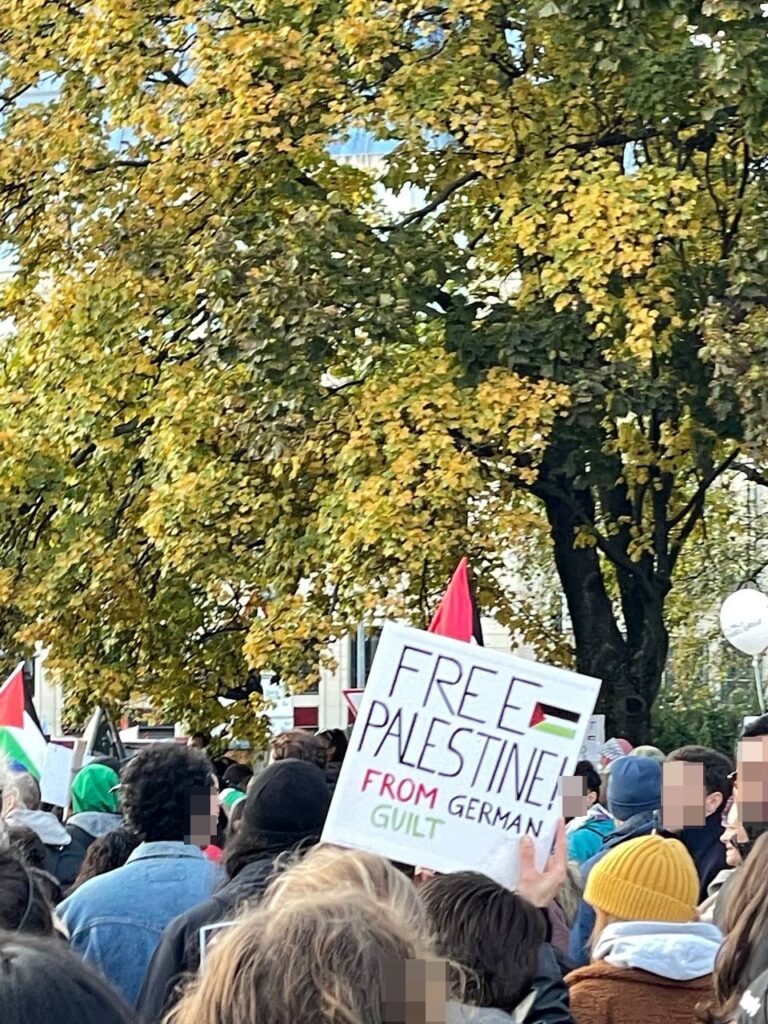
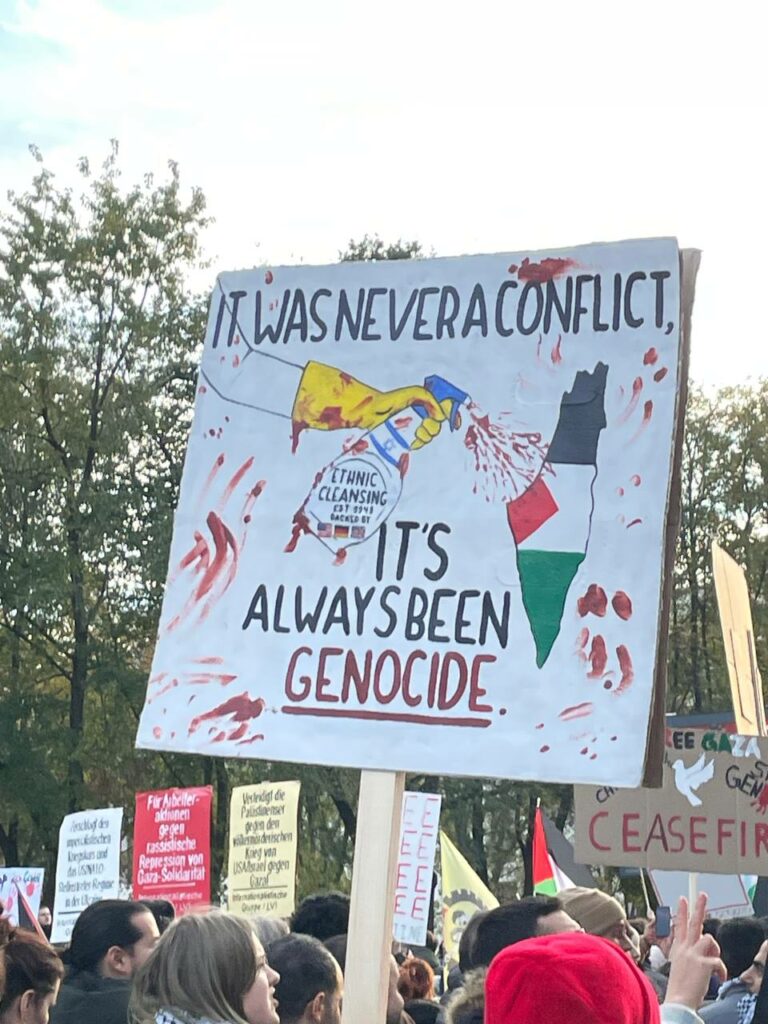
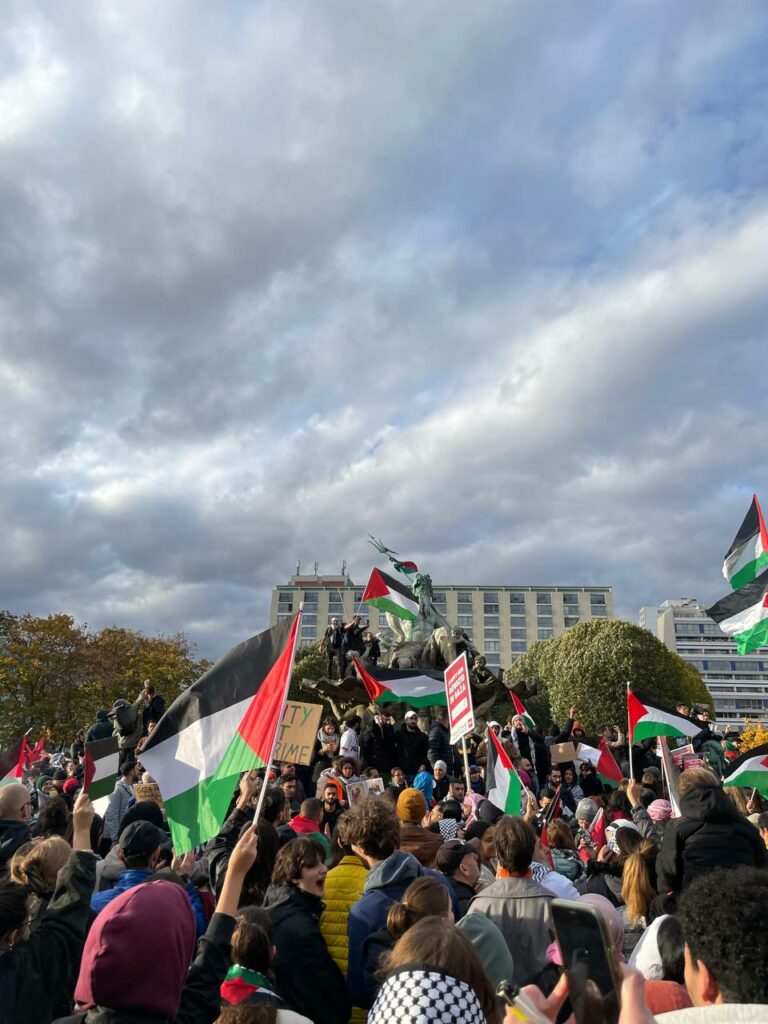
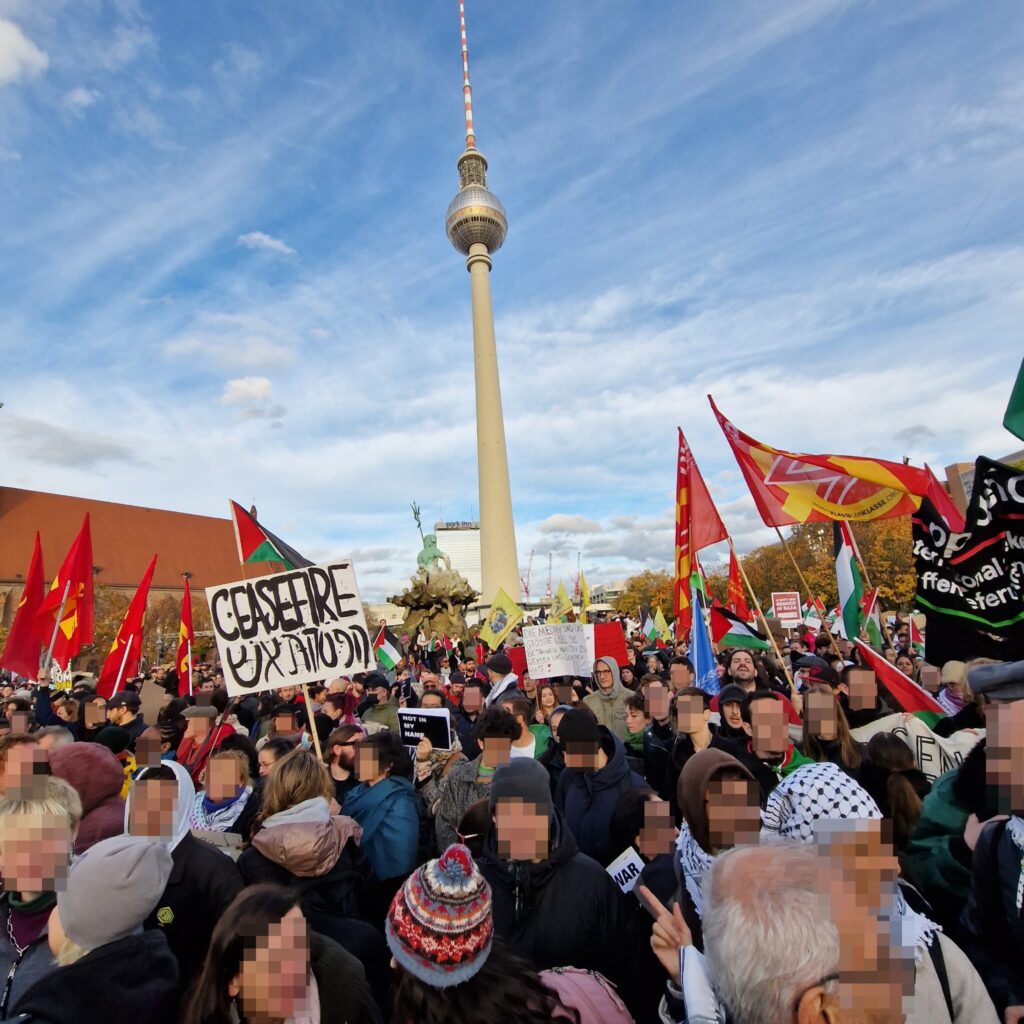
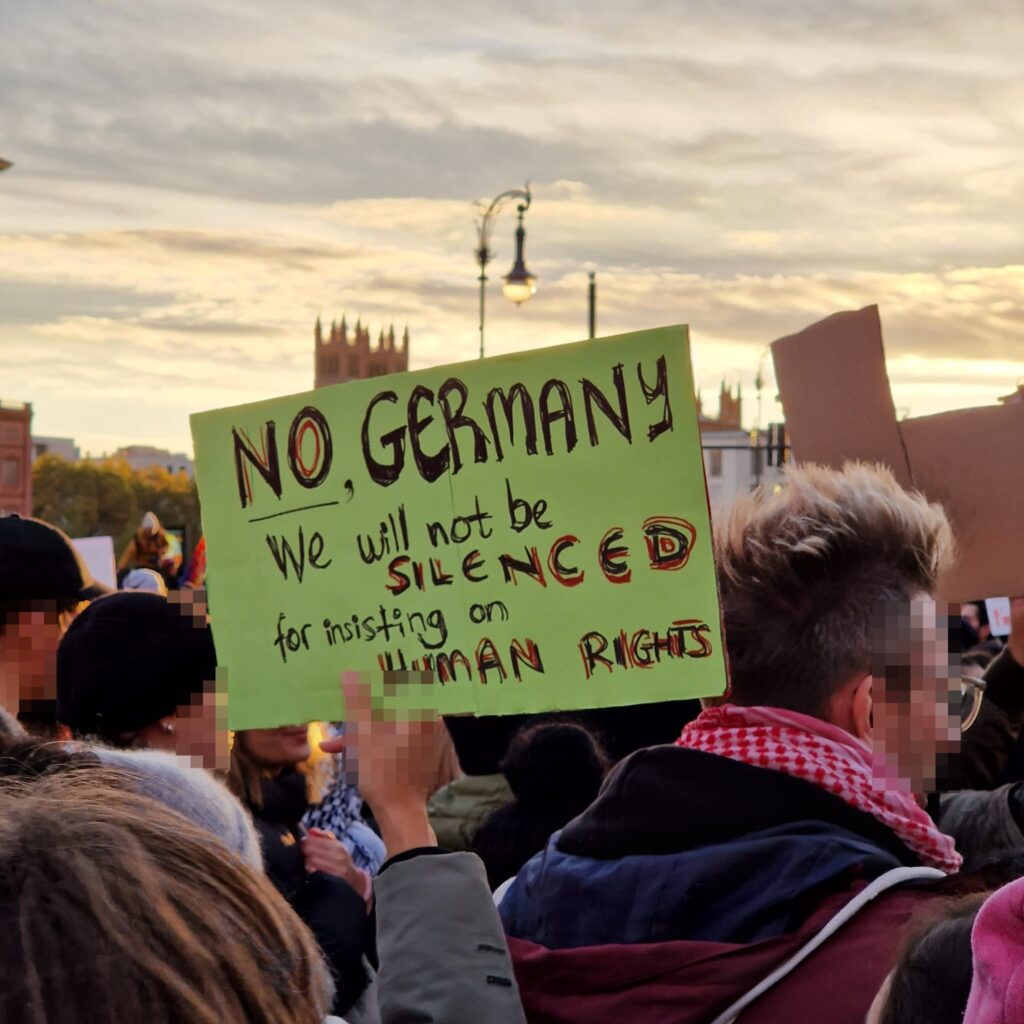
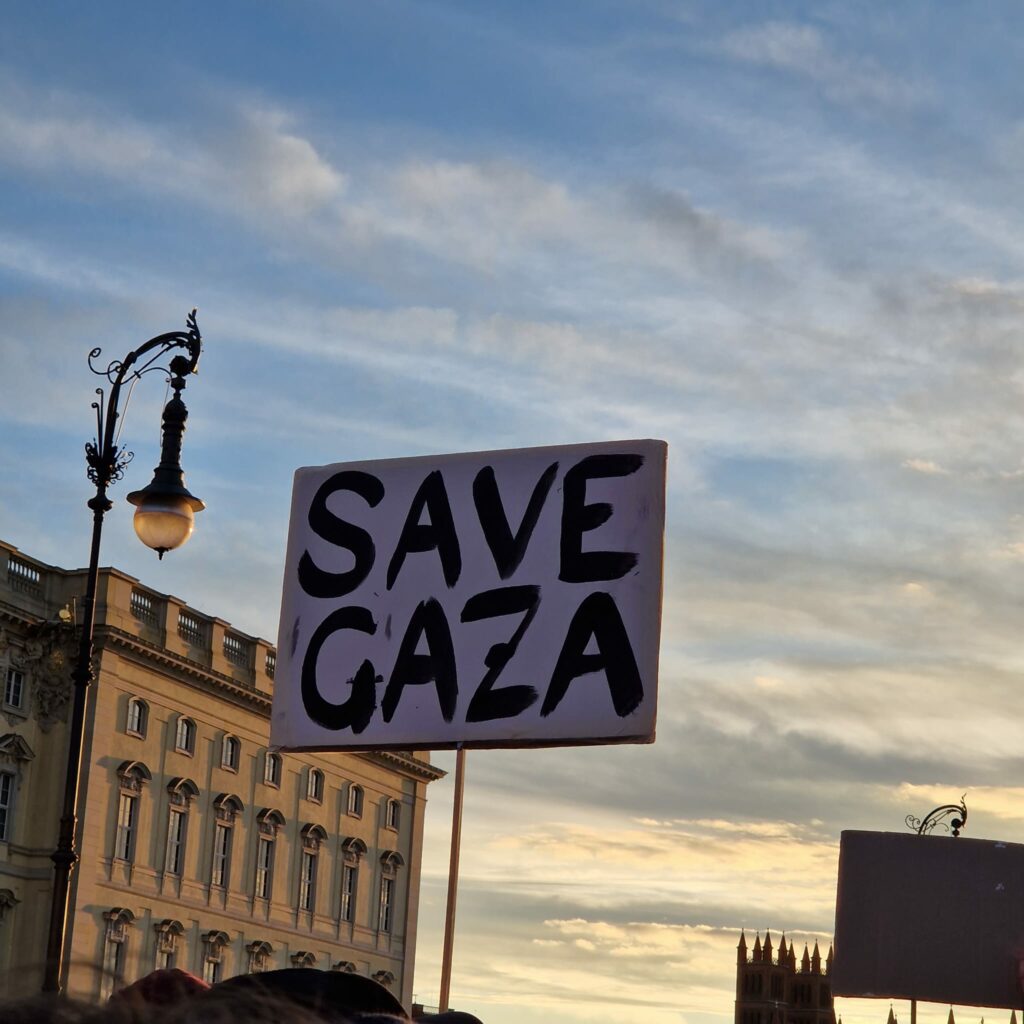
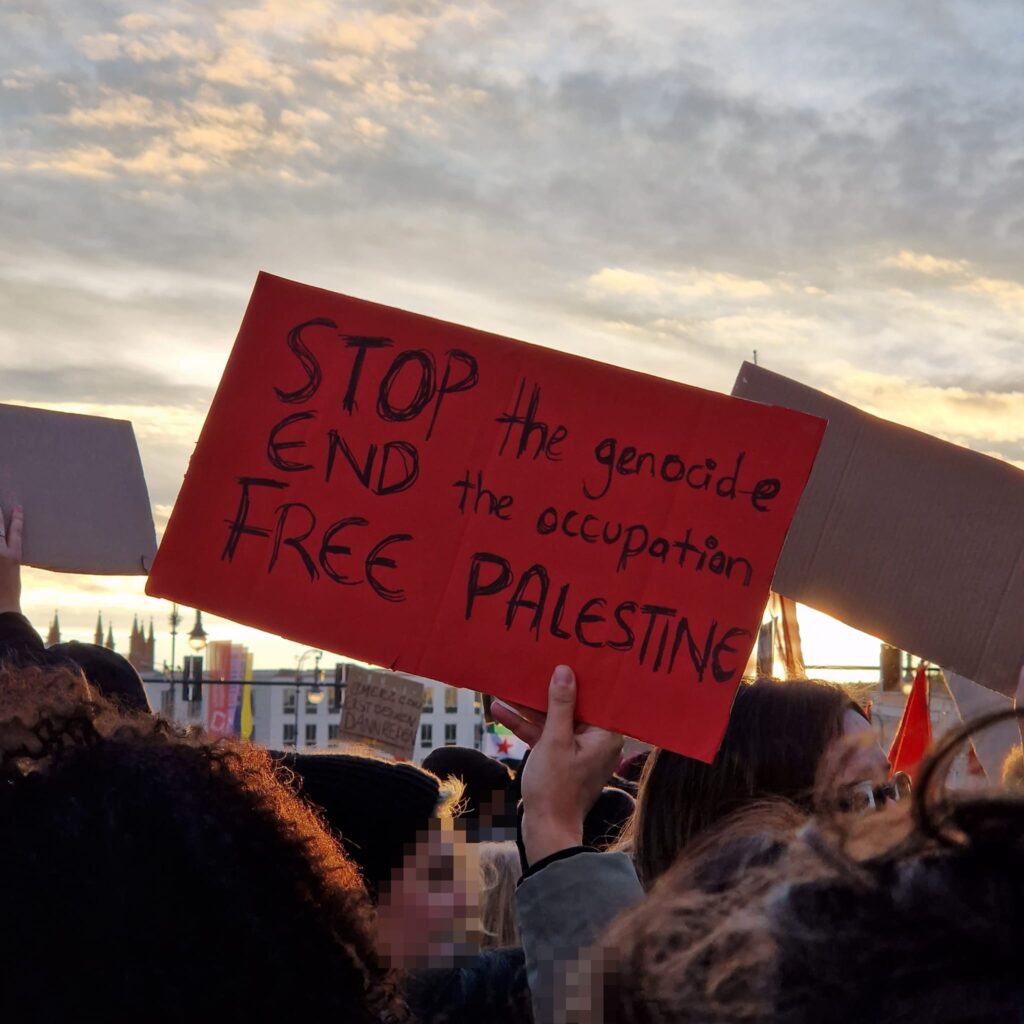
Photo Gallery: Demonstration in Berlin for Gaza, 4th November 2023

Alexanderplatz to Potsdamer Platz


05/11/2023

Photos by; Phil Butland, GABRIELA Germany, Assaad Kanaan, Erika Mourgues, Jaime Martinez Porro, Rosemarie Nünning, Tau Pibernat, Rachael Shapiro, Arslan Yilmaz

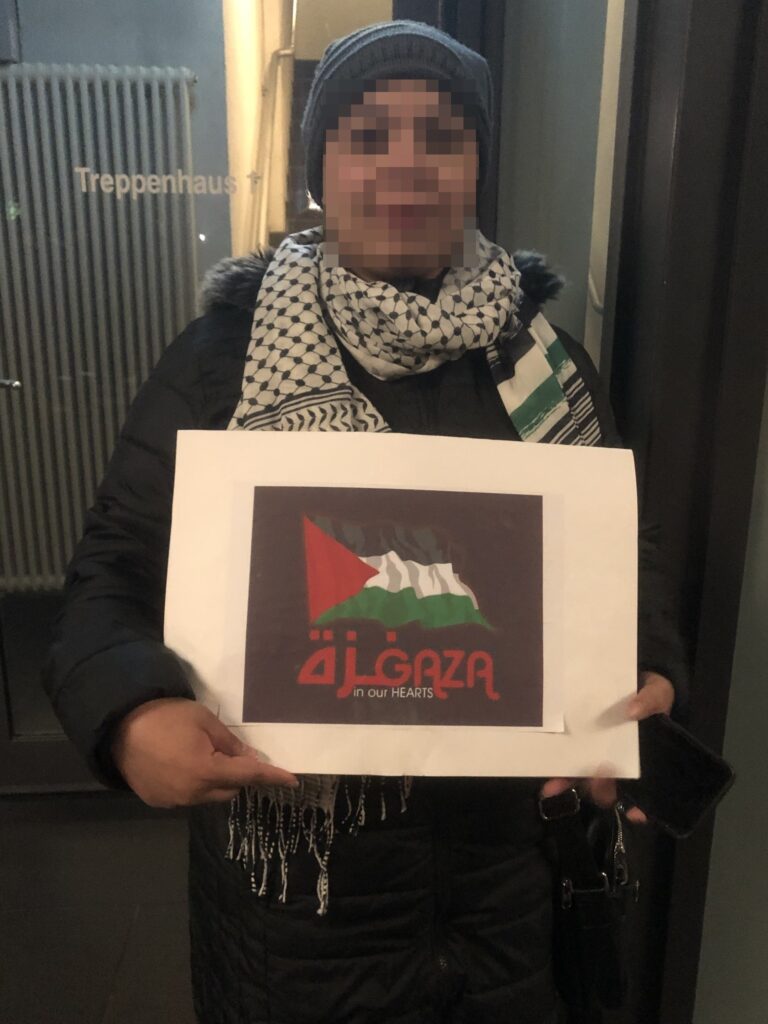
Because of the current level of repression in Berlin against Palestinians and their supporters, most faces have been pixellated.


“Boycotts are intended to create political pressure, we are demanding justice”

Interview with Shir Hever, military embargo coordinator for the Boycott National committee (BNC)

Political economy is a relevant, but often misunderstood, force underpinning the West’s staunch support of ongoing genocide and ethnic cleansing in Gaza and the West Bank. If this is mentioned, it is mainly in leftist circles. One reason for this is that the United States and its allies potentially benefit materially from the mass death and destruction. To delve into the specifics, we consulted Shir Hever, an economic researcher and author based in Jerusalem whose work focuses on the economy of the Israeli occupation.

Can you tell us a little bit about yourself and what informs your perspective on the current situation in Gaza?

My name is Dr. Shir Hever. I was born and grew up in Jerusalem, but instead of military service I volunteered for a year of civil service in Sderot. That is just a few kilometers from Gaza and I taught at a school for the children from nearby Kibbutzim. Both Sderot and the Kibbutzim were hard hit in the October 7th attack, people that I know were killed, lost relatives, were injured or were taken hostage. 

I am also active in Palestinian solidarity groups and BDS groups for many years, and made many friends in Gaza, with whom I have lost contact as Israeli forces are killing thousands. Not a single one of my friends from Gaza hasn’t already lost a loved one to Israeli attacks before. But now I don’t know who among them have survived. I wrote two books on the economic aspects of the Israeli occupation, the second of which is based on my PhD dissertation from the Free University of Berlin in political science.

From an economic perspective, can you sketch out the economic firms involved in upholding Israeli occupation in Gaza, and how they come into play with respect to the current assault we see now? 

This is a question far too big to be answered in an interview, it would take a book or more .There are many levels and layers of complicity, both Israeli and international companies. For example, the European company Airbus mediated a corrupt contract between Germany and the Israeli arms company IAI for leasing 16 Heron-TP attack drones by the German military, which are now “loaned” to the Israeli air force to conduct airstrikes in Gaza. 

If you want to follow the money, your question should be “who profits?” The answer is almost nobody. U.S arms companies (Raytheon, Lockheed Martin, Northrop Grumman and Boeing) had a huge boost in stock price when the onslaught on Gaza started but this is a short-term gain, which will mean little when the U.S starts to regret getting involved in another war in the Middle East. 

Israeli companies have previously profited from the siege of Gaza in many ways. For example by regulating product prices through controlling exports from Gaza, and by manipulating UN aid agencies into buying Israeli products as in-kind humanitarian aid. Moreover Israeli arms companies have used Gaza as a laboratory to showcase their new weapon development. All of this, however, seems insignificant right now as the Israeli economy is in freefall.

Critics of the western international consensus in support of Israel point to the fact that countries like the US (but also Germany) provide the regime with billions of dollars in “aid” funding. Can you explain in economic terms the reasons for their deep investment in maintaining the Israeli regime ? 

The U.S doesn’t give money to Israel. It’s not “aid” but it is military financing. It gives money to U.S arms companies who then provide free weapons to Israel, so it is a subsidy for the U.S arms companies. For example, the $106 billion the US requested from congress is not just for Israel. Only 14$ billion of it is earmarked for weapons to Israel, and the money will flow to the US arms companies, not to the Israeli Ministry of Finance. The subsidy helps the U.S test their own weapons without risking U.S soldiers. Henry Kissinger once said that for every tank which the U.S gives to Israel for free, Israel’s neighbours buy 4 tanks from the U.S. The interest is clear. 

As for Germany, it’s more complex – but the arms industry in Germany is just as corrupt as anywhere else. Germany’s biggest arms export to Israel were the Dolphin-class submarines which the Israeli Navy repeatedly said they do not want or need, but they were sold to Israel anyway because of corruption. Israel returned the favour by using guilt feelings in Germany for the Holocaust to twist the arms of the German government into buying the Arrow3 system for an exorbitant price of 4 billion Euros. Seeing that Arrow3 was never successfully deployed or fully tested, and that it finances one of Israel’s most criminal and corrupt arms companies, the deal will be remembered as a low point in the history of German government decisions.

I have seen analyses by other scholar activists (e.g. Angela Davis on G4S) discussing how the same corporations and economic firms that supply Israel also help to support other borders like the US-Mexican as well as the US carceral (prison) system more broadly. Do you have thoughts about these linkages?

There are many examples. The largest Israeli arms company is called Elbit Systems and it provides services and remote-controlled weapons for the Israeli illegal Separation Wall (or apartheid wall); as well as to the US border wall with Mexico. The latter surveils the Tohono O’odham Indigenous nation and violates their sovereignty and privacy rights. The Israeli company Magal provides armed robots that patrol both walls.

To what extent do you think these underlying economic factors influence the current situation of Israeli aggression in Gaza?

Israeli colonial violence is an integral part of the settler-colonial reality in Palestine. Violence begins with oppression, not with the resistance to oppression, even if some acts of resistance are unjustifiable. Israel is not motivated by capital interests in its violence. Many times capitalist countries try to influence Israel to take a more rational course of action, such as we have seen with a convoy of western leaders coming to Israel to try, unsuccessfully, to persuade it to refrain from a ground invasion of Gaza.

The role of the economic factors is important but secondary. Wars increase the price of oil and gas, and increase the profit margins of energy companies, and certainly increase sales and profits of arms companies, but other sectors of the economy suffer: services, agriculture, tourism and more.

In a recent interview you mentioned how people in the west (e.g. Germany) ‘pay the price’ for the government’s funding of Israel. Can you elaborate here on what you mean by this?

I mean that the population of Germany needs better investment in public services and infrastructure, the costs of education and health services are a heavy burden and there is no reason that a strong industrial economy such as Germany should have so much poverty. Instead of wasting 4 billion Euros on Arrow3, the money should be used to improve the lives of Germans. It is even more grotesque that Greece, much less wealthy than Germany and struck by terrible fires and floods, spent 400 million Euros on Israeli Spike missiles instead of on disaster relief. There is also a diplomatic price. NATO and the EU are seen by the Global South as a hypocritical organization, because they condemn Russian occupation and annexation but not Israeli. The West’s hegemony is weakened by its fanatical support for Israel.

In light of all the misinformation, how can those of us watching this situation unfold from abroad better inform ourselves about what is happening? 

I could give you an answer spanning hundreds of pages. I think that the atrocities, killing of defenseless civilians among them many children, the terrible suffering of the people of Gaza – these are facts which anyone can follow on their own. They are shocking and crushing, but by themselves they do not change much about our understanding of the situation.

So let me just focus on one thing. I grew up in Israel as did my parents. Neither I nor my parents can remember a time like this in the history of the country. Freedom of speech, even for Jews, has ended. Israeli media has stopped reporting the facts. Instead it knowingly spreads misinformation in the name of the “war effort,” even the liberal media such as Haaretz newspaper. There is a disconnect like never before between the Israeli public and the rest of the world. Israelis are daily expressing surprise and amazement that Jewish organizations around the world, but mostly in North America, are horrified by calls for genocide against Palestinians, and are holding mass rallies to stop the onslaught and demand a ceasefire. There is a real belief (not just a convenient half-serious self-delusion) among Israelis that the entire world is wrong, that antisemitism has suddenly gripped the global media, that Jews outside of Israel have all lost their minds and only the Jews in Israel continue to see reality as it really is. 

It is a tragic development, and under these conditions the public opinion in Israel is willing to justify any level of crimes against Palestinans. All Palestinians are now considered to be Hamas. One Israeli member of Knesset said, when confronted by the accusation that the Israeli military is dropping bombs on children in Gaza and killing them, that “the children brought it upon themselves.” 

What can regular people do to resist and oppose these economic firms who are propelling the violence in Gaza?

There is no such thing as “regular people.” We are all part of something – we all have our social circles. We need to operate not as individuals but as groups. We need to listen to Palestinians who are now telling us that the biggest priority is to enforce a ceasefire so the killing can stop. We can take part in collective action. A lot of effective groups are indeed calling for boycotts and demanding that private companies will not profit from the occupation and not finance the Israeli war machine, but the most effective groups are the ones who act strategically, in coordination with other groups and by following the guidelines of Palestinian civil society. 

If there is a company near me which supports Israeli crimes, I may be tempted to protest them, but no one will notice if I do it on my own. If it’s part of a larger group (a union, a church, synagogue or mosque, a student group or university, an artist group etc.) – the impact is amplified and companies are forced to take notice. The decision which company should be targeted is not based on the question “which company is the most complicit?” because we are not engaging in punishing companies or delivering justice. Boycotts are intended to create political pressure, we are demanding justice, so the question should be “which company can be targeted effectively to create a big political impact?”